

Competitors to Hyundai Santa Fe: The Best Alternatives Worth Considering

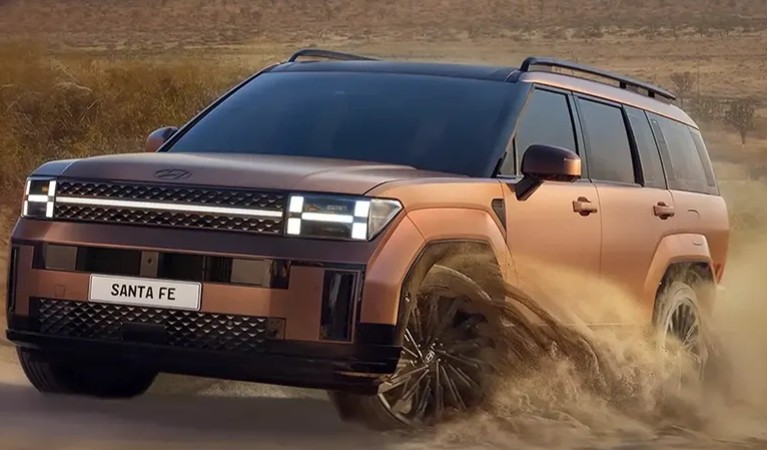
The Hyundai Santa Fe has become one of those SUVs that makes us stop and look twice. Its boxy styling, three-row flexibility, feature-packed cabin, and available hybrid powertrain give it a personality that feels surprisingly distinctive in a crowded family-SUV market. Hyundai describes the 2026 Santa Fe Hybrid as a three-row SUV with available HTRAC all-wheel drive, illustrating how the Santa Fe now sits somewhere between a conventional compact crossover and a larger family hauler.
But here's the question that matters when we're shopping: what are the best competitors to Hyundai Santa Fe?
Quite a few SUVs deserve a place on that shortlist.
The Kia Sorento is perhaps the most obvious rival. The Toyota Highlander brings a strong family-oriented formula. The Mazda CX-90 offers a more premium driving experience. Then we have larger alternatives such as the Hyundai Palisade, Kia Telluride, Toyota Grand Highlander, Honda Pilot, Volkswagen Atlas, and Ford Explorer.
Choosing between them is a little like choosing shoes for a long trip. They can all get us there, but the right pair depends on whether we value comfort, space, economy, style, or performance.
Let's break down the strongest Hyundai Santa Fe alternatives and figure out which one makes the most sense for different buyers.
Content in this publication
- What SUVs Compete With the Hyundai Santa Fe?
- Why Is the Hyundai Santa Fe So Difficult to Compare?
- 1. Kia Sorento: The Closest Hyundai Santa Fe Competitor
- 2. Toyota Highlander: The Sensible Family Alternative
- 3. Mazda CX-90: The Premium-Feeling Alternative
- 4. Honda Pilot: More Space and Traditional SUV Simplicity
- 5. Kia Telluride: A Larger and More Luxurious Alternative
- 6. Hyundai Palisade: The Santa Fe's Bigger Sibling
- 7. Toyota Grand Highlander: One of the Best Choices for Maximum Space
- 8. Volkswagen Atlas: The Practical Space Champion
- 9. Ford Explorer: The Performance-Oriented Family Choice
- 10. Nissan Pathfinder: Strong for Towing and Traditional SUV Buyers
- 11. Honda Passport: The Two-Row Alternative
- 12. Subaru Ascent: Built for Family Utility
- Which Hyundai Santa Fe Competitor Has the Best Third Row?
- Which Santa Fe Alternative Is Best for Fuel Economy?
- Which Competitor Is Best for Towing?
- Which Santa Fe Competitor Feels Most Luxurious?
- Which Alternative Is Best for Off-Road Driving?
- Hyundai Santa Fe vs Larger Three-Row SUVs
- What Should We Look for When Comparing Santa Fe Alternatives?
- Best Hyundai Santa Fe Competitor by Buyer Type
- Is the Hyundai Santa Fe Still Better Than Its Competitors?
- Conclusion: Which Hyundai Santa Fe Competitor Should We Buy?
- Frequently Asked Questions
What SUVs Compete With the Hyundai Santa Fe?
The Santa Fe occupies an unusual place in the SUV world. It offers three rows, yet it isn't quite as large as many traditional three-row midsize SUVs. That means its competitors come from more than one category.
The most relevant alternatives include:
- Kia Sorento
- Toyota Highlander
- Mazda CX-90
- Honda Pilot
- Kia Telluride
- Hyundai Palisade
- Toyota Grand Highlander
- Volkswagen Atlas
- Ford Explorer
- Nissan Pathfinder
- Honda Passport
- Subaru Ascent
Some match the Santa Fe closely in dimensions and positioning. Others are larger alternatives that shoppers naturally consider once passenger space becomes important.
That distinction matters.
Someone who occasionally carries six or seven people may love the Santa Fe. Someone transporting teenagers in the third row every afternoon might prefer something bigger.
Why Is the Hyundai Santa Fe So Difficult to Compare?
Previous generations of the Santa Fe were relatively conventional midsize crossovers. The newest design has changed the equation.
Now we have upright styling, three-row seating, a highly practical cabin, available all-wheel drive, and both conventional gasoline and hybrid options. The result is an SUV that overlaps multiple segments instead of fitting neatly into one box.
That's actually one of its biggest advantages.
We can cross-shop it against a Sorento without feeling that the Santa Fe is too large. Yet we can also compare it against a Pilot, Palisade, or Grand Highlander if maximum passenger space matters.
The Santa Fe's Main Strengths
Before looking at alternatives, we need to understand what competitors are trying to beat.
The Santa Fe generally attracts buyers because of its distinctive design, useful three-row layout, generous technology, available hybrid system, and strong value proposition. Its cabin also emphasizes practicality rather than pretending to be a sports car wearing hiking boots.
The 2026 Santa Fe's standard gasoline configuration is rated to tow up to 3,500 pounds with trailer brakes, while the more adventure-oriented XRT can reach 4,500 pounds, according to Car and Driver.
That gives us a useful benchmark as we examine its rivals.
1. Kia Sorento: The Closest Hyundai Santa Fe Competitor
If there were a family reunion for SUVs, the Kia Sorento and Hyundai Santa Fe would probably be seated beside each other.
They're natural competitors because both target buyers who want three-row flexibility without jumping into a giant SUV.
The Sorento's greatest strength is balance. It gives us family practicality while maintaining relatively manageable exterior dimensions. It also sits in a similar price and market territory to the Santa Fe.
Santa Fe vs Kia Sorento
The decision here may come down largely to personality.
The Santa Fe feels more rugged and architectural. Its slab-sided design looks almost like someone shrank an old-school off-roader and then filled the cabin with modern screens.
The Sorento usually feels sleeker and somewhat sportier.
Both appeal strongly to households that need occasional third-row seating rather than limousine-like space in the back.
Who Should Choose the Sorento?
We'd put the Sorento high on the list if we want:
- A relatively compact three-row SUV
- Stylish exterior design
- Multiple powertrain choices
- A family-friendly cabin
- An alternative that doesn't feel dramatically larger than the Santa Fe
If we like the idea behind the Santa Fe but simply prefer Kia's styling or interior execution, the Sorento is arguably the first SUV we should test-drive.
2. Toyota Highlander: The Sensible Family Alternative
Few SUVs represent the traditional family crossover formula as clearly as the Toyota Highlander.
While the Santa Fe tries to stand out visually, the Highlander tends to play the calmer role.
Think of the Santa Fe as the family member who turns up wearing hiking boots and an interesting jacket. The Highlander arrives in a neat polo shirt and already knows where everyone is sitting.
Neither approach is necessarily better.
Hyundai Santa Fe vs Toyota Highlander
The Highlander appeals strongly to buyers who want straightforward family transportation without unnecessary drama.
The Santa Fe counters with more adventurous styling and a cabin that feels particularly contemporary.
For shoppers considering electrification without fully committing to an EV, both nameplates also provide reasons to investigate hybrid options.
The bigger question is how much space we actually need.
If we regularly use all three rows, we'd pay particular attention to third-row comfort during a test drive rather than simply trusting the number of seats printed on a brochure.
Who Is the Highlander Best For?
The Highlander makes sense for buyers whose priorities are conventional SUV ergonomics, family practicality, and a mature ownership proposition.
The Santa Fe may appeal more strongly when design, interior technology, and visual character are higher priorities.
Here's where things become interesting.
The Mazda CX-90 doesn't simply compete by offering three rows. It approaches the problem differently.
Its cabin, rear-wheel-drive-oriented architecture, available turbocharged inline-six powertrain, and driving dynamics give it more of a premium flavor than many mainstream SUVs.
For 2026, the CX-90's gasoline lineup uses a turbocharged 3.3-liter inline-six producing 280 horsepower in standard configurations and as much as 340 horsepower in higher-output versions, with all-wheel drive standard. A plug-in hybrid is offered separately.
That already tells us something.
The Mazda is talking to the driver as much as the family.
Santa Fe vs Mazda CX-90
Choose the Santa Fe and practicality takes center stage.
Choose the CX-90 and driving character moves closer to the spotlight.
The Mazda's upscale interior is another major advantage. Its materials and presentation can feel closer to entry-level luxury territory than ordinary mainstream transportation.
But there's a trade-off.
Its elegant proportions don't translate into class-leading interior spaciousness. Car and Driver has specifically noted that its third row is better suited to children and that its ride can feel firm on imperfect pavement.
Where the CX-90 Wins
The Mazda is especially appealing if we prioritize steering feel, stronger engine choices, premium cabin ambience, towing potential, or a more sophisticated road-going personality.
Many CX-90 configurations can tow as much as 5,000 pounds, giving it additional appeal for owners pulling trailers.
For pure family practicality, however, the Santa Fe can be the easier machine to live with.
4. Honda Pilot: More Space and Traditional SUV Simplicity
Sometimes there's no replacement for size.
That's where the Honda Pilot enters the conversation.
The Pilot sits more firmly in the conventional three-row midsize SUV category. That generally makes it a logical step upward for a Santa Fe shopper who discovers that occasional third-row seating has become everyday third-row seating.
Honda Pilot vs Hyundai Santa Fe
The Pilot takes a relatively traditional mechanical approach, using a naturally aspirated V6 rather than leaning heavily into downsized turbo or hybrid powertrains.
In a recent comparison among 2026–27 three-row SUVs, Car and Driver highlighted the Pilot's comfort and lack of major weaknesses while characterizing its overall driving personality as comparatively restrained.
That's not necessarily criticism in the real world.
Families don't always want fireworks. Sometimes we just want comfortable seats, sensible controls, plenty of room, and an SUV that doesn't turn the school run into an experiment.
Choose the Pilot If Space Matters More Than Style
If we're routinely transporting adults or taller children in every seating row, we'd put the Pilot ahead of many more compact alternatives.
The Santa Fe remains the more visually daring option.
The Pilot feels more like the dependable family workhorse.
5. Kia Telluride: A Larger and More Luxurious Alternative
The Kia Telluride became popular for a simple reason: it delivers a lot of SUV for the money.
It's larger than the Santa Fe and competes more directly with vehicles such as the Hyundai Palisade, Honda Pilot, and Toyota Grand Highlander.
Still, Santa Fe shoppers frequently move toward it when they realize they want more third-row and luggage room.
Santa Fe vs Telluride
This comparison comes down largely to compact versatility versus full family capacity.
The Santa Fe is easier to position as an everyday crossover.
The Telluride feels more like a proper three-row family SUV.
A 2026–27 Car and Driver comparison placed the Telluride at the top of a group of larger three-row SUVs, praising its cabin refinement, comfort, efficiency, and driving character.
That's a strong argument for moving up a size.
But bigger isn't automatically better.
If we're mostly carrying four people and occasionally need extra seating, hauling around additional SUV every single day may be unnecessary.
6. Hyundai Palisade: The Santa Fe's Bigger Sibling
Perhaps the most fascinating Santa Fe competitor comes from inside Hyundai's own showroom.
The Palisade essentially answers the question:
What if we like Hyundai but need more SUV?
The Palisade sits above the Santa Fe and places greater emphasis on passenger comfort, third-row usability, and overall family capacity.
Current 2026 comparisons have praised the Palisade for its roomy interior, technology, refinement, and available hybrid configuration.
You may be interested in reading Nissan Frontier vs Ford Ranger: Which Midsize Truck Is Better?
Santa Fe vs Palisade
This is one of the easiest comparisons to understand.
Choose the Santa Fe when we value maneuverability, distinctive styling, and enough space for a smaller family.
Choose the Palisade when the third row isn't an emergency bench but part of everyday life.
Is the Palisade Worth the Upgrade?
For large families, often yes.
For couples or households with one or two children, maybe not.
The Santa Fe's smaller footprint is part of its charm. Moving up to the Palisade simply because it's larger can be like buying an eight-bedroom house because relatives visit twice a year.
Space is useful only when we actually use it.
7. Toyota Grand Highlander: One of the Best Choices for Maximum Space
Toyota took the familiar Highlander formula and stretched it into something significantly more family-focused with the Grand Highlander.
Toyota advertises seating for up to eight people and towing capacity of up to 5,000 pounds, depending on configuration.
That alone tells us who this SUV is targeting.
Big families.
Big trips.
Lots of luggage.
Grand Highlander vs Santa Fe
The Grand Highlander dominates when sheer passenger and cargo space become priorities.
It also offers attractive hybrid choices. Recent evaluations of midsize three-row SUVs have singled out its spacious third row, large cargo area, and strong hybrid fuel economy as key advantages.
The Santa Fe responds with a more manageable footprint and arguably more distinctive styling.
If we're hauling grandparents, kids, sports gear, backpacks, groceries, and perhaps half the contents of our garage, the Toyota starts making plenty of sense.
If most trips involve three or four occupants, the Santa Fe may feel more appropriately sized.
8. Volkswagen Atlas: The Practical Space Champion
The Volkswagen Atlas isn't subtle about its priorities.
Space comes first.
Where some competitors sacrifice cabin room for swooping rooflines and sporty proportions, the Atlas embraces the shape of a proper family hauler.
Recent 2026 evaluations continue to highlight its spacious passenger compartment and adult-friendly third row as major strengths.
Atlas vs Hyundai Santa Fe
The Atlas is the better choice when our mental checklist begins with:
"Can everyone fit?"
The Santa Fe asks another question:
"Can everyone fit while we still have something interesting to look at?"
The Hyundai's design is far more adventurous.
The Volkswagen's appeal is fundamentally practical.
That simplicity may be exactly what some families want.
9. Ford Explorer: The Performance-Oriented Family Choice
Not every three-row SUV buyer wants the driving experience to disappear into the background.
The Ford Explorer reminds us that family SUVs can still have some muscle.
The lineup includes performance-oriented variants, and the Explorer ST in particular has been praised for powerful acceleration and engaging road manners. Car and Driver's recent three-row SUV comparison placed the Explorer ST third overall, highlighting its performance while noting compromises in rear-seat comfort.
Explorer vs Santa Fe
If power and highway performance matter, the Explorer is fascinating.
If fuel economy, efficient packaging, or hybrid availability matter more, the Santa Fe deserves the closer look.
The Explorer feels like the SUV for someone who occasionally forgets they're driving the family bus.
The Santa Fe feels like the SUV for someone who wants the family bus to be smarter.
10. Nissan Pathfinder: Strong for Towing and Traditional SUV Buyers
The Nissan Pathfinder represents another conventional three-row alternative.
It's larger than the Santa Fe and emphasizes family capability rather than radical design.
For shoppers who prefer a more traditional SUV layout and need stronger towing capability, it deserves consideration.
In a recent large three-row comparison, however, the Pathfinder finished behind several major rivals, with reviewers criticizing aspects of its ride and handling refinement.
That doesn't make it a poor SUV.
It means competition in this class is fierce.
When nearly every model offers a roomy cabin, modern safety technology, smartphone connectivity, and respectable power, details matter tremendously.
11. Honda Passport: The Two-Row Alternative
Here's a wildcard.
What if we don't actually need three rows?
The Honda Passport suddenly becomes extremely interesting.
The Passport prioritizes five-passenger space, useful cargo room, and adventure-oriented capability rather than squeezing an extra bench into the rear.
Current versions use a 3.5-liter V6 producing 285 horsepower, compared with the Santa Fe gasoline model's turbocharged four-cylinder setup.
Passport vs Santa Fe for Outdoor Adventures
The Passport deserves particular attention from buyers considering the rugged-looking Santa Fe XRT.
A recent off-road comparison between the Passport TrailSport, Santa Fe XRT, and Subaru Outback Wilderness found the Honda particularly capable away from pavement thanks to its AWD calibration and underbody protection, while the Santa Fe impressed more with its spacious, quiet interior and road manners.
So if we regularly reach campsites through muddy trails rather than paved parking lots, the Passport may be the stronger companion.
12. Subaru Ascent: Built for Family Utility
The Subaru Ascent follows Subaru's familiar formula: standard all-wheel-drive-oriented practicality, a spacious cabin, and family-focused utility.
It doesn't chase the luxury feel of a Mazda CX-90 or the visual drama of a Santa Fe.
Instead, it focuses on function.
For drivers dealing regularly with poor weather, mountain roads, ski trips, or outdoor equipment, that straightforward character can be appealing.
Santa Fe vs Subaru Ascent
We'd lean toward the Santa Fe for design, cabin presentation, and powertrain variety.
We'd investigate the Ascent closely when all-weather capability and traditional family practicality dominate the decision.
Again, priorities change the winner.
There isn't one universally "best" SUV.
There is only the SUV that fits our actual life best.
Which Hyundai Santa Fe Competitor Has the Best Third Row?
If third-row space is our biggest concern, moving into the larger midsize category makes sense.
The Toyota Grand Highlander, Volkswagen Atlas, Hyundai Palisade, Kia Telluride, and Honda Pilot deserve particular attention.
Recent assessments have especially highlighted the Grand Highlander's passenger and cargo room, the Atlas's adult-friendly third row, and the Palisade's overall family-friendly interior.
The Santa Fe's third row is useful, but its compact exterior dimensions inevitably involve compromise.
Think of it as a bonus room rather than a second living room.
For occasional children or short journeys, that's perfectly reasonable.
For six adults traveling across the country? We'd want more space.
Which Santa Fe Alternative Is Best for Fuel Economy?
Hybrid shoppers have more options than ever.
The Santa Fe Hybrid itself remains compelling. A 2026 Santa Fe Limited Hybrid AWD, for example, is rated at 34 mpg combined according to Edmunds.
But Toyota's Grand Highlander Hybrid also deserves serious attention, particularly for buyers who need significantly more interior room.
The important point is that fuel economy shouldn't be judged in isolation.
A larger SUV consuming slightly more fuel but comfortably fitting our household may be smarter than buying a smaller vehicle and constantly struggling with space.
Hybrid vs Gasoline: Which Makes Sense?
Hybrids tend to make the greatest sense for drivers doing plenty of city or suburban driving.
Gasoline powertrains may remain attractive for buyers who prioritize simpler purchasing decisions, stronger towing configurations, or lower initial prices.
Our advice is simple: calculate how we actually drive rather than buying whichever badge says "hybrid."
Which Competitor Is Best for Towing?
This is one category where buyers need to look carefully at exact configurations.
The regular Santa Fe is rated for up to 3,500 pounds with trailer brakes, while the XRT can reach 4,500 pounds.
The Toyota Grand Highlander can tow up to 5,000 pounds, and many Mazda CX-90 configurations can also reach 5,000 pounds.
You may be interested in readingNissan Frontier vs Ford Ranger: Which Midsize Truck Is Better?You may be interested in reading
Nissan Frontier vs Chevy Colorado: Which Midsize Truck Wins?For heavier recreational trailers, those differences matter.
A few hundred pounds on paper can disappear quickly once we add passengers, luggage, equipment, and trailer cargo.
Never treat maximum towing figures like everyday operating targets.
Which Santa Fe Competitor Feels Most Luxurious?
Among mainstream alternatives, we'd give special attention to the Mazda CX-90.
Its cabin design, materials, and overall driving presentation aim noticeably higher than the traditional family-SUV formula. Car and Driver has described its interior as approaching luxury-SUV territory, particularly in upper trims.
The Palisade and Telluride are also impressive at the upper end of their respective lineups.
The Santa Fe takes a different route.
Instead of imitating a European luxury SUV, it creates a modern, almost architectural environment of its own.
Some buyers will love that.
Others may prefer Mazda's warmer, more traditional premium feel.
Which Alternative Is Best for Off-Road Driving?
We need to be careful with the term "off-road."
Most vehicles discussed here are crossovers, not rock-crawling machines with low-range transfer cases and locking differentials.
Still, some handle rough terrain better than others.
The Honda Passport TrailSport deserves particular attention. In recent testing against the Santa Fe XRT and Subaru Outback Wilderness, it proved especially capable across rougher terrain.
The Subaru approach is also compelling for buyers who regularly encounter snow, gravel, and poorly maintained roads.
The Santa Fe XRT works well for light adventure use, but its greatest strengths remain versatility and everyday comfort rather than extreme terrain.
Hyundai Santa Fe vs Larger Three-Row SUVs
One mistake we often make when shopping is comparing vehicles purely because they have the same number of seats.
Seven seats don't necessarily mean seven equally usable seats.
This is why shoppers need to separate Santa Fe competitors into two groups.
Direct Competitors
The Kia Sorento and Toyota Highlander sit relatively close to the Santa Fe in philosophy.
They're family crossovers that attempt to deliver useful three-row flexibility without becoming huge.
Larger Alternatives
The Palisade, Telluride, Pilot, Grand Highlander, Atlas, Explorer, Pathfinder, and CX-90 generally move closer to the traditional midsize three-row formula.
They're better suited to larger households but usually require more parking space, more money, or both.
Neither category is objectively superior.
The trick is resisting the temptation to buy more vehicle than we need.
What Should We Look for When Comparing Santa Fe Alternatives?
Forget the brochure for a moment.
Bring the family to the dealership.
Install the child seats.
Move the front seats into normal driving positions.
Climb into the third row.
Open the cargo area while every seat is upright.
Pair the phones.
Drive over rough pavement.
Try parking it.
That simple routine reveals more about an SUV than hours spent staring at specification sheets.
A vehicle that looks enormous online can suddenly feel cramped once seven passengers climb aboard.
Conversely, a smaller SUV with clever packaging may surprise us.
Our Most Important Comparison Factors
We should evaluate passenger space, cargo room, fuel economy, powertrain refinement, towing needs, ride comfort, infotainment usability, warranty coverage, insurance costs, purchase price, and how often we genuinely use the third row.
The final one may be the most important.
Buying a huge SUV because we might carry seven people twice a year is like carrying a suitcase every day because we might travel next summer.
Best Hyundai Santa Fe Competitor by Buyer Type
If we had to simplify this entire comparison, we'd match the SUVs like this:
Closest overall alternative: Kia Sorento.
Best for larger families: Hyundai Palisade or Toyota Grand Highlander.
Best premium-feeling choice: Mazda CX-90.
Best traditional family SUV: Honda Pilot.
Best spacious practical option: Volkswagen Atlas.
Best combination of luxury and family usability: Kia Telluride.
Best performance-oriented alternative: Ford Explorer.
Best adventurous two-row option: Honda Passport.
Best if we want to stay with Hyundai: Palisade.
Best if fuel-efficient three-row driving matters: Santa Fe Hybrid or Grand Highlander Hybrid.
The key is noticing how dramatically these recommendations change depending on one sentence describing our needs.
That's why blindly searching for "the best SUV" rarely works.
Is the Hyundai Santa Fe Still Better Than Its Competitors?
In many cases, absolutely.
The Santa Fe occupies a sweet spot that isn't easy to replicate.
It delivers three-row versatility without automatically becoming a huge SUV. It offers distinctive styling without entering luxury-brand pricing territory, and its hybrid option adds another layer of appeal. Hyundai also lists available HTRAC AWD on the 2026 Santa Fe Hybrid, making it suitable for buyers who want both electrified efficiency and additional traction.
But every strength creates a compromise.
Its smaller dimensions mean larger rivals offer more third-row and cargo room.
Its adventurous styling won't appeal to everyone.
Its towing capacity can also fall behind stronger configurations of competitors such as the CX-90 and Grand Highlander.
And that's perfectly fine.
A good SUV doesn't have to dominate every category.
It simply needs to dominate the categories we care about.
Conclusion: Which Hyundai Santa Fe Competitor Should We Buy?
The best competitors to Hyundai Santa Fe cover an unusually broad range.
The Kia Sorento is probably the closest direct rival, making it our first comparison if we want similar size and three-row versatility. The Toyota Highlander offers a more conventional family-SUV formula, while the Mazda CX-90 trades some packaging efficiency for premium materials and engaging performance.
Move up a size and the conversation changes.
The Hyundai Palisade and Kia Telluride deliver more room and refinement. The Toyota Grand Highlander prioritizes family space and offers compelling hybrid choices. The Honda Pilot remains a comfortable, straightforward family machine, while the Volkswagen Atlas is hard to ignore when interior volume matters most.
Then we have specialists.
The Ford Explorer adds performance. The Honda Passport brings stronger adventure credentials for buyers who don't need a third row. The Subaru Ascent caters to practical all-weather families.
So, should we automatically abandon the Santa Fe for one of them?
Not at all.
The Santa Fe's biggest advantage may actually be its balance. It gives us some of the practicality of a big three-row SUV without feeling quite so enormous. That's a rare trick.
Our best approach is therefore simple: decide how often we'll use the third row, how much cargo we regularly carry, whether we need a hybrid, and whether towing or off-road capability matters.
Once those answers become clear, the enormous field of Santa Fe alternatives suddenly becomes much smaller.
And that's when choosing the right SUV stops feeling like walking through a maze.
Frequently Asked Questions
What is the closest competitor to the Hyundai Santa Fe?
The Kia Sorento is arguably the closest direct competitor because it combines relatively manageable dimensions with three-row seating and a similar focus on family versatility. Buyers wanting substantially more passenger space should also compare the Santa Fe with larger options such as the Hyundai Palisade, Kia Telluride, and Toyota Grand Highlander.
Is the Toyota Highlander better than the Hyundai Santa Fe?
Neither is universally better. The Highlander makes sense for buyers who prefer a more conventional family-SUV approach, while the Santa Fe stands out with bold styling, modern cabin design, and strong packaging. The better choice depends largely on passenger needs, preferred powertrain, price, and personal taste.
Is the Kia Sorento or Hyundai Santa Fe better?
They're closely matched in purpose. The Sorento is one of the most natural Santa Fe alternatives for buyers wanting three rows without moving into a very large SUV. The decision is best made after comparing specific trims, powertrains, interior layouts, and local pricing.
You may be interested in readingNissan Frontier vs Ford Ranger: Which Midsize Truck Is Better?You may be interested in reading
Nissan Frontier vs Chevy Colorado: Which Midsize Truck Wins?You may be interested in reading
Nissan Frontier vs Honda Ridgeline: Which Midsize Truck Wins?What is a larger alternative to the Hyundai Santa Fe?
The Hyundai Palisade, Kia Telluride, Honda Pilot, Toyota Grand Highlander, Volkswagen Atlas, Ford Explorer, and Mazda CX-90 are all larger three-row alternatives worth considering. The Grand Highlander and Atlas are particularly attractive when third-row and cargo space take priority.
Which Hyundai Santa Fe competitor is best for families?
For smaller families that only occasionally need a third row, the Kia Sorento is difficult to ignore. For households routinely carrying six to eight people, larger options such as the Toyota Grand Highlander, Hyundai Palisade, Kia Telluride, Honda Pilot, and Volkswagen Atlas generally deserve closer consideration.
If you want to know other articles similar to Competitors to Hyundai Santa Fe: The Best Alternatives Worth Considering you can visit the category Models.
Kia Sorento Models: Complete Guide to Trims, Engines and Versions
BYD Shark 6 vs Ranger vs HiLux: Which Ute Makes the Most Sense in 2026?
BYD Shark 6 vs MG U9: Which Ute Makes More Sense in 2026?
BYD Shark 6 vs Ford Ranger Raptor: Which Performance Ute Is Better in 2026?
BYD Shark 6 vs Kia Tasman: Which Ute Is Better?
BYD Shark 6 vs 7: What We Know So Far
Leave a Reply
More content of your interest