

Nissan Frontier vs Ford Ranger: Which Midsize Truck Is Better?

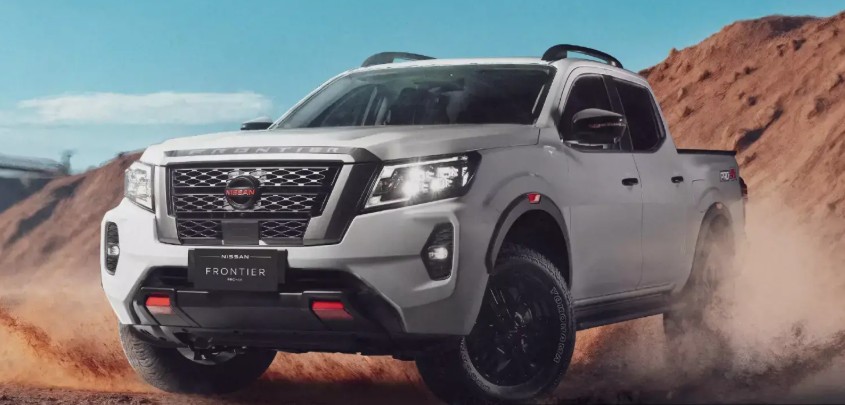
The Nissan Frontier vs Ford Ranger debate is one of those pickup comparisons that looks straightforward until we start digging into the details. Both are midsize trucks. Both can tow, haul, tackle trails, and handle daily driving. Both also offer genuine truck construction rather than simply dressing an SUV in work boots.
Yet they go about the job quite differently.
The Nissan Frontier follows a relatively traditional formula: a naturally aspirated V6, straightforward controls, a sturdy frame, and an old-school truck personality wrapped in a modern package. The Ford Ranger takes the more technological route, leaning heavily on turbocharged EcoBoost engines, strong torque output, sophisticated driver assistance, and a wider performance spectrum.
For this comparison, we'll primarily use the 2026 U.S.-market Frontier and Ranger as our reference point. Specifications vary by trim, drivetrain, configuration, model year, and country, so shoppers outside the United States should check local specifications.
So, which pickup deserves your driveway? Let's put the Frontier and Ranger side by side.
Content in this publication
- Nissan Frontier vs Ford Ranger at a Glance
- Engine Comparison: V6 Simplicity vs EcoBoost Variety
- Performance: Which Truck Feels Stronger?
- Nissan Frontier vs Ford Ranger Towing Capacity
- Payload Capacity: Ranger Takes Another Win
- Fuel Economy: Does the Ranger Save More Fuel?
- Transmission: Nine Speeds vs Ten
- Ride and Handling
- Off-Road Capability: PRO-4X vs Ranger Raptor
- Bed Size and Truck Practicality
- Interior Comfort and Space
- Technology: Ranger Pushes Harder Into the Digital Age
- Safety and Driver Assistance
- Reliability: Frontier Simplicity Has Appeal
- Nissan Frontier vs Ford Ranger for Daily Driving
- Which Is Better for Work?
- Which Is Better for Families?
- Ford Ranger Advantages
- Nissan Frontier Advantages
- Nissan Frontier vs Ford Ranger: Key Differences
- Nissan Frontier vs Ranger: Which Is Better Value?
- What About Frontier PRO-4X vs Ranger Raptor?
- Who Should Buy the Nissan Frontier?
- Who Should Buy the Ford Ranger?
- Nissan Frontier vs Ford Ranger: Our Verdict
- Frequently Asked Questions
Nissan Frontier vs Ford Ranger at a Glance
Before disappearing down the specification rabbit hole, here's the basic personality of each truck.
The Nissan Frontier feels like the simpler choice. Its standard 3.8-liter V6 produces 310 horsepower and 281 lb-ft of torque and works with a nine-speed automatic transmission. Nissan rates properly configured 2026 models to tow up to 7,150 pounds.
The Ford Ranger, meanwhile, gives buyers several engine choices. The regular Ranger offers 2.3-liter and available 2.7-liter EcoBoost engines, while the Ranger Raptor receives a muscular 3.0-liter EcoBoost V6. Ford lists outputs ranging from 270 horsepower and 310 lb-ft in the 2.3-liter Ranger to 405 horsepower and 430 lb-ft in the Raptor.
In simple terms:
- Frontier: traditional V6 character, straightforward lineup, strong value proposition.
- Ranger: stronger torque availability, more engine choice, higher maximum towing and payload ratings.
- Frontier PRO-4X: aimed at buyers wanting a capable factory off-roader without jumping into an extreme performance model.
- Ranger Raptor: the wild child, built much more aggressively around high-speed off-road performance.
Already, we can see these trucks aren't identical twins wearing different badges.
Engine Comparison: V6 Simplicity vs EcoBoost Variety
Nissan Frontier 3.8-Liter V6
Every 2026 Frontier uses Nissan's 3.8-liter naturally aspirated V6.
It produces:
310 horsepower
281 lb-ft of torque
The engine is paired with a nine-speed automatic transmission.
There's something refreshing about this arrangement.
You don't need a spreadsheet to choose an engine. There isn't a small turbo engine on one trim, a bigger turbo on another, and an expensive performance engine sitting at the top.
You pick your Frontier, and you get the V6.
Naturally aspirated engines also deliver power differently from turbocharged engines. The Frontier likes revs more than the Ranger's turbo engines do, giving it a traditional pickup character that some drivers will immediately appreciate.
Ford Ranger EcoBoost Engines
Ford takes almost the opposite approach.
For 2026, the U.S.-market Ranger offers a 2.3-liter EcoBoost four-cylinder producing 270 horsepower and 310 lb-ft, while an available 2.7-liter EcoBoost V6 produces 315 horsepower and 400 lb-ft.
Then there's the Ranger Raptor.
Its 3.0-liter EcoBoost V6 produces a substantial 405 horsepower and 430 lb-ft.
That's an enormous spread.
Which Engine Is Better?
It depends on what we mean by "better."
The Frontier's V6 appeals to drivers who want consistency and naturally aspirated response. The Ranger's turbocharged engines provide more low-end torque, particularly with the 2.7-liter V6.
For relaxed everyday driving and uncomplicated engine selection, we'd lean toward the Frontier.
For sheer torque and performance potential?
The Ranger wins.
Performance: Which Truck Feels Stronger?
Horsepower numbers only tell half the story.
Torque matters tremendously in a pickup, especially when pulling trailers, climbing hills, driving off-road, or accelerating with cargo aboard.
That's where the Ranger's turbo engines start flexing.
The Frontier's 281 lb-ft is respectable, but the Ranger's standard 2.3-liter engine already produces 310 lb-ft. Step into the 2.7-liter Ranger and we're looking at 400 lb-ft.
That difference should be noticeable when asking the truck to work hard.
The Frontier isn't slow simply because it has less torque. Its 310 horsepower remains competitive, and the nine-speed transmission helps keep the engine where it needs to be.
Still, if effortless low-rpm muscle sits near the top of our shopping list, Ford has the stronger hand.
Nissan Frontier vs Ford Ranger Towing Capacity
Now we get to one of the numbers pickup shoppers care about most.
Frontier Maximum Towing Capacity
The 2026 Frontier can tow up to 7,150 pounds when properly equipped, although exact capability changes according to cab, drivetrain, trim, equipment, passengers, and other factors.
That's enough capability for plenty of recreational towing duties, including many:
- Small and midsize travel trailers
- Utility trailers
- Boats
- Jet skis
- Motorcycles
- ATVs
- Landscaping trailers
The Frontier's fully boxed ladder frame reinforces its traditional truck credentials.
Ranger Maximum Towing Capacity
Properly configured Ranger XL, XLT, and Lariat models can tow up to 7,500 pounds with the appropriate equipment.
Interestingly, the mighty Ranger Raptor isn't the towing champion. Ford rates it at up to 5,510 pounds.
Why?
Because performance-oriented suspension and maximum towing ability don't necessarily go hand in hand.
Towing Winner: Ford Ranger
At the maximum published ratings, the regular Ranger edges out the Frontier:
Ranger: up to 7,500 lb
Frontier: up to 7,150 lb
That's a 350-pound advantage.
It's not enormous, but it's enough to give Ford the technical victory.
However, we shouldn't shop by maximum towing capacity alone. The actual rating of the exact truck sitting at the dealership matters far more than the biggest number printed in a brochure.
Payload Capacity: Ranger Takes Another Win
Payload is sometimes overlooked because towing gets all the attention.
Yet payload may be even more relevant for everyday truck owners.
Passengers, tools, camping equipment, cargo in the bed, accessories, and trailer tongue weight can all eat into available payload.
Ford lists maximum payload ratings of roughly 1,767 pounds for the 2.3-liter 4x2 configuration, with ratings decreasing on heavier configurations.
Nissan advertises Frontier payload capability around 1,590 pounds on certain configurations, while individual versions can be considerably lower.
Once again, configuration matters.
A heavily equipped off-road truck normally carries less payload than a lighter work-oriented model.
For buyers routinely loading heavy materials, the Ranger offers the higher ceiling.
Fuel Economy: Does the Ranger Save More Fuel?
Fuel economy can become a surprisingly large ownership expense.
Nissan says the Frontier's V6 can achieve up to 19 mpg city and 24 mpg highway, depending on configuration. Off-road-oriented versions can consume noticeably more.
Ford lists the 2.3-liter Ranger 4x2 at an EPA-estimated 21 mpg city, 25 highway, and 23 combined, while the 2.3-liter 4x4 is rated at 19/24/21 mpg. The more powerful Ranger engines use more fuel, with the Raptor naturally sitting at the thirsty end of the lineup.
Fuel Economy Winner: Ranger 2.3 EcoBoost
The standard Ranger can be the more economical choice on paper.
But there's an important twist.
Turbocharged engines can become significantly thirstier when we're frequently demanding boost, towing, or accelerating hard. Real-world fuel consumption depends heavily on driving style.
Think of the turbo Ranger as someone who can eat lightly—but only when we don't keep inviting them to the buffet.
Transmission: Nine Speeds vs Ten
The Frontier uses a nine-speed automatic, while the Ranger uses Ford's 10-speed SelectShift automatic.
More gears don't automatically mean a better transmission.
What matters is calibration.
The Frontier's nine-speed works alongside an engine with a broad, predictable naturally aspirated power curve. The Ranger's ten-speed has more ratios available to keep its turbocharged engines operating efficiently.
Drivers who dislike transmissions constantly searching for the perfect gear may appreciate the Nissan's more conventional personality.
You may be interested in reading Nissan Frontier vs Chevy Colorado: Which Midsize Truck Wins?
Those who value maximum powertrain flexibility may prefer Ford's approach.
Ride and Handling
Modern midsize trucks need to perform an awkward balancing act.
They must behave like trucks while increasingly being expected to drive like crossovers.
Neither Frontier nor Ranger completely hides its pickup DNA—and that's not necessarily a bad thing.
Frontier Driving Experience
The Frontier retains a traditional body-on-frame feel.
Its front suspension uses an independent double-wishbone arrangement, while the rear uses a solid axle with leaf springs.
There's substance to the way it moves. We know we're driving a truck.
For buyers coming from older pickups, that familiarity can be appealing.
Ranger Driving Experience
The Ranger generally feels like the more modern interpretation of the midsize pickup formula.
Its turbocharged torque gives it effortless punch, while its chassis aims to combine work capability with comfortable everyday road manners.
The difference becomes enormous when we reach the Ranger Raptor.
That isn't simply a Ranger with aggressive tires and some stickers. Its mission is much more performance focused.
Off-Road Capability: PRO-4X vs Ranger Raptor
Here's where things get entertaining.
Nissan Frontier PRO-4X
The Frontier PRO-4X receives serious off-road hardware.
Nissan equips it with features including:
- Bilstein off-road shocks
- Electronic locking rear differential
- All-terrain tires
- Skid plates
- Terrain Mode Selector
- Hill-descent technology
- Available trail-oriented camera technology
The PRO-4X makes sense for people who genuinely explore dirt roads, trails, campsites, muddy work areas, or rough terrain but don't necessarily need a desert-racing machine.
Why the PRO-4X Formula Works
Its appeal is balance.
It still feels like a Frontier.
We get additional capability without turning the entire truck into an extreme performance project.
Ford Ranger Raptor
The Ranger Raptor operates on another level.
Its 405-horsepower twin-turbo V6 immediately tells us what Ford had in mind.
It's the choice for someone asking:
"Yes, but what if we drive much faster across that dirt?"
The Raptor prioritizes off-road performance rather than maximum payload or towing. That's why its headline work-truck figures are actually lower than those of ordinary Ranger configurations.
Off-Road Winner
For extreme performance: Ranger Raptor.
For a more traditional off-road truck with an appealing balance between trail equipment, everyday usability, and simplicity: Frontier PRO-4X deserves serious consideration.
Bed Size and Truck Practicality
This category gets interesting because Nissan gives buyers more configuration flexibility.
Ford's 2026 U.S. Ranger is offered as a SuperCrew with a bed measuring approximately 59.6 inches long, 62.4 inches wide, and 20.6 inches deep. Ford lists 43.5 cubic feet of bed volume.
The Frontier offers both King Cab and Crew Cab arrangements, and Nissan also provides standard and long-bed configurations on selected versions.
Some Frontier beds measure 73.3 inches long, giving buyers who regularly carry long equipment a useful option.
Practicality Winner: Nissan Frontier
Ford's crew-cab-only approach keeps things simple.
Nissan gives us more freedom.
If our idea of a truck involves lumber, ladders, tools, camping gear, bikes, or bulky equipment rather than simply carrying passengers, the Frontier's available longer bed can be a major advantage.
Interior Comfort and Space
Pickup interiors have changed dramatically.
We're no longer talking about vinyl benches, three knobs, and a radio that sounds like it's broadcasting from inside a soup can.
Both trucks provide modern cabins with smartphone integration, infotainment systems, driver assistance, and increasingly sophisticated comfort features.
The Ranger's cabin feels more digitally oriented.
The Frontier takes a more conventional approach.
And this category may ultimately come down to personal taste.
Some buyers love enormous screens and digital interfaces. Others want controls they can operate while bouncing along a rough road without performing touchscreen surgery.
The Frontier's straightforward cabin philosophy can therefore be an advantage rather than a weakness.
Technology: Ranger Pushes Harder Into the Digital Age
Ford has increasingly positioned its trucks as technology platforms.
That philosophy is visible in the Ranger.
Depending on trim and equipment, buyers can access sophisticated infotainment, towing assistance, driver aids, digital displays, cameras, connectivity features, and off-road technology.
The Frontier isn't technologically barren.
Far from it.
For example, Nissan offers a 12.3-inch touchscreen on certain Frontier versions, and smartphone integration is widely available.
But the Nissan generally feels less obsessed with turning every function into a digital experience.
Technology Winner: Ford Ranger
If screens, cameras, connected features, and advanced electronic systems excite us, we'd lean Ranger.
If we prefer technology without wanting the truck to feel like a smartphone with a cargo bed, the Frontier may actually be more satisfying.
Safety and Driver Assistance
Both trucks offer modern active-safety systems, although availability varies according to trim and equipment.
Nissan's Safety Shield 360 suite is standard across the 2026 Frontier lineup according to Nissan's fleet specifications.
The Ranger likewise provides a broad collection of contemporary driver-assistance features depending on configuration.
This is one category where we wouldn't choose purely by brand.
Instead, compare the specific trims you're buying.
A base truck and a luxury-oriented trim can have significantly different equipment even though they wear the same model badge.
Reliability: Frontier Simplicity Has Appeal
Reliability comparisons become difficult because we're trying to predict the future from past performance.
Still, powertrain philosophy matters.
The Frontier's naturally aspirated V6 is mechanically less ambitious than Ford's high-output turbocharged options. That doesn't automatically make the Nissan more reliable, but buyers intending to keep a truck for a decade or longer may find the simpler concept reassuring.
Ford's EcoBoost engines deliver impressive torque from relatively small displacement, but they also rely on turbocharging to achieve that performance.
There's always a trade-off.
More performance technology gives us more performance—but also more components and complexity.
Long-Term Ownership
If we planned to keep either truck well beyond 100,000 miles, maintenance history would matter more than the badge on the grille.
Oil-change intervals become especially important with turbocharged engines.
For a used Ranger or Frontier, we'd prioritize:
- Complete maintenance records.
- Evidence of regular oil changes.
- Smooth transmission operation.
- Proper 4WD engagement.
- Signs of previous heavy towing.
- Rust or underbody damage.
- Off-road abuse.
- Accident history.
A carefully maintained Ranger is usually a safer purchase than a neglected Frontier, and vice versa.
Nissan Frontier vs Ford Ranger for Daily Driving
Not everyone buying a pickup spends Monday through Friday hauling concrete.
Many of us want a truck because it's useful on weekends while still needing it to commute, shop, carry children, and survive parking garages.
You may be interested in readingNissan Frontier vs Chevy Colorado: Which Midsize Truck Wins?You may be interested in reading
Nissan Frontier vs Honda Ridgeline: Which Midsize Truck Wins?For everyday use, the Ranger's strong low-end torque and modern cabin make it an attractive option.
The Frontier counters with straightforward controls and traditional driving character.
If you're transitioning from an SUV, the Ranger may feel more familiar.
If you're transitioning from an older pickup, the Frontier may feel like home—just renovated.
Which Is Better for Work?
The Ranger wins several important work-related specifications.
Maximum towing is higher.
Maximum payload is higher.
The turbocharged engines produce abundant torque.
That makes the Ranger especially compelling for tradespeople frequently towing equipment or carrying significant loads.
But the Frontier has an ace up its sleeve: configuration.
An available long bed can matter enormously for certain jobs.
A contractor carrying long tools may value bed length more than an additional few hundred pounds of maximum payload.
There's no universal winner here because "work" means different things to different owners.
Which Is Better for Families?
Crew-cab versions of either truck can work as family vehicles.
The Ranger's modern interior and technology may make it the easier sell for households replacing a crossover or SUV.
However, we should remember that midsize pickups aren't full-size family limousines.
Before buying either truck, sit in the rear seats.
Better still, install the child seats you actually use.
Spec sheets tell us legroom measurements. They don't tell us whether our knees will spend three hours arguing with the seatback during a road trip.
Ford Ranger Advantages
The Ranger makes a strong case through versatility.
Its biggest strengths include higher maximum towing capability, higher maximum payload, considerably more torque with the available V6, multiple engine choices, strong technology, competitive fuel economy with the 2.3-liter engine, and the extraordinary Ranger Raptor option.
It's essentially several personalities living under one nameplate.
An entry Ranger can be a practical midsize pickup.
A 2.7-liter Ranger becomes a torque-rich everyday truck.
A Ranger Raptor is something altogether more mischievous.
Nissan Frontier Advantages
The Frontier fights back with simplicity.
Its strengths include a standard 310-horsepower V6, nine-speed automatic, traditional pickup character, available long-bed configurations, strong towing ability, PRO-4X off-road hardware, straightforward engine selection, and a cabin that doesn't overwhelm us with unnecessary complexity.
There's an appealing honesty about it.
The Frontier doesn't spend much time trying to convince us it's something other than a truck.
Nissan Frontier vs Ford Ranger: Key Differences
| Category | Nissan Frontier | Ford Ranger |
|---|---|---|
| Standard engine | 3.8L V6 | 2.3L turbo I4 |
| Standard horsepower | 310 hp | 270 hp |
| Standard torque | 281 lb-ft | 310 lb-ft |
| Available engine choices | One main engine | Multiple engines |
| Maximum regular-model power | 310 hp | 315 hp |
| Performance model | PRO-4X | Raptor |
| Raptor output | — | 405 hp |
| Maximum towing | Up to 7,150 lb | Up to 7,500 lb |
| Long-bed availability | Yes, selected configurations | No comparable U.S. configuration |
| Powertrain personality | Traditional | Turbocharged/modern |
| Best for simplicity | Frontier | — |
| Best for maximum capability | — | Ranger |
| Best extreme off-roader | — | Ranger Raptor |
Published ratings depend on configuration and equipment. Frontier figures are based primarily on Nissan's 2026 U.S. specifications, while Ranger figures are based on Ford's 2026 U.S. specifications.
Nissan Frontier vs Ranger: Which Is Better Value?
Value isn't simply about which truck has the lower sticker price.
We need to consider what equipment we're receiving for that money.
The Frontier's standard V6 is important here.
There's no need to climb through several trim levels merely to obtain six-cylinder power. Every Frontier starts with 310 horsepower.
Ford's strategy is different.
The 2.3-liter engine provides enough performance for many drivers, while buyers can pay for additional capability if they need it.
That means Ranger shoppers can tailor the truck more precisely.
The Frontier gives us more powertrain equipment upfront; the Ranger gives us more choices.
Neither strategy is inherently better.
What About Frontier PRO-4X vs Ranger Raptor?
These two trucks frequently appear in the same conversation, but they're not direct equivalents.
The PRO-4X is an enhanced off-road Frontier.
The Raptor is effectively an off-road performance flagship.
That's an important distinction.
The Frontier PRO-4X's Bilstein shocks, locking rear differential, skid plates, and all-terrain tires make it genuinely trail capable.
The Ranger Raptor takes the concept considerably further with 405 horsepower and a much stronger emphasis on performance.
The Raptor is the hammer.
The PRO-4X is the multitool.
Which one we'd rather own depends entirely on what we're trying to build.
Who Should Buy the Nissan Frontier?
Choose the Nissan Frontier if you value traditional truck engineering, naturally aspirated V6 power, straightforward controls, strong towing capability, an available longer bed, and a relatively uncomplicated model lineup.
It also makes plenty of sense for someone who says:
"I just want a solid midsize truck. Why does this need to be complicated?"
That's essentially Frontier territory.
Who Should Buy the Ford Ranger?
Choose the Ford Ranger if maximum towing and payload ratings matter, you enjoy turbocharged torque, you want more powertrain choice, technology ranks highly on your priorities, or you want access to the bonkers Ranger Raptor.
The Ranger is particularly attractive for buyers who want one truck platform that can stretch from practical daily driver to serious off-road performance machine.
Nissan Frontier vs Ford Ranger: Our Verdict
Picking an overall winner isn't as easy as looking at horsepower.
The Ford Ranger wins the numbers battle in several important categories. It can tow more when properly configured, offers a higher maximum payload, provides substantially more torque with its available V6, and gives buyers multiple powertrain choices. Ford also has the Ranger Raptor, which pushes the platform into performance territory the Frontier doesn't directly match.
So if we're choosing purely on capability, powertrain variety, technology, and performance potential, we'd pick the Ford Ranger.
But the Nissan Frontier has its own charm.
Its 310-horsepower naturally aspirated V6 comes standard. Its configuration choices include useful longer-bed versions. The PRO-4X delivers meaningful off-road equipment without turning the truck into an extreme performance toy. And its more traditional character may appeal enormously to owners who simply want a pickup that feels like a pickup.
For simplicity, conventional V6 character, and practical truck versatility, we'd happily choose the Nissan Frontier.
In other words, the Ranger feels like the midsize truck that keeps asking, "What else can we make this thing do?"
The Frontier asks something simpler:
"Where are we going?"
And sometimes that's exactly what we want from a truck.
Frequently Asked Questions
1. Is the Nissan Frontier better than the Ford Ranger?
The Frontier can be better for buyers who prefer a standard naturally aspirated V6, straightforward controls, available long-bed configurations, and traditional pickup character. The Ranger is stronger if maximum towing, payload, torque, technology, and engine choice are priorities.
2. Which can tow more, Nissan Frontier or Ford Ranger?
For the 2026 U.S. models, a properly configured Ford Ranger can tow up to 7,500 pounds, while Nissan advertises up to 7,150 pounds for the Frontier. Exact ratings vary according to configuration and equipment.
3. Which has more horsepower, Ford Ranger or Nissan Frontier?
The standard Frontier wins against the standard Ranger: Nissan provides 310 horsepower compared with 270 horsepower from Ford's standard 2.3-liter EcoBoost. However, the available 2.7-liter Ranger makes 315 horsepower, while the Ranger Raptor's 3.0-liter EcoBoost V6 produces 405 horsepower.
4. Is the Frontier PRO-4X better than the Ranger Raptor?
Not in outright performance. The Ranger Raptor is significantly more powerful and purpose-built for aggressive off-road driving. The Frontier PRO-4X is better viewed as a balanced trail-ready pickup, combining useful off-road hardware with everyday truck practicality.
You may be interested in readingNissan Frontier vs Chevy Colorado: Which Midsize Truck Wins?You may be interested in reading
Nissan Frontier vs Honda Ridgeline: Which Midsize Truck Wins?You may be interested in reading
Nissan Frontier vs Titan: Which Nissan Truck Fits You Best?5. Which truck should we buy for long-term ownership?
Buy the truck that best matches how you'll actually use it. The Frontier's naturally aspirated V6 may appeal to buyers prioritizing mechanical simplicity, while the Ranger provides stronger torque and more powertrain options. For used examples, maintenance history, condition, previous towing, and evidence of off-road abuse should matter more than the badge alone.
If you want to know other articles similar to Nissan Frontier vs Ford Ranger: Which Midsize Truck Is Better? you can visit the category Models.
Kia Sorento Models: Complete Guide to Trims, Engines and Versions
BYD Shark 6 vs Ranger vs HiLux: Which Ute Makes the Most Sense in 2026?
BYD Shark 6 vs MG U9: Which Ute Makes More Sense in 2026?
BYD Shark 6 vs Ford Ranger Raptor: Which Performance Ute Is Better in 2026?
BYD Shark 6 vs Kia Tasman: Which Ute Is Better?
BYD Shark 6 vs 7: What We Know So Far
Leave a Reply
More content of your interest