

Holden Colorado 4WD Not Engaging: Causes, Checks, and Fixes

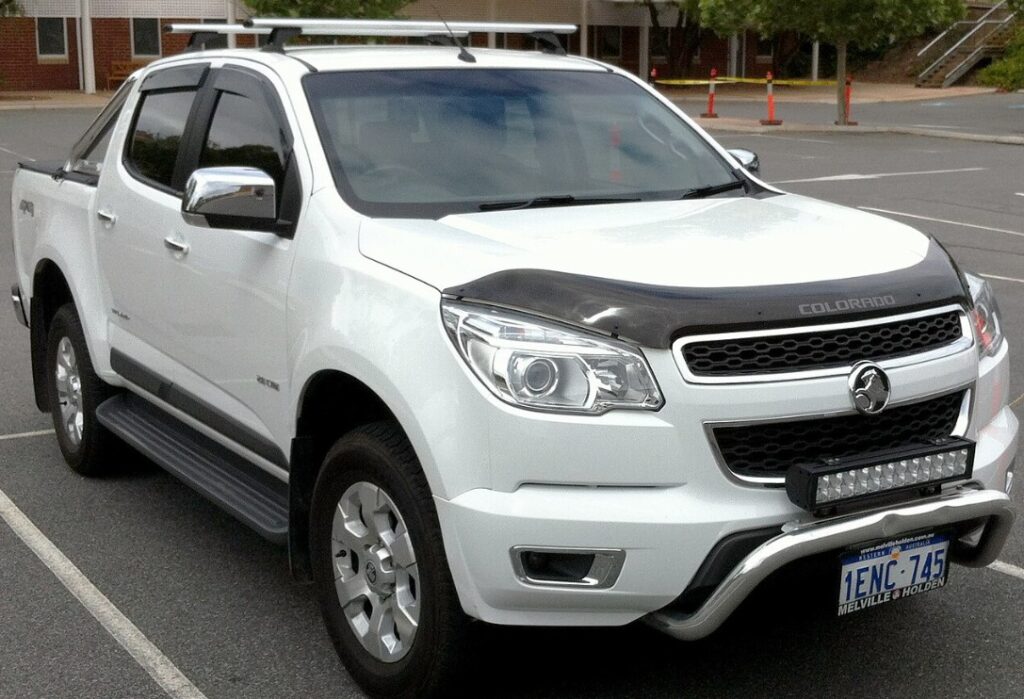
When a Holden Colorado 4WD is not engaging, it can turn a capable ute into something that suddenly feels far less confident. We rotate the selector from 2H to 4H, expect the four-wheel-drive system to wake up, and… nothing happens. Maybe the 4WD light flashes. Maybe it stays off. Maybe the dashboard says the system has selected four-wheel drive even though the front wheels clearly have other ideas.
It is frustrating, but it does not automatically mean the transfer case has suffered a catastrophic failure.
The Colorado's four-wheel-drive system relies on several components working together: electrical switches, control modules, wiring, sensors, actuators, the transfer case, and the front axle engagement mechanism. One weak link can stop the entire chain.
In this guide, we'll work through the most likely reasons a Holden Colorado 4WD won't engage, what the symptoms can tell us, what we can inspect ourselves, and when it makes sense to hand the problem to a workshop.
Content in this publication
- How the Holden Colorado 4WD System Works
- Common Signs That the 4WD Is Not Engaging
- Why Is My Holden Colorado 4WD Not Engaging?
- 5. Damaged Wiring or Electrical Connectors
- 6. Blown Fuse or Power Supply Issue
- 7. Low Battery Voltage
- Holden Colorado 4WD Light Flashing but Not Engaging
- Holden Colorado Will Not Shift From 2H to 4H
- Holden Colorado 4L Not Engaging
- Could the Transfer Case Be the Problem?
- Can Old or Low Transfer Case Fluid Stop 4WD Engagement?
- Can Mud or Water Cause a Colorado 4WD Fault?
- How to Diagnose a Holden Colorado 4WD That Won't Engage
- Why a Scan Tool Is So Valuable
- Can Disconnecting the Battery Reset the 4WD System?
- Could a 4WD Control Module Be Faulty?
- Mechanical Binding and Driveline Wind-Up
- Is It Safe to Drive With the 4WD Not Working?
- What If the Colorado Is Stuck in 4WD?
- Does Tyre Size Affect 4WD Operation?
- DIY Fix or Mechanic?
- Common Mistakes When Troubleshooting Holden Colorado 4WD Problems
- A Practical Holden Colorado 4WD Troubleshooting Checklist
- Preventing Future 4WD Engagement Problems
- How Much Can a Holden Colorado 4WD Repair Cost?
- Can You Keep Driving If 4H Won't Engage?
- Final Thoughts on Holden Colorado 4WD Not Engaging
- Frequently Asked Questions
How the Holden Colorado 4WD System Works
Before chasing faults, it helps to understand what happens when we turn the 4WD selector.
On four-wheel-drive Colorado models, the driver normally chooses between modes such as 2H, 4H, and 4L. Depending on the model year and specification, the switch communicates electronically with a transfer-case control system rather than mechanically moving a lever.
Select 4H and the system effectively has to complete a short conversation:
- The selector sends a request.
- The control module checks operating conditions.
- The transfer-case actuator moves to the requested position.
- The front driveline becomes engaged.
- Position sensors confirm the change.
- The dashboard indicator shows that 4WD is active.
If one part of that conversation goes silent, the system may refuse to complete the shift.
Think of it like a relay race. The transfer case can be perfectly healthy, but if the first runner never passes the baton, nobody crosses the finish line.
Common Signs That the 4WD Is Not Engaging
Not every Colorado behaves the same way when the four-wheel-drive system develops a fault.
We may notice:
- A flashing 4WD indicator.
- No 4WD light when the selector is turned.
- The indicator remains on 2H.
- A "Service 4WD" or similar warning.
- 4H appears selected but the front wheels do not drive.
- 4L refuses to engage.
- Clicking underneath the vehicle without engagement.
- No actuator sound at all.
- The system engages intermittently.
- 4WD works when cold but stops after driving.
- The vehicle becomes stuck in 4H or 4L.
Each symptom points us in a slightly different direction.
Why Is My Holden Colorado 4WD Not Engaging?
There is no single universal culprit. In practice, electrical and actuator-related faults are often worth investigating before assuming expensive internal transfer-case damage.
1. Faulty 4WD Selector Switch
The dashboard selector is the driver's command centre.
We turn it and expect the vehicle to obey, but switches wear internally. Contacts can become inconsistent, resistance can change, and the switch may stop sending a reliable signal.
A failing selector might cause the system to work one moment and ignore us the next.
Signs of a Selector Switch Problem
Possible clues include:
- No response when changing modes.
- Intermittent operation.
- Indicator lights behaving unpredictably.
- 4WD working after repeatedly rotating the selector.
- No obvious mechanical noise from the transfer case.
Replacing switches blindly is not ideal, though. We should first confirm that the control module actually receives the selected mode.
2. Transfer Case Actuator Failure
The transfer-case actuator is one of the most important components in an electronically controlled four-wheel-drive system.
Its job is straightforward on paper: move the transfer case into the commanded position.
In reality, the actuator contains moving parts and electrical components that can wear, seize, or fail.
If the actuator cannot move far enough, the control module may keep waiting for confirmation. That is when we often see the 4WD lamp flashing rather than becoming steadily illuminated.
3. Transfer Case Position Sensor Problem
The system needs to know where the transfer case actually is.
That is where position sensing becomes important.
Suppose the actuator successfully moves the mechanism into 4H but the position signal never confirms it. The control module sees conflicting information and may treat the shift as unsuccessful.
The result can feel strangely theatrical: the machinery has moved, yet the dashboard keeps blinking as if it is still thinking about it.
4. Front Axle Engagement Fault
Selecting 4WD involves more than moving something inside the transfer case.
The front axle or associated engagement mechanism also needs to transmit torque properly. A fault here can create one of the more confusing symptoms: the vehicle indicates 4WD, but the front axle provides little or no drive.
If the transfer case engages while the front axle does not, drivers may mistakenly assume that the entire four-wheel-drive system is dead.
5. Damaged Wiring or Electrical Connectors
Four-wheel-drive vehicles live a hard life underneath.
Water, mud, dust, vibration, heat, road salt in some markets, and off-road debris all have opportunities to attack electrical connections.
A damaged wire can stop communication between components even though every expensive mechanical part is still perfectly serviceable.
Areas Worth Inspecting
Pay particular attention to wiring around:
- The transfer case.
- Transfer-case actuator.
- Front axle components.
- Chassis harness connectors.
- Ground points.
- Areas exposed to stones or off-road impacts.
We are looking for corrosion, broken insulation, pulled wires, loose plugs, moisture, and greenish deposits inside connectors.
A five-cent electrical contact problem can imitate a thousand-dollar mechanical one.
6. Blown Fuse or Power Supply Issue
Before crawling under the ute with a multimeter, check the basics.
Electronic 4WD systems need a stable supply of electrical power. A blown fuse, poor relay connection, weak ground, or low system voltage can stop engagement.
Owners occasionally skip this stage because it feels too simple.
But simple faults deserve to be ruled out first precisely because they are simple.
Check the owner's manual or fuse-box identification for circuits associated with the drivetrain, transfer case, four-wheel drive, or relevant control module.
Do not simply replace a repeatedly blowing fuse and continue driving. A fuse that fails again is telling us there may be an electrical short or overloaded circuit.
7. Low Battery Voltage
A weak battery can cause surprisingly strange electronic behaviour.
The engine might still crank and start, yet voltage may drop enough to upset control modules or actuators.
Modern vehicles are much less tolerant of marginal electrical systems than old mechanical 4WDs.
If several seemingly unrelated electrical symptoms appear at the same time, battery voltage and charging-system condition deserve attention.
When Battery Voltage Becomes Suspicious
Look for:
- Slow starting.
- Dashboard warnings appearing randomly.
- 4WD faults after cold starts.
- Systems resetting unexpectedly.
- A battery several years old.
- Recent jump-starting.
Test the battery properly rather than judging it solely by whether the engine starts.
Holden Colorado 4WD Light Flashing but Not Engaging
A flashing four-wheel-drive light usually means the system is attempting a shift but has not received the confirmation it expects.
That distinction matters.
A completely dead system suggests we investigate power, switches, fuses, wiring, or control communication first. A continuously flashing light suggests that a command may have been received but the shift sequence cannot finish.
Possible causes include:
- Transfer-case actuator trouble.
- Position sensor mismatch.
- Front axle engagement issue.
- Mechanical binding.
- Wiring or connector faults.
- Incorrect conditions for selecting 4L.
Should the 4WD Light Flash Briefly?
A brief flash during a transition may be normal while the mechanism changes position.
The concern begins when the lamp continues flashing and never settles into a steady indication.
If it flashes for an extended period, avoid repeatedly twisting the selector back and forth in frustration. That can complicate diagnosis and may repeatedly load an already struggling actuator.
Holden Colorado Will Not Shift From 2H to 4H
If the ute stays stubbornly in 2H, begin with operating conditions.
Depending on the system and driving situation, shifting into 4H may require us to maintain an appropriate speed and keep drivetrain loads low.
Try driving straight ahead at low speed and easing off the accelerator while selecting the desired mode.
If it still refuses to engage, the fault is probably more than simple driveline tension.
What If 4H Engages Only Sometimes?
Intermittent faults often scream "electrical" or "position-related."
Temperature, vibration, moisture, and vehicle movement can temporarily restore a poor connection.
If 4WD engages after hitting a bump, after restarting the vehicle, or after repeatedly operating the selector, do not celebrate too quickly. Intermittent operation can be harder to diagnose precisely because the system behaves normally when we finally show it to a mechanic.
Record exactly when it fails.
Holden Colorado 4L Not Engaging
Four-low is different from ordinary 4H operation.
The system typically requires specific conditions before allowing low range because engaging reduction gearing incorrectly could damage the driveline.
Check the Correct 4L Selection Procedure
Depending on the Colorado version, low-range selection may require:
- The vehicle to be stationary or moving extremely slowly.
- The transmission in Neutral.
- The brake pedal applied.
- Minimal drivetrain load.
If 4H works normally but 4L does not, make sure we are following the correct procedure before diagnosing a fault.
If 4H Works but 4L Still Doesn't
Then the investigation becomes more specific.
Potential issues include:
- Selector input problems.
- Transfer-case actuator travel limitations.
- Position sensor faults.
- Internal transfer-case binding.
- Control-module errors.
- Transmission range information not being recognised.
A scan tool becomes particularly useful here.
Could the Transfer Case Be the Problem?
Yes, but we should avoid immediately blaming the complete transfer case.
Internal transfer-case faults can occur. Bearings, gears, chains, shafts, forks, and other components experience wear over time, particularly in vehicles used heavily for towing or off-road driving.
Yet internal failure normally produces additional clues.
We might hear:
- Grinding.
- Clunking.
- Whining.
- Repeated mechanical clicking.
- Harsh engagement.
- Noise that changes between 2H and 4H.
If the system is completely silent and simply ignores the selector, electrical diagnosis often deserves priority.
Can Old or Low Transfer Case Fluid Stop 4WD Engagement?
Fluid condition can contribute to driveline problems, although low fluid does not usually explain every electronic engagement failure by itself.
The transfer case depends on lubrication. If fluid becomes severely degraded or the level drops because of a leak, internal components can wear or bind.
Check underneath for leakage around seals and the transfer-case housing.
Why Fluid History Matters
A Colorado that has spent years towing caravans, carrying heavy loads, crossing water, or working off-road asks considerably more of its drivetrain than one that spends its life commuting.
Maintenance schedules are not merely paperwork.
Fresh, correctly specified fluids are cheap compared with transfer-case repairs.
Can Mud or Water Cause a Colorado 4WD Fault?
Absolutely.
If the problem started immediately after deep mud, water crossings, or pressure washing underneath the vehicle, that timing matters.
Moisture can enter connectors. Mud can pack around moving parts. Off-road debris can damage wiring.
After a Water Crossing
We should inspect:
- Electrical plugs around the transfer case.
- Exposed wiring.
- Breathers.
- Fluid contamination where relevant.
- Front axle connections.
Water damage may not appear instantly. Corrosion can develop gradually and create faults weeks or months later.
How to Diagnose a Holden Colorado 4WD That Won't Engage
Instead of replacing components randomly, approach diagnosis logically.
Step 1: Confirm Exactly What the Vehicle Is Doing
Ask several basic questions.
Does the light flash?
Does it stay off?
Can we hear an actuator?
Does 4H fail but 4L work?
Does the problem occur only when hot?
Does it engage after restarting?
The pattern matters.
Step 2: Check the Operating Procedure
Before assuming a defect, make sure the requested mode is being selected under suitable conditions.
Pay particular attention to 4L.
Step 3: Inspect the Fuses
Check relevant fuses visually and preferably electrically.
A fuse can sometimes look intact while failing to provide reliable continuity.
Step 4: Check Battery Condition
Measure battery voltage and confirm the charging system operates correctly.
A marginal electrical supply can create misleading symptoms.
Step 5: Inspect Wiring and Connectors
Look underneath carefully.
A loose connector is far cheaper to repair than a transfer case, so we want to find that problem before ordering parts.
Step 6: Scan the Vehicle for Fault Codes
This is where diagnosis becomes much more efficient.
A capable scan tool can communicate with drivetrain-related modules rather than only reading generic engine codes.
Fault codes may point toward:
- Actuator circuits.
- Position sensors.
- Communication errors.
- Switch inputs.
- Voltage faults.
- Transfer-case control problems.
Do not assume that a basic inexpensive OBD reader can see everything. Many simple scanners mainly access powertrain emissions information.
Why a Scan Tool Is So Valuable
Without live diagnostic data, we are partly guessing.
A proper scanner can sometimes show the requested transfer-case position and the actual reported position simultaneously.
Imagine seeing:
Requested mode: 4H
Actual position: 2H
Now we know the switch command reached the system, but the shift did not complete.
That dramatically narrows the investigation.
Alternatively:
Requested mode: 2H, even though we have selected 4H.
Now suspicion moves toward the selector or its circuit.
Good diagnostic data turns a foggy mystery into a much smaller puzzle.
Can Disconnecting the Battery Reset the 4WD System?
Sometimes disconnecting power appears to restore operation temporarily, but that does not necessarily mean the problem is fixed.
A reset can clear temporary module states. If an intermittent actuator, sensor, or wiring problem remains, the fault usually returns.
We should therefore treat a battery reset as diagnostic information rather than a cure.
If the 4WD starts working after power is restored, note that behaviour and investigate further.
Could a 4WD Control Module Be Faulty?
Yes, although a module should not be condemned simply because the system displays a fault.
Control modules are often blamed too early.
They depend on good power, good ground, valid sensor inputs, functional actuators, and reliable network communication. If any of those disappear, the module may only be reporting somebody else's problem.
Before replacing a control unit, verify:
- Power supply.
- Ground integrity.
- Wiring continuity.
- Connector condition.
- Input signals.
- Actuator operation.
- Relevant fault codes.
Modules are expensive diagnostic guesses.
Mechanical Binding and Driveline Wind-Up
Sometimes a system struggles to disengage or change modes because torque is trapped through the drivetrain.
This can happen when four-wheel drive has been used on a high-grip surface.
Traditional part-time 4WD systems generally should not be driven in locked four-wheel-drive modes on dry pavement unless the manufacturer's system specifically allows it.
Why?
The front and rear axles travel slightly different distances when turning. On loose dirt, tyres can slip enough to release that difference. On dry asphalt, the drivetrain may wind itself up like a tightly twisted spring.
Signs of Driveline Wind-Up
We may notice:
- Heavy steering.
- Tyre scrubbing.
- Jerking while turning.
- Difficulty returning to 2H.
- Tension or clunking in the driveline.
Moving slowly on a loose surface and reducing drivetrain load may allow the system to release.
Is It Safe to Drive With the 4WD Not Working?
That depends on the failure.
If the vehicle operates normally in 2H, makes no unusual noises, and displays no serious drivetrain warning, it may still be usable on ordinary roads until repairs can be arranged.
But we should not rely on it for conditions where four-wheel drive is essential.
That means avoiding situations such as:
- Deep sand.
- Mud.
- Steep off-road climbs.
- Remote tracks.
- Slippery boat ramps.
- Locations where becoming stuck could create a safety risk.
If the transfer case is grinding, clunking, leaking heavily, or stuck between ranges, stop driving until the problem is assessed.
What If the Colorado Is Stuck in 4WD?
A vehicle that refuses to leave 4H or 4L needs slightly different attention.
Start by reducing driveline tension.
Drive slowly and straight on a suitable loose surface if safe to do so. Ease off the accelerator and attempt the shift again using the proper procedure.
If the vehicle remains in four-wheel drive, an actuator or position problem becomes more likely.
Driving a part-time four-wheel-drive system on high-grip pavement for extended periods can place unnecessary stress on the drivetrain.
Does Tyre Size Affect 4WD Operation?
Tyres are easy to overlook.
All four tyres should be appropriately matched in size and overall rolling circumference. Significant differences can create drivetrain stress and may interfere with systems that compare wheel-speed information.
This does not mean that every 4WD engagement failure comes from tyres, of course.
But if the problem appeared after fitting mismatched tyres or replacing only one tyre with a noticeably different diameter, it deserves attention.
DIY Fix or Mechanic?
Some checks are perfectly reasonable for a confident owner.
Tasks We Can Usually Inspect Ourselves
We may safely check:
- Fuses.
- Battery condition.
- Visible connectors.
- Obvious wiring damage.
- Transfer-case leaks.
- Correct selector procedure.
- Tyre matching.
- Basic fault codes with suitable equipment.
When Professional Diagnosis Makes More Sense
Consider a 4WD specialist or experienced mechanic if:
- The transfer case makes mechanical noise.
- 4WD remains stuck.
- The system repeatedly blows a fuse.
- Wiring needs electrical testing.
- Actuator calibration is required.
- Internal transfer-case damage is suspected.
- Diagnostic codes require advanced testing.
- The system behaves differently under load.
Guessing with expensive components rarely saves money.
Common Mistakes When Troubleshooting Holden Colorado 4WD Problems
When four-wheel drive refuses to cooperate, frustration encourages shortcuts.
Avoid these common traps.
Replacing the Actuator Without Testing It
An actuator may be guilty, but so might the wiring feeding it.
Assuming the Dashboard Switch Is the Problem
The switch is easy to replace, so it becomes an attractive suspect. Easy does not equal correct.
Ignoring Battery Voltage
Low voltage can make electronic systems behave erratically.
Buying a Transfer Case Too Soon
A complete transfer-case replacement is one of the most expensive ways to discover that the original fault was electrical.
Repeatedly Forcing the Selector
Rapidly switching between modes rarely persuades a failed component to recover permanently.
A Practical Holden Colorado 4WD Troubleshooting Checklist
If our Holden Colorado 4WD is not engaging, this order makes sense:
- Confirm whether 4H, 4L, or both are affected.
- Watch the dashboard 4WD indicator.
- Listen for actuator movement.
- Make sure the correct engagement procedure is being used.
- Check battery condition.
- Inspect relevant fuses.
- Inspect visible wiring and connectors.
- Look for water, mud, or corrosion.
- Check for transfer-case fluid leaks.
- Confirm all four tyres are appropriately matched.
- Scan the relevant control modules.
- Compare requested and actual transfer-case positions if live data is available.
- Test actuator circuits before replacing components.
- Investigate mechanical transfer-case faults only after basic electrical causes have been ruled out.
Following a sequence saves us from throwing parts at the vehicle like darts at a board.
Preventing Future 4WD Engagement Problems
We cannot prevent every electrical or mechanical failure, but good habits reduce the odds.
Use the 4WD System Periodically
A system that never operates can still deteriorate.
Where appropriate, periodically cycle through the available modes according to the owner's manual. Components generally benefit from being exercised.
Keep the Underside Clean
After mud or sand driving, clean the underside carefully.
Do not blast electrical connectors at point-blank range with high-pressure water.
Inspect After Serious Off-Road Trips
Branches, rocks, and mud can damage wiring without us noticing from the driver's seat.
Maintain Drivetrain Fluids
Use the correct specification and appropriate service intervals.
Don't Ignore Small Symptoms
A 4WD light that flashes once every few months may be the opening chapter of a larger fault.
Intermittent problems rarely become cheaper when ignored.
How Much Can a Holden Colorado 4WD Repair Cost?
Costs vary enormously because "4WD not engaging" describes a symptom, not a single repair.
At the inexpensive end, we could be dealing with:
- A fuse.
- Dirty electrical contacts.
- A loose plug.
- Minor wiring damage.
- A selector switch.
Further up the scale:
- Transfer-case actuator.
- Position sensor.
- Wiring harness repair.
- Control-module diagnosis or replacement.
At the expensive end:
- Internal transfer-case repairs.
- Major driveline damage.
- Complete transfer-case replacement.
This is why proper diagnosis pays for itself.
Spending money to identify the problem can feel annoying, but replacing three healthy components before finding the fourth one was faulty feels much worse.
Can You Keep Driving If 4H Won't Engage?
For normal sealed-road driving in 2H, often yes, provided the vehicle has no unusual noises or other serious symptoms.
But remember what has been lost.
If we are heading toward a beach, muddy paddock, remote trail, snow, or difficult boat ramp, the absence of four-wheel drive changes the risk considerably.
A ute that drives perfectly to the trailhead can become a two-tonne paperweight once the surface turns slippery.
Repair the problem before relying on the vehicle in demanding terrain.
Final Thoughts on Holden Colorado 4WD Not Engaging
A Holden Colorado 4WD not engaging can be caused by anything from a minor electrical connection to an actuator or internal transfer-case fault. The trick is not to jump straight toward the most dramatic possibility.
Start small.
Confirm the engagement procedure. Watch the indicator. Listen for actuator activity. Check power and fuses. Inspect wiring. Scan the relevant modules. Only then should we begin blaming expensive mechanical components.
The four-wheel-drive system is a chain of electrical commands and mechanical actions. When we identify exactly where that chain breaks, the repair usually becomes far less mysterious.
And that is ultimately the goal: not merely to replace something, but to replace the right thing.
Frequently Asked Questions
1. Why is my Holden Colorado 4WD light flashing but not engaging?
A continuously flashing 4WD light can mean the system has received the request to change modes but cannot confirm completion. Possible causes include a transfer-case actuator problem, position sensor fault, front axle engagement issue, damaged wiring, or mechanical binding. Diagnostic fault codes and live transfer-case position data can help narrow down the cause.
2. Why won't my Holden Colorado shift from 2H to 4H?
Check that the vehicle is being operated under suitable conditions and reduce drivetrain load while selecting 4H. If it still refuses to engage, inspect the selector switch, fuses, battery condition, electrical connectors, transfer-case actuator, and position sensing system.
3. Why does my Holden Colorado engage 4H but not 4L?
Low range normally has stricter engagement requirements than 4H. Make sure the correct procedure is being followed, which may include stopping or nearly stopping the vehicle, selecting Neutral, and applying the brake. If the procedure is correct, actuator travel, sensor signals, control inputs, or internal transfer-case problems may need diagnosis.
4. Can a bad battery cause the Holden Colorado 4WD to stop working?
Yes. Low or unstable voltage can interfere with electronic control modules and actuators. The engine may still start while battery voltage is marginal enough to create unusual electronic faults, so battery and charging-system tests are worthwhile when 4WD problems appear alongside other electrical symptoms.
5. Can I drive my Holden Colorado if the 4WD won't engage?
If the vehicle operates normally in 2H without unusual noises, major leaks, or serious drivetrain warnings, ordinary road driving may still be possible. However, avoid terrain where four-wheel drive is necessary. If the transfer case makes grinding noises, becomes stuck between modes, or the vehicle behaves abnormally, have it inspected before continuing to drive.
If you want to know other articles similar to Holden Colorado 4WD Not Engaging: Causes, Checks, and Fixes you can visit the category Common Problems.
Nissan Rogue AC Not Working? Causes, Diagnosis, and Fixes

Kia Sorento Issues: Common Problems, Reliability and What to Watch For

Honda Passport Not Starting: Causes, Symptoms, and How to Fix It
Honda Passport Keyless Remote Battery Low: What It Means and How to Fix It
Nissan Rogue Apple CarPlay Not Working: Causes and Fixes
Nissan Rogue No Key Detected: Causes, Fixes, and What to Do
Leave a Reply
More content of your interest