

Ram 1500 Maintenance Schedule: Complete Service Guide

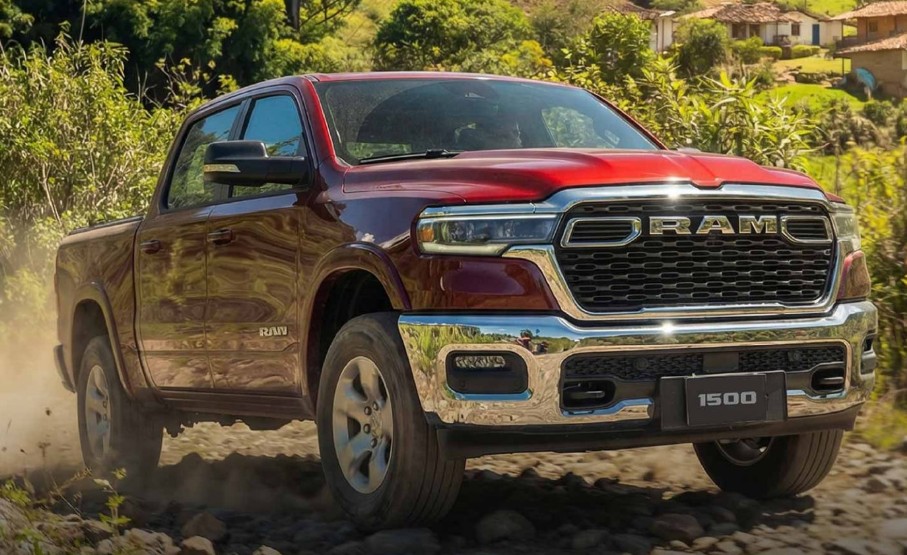
A Ram 1500 can spend its life doing almost anything. One truck may cruise quietly to an office every morning, while another pulls a travel trailer across mountain passes, crawls through muddy job sites, or sits idling for hours. That is exactly why a good Ram 1500 maintenance schedule is more than a list of mileage numbers. It is a roadmap that needs to match how we actually use the truck.
Ram's maintenance requirements have also changed over the years as engines, electronics, oil-monitoring systems, and drivetrains have evolved. A newer Ram 1500 with the 3.0L Hurricane engine does not necessarily follow every detail that applied to an older HEMI-powered truck. For that reason, we should always treat the owner's manual for our exact model year and engine as the final authority.
For a useful modern reference point, the 2025 Ram 1500 gasoline maintenance plan uses an automatic oil-life monitoring system and establishes several key inspection and replacement milestones between 10,000 and 150,000 miles. Ram also warns that severe use can require more frequent maintenance.
So, what should we service, when should we do it, and which maintenance items deserve the most attention? Let's break it down without turning the owner's manual into alphabet soup.
Content in this publication
- How the Ram 1500 Maintenance Schedule Works
- Ram 1500 Maintenance Schedule at a Glance
- Before 10,000 Miles: Establish Good Maintenance Habits
- What Happens at Every Ram 1500 Oil Change?
- 10,000-Mile Ram 1500 Maintenance
- 12,000-Mile Maintenance: Cabin Air Filter
- 20,000-Mile Ram 1500 Maintenance
- 30,000-Mile Ram 1500 Maintenance
- 40,000 to 50,000 Miles: Don't Fall Into the Maintenance Gap
- 60,000-Mile Ram 1500 Maintenance
- 75,000-Mile Ram 1500 Maintenance
- 100,000-Mile Ram 1500 Service
- 120,000-Mile Ram 1500 Maintenance
- 150,000-Mile Ram 1500 Maintenance
- Ram 1500 Maintenance Schedule for Frequent Towing
- Ram 1500 Severe-Service Maintenance
- Monthly Ram 1500 Maintenance Checklist
- How Often Should We Change Ram 1500 Oil?
- What About Transmission Fluid?
- Ram 1500 Maintenance Cost: What Should We Budget For?
- Dealer Maintenance vs Independent Mechanic
- How to Maintain a Used Ram 1500 With No Service Records
- Common Ram 1500 Maintenance Mistakes
- How to Make a Ram 1500 Last Longer
- Is the Ram 1500 Expensive to Maintain?
- Ram 1500 Maintenance Schedule by Mileage: Simple Reference
- Final Thoughts on the Ram 1500 Maintenance Schedule
- Frequently Asked Questions
How the Ram 1500 Maintenance Schedule Works
Modern Ram 1500 maintenance is not based exclusively on one fixed mileage interval. Instead, several systems work together.
Oil changes are largely controlled by the truck's oil change indicator system, which considers operating conditions rather than simply counting miles. In the 2025 Ram 1500, Ram specifies that oil-change intervals must not exceed 10,000 miles (16,000 km), 12 months, or 350 engine hours, whichever occurs first.
That maximum matters.
If the dashboard requests an oil change after 6,500 miles because we've spent months towing through summer heat, we shouldn't wait until 10,000 miles simply because someone online told us that was the interval. The truck is effectively saying, "I've had a rough few months."
Other maintenance items are mileage-based. Filters, suspension components, brakes, transfer-case fluid, spark plugs, coolant, and driveline components have their own inspection or replacement points.
Mileage Is Only Part of the Story
Suppose two Ram 1500s both have 40,000 miles.
Truck A spent most of those miles cruising interstate highways.
Truck B pulled landscaping equipment, idled at job sites, drove through dirt roads, and made five-mile trips in freezing weather.
Same odometer. Completely different life.
Ram specifically notes that frequent short trips, trailer towing, dusty environments, and extreme temperatures can influence maintenance needs. More frequent servicing may therefore be necessary under severe conditions.
That distinction is one of the most important things we can understand about truck maintenance.
Ram 1500 Maintenance Schedule at a Glance
Using the modern gasoline Ram 1500 schedule as our framework, these are the major milestones worth remembering. Exact requirements should still be confirmed against the owner's manual for our particular model year.
- Every month or before a long trip: Check engine oil, lights, battery connections, brakes, steering and suspension, washer system, tire pressure, and coolant level.
- Whenever the oil-life system calls for service: Change engine oil and filter and complete several related inspections.
- Every 10,000 miles: Certain driveline inspections begin, although Ram notes the first applicable inspection occurs at 20,000 miles on the referenced 2025 schedule.
- Every 12,000 miles: Inspect the cabin air filter and replace it if necessary.
- Every 20,000 miles: Inspect suspension, tie-rod ends, boots, and brake linings.
- Every 30,000 miles: Replace the engine air filter and inspect axle surfaces; severe towing/off-road applications may require axle-fluid service.
- Every 60,000 miles: Inspect transfer-case fluid, with replacement required under certain severe-duty uses.
- Every 100,000 miles: Replace spark plugs and inspect or replace the PCV valve as necessary.
- Every 120,000 miles: Replace transfer-case fluid.
- At 150,000 miles or 10 years: Replace engine coolant; certain Stop/Start-equipped models also require accessory-drive-belt replacement.
That may look like a lot, but most visits involve inspections rather than replacing half the truck.
Before 10,000 Miles: Establish Good Maintenance Habits
A new Ram 1500 doesn't need to be treated like glass, but the first several thousand miles are a perfect time to establish habits that can save us money later.
Check the engine oil periodically. Pay attention to tire pressure. Listen for unusual noises. Look underneath the truck occasionally for fresh fluid spots.
Ram says a long engine and drivetrain break-in period is not required on the 2025 model, although it recommends moderate driving during the first 300 miles and notes that some oil consumption during the first few thousand miles can be normal.
Don't Ignore the Oil-Life Percentage
One of the easiest mistakes is treating the oil-life monitor like a decorative gauge.
It isn't.
The system estimates when the oil needs replacement based partly on how the engine has been used. On modern gasoline Ram 1500 models, we should follow the indicator while respecting Ram's absolute maximum interval of 10,000 miles, 12 months, or 350 engine hours.
Think of 10,000 miles as the ceiling, not a target we must reach.
What Happens at Every Ram 1500 Oil Change?
An oil-change visit is a convenient health check for the whole truck.
On the referenced modern Ram maintenance plan, Ram recommends changing the engine oil and filter when indicated while also inspecting several other systems.
Engine Oil and Filter
Fresh oil reduces friction, carries contaminants into the filter, helps manage heat, and protects internal engine components.
Running oil well beyond its useful life is a little like asking someone to run a marathon wearing the same dirty socks from the previous marathon. Technically possible? Maybe. Sensible? Not particularly.
Always use the oil viscosity and specification required for the exact engine.
For example, the 2025 Ram 1500 handbook specifies full-synthetic SAE 0W-20 oil meeting the appropriate standard for the 3.0L Standard Output and 3.6L engines, while the 3.0L High Output calls for full-synthetic SAE 0W-40 meeting its specified standard.
That alone shows why we shouldn't assume every Ram 1500 takes the same oil.
Tire Rotation
Ram recommends rotating the tires when irregular wear first appears, even when that happens before the oil indicator requests service.
In everyday ownership, many of us choose to inspect rotation needs during every oil change because trucks can be surprisingly hard on tires.
Weight distribution, towing, alignment, aggressive acceleration, oversized tires, and rough roads can all affect tread wear.
Brake Inspection
Oil-change intervals are also opportunities to inspect pads, shoes, rotors, drums, and hoses.
Brake maintenance isn't something we want to discover by accident while towing downhill.
Battery and Charging System
The battery and its terminals should be inspected and cleaned or tightened when necessary.
Modern trucks depend heavily on stable voltage. What begins as a tired battery can occasionally masquerade as a collection of bizarre electrical glitches.
Cooling and Exhaust Systems
Ram also calls for checking cooling-system protection and hoses along with inspecting the exhaust system at oil-service intervals.
Small coolant leaks are much cheaper when they're still small.
10,000-Mile Ram 1500 Maintenance
The 10,000-mile point is less dramatic than many owners expect because the oil-life monitor may have already triggered an oil change earlier.
For the 2025 gasoline schedule, Ram identifies CV/universal-joint inspection on a 10,000-mile cycle but notes that the first interval for those listed items occurs at 20,000 miles. Severe dusty operation also deserves attention to the evaporative-system fresh-air filter.
What Should We Personally Check?
Even when nothing requires replacement, this is a smart time to examine:
Tire tread wear, fluid leaks, wiper condition, brake feel, steering behavior, suspension noises, lights, and fluid levels.
Maintenance isn't just replacing parts. A large portion of good maintenance is simply catching deterioration before it becomes failure.
12,000-Mile Maintenance: Cabin Air Filter
At 12,000 miles (19,000 km), Ram calls for inspection of the cabin air filter and replacement when necessary on the referenced 2025 schedule.
A dirty cabin filter won't usually destroy the truck, but it can reduce HVAC airflow and allow more dust and debris into the cabin.
Drivers in dusty environments may need replacement sooner.
If the air conditioning suddenly feels like it's breathing through a pillow, the cabin filter is an easy place to start.
20,000-Mile Ram 1500 Maintenance
By approximately 20,000 miles, inspection becomes more focused on mechanical wear.
Ram specifies inspection of the front suspension, tie-rod ends, and boot seals, with replacement as necessary. Brake linings should also be inspected.
Why Suspension Inspection Matters
A pickup truck suspension works hard.
Potholes, payload, curb strikes, washboard roads, towing weight, and aftermarket wheels can accelerate wear.
Signs something needs attention may include:
Uneven tire wear, wandering steering, clunks over bumps, vibration, loose steering feel, or the truck pulling to one side.
Don't wait for a ball joint or tie-rod end to become dramatically loose before investigating.
30,000-Mile Ram 1500 Maintenance
Thirty thousand miles is one of the first larger maintenance milestones.
Ram specifies replacement of the engine air cleaner filter at this interval on the 2025 gasoline maintenance plan. It also calls for inspection of the front and rear axle surfaces, checking fluid level if leakage is suspected.
Engine Air Filter Replacement
The air filter is the engine's front door.
A clean filter allows the engine to breathe while blocking contaminants. A badly clogged filter can restrict airflow, while a damaged or improperly installed one can allow dirt into the intake system.
Ram notes that vehicles operated in dusty or off-road environments should have the air cleaner inspected more frequently and replaced as necessary.
Towing and Severe-Duty Axle Service
Here's where truck use really matters.
For vehicles used for police, taxi, fleet, off-road duty, or frequent trailer towing, the referenced Ram schedule specifies changing axle fluid at the 30,000-mile inspection point.
A truck that spends weekends towing an enclosed equipment trailer may therefore need a different maintenance routine from one that carries groceries.
40,000 to 50,000 Miles: Don't Fall Into the Maintenance Gap
There isn't always a dramatic manufacturer replacement milestone around 40,000 or 50,000 miles, and that's exactly why owners sometimes become complacent.
We should continue following the oil-life monitor and recurring inspections.
This is also an excellent mileage range for checking tire age, brake thickness, wheel alignment, battery health, suspension wear, fluid seepage, and cooling-system condition.
If we're buying a used Ram with around 50,000 miles, maintenance records matter tremendously.
A sparkling dashboard doesn't tell us whether the previous owner changed oil on time.
60,000-Mile Ram 1500 Maintenance
At 60,000 miles (96,000 km), Ram calls for inspection of the transfer-case fluid on the referenced gasoline maintenance plan. The fluid should be changed at this stage for certain severe applications, including police, taxi, fleet, and frequent trailer-towing use.
Why the Transfer Case Deserves Attention
On four-wheel-drive Rams, the transfer case distributes torque between the axles.
Its fluid spends years dealing with heat, loads, rotating components, and contamination.
Owners sometimes focus obsessively on engine oil while ignoring every other lubricant underneath the truck.
That's like maintaining the kitchen perfectly while never looking at the roof.
75,000-Mile Ram 1500 Maintenance
Around 75,000 miles, the truck is entering middle age rather than old age.
If the maintenance history is solid, this shouldn't be a frightening number.
Continue scheduled oil changes and recurring inspections while paying closer attention to components whose condition depends heavily on environment and use:
Belts, hoses, brakes, suspension, tires, battery condition, driveshaft joints, seals, differential leakage, and cooling-system hoses.
Trucks used in salted winter climates deserve extra attention underneath because corrosion can change the maintenance story dramatically.
100,000-Mile Ram 1500 Service
One hundred thousand miles sounds like a major psychological milestone because we've spent decades treating six digits as some kind of automotive finish line.
Modern trucks can go far beyond it when properly maintained.
On the 2025 gasoline Ram 1500 schedule, spark plugs are replaced at 100,000 miles (160,000 km). Ram also calls for replacement of the PCV valve if necessary. The spark-plug interval is mileage-based rather than time-based.
Spark Plug Replacement
Worn spark plugs can contribute to poor starting, rough operation, misfires, reduced performance, and inefficient combustion.
Replacing them at the correct interval helps restore a strong, consistent spark.
Don't assume the plug interval from another Ram engine applies to yours. Older engines and different configurations may use different schedules.
PCV System Inspection
The positive crankcase ventilation system manages crankcase vapors.
It's not a glamorous component, but neither is plumbing until the plumbing stops working.
At high mileage, seemingly insignificant maintenance items can have outsized consequences.
120,000-Mile Ram 1500 Maintenance
At 120,000 miles (192,000 km), the 2025 gasoline schedule specifies changing the transfer-case fluid.
This applies regardless of the earlier severe-duty transfer-case service requirements.
By this mileage, we should also be paying attention to overall mechanical condition rather than blindly replacing parts based on age.
A properly inspected 120,000-mile Ram can be in better condition than a neglected 60,000-mile truck.
Maintenance history beats odometer psychology.
150,000-Mile Ram 1500 Maintenance
This is one of the largest scheduled-service milestones.
The referenced modern Ram maintenance plan specifies flushing and replacing engine coolant at 150,000 miles (240,000 km) or 10 years, whichever comes first. Stop/Start-equipped vehicles covered by the schedule also receive an OEM-grade accessory-drive-belt replacement at this mileage.
Coolant Replacement
Coolant does more than prevent freezing.
It transfers heat, resists corrosion, protects internal cooling passages, and helps the engine maintain a stable operating temperature.
Ram specifies long-life OAT coolant on the 2025 truck, with a 10-year/150,000-mile formulation.
Mixing incompatible coolant types can create problems, so this is one area where "the bottle was the same color" isn't a good maintenance philosophy.
Accessory Drive Belt
A worn belt may crack, glaze, stretch, or deteriorate.
Depending on configuration, it drives critical accessories. If our model's schedule calls for replacement, 150,000 miles isn't the moment to suddenly decide belts are immortal.
Ram 1500 Maintenance Schedule for Frequent Towing
If we tow regularly, the standard maintenance schedule becomes the minimum framework rather than the entire plan.
Frequent towing increases loads and often increases heat in drivetrain components.
Ram's own schedule specifically calls for earlier axle-fluid and transfer-case-fluid service in frequent towing applications.
What Towing Owners Should Watch Closely
Before and after demanding towing trips, pay particular attention to brakes, tires, wheel condition, coolant, engine oil, transmission behavior, axle leakage, transfer-case condition, and hitch hardware.
Towing puts stress through the whole truck, not merely the engine.
A trailer can weigh thousands of pounds. Pretending the truck doesn't notice is optimistic at best.
Ram 1500 Severe-Service Maintenance
"Severe duty" doesn't necessarily mean crossing the Sahara with a bulldozer attached.
Routine life can qualify.
Frequent short trips, dusty environments, sustained trailer towing, commercial use, off-road driving, significant idling, and harsh temperatures can all justify closer inspection or shorter service intervals. Ram explicitly notes that severe conditions can require additional or more frequent maintenance.
Short Trips Can Be Harder Than Long Trips
This sounds backward, but constant short trips can prevent fluids and components from spending enough time at normal operating temperature.
A 200-mile highway trip may actually be gentler in certain respects than twenty separate five-mile drives.
That is why mileage alone never tells the complete story.
Monthly Ram 1500 Maintenance Checklist
We don't need to crawl underneath the truck every Saturday morning with a mechanic's creeper.
A quick monthly check can still catch plenty.
Ram recommends checking several items once a month or before a long trip, including engine-oil level, lights, battery terminals and connections, brakes and brake-fluid level, steering and suspension components, wiper/washer operation, tire pressure, and cooling-system reservoir levels.
Make those checks routine and they take minutes.
Ignore them for three years and the truck may eventually send us a much more expensive reminder.
How Often Should We Change Ram 1500 Oil?
For many newer gasoline Ram 1500 models, the best answer is:
Follow the oil-change indicator without exceeding the manufacturer's maximum interval.
For the 2025 Ram 1500, that means no more than 10,000 miles, 12 months, or 350 engine hours, whichever comes first.
But older Ram 1500 models, diesel engines, Classic models, and different engine families may have different requirements.
For instance, Ram documentation for some previous-generation diesel models specified intervals as long as 15,000 miles or six months under their applicable maintenance rules, illustrating why mixing schedules between generations can produce bad advice.
Should We Change Oil Earlier Than the Monitor Says?
Sometimes.
If we tow heavily, idle extensively, drive in extreme heat or cold, spend time off-road, or make constant short trips, a conservative interval may make sense.
What we shouldn't do is stretch beyond the manufacturer's maximum simply to save one oil change.
Oil is cheap compared with engines.
What About Transmission Fluid?
Transmission servicing generates more disagreement than almost any other maintenance topic.
The correct answer depends on model year, transmission, usage, and the manufacturer's instructions for that specific drivetrain.
We should avoid inventing a universal "change it every 60,000 miles" rule for every Ram 1500 simply because the number sounds tidy.
Instead, verify the exact transmission and consult the model-specific service information, especially if the truck tows heavily or has developed harsh shifting, shuddering, delayed engagement, overheating, or fluid leakage.
Preventive maintenance works best when it's specific rather than superstitious.
Ram 1500 Maintenance Cost: What Should We Budget For?
Maintenance costs rarely arrive evenly.
One year may involve little beyond oil changes and filters. Another may bring tires, brakes, spark plugs, fluid services, and a battery within a few months.
A sensible strategy is to create a maintenance fund rather than thinking of every repair as an emergency.
Routine items typically include engine oil and filter changes, tire rotations, air filters, cabin filters, brake service, batteries, spark plugs, coolant, driveline fluids, belts, and normal wear components.
The exact cost varies widely by location, labor rates, engine, parts choice, and whether we perform basic work ourselves.
Dealer Maintenance vs Independent Mechanic
We don't automatically need a dealership for every service item.
A qualified independent shop can handle many routine maintenance jobs perfectly well.
The important part is using correct fluids, correct parts specifications, proper procedures, and maintaining service records.
Dealership service can be particularly useful when we need manufacturer software updates, warranty diagnosis, recalls, specialized electronic work, or vehicle-specific technical expertise.
A good mechanic is worth more than a fancy waiting room.
How to Maintain a Used Ram 1500 With No Service Records
Buying a used truck with a mysterious history changes the strategy.
Don't assume everything is overdue, but don't assume it was done either.
Start with a thorough inspection.
Check engine oil condition and level, coolant, brakes, tires, battery, suspension, filters, driveline leaks, belts, hoses, and diagnostic trouble codes. Verify previous maintenance through invoices, digital records, or service history where possible.
Then compare the truck's mileage with the manufacturer's maintenance schedule.
If a 105,000-mile truck has no evidence of ever receiving its required spark plugs, that deserves attention.
The goal isn't to replace every fluid in panic. It's to establish a reliable baseline.
Common Ram 1500 Maintenance Mistakes
Most expensive maintenance mistakes aren't dramatic. They're boring decisions repeated for years.
One is ignoring the oil-life monitor.
Another is forgetting time-based maintenance because the truck doesn't accumulate many miles.
A third is treating a heavily towed truck like a lightly driven commuter.
We also see owners overlook tire pressure, run worn brake pads too long, ignore small coolant leaks, skip filter changes, install fluids that don't meet specification, or assume any warning light will disappear on its own.
Maintenance is rarely glamorous.
That's exactly why it works.
How to Make a Ram 1500 Last Longer
If we want 150,000, 200,000, or even more miles from a truck, consistency matters more than heroics.
Follow the correct maintenance schedule. Use specified fluids. Fix leaks early. Keep tires properly inflated. Don't ignore overheating. Avoid driving indefinitely with warning lights. Service the drivetrain appropriately if the truck tows. Keep records.
And pay attention to changes.
A new vibration, noise, smell, hesitation, clunk, or fluid spot is information.
Vehicles usually whisper before they shout.
Keep a Maintenance Log
A basic maintenance log can include:
Date, mileage, engine hours if relevant, oil type, filter brand, tire rotation, brake measurements, fluid services, filter changes, repairs, and upcoming maintenance.
That record becomes especially valuable after several years.
It also makes the truck easier to sell because documented maintenance tells buyers we've cared for it rather than merely washed it before taking photos.
Is the Ram 1500 Expensive to Maintain?
It depends heavily on configuration and use.
A lightly driven two-wheel-drive Ram may have relatively straightforward upkeep. A four-wheel-drive truck towing frequently has additional driveline service considerations. Larger tires can cost more. High-output engines may require different oil specifications. Luxury trims carry more electronics and powered equipment that may eventually need attention.
Yet maintenance cost and reliability are closely connected.
Skipping $200 worth of preventative service can eventually create a $2,000 repair.
Saving money and postponing maintenance are not always the same thing.
Ram 1500 Maintenance Schedule by Mileage: Simple Reference
If we want the whole guide condensed into one practical sequence, the modern gasoline schedule looks roughly like this:
Oil-life interval: Oil and filter plus routine inspections.
10,000-mile cycle: CV/universal-joint inspection schedule begins, with the first referenced inspection occurring at 20,000 miles.
12,000 miles: Cabin air-filter inspection.
20,000 miles: Front suspension, tie-rod, boot-seal, and brake-lining inspection.
30,000 miles: Engine air-filter replacement; axle inspection and severe-duty axle-fluid service where applicable.
60,000 miles: Transfer-case-fluid inspection; severe-use change where applicable.
100,000 miles: Spark plugs; PCV valve as necessary.
120,000 miles: Transfer-case-fluid replacement.
150,000 miles/10 years: Engine coolant replacement; applicable Stop/Start accessory-drive-belt replacement.
Remember, that is a useful modern reference rather than a substitute for the manual associated with our truck's VIN, model year, and engine.
Final Thoughts on the Ram 1500 Maintenance Schedule
The best Ram 1500 maintenance schedule isn't the one with the most services. It's the one we actually follow.
Modern Rams make part of the job easier through oil-life monitoring and long-life components, but that doesn't mean the truck is maintenance-free. Oil, filters, brakes, suspension components, driveline fluids, spark plugs, coolant, tires, and batteries all age in different ways.
The key is matching maintenance to reality.
If our truck lives an easy highway life, follow the normal schedule and keep an eye on condition. If it tows, works commercially, travels off-road, sits in dust, idles excessively, or survives brutal winters, give it more attention.
A well-maintained Ram doesn't need constant pampering. It needs consistency.
Treat maintenance like insurance we can actually see working, and the odometer can become something we're proud of rather than something we're afraid of.
Frequently Asked Questions
1. How often does a Ram 1500 need an oil change?
On the 2025 gasoline Ram 1500, the oil-change indicator determines the service point based on operating conditions, but Ram says the interval must never exceed 10,000 miles, 12 months, or 350 engine hours, whichever comes first. Older models and different engines can use different schedules, so verify the owner's manual for the exact truck.
2. What maintenance does a Ram 1500 need at 30,000 miles?
On the referenced 2025 gasoline maintenance plan, Ram calls for replacing the engine air cleaner filter and inspecting the front and rear axle surfaces. Trucks used for frequent towing, off-road driving, police, taxi, or fleet work may also require axle-fluid replacement.
3. When should Ram 1500 spark plugs be changed?
The 2025 gasoline Ram 1500 maintenance schedule specifies spark-plug replacement at 100,000 miles or 160,000 km. Ram notes that this interval is based on mileage rather than years. Different engines and older models may have different requirements.
4. When should Ram 1500 coolant be changed?
For the 2025 gasoline Ram 1500 schedule, Ram specifies flushing and replacing engine coolant at 150,000 miles or 10 years, whichever comes first. Always use coolant meeting the specification required for the particular model and engine.
5. Does towing change the Ram 1500 maintenance schedule?
Yes. Frequent trailer towing is treated as a more demanding use case for several drivetrain components. On the referenced schedule, frequent towing can trigger earlier axle-fluid replacement and transfer-case-fluid servicing. Trucks used heavily for towing should therefore receive closer inspections than lightly driven commuter trucks.
If you want to know other articles similar to Ram 1500 Maintenance Schedule: Complete Service Guide you can visit the category Maintenance.
Honda Passport Maintenance Codes: Complete Maintenance Minder Guide
Honda Passport Maintenance Schedule: Complete Service Guide

Nissan Rogue Maintenance Schedule: Complete Service Guide
BYD Shark 6 Service Schedule: Complete Maintenance Guide

Mitsubishi Pajero Sport Service Schedule: Complete Maintenance Guide

Toyota Hilux 80000 km Service Cost: Complete Pricing and Maintenance Guide
Leave a Reply
More content of your interest