

BYD Shark 6 Service Schedule: Complete Maintenance Guide

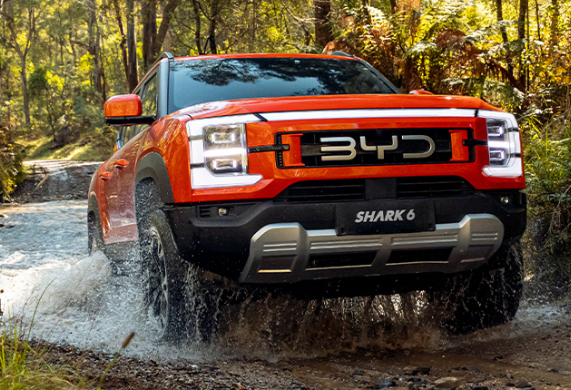
The BYD Shark 6 service schedule is a little more interesting than the maintenance plan of a conventional petrol or diesel ute. That is hardly surprising. The Shark 6 combines a turbocharged petrol engine, electric motors, a high-voltage battery, sophisticated electronics, regenerative braking, and an all-wheel-drive hybrid system in one vehicle.
In other words, we are not dealing with a simple oil-change-and-go machine.
The reassuring part is that routine servicing is relatively straightforward once we understand one important distinction: BYD tracks both total vehicle kilometres and HEV kilometres. The latter measures the distance associated with hybrid-engine operation and can affect when certain engine-related components need attention.
For this guide, we are using the Australian-market BYD Shark 6 owner's handbook and BYD Australia's current servicing information as our main references. Owners elsewhere should always check their market-specific handbook because service requirements can differ by country, model year, software update, or vehicle specification.
The Australian handbook specifies an initial maintenance visit at six months or 3,500 km of HEV mileage, whichever comes first. After that, basic vehicle maintenance generally follows a 12-month or 20,000 km total-distance interval, while engine-related servicing can operate on a 12-month or 10,000 km HEV-mileage basis.
Let's break all of that down without turning this into a mechanic's textbook.
Content in this publication
- BYD Shark 6 Service Schedule at a Glance
- Why the Shark 6 Has Two Mileage Counters
- First BYD Shark 6 Service: 6 Months or 3,500 km HEV
- Routine BYD Shark 6 Service Interval
- BYD Shark 6 Engine Oil Change Interval
- BYD Shark 6 Brake Service Schedule
- BYD Shark 6 Coolant Replacement Interval
- Drive Gear Oil and Differential Maintenance
- BYD Shark 6 Spark Plug Replacement
- Fuel Filter Service Interval
- Air Filter Replacement Schedule
- Cabin Filter and Air-Conditioning Maintenance
- High-Voltage Battery Inspection
- Tyre Rotation and Inspection
- Severe-Use BYD Shark 6 Servicing
- BYD Shark 6 Service Schedule by Year
- Is the BYD Shark 6 Expensive to Service?
- Can an Independent Workshop Service a BYD Shark 6?
- What Happens If We Miss a BYD Shark 6 Service?
- How to Keep Track of Shark 6 Maintenance
- Should We Service the Shark 6 Early?
- Which Schedule Should Owners Follow if Information Conflicts?
- BYD Shark 6 Maintenance Checklist Between Services
- Final Thoughts on the BYD Shark 6 Service Schedule
- FAQs About the BYD Shark 6 Service Schedule
BYD Shark 6 Service Schedule at a Glance
If we want the simplified version first, the schedule looks roughly like this for the Australian-market Shark 6:
| Maintenance item | Typical interval |
|---|---|
| Initial service | 6 months or 3,500 km HEV |
| General routine inspection | 12 months or 20,000 km total |
| Engine oil and filter | 12 months or 10,000 km HEV after first service |
| Brake fluid | 2 years or 40,000 km |
| Front differential oil – first change | 18 months or 23,500 km |
| Fuel filter – first interval | 18 months or 13,500 km HEV |
| Engine air filter – first interval | 18 months or 13,500 km HEV |
| Charcoal-canister dust filter | 2 years or 30,000 km |
| Front/rear drive gear oil | 4 years or 60,000 km |
| Transmission filter element | 4 years or 60,000 km |
| Engine and motor coolant | 4 years or 100,000 km |
| Spark plugs – first replacement | 42 months or 33,500 km HEV |
BYD generally applies the familiar "whichever comes first" principle, meaning low annual mileage does not allow us to ignore time-based maintenance.
That distinction matters especially for owners who charge frequently and drive primarily on electricity.
Why the Shark 6 Has Two Mileage Counters
A normal petrol vehicle has one obvious maintenance reference: odometer kilometres.
The Shark 6 is different.
Because it is a plug-in hybrid, the combustion engine does not necessarily operate whenever the vehicle moves. We might travel thousands of kilometres while relying heavily on battery power.
That means total mileage and HEV mileage aren't necessarily the same thing.
Total Mileage
Total mileage is simply the distance the vehicle has travelled.
BYD uses this figure for many chassis, suspension, brake, electrical, battery and general vehicle inspections.
For example, after the first maintenance visit, many basic inspections are scheduled every 12 months or 20,000 km total mileage.
HEV Mileage
HEV mileage is particularly important for servicing items associated with the petrol engine.
Think of it as the engine's working diary.
The ute may show 20,000 km on the odometer, but if much of that driving occurred using battery power, the combustion engine may have accumulated significantly less equivalent HEV distance.
Why This Matters for Engine Oil
After the initial maintenance, BYD specifies engine oil and oil-filter replacement every 12 months or 10,000 km HEV mileage, whichever occurs first.
So simply looking at the odometer isn't always enough.
First BYD Shark 6 Service: 6 Months or 3,500 km HEV
The initial service deserves special attention because it does not follow the later 12-month pattern.
According to the Australian Shark 6 owner's handbook, the vehicle's first maintenance should occur at:
6 months or 3,500 km HEV mileage, whichever comes first.
The initial maintenance includes general vehicle maintenance plus replacement of the engine oil and oil filter, along with checks of engine idle speed and the crankcase ventilation system.
This first visit is essentially the vehicle's early-life check-up.
During the first months of ownership, components settle, fluids circulate through a newly assembled drivetrain, software updates may become available and the workshop has an opportunity to identify anything unusual before it becomes a larger problem.
Do Not Confuse HEV Mileage With Odometer Mileage
Suppose our Shark 6 has travelled 7,000 km but only accumulated 3,000 km of HEV mileage.
The HEV threshold might not yet have been reached—but if six months have passed, the time threshold triggers the service anyway.
The reverse can also happen.
Someone doing long-distance highway trips may reach 3,500 km HEV mileage well before six months.
Then mileage wins.
Routine BYD Shark 6 Service Interval
Following the initial maintenance, the vehicle's general maintenance structure becomes easier to remember.
BYD specifies many basic vehicle inspections every:
12 months or 20,000 km total mileage, whichever comes first.
These inspections cover considerably more than just opening the bonnet and looking at fluid levels. The handbook lists checks covering brakes, suspension, steering, cooling components, high-voltage equipment, wheel components, lighting and other systems.
BYD Australia's current service guide similarly describes DM-model servicing around 20,000 km total / 10,000 km HEV or 12 months.
Typical Routine Inspection Areas
Depending on the service, technicians may inspect areas including:
- Brake pads and brake discs
- Brake pipes and hoses
- Steering components
- Front and rear suspension
- Driveshaft boots
- Wheel bearings
- Tyre condition and wear
- Cooling-system components
- High-voltage battery housing
- High-voltage wiring and connectors
- Charging equipment
- Powertrain leaks
- Vehicle diagnostic trouble codes
- Lighting systems
- Air-conditioning filtration
- Software status
Modern servicing is increasingly as much about diagnostics as spanners.
The Shark 6 is a good example. Software, battery management and electronic control systems form part of the maintenance picture alongside mechanical components.
BYD Shark 6 Engine Oil Change Interval
Plug-in hybrids can create a funny ownership habit: because we hear the petrol engine less often, we can unconsciously assume it needs little attention.
Oil still ages.
Moisture contamination, repeated cold starts, fuel dilution and time can affect engine oil even when annual engine mileage appears modest.
BYD specifies replacement of the engine oil and oil filter every 12 months or 10,000 km HEV mileage after the initial service.
Why Annual Oil Changes Still Matter
Imagine engine oil as the bloodstream of the combustion engine.
The fact that the engine sleeps more frequently doesn't mean its oil becomes immortal.
Plug-in hybrids may actually experience unusual operating patterns: short engine runs, repeated heating and cooling cycles, long periods between sustained engine operation, and sudden engine activation during demanding acceleration or low-battery driving.
Following the prescribed interval is therefore sensible rather than excessive.
BYD Shark 6 Brake Service Schedule
One advantage of electrified vehicles is regenerative braking.
When we lift off the accelerator or brake gently, the electric motors can help slow the vehicle while recovering energy.
That may reduce friction-brake wear compared with a traditional ute.
But brake fluid does not care how trendy the drivetrain is.
The Shark 6 handbook calls for brake-fluid inspection during maintenance and replacement every two years or 40,000 km.
Brake Pads and Discs
Brake pads and discs should be inspected as part of routine maintenance.
Their actual lifespan depends enormously on:
- Driving style
- Vehicle loading
- Towing
- Mountain driving
- Regenerative-braking use
- Road conditions
- Climate
Someone driving gently around town may enjoy surprisingly long pad life. A Shark 6 regularly towing heavy loads down steep roads lives a very different existence.
BYD Shark 6 Coolant Replacement Interval
The Shark 6 does not have just a traditional combustion engine to manage thermally.
There are electrified drivetrain components that also require carefully controlled temperatures.
The owner's handbook specifies replacement of the long-life organic-acid engine coolant and drive-motor coolant every four years or 100,000 km, whichever comes first.
This is one of those maintenance jobs we should not casually replace with random generic coolant from the nearest petrol station.
Modern hybrid cooling systems are engineered around specific coolant properties.
Use the fluid specification required by BYD.
Drive Gear Oil and Differential Maintenance
The Shark 6's drivetrain introduces several components that conventional front-wheel-drive hybrids simply don't have.
According to the Australian handbook, front and rear drive gear oil should be checked and replaced at four years or 60,000 km, whichever comes first.
There is also an earlier requirement for the front drive differential gear oil.
First Front Differential Oil Change
BYD specifies the first replacement at approximately:
18 months or 23,500 km
After that, it is checked and replaced in line with the front and rear drive-gear-oil maintenance schedule.
That earlier interval is easy to overlook because it sits between the obvious annual services.
Transmission Filter Element
The transmission filter element is scheduled for replacement every:
4 years or 60,000 km.
For owners planning to keep their ute well beyond the finance period, these drivetrain-fluid services become increasingly important.
Fresh lubricant is cheap compared with gears, bearings and drive units.
BYD Shark 6 Spark Plug Replacement
Spark plugs are another maintenance item controlled partly by HEV mileage.
For the Australian handbook schedule, the first spark-plug replacement is specified at approximately:
42 months or 33,500 km HEV mileage.
Subsequent replacement is listed every:
48 months or 40,000 km HEV mileage.
Because the engine may run far less frequently than in a regular petrol ute, this interval is more nuanced than simply replacing plugs every fixed odometer distance.
Fuel Filter Service Interval
The fuel system also has its own schedule.
The non-integrated fuel filter is listed for checking and replacement at around:
18 months or 13,500 km HEV mileage for the first time, followed by replacement every 24 months or 20,000 km HEV mileage.
Again, time matters.
Someone who drives mostly electrically could still reach the calendar deadline before the corresponding engine-distance threshold.
Air Filter Replacement Schedule
The engine air filter follows a similar pattern.
The handbook specifies the first replacement at around:
18 months or 13,500 km HEV mileage, followed by roughly 24 months or 20,000 km HEV mileage afterward.
However, BYD specifically notes that the filter should be checked more frequently under severe operating conditions.
Dust Changes Everything
If we spend weekends driving along dusty tracks, a clean-looking service schedule on paper may become irrelevant surprisingly quickly.
A filter repeatedly swallowing fine dust is effectively working overtime.
Replacing it earlier can protect airflow, efficiency and the combustion engine itself.
Cabin Filter and Air-Conditioning Maintenance
The Shark 6 owner's handbook calls for routine inspection of the HEPA/cabin filtration system.
BYD recommends checking it during scheduled servicing and replacing it sooner in harsh environments or when airflow becomes restricted.
Signs that the cabin filter may need attention include:
- Weak airflow from the vents
- Dust entering the cabin
- Persistent musty smells
- Increased window fogging
- More fan noise than usual
This is one of the easiest maintenance items to underestimate until the air conditioner begins breathing through the equivalent of a dirty pillow.
High-Voltage Battery Inspection
Servicing a Shark 6 is not simply servicing a petrol engine with an electric motor bolted on.
The high-voltage system is central to the vehicle.
Routine maintenance therefore includes inspection of areas such as the battery housing, mounting components, high-voltage wiring, connectors and related electrical hardware. BYD Australia's service guide also lists high-voltage battery housing, wiring and ground-connection inspections among scheduled service tasks.
Does the Battery Need an Oil Change?
No.
There is no traditional battery "service" equivalent to changing engine oil.
Instead, technicians look for damage, leaks, mounting problems, connection issues, thermal-management problems and diagnostic faults.
The Shark 6 handbook also recommends periodic battery calibration practices, including regular full charge/discharge cycles according to its instructions.
Tyre Rotation and Inspection
The Shark 6 is a substantial dual-cab ute with strong acceleration.
Those two facts alone should make us pay attention to tyre wear.
BYD calls for tyre inspection during servicing and rotation when necessary, with more frequent checks under severe working conditions.
Why Tyres Can Wear Faster Than Expected
Instant electric-motor torque feels fantastic.
Tyres are less enthusiastic.
Aggressive acceleration, towing, heavy payloads and incorrect pressures can chew through tread remarkably quickly.
We should therefore monitor:
- Front versus rear tread depth
- Inner-edge wear
- Outer-edge wear
- Tyre pressure
- Sidewall damage
- Uneven wear patterns
Unusual wear can reveal an alignment, suspension or pressure issue long before we feel anything from the driver's seat.
Severe-Use BYD Shark 6 Servicing
This section matters enormously because many Shark 6 buyers purchase the vehicle precisely to do things that qualify as severe use.
BYD identifies operating conditions that can justify shorter maintenance intervals.
Examples include frequent driving on dusty roads, rough or mountain roads, towing, repeated heavy braking, very hot congested urban driving and frequent overloading.
Towing Can Change the Maintenance Equation
If we regularly tow a caravan, boat or loaded trailer, we should not blindly assume the normal schedule represents the ideal maintenance frequency for every component.
Towing increases stress on:
- Cooling systems
- Brakes
- Tyres
- Suspension
- Driveline components
- Lubricants
- Engine operation
The handbook specifically lists frequent trailer use among severe operating conditions.
Off-Road and Dusty Driving
Dust is another maintenance accelerator.
Frequent exposure can affect air filters, cabin filters, seals, brakes, suspension joints and cooling surfaces.
Mud and water crossings deserve particular attention around high-voltage components and driveline breathers.
BYD specifically calls for checking the longitudinal EHS differential vent plug after severe driving conditions.
After Serious Off-Road Trips
We would consider inspecting:
- Tyres
- Underbody
- Suspension
- Brake components
- Battery protection panels
- Electrical connectors
- Differential breathers
- Cooling areas
- Air filter
- Mud accumulation
Waiting twelve months after repeatedly burying a ute in mud is like waiting until next year to clean hiking boots after walking through a swamp.
BYD Shark 6 Service Schedule by Year
For owners who prefer calendar thinking rather than technical intervals, this simplified roadmap is easier to digest.
First 6 Months
Expect the initial maintenance when the first six months or 3,500 km HEV threshold is reached.
The engine oil and filter receive particular attention during this early service.
12 Months
Routine maintenance starts settling into its regular rhythm.
Typical work includes broad vehicle inspection plus engine servicing when its time/HEV-distance trigger has been reached.
24 Months
Brake fluid becomes an important scheduled replacement item, while fuel and filtration requirements may also fall due depending on mileage and previous maintenance.
36 Months
The emphasis returns primarily to inspection and normal periodic engine servicing, with actual replacement items depending on accumulated total and HEV kilometres.
48 Months
This becomes a more substantial point in the ownership cycle.
By this stage, coolant, drivetrain fluids or filtration components may require replacement according to applicable distance and time triggers.
BYD Australia's general DM servicing guide describes the 80,000 km/48-month visit as including items such as brake fluid, coolant, fuel-system filters, EHS oils and filters, and spark plugs, although the exact VIN-specific workshop schedule should always be followed.
Is the BYD Shark 6 Expensive to Service?
A plug-in hybrid sounds complicated because, mechanically speaking, it is.
We have an internal-combustion engine and an electric drivetrain living under the same roof.
Yet complexity does not automatically mean constant servicing.
Regenerative braking can reduce friction-brake wear, the electric components do not require traditional engine-style servicing, and many inspections occur only annually.
At the same time, we should not pretend the Shark 6 is an EV with virtually nothing under the bonnet.
There is still:
- Engine oil
- Oil filter
- Spark plugs
- Engine air filter
- Fuel filtration
- Coolant
- Brake fluid
- Gear oil
- Drivetrain filters
So ownership sits somewhere between an EV and a conventional combustion ute.
Can an Independent Workshop Service a BYD Shark 6?
This question deserves more than a simple yes or no.
Routine mechanical work can potentially be handled by suitably qualified repairers where local law permits, but high-voltage hybrid systems require proper training, equipment and safety procedures.
There is also another issue: documentation.
Warranty-related disputes become much easier to avoid when there is clear evidence that required maintenance was performed correctly, on time and using appropriate parts and fluids.
BYD's Australian handbook recommends maintenance in accordance with BYD standards and specifications through authorised dealers or service providers.
Whichever workshop we choose, keeping detailed service records is sensible.
What Happens If We Miss a BYD Shark 6 Service?
Missing a service by a few days is different from ignoring maintenance for years, but neither should become a habit.
The biggest concerns are:
- Mechanical deterioration
- Missed software or diagnostic issues
- Reduced resale confidence
- Poor maintenance records
- Potential warranty complications where neglect contributes to a failure
BYD's warranty documentation states that preventive maintenance should follow the prescribed schedule and warns that failures caused by failure to perform required maintenance may not be covered.
The safest approach is simple: book the service before the applicable time or mileage threshold arrives.
How to Keep Track of Shark 6 Maintenance
Plug-in hybrid servicing can initially feel confusing because there are multiple clocks running at once.
We can simplify ownership with a small routine.
Keep track of:
- Vehicle delivery date.
- Total odometer reading.
- HEV mileage.
- Previous service date.
- Previous service mileage.
- Fluid replacements.
- Filter replacements.
- Tyre rotations.
- Towing or severe-use history.
A spreadsheet, phone note, maintenance app or old-fashioned folder works perfectly.
The method matters less than consistency.
Should We Service the Shark 6 Early?
Sometimes, yes.
Earlier servicing may make sense when the vehicle regularly experiences severe conditions, particularly towing, heavy payloads, dusty roads, off-road use or demanding climate conditions.
But changing everything prematurely "just in case" is not automatically better either.
Modern fluids and components are designed around specific service lives.
The smarter philosophy is:
Follow the official schedule, then shorten relevant intervals when actual operating conditions justify it.
That gives us maintenance based on evidence rather than superstition.
Which Schedule Should Owners Follow if Information Conflicts?
This is an important question because online servicing tables can differ.
BYD may update dealer service programs, model-year specifications or maintenance documentation over time.
There can also be differences between countries.
For that reason, our priority should be:
The maintenance schedule applicable to our exact VIN, market and model year.
Use the owner's handbook as the technical baseline, but confirm the current schedule with BYD or the servicing dealer when booking.
That is particularly important for a relatively new model such as the Shark 6, where service programs can evolve as the vehicle enters more markets.
BYD Shark 6 Maintenance Checklist Between Services
We do not need to wait for the service centre to tell us everything.
A quick monthly inspection can reveal problems early.
Check:
- Tyre pressures and visible tyre wear
- Washer-fluid level
- Coolant warning messages
- Fluid or coolant leaks
- Charging-port condition
- Exterior lights
- Brake feel
- Steering feel
- Unusual suspension noises
- Underbody damage after off-road driving
- Air-conditioning performance
- Warning lights or dashboard messages
We are not trying to become technicians.
We are simply listening to the vehicle.
Cars usually whisper before they shout.
Final Thoughts on the BYD Shark 6 Service Schedule
The BYD Shark 6 service schedule becomes much easier to understand once we separate total mileage from HEV mileage.
The headline routine is straightforward: the Australian-market handbook calls for an initial service at six months or 3,500 km HEV mileage, followed by broad vehicle maintenance generally based around 12 months or 20,000 km total distance, while engine oil servicing works around 12 months or 10,000 km HEV distance after the first service.
From there, components follow their own clocks. Brake fluid typically reaches its interval at two years or 40,000 km. Coolant stretches to four years or 100,000 km. Drive oils, filters, spark plugs and fuel-system components have separate schedules.
The key is not memorising every number.
It is understanding the system.
Keep an eye on time, total distance and HEV distance. Maintain records. Pay extra attention if we tow, carry heavy loads or spend weekends on dirt tracks. And when an online schedule conflicts with the documentation for our exact vehicle, use the VIN-specific BYD maintenance requirements.
Treat the Shark 6 properly and servicing should feel less like a mysterious hybrid ritual and more like what it really is: sensible preventative maintenance for a sophisticated ute.
FAQs About the BYD Shark 6 Service Schedule
1. How often does a BYD Shark 6 need servicing?
For the Australian model, the first maintenance is specified at six months or 3,500 km HEV mileage. After that, many routine vehicle inspections operate on a 12-month or 20,000 km total-distance schedule, while engine-related servicing can depend on 10,000 km HEV mileage. Always use whichever applicable time or distance limit arrives first.
2. How often does the BYD Shark 6 need an oil change?
The first service includes an engine-oil and oil-filter change. After that, the handbook specifies replacement every 12 months or 10,000 km HEV mileage, whichever comes first.
3. What does HEV mileage mean on the BYD Shark 6?
HEV mileage is used to track operation relevant to the hybrid combustion drivetrain rather than relying solely on total vehicle distance. Because the Shark 6 can drive using substantial electric assistance, engine-related maintenance may use HEV mileage rather than total odometer kilometres.
4. Does towing affect the BYD Shark 6 service schedule?
It can. BYD classifies frequent trailer use among severe operating conditions and advises that maintenance intervals may need to be shortened depending on usage.
5. When should the BYD Shark 6 coolant be changed?
The Australian owner's handbook specifies replacement of the long-life engine and drive-motor coolant every four years or 100,000 km, whichever comes first.
If you want to know other articles similar to BYD Shark 6 Service Schedule: Complete Maintenance Guide you can visit the category Maintenance.
Kia Sorento Service Schedule: Complete Maintenance Guide
Haval Jolion Service Cost: Australia Maintenance Guide

Nissan Rogue Maintenance Schedule: Complete Service Guide

Honda Passport Maintenance Codes: Complete Maintenance Minder Guide
Honda Passport Maintenance Schedule: Complete Service Guide
Nissan Rogue Maintenance Schedule: Complete Service Guide
Leave a Reply
More content of your interest