

Is Mitsubishi Pajero Sport a Good Car? A Complete Ownership Review

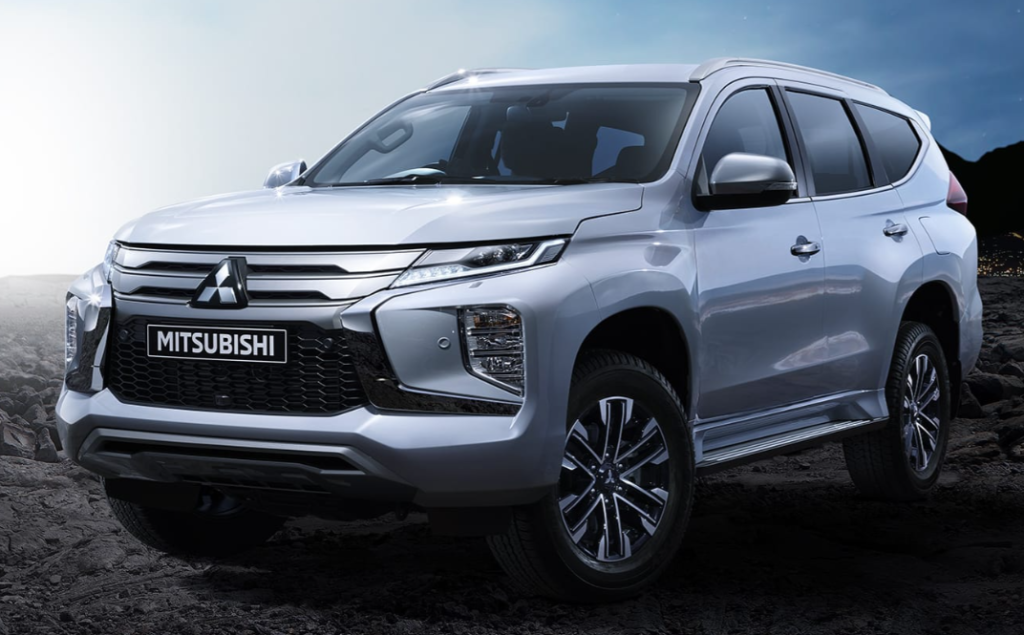
The Mitsubishi Pajero Sport is one of those SUVs that makes a lot more sense once we stop judging it like a normal family crossover.
It is tall. It is diesel-powered in many markets. It sits on rugged body-on-frame foundations. And when equipped with Mitsubishi's Super Select 4WD-II system, it has genuine low-range four-wheel-drive capability rather than merely looking adventurous while sitting outside the supermarket.
So, is Mitsubishi Pajero Sport a good car?
For the right driver, absolutely.
The Pajero Sport combines serious off-road hardware, respectable towing ability, seven-seat practicality on many versions, reasonable diesel economy and relatively straightforward mechanical engineering. Current Australian specifications, for example, continue to list a 2.4-litre MIVEC turbo-diesel engine, eight-speed automatic transmission, Super Select 4WD-II and up to 3.1 tonnes of braked towing capacity on relevant models.
But it isn't perfect.
Its cabin isn't as wide or polished as some newer SUVs. Its ride can remind us that there is rugged 4x4 hardware underneath. Some driver-assistance technology now feels a generation behind the newest competitors, and potential used buyers should know about several mechanical issues that have been reported over the years.
Think of the Pajero Sport as a sturdy pair of hiking boots. A softer road-focused SUV might feel like better footwear while strolling around town, but when the pavement disappears, those hiking boots suddenly make a lot of sense.
Let's look at where the Pajero Sport shines, where it compromises, and whether we would consider one a genuinely good SUV.
Content in this publication
- Is the Mitsubishi Pajero Sport a Good Car? The Short Answer
- What Kind of SUV Is the Mitsubishi Pajero Sport?
- Mitsubishi Pajero Sport Engine Performance
- What Is the Pajero Sport Like to Drive Around Town?
- How Comfortable Is the Mitsubishi Pajero Sport?
- Is the Mitsubishi Pajero Sport Good Off-Road?
- Is the Mitsubishi Pajero Sport Reliable?
- How Fuel Efficient Is the Pajero Sport?
- Is the Mitsubishi Pajero Sport Good for Towing?
- How Practical Is the Pajero Sport for Families?
- What About Safety?
- Pajero Sport Technology and Infotainment
- Are Pajero Sport Running Costs Expensive?
- What Should We Check Before Buying a Used Pajero Sport?
- Who Should Buy a Mitsubishi Pajero Sport?
- Who Probably Shouldn't Buy One?
- Pajero Sport Versus Its Main Rivals
- Mitsubishi Pajero Sport Pros and Cons
- Conclusion: Is Mitsubishi Pajero Sport a Good Car?
- Frequently Asked Questions
Is the Mitsubishi Pajero Sport a Good Car? The Short Answer
Yes, the Mitsubishi Pajero Sport is generally a good car if we prioritize durability, four-wheel-drive capability, towing, long-distance usability and family practicality over sporty handling or luxury-car refinement.
Its strongest qualities include:
- Proven 2.4-litre turbo-diesel powertrain in many markets
- Eight-speed automatic transmission on most automatic versions
- Genuine low-range four-wheel drive on 4WD models
- Up to seven seats depending on specification
- Strong towing capability
- Useful ground clearance
- Reasonable diesel fuel consumption for a ladder-frame SUV
- A generally straightforward, rugged mechanical layout
- Good equipment levels on higher trims
- Strong suitability for touring and rough-road travel
Its weaker points include:
- Narrower cabin than some competitors
- Third-row space better suited to occasional use
- Truck-like characteristics compared with car-based SUVs
- Older infotainment and driver-assistance technology in some versions
- Diesel emissions equipment that dislikes constant short journeys
- Several known issues worth investigating when buying used
In other words, the Pajero Sport isn't trying to be everything.
And that's actually part of its charm.
What Kind of SUV Is the Mitsubishi Pajero Sport?
Before deciding whether it is good, we need to understand what it actually is.
The Pajero Sport isn't simply a Mitsubishi Outlander with bigger wheels.
It belongs to the ute-based SUV family. Its engineering roots are closely related to Mitsubishi's Triton pickup, although the Pajero Sport uses a passenger-friendly rear suspension rather than simply copying a work truck from front to back.
That construction philosophy puts it in broadly the same category as vehicles such as the Toyota Fortuner, Isuzu MU-X and Ford Everest.
Body-on-Frame Construction Makes a Difference
Most modern family SUVs use unibody construction. The vehicle's body and structural shell essentially form one integrated structure.
The Pajero Sport takes a more traditional approach.
Its body sits on a separate ladder-style frame.
Why should we care?
Because this construction works particularly well when an SUV is expected to tow, travel over rough terrain and repeatedly absorb punishment.
The trade-off is weight and refinement.
Drive a Pajero Sport immediately after a smooth road-focused crossover and we may notice more body movement. Road imperfections can sometimes send a gentle reminder through the cabin that we are driving something with serious off-road hardware underneath.
But take both vehicles down a broken dirt road and the Mitsubishi begins playing a game it understands very well.
Mitsubishi Pajero Sport Engine Performance
Across many markets, the Pajero Sport has been offered with Mitsubishi's 2.4-litre MIVEC turbocharged diesel engine.
Current Philippine Montero Sport specifications—the Pajero Sport is marketed as Montero Sport there—list the 2.4-litre 4N15 turbo-diesel producing 181 PS and 430 Nm, paired with an eight-speed automatic on most versions.
Regional specifications can vary, so we should always verify the exact model being purchased.
Does the Pajero Sport Feel Powerful?
The Pajero Sport isn't a performance SUV.
Don't expect it to leap forward like a turbocharged petrol crossover or electric SUV.
Instead, the diesel engine delivers its performance in a relaxed wave of low-speed torque.
Press the accelerator and there is usually a brief moment where the drivetrain gathers itself. Then the torque arrives and pushes the vehicle forward with reassuring determination.
That character works particularly well when:
- Climbing hills
- Carrying passengers
- Towing
- Overtaking at highway speeds
- Crawling over rough terrain
- Travelling long distances
Around town, however, the diesel can occasionally feel less eager than a smaller turbo-petrol SUV.
The Eight-Speed Automatic Is a Major Strength
One of the Pajero Sport's better drivetrain decisions is its eight-speed automatic transmission.
Having eight ratios allows the transmission to keep the diesel engine relatively close to its useful torque range without making highway cruising unnecessarily busy.
Current Mitsubishi specifications in both Australia and the Philippines continue to list an eight-speed automatic with Sport Mode on automatic variants.
In everyday driving, we generally want an automatic transmission to disappear into the background.
The Pajero Sport largely manages that.
Paddle Shifters Are More Useful Than They Look
Some models include steering-wheel-mounted paddle shifters.
They might sound like an odd accessory in a large diesel 4WD, but they can actually be useful.
Descending a long mountain road?
Select a lower gear.
Towing downhill?
Use engine braking rather than constantly leaning on the brakes.
Preparing for an overtake?
Drop a gear before pressing the accelerator.
Suddenly those paddles make more sense.
What Is the Pajero Sport Like to Drive Around Town?
Urban driving reveals both the Pajero Sport's strengths and its compromises.
The elevated seating position gives us excellent forward visibility. We sit high enough to see over smaller traffic, and that commanding position can make congested roads feel less intimidating.
But physics still exists.
This is a relatively large, tall SUV designed with off-road capability in mind.
Steering and Parking
The steering is generally easy enough at low speeds, but the Pajero Sport never shrinks around us in the way a compact SUV might.
Parking garages require a little more concentration.
Narrow city streets?
Same story.
Higher specifications in some markets help considerably with multi-around-view camera systems, parking sensors and related technology. Mitsubishi's current Philippine high-specification Montero Sport, for example, lists a Multi-Around View Monitor among its equipment.
The Narrow Body Can Actually Help
Interestingly, the Pajero Sport's relatively narrow cabin—sometimes criticized when carrying three adults across the second row—can become an advantage on tight trails and narrow urban roads.
A vehicle doesn't need to be enormous to be capable.
Sometimes slimmer hips are useful.
How Comfortable Is the Mitsubishi Pajero Sport?
Comfort is good, provided we judge it against other rugged 4x4 SUVs rather than luxury crossovers.
The front seats generally provide a pleasant long-distance driving position, while higher grades may include power adjustment, leather-appointed upholstery and heated front seats depending on the market.
You may be interested in reading Is Peugeot RCZ a Good Car? A Complete Used Buyer’s Guide
Australian specifications currently advertise seven seats on GLS and Exceed versions together with dual-zone climate control and other comfort equipment.
Ride Comfort
At highway speeds, the Pajero Sport settles nicely.
On smooth roads, it can cover enormous distances without demanding much from the driver.
Over sharp urban imperfections, however, the ladder-frame architecture and off-road-focused suspension become more noticeable.
There can be a slight secondary jiggle where a softer crossover would simply absorb the bump and move on.
It's rarely terrible.
It's simply different.
Second-Row Comfort
The second row offers useful family accommodation, though width can become a consideration when carrying three larger passengers.
For two adults or growing children, it is generally comfortable.
Families planning to fit several bulky child seats should physically test their seats before purchasing rather than relying purely on specification sheets.
Is the Third Row Good?
The third row adds versatility rather than limousine accommodation.
Children will usually make better use of it than tall adults.
For occasional trips, school runs or carrying extra family members, it can be extremely handy.
For seven adults crossing a continent?
We would probably reconsider.
Is the Mitsubishi Pajero Sport Good Off-Road?
This is where the Pajero Sport stops pretending and starts showing us why it exists.
Proper 4WD variants are genuinely capable off-road.
Mitsubishi's Super Select 4WD-II system is particularly interesting because it provides several drivetrain modes for different surfaces.
Current Mitsubishi documentation describes modes including 2H, 4H, 4HLc and 4LLc on equipped models.
Understanding Super Select 4WD-II
In simplified terms:
- 2H: Rear-wheel drive for normal road use
- 4H: Four-wheel drive suitable for situations where extra traction is useful
- 4HLc: Locked-centre four-wheel drive for loose or difficult surfaces
- 4LLc: Low-range gearing for serious off-road conditions
That flexibility is one of Mitsubishi's party tricks.
Many traditional 4WD systems don't encourage four-wheel drive on normal dry pavement. Super Select allows appropriately equipped Pajero Sport models to offer a useful full-time-style 4WD mode for changing or slippery conditions.
Off-Road Modes Add Another Layer
Depending on model and market, selectable terrain modes can tailor throttle response, transmission behavior and traction-control intervention for surfaces such as gravel, mud, snow, sand or rocks.
Mitsubishi Australia currently lists Gravel, Mud/Snow, Sand and Rock modes on its Pajero Sport.
Do Most Owners Need All This?
Probably not.
But that's like owning a waterproof jacket.
We don't appreciate it because it rains every day.
We appreciate it because when the storm finally arrives, we're prepared.
Is the Mitsubishi Pajero Sport Reliable?
Reliability is one of the biggest questions surrounding any used 4WD.
Overall, the Pajero Sport has developed a fairly solid reputation, but calling any vehicle completely problem-free would be unrealistic.
The 2.4-litre diesel has now accumulated many years of service across Mitsubishi products, meaning there is substantial real-world knowledge surrounding maintenance and common problems.
The Engine Is Well Established
The 4N15 diesel isn't some experimental powertrain that appeared yesterday.
That matters.
Independent workshops are familiar with it, replacement parts are widely available in markets where Mitsubishi sells strongly, and common maintenance procedures are well understood.
That familiarity can be valuable once a vehicle reaches higher mileage.
Reported Pajero Sport Problems
Several issues have been reported across the model's lifespan.
CarsGuide's technical coverage has discussed diesel particulate filter and EGR-related concerns on some vehicles, intercooler-hose problems on certain examples and instances of cylinder-head or head-gasket trouble, while also noting that the prevalence of some of these failures is difficult to quantify.
These reports don't mean every Pajero Sport will develop them.
They mean we should inspect carefully rather than assuming that a reputation for toughness makes maintenance optional.
DPF and EGR Issues
Modern diesels contain emissions-control equipment that prefers proper operating temperatures and longer drives.
A vehicle spending its entire life performing five-minute school runs may never get the sustained conditions a diesel particulate filter enjoys.
That can contribute to DPF-related trouble.
A Pajero Sport therefore makes more sense for drivers who regularly travel reasonable distances than for someone whose driving consists almost entirely of short urban hops.
Intercooler Hoses
Some owners have encountered damaged or split intercooler hoses.
A leaking hose can result in reduced boost, poor performance or unusual noises.
When buying used, inspecting hoses and asking whether replacements have already been fitted is worthwhile.
Cooling-System Maintenance Matters
Any used diesel 4WD deserves careful attention to its cooling system.
Check coolant condition, service history and evidence of overheating.
A robust engine can still become an expensive engine when neglected.
How Fuel Efficient Is the Pajero Sport?
For a heavy seven-seat 4WD, economy can be surprisingly reasonable.
Mitsubishi Australia's current SUV comparison information lists the Pajero Sport at approximately 8.0 L/100 km in the relevant official combined figure.
Real life, of course, rarely resembles a laboratory.
Our consumption will depend on:
- Traffic
- Speed
- Terrain
- Vehicle load
- Tyre choice
- Roof racks
- Towing
- Air-conditioning use
- Driving style
- Off-road modifications
A heavily accessorized Pajero Sport towing a caravan into a headwind will consume dramatically more fuel than an unladen example cruising gently down a highway.
Still, compared with large petrol 4x4s, the diesel's range and efficiency can be attractive.
Is the Mitsubishi Pajero Sport Good for Towing?
Yes.
Towing is one of its natural strengths.
Australian specifications currently quote up to 3.1 tonnes braked towing capacity on the Pajero Sport.
That makes it suitable on paper for many:
- Caravans
- Boats
- Horse floats
- Utility trailers
- Camping trailers
But maximum towing capacity never tells the complete story.
We also need to calculate payload, tow-ball mass, gross vehicle mass and combined vehicle-and-trailer limits.
Load the cabin with seven adults, fill the cargo area, install accessories and attach a heavy caravan, and the numbers can tighten surprisingly quickly.
A spreadsheet is less exciting than a new caravan.
You may be interested in readingIs Peugeot RCZ a Good Car? A Complete Used Buyer’s GuideYou may be interested in reading
 Nissan Rogue Reliability: What Owners and Used-Car Buyers Need to Know
It is also considerably cheaper than discovering we've overloaded our vehicle.
How Practical Is the Pajero Sport for Families?
Very practical—with a few caveats.
Mitsubishi offers five- and seven-seat configurations depending on market and trim. Australian current-model information lists cargo capacity of up to approximately 1,488 litres depending on configuration.
Fold the rear seats and the Pajero Sport becomes useful for:
- Camping equipment
- Large suitcases
- Sports gear
- Hardware-store trips
- Bicycles with appropriate folding or wheel removal
- Pets
- Family road trips
Seven Seats Versus Luggage Space
This is the classic three-row SUV problem.
Raise every seat and cargo space becomes significantly smaller.
Fold the third row and practicality improves dramatically.
Families who genuinely need seven seats and lots of luggage simultaneously may want to compare larger SUVs.
For everyone else, the flexibility is valuable.
What About Safety?
Safety requires some explanation because ratings can become outdated.
Earlier Pajero Sport models carried a five-star ANCAP rating based on testing associated with the Triton platform. However, that rating applied to vehicles built through December 2022 and subsequently expired.
ANCAP lists Australian/New Zealand Pajero Sport vehicles built from January 2023 through February 2025 as unrated, meaning they did not carry a current ANCAP rating—not that ANCAP assigned them a poor crash-test score.
That distinction matters.
Available Safety Technology
Depending on model and country, Pajero Sport equipment can include:
- Forward Collision Mitigation
- Adaptive Cruise Control
- Blind Spot Warning
- Lane Change Assist
- Rear Cross Traffic Alert
- Multi-around-view camera
- Stability and traction control
- Hill Start Assist
- Hill Descent Control
- Trailer Stability Assist
- Multiple airbags
High-specification current Montero Sport models in the Philippines list many of those systems, while Australian versions also offer a broad MiTEC safety package depending on grade.
The hardware is useful.
Still, buyers prioritizing the very latest lane-centering technology and newest-generation crash-test performance should compare the Pajero Sport directly against recently launched competitors.
Pajero Sport Technology and Infotainment
Technology is probably not the main reason anyone buys this SUV.
Current versions in several markets use an 8-inch infotainment system with Apple CarPlay and Android Auto support, while upper trims may add digital instrumentation, cameras, a powered tailgate and other convenience features.
It works.
But newer competitors have moved toward enormous displays, wireless connectivity ecosystems and increasingly sophisticated digital interfaces.
If our definition of luxury starts with screen size, the Pajero Sport may feel dated.
If we'd rather have low-range gearing than another 14-inch touchscreen, it suddenly seems much more appealing.
Are Pajero Sport Running Costs Expensive?
Running costs depend heavily on location, but the basic picture is fairly sensible for a proper diesel 4WD.
Expect expenses for:
- Diesel fuel
- Scheduled servicing
- Larger tyres
- Diesel fuel filters
- Brake components
- 4WD drivetrain fluids
- DPF-related maintenance if problems develop
- Suspension wear on heavily used examples
Mitsubishi's support programs can be attractive in certain regions.
In Australia, for example, Mitsubishi currently advertises up to a 10-year/200,000 km warranty when specified servicing conditions are met, alongside a capped-price servicing program.
We shouldn't assume identical coverage elsewhere.
Always check the warranty terms in our own country.
What Should We Check Before Buying a Used Pajero Sport?
A used Pajero Sport can make excellent sense, but condition matters more than shiny paint.
Use this checklist.
Used Pajero Sport Inspection Checklist
- Verify the complete service history.
Missing maintenance records should immediately reduce our confidence. - Check cold-start behavior.
Listen for unusual knocking, rattling or excessive smoke. - Inspect the cooling system.
Look for coolant loss, contamination or evidence of overheating. - Inspect intercooler and turbo hoses.
Look for splits, oil residue or incorrect routing. - Test the automatic transmission.
Shifts should be smooth without severe flaring, banging or hesitation. - Operate every 4WD mode.
Make sure Super Select engages properly. - Test low range.
Many used 4WDs spend years without their low-range system being touched. - Look underneath.
Scraped protection plates aren't necessarily concerning. Major chassis damage is. - Check for towing wear.
A tow bar isn't a problem, but repeated heavy towing makes maintenance history more important. - Scan for warning lights and fault codes.
Don't accept the phrase, “That light always does that.” - Check DPF operation.
Particularly important on vehicles used mainly for short urban journeys. - Inspect tyres carefully.
Uneven wear can reveal alignment or suspension issues. - Test all electronics.
Cameras, powered tailgate, displays, climate control and safety systems can become expensive when faults accumulate.
Who Should Buy a Mitsubishi Pajero Sport?
The Pajero Sport makes particularly good sense for people who actually use its capabilities.
We would put it high on the shopping list if we regularly:
- Travel on rough roads
- Go camping
- Tow
- Explore remote areas
- Need seven seats occasionally
- Carry bulky equipment
- Drive long highway distances
- Want genuine low-range four-wheel drive
- Prefer mechanical capability over flashy technology
For those buyers, the Pajero Sport can feel almost refreshingly focused.
It knows its job.
Who Probably Shouldn't Buy One?
Not everybody needs a ladder-frame diesel SUV.
If we spend 99 percent of our time commuting through crowded city streets, never tow, never leave sealed roads and rarely carry more than four passengers, we're hauling around a lot of capability we don't use.
A car-based SUV may deliver:
- Softer ride quality
- Quieter operation
- Better urban economy
- Easier parking
- More responsive handling
- Newer interior technology
There's no prize for owning the most capable vehicle in the neighborhood if that capability never leaves the driveway.
Pajero Sport Versus Its Main Rivals
The Pajero Sport competes in a fascinating corner of the market because most alternatives have their own distinct personalities.
Pajero Sport vs Toyota Fortuner
Both follow the rugged ute-based formula.
The Fortuner benefits from Toyota's reputation and broad ownership ecosystem, while the Pajero Sport's Super Select 4WD system is a compelling feature for drivers who value drivetrain versatility.
Pajero Sport vs Isuzu MU-X
The MU-X is another strong choice for touring and towing.
Depending on model year, the Isuzu can offer newer technology and a spacious cabin, while Mitsubishi counters with its established 4WD system and generally straightforward driving experience.
Pajero Sport vs Ford Everest
The Everest has increasingly pushed the segment toward a more refined, technology-heavy experience.
It can feel more sophisticated on-road.
The Pajero Sport often appeals to buyers who are happy to sacrifice some polish in exchange for simpler, proven hardware and potentially lower purchase cost depending on the market.
There is no universal winner.
What matters is which compromise matches our lifestyle.
Mitsubishi Pajero Sport Pros and Cons
Major Advantages
- Genuine off-road capability
- Useful Super Select 4WD-II system
- Low-range gearing on appropriate variants
- Strong diesel torque
- Smooth eight-speed automatic
- Good towing ability
- Seven-seat availability
- Practical folding rear seats
- Reasonable economy for its size
- Comfortable long-distance cruising
- Proven mechanical layout
- Good value in many markets
Main Disadvantages
- Cabin can feel narrow
- Third row is best for occasional use
- Ride remains more rugged than road-focused SUVs
- Diesel engine can sound agricultural when pushed
- Infotainment is behind newer rivals
- Current safety-rating situation varies by model year and region
- Short-trip driving isn't ideal for a modern diesel
- Some known used-car issues require inspection
Conclusion: Is Mitsubishi Pajero Sport a Good Car?
Yes—the Mitsubishi Pajero Sport is a good car, but more importantly, it is a good 4WD.
That distinction explains almost everything.
Buy one expecting the silent ride, razor-sharp handling and giant screens of the newest road-focused SUVs and we may wonder what all the enthusiasm is about.
Take one touring, load it with camping equipment, pull a trailer, tackle a muddy track or cruise hundreds of kilometres through the countryside and its personality becomes much easier to understand.
Its combination of a well-established turbo-diesel, eight-speed automatic, proper four-wheel-drive hardware and flexible passenger accommodation gives it a rare breadth of ability.
There are compromises.
The interior isn't the roomiest in its class. The technology is beginning to show its age in some markets. Used examples need careful inspection, and drivers who rarely leave the city would probably be happier in something lighter and softer.
But the Pajero Sport isn't trying to be a fashionable crossover.
It's closer to a dependable multi-tool.
Maybe another SUV has a sharper blade or a prettier handle, but the Mitsubishi arrives with enough tools to solve a remarkable number of problems.
For families, travellers and adventurous drivers who will genuinely use those tools, the Pajero Sport remains a very convincing SUV.
Frequently Asked Questions
1. Is the Mitsubishi Pajero Sport reliable?
The Pajero Sport generally has a solid reputation when maintained correctly, particularly because its 2.4-litre diesel drivetrain has been used extensively across Mitsubishi products. However, used buyers should investigate service history and check for reported issues involving DPF/EGR systems, intercooler hoses, cooling-system condition and other age-related components.
2. Is the Mitsubishi Pajero Sport good for long trips?
Yes. Long-distance touring is one of the Pajero Sport's strengths. Its comfortable driving position, diesel range, automatic transmission, useful cargo space and available seven-seat layout make it well suited to road trips. Its off-road capability also gives travellers more freedom when sealed roads end.
3. Is the Pajero Sport good off-road?
Proper 4WD versions are very capable. Mitsubishi's Super Select 4WD-II system provides multiple drive modes including low range on equipped variants, while selectable terrain modes can help manage difficult surfaces. It is considerably more capable off-road than the average car-based family SUV.
You may be interested in readingIs Peugeot RCZ a Good Car? A Complete Used Buyer’s GuideYou may be interested in reading
Nissan Rogue Reliability: What Owners and Used-Car Buyers Need to KnowYou may be interested in reading
 Honda Passport Weight: Curb Weight, Trims, Towing, and What the Numbers Really Mean
4. Is the Mitsubishi Pajero Sport fuel efficient?
For a large ladder-frame diesel 4WD, fuel economy is respectable. Mitsubishi Australia currently quotes around 8.0 L/100 km for the Pajero Sport in its SUV range information, although real-world consumption varies significantly with traffic, terrain, towing, accessories and driving style.
5. Is a used Mitsubishi Pajero Sport worth buying?
It can be. A well-maintained Pajero Sport with documented servicing can provide a lot of capability for the money. We would prioritize mechanical condition and service history over mileage alone, test every 4WD function, check the diesel emissions system and inspect carefully for evidence of overheating, heavy towing or abusive off-road use.
If you want to know other articles similar to Is Mitsubishi Pajero Sport a Good Car? A Complete Ownership Review you can visit the category Blog.
Volvo S90 Reliability: Problems, Costs & Best Years
Is Haval Jolion a Good Car? Honest Review, Reliability, Pros and Cons
How to Start Haval Jolion With Spare Key: Complete Guide
How to Calculate Per Diem on an Auto Loan

How to Calculate the Residual Value of a Car
Is the Honda Passport Selling Well? Sales Numbers Tell the Story
Leave a Reply
More content of your interest