
BYD Shark 6 Reliability: How Dependable Is This Hybrid Ute?

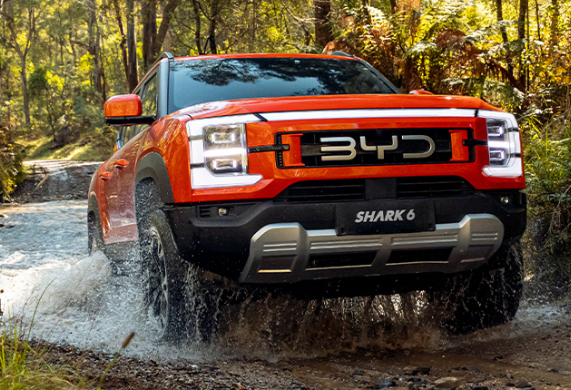
The BYD Shark 6 reliability question is becoming increasingly important as more of these plug-in hybrid utes move from shiny dealership floors into everyday life. It is one thing for a vehicle to impress us during a half-hour test drive. It is quite another for it to survive years of commuting, towing, highway work, rough roads, family trips, charging cycles, scorching summers and the occasional muddy weekend.
So, is the BYD Shark 6 reliable?
The fairest answer in 2026 is: the early signs are encouraging, but the long-term reliability record is still developing.
That distinction matters. The Shark 6 only went on sale in Australia in January 2025, meaning we simply do not yet have the decade-long owner history available for established rivals such as the Toyota HiLux, Ford Ranger or Isuzu D-Max. ANCAP lists Australian and New Zealand Shark 6 sales from January 2025 onward.
There is plenty we can examine already, though. Build quality has generally impressed independent reviewers, BYD provides substantial warranty coverage, the Blade Battery is a mature part of the manufacturer's technology portfolio, and the DMO hybrid system offers an interesting alternative to traditional diesel ute engineering. At the same time, a major Australian safety recall announced in September 2026 reminds us that early-production vehicles can have growing pains.
Let's dig deeper.
Content in this publication
- Is the BYD Shark 6 Reliable Overall?
- Why BYD Shark 6 Reliability Is Hard to Judge Yet
- BYD Shark 6 Powertrain Reliability
- BYD Shark 6 Battery Reliability
- How Reliable Is the 1.5-Litre Turbo Engine?
- BYD Shark 6 Performance Reliability
- The 2026 BYD Shark 6 Recall Matters
- Shark 6 Build Quality
- Software Reliability and Electronics
- Can Software Updates Improve Reliability?
- Shark 6 Suspension and Chassis Durability
- Towing and Long-Term Reliability
- BYD Shark 6 Service Intervals
- Warranty: One of the Shark 6's Stronger Arguments
- The Dealer and Parts Network Matters Too
- BYD Shark 6 Safety and Structural Quality
- Common BYD Shark 6 Problems to Watch For
- What Should We Check Before Buying a Used Shark 6?
- BYD Shark 6 Reliability Versus Diesel Utes
- Will a BYD Shark 6 Last 10 Years?
- How to Make a BYD Shark 6 More Reliable
- Is the BYD Shark 6 a Good Choice for Long-Term Ownership?
- Conclusion: BYD Shark 6 Reliability Looks Promising, but Time Will Decide
- FAQs About BYD Shark 6 Reliability
Is the BYD Shark 6 Reliable Overall?
If we judge the Shark 6 purely from the evidence currently available, there is no strong indication that it is fundamentally unreliable.
Independent assessments have repeatedly praised its apparent assembly quality. CarExpert, for example, described the 2026 Shark 6 Performance's interior as exceptionally well built and noted that the materials felt tough and substantial.
That is encouraging because annoying rattles, trim failures, loose fittings and premature interior wear are often where new models expose themselves first.
But reliability is a marathon, not a 100-metre sprint.
A vehicle can feel beautifully screwed together at 5,000 km and still develop expensive drivetrain or electronic problems at 150,000 km. Because the Shark 6 is still young, anyone claiming that it is categorically more or less reliable than a HiLux or Ranger is running ahead of the evidence.
The Most Accurate Reliability Verdict in 2026
We would describe the situation like this:
Short-term quality: promising.
Long-term mechanical durability: not yet proven.
Battery warranty protection: strong.
Powertrain complexity: relatively high.
Known recall history: now significant enough to consider.
That is far more useful than simply calling it "reliable" or "unreliable."
Why BYD Shark 6 Reliability Is Hard to Judge Yet
Traditional utes have decades of history behind them. We know which diesel engines tend to last, which transmissions cause trouble and which generations develop predictable faults.
The Shark 6 has no such history yet.
The first Australian examples arrived in significant numbers during 2025. Consequently, even relatively high-mileage Australian vehicles have generally accumulated only a fraction of the distance we would like to see before drawing conclusions about 10-year durability.
That does not make the vehicle risky by definition. It simply creates uncertainty.
Think of it like meeting a new neighbour. They seem friendly, maintain their garden and always bring the bins in on time. Everything looks positive. But after knowing them for only a year, would we confidently predict what they will be like in 2035?
Probably not.
The same logic applies here.
BYD Shark 6 Powertrain Reliability
The Shark 6 is mechanically very different from the average diesel ute.
Rather than relying mainly on a turbo-diesel engine connected to a conventional automatic transmission and mechanical 4WD system, BYD uses its DMO Super Hybrid architecture.
Current Australian Shark 6 versions combine turbocharged petrol engines with electric motors and BYD's Blade Battery. BYD lists a 1.5-litre turbo hybrid system for the Dynamic and Premium variants, while the Performance uses a 2.0-litre turbocharged hybrid engine.
Does the Hybrid System Create More Reliability Risks?
Potentially, but the answer is more complicated than "more components equal more problems."
A plug-in hybrid introduces additional hardware such as:
- High-voltage battery pack
- Electric drive motors
- Power electronics
- Charging equipment
- Cooling systems
- Hybrid control software
- Petrol engine
That sounds intimidating.
However, electric motors themselves contain relatively few moving parts. Hybrid operation can also reduce how frequently the petrol engine works hard during ordinary urban driving.
The real unknown is how all these systems will age together after repeated towing, charging, extreme temperatures and high-mileage use.
Fewer Traditional Driveline Components Can Be an Advantage
BYD's DMO system does not simply copy the mechanical layout of a conventional diesel ute. BYD describes it as using a longitudinal electric hybrid arrangement with a dedicated rear-drive assembly and an off-road-focused battery architecture.
That can eliminate or change some of the traditional mechanical pathways through which power reaches the road.
But simplicity in one area does not make the whole vehicle simple.
The Shark replaces certain conventional driveline components with electronics, electric motors, battery-management hardware and software. Reliability therefore depends not merely on nuts and bolts but increasingly on sensors, modules and programming.
BYD Shark 6 Battery Reliability
For many prospective owners, the battery is the elephant in the room.
"What happens when the battery dies?"
It is an understandable concern, although battery ageing is usually more gradual than that question suggests.
BYD's Australian specification identifies the Shark 6 battery as a BYD Blade Battery, with the 2026 specification listing a 29.6 kWh battery capacity across the range.
What Does the Battery Warranty Cover?
BYD currently provides an eight-year or 160,000 km traction-battery warranty, whichever comes first. The broader vehicle warranty is six years or 150,000 km. Terms, conditions and exclusions naturally apply.
That warranty does not guarantee that every battery will remain identical to new for eight years.
Batteries naturally lose some capacity over time.
Still, substantial factory coverage reduces some of the financial uncertainty surrounding major high-voltage failures during the early ownership period.
Battery Degradation Is Different From Battery Failure
This distinction is essential.
Battery degradation means the usable capacity slowly decreases. If a battery that once delivered a certain electric range eventually delivers less, it has degraded.
Battery failure means something actually stops functioning correctly.
Those are not the same problem.
For Shark 6 owners, gradual battery ageing could eventually mean the petrol engine runs more frequently because less electrical energy is available. That may reduce fuel-saving benefits without necessarily leaving the vehicle stranded.
How Reliable Is the 1.5-Litre Turbo Engine?
The original Shark 6 Premium uses a 1.5-litre turbocharged petrol engine as part of its DMO hybrid system.
On paper, asking a 1.5-litre engine to participate in moving a large dual-cab ute might sound like sending a terrier to pull a caravan.
But that comparison misses the role of the electric motors.
The petrol engine is part of a broader hybrid system rather than acting alone during normal full-battery operation.
Where things become more interesting is when the battery state of charge is low.
Independent testing has noted that under demanding conditions with reduced battery reserves, the petrol engine can become much more noticeable as it works to maintain battery charge and vehicle performance.
CarExpert has also questioned whether the original 1.5-litre engine provides enough reserve performance for a ute of this size when battery assistance is limited.
That is primarily a performance observation rather than proof of a reliability defect. Still, owners who tow frequently or repeatedly run the battery low may place different demands on the combustion engine than someone who charges nightly and mainly drives around town.
BYD Shark 6 Performance Reliability
The newer Shark 6 Performance introduces a larger 2.0-litre turbocharged petrol engine as part of a 350 kW/700 Nm hybrid system. BYD also rates the Performance for up to 3,500 kg of braked towing.
Could the larger engine improve long-term durability because it does not need to work as hard?
Perhaps, but we should not jump to that conclusion without long-term data.
Higher outputs also create additional thermal and mechanical loads.
The Performance is simply too new for a meaningful high-mileage reliability pattern to have emerged.
The 2026 BYD Shark 6 Recall Matters
No serious discussion of BYD Shark 6 reliability in 2026 should ignore the recent recall.
In September 2026, BYD recalled 32,009 Shark 6 vehicles in Australia because the spare-wheel support system could experience abnormal wear. The affected vehicles were produced between August 29, 2024 and June 15, 2026.
You may be interested in reading Is Mitsubishi Pajero Sport a Good Car? A Complete Ownership Review
According to the recall information, incorrect spare-wheel installation, tray positioning or insufficient fastening torque could cause wear to the spare-wheel support cable. Continued friction could eventually allow the cable to fail, creating a risk that the spare wheel could detach.
What Is BYD Doing About the Recall?
Affected vehicles are being fitted with an updated spare-wheel lifter assembly at no charge. Owners of affected vehicles have also been advised regarding the spare wheel while awaiting the remedy.
Does One Recall Mean the Shark 6 Is Unreliable?
Not automatically.
Almost every major vehicle manufacturer eventually issues recalls. Rangers, HiLuxes, premium European vehicles and Japanese family cars have all experienced safety campaigns.
A recall is therefore not a simple reliability scorecard.
What matters is:
the seriousness of the defect, the number of vehicles affected, how quickly the problem is identified, whether the repair permanently addresses it, and how effectively owners receive support.
The Shark 6 recall is significant because of the number of Australian vehicles involved and the potential safety consequence. It deserves attention, but it does not establish that the hybrid drivetrain itself is unreliable.
Here the early evidence looks fairly positive.
The cabin feels more SUV-like than agricultural, and reviewers have generally found the construction impressively solid.
CarExpert's 2026 Performance assessment reported only a minor centre-console squeak in one example and said other test vehicles did not replicate it. The same review praised the overall interior construction and materials.
Earlier testing of the Premium likewise highlighted the model's strong perceived build quality.
That does not tell us what the cabin will look like after 250,000 km of worksite abuse, dogs, children and tools.
But first impressions are certainly more reassuring than a vehicle launching with widespread reports of loose trim and obvious assembly problems.
Software Reliability and Electronics
Modern cars can suffer problems without a single mechanical component breaking.
Software is now part of reliability.
The Shark 6 contains a large touchscreen, advanced driver-assistance technologies, hybrid-management software, cameras, connectivity systems, charging controls and dozens of electronic modules.
Independent reviews have criticised some aspects of the interface and driver-assistance behaviour. One early review described the driver-attention system as inconsistent and found adaptive cruise behaviour could require careful supervision.
Meanwhile, CarExpert's 2026 Performance review described parts of the user interface as illogical.
These complaints should not automatically be called "reliability problems."
An annoying user interface is different from a failed computer module.
But software quality matters because it shapes the ownership experience. The mechanically perfect vehicle that constantly beeps, resets preferences or behaves unpredictably can still make its owner want to throw the keys into a lake.
Can Software Updates Improve Reliability?
Potentially.
One advantage of heavily digital vehicles is that some behaviours can be altered through software rather than replacing hardware.
BYD's Australian service program includes vehicle system health checks, software analysis and applicable updates during scheduled servicing.
That means certain electronic frustrations may evolve during ownership.
The downside?
More dependence on software creates another category of potential failure that older, simpler utes barely had.
The Shark 6 uses double-wishbone suspension at both the front and rear according to current Australian specifications.
That setup contributes to one of the vehicle's most frequently praised traits: comfortable road manners.
However, durability will depend heavily on how owners use it.
A Shark spending its life commuting through Melbourne or Sydney will face very different stresses from one carrying heavy equipment across corrugated rural roads every week.
Off-Road Use Could Be the Real Test
The Shark 6 is marketed as an off-road-capable ute, but several reviewers have suggested that hardcore off-road use is not where the original model feels strongest.
That does not mean its suspension is fragile.
It means buyers should separate comfort, traction technology and genuine long-term bush durability.
Years of corrugations reveal weaknesses that press-launch trails cannot.
We will need more high-mileage work vehicles before we know how suspension bushes, ball joints, dampers, wheel bearings and underbody components cope with sustained punishment.
Towing and Long-Term Reliability
Towing is one area where usage matters enormously.
The current Australian Premium is rated to tow up to 2,500 kg braked, while the Performance increases this to 3,500 kg.
A vehicle that rarely tows will age differently from one constantly operating near its maximum rated limit.
Towing creates heat and load.
It asks more of the battery, electric motors, cooling system, tyres, suspension, brakes and petrol engine.
If we were buying a Shark 6 specifically to tow several tonnes every week, we would place much greater emphasis on future high-mileage towing reports than if we intended to use it mostly as a commuter with occasional trailer duty.
BYD Shark 6 Service Intervals
Reliability is partly engineered at the factory and partly created in the owner's driveway.
Skip maintenance and even excellent engineering eventually complains.
BYD Australia's servicing information uses a 20,000 km or 12-month interval, and independent Australian ownership-cost data for the Shark 6 confirms that schedule.
That kilometre interval is relatively generous for a ute.
But plug-in hybrid ownership creates one unusual temptation: assuming the petrol engine barely runs, so servicing is somehow less important.
Do not fall into that trap.
Engine oil still ages. Cooling systems still matter. Brake fluid still absorbs moisture. Suspension components still wear. Tyres still need rotation and pressure checks.
The battery and high-voltage system also require inspection.
What BYD Checks During Servicing
BYD says scheduled servicing can include checks of:
- High-voltage wiring and components
- Battery housing and mounting points
- Braking systems
- Tyres
- Suspension
- Steering components
- Vehicle electronics
- Software status and updates
For a technically complex PHEV ute, maintaining that schedule is especially worthwhile.
Warranty: One of the Shark 6's Stronger Arguments
Warranty does not equal reliability.
A company could theoretically offer a long warranty on an unreliable product.
But warranty still matters because it changes financial risk.
BYD currently provides Australian Shark 6 buyers with:
6 years/150,000 km vehicle warranty and 8 years/160,000 km traction-battery warranty, subject to BYD's terms and exclusions.
For average private owners, that covers a substantial part of the likely ownership period.
High-mileage commercial drivers should pay closer attention to the kilometre limits, however. Someone covering 40,000 km annually could exhaust the vehicle's distance allowance much sooner than a family covering 12,000 km per year.
The Dealer and Parts Network Matters Too
A reliable vehicle can still become frustrating if a relatively minor failure takes weeks to repair.
You may be interested in readingIs Mitsubishi Pajero Sport a Good Car? A Complete Ownership ReviewYou may be interested in reading
 Is Peugeot RCZ a Good Car? A Complete Used Buyer’s Guide
That makes after-sales support part of practical reliability.
BYD's Australian network has expanded quickly alongside its sales growth. BYD itself says its service and parts network continues to grow.
There have nevertheless been reports concerning service capacity, parts availability and after-sales growing pains as BYD's Australian customer base expanded. CarsGuide reported in 2025 that the company was working to improve support after complaints involving parts delays and servicing experiences.
That may improve as the network matures.
For buyers outside major cities, however, we would still check where the nearest authorised service centre is before purchasing.
A ute is not particularly useful when its nearest specialist is half a day's drive away.
BYD Shark 6 Safety and Structural Quality
Reliability and crash safety are different subjects, but structural engineering does provide useful context.
ANCAP's 2025 Shark 6 assessment applies to all variants and reports scores of 85% for adult occupant protection, 87% for child occupant protection, 74% for vulnerable road-user protection and 86% for safety assist.
BYD also says the Shark 6's integrated battery architecture contributes to chassis rigidity, while the battery itself is incorporated into its DMO platform architecture.
Again, this cannot predict long-term reliability.
It does show that the Shark 6 is not simply a traditional pickup with a battery squeezed underneath as an afterthought. The hybrid system is fundamental to the platform's design.
Common BYD Shark 6 Problems to Watch For
At this stage, it would be misleading to publish a giant catalogue of supposed "common Shark 6 faults" based on isolated forum posts.
The fleet is too young.
Instead, prospective owners should focus on documented and repeatable areas.
The September 2026 spare-wheel lifter recall is the clearest current hardware issue requiring attention.
Beyond that, reviews have highlighted concerns or annoyances involving driver-monitoring behaviour, certain assistance systems, interface logic, throttle calibration and the original 1.5-litre powertrain when battery reserves are low.
Most of these are usability or calibration criticisms rather than established mechanical failures.
That difference matters enormously when researching reliability online.
What Should We Check Before Buying a Used Shark 6?
A second-hand Shark 6 deserves the same careful inspection as any technically sophisticated PHEV.
Our practical checklist would be:
- Confirm recall completion. Check whether any applicable spare-wheel lifter campaign has been performed.
- Verify service history. Gaps may complicate future warranty claims and can hide neglect.
- Test AC and DC charging. Make sure the vehicle begins and completes charging normally.
- Inspect the underbody. This matters particularly if the vehicle has been used off-road.
- Check every electronic feature. Cameras, screens, driver-assistance systems, power accessories and connectivity should all work.
- Drive with different battery states if possible. Listen for abnormal noises and observe how smoothly the petrol engine joins the hybrid system.
- Inspect tyres carefully. Uneven wear may suggest alignment, suspension or hard-use issues.
- Check towing history. Frequent heavy towing is not automatically bad, but it changes how we evaluate wear.
- Confirm remaining factory warranty. Mileage can be just as important as age.
- Get an independent inspection. Ideally use someone comfortable assessing modern PHEVs and high-voltage vehicles.
BYD Shark 6 Reliability Versus Diesel Utes
This is where comparisons become fascinating.
A diesel ute may appear mechanically familiar, but modern diesels are hardly primitive machines.
They can include turbochargers, high-pressure common-rail injection, diesel particulate filters, exhaust-gas recirculation systems, selective catalytic reduction equipment, complex automatic transmissions and sophisticated emissions electronics.
A PHEV replaces some familiar complexity with a different kind.
Instead of asking, "Which one is simple?" we should ask, "Which complexity fits our driving?"
For repeated short urban journeys, a plug-in hybrid that can regularly operate electrically has obvious appeal.
For remote-area travel hundreds of kilometres from specialised service support, the proven familiarity of a mainstream diesel platform may still matter to some buyers.
Reliability is not merely statistics. Context counts.
Will a BYD Shark 6 Last 10 Years?
It absolutely could.
But nobody can responsibly demonstrate that yet.
Ten-year durability requires ten years of evidence.
What we can say is that BYD has provided warranty coverage substantial enough to protect major systems through much of the early and middle ownership period, while the traction battery receives eight years or 160,000 km of coverage.
The more interesting evidence will begin appearing later this decade, when large numbers of Shark 6 vehicles cross 150,000 or 200,000 km.
That is when we will learn about battery degradation, motor durability, cooling-system ageing, suspension wear, charging hardware and electronic module longevity.
How to Make a BYD Shark 6 More Reliable
Good ownership cannot prevent every manufacturing defect, but it can remove plenty of avoidable ones.
Charge regularly if your usage pattern allows it. Follow the scheduled maintenance program. Avoid habitually exceeding payload or towing limits. Keep tyres correctly inflated. Investigate warning messages rather than ignoring them. Wash mud and corrosive material from the underbody after serious off-road use.
And perhaps most importantly, do not treat a PHEV as maintenance-free simply because it can drive electrically.
The Shark is still a machine.
Machines like attention.
Is the BYD Shark 6 a Good Choice for Long-Term Ownership?
For someone buying in 2026, we would call the Shark 6 an interesting long-term proposition rather than a fully proven one.
The positives are meaningful.
The vehicle has received strong comments regarding initial build quality. BYD offers substantial vehicle and battery warranty coverage. The Blade Battery and DMO architecture are central technologies rather than experimental accessories bolted onto an unrelated platform.
The uncertainties are equally real.
We do not yet have eight or ten years of Shark 6 owner data. Australia's September 2026 spare-wheel recall shows that early-production quality problems can occur. Service and parts support also deserve consideration, particularly for owners far from major metropolitan areas.
That is the balance prospective buyers should keep in mind.
Conclusion: BYD Shark 6 Reliability Looks Promising, but Time Will Decide
So, is the BYD Shark 6 reliable?
So far, there is more reason for cautious confidence than alarm.
Its initial build quality has attracted positive comments, its hybrid technology is sophisticated, its battery warranty is substantial, and we have not yet seen evidence establishing a widespread catastrophic drivetrain weakness.
But the story is still being written.
The Shark 6 has only been on Australian roads since 2025, and that simply is not enough time to declare it a 300,000 km hero. The September 2026 spare-wheel assembly recall also shows why owners should stay informed about safety campaigns and technical updates.
For buyers willing to adopt newer plug-in hybrid technology, charge regularly and maintain the vehicle correctly, the Shark 6 presents a compelling package.
For buyers whose number-one priority is decades of already-documented durability, established ute platforms still have something the BYD cannot manufacture overnight: history.
And that may be the best way to understand BYD Shark 6 reliability today.
The engineering looks promising.
The early quality looks respectable.
The warranty provides meaningful reassurance.
Now the kilometres need to prove the rest.
FAQs About BYD Shark 6 Reliability
1. Is the BYD Shark 6 a reliable car?
Early evidence suggests the BYD Shark 6 has solid initial build quality, but it has not been on the market long enough to establish a definitive long-term reliability record. Australian sales began in January 2025, so high-mileage durability evidence remains limited.
2. Does the BYD Shark 6 have battery problems?
There is currently insufficient evidence to describe battery failure as a widespread Shark 6 problem. BYD uses its Blade Battery in the vehicle and provides Australian traction-battery warranty coverage of eight years or 160,000 km, subject to warranty conditions.
3. Has the BYD Shark 6 been recalled?
Yes. In September 2026, 32,009 Australian Shark 6 vehicles were recalled because abnormal wear of the spare-wheel support cable could potentially result in the spare wheel detaching. Affected vehicles are eligible for an updated spare-wheel lifter assembly.
4. How long is the BYD Shark 6 warranty?
BYD Australia provides a six-year/150,000 km vehicle warranty and an eight-year/160,000 km traction-battery warranty, whichever applicable limit is reached first. Terms, exclusions and conditions apply.
You may be interested in readingIs Mitsubishi Pajero Sport a Good Car? A Complete Ownership ReviewYou may be interested in reading
Is Peugeot RCZ a Good Car? A Complete Used Buyer’s GuideYou may be interested in reading
 Nissan Rogue Reliability: What Owners and Used-Car Buyers Need to Know
5. Will a BYD Shark 6 last 200,000 km?
It may, but there is not yet enough real-world evidence to state confidently how the Shark 6 performs across a large fleet at 200,000 km. Proper servicing, charging habits, towing loads, road conditions and individual vehicle use will all influence long-term durability.
If you want to know other articles similar to BYD Shark 6 Reliability: How Dependable Is This Hybrid Ute? you can visit the category Blog.
Volvo S90 Reliability: Problems, Costs & Best Years
Is Haval Jolion a Good Car? Honest Review, Reliability, Pros and Cons
How to Start Haval Jolion With Spare Key: Complete Guide
How to Calculate Per Diem on an Auto Loan

How to Calculate the Residual Value of a Car

Is the Honda Passport Selling Well? Sales Numbers Tell the Story
Leave a Reply
More content of your interest