

Volkswagen Amarok Fuel Tank Size: Capacity, Range, and Refueling Guide

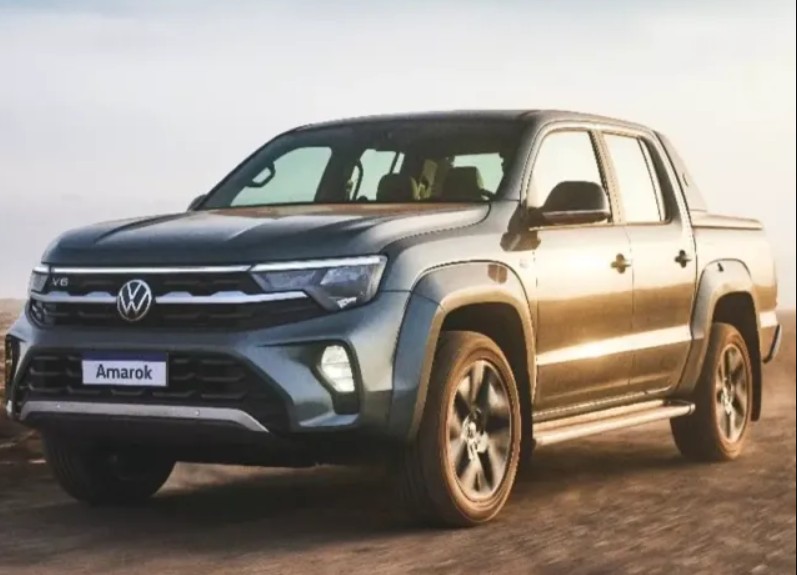
If we are trying to figure out the Volkswagen Amarok fuel tank size, the short answer is refreshingly simple: most Volkswagen Amarok models use an approximately 80-litre fuel tank.
That figure applies to many first-generation Amaroks as well as the newer-generation pickup sold in major markets. Volkswagen's current New Zealand specifications, for example, list an approximate 80 L fuel tank across the Amarok range, while Volkswagen Chile also specifies an 80 L tank for the Amarok V6.
But tank capacity is only half the story.
How far can we actually drive on 80 litres? Does a V6 Amarok have a larger tank than a 2.0-litre diesel? Why might we manage to pump only 70 litres into an apparently empty 80-litre tank? And how much does towing a caravan or trailer change the Amarok's usable driving range?
Those questions matter much more in everyday ownership.
So rather than simply throwing an "80 L" figure at the screen and calling it a day, let's unpack what the Volkswagen Amarok fuel tank capacity actually means on the road.
Content in this publication
- What Is the Volkswagen Amarok Fuel Tank Size?
- Volkswagen Amarok Fuel Tank Capacity at a Glance
- Does the Volkswagen Amarok V6 Have an 80-Litre Tank?
- What About the 2.0-Litre Amarok Fuel Tank?
- How Far Can an Amarok Travel on a Full Tank?
- Fuel Economy Changes Everything
- How Towing Affects Amarok Fuel Range
- Why Can't We Put 80 Litres Into an Empty Amarok?
- Is the Entire 80-Litre Capacity Usable?
- Should We Fill an Amarok Right to the Top?
- Volkswagen Amarok Diesel Fuel Tank Size
- First-Generation Amarok Fuel Tank Size
- Second-Generation Amarok Fuel Tank Size
- Amarok Fuel Tank Size Versus Real Touring Range
- How Payload Affects Fuel Consumption
- Can We Fit a Larger Amarok Fuel Tank?
- Should We Carry Jerry Cans Instead?
- How to Improve Amarok Range From Every Tank
- What Fuel Should We Put in the Amarok?
- How Accurate Is the Amarok Fuel Gauge?
- When Does the Amarok Low-Fuel Warning Come On?
- Is 80 Litres Enough for an Amarok?
- Volkswagen Amarok Fuel Tank Size: What Owners Should Remember
- Conclusion
- Frequently Asked Questions
What Is the Volkswagen Amarok Fuel Tank Size?
For the majority of Amarok configurations owners are likely to encounter, the nominal fuel tank capacity is approximately:
80 litres
That equals roughly:
- 21.1 US gallons
- 17.6 UK imperial gallons
Volkswagen's MY25 New Zealand specification sheet lists an approximate 80 L tank for the Amarok variants covered by the document. The earlier MY23 specification sheet likewise lists 80 litres across its Amarok range.
That gives us a useful rule of thumb:
When somebody asks, "How big is the Volkswagen Amarok fuel tank?", 80 litres is generally the answer to start with.
Nevertheless, Amaroks have been produced for different regions, generations, engines, cab styles, emissions regulations, and equipment packages. Specifications can therefore differ by market or production year.
Before buying replacement parts, fitting an auxiliary tank, calculating an expedition fuel plan, or relying on every last litre, we should verify the specification for the exact vehicle through its owner's documentation or Volkswagen dealer data.
Volkswagen Amarok Fuel Tank Capacity at a Glance
Here is the broad picture.
| Amarok configuration | Typical fuel tank size |
|---|---|
| First-generation Amarok diesel | Around 80 L |
| Amarok 2.0 TDI | Around 80 L |
| Amarok 3.0 V6 TDI | Around 80 L |
| New-generation Amarok 2.0 diesel | Approx. 80 L |
| New-generation Amarok V6 | Approx. 80 L |
The interesting part is that Volkswagen generally hasn't followed the logic of giving the biggest engine a dramatically bigger fuel tank.
Instead, the difference between Amarok variants tends to show up more clearly in fuel consumption and therefore driving range.
It's a little like giving two hikers identical water bottles. The one who drinks more quickly doesn't carry less water; they simply have to refill sooner.
Does the Volkswagen Amarok V6 Have an 80-Litre Tank?
Yes, many Amarok V6 models have an 80-litre fuel tank.
Volkswagen Chile currently describes its Amarok V6 with an 80 L tank, while Volkswagen New Zealand's recent Amarok specifications also list an 80 L approximate capacity across the covered versions.
That is useful because people sometimes assume the 3.0-litre V6 automatically gets a significantly larger tank than four-cylinder Amaroks.
Usually, that's not the case.
Why Doesn't the V6 Need a Bigger Tank?
Packaging is one reason.
A pickup has limited space underneath its chassis once we account for:
- drivetrain components,
- exhaust equipment,
- spare wheel placement,
- suspension,
- four-wheel-drive hardware,
- crash protection,
- payload requirements.
Making the fuel tank substantially larger would involve compromises somewhere else.
Volkswagen evidently decided that around 80 litres provides a practical balance between range, weight, packaging, and refueling convenience.
Does the V6 Use More Fuel?
Generally, we should expect fuel consumption to vary by engine, transmission, trim, tyres, payload, road conditions, and driving style.
Volkswagen's MY25 New Zealand specification sheet, for example, lists 9.6 L/100 km combined consumption for the V6 configurations shown in that document.
Real-world numbers can naturally be different.
A truck rolling along an empty motorway is living an easy life. The same Amarok towing 3 tonnes into a headwind is effectively running uphill all day.
What About the 2.0-Litre Amarok Fuel Tank?
The smaller diesel engines commonly use the same roughly 80-litre tank capacity.
Volkswagen New Zealand has published an Amarok driving review describing an 80 L tank on a 2.0-litre diesel model. In that test, the vehicle recorded 8.4 L/100 km during mixed city and open-road driving.
That combination highlights one advantage of an efficient four-cylinder engine.
The tank doesn't necessarily get larger; instead, each litre can potentially take us farther.
2.0 TDI Versus V6 Range
Imagine two Amaroks carrying the same 80 litres.
If one averages approximately 8.5 L/100 km and another averages 10.5 L/100 km, the more efficient vehicle could theoretically travel much farther before using the same amount of diesel.
That's why tank size alone doesn't determine whether an Amarok feels like a long-distance machine.
Efficiency matters just as much.
How Far Can an Amarok Travel on a Full Tank?
Here is where things become interesting.
With an 80 L tank, a Volkswagen Amarok can potentially cover a substantial distance between fuel stops.
Volkswagen New Zealand reported approximately 8.4 L/100 km during mixed driving in a 2.0-litre Amarok and noted that an 80 L tank could provide range approaching 1,000 km under favorable conditions.
We should treat that as an example, not a guaranteed range.
Real-world distance depends heavily on how and where the truck is driven.
Typical Amarok Driving Range
For everyday use, an Amarok might broadly deliver something in the neighborhood of:
650 to 900+ km per tank
depending on fuel economy.
Under exceptionally efficient highway conditions, approaching 1,000 km may be realistic for some configurations and drivers. Conversely, towing, off-roading, city traffic, roof loads, aggressive acceleration, or heavy payloads can chop hundreds of kilometres from a theoretical maximum.
Fuel Economy Changes Everything
An 80-litre tank is simply storage.
What matters is how quickly the engine drinks from it.
Think of the tank as a bank account and fuel consumption as spending. Two people can start payday with the same balance, but the person spending twice as fast reaches zero much sooner.
The same principle applies here.
Highway Driving
Open-road cruising is normally where the Amarok's tank stretches furthest.
Steady speeds reduce repeated acceleration, while higher transmission gears allow the engine to operate relatively efficiently.
Under favorable circumstances, highway touring is where owners are most likely to see impressive range numbers.
City Driving
Stop-start driving is another story.
Repeated acceleration moves a heavy pickup from rest again and again. Traffic lights, congestion, short trips, cold engines, and idling all consume fuel without covering much distance.
That can noticeably reduce range.
Off-Road Driving
Off-road fuel economy can fall significantly.
Why?
Because we may be:
- climbing steep terrain,
- running lower gears,
- using four-wheel drive,
- driving through sand or mud,
- reducing tyre pressures,
- carrying recovery gear,
- accelerating repeatedly at low speeds.
Distance covered per litre can therefore look terrible compared with highway driving.
Yet that's normal.
An Amarok crawling through deep sand might cover only a few kilometres while performing far more mechanical work than it would cruising the same distance on asphalt.
How Towing Affects Amarok Fuel Range
Anyone buying an Amarok for towing should pay particular attention here.
The Amarok may have an 80 L tank, but attaching a large caravan, horse trailer, boat, or equipment trailer can dramatically increase fuel consumption.
Aerodynamic drag becomes especially important at motorway speeds.
A tall caravan behind the pickup behaves a little like a giant invisible parachute. We press the accelerator, the engine makes more power, and the fuel level begins moving downward considerably faster.
Expect Shorter Refueling Intervals
Suppose an Amarok normally manages excellent highway efficiency when unloaded. Once towing, its consumption could increase substantially depending on:
- trailer weight,
- trailer shape,
- cruising speed,
- hills,
- wind,
- tyre pressures,
- payload,
- engine choice.
That means an 80 L tank that feels enormous during everyday commuting can suddenly feel fairly ordinary.
Plan Fuel Stops Before Remote Towing Trips
When heading into isolated areas, we shouldn't calculate stops using the absolute theoretical maximum range.
Build in a comfortable reserve instead.
Fuel stations close. Headwinds arrive. Detours happen. Mountains appear.
A sensible fuel plan leaves breathing room.
Why Can't We Put 80 Litres Into an Empty Amarok?
This question catches owners all the time.
The dashboard may say the tank is nearly empty, but the pump clicks off after 65 or 70 litres.
Does that mean the tank isn't really 80 L?
Not necessarily.
The Low-Fuel Warning Appears Before the Tank Is Literally Empty
Manufacturers don't generally want us driving until the last drop disappears.
Volkswagen explains that its low-fuel warning indicates the tank has reached its reserve level and advises refueling without delay.
So when the warning appears, there is still fuel in the tank.
That remaining amount helps protect us from becoming stranded immediately after the warning illuminates.
Dashboard Range Is an Estimate
The distance-to-empty display isn't measuring a perfectly predictable future.
Instead, it estimates range partly from recent consumption.
Drive gently and it may rise.
Start towing uphill and it can fall rapidly.
That's why "0 km remaining" should never become a personal challenge.
Never Depend on the Last Few Litres
Fuel can move inside the tank during:
- steep climbs,
- descents,
- cornering,
- uneven off-road travel.
Running extremely low may therefore create problems before every theoretical litre is actually consumed.
Refueling earlier is simply smarter.
Is the Entire 80-Litre Capacity Usable?
Nominal tank capacity and reliably usable fuel shouldn't be treated as exactly the same thing.
Manufacturers quote an approximate tank capacity, while real-world fill amounts may vary because of reserve fuel, tank design, temperature, filling angle, pump shutoff behavior, and other factors.
Volkswagen itself describes the current Amarok's fuel tank figure as approximately 80 litres in its specification sheets.
That word — approximately — matters.
We shouldn't assume that hitting the low-fuel warning means exactly the same number of litres remain every time.
Should We Fill an Amarok Right to the Top?
Normal refueling is straightforward: insert the nozzle, select the correct fuel, and allow the pump's automatic shutoff to stop filling.
Repeatedly squeezing extra fuel in after the nozzle clicks isn't generally useful.
The extra few moments at the pump aren't going to transform an Amarok into an intercontinental expedition truck.
Instead, follow the instructions in the vehicle owner's manual and stop filling according to the recommended procedure.
Don't Confuse Tank Capacity With Fill Amount
We should keep three different numbers separate:
Tank capacity: approximately how much the tank is designed to contain.
Fuel remaining: how much is already inside when we arrive at the station.
Pump amount: how much we actually add.
If an 80 L tank still contains 12 litres, for example, we obviously shouldn't expect the pump to dispense 80 more.
Simple idea, yet it explains countless "my fuel tank is smaller than advertised" discussions.
Volkswagen Amarok Diesel Fuel Tank Size
Diesel Amaroks dominate many markets, and these are the versions for which the 80 L figure is most commonly relevant.
Depending on generation and region, the Amarok has been offered with engines including 2.0-litre four-cylinder diesels and 3.0-litre V6 diesels.
The current-generation New Zealand Amarok specifications continue to show an approximate 80 L tank.
Why an 80-Litre Diesel Tank Works Well
Diesel pickup engines are designed around torque, load carrying, highway travel, towing, and commercial use.
Combine good diesel efficiency with 80 litres of fuel and the result can be strong touring range without requiring an enormous tank.
For many owners, that's the sweet spot.
We can drive meaningful distances between stops without adding the size and weight of a truly massive factory tank.
First-Generation Amarok Fuel Tank Size
The original Volkswagen Amarok established much of the pickup's reputation for long-distance diesel driving.
Many first-generation versions also use an approximately 80-litre fuel tank.
That includes numerous 2.0 TDI and later V6 configurations.
Volkswagen Chile's current listing for its locally offered Amarok V6 explicitly states an 80 L tank.
Why Model Year Still Matters
The first generation existed for a long time and was sold around the world.
Whenever a vehicle spans numerous years and markets, small differences become possible.
We could encounter different:
- engines,
- emissions equipment,
- drivetrains,
- body styles,
- fuel systems,
- regional specifications.
So while "80 litres" is an excellent general answer, the VIN-specific handbook remains the final word for an individual truck.
Second-Generation Amarok Fuel Tank Size
The newer Amarok retains the familiar approximately 80-litre capacity in major markets.
Volkswagen New Zealand's MY23, MY24, and MY25 documentation all identify an approximately 80 L tank across the listed Amarok models.
That consistency makes life easier for buyers comparing trim levels.
We aren't forced into a more expensive variant simply to gain meaningful extra fuel capacity.
Does Trim Level Change Tank Size?
In recent New Zealand specifications, the listed Amarok variants share the same approximate 80 L capacity despite differences in trim and drivetrain.
So moving from one trim to another is generally more about equipment, styling, engine choice, and capability than fuel-storage volume.
Amarok Fuel Tank Size Versus Real Touring Range
Here's the distinction we really care about.
A specification sheet tells us how much fuel fits.
A road trip tells us how useful that fuel actually is.
For long-distance touring, consider four things together:
1. Tank Capacity
About 80 litres gives us the starting point.
2. Consumption
Lower L/100 km means greater range.
3. Reserve Margin
We shouldn't plan to arrive at the station with fumes in the tank.
4. Conditions
Wind, hills, towing, load, terrain, and traffic can change consumption dramatically.
A Better Way to Plan
Instead of asking:
"Can my Amarok theoretically make 850 km?"
Ask:
"Can it comfortably make the next 650 km if conditions become worse than expected?"
That mindset is much more useful, particularly outside major cities.
How Payload Affects Fuel Consumption
The Amarok is designed to carry weight, but physics still sends the bill.
Extra cargo means the engine must move additional mass during acceleration and climbing.
A few lightweight bags won't transform consumption.
A tray loaded with tools, camping equipment, water, spare fuel, recovery equipment, and passengers is another matter.
Roof Accessories Matter Too
Sometimes aerodynamic drag hurts more than weight.
Roof racks, awnings, rooftop tents, storage boxes, and large accessories increase frontal area and disturb airflow.
At low speed, the effect may be minor.
At highway speeds, it can be surprisingly significant.
Air resistance rises rapidly as speed increases, which means pushing bulky accessories through the air demands more energy.
The 80 L tank hasn't become smaller.
It just empties faster.
Can We Fit a Larger Amarok Fuel Tank?
Aftermarket long-range tanks are popular among owners who regularly travel through remote areas.
The idea is appealing.
More diesel means fewer stops and greater independence.
But bigger isn't automatically better.
Advantages of a Long-Range Tank
Potential benefits include:
- longer distance between fuel stations,
- greater flexibility in remote areas,
- less reliance on expensive isolated fuel stops,
- improved expedition planning,
- fewer jerry cans.
Disadvantages to Consider
There are trade-offs:
- additional weight,
- installation cost,
- reduced payload availability,
- possible clearance changes,
- compatibility issues,
- fuel-gauge calibration,
- legal or inspection requirements,
- warranty considerations.
Diesel itself has weight, so adding dozens of litres isn't free payload.
If we rarely travel anywhere more than 200 km from a service station, an aftermarket tank may solve a problem we don't actually have.
Should We Carry Jerry Cans Instead?
For occasional remote travel, portable fuel containers can be more flexible than permanently installing a large tank.
But they need to be approved, properly sealed, securely mounted, and carried according to applicable laws and safety guidance.
Never treat loose fuel containers like ordinary luggage.
Diesel may be less volatile than petrol, but it is still fuel.
For serious touring, a professionally installed long-range tank can often provide a cleaner and more convenient solution.
How to Improve Amarok Range From Every Tank
We don't need a larger tank to travel farther.
Sometimes the cheapest extra range is simply the fuel we stop wasting.
A few sensible habits can make the existing 80 litres work harder:
- Keep tyre pressures appropriate. Underinflated tyres increase rolling resistance.
- Remove unnecessary weight. Don't carry half the garage everywhere.
- Reduce unnecessary roof drag. Remove unused racks or accessories when practical.
- Accelerate progressively. Full-throttle launches aren't famous for fuel economy.
- Maintain sensible highway speeds. Aerodynamic resistance becomes increasingly costly as speed rises.
- Service the vehicle properly. Engine, air intake, tyres, and drivetrain condition matter.
- Plan towing speeds realistically. A small reduction in speed can sometimes make a noticeable consumption difference.
- Use trip-computer data intelligently. Track long-term averages rather than judging the truck from one short drive.
None of these turns an Amarok into a tiny hatchback.
That's not the point.
We're simply helping a capable pickup use its fuel more efficiently.
What Fuel Should We Put in the Amarok?
The correct fuel depends on the exact Amarok engine and market specification.
Most Amaroks encountered in markets such as Australia and New Zealand use diesel power, but specifications vary globally.
Always follow the fuel requirement printed inside the fuel flap or listed in the owner's manual.
Don't select fuel based solely on what another Amarok owner uses.
Two pickups can wear almost identical badges while having different engines underneath.
What Happens If We Use the Wrong Fuel?
If the wrong fuel is added, avoid starting the engine.
Running an incompatible fuel through the system can turn a manageable draining job into a considerably more expensive repair.
Contact roadside assistance or an appropriate workshop for guidance.
How Accurate Is the Amarok Fuel Gauge?
The gauge is designed to provide useful information, not laboratory-grade measurement.
Fuel moves around inside the tank constantly.
Parking on a slope or driving over uneven terrain may temporarily affect the indicated level.
Modern electronics smooth much of that behavior, but the display still shouldn't be treated as a measuring cylinder.
Watch the Trend, Not Every Pixel
If the gauge seems to drop quickly immediately after filling and then slows, or behaves slightly differently depending on parking angle, that does not necessarily indicate a fault.
Persistent unusual behavior is different.
If the gauge suddenly reads empty after filling, remains stuck at full for hundreds of kilometres, or repeatedly gives implausible readings, the sender, wiring, instrument system, or related components may need inspection.
When Does the Amarok Low-Fuel Warning Come On?
Exact reserve behavior can vary, so we shouldn't build a trip plan around one universal number of litres.
Volkswagen states generally that the amber low-fuel warning means the tank has reached its reserve level and advises drivers to refuel without delay.
That's the right way to interpret it.
The light means find fuel, not begin testing Volkswagen's engineering tolerances.
How Far Can We Drive After the Fuel Light?
There is no responsible fixed-distance answer.
Remaining range depends on:
- fuel actually left,
- current consumption,
- terrain,
- traffic,
- towing,
- temperature,
- idling,
- driving style.
If the display says 70 km remaining, that isn't a promise engraved in stone.
Conditions can change faster than the computer predicts.
Is 80 Litres Enough for an Amarok?
For most everyday owners, yes.
An 80 L tank strikes a strong balance between practical range and vehicle packaging.
During efficient touring, the Amarok can travel impressively far between stops. Volkswagen New Zealand's own 2.0-litre diesel road test recorded 8.4 L/100 km and described potential range approaching 1,000 km from the 80 L tank.
For routine driving, highway trips, work duties, and moderate towing, that is plenty for most people.
Where 80 litres begins feeling restrictive is serious remote touring or heavy towing across areas with very large gaps between reliable service stations.
That's when long-range tanks and additional fuel planning start making sense.
Volkswagen Amarok Fuel Tank Size: What Owners Should Remember
We can reduce this whole discussion to a few practical principles.
The Volkswagen Amarok fuel tank size is generally around 80 litres, including many older 2.0 TDI and V6 vehicles as well as the newer-generation Amarok. Current official Volkswagen New Zealand documentation lists approximately 80 litres across its Amarok range, and Volkswagen Chile likewise specifies an 80 L tank for its V6 Amarok.
But an 80 L tank doesn't automatically mean a certain driving range.
Range depends on fuel consumption.
And consumption depends on almost everything we do with the pickup.
Drive gently on an open highway and the tank can feel like a bottomless well. Hook up a heavy caravan, point the nose into a headwind, and climb through mountain country, and suddenly that same gauge seems to move like the second hand on a clock.
That's pickup ownership in a nutshell.
Conclusion
The answer to "What is the Volkswagen Amarok fuel tank size?" is straightforward: approximately 80 litres for many Amarok models and configurations.
That works out to roughly 21.1 US gallons or 17.6 imperial gallons and provides the Amarok with useful long-distance capability, particularly when paired with an efficient diesel engine.
An 80 L tank can potentially support anything from roughly 650 km of demanding driving to 900 km or more under favorable circumstances, with some efficient driving scenarios approaching the 1,000 km mark. The exact result comes down to engine choice, terrain, speed, payload, towing, weather, and driving style.
So rather than obsessing over the final litre, we prefer a simpler philosophy: know the truck's real consumption, leave a sensible reserve, and plan fuel stops around realistic conditions.
Do that, and the Amarok's tank is more than big enough for everyday adventures — whether we're heading to work Monday morning or watching the last service station disappear in the rear-view mirror on Friday afternoon.
Frequently Asked Questions
1. What is the fuel tank capacity of a Volkswagen Amarok?
Most Volkswagen Amarok models have an approximately 80-litre fuel tank. Current Volkswagen New Zealand specifications list an 80 L approximate capacity for the Amarok variants shown. Always check the specification for the exact year and market because regional differences can occur.
2. How many gallons does an Amarok fuel tank hold?
An 80-litre Amarok tank is roughly equivalent to 21.1 US gallons or 17.6 imperial gallons. Remember that the amount dispensed during refueling will usually be less than the full rated tank capacity because some fuel remains in the tank.
3. How far can a Volkswagen Amarok travel on a full tank?
Real-world range can vary substantially, but roughly 650 to 900+ km can be reasonable depending on engine, road conditions, driving style, payload, and towing. Volkswagen New Zealand has reported 8.4 L/100 km from a 2.0-litre Amarok in mixed driving and noted potential range approaching 1,000 km from its 80 L tank.
4. Does the Amarok V6 have a larger fuel tank than the 2.0 TDI?
Not necessarily. Many Amarok V6 and 2.0-litre diesel variants use the same approximately 80 L fuel capacity. Their range can differ because the engines may consume fuel at different rates rather than because one carries dramatically more diesel.
5. Why can I only put 65 or 70 litres into my 80-litre Amarok tank?
Because the tank normally isn't completely empty when you refuel. The low-fuel warning activates when reserve fuel remains, rather than after every usable drop has disappeared. Volkswagen advises refueling once the reserve warning appears. Pump shutoff behavior, parking angle, temperature, and existing fuel can also affect the amount added.
If you want to know other articles similar to Volkswagen Amarok Fuel Tank Size: Capacity, Range, and Refueling Guide you can visit the category Service and Parts.
Kia Sorento Service Reset: How to Reset the Service Light
Kia Sorento Fuel Tank Capacity: Gallons, Litres and Model Differences
Kia Sorento Tyre Pressure: Recommended PSI, Bar and Complete Guide
Kia Sorento Boot Space: How Much Luggage Space Does It Really Have?
Kia Sorento Towing Capacity: How Much Can a Sorento Tow?

Honda Passport Payload Capacity: How Much Weight Can It Carry?
Leave a Reply
More content of your interest