
Volkswagen Amarok Engine Size: Complete Guide to 2.0L and 3.0L Engines

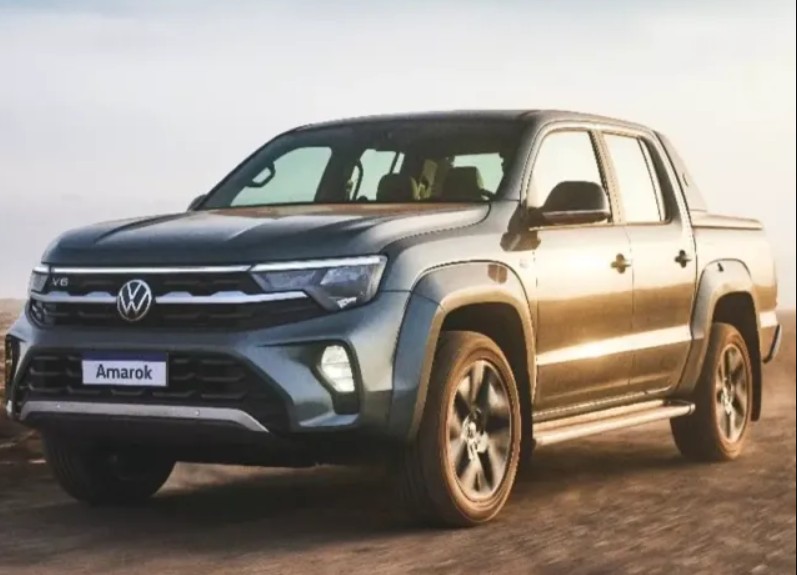
Ask what makes the Volkswagen Amarok interesting and we’ll probably hear plenty about its towing ability, four-wheel-drive system, comfortable cabin, or unusually refined road manners for a pickup. But beneath all of that sits the part that really defines how an Amarok feels: its engine.
The Volkswagen Amarok engine size depends heavily on the generation, model year, specification, and country in which the truck was sold. Across its history, the Amarok has most commonly been associated with 2.0-liter four-cylinder diesel engines and 3.0-liter V6 diesel engines. Current specifications also vary by market, so we should never assume that two Amaroks wearing the same badge necessarily have identical powertrains.
In the current UK range, for example, Volkswagen promotes the new Amarok with V6 power and a towing capacity of up to 3.5 tonnes when appropriately configured. Volkswagen's current Amarok offers also identify a 3.0 TDI producing 240 PS in certain UK specifications.
Meanwhile, some markets continue to offer versions of the previous-generation design. Volkswagen Argentina currently advertises an Amarok V6 with a 3.0-liter TDI producing 258 CV, temporarily rising to 272 CV through overboost, paired with an eight-speed transmission and permanent 4MOTION four-wheel drive.
Confusing? A little. That's precisely why we're going deeper.
Content in this publication
- What Engine Size Does the Volkswagen Amarok Have?
- Volkswagen Amarok Engine Sizes at a Glance
- The 2.0-Liter TDI Amarok Engine
- The 3.0-Liter V6 TDI Amarok Engine
- Volkswagen Amarok 2.0 vs 3.0 Engine Size
- Is the 2.0-Liter Amarok Underpowered?
- Is the 3.0 V6 Amarok Worth It?
- Amarok Engine Size and Towing Capacity
- Amarok Engine Size and Fuel Economy
- First-Generation Volkswagen Amarok Engine Sizes
- Second-Generation Volkswagen Amarok Engine Size
- Why Amarok Engine Specs Vary Between Countries
- Does Amarok Engine Size Affect Reliability?
- Which Amarok Engine Is Best for Daily Driving?
- Which Volkswagen Amarok Engine Should We Buy?
- How to Identify Your Amarok Engine Size
- 2.0 TDI vs 3.0 V6 TDI: Our Practical Verdict
- Should You Choose an Amarok Based on Engine Size Alone?
- Final Thoughts on Volkswagen Amarok Engine Size
- Frequently Asked Questions
What Engine Size Does the Volkswagen Amarok Have?
The short answer is that most Volkswagen Amaroks you'll encounter use either a 2.0-liter diesel four-cylinder engine or a 3.0-liter V6 diesel engine.
Which one sits under the hood depends on where the vehicle was sold and when it was manufactured.
The original Amarok became particularly well known for its 2.0 TDI engines. Later, Volkswagen introduced the larger 3.0-liter V6 TDI, changing the character of the truck considerably. Instead of relying purely on a relatively small turbocharged four-cylinder, buyers could now get a larger six-cylinder diesel with substantially stronger torque delivery.
Today the story is even more market-dependent because different versions of the Amarok are sold internationally. Volkswagen's UK operation currently markets 3.0 TDI Amarok variants, while Volkswagen Argentina continues to list its locally available V6 Amarok with the 258 CV version of the 3.0 TDI.
So whenever we're shopping for one, the smartest question isn't simply, “What size engine does an Amarok have?”
It's:
“Which Amarok, from which year and which market?”
That distinction matters.
Volkswagen Amarok Engine Sizes at a Glance
Although engine availability varies considerably between countries and model years, the Amarok story can broadly be understood through two main diesel capacities:
- 2.0-liter TDI: four-cylinder diesel engine, offered in several power outputs and historically available in single- and twin-turbo configurations depending on specification.
- 3.0-liter V6 TDI: six-cylinder turbodiesel, introduced as the more powerful and torque-rich option and offered in several output levels over the years.
- Current 3.0 TDI variants: Volkswagen Commercial Vehicles UK presently advertises a 240 PS 3.0 TDI Amarok, while other markets use different calibrations.
- 258 CV V6 version: Volkswagen Argentina lists a 3.0 TDI V6 producing 258 CV and as much as 272 CV with overboost.
- Market differences matter: specifications, transmissions, emissions equipment, power ratings, and drivetrain combinations can differ even when engine displacement appears identical.
Think of those engines as two different personalities wearing the same work boots. The 2.0 TDI tends to represent practicality and efficiency, while the 3.0 V6 generally emphasizes effortless performance.
The 2.0-Liter TDI Amarok Engine
Why Volkswagen Used a 2.0-Liter Diesel
When a pickup looks as substantial as an Amarok, a 2.0-liter engine can initially sound small.
That's misleading.
Turbocharging allows a relatively compact diesel engine to produce strong low-speed torque without requiring enormous displacement. Diesel engines are also naturally suited to utility vehicles because their useful pulling power arrives relatively low in the rev range.
This was central to the original Amarok formula.
Rather than putting a huge engine in the truck and accepting the corresponding thirst, Volkswagen approached the problem more like an engineer trimming unnecessary weight from a backpack: use a smaller capacity, then extract the performance through turbocharging and careful calibration.
That philosophy helped distinguish the Amarok from some traditional pickups that historically relied on larger engines.
Single-Turbo and Bi-Turbo 2.0 TDI Engines
One reason researching a used Amarok can become complicated is that saying “2.0 TDI” doesn't tell us everything.
Various versions of the 2.0-liter diesel appeared with different turbocharger arrangements and power outputs.
In practical terms, the more powerful twin-turbo or bi-turbo versions were designed to broaden the engine's useful torque band. Rather than feeling energetic only within a narrow slice of engine speed, they could provide better response across a wider operating range.
For buyers, this means engine displacement alone shouldn't dictate the decision.
Two Amaroks can both say 2.0 TDI and still feel noticeably different on the road.
Why Power Output Matters as Much as Capacity
Engine size tells us displacement.
It does not tell us the entire performance story.
Turbo pressure, fuel injection, software calibration, transmission gearing and emissions tuning all influence how quickly an Amarok accelerates and how comfortably it handles a load.
That's why we should always check the actual engine code or official specification for the exact vehicle we're considering rather than assuming every 2.0-liter Amarok performs identically.
The 3.0-Liter V6 TDI Amarok Engine
The arrival of the 3.0-liter V6 TDI transformed the Amarok's personality.
The larger engine didn't merely add power. It made the truck feel more relaxed when that power was required.
Volkswagen has offered multiple calibrations of the V6 over time and across different markets. Volkswagen's current Argentine model page, for instance, specifies 258 CV with up to 272 CV during overboost, while Volkswagen Commercial Vehicles UK currently advertises Amarok offers using a 240 PS 3.0 TDI.
That demonstrates something important: 3.0-liter displacement doesn't automatically mean one universal horsepower figure.
Why the V6 Feels So Different
Imagine carrying a heavy suitcase upstairs.
A smaller engine can certainly do the work, but it may need to push harder. A larger torque-rich engine does the same job while appearing less bothered by it.
That's essentially the appeal of the V6 Amarok.
With six cylinders and greater displacement, the engine has more breathing room when accelerating, overtaking, climbing hills or pulling a trailer.
Volkswagen previously described a 258 PS version of its 3.0-liter V6 TDI as producing up to 580 Nm of torque, with an additional 14 PS available through overboost.
Numbers like those explain why V6 Amaroks gained such a strong following.
3.0 V6 TDI Torque
Torque deserves particular attention in a pickup.
Horsepower sells posters. Torque pulls trailers.
More accurately, both matter, but strong low- and mid-range torque makes a pickup feel capable without constantly demanding downshifts or high engine speeds.
The 580 Nm figure quoted by Volkswagen for its 258 PS V6 illustrates the substantial reserves available from that particular version.
When we're driving without a trailer, that usually translates into strong overtaking ability.
Add weight, passengers, camping equipment or a caravan, and the advantage becomes even easier to appreciate.
Does More Torque Automatically Mean Better?
Not always.
Someone commuting through a city every day may never exploit the extra capability of a V6. Meanwhile, the owner repeatedly hauling heavy equipment across highways may value every additional Newton-metre.
The correct engine isn't necessarily the biggest one.
It's the one that matches what we actually do.
Volkswagen Amarok 2.0 vs 3.0 Engine Size
Now we reach the comparison most buyers really care about.
Is the 2.0 TDI enough, or should we hunt down a V6?
There's no universal winner.
The 2.0-liter Amarok makes sense when priorities include everyday usability, potentially lower fuel consumption, simpler expectations and a lower purchase price in many used markets.
The 3.0 V6 TDI, meanwhile, makes a compelling case when towing, highway performance and effortless acceleration matter more.
Both can be excellent tools. They're simply different kinds of tools.
A 2.0 TDI is like a good cordless drill: compact, efficient and capable of performing most everyday jobs.
The V6 is the heavier impact wrench sitting beside it.
We may not need it every day, but when the serious work arrives, we'll be glad it's there.
Is the 2.0-Liter Amarok Underpowered?
Not automatically.
Engine capacity can deceive us because modern turbocharged engines produce considerably more usable output than their displacement alone suggests.
A 2.0-liter diesel in a large pickup sounds modest on paper, especially to drivers accustomed to three-, four- or even five-liter utility engines.
But what matters is how the entire drivetrain works together.
Transmission gearing can keep the engine in its strongest range. Turbocharging dramatically increases the amount of air entering the cylinders. Modern injection systems precisely control fuel delivery.
The result is that a 2.0 TDI Amarok can provide perfectly acceptable performance for many owners.
Would we choose it over a V6 for routinely towing the heaviest possible trailer?
Probably not.
For daily driving, moderate loads and ordinary recreational use?
Absolutely plausible.
Is the 3.0 V6 Amarok Worth It?
For certain buyers, yes.
The V6's biggest advantage isn't simply acceleration. It's effortlessness.
A strong diesel engine can make a heavy pickup feel surprisingly unstressed. We press the accelerator, torque arrives, and the vehicle gathers speed without the frantic sensation we sometimes experience from smaller powerplants.
The 3.0 TDI is therefore especially attractive for long-distance drivers, regular towers and buyers who simply enjoy having performance in reserve.
Current UK Amarok marketing specifically highlights V6 power alongside up to 3.5 tonnes of towing capacity with automatic transmission, reinforcing the truck's heavy-duty positioning.
Of course, towing limits depend on the exact configuration, market and legal requirements, so the manufacturer's data plate and local specifications should always take priority.
Amarok Engine Size and Towing Capacity
Engine displacement doesn't technically determine towing capacity by itself.
That's worth emphasizing.
A vehicle's tow rating reflects the entire engineering package: engine cooling, transmission, brakes, chassis, suspension, axle ratings and drivetrain configuration all matter.
However, engine characteristics determine how pleasant towing feels.
A larger torque-rich engine can pull a heavy trailer away from junctions more confidently, maintain highway speeds with less effort and climb gradients without constantly searching for gears.
Volkswagen currently describes the UK Amarok as capable of towing up to 3.5 tonnes with automatic transmission, depending on specification.
Which Amarok Engine Is Better for Towing?
If regular heavy towing sits high on our priority list, the V6 is generally the more desirable engine.
Not because a four-cylinder Amarok suddenly becomes incapable, but because extra displacement and torque provide a useful performance cushion.
Think about driving uphill with a trailer in hot weather.
An engine working near the upper end of its comfortable performance range has less reserve.
A larger engine producing the same road speed with less apparent effort gives us more flexibility for overtaking, gradients and changing traffic conditions.
That's valuable.
Amarok Engine Size and Fuel Economy
Here's where smaller engines traditionally strike back.
A 2.0-liter diesel has a theoretical efficiency advantage because it has less displacement and fewer cylinders than a 3.0-liter V6.
Real-world fuel consumption, however, isn't dictated by capacity alone.
Driving style matters enormously.
So do vehicle weight, tyres, road speed, aerodynamics, transmission gearing, terrain and payload.
A lightly loaded 2.0 TDI driven calmly may be economical.
Load the same vehicle heavily and drive it aggressively, however, and its smaller engine may spend more time working hard.
Conversely, the V6 consumes more fuel under many comparable circumstances but may achieve surprisingly sensible consumption on long journeys because it can maintain speed with relatively little effort.
We shouldn't select an engine purely by assuming “smaller equals cheaper.”
Calculate how we'll actually use the truck.
First-Generation Volkswagen Amarok Engine Sizes
The first-generation Amarok established Volkswagen in a pickup segment dominated by manufacturers with decades of utility-vehicle experience.
Its smaller-displacement turbodiesel philosophy was a major part of that identity.
Early trucks predominantly relied on 2.0-liter TDI power, while later versions expanded the range with the 3.0-liter V6 TDI.
That change reflected more than a race for horsepower.
The V6 pushed the Amarok closer toward the increasingly popular lifestyle-pickup category, where buyers expected towing ability and durability but also strong highway performance, refinement and premium equipment.
The result was a truck that could spend Friday hauling equipment and Saturday carrying the family without feeling completely out of place in either role.
Second-Generation Volkswagen Amarok Engine Size
The newer-generation Amarok continues the idea of offering different engines according to specification and market.
One of the most visible current configurations in Europe is the 3.0-liter V6 TDI. Volkswagen Commercial Vehicles UK currently lists a 3.0 TDI Amarok with 240 PS in its offers and promotes the truck's V6 power more broadly on its model page.
The important lesson for buyers is that Amarok specifications have become increasingly market-specific.
An article written about an Australian Amarok may not perfectly describe a UK truck.
A South American model can differ again.
So rather than relying purely on the badge, verify the specification associated with the VIN, registration year and local Volkswagen documentation.
Why Amarok Engine Specs Vary Between Countries
Vehicle manufacturers rarely offer identical lineups worldwide.
Emissions rules vary.
Fuel quality varies.
Taxes can depend on displacement or emissions.
Customer preferences vary.
Manufacturing arrangements and local product strategies differ too.
That's why one country's Volkswagen website can show an engine that another market doesn't sell at all.
Argentina provides a particularly interesting example because Volkswagen currently promotes the V6 Amarok there with 258 CV, rising to 272 CV with overboost, an eight-speed transmission and permanent 4MOTION drivetrain.
The UK range, meanwhile, presently advertises different specifications, including a 240 PS 3.0 TDI.
Same model name.
Same 3.0-liter nominal displacement.
Different outputs.
Does Amarok Engine Size Affect Reliability?
This is where we'd avoid easy conclusions.
A bigger engine isn't automatically more reliable.
Neither is a smaller one.
Reliability depends on design, maintenance, operating conditions and how previous owners treated the vehicle.
A meticulously serviced 2.0 TDI can be a far safer used purchase than a neglected V6.
The reverse is equally true.
Turbochargers, diesel particulate filters, EGR systems, fuel injectors, cooling components and transmission condition deserve careful inspection on any modern diesel pickup.
Service history matters tremendously.
If we're shopping used, we'd rather see boring paperwork documenting years of correct maintenance than a shiny set of aftermarket wheels hiding a questionable mechanical history.
Maintenance Matters More Than Displacement
Oil quality and correct service intervals are especially important with turbocharged diesel engines.
Turbochargers spin at extraordinary speeds and depend on clean lubrication.
Modern diesel emissions systems also dislike vehicles that spend their entire lives making tiny cold-start journeys.
So when evaluating a 2.0 versus 3.0 Amarok, don't merely compare cubic centimeters.
Compare histories.
How frequently was the oil changed?
Was the correct specification used?
Was servicing performed consistently?
Has the vehicle spent its life towing?
Those questions tell us more about the future than the engine badge alone.
Which Amarok Engine Is Best for Daily Driving?
For uncomplicated everyday transport, we wouldn't automatically dismiss the 2.0 TDI.
If the truck mainly carries one or two people, occasionally transports moderate loads and spends most of its time commuting, the four-cylinder may provide everything required.
The V6 becomes tempting when daily driving includes high-speed highways, hills, frequent overtaking or regular towing.
There's also the emotional side.
Nobody buys every vehicle based purely on spreadsheets.
A V6 pickup has a certain sense of abundance. The accelerator doesn't feel like a request; it feels more like an instruction.
That may have no practical value during a five-kilometre commute.
But we'll understand why owners enjoy it.
Which Volkswagen Amarok Engine Should We Buy?
Start with how the vehicle will spend 90% of its life.
If we're mostly commuting, carrying modest loads and occasionally heading off-road, a properly maintained 2.0 TDI could be the sensible choice.
If we're towing a substantial caravan every month, crossing mountainous terrain or regularly carrying heavy loads, the V6 begins to justify itself.
Then factor in the purchase price.
After that comes fuel.
Then insurance.
Then maintenance.
Only once we've considered all of those should we allow horsepower to seduce us.
Because buying more engine than we need can become expensive.
Buying less engine than we need can become annoying.
The sweet spot sits somewhere between them.
How to Identify Your Amarok Engine Size
The safest approach is to verify the exact vehicle rather than relying on appearance.
Badges can be removed.
Tailgates can be replaced.
Vehicles get modified.
Documentation is harder to argue with.
Check the registration documents, VIN-linked specification, service records and manufacturer information. The engine code can provide an even more precise identification when replacement parts or technical specifications are required.
This becomes especially important when ordering components.
“Volkswagen Amarok 2.0 diesel” may not contain enough information for the correct turbocharger, filter, sensor or engine-management component.
Model year and engine code remove much of the ambiguity.
What Does TDI Mean on an Amarok?
TDI is Volkswagen's long-established designation associated with turbocharged direct-injection diesel engines.
In an Amarok context, seeing TDI tells us we're dealing with a diesel powertrain, but it doesn't tell us the capacity or output on its own.
We still need to know whether we're looking at a 2.0-liter four-cylinder or a 3.0-liter V6 and which calibration applies.
Why the Engine Code Is Useful
An engine code functions almost like the engine's surname.
Two engines may share the same displacement but use different components, software and performance specifications.
That's why technicians and parts suppliers often care more about the engine code than the badge attached to the tailgate.
For owners planning long-term maintenance, finding and recording the correct code early can save plenty of headaches later.
2.0 TDI vs 3.0 V6 TDI: Our Practical Verdict
We can reduce the entire debate to one simple idea.
The 2.0 TDI is usually the rational Amarok engine. The 3.0 V6 TDI is the effortless one.
That doesn't mean the smaller engine is boring or the larger one is wasteful.
Instead, each solves a slightly different problem.
The 2.0 TDI appeals to buyers who want a capable pickup without automatically stepping into the largest available powertrain.
The V6 suits drivers who expect their Amarok to tow, travel long distances and accelerate confidently even when loaded.
Volkswagen's own marketing reflects this positioning. The present UK Amarok is promoted around V6 power and up to 3.5 tonnes of towing capacity, while current Argentine specifications highlight the substantial output and torque available from the locally sold 3.0 TDI V6.
Neither answer is wrong.
The mistake would be choosing one without considering how we'll actually use it.
Should You Choose an Amarok Based on Engine Size Alone?
No.
Engine capacity belongs near the top of the checklist, but it shouldn't be the entire checklist.
Condition matters more.
Service history matters more.
Transmission condition can matter more.
Previous use matters enormously.
A carefully maintained four-cylinder truck with complete records can make far more sense than a suspiciously cheap V6 that spent years dragging maximum-weight trailers and missing services.
We should buy the vehicle first and the engine badge second.
That philosophy is especially valuable in the used market.
Final Thoughts on Volkswagen Amarok Engine Size
Understanding Volkswagen Amarok engine size becomes surprisingly straightforward once we stop trying to treat every Amarok as the same truck.
Historically, the two engine capacities most strongly associated with the model are 2.0 liters and 3.0 liters.
The 2.0 TDI represents the smaller four-cylinder side of the family: practical, turbocharged and capable of handling ordinary pickup duties without requiring huge displacement.
The 3.0 TDI V6 moves the Amarok into another league of performance. It provides the stronger, smoother torque delivery many drivers want for towing, highway travel and heavy-duty use. Current specifications demonstrate how much the exact output can vary: Volkswagen advertises a 240 PS 3.0 TDI in today's UK market, while its Argentine operation offers a 258 CV V6 that can reach 272 CV temporarily through overboost.
So which one would we choose?
For an everyday pickup where economy and practicality matter, we'd seriously consider a well-maintained 2.0 TDI.
For regular towing, long-distance travel and effortless performance, we'd lean toward the 3.0 V6.
But we'd choose condition over capacity every time.
A good engine with a bad history can become a financial sinkhole remarkably quickly.
A properly maintained Amarok, on the other hand, can combine workhorse capability with a driving experience that feels far more polished than the traditional pickup stereotype.
And that's ultimately why engine size matters.
It isn't simply a number printed in a brochure.
It changes the entire personality of the truck.
Frequently Asked Questions
1. What engine size is a Volkswagen Amarok?
Volkswagen Amarok engine size varies according to model year and market, but the two capacities most commonly associated with the Amarok are 2.0-liter four-cylinder TDI diesel engines and 3.0-liter V6 TDI diesel engines. Current engine availability differs between countries.
2. Is the Amarok 2.0 or 3.0 better?
The 2.0 TDI can be the more sensible option for everyday driving and lighter-duty work, while the 3.0 V6 TDI generally offers stronger performance and more effortless towing. The best choice ultimately depends on workload, purchase price, running costs and the condition of the individual vehicle.
3. Is the Volkswagen Amarok V6 a 3.0-liter engine?
Yes. Amarok models carrying the V6 TDI powertrain use a 3.0-liter diesel engine. Power output varies by generation and country. Volkswagen currently lists a 240 PS 3.0 TDI in certain UK Amarok offers, while the Argentine V6 is advertised at 258 CV with up to 272 CV through overboost.
4. How much torque does the 3.0 Amarok V6 have?
It depends on the particular engine version. Volkswagen has documented a 258 PS version of the 3.0-liter V6 TDI producing up to 580 Nm of torque, demonstrating why the V6 became particularly attractive for towing and high-load driving.
5. Which Amarok engine is best for towing?
For frequent heavy towing, we'd generally favor the 3.0-liter V6 TDI because its larger displacement and strong torque delivery make pulling substantial loads feel less demanding. Current UK Volkswagen specifications advertise up to 3.5 tonnes of towing capacity for appropriately configured automatic Amaroks, although the exact legal and technical rating must always be checked for the individual vehicle.
If you want to know other articles similar to Volkswagen Amarok Engine Size: Complete Guide to 2.0L and 3.0L Engines you can visit the category Service and Parts.
Nissan Qashqai Fuel Tank Capacity: Complete Guide

Suzuki Swift Fuel Tank Capacity: Complete Guide
Mazda CX-5 Weight (2013–2026): Complete Guide in Pounds and KG
Kia Sportage Dashboard Symbols and Warning Lights

MINI Cooper Weight (2002–2027): Complete Weight Chart & Guide
Toyota RAV4 Engine Sizes: Complete Guide (1994–2026)
Leave a Reply
More content of your interest