

Holden Colorado vs VW Amarok: Which Used Ute Is Better?

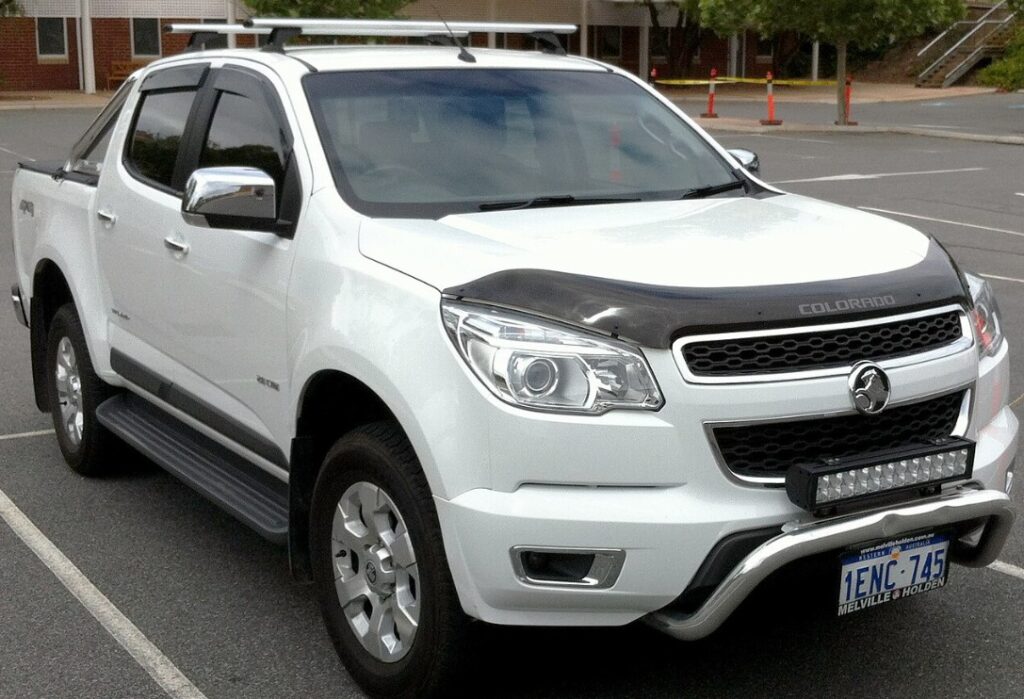
When we compare the Holden Colorado vs VW Amarok, we're looking at two utes that approached the same job from noticeably different directions. The Colorado built its reputation around straightforward diesel muscle, strong towing credentials, and a relatively no-nonsense personality. The Volkswagen Amarok, particularly in V6 form, brought more European polish, stronger performance, and a cabin that often felt closer to an SUV than a traditional work ute.
There's another wrinkle. Holden retired the Colorado following the end of the Holden brand in Australia, meaning every Colorado is now a used-vehicle proposition. Volkswagen, meanwhile, continues to sell the Amarok, although today's second-generation model is substantially different from the first-generation Amarok that competes most directly with late-model Colorados on the used market.
So which one makes more sense?
If we're shopping for a second-hand dual-cab ute, the answer isn't as simple as choosing the one with the biggest engine or fanciest badge. Purchase price, service history, towing requirements, off-road use, comfort and long-term repair costs can completely change the equation.
Let's put them side by side.
Content in this publication
- Holden Colorado vs Volkswagen Amarok at a Glance
- The Basic Difference Between Colorado and Amarok
- Engine Performance: Which Ute Feels Stronger?
- Towing: Holden Colorado vs VW Amarok
- Ride Comfort and Everyday Driving
- Interior Quality and Technology
- Off-Road Ability
- Reliability: Is Colorado or Amarok Better?
- Running Costs and Maintenance
- Fuel Economy: Does the Amarok V6 Drink Much More?
- Colorado vs Amarok for Work
- Which One Has Better Towing Value?
- Used Holden Colorado vs Used VW Amarok: What Should We Inspect?
- Which Ute Is Better for Heavy Towing?
- Which Is Better Off-Road?
- Which Holds Up Better as a Used Buy?
- Who Should Buy the Holden Colorado?
- Who Should Buy the Volkswagen Amarok?
- Holden Colorado vs VW Amarok: Our Verdict
- Frequently Asked Questions
- Closing Thoughts
Holden Colorado vs Volkswagen Amarok at a Glance
For the fairest used-market comparison, we'll concentrate primarily on late RG-series Holden Colorados and first-generation Amaroks. Exact specifications vary considerably by year, engine, transmission and trim, so any individual vehicle should always be checked against its compliance plate, handbook and factory specifications.
| Category | Holden Colorado | Volkswagen Amarok |
|---|---|---|
| Main late-model diesel | 2.8L four-cylinder turbo diesel | 2.0L four-cylinder or 3.0L V6 turbo diesel |
| Character | Rugged and straightforward | Refined and performance-oriented |
| Braked towing | Up to 3,500 kg on relevant models | Up to 3,500 kg on later V6 versions |
| Best suited to | Value, touring, towing, work | Comfort, performance, towing, daily driving |
| Used-market status | Discontinued | First generation discontinued; newer Amarok available |
| Cabin feel | Functional | More premium |
| Main attraction | Capability for the money | Strong V6 performance and refinement |
Late Colorado models were rated to tow as much as 3,500 kg braked, while MY18-and-later Amarok V6 models also received a 3,500 kg braked rating. Earlier four-cylinder Amaroks could have lower limits, illustrating why we should never assume every Amarok has the same towing capacity.
The Basic Difference Between Colorado and Amarok
Think of the Colorado as a sturdy pair of work boots. It isn't necessarily elegant, but that's hardly the point. It wants to tow the boat, carry the tools, tackle the campsite and come back for another round.
The original Amarok feels more like those same boots made from better leather.
Volkswagen attempted to inject a distinctly European character into the ute formula. That's particularly obvious when we drive an Amarok V6. There's effortless low-end shove, a relatively sophisticated cabin and a sense that Volkswagen wanted owners to enjoy the journey rather than simply survive it.
Neither philosophy is inherently better.
A buyer who wants maximum equipment and power for every dollar might prefer a Colorado. Someone spending three hours a day behind the wheel might happily pay extra for the Amarok's refinement.
Colorado Takes the Traditional Ute Approach
The RG Colorado sold from 2012 through 2020, with a substantial update arriving during its lifespan. Later versions use Holden's 2.8-litre turbo-diesel four-cylinder engine and became the Colorado models many used buyers now target.
That engine's appeal isn't mystery or sophistication. It's torque.
Late Colorado diesels produced around 500 Nm when paired with the automatic transmission, giving the Holden respectable pulling ability without needing six cylinders.
Amarok Adds a Little More Sophistication
Early Amaroks became known for their 2.0-litre four-cylinder diesel engines, but the arrival of the 3.0-litre V6 diesel changed the personality of the range.
Suddenly, the Amarok wasn't simply an alternative to a HiLux, Ranger or Colorado. It became the ute people bought because they actually wanted the engine.
That distinction matters.
If we're comparing an ordinary four-cylinder Amarok against a 2.8 Colorado, the decision can be remarkably close. Put a powerful Amarok V6 beside the Colorado and the VW starts playing a different game.
Engine Performance: Which Ute Feels Stronger?
The Colorado's 2.8-litre turbo diesel does exactly what most ute owners need. Torque arrives where it's useful, and there is enough muscle for highway overtaking, hills, trailers and loaded trays.
But the Amarok V6 is the standout here.
Its six-cylinder diesel delivery feels smoother and less strained than the Colorado's four-cylinder engine. Rather than working its way through a hill, the V6 tends to flatten it.
Does everyone need that extra performance?
Absolutely not.
That's one of the traps of ute shopping. We can become obsessed with output figures when our actual driving consists of commuting, hardware-store runs and towing a camper six weekends a year.
For ordinary use, the Colorado offers plenty. For effortless performance, however, the V6 Amarok has the stronger hand.
What About a Four-Cylinder Amarok?
Now things become more complicated.
A four-cylinder Amarok shouldn't be treated as simply a cheaper V6. Depending on model year and specification, towing capacity and performance can differ, with Volkswagen's four-cylinder models historically having lower tow ratings than later V6 Amaroks.
That means the model badge matters.
When we're searching classifieds, the word "Amarok" tells us less than we might think. Engine, drivetrain, year and transmission can dramatically change what we're actually buying.
Why Torque Matters More Than Pub-Bragging Numbers
Peak power looks great in a brochure. Torque at usable engine speeds is what we'll notice while pulling a caravan up a long incline.
More importantly, gearing, vehicle mass, trailer weight and combined vehicle mass matter too.
A big tow rating printed on a specification sheet doesn't magically erase physics.
Towing: Holden Colorado vs VW Amarok
This is probably the most important comparison for many buyers.
Selected late-model Holden Colorados offer a maximum braked trailer rating of 3,500 kg. Later first-generation Amarok V6 models can match that figure.
Case closed?
Not even close.
Maximum towing capacity is only one number in a much larger equation.
A 2020 Colorado, for example, has been noted with a 6,000 kg gross combination mass. At its maximum 3,150 kg GVM, that mathematical relationship leaves considerably less than the headline 3,500 kg for the trailer.
This is why we should calculate payload, ball load, accessories, passengers, fuel and trailer weight before buying either vehicle specifically for heavy towing.
Which One Would We Choose for a Caravan?
If we were towing regularly and comparing a clean late Colorado with an Amarok V6 in similarly good condition, we'd lean toward the Amarok for engine refinement and effortless pulling power.
But condition beats badge.
A meticulously maintained Colorado with documented servicing would be infinitely more appealing than a neglected V6 Amarok with mysterious modifications, overdue maintenance and a trailer hitch that looks as though it has dragged half of Australia behind it.
Heavy towing accelerates wear.
Before buying either ute, we'd want to know what it has spent its life pulling.
Ride Comfort and Everyday Driving
Here's where the Amarok starts stretching its legs.
Traditional utes can feel busy or bouncy when the tray is empty. They're designed around payload and durability, after all. Expecting them to float over city potholes like a luxury SUV is like asking a hammer to double as a pillow.
The first-generation Amarok earned plenty of fans because it softened that commercial-vehicle edge.
Steering, seating position, cabin layout and highway behaviour make it a very pleasant long-distance ute.
The Colorado, particularly later versions, isn't unpleasant. For a ute, it can be an agreeable cruiser. But the underlying experience still feels somewhat more utilitarian.
If our typical week includes five days of commuting and one day of actual ute work, the Amarok's added polish becomes increasingly valuable.
Which Is Easier to Live With in the City?
Neither is tiny.
Parking either one in an old shopping-centre car park can feel like docking a fishing boat between two kayaks.
Still, an Amarok generally feels polished enough that its commercial roots fade into the background during normal driving. The Colorado keeps reminding us, gently but consistently, that we're driving a ute.
Some buyers actually prefer that.
There's something refreshing about a vehicle that doesn't pretend to be anything else.
Interior Quality and Technology
Colorado interiors improved noticeably over the model's lifetime, especially after the later RG update. Even then, function generally takes precedence over theatre.
Buttons are where we expect them. The driving position works. There's room for family gear. Everything feels designed to tolerate real use.
The Amarok cabin generally presents better.
You may be interested in reading Which Mazda 6 Is the Best? The Complete Buyer’s Guide
Materials, design and overall presentation give it an advantage for buyers coming from SUVs or passenger cars. Higher specifications push that impression further.
Still, there's an important caveat.
We're comparing used vehicles.
A beautifully designed cabin with worn switches, damaged leather and malfunctioning electronics isn't better than a simpler interior that has aged gracefully.
Condition remains king.
Rear-Seat Comfort
Dual-cab buyers should sit in the back before signing anything.
Brochures can't tell us how our knees feel after two hours.
If the ute will regularly carry teenagers or adults, we'd bring the family along for the test drive. A five-minute inspection in the dealer's yard doesn't replicate a weekend road trip.
Off-Road Ability
Both vehicles can be capable off-road when appropriately equipped, but again we have to look at specific variants rather than badges.
Tyres can transform either ute.
A Colorado on quality all-terrain rubber will often go farther than a supposedly more advanced ute wearing highway-focused tyres. Driver experience, tyre pressure, approach angles, recovery equipment and route choice matter just as much as the logo on the grille.
The Colorado's character suits off-road touring beautifully. There's a mechanical, rugged feeling to it that inspires confidence when the road disappears.
The Amarok can also be remarkably capable, while feeling more polished on the drive to the trail.
Which One Makes the Better Touring Ute?
For remote touring, we'd think beyond outright capability.
Parts availability, mechanic familiarity, accessories, payload and how heavily the vehicle has already been modified matter enormously.
The Colorado developed a substantial Australian following before Holden's withdrawal, and Holden still maintains an ownership and service-support presence for existing owners.
The Amarok benefits from Volkswagen remaining active in the Australian market.
Neither factor guarantees a trouble-free trip, but it belongs in our planning.
Reliability: Is Colorado or Amarok Better?
This is where simple internet answers become dangerous.
Asking whether "the Colorado" or "the Amarok" is more reliable ignores age, engine, transmission, maintenance and previous usage.
A twelve-year-old ute that spent every weekend towing three tonnes shouldn't be judged against a six-year-old vehicle that mostly carried groceries.
Service history is the first filter.
We'd rather buy a higher-kilometre example with an organised folder of invoices than a suspiciously low-kilometre one whose owner can't remember when the transmission was last serviced.
Holden Colorado Problems to Watch For
Used Colorado buyers should pay particular attention to the drivetrain, cooling system, emissions-related equipment, suspension condition, four-wheel-drive operation and signs of hard towing or off-road use.
Automatic-transmission behaviour deserves special scrutiny. A class action filed in Australia has alleged faults affecting certain GM transmissions fitted to multiple Holden models, including Colorados. Those allegations are legal claims rather than proof that every Colorado transmission is defective, but they reinforce the value of checking for shudder, harsh shifting, leaks and an accurate service history.
Never diagnose a ute from an internet reputation alone. Drive the actual vehicle.
Volkswagen Amarok Problems to Consider
With the Amarok, the specific powertrain matters enormously.
A four-cylinder diesel, V6 diesel, manual and automatic can each present different ownership considerations. A pre-purchase inspection by someone familiar with Amaroks is therefore worth more than a generic used-car inspection.
Sophistication can bring benefits, but it also means we shouldn't buy one simply because it drives beautifully for fifteen minutes.
Maintenance records matter.
A lot.
Modified Utes Deserve Extra Attention
A suspension lift isn't automatically bad. Neither is a bull bar, snorkel, canopy or remap.
But modifications tell a story.
We need to work out whether that story says "carefully built touring vehicle" or "weekend toy launched over sand dunes by someone named Baz."
Look underneath.
Scrapes, smashed guards, damaged crossmembers and badly installed accessories can reveal more than a freshly detailed body.
Running Costs and Maintenance
The Colorado's strongest financial argument is straightforward: used examples can offer serious capability without demanding Amarok V6 money.
That's compelling.
The catch is that buying the cheaper ute doesn't necessarily mean owning the cheaper ute.
Deferred maintenance can consume the difference rapidly.
The Amarok may command more because of its performance and refinement, particularly in desirable V6 specifications. For buyers who value those characteristics every day, paying the premium can make sense.
For someone who simply needs a dependable tow vehicle or work ute, the Colorado's simpler proposition can look much better.
Does Holden's Exit Make the Colorado a Bad Buy?
No.
The end of a brand doesn't instantly turn every vehicle it produced into an orphan.
Holden officially ended new-vehicle operations after General Motors decided to retire the brand in Australia and New Zealand, but an ownership support network remains in place for Holden vehicles.
Still, we're buying a discontinued product.
That fact should influence the price we're willing to pay and how long we intend to keep the vehicle.
Fuel Economy: Does the Amarok V6 Drink Much More?
Real-world consumption depends heavily on tyres, accessories, terrain, speed, towing weight and driving style.
That's especially true with utes.
Fit a bull bar, canopy, roof rack and oversized all-terrain tyres, then tow a caravan into a headwind, and the neat laboratory consumption figure becomes about as useful as an umbrella in a cyclone.
The right question isn't merely which ute uses less fuel.
We should ask how much fuel matters relative to purchase price, servicing, insurance, tyres and depreciation.
Someone driving 35,000 km per year should care deeply.
Someone covering 8,000 km might find that a modest consumption difference barely registers against other ownership expenses.
Colorado vs Amarok for Work
For work, we'd lean toward the Colorado if value is the overriding priority.
It's the kind of ute we can imagine collecting concrete bags in without apologising to the upholstery.
That simplicity is valuable.
The Amarok can absolutely work hard, but higher-spec versions sometimes feel almost too nice for dirty commercial duty. If we're spending serious money on a V6 Amarok only to fill the cabin with dust and throw tools into the tray every morning, we need to be sure we're actually benefiting from the premium.
Colorado vs Amarok for Family Use
Reverse the situation and the Amarok becomes extremely attractive.
You may be interested in readingWhich Mazda 6 Is the Best? The Complete Buyer’s GuideYou may be interested in reading
 Ram 1500 DS vs DT: What’s the Difference and Which One Should We Choose?
When we're using the ute as the family car, refinement stops being an indulgence.
It's something we experience every morning.
Seat comfort, engine smoothness, highway manners and cabin ambience suddenly matter more than whether we can hose mud off the footwell.
The Colorado can serve family duty perfectly well, particularly in later higher-spec forms, but the Amarok feels more naturally suited to buyers replacing an SUV with a dual-cab.
Which One Has Better Towing Value?
This might be the Colorado's sweet spot.
Late examples combine substantial diesel torque with a 3,500 kg maximum braked tow rating on relevant variants, yet used prices may leave more budget available for tyres, suspension work, a brake controller, servicing or the caravan itself.
The Amarok V6 may be the superior tow vehicle dynamically.
The Colorado may be the better towing purchase.
Those aren't necessarily the same thing.
Used Holden Colorado vs Used VW Amarok: What Should We Inspect?
A pre-purchase inspection is essential for either model, but there are several things we'd personally investigate before money changes hands:
- Verify complete service records; test the automatic transmission from cold and fully warm; confirm 4WD engagement; inspect the chassis, suspension and underbody for off-road damage; check cooling and oil leaks; scan the vehicle electronically for stored faults; inspect towbar wear and ask what the vehicle previously towed; check modifications for legality and workmanship; examine tyres for uneven wear; and confirm the exact GVM, GCM, payload and towing rating of that specific variant before planning heavy towing.
That single inspection can tell us more than fifty online forum arguments.
Which Ute Is Better for Heavy Towing?
For regular heavy towing, a later V6 Amarok gets our vote when condition and budget are comparable.
The engine is simply better suited to making heavy work feel light.
Maximum tow ratings can be similar, though we still need to perform the complete weight calculation rather than treating 3,500 kg as permission to hitch up anything weighing less than that figure. Later V6 Amaroks gained the 3,500 kg rating, while the Colorado also advertised up to 3,500 kg on applicable variants.
For occasional towing, the Colorado becomes harder to dismiss.
Why spend thousands extra for effortless V6 performance we're going to use five times a year?
Which Is Better Off-Road?
There's no universal winner.
If both vehicles are stock, variant choice matters. If they're modified, tyres and suspension may matter even more.
For touring simplicity and value, we'd gravitate toward the Colorado.
For an all-round ute that has to drive hundreds of highway kilometres before reaching the tracks, we'd prefer the Amarok.
This isn't a battle between capable and incapable.
It's a battle between two different flavours of capability.
Which Holds Up Better as a Used Buy?
At this age, maintenance determines the winner.
The badge is secondary.
A one-owner Colorado with detailed servicing can be a fantastic purchase. A similarly cared-for Amarok V6 could be even more satisfying.
What we wouldn't do is stretch our budget to buy the cheapest V6 Amarok available simply because we want the badge and engine.
The cheapest example of an expensive vehicle has a habit of eventually becoming the expensive example.
Who Should Buy the Holden Colorado?
We'd choose the Colorado if value, towing ability and functional simplicity rank above luxury.
It's particularly attractive to buyers who want a capable dual-cab but would rather keep several thousand dollars available for maintenance, accessories and travel.
The Colorado makes sense when the ute itself is the tool rather than the hobby.
It doesn't need to impress us every time we press the accelerator.
It needs to start, haul, tow and get us home.
Who Should Buy the Volkswagen Amarok?
We'd choose the Amarok—especially a well-maintained V6—if refinement matters almost as much as capability.
It's a compelling option for drivers who use their ute every day, cover long highway distances or want towing performance that feels less laboured.
The Amarok is also easier to justify when the ute replaces both a workhorse and a family SUV.
Instead of buying two personalities, we're getting a little of each.
Holden Colorado vs VW Amarok: Our Verdict
So, Holden Colorado vs VW Amarok—which is better?
The Volkswagen Amarok is the more polished vehicle, and a good V6 example delivers the kind of performance that can make the Colorado feel distinctly old-school. If we want strong towing performance, long-distance refinement and a cabin with an SUV-like flavour, the Amarok is our pick.
Yet the Colorado fights back where used-ute buyers often care most: value.
Its 2.8-litre diesel provides useful torque, relevant late models can tow up to 3,500 kg braked, and its relatively straightforward personality suits work, touring and occasional towing extremely well.
Our choice therefore looks like this:
For the best all-round driving experience: Amarok V6.
For capability per dollar: Holden Colorado.
And if we're standing in front of two actual used examples?
We buy the one with the better history.
Every time.
A well-maintained ute is worth more than a superior specification sheet attached to a neglected vehicle.
Frequently Asked Questions
Is a Holden Colorado better than a VW Amarok?
The Colorado can be the better choice for buyers prioritising value, uncomplicated utility and strong towing capability. The Amarok—particularly the V6—is generally more appealing when engine performance, comfort and refinement carry greater weight. Neither is automatically better because age, variant and maintenance history make a major difference on the used market.
Which is better for towing, Colorado or Amarok?
Relevant late-model Holden Colorados and later first-generation Amarok V6 models can both offer maximum braked towing ratings of 3,500 kg. We would favour the Amarok V6 for frequent heavy towing because of its smoother, stronger engine delivery, while a Colorado can offer excellent towing capability for the purchase price. Always check GVM, GCM, payload and towball load as well as the advertised trailer rating.
Is the Holden Colorado reliable now that Holden has closed?
Holden's withdrawal doesn't automatically make the Colorado unreliable. Reliability depends far more on servicing, usage and the condition of the individual vehicle. Holden continues to provide ownership and service information for existing vehicles, although buyers should recognise that they are purchasing a discontinued model.
Is the VW Amarok V6 worth buying instead of a Colorado?
It can be. The V6 Amarok makes the most sense for drivers who will genuinely benefit from its performance, refinement and towing characteristics. If budget matters more than outright performance, a clean Colorado may leave substantially more money available for servicing and accessories while still providing plenty of capability.
What should we check before buying a used Colorado or Amarok?
We should prioritise documented servicing, cold and warm transmission behaviour, 4WD operation, engine condition, fluid leaks, suspension wear, electronic faults, tyres, towing history and evidence of off-road abuse. We should also confirm the exact payload, GVM, GCM and towing limits of the specific model rather than relying on generic specifications found online.
Closing Thoughts
Comparing the Holden Colorado vs VW Amarok proves that buying a ute isn't simply a numbers game.
The Amarok charms us with refinement and, in V6 form, genuine muscle. The Colorado responds with a simpler argument: it can perform a remarkable amount of the same work without necessarily demanding the same purchase price.
One is the ute we'd probably rather drive.
The other might be the ute we'd rather pay for.
And that's why the final answer depends less on which badge wins on paper and more on how we're actually going to use the vehicle.
For family commuting and frequent towing, we'd hunt for a carefully maintained Amarok V6.
For touring, work, occasional towing and stronger value, we'd happily consider a late RG Colorado.
You may be interested in readingWhich Mazda 6 Is the Best? The Complete Buyer’s GuideYou may be interested in reading
Ram 1500 DS vs DT: What’s the Difference and Which One Should We Choose?You may be interested in reading
 Is VW Amarok a Ford Ranger? The Real Story Behind These Two Pickups
Most importantly, we'd buy on condition rather than reputation.
Because when a ute has already lived several years of its life, its previous owner matters almost as much as the company that built it.
If you want to know other articles similar to Holden Colorado vs VW Amarok: Which Used Ute Is Better? you can visit the category Models.
Nissan Rogue Dark Armor vs Platinum: Which Trim Is Better?

Kia Sorento Models: Complete Guide to Trims, Engines and Versions
BYD Shark 6 vs Ranger vs HiLux: Which Ute Makes the Most Sense in 2026?
BYD Shark 6 vs MG U9: Which Ute Makes More Sense in 2026?
BYD Shark 6 vs Ford Ranger Raptor: Which Performance Ute Is Better in 2026?
BYD Shark 6 vs Kia Tasman: Which Ute Is Better?
Leave a Reply
More content of your interest