

Which Mazda 6 Is the Best? The Complete Buyer’s Guide

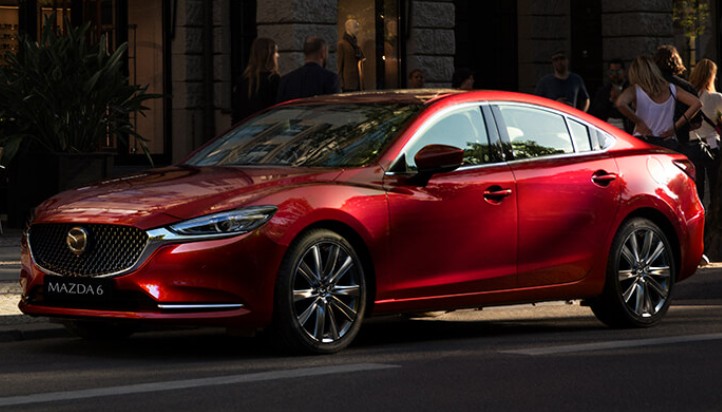
The Mazda 6 has always occupied an interesting corner of the midsize-car world. It is practical enough to handle school runs, commuting, luggage, and long motorway journeys, yet it usually feels sharper and more polished than the average family sedan. In other words, Mazda somehow managed to put sensible shoes on a car that still likes to dance.
But if we're shopping used, one question quickly rises above the rest: which Mazda 6 is the best?
Our pick for most buyers is a 2018–2021 third-generation Mazda 6 with the naturally aspirated 2.5-liter SKYACTIV-G petrol engine, provided it has a good maintenance history. These later models combine the mature third-generation chassis, a noticeably upgraded cabin, strong equipment levels, straightforward power delivery, and fewer ownership compromises than the diesel versions.
If outright performance matters more, the 2.5-liter turbocharged Mazda 6 is the one we'd chase. And if value matters most, an earlier 2014–2017 2.5 petrol model can make enormous sense.
There's more nuance than simply buying the newest example we can afford, though. Different markets received different engines, trims, body styles, and equipment. So let's sort through the Mazda 6 family and find the version that actually deserves a place in our driveway.
Content in this publication
- Which Mazda 6 Is the Best Overall?
- Why the Third-Generation Mazda 6 Is Usually the One to Buy
- Best Mazda 6 Year: Is 2021 the Winner?
- Best Mazda 6 Engine: 2.5 SKYACTIV-G Petrol
- Best Mazda 6 for Performance: The 2.5 Turbo
- Which Mazda 6 Trim Is the Best?
- Best Mazda 6 for Reliability
- Petrol or Diesel: Which Mazda 6 Is Best?
- What About the 2.0-Liter Mazda 6?
- Best Mazda 6 for Fuel Economy
- Best Mazda 6 for Long-Distance Driving
- Best Older Mazda 6 for Buyers on a Budget
- Which Mazda 6 Should We Avoid?
- What Mileage Is Too High for a Mazda 6?
- Manual or Automatic Mazda 6?
- Does the Mazda 6 Turbo Justify the Extra Cost?
- The Best Mazda 6 Depends on Where We Live
- Used Mazda 6 Pre-Purchase Checklist
- Our Mazda 6 Ranking by Buyer Type
- Is the Mazda 6 Still Worth Buying?
- Final Verdict: Which Mazda 6 Is the Best?
- Frequently Asked Questions
Which Mazda 6 Is the Best Overall?
For the widest range of buyers, we'd choose a 2018–2021 Mazda 6 2.5 SKYACTIV-G petrol.
Why this particular combination?
The third-generation Mazda 6 had already been around for several years by 2018, allowing Mazda to refine the formula rather than reinvent it. The later cars gained a more sophisticated interior, improved refinement, modernized equipment, and a mature version of Mazda's naturally aspirated SKYACTIV petrol engine.
In North America, the 2021 naturally aspirated 2.5-liter engine produced around 187 horsepower and 186 lb-ft of torque and was paired with a six-speed automatic transmission.
That might not sound explosive beside today's turbocharged everything, but numbers don't tell the whole story. The naturally aspirated Mazda 6 responds predictably, works nicely with the transmission, and suits the car's balanced personality.
It's the Goldilocks Mazda 6: not too complicated, not too slow, not excessively thirsty, and still modern enough to feel desirable.
Our Mazda 6 Sweet Spot
If we were searching the classifieds ourselves, we'd prioritize:
- 2018–2021 model year
- 2.5-liter SKYACTIV-G petrol engine
- Automatic transmission
- A mid-to-high specification
- Full maintenance records
- No unresolved warning lights
- Clean accident and ownership history
Exact trim names vary by country. A Touring, GT, GT Sport, Signature, Atenza, or similarly positioned specification can therefore mean different things depending on where the car was originally sold.
Condition should ultimately beat badges.
A beautifully maintained mid-spec Mazda 6 is usually a much smarter purchase than a neglected flagship wearing bigger wheels and more leather.
Why the Third-Generation Mazda 6 Is Usually the One to Buy
Mazda launched the third-generation Mazda 6 for the 2014 model year in North America, introducing the company's KODO design language and SKYACTIV technology to the midsize sedan. Mazda's Canadian launch information listed the 2.5-liter SKYACTIV-G engine at 184 horsepower and 185 lb-ft of torque.
More than a decade later, the design has aged remarkably gracefully.
Put a tidy late-model Mazda 6 beside many newer family cars and it doesn't immediately look like yesterday's news. The proportions remain clean, the body isn't drowning in fake vents, and the interior favors simple controls rather than turning every function into a touchscreen treasure hunt.
It Offers the Best Balance of Old and New
Older cars can be charming, but age brings its own baggage. Rubber components deteriorate. Suspension parts wear. Interior electronics age. Corrosion can become important in harsher climates.
Conversely, newer cars increasingly rely on complex electronics, highly boosted engines, elaborate transmissions, and expensive integrated infotainment systems.
The later third-generation Mazda 6 lands between those worlds.
It feels modern without feeling needlessly complicated.
That's a major reason we think it represents the strongest Mazda 6 package overall.
Best Mazda 6 Year: Is 2021 the Winner?
If we're talking specifically about North America, the 2021 Mazda 6 is arguably the ultimate version of the traditional model.
The 2021 range offered both Mazda's naturally aspirated 2.5-liter engine and the more muscular SKYACTIV-G 2.5T in higher specifications. Mazda's specifications confirm both 2.5-liter petrol configurations.
Because 2021 sat at the end of the Mazda 6's North American run, buyers effectively received years of gradual third-generation development.
Would we automatically choose a 2021 over a perfect 2019?
No.
Used cars don't exist in laboratory conditions. Mileage, servicing, previous ownership, tyres, brakes, accident history, rust, and general care matter enormously.
A spotless 2019 can easily be preferable to a battered 2021.
Best Years to Target
As a practical shopping range, we'd focus particularly on 2018, 2019, 2020, and 2021 where available.
Earlier third-generation cars remain worthwhile, especially when substantially cheaper, but the later facelifted cars feel more premium and polished.
Best Mazda 6 Engine: 2.5 SKYACTIV-G Petrol
For everyday ownership, our favorite engine is the naturally aspirated 2.5-liter SKYACTIV-G petrol.
This engine won't shove us into the seat like the turbo version, but that's not really the point.
It's smooth, responsive, and well matched to normal driving. More importantly for used buyers, it avoids adding a turbocharger to the equation.
Mazda's specifications list the 2.5 SKYACTIV-G at 2,488.5 cc, using a four-cylinder DOHC layout.
Why Naturally Aspirated Power Makes Sense
Turbocharging isn't inherently bad. Modern turbo engines can be excellent.
Still, when we're buying an aging used car, simplicity has value.
The standard 2.5 petrol gives us enough performance for motorway overtakes and everyday commuting without encouraging us to pay extra for power we're rarely able to use.
Throttle response also feels pleasantly linear.
Press the accelerator and the car builds speed naturally rather than waiting for a sudden wave of boost.
Think strong coffee rather than an energy drink.
Best Mazda 6 for Performance: The 2.5 Turbo
Now things get interesting.
If we want the Mazda 6 with genuine muscle, the 2.5T turbocharged petrol model is easily the most appealing factory version of the later car.
Australian specifications demonstrate just how much stronger this engine is. Mazda listed later 2.5T versions at up to 173 kW and 420 Nm, giving the Mazda 6 considerably more low-end punch than the naturally aspirated engine.
In North America, turbocharged versions were offered in upper trims such as Grand Touring and Signature, depending on model year.
What Makes the Turbo Mazda 6 Special?
The turbo doesn't transform the Mazda 6 into a hardcore sports sedan.
That's actually part of its appeal.
Instead, we get effortless torque. Joining a motorway becomes easier. Passing slower traffic requires less planning. Hills feel flatter. A fully loaded car feels less burdened.
The engine provides the kind of muscular mid-range shove that makes ordinary driving feel expensive.
And unlike many sporty alternatives, the Mazda 6 doesn't need an aggressively tuned suspension or shouty exhaust to prove its point.
Should We Buy the Turbo Instead?
Buy the turbo if:
- Performance matters to us.
- We regularly drive at motorway speeds.
- We carry passengers or luggage frequently.
- We don't mind potentially higher running costs.
- We find a well-maintained example at a sensible price.
Choose the naturally aspirated 2.5 if long-term simplicity and overall value matter more.
Which Mazda 6 Trim Is the Best?
There's no universal answer because trim names varied substantially across the United States, Canada, Australia, New Zealand, the UK, and other markets.
Our general rule is simple:
Buy one level below the most extravagant version unless the flagship features genuinely matter to you.
Why?
Mid-to-upper trims often contain nearly everything we'll use daily: heated seats, upgraded audio, better interior materials, advanced safety equipment, larger wheels, and improved infotainment.
The flagship may add luxury touches that are lovely but unnecessary.
Best Trim for Value
A Touring-level or equivalent Mazda 6 often hits the sweet spot.
We receive noticeably more equipment than in the entry model without paying the premium associated with a top specification.
Again, names depend on market. Don't shop solely by badge.
Shop by actual equipment.
Best Trim for Luxury
For maximum comfort, look toward versions such as the Signature, GT, GT SP, or Atenza, depending on region and year.
Higher-spec Mazda 6 interiors can feel surprisingly upscale.
The dashboard layout, materials, seats, and control placement are restrained rather than flashy. That's aged well because Mazda resisted the temptation to fill the cabin with gimmicks.
You may be interested in reading Ram 1500 DS vs DT: What’s the Difference and Which One Should We Choose?
Best Mazda 6 for Reliability
If reliability is our top priority, we'd again lean toward a later third-generation 2.5 petrol without the turbo, backed by documented servicing.
Notice the emphasis on history.
Model-year lists are useful shortcuts, not crystal balls.
Two identical Mazda 6s can have completely different futures depending on their previous owners.
One may have enjoyed annual servicing, quality oil, gentle motorway mileage, and a covered garage.
The other may have survived skipped services, kerbed wheels, cheap tyres, cold-engine abuse, and three years of dashboard warning lights.
Which would we rather own?
Exactly.
Maintenance History Beats Low Mileage
Low mileage looks seductive in an advertisement, but it isn't automatically better.
A higher-mileage car that regularly covered long journeys and received meticulous maintenance can be a safer purchase than an ultra-low-mileage example that spent its life making five-minute trips.
We should examine the whole story.
Petrol or Diesel: Which Mazda 6 Is Best?
This is where our recommendation gets considerably more cautious.
Mazda offered the Mazda 6 with 2.2-liter SKYACTIV-D diesel engines in numerous international markets. Mazda's own specifications confirm the 2,191 cc SKYACTIV-D alongside its petrol engines.
Diesel versions can deliver strong torque and attractive fuel economy, especially during sustained highway driving.
But we'd generally steer the average used buyer toward petrol.
When a Diesel Mazda 6 Makes Sense
A diesel can still suit us if we:
- Cover high annual mileage.
- Regularly drive long distances.
- Spend considerable time on motorways.
- Understand diesel emissions systems.
- Have an excellent service history for the specific car.
- Obtain a thorough pre-purchase inspection.
Modern diesels dislike being treated purely as short-trip city machines.
DPF systems need suitable operating conditions, and diesel-related repairs can quickly erase years of fuel savings.
Our Verdict on the Diesel
For a knowledgeable high-mileage driver, it may be worthwhile.
For an average buyer asking us which Mazda 6 we'd choose with our own money?
Petrol.
What About the 2.0-Liter Mazda 6?
Some markets received the third-generation Mazda 6 with a 2.0-liter SKYACTIV-G petrol engine.
Mazda documentation lists versions of the 2.0 alongside the 2.5, with one specification producing 114 kW and 200 Nm.
The 2.0 isn't a bad engine.
For city driving, moderate speeds, and buyers who prioritize economy over acceleration, it can work perfectly well.
But the Mazda 6 isn't a tiny car.
Add passengers, luggage, hills, and motorway overtaking and the additional torque of the 2.5 becomes welcome.
2.0 vs 2.5 Mazda 6
We'd choose the 2.5 unless the 2.0 offers a meaningful advantage in purchase price, insurance, taxation, or local fuel costs.
The larger engine suits the personality of the Mazda 6 better.
Best Mazda 6 for Fuel Economy
This becomes highly market- and usage-dependent.
A diesel will often look strongest for prolonged long-distance driving, while smaller naturally aspirated petrol engines can make more sense in mixed use.
But here's the trap: buying purely for fuel economy can become false economy.
Saving a modest amount at the pump means little if we deliberately purchase a more complicated powertrain that doesn't fit our driving pattern.
The best Mazda 6 for fuel economy isn't necessarily the version with the smallest number on a brochure.
It's the one whose engine matches how we actually drive.
Best Mazda 6 for Long-Distance Driving
For long motorway journeys, the Mazda 6 is in its natural habitat.
Our favorite setup would be a high-spec 2.5 petrol, or the turbo if effortless overtaking is important.
The seats are comfortable, the driving position feels natural, and the chassis is stable without making the car feel like a numb motorway barge.
Australian buyers also had access to wagon versions, adding another layer of practicality.
Sedan or Wagon?
If a wagon is available in our market, we'd seriously consider it.
The sedan looks elegant, but the wagon is the Swiss Army knife of the family.
Dog?
Luggage?
Camping equipment?
Bulky shopping?
A wagon swallows awkward loads much more gracefully.
Yet unlike an SUV, it retains the lower driving position and car-like dynamics that make the Mazda 6 enjoyable in the first place.
Best Older Mazda 6 for Buyers on a Budget
We don't need a 2020 or 2021 model to get a good Mazda 6.
A well-maintained 2014–2017 third-generation 2.5 petrol can deliver exceptional value.
The original 2014 2.5 SKYACTIV-G already produced a healthy 184 hp and 185 lb-ft in Canadian specification.
These earlier cars won't have every later-model interior improvement, but the basic recipe remains excellent.
Why an Older Car Can Be the Smarter Deal
Depreciation does some wonderful things for used-car shoppers.
Someone else paid the expensive early years.
We arrive later and buy the same chassis, broadly similar engine architecture, handsome styling, and enjoyable driving experience for much less money.
But age means inspection becomes increasingly important.
Check suspension wear, tyres, brakes, corrosion, electrical equipment, fluid leaks, infotainment operation, and maintenance history carefully.
Which Mazda 6 Should We Avoid?
We wouldn't automatically blacklist an entire model year.
Instead, we'd avoid specific cars displaying specific warning signs.
That's a far more useful strategy.
Walk away—or investigate very carefully—if we encounter unexplained warning lights, incomplete servicing, persistent smoke, unusual engine noises, transmission hesitation, obvious collision repairs, serious corrosion, repeated low-oil warnings, unresolved DPF issues on diesels, or an owner who mysteriously knows nothing about the car's maintenance history.
Be Especially Careful With Cheap Diesels
A suspiciously cheap diesel Mazda 6 can look like the bargain of the decade.
Sometimes it is.
Sometimes the seller simply knows a large repair bill is walking toward the car like a thunderstorm.
A diagnostic scan and specialist inspection are worth far more than guessing.
What Mileage Is Too High for a Mazda 6?
There isn't a magic mileage where a Mazda 6 suddenly turns into a pumpkin.
Mileage matters, but condition matters more.
You may be interested in readingRam 1500 DS vs DT: What’s the Difference and Which One Should We Choose?You may be interested in reading
 Is VW Amarok a Ford Ranger? The Real Story Behind These Two Pickups
At higher mileages, we should expect normal wear items to enter the picture. Suspension bushings, dampers, wheel bearings, engine mounts, brakes, batteries, belts, hoses, and other components don't live forever.
That isn't necessarily evidence of a bad car.
It's simply what happens when machines travel hundreds of thousands of kilometers.
High Mileage Doesn't Automatically Mean High Risk
Ask:
How was it driven?
How often was it serviced?
Does it have invoices?
Is the mileage credible?
Has preventive maintenance been performed?
How does it drive today?
A 160,000-km car with a folder of invoices can be more reassuring than an 80,000-km car with no records whatsoever.
Manual or Automatic Mazda 6?
Manual Mazda 6 models existed in selected markets and years, and Mazda offered both six-speed manual and automatic transmissions when the third generation launched.
Enthusiasts may naturally gravitate toward the manual.
We understand why.
The Mazda 6 already has responsive steering and a driver-focused character, so changing gears ourselves completes the experience nicely.
But for most shoppers, the six-speed automatic is the easier recommendation.
It's conventional, pleasant to use, and better suited to traffic.
Which Transmission Would We Choose?
Automatic for daily transportation.
Manual for enjoyment and rarity.
Neither choice is wrong if the individual car is healthy.
Does the Mazda 6 Turbo Justify the Extra Cost?
This depends on what makes us smile.
The turbo engine isn't merely marginally stronger. Its torque output transforms how effortless the Mazda 6 feels.
Mazda's Australian 2.5T produced around 420 Nm of torque, versus considerably less from naturally aspirated versions.
That's a significant difference from the driver's seat.
Put our foot down at ordinary road speeds and the turbo moves with authority.
Still, we'd resist buying one solely because it's the fastest.
More power usually means more fuel consumption when exploited, and turbocharged hardware introduces extra complexity compared with the naturally aspirated alternative.
The Turbo Is the Heart Choice
Want the Mazda 6 we'll look back at after parking?
Turbo.
Want the Mazda 6 we'd recommend to a relative who simply wants dependable transportation?
Naturally aspirated petrol.
Simple.
The Best Mazda 6 Depends on Where We Live
This point deserves more attention than it usually receives.
Searching “which Mazda 6 is best” can produce contradictory answers because Mazda sold different configurations around the world.
North America, Europe, Australia, New Zealand, Japan, and other markets didn't receive identical lineups.
An American buyer might be comparing Sport, Touring, Grand Touring, Grand Touring Reserve, and Signature versions.
An Australian buyer may encounter Sport, Touring, GT SP, Atenza, sedans, wagons, and different powertrain combinations.
A British buyer may encounter petrol and diesel engines that American shoppers never saw.
So specifications should always be checked using the VIN, registration data, owner's manual, or original local-market brochure rather than assuming every Mazda 6 with the same year is identical.
Used Mazda 6 Pre-Purchase Checklist
Once we've found the right specification, we still need to find the right individual car.
Before buying, we should check:
- Service history: Confirm regular oil changes and scheduled maintenance.
- Cold start: Listen for rattles, knocking, abnormal smoke, or unstable idle.
- Warning lights: Don't accept “it's probably just a sensor” without diagnosis.
- Transmission operation: Changes should feel consistent and predictable.
- Suspension: Listen for knocks over rough surfaces.
- Tyres: Uneven wear can expose alignment or suspension problems.
- Brakes: Check for vibration, grinding, or pulling.
- Electronics: Test infotainment, cameras, sensors, climate control, windows, seats, and switches.
- Bodywork: Look for mismatched paint, uneven panel gaps, corrosion, and signs of previous collision repair.
- Diagnostic scan: Scan the vehicle even when no warning light is illuminated.
- Independent inspection: Have a Mazda specialist or trusted mechanic inspect the car before purchase.
A proper inspection can turn a two-hour appointment into thousands saved.
That's one of the best returns on investment in the used-car world.
Our Mazda 6 Ranking by Buyer Type
If we reduce everything to practical recommendations, our choices look like this:
| Buyer Type | Mazda 6 We'd Choose |
|---|---|
| Best overall | 2018–2021 2.5 SKYACTIV-G petrol |
| Best performance | 2.5T turbo petrol |
| Best value | 2014–2017 2.5 petrol |
| Best for simplicity | Naturally aspirated 2.5 petrol |
| Best for luxury | High-spec GT/Signature/Atenza equivalent |
| Best for cargo | Mazda 6 Wagon 2.5 petrol |
| Best for high-mileage motorway use | Well-maintained diesel, where suitable |
| Best enthusiast choice | 2.5 petrol manual where available |
The table gives us a useful shortcut, but there's one important principle behind every recommendation:
Condition wins.
Is the Mazda 6 Still Worth Buying?
Absolutely—if what we're looking for is a traditional midsize car.
The automotive market has shifted heavily toward crossovers and SUVs, which ironically makes the Mazda 6 more interesting on the used market.
We receive a lower driving position, controlled body movement, good steering, generous passenger space, respectable luggage capacity, and styling that doesn't look like every other tall family box in the parking lot.
The Mazda 6 feels like a car designed by people who remembered that driving can be enjoyable even when we're just going to work.
That counts for something.
Final Verdict: Which Mazda 6 Is the Best?
So, after looking at engines, years, trims, transmissions, performance, practicality, and ownership priorities, which Mazda 6 is the best?
For most buyers, we'd choose a 2018–2021 Mazda 6 fitted with the naturally aspirated 2.5-liter SKYACTIV-G petrol engine.
It delivers the strongest overall mixture of performance, refinement, simplicity, equipment, and used-car value.
If our heart demands more power, we'd move directly to the 2.5T turbo Mazda 6. Its substantial torque turns an already accomplished family sedan into something genuinely quick and effortless.
Budget shoppers shouldn't ignore the 2014–2017 2.5 petrol, either. Find a clean example with excellent maintenance records and it can provide much of the later car's appeal for considerably less money.
We'd approach diesel models more selectively. They can make sense for drivers covering long motorway distances, but petrol is the easier all-purpose recommendation.
Above everything else, we'd buy history rather than mileage and condition rather than trim.
The “best Mazda 6” isn't necessarily the newest, fastest, or most expensive one.
It's the car that combines the right engine with careful previous ownership.
Find that combination and the Mazda 6 remains one of those increasingly rare used cars that can satisfy our sensible side without putting our enthusiast side to sleep.
Frequently Asked Questions
1. What is the best Mazda 6 year to buy?
For many buyers, 2018–2021 models represent an excellent target because they combine later third-generation refinements with modern equipment and mature powertrains. A properly maintained earlier car can still be an excellent purchase, so we'd never reject a good example based on year alone.
2. Which Mazda 6 engine is the most reliable choice?
Our preferred all-round option is the naturally aspirated 2.5-liter SKYACTIV-G petrol engine. It offers useful performance while avoiding the additional turbocharger hardware of the 2.5T and the emissions-system considerations associated with diesel models. Maintenance history remains essential.
3. Is the Mazda 6 2.5 turbo worth buying?
Yes, especially if performance matters. The 2.5T delivers dramatically stronger low- and mid-range torque, with some Australian versions rated at 420 Nm. It makes overtaking and motorway driving effortless, although we'd expect somewhat greater mechanical complexity and running costs than with the naturally aspirated 2.5.
4. Should we buy a petrol or diesel Mazda 6?
For ordinary mixed driving, we'd generally choose petrol. Diesel makes more sense for drivers who regularly cover substantial motorway mileage and understand the maintenance requirements of modern diesel emissions systems. Short-trip drivers have fewer reasons to choose the diesel.
5. Is an older Mazda 6 still a good buy?
Yes. A well-maintained 2014–2017 third-generation Mazda 6, particularly with the 2.5 petrol engine, can provide excellent value. At this age, however, maintenance records, corrosion, suspension condition, tyres, brakes, accident history, and a professional inspection matter more than finding a particular model year.
You may be interested in readingRam 1500 DS vs DT: What’s the Difference and Which One Should We Choose?You may be interested in reading
Is VW Amarok a Ford Ranger? The Real Story Behind These Two PickupsYou may be interested in reading
What Ram 1500 Is Best for Towing? Complete GuideIf you want to know other articles similar to Which Mazda 6 Is the Best? The Complete Buyer’s Guide you can visit the category Models.
Kia Sorento Models: Complete Guide to Trims, Engines and Versions
BYD Shark 6 vs Ranger vs HiLux: Which Ute Makes the Most Sense in 2026?
BYD Shark 6 vs MG U9: Which Ute Makes More Sense in 2026?
BYD Shark 6 vs Ford Ranger Raptor: Which Performance Ute Is Better in 2026?
BYD Shark 6 vs Kia Tasman: Which Ute Is Better?
BYD Shark 6 vs 7: What We Know So Far
Leave a Reply
More content of your interest