

Holden Colorado and Isuzu D-Max: Differences, Similarities, and Which Is Better?

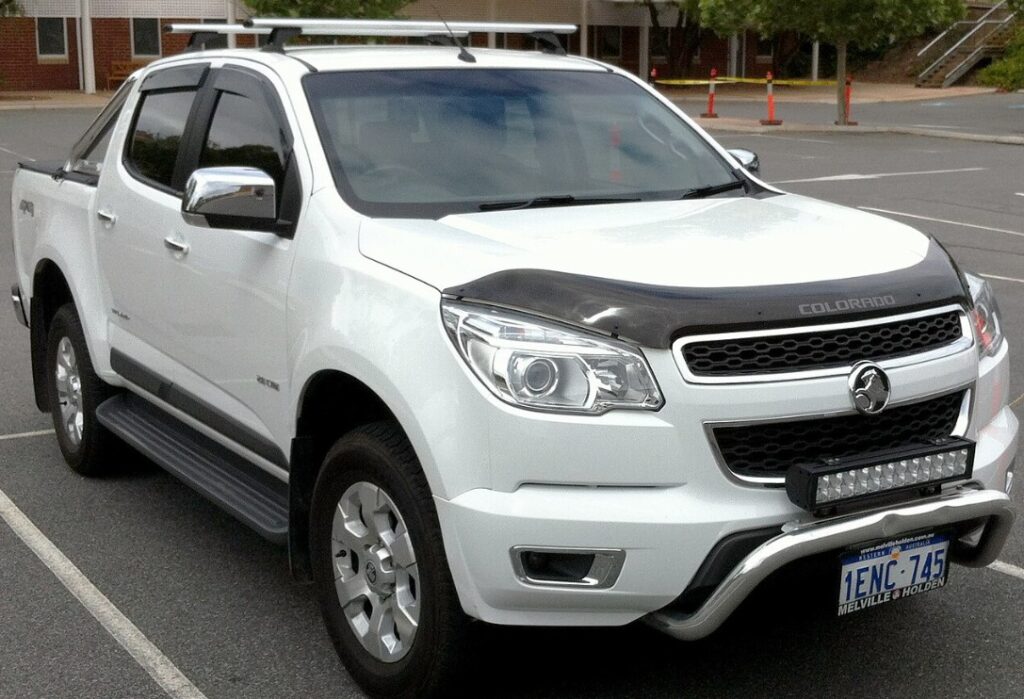
Put a Holden Colorado beside an Isuzu D-Max from the same era and it is easy to understand why so many buyers ask the same question: are the Holden Colorado and Isuzu D-Max basically the same ute?
At first glance, they certainly look like close relatives. Their proportions are similar, both have strong connections to Thailand-built pickup engineering, and earlier models share more history than their badges might suggest. However, assuming they are simply the same truck wearing different grilles can lead us down the wrong road.
The relationship is more complicated—and much more interesting.
The first-generation D-Max formed an important part of the Holden Rodeo and early Colorado story. Later Colorado and D-Max models continued to have platform connections, but they developed distinct engines, transmissions, suspension tuning, equipment and personalities. Australia received the first-generation D-Max as an Isuzu-branded vehicle in 2008, while Holden transitioned from the Rodeo name to Colorado during the same period.
By the time we're comparing popular 2012-2020 examples, the difference becomes especially important. The Holden generally relies on its 2.8-litre Duramax turbo-diesel, while the equivalent D-Max became famous for Isuzu's 3.0-litre 4JJ1 diesel.
So which should we buy? Which engine is better? Which ute makes more sense for towing, touring or daily driving? And can parts really be swapped between them?
Let's untangle the family tree.
Content in this publication
- Are the Holden Colorado and Isuzu D-Max the Same Vehicle?
- The Holden Rodeo Connection Explains Everything
- The 2012 Holden Colorado Changed the Relationship
- Holden Colorado vs Isuzu D-Max Engine Performance
- Transmission Differences Matter Too
- Colorado and D-Max Driving Experience
- Holden Colorado and Isuzu D-Max Off-Road
- Towing: Colorado or D-Max?
- Fuel Economy: Which One Uses Less Diesel?
- Holden Colorado vs Isuzu D-Max Reliability
- Are Holden Colorado and Isuzu D-Max Parts Interchangeable?
- Interior and Equipment Differences
- Used Holden Colorado Advantages
- Used Isuzu D-Max Advantages
- Which Ute Is Better for High Kilometres?
- Holden Colorado vs Isuzu D-Max for Work
- Holden Colorado vs Isuzu D-Max for Touring
- Which Holden Colorado Is Closest to an Isuzu D-Max?
- Colorado vs D-Max: Which One Should We Buy?
- Final Verdict: Related Utes With Very Different Personalities
- Frequently Asked Questions
Are the Holden Colorado and Isuzu D-Max the Same Vehicle?
The shortest answer is no—but certain generations are closely related.
That's the distinction we need to remember.
The Holden Colorado and Isuzu D-Max have historically shared engineering roots, particularly through the long-running relationship between General Motors and Isuzu. Early Australian-market examples were particularly close.
Before the Colorado name appeared locally, Holden sold the Rodeo. The Australian Holden Rodeo introduced in 2003 was closely related to the first-generation Isuzu D-Max. When Holden subsequently stopped using the Rodeo name, the facelifted ute became the Holden Colorado in Australia in 2008. The contemporary D-Max was also launched under Isuzu UTE Australia in 2008.
Think of them less like identical twins and more like siblings who grew up in the same house.
Their bones may have similarities. Their personalities don't necessarily match.
Why the Confusion Exists
There is good reason for owners to associate the two.
Both names appeared around essentially the same ute architecture during parts of their histories. Both were manufactured in Thailand. Some chassis and body dimensions are similar, and various mechanical or aftermarket components can overlap depending on generation.
Yet specifications changed substantially by market, year and trim.
That's why saying "Colorado parts fit a D-Max" without specifying the model year is a little like saying shoes fit people. Sometimes they do—but size matters.
The Holden Rodeo Connection Explains Everything
To understand the Holden Colorado and Isuzu D-Max connection, we first need to rewind to the Holden Rodeo.
The first-generation D-Max arrived internationally in the early 2000s. In Australia, a version of that architecture was sold as the Holden Rodeo from 2003. The arrangement reflected the historical General Motors-Isuzu relationship.
Things changed later in the decade.
Holden retired the Rodeo name and introduced the Colorado badge in Australia during 2008. That first Colorado was essentially the successor to the Rodeo and remained closely connected with the first-generation D-Max architecture.
2008-2011 Colorado: The Closest D-Max Relative
If we are specifically talking about the RC Holden Colorado sold before the second-generation Colorado arrived in 2012, the family resemblance is particularly strong.
One notable connection sits under the bonnet.
Diesel versions of that Colorado used Isuzu's 3.0-litre 4JJ1 turbo-diesel, the same engine family closely associated with the D-Max. Contemporary Australian specifications list the Colorado's 3.0-litre turbo-diesel at 120 kW and 360 Nm.
For enthusiasts looking at an older Colorado, this matters.
An RC Colorado diesel has much more Isuzu DNA than a later RG Colorado does.
Why This Matters When Buying Used
Imagine browsing used listings and finding a 2010 Colorado beside a 2016 Colorado.
They carry the same badge.
Mechanically, however, they belong to noticeably different chapters.
The older truck's Isuzu-derived diesel connection can make it appealing to buyers specifically searching for the reputation associated with the 4JJ1.
The later Colorado follows a different recipe.
The 2012 Holden Colorado Changed the Relationship
The arrival of the RG Holden Colorado in 2012 is where many comparisons become muddled.
The second-generation Colorado and contemporary D-Max still had platform connections and broadly similar dimensions, but calling them the same ute became increasingly inaccurate.
The engines alone tell us why.
The RG Colorado used a 2.8-litre turbo-diesel, with later versions producing approximately 147 kW and up to 500 Nm when paired with the automatic transmission.
The D-Max stayed committed to Isuzu diesel engineering, particularly its 3.0-litre 4JJ1 family. Isuzu itself describes the 3.0-litre 4JJ1 as central to the first-generation D-Max sold in Australia from 2008.
Same neighbourhood, different houses.
Colorado 2.8 vs D-Max 3.0
This engine difference arguably defines the comparison better than anything else.
The Holden's 2.8 was tuned for stronger headline torque, particularly in later automatic versions.
The D-Max's 3.0 traditionally pursued a somewhat different philosophy: relatively conservative output, straightforward diesel character and a reputation built around durability.
A 2018 comparison illustrates the distinction nicely. CarsGuide listed the 2018 Colorado with a 2.8-litre turbo-diesel and the D-Max with a 3.0-litre turbo-diesel.
Neither approach automatically wins.
It depends on what we're asking the ute to do.
Holden Colorado vs Isuzu D-Max Engine Performance
On paper, a later RG Colorado tends to look like the stronger athlete.
Its torque figures are impressive, and that grunt can be noticeable when accelerating, overtaking or pulling weight. The automatic Colorado's peak torque reached 500 Nm in later versions, giving it serious muscle for its era.
The D-Max's traditional 3.0-litre diesel generally feels more agricultural.
That's not necessarily criticism.
Some drivers actually prefer it.
The Isuzu engine behaves a little like an old work boot: not especially glamorous, but reassuringly comfortable when the job becomes messy.
Which Feels Faster?
For comparable mid-to-late-2010s vehicles, we'd generally expect the Colorado to feel stronger and more responsive.
Its engine produces substantial torque and tends to deliver a more energetic driving experience.
The D-Max can feel slower and louder, particularly when pushed.
But outright acceleration isn't everything in a work ute.
If our priorities include towing across remote Australia, carrying equipment or keeping a vehicle for many years, performance numbers become just one piece of a much larger puzzle.
Which Engine Has the Better Reputation?
Here the Isuzu becomes especially interesting.
The 4JJ1 has developed an enthusiastic following among Australian ute buyers. Isuzu itself has heavily promoted the engine's durability and economy, describing it as central to the Australian D-Max's reputation.
Of course, no diesel is indestructible.
Maintenance history matters more than mythology.
A neglected D-Max can become expensive just as easily as a neglected Colorado. Conversely, a well-maintained Colorado can travel substantial distances without drama.
We should buy the individual vehicle, not merely the reputation printed on its tailgate.
Transmission Differences Matter Too
Engines get most of the attention, but transmissions dramatically affect how these utes feel.
Later RG Colorado models could be paired with six-speed transmissions, including a six-speed automatic.
D-Max transmission combinations varied through the generation and model years.
What matters for us as used buyers is less about counting gears and more about checking how the transmission behaves.
Does the automatic engage smoothly when cold? Does it hesitate when selecting reverse? Does it hunt excessively while towing? Has the fluid actually been serviced rather than ignored under the assumption that it is "lifetime" fluid?
An impressive engine attached to a tired gearbox isn't much of a bargain.
Colorado and D-Max Driving Experience
Drive the two back-to-back and the differences become clearer.
The Colorado generally aims for a somewhat more passenger-friendly personality. Later models became increasingly refined, particularly after updates to suspension, steering, cabin insulation and electronic systems.
The D-Max historically retained more of a commercial-vehicle flavour.
That can mean heavier sensations, more diesel noise and a firmer personality.
You may be interested in reading Holden Colorado vs VW Amarok: Which Used Ute Is Better?
Neither is inherently wrong.
One feels like a work ute trying to become an SUV.
The other often feels like a work ute that isn't embarrassed about being a work ute.
On-Road Comfort
For buyers covering long highway kilometres without carrying heavy loads, we would lean toward a well-sorted later Colorado for comfort.
Its stronger engine performance also makes overtaking relatively effortless.
Meanwhile, the D-Max may feel more utilitarian, especially in lower specifications.
Yet ride quality varies enormously with tyres, suspension modifications, tray weight and accessories. A D-Max fitted with sensible touring suspension may ride better than a Colorado wearing excessively stiff aftermarket springs.
Don't Ignore Previous Modifications
Used dual-cab utes frequently lead harder lives than ordinary cars.
Bull bars, winches, canopies, drawers, roof tents, larger tyres and suspension lifts can dramatically change handling.
A modified ute isn't automatically better.
Sometimes we're buying somebody else's carefully engineered touring setup.
Sometimes we're buying somebody else's collection of mistakes.
Holden Colorado and Isuzu D-Max Off-Road
Both utes developed respectable reputations for off-road use, and properly equipped 4x4 versions can travel far beyond sealed roads.
The essential formula is familiar: ladder-frame construction, selectable four-wheel drive, useful ground clearance and low-range gearing in appropriate models.
But tyre choice and driver skill often matter more than tiny differences in brochure numbers.
A stock D-Max on good all-terrain tyres can embarrass a heavily modified Colorado wearing unsuitable rubber—and vice versa.
Which Is Better for Remote Touring?
This is where the D-Max has traditionally attracted loyal buyers.
Its diesel reputation, widespread use in regional areas and work-focused personality make it naturally appealing for remote touring.
The Colorado remains perfectly capable, but with Holden no longer selling new vehicles in Australia, some buyers may feel more comfortable choosing a brand that continues to actively support its ute range locally.
That doesn't automatically make the Colorado difficult to own. Parts and specialist support remain available. However, long-term ownership is a factor worth considering.
Towing: Colorado or D-Max?
Both names became popular tow vehicles, especially among owners pulling caravans, boats and trailers.
Yet towing capacity alone can be misleading.
A manufacturer's maximum rating is not permission to hook up any trailer weighing that amount and disappear toward the horizon.
We still need to account for payload, tow-ball download, gross vehicle mass, axle loads and combined vehicle mass.
A ute loaded with passengers, a bull bar, canopy, drawers, fridge and tools can consume its payload surprisingly quickly.
Why the Colorado Feels Strong While Towing
Later Colorado models benefit from their high torque output.
That 500 Nm figure associated with automatic versions of the later 2.8-litre diesel gives the Holden useful pulling muscle.
On steep climbs or highway overtaking, that extra shove can make the truck feel relaxed.
The D-Max often completes the same job with less theatre.
It may not feel as punchy, but many owners value predictable, steady performance over outright pace.
Fuel Economy: Which One Uses Less Diesel?
We need to be cautious here because fuel consumption depends heavily on year, cab style, transmission, tyres and load.
Even so, contemporary comparisons can illustrate the general pattern.
For example, CarsGuide's published figures for comparable 2018 examples listed 9.1 L/100 km for the Colorado and 7.8 L/100 km for the D-Max. These figures shouldn't be treated as universal real-world consumption, but they demonstrate why the Isuzu has often attracted buyers focused on fuel efficiency.
In the real world, modifications can completely rewrite the story.
Large mud tyres, roof racks and constant heavy loads turn aerodynamic efficiency into something resembling a brick fighting the wind.
Holden Colorado vs Isuzu D-Max Reliability
Reliability is probably the most emotionally charged part of this comparison.
Ask ten ute owners at a campsite and we may receive twelve opinions.
The D-Max enjoys a particularly strong reputation for mechanical toughness, helped enormously by the long-running popularity of its 3.0-litre diesel.
The Colorado's reputation is somewhat more mixed depending on generation and individual component.
But broad reputations should never replace a proper inspection.
What We Would Check Before Buying Either Ute
Rather than choosing solely by badge, we'd inspect the vehicle systematically:
- Verify complete servicing records and confirm kilometre intervals rather than accepting vague claims about a "full history."
- Start the engine completely cold and listen for unusual rattles, knocking or excessive smoke.
- Inspect underneath for off-road damage, leaks, bent protection plates and evidence of hard impacts.
- Test the 4WD system, including low range where conditions permit.
- Check automatic transmission behaviour both cold and fully warmed.
- Look for uneven tyre wear that could indicate alignment, suspension or accident issues.
- Inspect the cooling system carefully, particularly on vehicles used for heavy towing.
- Check whether aftermarket suspension, tuning or emissions modifications have been professionally installed.
- Confirm the exact variant's towing, payload and axle ratings rather than relying on figures quoted for another trim.
- Arrange an independent pre-purchase mechanical inspection before handing over the money.
That final step can save thousands.
A clean steering wheel and polished paint tell us almost nothing about how a ute spent its previous 150,000 kilometres.
Are Holden Colorado and Isuzu D-Max Parts Interchangeable?
Sometimes.
But we shouldn't assume compatibility.
This question appears constantly because the vehicles share historical engineering connections. Some parts, accessories or dimensions may overlap between corresponding generations.
Others absolutely won't.
Engine components are the obvious example on later vehicles: a 2.8-litre RG Colorado and 3.0-litre D-Max don't suddenly become mechanically interchangeable because the chassis architecture has a relationship.
Body panels, electronics, suspension parts, mounting points and drivetrain components can also differ by year.
Can a Colorado Canopy Fit a D-Max?
Possibly—but verify measurements and model compatibility before buying anything.
Tub dimensions and mounting locations may be sufficiently similar on certain related models for some aftermarket accessories to cross over, yet variations in model year, cab type and styling can spoil the fit.
Never buy an expensive canopy based purely on the phrase "they're basically the same ute."
Measure twice.
Buy once.
Interior and Equipment Differences
Once inside, each manufacturer's priorities become obvious.
Later Colorado models generally pushed harder toward the lifestyle market. Higher specifications offered the visual polish and technology increasingly expected by families using dual-cab utes as everyday vehicles.
The D-Max tended to retain a straightforward cabin philosophy.
Some people interpret that as dated.
Others call it sensible.
Do we really need an interior resembling a luxury airport lounge when we're climbing inside with muddy boots?
That depends entirely on how we use the vehicle.
Which Makes the Better Family Ute?
For mostly urban driving, school runs, highway travel and occasional towing, we'd probably find a later Colorado more appealing from a refinement perspective.
For frequent worksite use and rural driving, the rugged simplicity of an appropriate D-Max can make tremendous sense.
But condition can reverse the equation.
A low-kilometre Colorado with careful ownership beats an abused D-Max every day of the week.
Used Holden Colorado Advantages
The Colorado has one particularly compelling strength in today's second-hand market: value.
Because Holden stopped new-vehicle sales in Australia, used Colorados can sometimes attract buyers who recognize their underlying capability without paying the same premium demanded by more fashionable alternatives.
That can make a good example surprisingly attractive.
We may get a powerful diesel, respectable towing ability, useful 4WD capability and comfortable touring manners for sensible money.
Depreciation can therefore work in our favour when buying used.
You may be interested in readingHolden Colorado vs VW Amarok: Which Used Ute Is Better?You may be interested in reading
 Which Mazda 6 Is the Best? The Complete Buyer’s Guide
The Catch With Buying a Colorado Today
The obvious concern is Holden's departure from the Australian new-car market.
That creates uncertainty for some shoppers.
It doesn't mean every Colorado will suddenly become impossible to repair, but we should investigate local parts availability, independent specialists and servicing support before purchasing.
If we live near a good Colorado specialist, ownership may be relatively straightforward.
If we're operating hundreds of kilometres from major centres, the calculation may be different.
Used Isuzu D-Max Advantages
The D-Max's greatest asset is confidence.
Not perfection—confidence.
Isuzu has built a strong identity around diesel utes and commercial vehicles, and its Australian D-Max story dates back to the model's local launch in 2008.
Buyers often perceive the D-Max as a safer long-term choice, particularly when reliability and remote-area use rank above outright performance.
That reputation also helps resale values.
Unfortunately, reputation can increase purchase prices too.
The D-Max Isn't Automatically the Winner
This is important.
A D-Max badge does not transform a poorly serviced truck into a good purchase.
Older examples may have spent years towing, working on farms, running mine sites or travelling corrugated roads.
A cheaper Colorado owned by one careful private owner may represent considerably less risk.
Maintenance records beat internet legends.
Every time.
Which Ute Is Better for High Kilometres?
If we're planning to keep a ute well beyond 200,000 km, the D-Max would probably sit near the top of our shortlist.
Its traditional engine philosophy is particularly attractive for long-term ownership.
But we'd still favour maintenance history over odometer numbers.
A ute showing 220,000 km with documented servicing, highway usage and preventative maintenance can be far more appealing than one showing 130,000 km with missing records and signs of hard off-road use.
Mileage tells us how far the truck travelled.
Condition tells us how it travelled.
Holden Colorado vs Isuzu D-Max for Work
For tradies and fleet-style use, both can make sense.
The D-Max has the appeal of a purpose-built working identity.
The Colorado adds stronger performance and, depending on specification, more comfort.
Our choice would depend on workload.
If we're hauling tools around metropolitan areas every day, cabin comfort and acceleration matter.
If we're operating in regional environments and keeping the vehicle for a decade, mechanical simplicity and service support might matter more.
Holden Colorado vs Isuzu D-Max for Touring
Touring changes the priorities again.
When we're hundreds of kilometres from the nearest large town, horsepower becomes less exciting than reliability, fuel range and repairability.
The D-Max's reputation fits that mindset beautifully.
However, the Colorado's strong torque makes it an excellent highway tourer, especially when carrying gear or towing.
A well-maintained Colorado with sensible accessories can be an extremely capable touring platform.
We shouldn't dismiss it simply because the Holden badge has disappeared from new-car showrooms.
Which Holden Colorado Is Closest to an Isuzu D-Max?
If our goal is specifically to find the Colorado with the strongest direct Isuzu connection, look toward the 2008-2011 RC-generation diesel Colorado.
That vehicle used Isuzu's 3.0-litre 4JJ1 turbo-diesel and followed directly from the D-Max-related Holden Rodeo architecture.
This is an important distinction from the RG Colorado introduced in 2012.
Later models may still share historical platform lineage with the contemporary D-Max, but their powertrains—and consequently their ownership characteristics—are much less alike.
So, Is a Colorado Basically a D-Max?
For an early RC Colorado?
There is considerable Isuzu DNA.
For a later RG Colorado?
Not really.
Calling them identical oversimplifies the relationship.
They may have shared architectural ancestry, but different engines, transmissions, tuning and equipment mean we should evaluate them as separate vehicles.
Colorado vs D-Max: Which One Should We Buy?
If we had two equally clean examples sitting in front of us, the decision would come down to priorities.
Choose the Holden Colorado when stronger engine performance, overtaking power, towing punch, road manners and second-hand value matter most.
Choose the Isuzu D-Max when long-term diesel reputation, resale confidence, straightforward engineering and continued brand presence in the Australian ute market matter more.
For remote touring, we'd lean D-Max.
For value and performance, we'd lean Colorado.
For an older pre-2012 ute, we'd examine both closely because the mechanical relationship becomes much tighter.
And for any used example with substantial kilometres?
We'd buy whichever one has the best history.
Service invoices aren't exciting, but they're far more valuable than shiny wheels.
The story of the Holden Colorado and Isuzu D-Max isn't a simple case of one manufacturer changing the badge on another manufacturer's truck.
Their histories genuinely intertwine.
The first-generation D-Max architecture was closely connected with the Holden Rodeo, and the early Australian Colorado retained substantial Isuzu influence—including the 3.0-litre 4JJ1 diesel. When the RG Colorado arrived in 2012, however, the Holden increasingly developed its own personality, most obviously through its 2.8-litre diesel powertrain.
That leaves us with two different interpretations of the dual-cab ute formula.
The Colorado is the punchier choice. It combines strong torque, comfortable touring ability and potentially excellent used-car value.
The D-Max is the conservative choice. Its attraction lies in straightforward engineering, the long-standing reputation of its 3.0-litre diesel and confidence among buyers who intend to keep a ute working for many years.
Which is better?
There isn't one universal winner.
If we want the strongest performance for our money, a carefully maintained Colorado is difficult to ignore.
If our priorities revolve around long-term ownership, remote touring and resale confidence, we'd probably put the D-Max ahead.
But the smartest purchase isn't necessarily the model with the strongest reputation.
It's the vehicle that has been maintained properly, hasn't spent its life being abused, and passes a thorough mechanical inspection.
Because when we're buying a used ute, condition is king—and the badge on the grille is merely the crown.
Frequently Asked Questions
1. Are the Holden Colorado and Isuzu D-Max the same?
No. Certain generations share considerable engineering history and platform connections, but they are not universally identical vehicles. The early Australian Holden Colorado was particularly closely related to the first-generation Isuzu D-Max architecture, while later RG Colorados used different engines and other distinct components.
2. Does a Holden Colorado have an Isuzu engine?
Some do. The 2008-2011 RC Holden Colorado was available with Isuzu's 3.0-litre 4JJ1 turbo-diesel. The later RG Colorado introduced in 2012 instead used a 2.8-litre turbo-diesel, so we shouldn't assume every diesel Colorado carries an Isuzu engine.
3. Which is more reliable, Holden Colorado or Isuzu D-Max?
The D-Max generally enjoys the stronger reputation for long-term diesel durability, particularly around its 3.0-litre engine. However, maintenance history, workload and previous modifications can matter more than the badge. A thoroughly maintained Colorado can be a much better buy than a neglected D-Max.
You may be interested in readingHolden Colorado vs VW Amarok: Which Used Ute Is Better?You may be interested in reading
Which Mazda 6 Is the Best? The Complete Buyer’s GuideYou may be interested in reading
 Ram 1500 DS vs DT: What’s the Difference and Which One Should We Choose?
4. Can Holden Colorado parts fit an Isuzu D-Max?
Some parts and accessories may interchange between related generations, but many will not. Compatibility depends on year, body style, engine, drivetrain and the particular component. Always check manufacturer part numbers or measurements rather than assuming interchangeability.
5. Should we buy a used Colorado or D-Max?
Choose the Colorado if value, stronger performance and towing punch are priorities. Choose the D-Max if diesel reputation, long-term ownership confidence and resale appeal matter more. Whichever vehicle we choose, a documented service history and independent pre-purchase inspection should carry more weight than brand reputation alone.
If you want to know other articles similar to Holden Colorado and Isuzu D-Max: Differences, Similarities, and Which Is Better? you can visit the category Models.
Volkswagen T-Cross vs Volkswagen T-Roc: Which Is Better?
Hyundai Tucson Weight: Complete Guide to Curb, Gross, and Payload Specs

Honda Passport vs Toyota 4Runner: Which SUV Is Better?
Honda Passport vs Ford Bronco: Which SUV Is Better?
Honda Passport vs Ford Explorer: Which SUV Is Better?
Honda Passport or Pilot: Which SUV Is Better?
Leave a Reply
More content of your interest