

Holden Colorado vs Mazda BT-50: Which Used Ute Is Better?

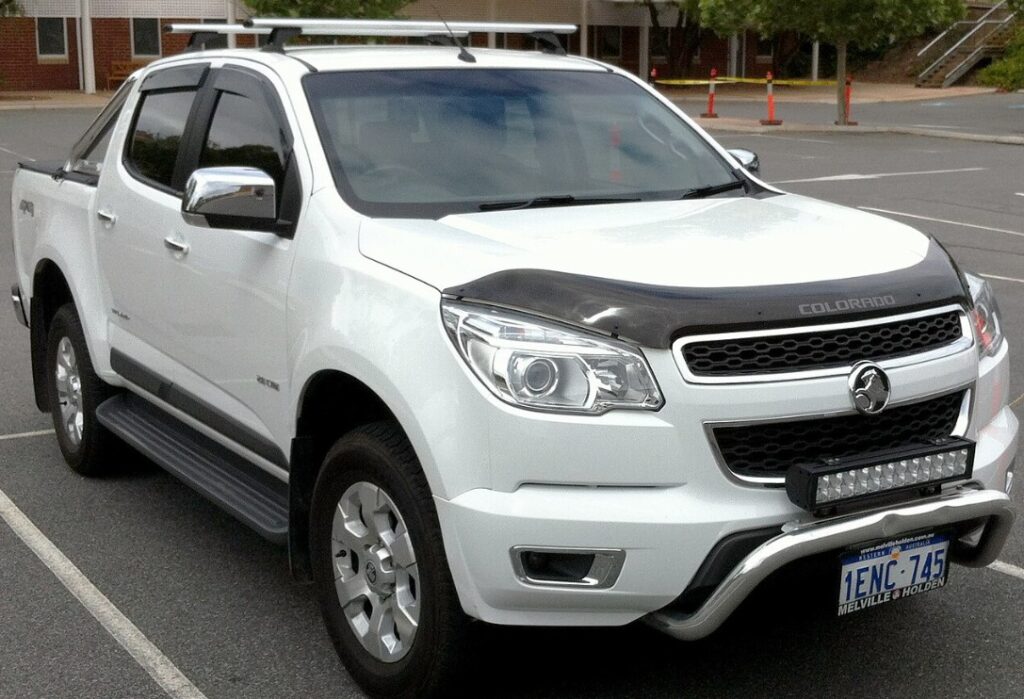
Choosing between a Holden Colorado vs Mazda BT-50 sounds simple until we start digging into model years, engines, towing ability, off-road hardware, running costs, and the small everyday details that determine whether a ute becomes a trusted companion or an expensive headache.
Both names have been major players in the Australian ute market, but they followed very different paths. The Holden Colorado reached the end of its Australian new-car life after Holden ceased new-vehicle sales, while the Mazda BT-50 continues as a current model. Holden still maintains service and ownership support for existing vehicles, so the Colorado remains very much alive on the used market.
That distinction matters.
If we're comparing a late-model Holden Colorado with a newer BT-50, we're effectively comparing a discontinued ute with a model that is still evolving. But that doesn't automatically make the Mazda the winner. Used Colorados can offer serious towing muscle, strong diesel torque, plenty of equipment, and attractive prices.
So, which ute makes more sense?
Let's put them head-to-head.
Content in this publication
- Holden Colorado vs Mazda BT-50 at a Glance
- The Biggest Difference: We're Comparing Different Eras
- Engine Performance: Colorado Has More Torque
- Mazda BT-50 Engine: Less Torque, Still Plenty of Muscle
- Holden Colorado vs Mazda BT-50 Towing Capacity
- Which Ute Is Better for Towing?
- Off-Road Ability
- Ride Comfort and Everyday Driving
- Interior Quality and Technology
- Payload: Check the Exact Variant
- Fuel Economy
- Reliability: Which One Should We Trust?
- BT-50 Reliability Considerations
- Servicing and Parts Availability
- Resale Value
- Which Is Better as a Work Ute?
- Which Is Better for Touring and Camping?
- Which Is Better for Families?
- Used Colorado vs Used BT-50: Condition Changes Everything
- Holden Colorado vs Mazda BT-50: Pros and Cons
- So, Holden Colorado or Mazda BT-50?
- Final Verdict
- Frequently Asked Questions
Holden Colorado vs Mazda BT-50 at a Glance
Before wandering deep into the mechanical weeds, here's the basic picture.
The late Holden Colorado commonly found on Australian used-car listings uses a 2.8-litre Duramax turbo-diesel four-cylinder. In automatic form, it produces around 147kW and 500Nm, while manual versions have lower peak torque.
The modern Mazda BT-50 takes a different approach. Most current variants use a 3.0-litre turbo-diesel four-cylinder producing 140kW and 450Nm, while selected entry models use a smaller 1.9-litre diesel rated at 110kW and 350Nm. Mazda pairs these engines with six-speed transmissions depending on specification.
On paper, therefore, the automatic Colorado actually has the stronger peak torque figure.
That's our first reminder that newer doesn't automatically mean stronger.
Quick Comparison
| Category | Holden Colorado | Mazda BT-50 |
|---|---|---|
| Typical diesel | 2.8L turbo-diesel | 3.0L turbo-diesel |
| Late-model auto torque | 500Nm | 450Nm |
| Late-model power | 147kW | 140kW |
| Maximum braked towing | Up to 3,500kg | Up to 3,500kg |
| New-car availability | Discontinued | Current |
| Main appeal | Value and strong torque | Modernity and ongoing support |
Exact specifications depend on year, body style, drivetrain and variant, so we should always verify the compliance plate and owner's documentation of the particular ute we're considering.
The Biggest Difference: We're Comparing Different Eras
This is where many comparisons become misleading.
Search for a Mazda BT-50 and we could find everything from an older Ford-related BT-50 to today's Isuzu-based generation. Search for a Holden Colorado and we'll encounter several generations and mechanical configurations.
That means a blanket statement such as "the BT-50 is more reliable" or "the Colorado tows better" doesn't tell us much.
We need to compare apples with apples.
Older Mazda BT-50 vs Holden Colorado
Older BT-50s have a distinctly different personality from today's model. They feel more traditionally truck-like, and depending on the generation can provide strong diesel performance and excellent utility.
The later RG-generation Colorado, meanwhile, became one of Holden's most competitive utes. By the end of its Australian run, its 2.8-litre turbo-diesel produced 147kW and up to 500Nm with the automatic transmission.
For shoppers looking around similar used-market price points, a Colorado can consequently provide a lot of ute for the money.
Modern BT-50 vs Colorado
Put a late Colorado alongside a current-generation BT-50 and the Mazda starts pulling ahead in areas associated with being a newer design.
Yet the Colorado fights back with that strong 500Nm automatic diesel, straightforward workhorse character and potentially lower purchase price.
It's like comparing a well-equipped older hiking boot with a newer technical boot. One may have more sophisticated materials, but the older one might still be exactly what we need for heavy work.
Engine Performance: Colorado Has More Torque
Here's where the Holden makes a strong opening argument.
A late automatic Colorado's 2.8-litre Duramax diesel produces 147kW and 500Nm.
Mazda's current mainstream 3.0-litre BT-50 produces 140kW and 450Nm.
That's a meaningful difference on paper.
How the Colorado Feels
The Colorado's torque gives it the muscular low-speed sensation many ute drivers enjoy. Push the accelerator and there's a sense that the engine has rolled up its sleeves.
That character suits:
- towing caravans
- carrying substantial loads
- highway overtaking
- climbing hills
- worksite driving
- long-distance touring
Peak figures aren't everything, of course. Transmission calibration, vehicle mass, gearing and engine response matter enormously.
Still, anyone assuming the newer Mazda automatically has the more powerful engine may be surprised.
Manual Colorado Buyers Need to Pay Attention
There's an important footnote.
Late automatic Colorados were rated at 500Nm, while the manual version produced around 440Nm.
So when comparing advertisements, don't simply read "2.8 Duramax" and assume every Colorado delivers identical performance.
Transmission matters.
Mazda BT-50 Engine: Less Torque, Still Plenty of Muscle
The 3.0-litre BT-50 produces 140kW and 450Nm, figures that remain perfectly respectable for a dual-cab ute.
Does losing 50Nm compared with an automatic Colorado make the Mazda slow?
Not really.
The difference becomes more relevant when we're pushing both vehicles hard: hauling significant loads, climbing steep grades or towing a heavy caravan.
During ordinary suburban and highway driving, both provide the diesel shove we expect from a modern work ute.
Don't Confuse the 3.0 and 1.9 BT-50
Mazda also offers a 1.9-litre engine in selected BT-50 versions. The current specification quoted by Mazda lists 110kW and 350Nm for that engine.
That's a different proposition altogether.
For light commercial duties, commuting and buyers prioritising operating efficiency, it can make sense.
For regularly hauling a large caravan?
We'd lean toward the larger engine.
Holden Colorado vs Mazda BT-50 Towing Capacity
Here's the number many buyers jump straight to:
3,500kg.
The Holden Colorado can be rated for up to 3,500kg braked towing capacity, depending on specification.
The Mazda BT-50 can also offer 3,500kg braked towing capacity. Mazda additionally explains that unbraked trailers are generally limited to 750kg in this vehicle class, subject to vehicle specifications and applicable regulations.
So it's a tie?
Not quite.
Why 3,500kg Doesn't Tell the Whole Towing Story
A maximum towing rating isn't permission to load the tray to the roof, hook up a 3.5-tonne caravan and head toward the horizon.
We also need to consider:
- GVM
- GCM
- payload
- tow-ball download
- passengers
- accessories
- bullbars
- canopies
- camping equipment
- water
- fuel
- luggage
This is where real-world towing maths can turn into alphabet soup.
A towing assessment of the 2020 Colorado highlighted exactly this issue: with a quoted 6,000kg GCM and 3,150kg maximum GVM in the configuration tested, maximum theoretical trailer capacity cannot necessarily be combined with maximum vehicle loading.
The same principle applies to any ute.
Payload Disappears Faster Than We Think
Imagine four adults, a bullbar, canopy, recovery equipment, fridge, tools and a heavy trailer pushing substantial weight onto the towball.
Suddenly that impressive payload figure starts shrinking like ice on hot bitumen.
Mazda even provides a dedicated payload calculator because towing capacity and usable payload interact rather than existing as separate numbers.
Which Ute Is Better for Towing?
If we're comparing the later 500Nm automatic Colorado against a 450Nm 3.0-litre BT-50, the Holden has an obvious torque advantage on paper.
For pulling away with weight behind us or climbing grades, that extra torque is appealing.
But towing isn't an engine dyno competition.
Vehicle condition, suspension, tyres, brakes, cooling system, transmission behaviour, wheelbase, load distribution and trailer setup matter just as much.
For a used vehicle in particular, we'd happily choose an immaculately maintained BT-50 over an abused Colorado with 500Nm.
Condition beats brochure specifications every time.
Off-Road Ability
Both utes can be genuinely useful away from sealed roads when properly equipped.
A four-wheel-drive Colorado uses a part-time 4WD arrangement with a two-speed transfer case, giving drivers the low-range gearing expected from a traditional off-road ute.
Appropriate 4x4 BT-50 versions similarly target the work-and-adventure market.
Colorado Off-Road Character
The Colorado has that familiar rugged ute formula:
body-on-frame construction, independent front suspension, live rear axle and leaf springs.
In other words, nobody designed it primarily for cruising through shopping-centre car parks.
It can tackle rough access roads, muddy worksites, sand, corrugations and touring routes when configured appropriately.
BT-50 Off-Road Character
The current BT-50 still feels like a ute rather than trying to disguise itself as an SUV.
That's useful.
We sometimes get carried away looking for luxury-car refinement in vehicles whose job description includes hauling tools across corrugated tracks.
If our lifestyle regularly involves camping, farms, remote travel or difficult terrain, a 4x4 version of either vehicle makes considerably more sense than buying purely on badges.
Ride Comfort and Everyday Driving
Now we get to an area that matters enormously if the ute spends 90% of its life without a trailer.
Utes can look heroic in advertisements while being used primarily for school runs, supermarket trips and commuting.
You may be interested in reading Holden Colorado and Isuzu D-Max: Differences, Similarities, and Which Is Better?
Nothing wrong with that.
But it changes our priorities.
Why the BT-50 May Appeal More as a Daily Driver
The newer BT-50 generally presents itself as the more contemporary proposition.
The design, cabin presentation and technology make it easier to treat as a family vehicle as well as a workhorse.
For buyers stepping out of an SUV, that can matter enormously.
The Colorado Still Has Everyday Appeal
The Colorado isn't some agricultural tractor with number plates.
Later models can be comfortable, well equipped and perfectly civilised for highway travel.
Its strength is simplicity of purpose.
Sit inside, fire up the diesel, and it feels ready to work.
Interior Quality and Technology
If infotainment, cabin design and contemporary safety technology are major priorities, the BT-50 has a natural advantage when we're comparing a current vehicle with a discontinued Colorado.
That's simply the march of time.
Technology ages faster than engines.
A ten-year-old turbo-diesel can still pull a trailer beautifully. A ten-year-old infotainment system can feel like operating a museum exhibit.
Colorado Cabin
The Colorado cabin is functional.
Later versions offer enough equipment to prevent the vehicle feeling genuinely ancient, but buyers used to newer digital interfaces may notice its age.
For a tradie who wants straightforward controls?
That might actually be a benefit.
BT-50 Cabin
The newer Mazda feels more aligned with what modern dual-cab buyers expect: a ute that needs to handle weekday duties without feeling overly industrial.
If our partner or family members will drive the vehicle frequently, this could become more important than a 50Nm torque advantage.
Payload: Check the Exact Variant
Payload is another area where generic comparisons become dangerous.
Mazda's own published examples show just how dramatically payload can vary within a single model range. Mazda has cited figures ranging from 887kg for one 4x4 dual-cab configuration to 1,236kg for a 4x2 single cab-chassis configuration.
Same badge.
Very different carrying ability.
The Colorado is no exception to this rule.
Tray configuration, cab style, drivetrain, transmission and trim level influence what the vehicle can legally carry.
For Work Buyers, Payload May Matter More Than Power
A plumber carrying equipment every weekday probably shouldn't choose a ute because one makes another 20kW.
Payload could matter far more.
The same goes for touring.
Add a steel bullbar, winch, second battery, canopy, fridge, drawers, rooftop tent and 120 litres of water and suddenly we've built a small house on the back of our ute.
Every kilogram counts.
Fuel Economy
Diesel consumption is always difficult to compare fairly because driving environment changes everything.
Highway cruising?
City commuting?
Towing 2.8 tonnes?
Carrying nothing?
Those are completely different workloads.
A 2019 Colorado was officially listed at approximately 7.9 to 8.7L/100km depending on configuration.
Official numbers are useful for comparison, but we shouldn't treat them as promises.
Towing Changes Everything
Once we attach a large caravan, aerodynamic drag becomes the invisible hand reaching into our fuel tank.
Speed, trailer height, wind, terrain and weight can transform consumption.
For serious towing buyers, the better question isn't:
"Which one gets the best brochure fuel economy?"
It's:
"Which one comfortably performs the job without constantly working at its limit?"
Reliability: Which One Should We Trust?
This is probably the most emotionally charged part of the Holden Colorado vs Mazda BT-50 debate.
And it's also the part where sweeping claims are least useful.
A ten-year-old ute with 180,000km has lived a life.
Maybe it spent those kilometres cruising highways.
Maybe it spent them dragging a three-tonne van through summer heat.
Maybe its owner changed the oil obsessively.
Maybe servicing happened whenever the dashboard started begging.
We can't see any of that in a badge.
Colorado Reliability Considerations
The 2.8-litre diesel has earned the Colorado plenty of fans, and specialist assessments commonly describe the engine as a strong part of the package while noting that ageing diesel emissions equipment and transmissions deserve attention on used examples.
That doesn't mean every Colorado will develop problems.
It means inspection history matters.
What We'd Check on a Used Colorado
Before purchasing, we'd inspect:
- complete service history
- cold-start behaviour
- abnormal smoke
- cooling-system condition
- oil leaks
- transmission shifting
- diesel particulate filter warnings
- 4WD engagement
- suspension wear
- underbody damage
- evidence of heavy towing
- aftermarket modifications
A pre-purchase inspection is money well spent.
BT-50 Reliability Considerations
The current BT-50 uses a powertrain shared with its Isuzu relative rather than the Ford-related architecture of earlier BT-50 generations.
Again, generation matters.
When researching reliability, always put the year and engine into the search instead of merely searching "Mazda BT-50 problems."
Otherwise we mix different vehicles into one giant soup of internet complaints.
Servicing and Parts Availability
This is one of the most understandable concerns about buying a Colorado.
Holden no longer sells new vehicles in Australia, but its Australian ownership site continues to provide information covering servicing, warranty-related resources and customer support for existing owners.
Still, Mazda has the straightforward advantage of selling the BT-50 as a current model.
Does Holden's Closure Make the Colorado a Bad Buy?
Not automatically.
There are plenty of discontinued vehicles driving Australian roads every day.
Parts demand doesn't magically evaporate when a badge disappears from showrooms.
The issue becomes more important as vehicles age, particularly for unusual trim pieces, electronic components or model-specific parts.
Mechanical maintenance is usually a more manageable question than obscure cosmetic replacement pieces.
Resale Value
This category naturally favours the vehicle that is still part of an active new-car lineup.
The BT-50 badge continues.
The Colorado badge doesn't.
Yet depreciation can work in our favour when buying used.
Colorado's Used-Value Advantage
Suppose two utes perform broadly similar jobs, but the Colorado costs thousands less because buyers are nervous about the Holden name disappearing.
For a buyer intending to keep the vehicle for many years, that discount could matter more than future resale.
Buy low, use it hard, maintain it properly.
That's not a bad formula.
You may be interested in readingHolden Colorado and Isuzu D-Max: Differences, Similarities, and Which Is Better?You may be interested in reading
Holden Colorado vs VW Amarok: Which Used Ute Is Better?BT-50 Resale Confidence
The BT-50 may appeal more strongly to shoppers who regularly change vehicles and care about ease of resale.
Being associated with a current manufacturer lineup provides psychological reassurance.
And in the used-car world, reassurance has monetary value.
Which Is Better as a Work Ute?
This depends entirely on the work.
If we need strong diesel torque and are shopping on a limited used-vehicle budget, the Colorado is exceptionally tempting.
The automatic's 500Nm remains a persuasive figure.
If we want newer technology, a continuing model line and easier access to a current manufacturer ecosystem, the BT-50 makes more sense.
Choose the Colorado for Work If…
We'd lean Colorado when:
- purchase price matters heavily
- we want strong diesel torque
- towing is frequent
- we don't care about having the newest interior technology
- we've found a well-maintained example with excellent history
Choose the BT-50 for Work If…
We'd lean BT-50 when:
- we want a newer vehicle
- safety and technology matter strongly
- we plan to keep dealership servicing simple
- family driving is part of the equation
- we prefer a currently supported model range
Which Is Better for Touring and Camping?
Now things get interesting.
Both can make strong touring platforms.
We can fit canopies, drawers, fridges, recovery equipment, roof systems and long-range touring accessories to either.
But resist the temptation to accessorise first and calculate weight later.
Every accessory consumes payload.
For Heavy Caravan Touring
The Colorado's 500Nm automatic engine gives it genuine appeal.
Both vehicles can reach the headline 3.5-tonne braked tow rating in appropriate configurations, but real legal carrying ability depends on combined mass and individual axle, GVM and GCM limits.
For a big caravan, we'd calculate the exact weights before buying either vehicle.
Not after.
Before.
Which Is Better for Families?
The BT-50 takes this round for many buyers.
Why?
Because modern ute buyers increasingly expect one vehicle to do everything.
Tow the caravan Friday.
Football Saturday.
Shopping Sunday.
Worksite Monday.
The newer BT-50 naturally fits that multi-purpose role more convincingly.
But if the family budget is tight, a good Colorado offers a lot of capability without forcing us into a much more expensive purchase.
Used Colorado vs Used BT-50: Condition Changes Everything
This is the most important section in the entire comparison.
Imagine two vehicles.
One is supposedly the "more reliable" model but has incomplete service records, mismatched tyres, a transmission that shifts strangely and evidence of beach driving.
The other has detailed invoices, one careful owner, clean fluids, good tyres and immaculate underbody condition.
Which would we buy?
The second one.
Every time.
Our Used-Ute Inspection Priorities
When buying either vehicle, check:
- Service history and invoices.
- Engine condition from completely cold.
- Transmission operation.
- 4WD system engagement.
- Cooling-system condition.
- Tyre wear patterns.
- Suspension bushes and shocks.
- Chassis and underbody damage.
- Signs of saltwater or beach exposure.
- Towbar wear and evidence of heavy towing.
- Emissions-system warning lights.
- Electrical functions.
- Vehicle recalls and completed campaigns.
- Actual payload and towing specifications.
- Independent mechanical inspection.
That checklist is worth more than arguing over brand loyalty.
Holden Colorado vs Mazda BT-50: Pros and Cons
Holden Colorado Pros
The Colorado's strongest arguments are value, torque and capability. In automatic late-model form, the 2.8 diesel's 500Nm remains impressive even beside newer competitors.
It can also tow up to 3.5 tonnes braked in appropriate configurations.
For buyers who don't mind owning a discontinued model, there's serious appeal here.
Holden Colorado Cons
Its age is becoming more obvious.
Technology isn't as contemporary, the Holden new-car network no longer exists in its old form, and condition varies enormously across used examples.
Cheap Colorados can be bargains.
They can also be cheap for a reason.
Mazda BT-50 Pros
The BT-50 benefits from being a current product, modern design and continued manufacturer presence.
The mainstream 3.0-litre engine's 140kW and 450Nm are still plenty for most owners, and appropriately specified versions can tow up to 3.5 tonnes braked.
It also makes a convincing dual-purpose family and work vehicle.
Mazda BT-50 Cons
The obvious disadvantage is price.
A newer BT-50 can require substantially more upfront money than a used Colorado.
And despite being newer, its 3.0-litre diesel doesn't beat the late automatic Colorado's peak torque output.
So, Holden Colorado or Mazda BT-50?
If we were shopping with value as the priority, we'd give the Holden Colorado serious consideration.
The late 2.8-litre automatic combination offers 147kW and 500Nm, respectable towing capability and a rugged platform that remains useful years after Holden disappeared from new-car showrooms.
But we'd buy strictly on condition.
A cheap Colorado with sketchy history isn't a bargain.
It's a repair invoice wearing number plates.
If our budget allowed us to buy newer, and we wanted current technology, continued manufacturer presence and a vehicle equally comfortable serving work and family duties, we'd choose the Mazda BT-50.
Best for Heavy-Duty Value: Holden Colorado
For maximum capability per dollar on the used market, the Colorado is difficult to ignore.
That 500Nm automatic diesel is its ace card.
Best All-Round Modern Choice: Mazda BT-50
For someone wanting the more contemporary ownership experience, the BT-50 gets our vote.
It costs more, but we're buying something newer in concept as well as age.
The Real Winner Is the Better Individual Vehicle
And that's the twist.
When comparing used utes, model reputation gets us onto the shortlist.
Condition makes the final decision.
A meticulously maintained Colorado beats a neglected BT-50.
A carefully owned BT-50 beats a Colorado that spent five years drowning in beach sand while towing at maximum weight.
Buy the vehicle, not merely the badge.
Final Verdict
The Holden Colorado vs Mazda BT-50 battle doesn't produce one universal winner.
The Colorado is the value fighter. Its late 2.8-litre turbo-diesel automatic produces a stout 500Nm, it can provide 3.5-tonne braked towing ability in suitable specifications, and used examples can offer enormous capability for the money.
The Mazda BT-50 is the more future-facing option. The current mainstream 3.0-litre diesel provides 140kW and 450Nm, Mazda remains actively invested in the model, and its newer platform makes more sense for drivers who want their ute to double as a contemporary family vehicle.
Our choice?
Buy the Colorado if price, torque and used-market value come first.
Buy the BT-50 if modernity, continuing manufacturer support and everyday refinement matter more.
And whichever ute we choose, spend less time obsessing over the badge and more time inspecting service records, weights, mechanical condition and previous use.
That's where the real difference hides.
Frequently Asked Questions
Is the Holden Colorado better than the Mazda BT-50?
The Holden Colorado can be the better choice for buyers seeking strong diesel torque and used-market value. A late automatic Colorado produces around 147kW and 500Nm, whereas Mazda's current mainstream 3.0-litre BT-50 produces 140kW and 450Nm. However, the Mazda is the newer platform and remains part of an active model lineup.
Which tows more, Holden Colorado or Mazda BT-50?
Appropriately specified versions of both can offer up to 3,500kg braked towing capacity. Always check the exact model's GVM, GCM, payload and towball limits rather than relying exclusively on the headline tow rating.
Which has more torque, Colorado or BT-50?
A late automatic Holden Colorado's 2.8-litre diesel produces approximately 500Nm, while the current Mazda BT-50's mainstream 3.0-litre diesel produces 450Nm. Manual Colorado versions may have different output figures, so specifications should be checked by model year and transmission.
You may be interested in readingHolden Colorado and Isuzu D-Max: Differences, Similarities, and Which Is Better?You may be interested in reading
Holden Colorado vs VW Amarok: Which Used Ute Is Better?You may be interested in reading
 Which Mazda 6 Is the Best? The Complete Buyer’s Guide
Is buying a Holden Colorado risky now that Holden has closed?
Not necessarily. Holden continues to maintain Australian ownership and service information for existing vehicles. However, because every Colorado is now a used vehicle, service history and mechanical condition deserve particularly careful inspection.
Should I buy a used Colorado or spend more on a BT-50?
Choose the Colorado when value and strong towing performance are the priorities and you've found an exceptionally well-maintained example. Spend more on the BT-50 when you value newer technology, an actively sold model range and a more contemporary ownership experience. For used vehicles, we'd place condition and documented maintenance above either badge.
If you want to know other articles similar to Holden Colorado vs Mazda BT-50: Which Used Ute Is Better? you can visit the category Models.
Volkswagen T-Cross vs Volkswagen T-Roc: Which Is Better?
Hyundai Tucson Weight: Complete Guide to Curb, Gross, and Payload Specs

Honda Passport vs Toyota 4Runner: Which SUV Is Better?
Honda Passport vs Ford Bronco: Which SUV Is Better?
Honda Passport vs Ford Explorer: Which SUV Is Better?
Honda Passport or Pilot: Which SUV Is Better?
Leave a Reply
More content of your interest