

Holden Colorado Towing Capacity: Complete Guide for Owners and Buyers

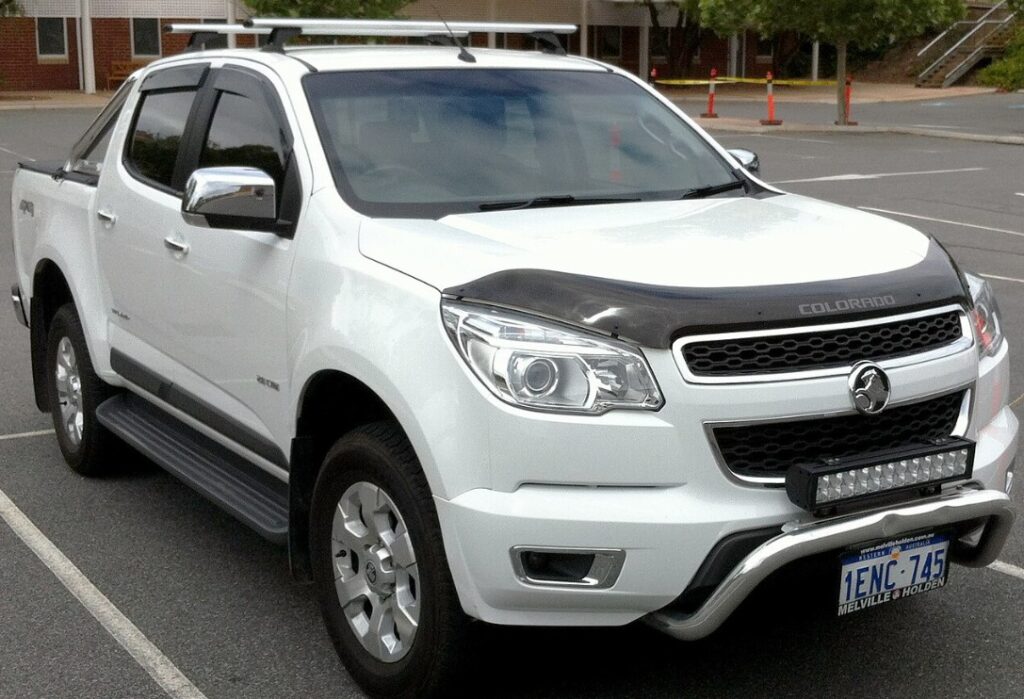
The Holden Colorado towing capacity is one of the big reasons this ute became such a familiar sight on Australian highways, worksites, boat ramps, and caravan parks. For later RG-generation Colorados, the headline number is impressive: many variants are rated to tow up to 3,500 kg braked. Earlier models, however, can have considerably lower ratings, so the badge on the tailgate alone doesn't tell us everything. Published year-by-year data shows ratings progressing from around 2,000 kg on early examples to 3,000 kg and eventually 3,500 kg on later Colorados.
That 3.5-tonne figure deserves some context too. Maximum towing capacity is not the same thing as saying we can hook a 3,500 kg caravan behind every Colorado, fill the tray with camping gear, load five people aboard, and drive away without another calculation.
Towing limits work together with payload, towball download, Gross Vehicle Mass (GVM), Gross Combination Mass (GCM), trailer brakes, and the specific specifications of our vehicle.
So, whether we're buying a Colorado specifically for a caravan, wondering whether ours can pull a boat, or simply trying to understand all those numbers stamped on compliance plates, this guide breaks the subject down without turning it into an engineering lecture.
Content in this publication
- What Is the Holden Colorado Towing Capacity?
- Holden Colorado Towing Capacity by Year
- Why the Colorado Became Such a Popular Tow Vehicle
- The 3,500 kg Number Isn't the Whole Story
- What Is GCM and Why Does It Matter?
- Holden Colorado Towball Weight
- Can a Holden Colorado Really Tow a 3.5-Tonne Caravan?
- Can a Holden Colorado Tow a Large Caravan?
- Can a Holden Colorado Tow a Boat?
- Can a Holden Colorado Tow a Horse Float?
- 2WD vs 4WD Holden Colorado for Towing
- What Happens to Fuel Economy While Towing?
- How Does the Holden Colorado Handle Heavy Towing?
- How to Prepare a Colorado for Towing
- Is the Holden Colorado a Good Tow Vehicle Today?
- The Biggest Mistake When Calculating Colorado Towing Capacity
- Conclusion: How Much Can a Holden Colorado Tow?
- Frequently Asked Questions
What Is the Holden Colorado Towing Capacity?
For many later-model Holden Colorados, particularly RG-generation 2.8-litre turbo-diesel versions, the maximum braked towing capacity is 3,500 kg, while the commonly quoted maximum unbraked trailer capacity is 750 kg. CarsGuide lists the 2016, 2017 and 2019 Colorado at up to 3,500 kg braked, for example.
That puts the later Colorado squarely in the heavy-duty towing class of Australian dual-cab utes of its period.
But here's where things get interesting.
The Colorado has been sold across different generations, body styles, drivetrains and model years. Consequently, we shouldn't assume every vehicle carrying the Colorado name has the same rating.
| Holden Colorado model year | Approx. maximum braked towing capacity | Typical unbraked limit |
|---|---|---|
| 2008–2009 | Up to 2,000 kg | 750 kg |
| 2010–2012 | Up to 3,000 kg | 750 kg |
| 2013–2020 | Up to 3,500 kg | 750 kg |
These figures provide a useful general guide based on published Australian towing data, but the actual limit for our vehicle should always be checked against its owner's documentation and specifications because variant-level differences can exist.
What Does 3,500 kg Braked Towing Actually Mean?
When Holden Colorado specifications quote a maximum towing capacity of 3,500 kg, they are referring to a trailer equipped with an appropriate braking system.
In other words, we're not talking about dragging three and a half tonnes behind the ute using the Colorado's brakes alone.
The trailer carries its own braking equipment, helping slow its own mass rather than asking the tow vehicle to do all the work.
Three and a half tonnes is roughly where serious caravan, horse-float and machinery-trailer territory begins. On paper, therefore, an appropriately rated Colorado can handle some genuinely substantial loads.
Yet towing capacity is just the first ceiling we encounter.
Braked vs Unbraked Towing
This distinction sounds technical but is actually straightforward.
A braked trailer has brakes that operate as part of the towing setup. An unbraked trailer doesn't.
Later Colorados commonly carry an unbraked towing limit of 750 kg versus a braked limit of up to 3,500 kg.
Think of it like walking downhill carrying a heavy suitcase. If the suitcase suddenly had wheels and its own brakes, controlling it would become much easier. Trailer brakes play a similar role by preventing the tow vehicle from shouldering the entire braking load.
Holden Colorado Towing Capacity by Year
The Colorado's towing capability improved substantially throughout its Australian lifespan.
Earlier examples weren't the 3.5-tonne towers people sometimes assume they were.
2008 and 2009 Holden Colorado Towing Capacity
Early Holden Colorados from 2008 and 2009 are generally listed with a maximum braked towing capacity of 2,000 kg.
That's still useful for smaller caravans, campers, boats and utility trailers, but it puts these older vehicles in a very different category from later 3.5-tonne models.
Anyone shopping specifically for a tow vehicle should pay close attention here. A cheap early Colorado can look tempting, but saving money at purchase time doesn't help if the caravan we'd like to tow exceeds the vehicle's rating.
2010 to 2012 Holden Colorado Towing Capacity
Published towing figures for the 2010, 2011 and 2012 model years rise to approximately 3,000 kg braked.
That extra tonne dramatically expands the range of trailers these Colorados can legally accommodate.
Still, 3,000 kg and 3,500 kg aren't interchangeable. A large caravan with a 3,200 kg ATM, for example, may be acceptable behind a later Colorado but already sits beyond the rating of a 3,000 kg version.
2013 to 2020 Holden Colorado Towing Capacity
From 2013 onward, published Australian towing data generally lists the Colorado with a maximum 3,500 kg braked towing capacity.
This period includes the Colorados that built the model's strongest towing reputation.
A 2019 Colorado Z71 tested alongside other popular dual-cab utes was specified with a 3,500 kg braked towing capacity and 350 kg maximum towball download.
Likewise, a 2019 Colorado LT tow test listed 3,500 kg towing capacity, 350 kg maximum towball download and a 1,048 kg payload for that particular vehicle.
Why the Colorado Became Such a Popular Tow Vehicle
A big towing number alone doesn't make a good tow vehicle.
We also want torque, sensible gearing, chassis stability, effective cooling, braking confidence and predictable behaviour when a heavy trailer starts pushing from behind.
Later Colorados used a 2.8-litre four-cylinder turbo-diesel engine. A 2019 example was rated at 147 kW and 500 Nm when paired with its six-speed automatic transmission.
Five hundred Newton-metres is particularly relevant when towing because torque is what helps get a heavy combination moving and keeps it climbing when the highway points uphill.
Imagine pushing a loaded shopping trolley. Peak speed isn't what matters when the trolley is stationary. We need shove. Diesel torque gives the Colorado that shove.
2.8-Litre Diesel and Heavy Towing
The 2.8-litre turbo-diesel became closely associated with the RG Colorado's towing ability.
Its broad torque delivery gives drivers relatively strong pulling power without constantly chasing the upper reaches of the rev counter.
In an independent 3,500 kg tow comparison, testers found that the 2.8-litre Colorado handled the heavy trailer surprisingly well for its displacement, describing its power delivery as measured while hauling the test load.
That doesn't mean towing 3.5 tonnes feels effortless.
Physics always sends the invoice.
Accelerating takes longer. Hills become more noticeable. Braking distances increase. Fuel consumption rises substantially, and overtaking requires considerably more planning.
Automatic vs Manual Colorado for Towing
Both manual and automatic Colorados have appeared with strong towing ratings depending on model year and variant.
For example, CarsGuide lists multiple 2015 2.8-litre diesel Colorado variants—manual and automatic—with a 3,500 kg braked capacity.
Which transmission is better in practice?
Many touring drivers prefer the automatic because it removes clutch work during hill starts, traffic and slow manoeuvring. That's particularly handy when backing a caravan into a cramped campsite where every metre feels like a driving exam.
A manual gives us greater direct control, but regularly moving heavy loads can also place considerable demands on the clutch.
Neither configuration magically overrides the vehicle's weight ratings. The exact specifications of the individual Colorado remain what matters.
The 3,500 kg Number Isn't the Whole Story
Here's the mistake we'd avoid above almost everything else: treating maximum towing capacity as the only calculation.
Imagine our Colorado is rated to tow 3,500 kg.
Great.
Now add a bullbar, canopy, fridge, tools, two adults, two children, luggage, recovery equipment and 200-plus kilograms of towball download.
Suddenly the equation looks completely different.
The towing limit may still say 3,500 kg, but other vehicle limits can become the real restriction.
Understanding GVM
Gross Vehicle Mass, usually shortened to GVM, is the maximum permitted operating mass of the tow vehicle itself.
That includes the vehicle plus occupants, accessories, luggage and the portion of trailer weight pressing down on the towball.
Yes, towball weight effectively consumes vehicle payload.
That's the detail people often miss.
Suppose we start with 900 kg of available payload and connect a caravan producing 300 kg of ball download. We don't still have 900 kg available for people and cargo. We've already used a substantial slice of it.
Payload Matters More Than Many Buyers Expect
Payload is essentially how much weight we can add to the vehicle before reaching its GVM.
And utes invite us to add weight.
A steel bullbar here. Winch there. Roof rack. Canopy. Drawer system. Auxiliary battery. Long-range equipment. Tools. Camping gear.
Each accessory seems harmless alone. Together they can chew through payload like termites through timber.
That's why a towing setup needs to be calculated as an entire system.
What Is GCM and Why Does It Matter?
Gross Combination Mass is another crucial number.
GCM represents the permitted combined mass of the loaded tow vehicle and loaded trailer, subject to the manufacturer's specifications.
Here's a practical example of why this matters.
A 2020 Colorado LTZ towing review noted a 6,000 kg GCM and 3,150 kg GVM for the test vehicle. The publication pointed out that if the Colorado itself were loaded all the way to its 3,150 kg maximum GVM, only 2,850 kg would remain within that 6,000 kg combination limit—not the headline 3,500 kg tow rating.
That's the towing equation in a nutshell.
A 3,500 kg tow rating doesn't necessarily mean 3,500 kg trailer + maximum vehicle load simultaneously.
Why GCM Changes Real-World Towing Capacity
Let's imagine we have a hypothetical Colorado with a 6,000 kg GCM.
Our loaded Colorado weighs 2,800 kg.
That leaves 3,200 kg before reaching 6,000 kg.
Even if the vehicle technically carries a 3,500 kg trailer rating, the combination limit can become the tighter constraint depending on how weight is calculated for the specific setup.
This is why serious caravan owners visit a weighbridge.
Numbers beat guesses every time.
Holden Colorado Towball Weight
Later Colorado towing specifications are frequently quoted with a maximum towball download around 350 kg when towing at the upper end of the vehicle's capacity. Both comparative testing and Colorado tow-test specifications have published a 350 kg maximum for certain 2019 examples.
Towball weight matters because the trailer shouldn't simply float neutrally behind the vehicle. A properly configured trailer places an appropriate amount of downward load on the tow vehicle.
Too little can contribute to instability.
Too much can overload the rear axle or push the tow vehicle beyond GVM.
Neither extreme is something we want at 100 km/h.
Does Towball Weight Reduce Payload?
Yes.
This is one of the most important practical lessons in the entire Holden Colorado towing conversation.
The ball load imposed by the trailer becomes load carried by the tow vehicle.
So if we're towing a heavy caravan with a substantial ball download, we need to account for it alongside passengers, accessories and cargo.
A family touring Colorado can become heavy surprisingly quickly.
Can a Holden Colorado Really Tow a 3.5-Tonne Caravan?
A suitably rated later-model Colorado can have a maximum braked towing specification of 3,500 kg. That is the manufacturer's maximum-type figure published for many variants, not a recommendation that every owner should automatically seek out a 3,500 kg caravan.
There's a meaningful distinction between can tow and ideal everyday towing setup.
At maximum weight, every factor matters more: vehicle loading, tyre condition, brake adjustment, trailer balance, road surface, crosswinds, temperature, hills and driver judgement.
A Colorado that feels relaxed towing 2,200 kg may behave quite differently towing 3,400 kg.
Maximum Capacity vs Comfortable Capacity
Towing below the absolute maximum usually provides more breathing room.
We're not talking about some universal percentage because every vehicle-trailer combination differs. Instead, we should focus on measured weights and margins.
Before committing to a heavy caravan, we'd want to know:
- The Colorado's exact braked towing rating, GVM, GCM and axle limits.
- The caravan's actual loaded mass rather than only its advertised empty weight.
- Actual towball download once the caravan is packed.
- Remaining Colorado payload after accessories, passengers and ball load.
- Whether the towbar, hitch and related hardware are appropriately rated.
- Whether the trailer braking setup complies with applicable requirements.
- Whether tyres and pressures suit the intended vehicle and trailer loads.
- Actual weighbridge numbers for the loaded touring configuration.
Those figures tell us far more than the brochure headline.
Can a Holden Colorado Tow a Large Caravan?
Absolutely—many owners choose later Colorados precisely because they want to tow sizeable caravans.
A caravan weighing somewhere in the mid-2-tonne range can leave substantially more breathing room than one sitting almost on the vehicle's maximum towing rating, although we must still calculate all applicable limits.
Once caravans climb beyond three tonnes, weight management becomes increasingly important.
Water alone is easy to underestimate. Fill large fresh-water tanks, throw food into the cupboards, add gas bottles, bikes, outdoor furniture, batteries, solar equipment and personal belongings, and a caravan's real travelling mass may bear little resemblance to its empty brochure number.
Can a Holden Colorado Tow a Boat?
For many boats, a later Colorado's towing capacity is more than sufficient.
But we need to calculate the entire trailer package.
Boat + engine + trailer + fuel + batteries + fishing equipment + water + accessories = the weight that matters.
Boat ramps also introduce a different challenge.
Getting the trailer moving on a slippery incline requires traction as much as engine power. This is where four-wheel-drive Colorado variants can be particularly useful, especially with heavier boats.
Can a Holden Colorado Tow a Horse Float?
Potentially, yes.
Again, we use total loaded weight.
A horse float that looks relatively light while empty can become a serious towing load once horses, equipment, feed and water enter the equation.
And unlike bricks or machinery, horses move.
That shifting load makes smooth acceleration, progressive braking and careful cornering particularly important.
2WD vs 4WD Holden Colorado for Towing
A two-wheel-drive Colorado can still be a capable towing vehicle where its specifications permit the required load.
On sealed roads, towing capacity itself isn't automatically dependent on whether we have 2WD or 4WD.
Four-wheel drive becomes especially valuable when towing involves slippery boat ramps, muddy campsites, loose gravel, steep unsealed roads or off-road access.
If our caravan lives almost entirely on bitumen, 2WD may fulfil the job.
If our idea of camping begins where the bitumen ends, 4WD starts earning its keep.
What Happens to Fuel Economy While Towing?
Expect fuel consumption to increase.
Sometimes substantially.
Dragging a caravan through the air is like attaching a small garden shed to the back of the ute. Weight matters during acceleration and climbing, while aerodynamic resistance keeps demanding energy whenever we're moving at speed.
Headwinds make things worse.
So does high speed.
A Colorado may offer respectable unladen diesel economy, but we shouldn't budget a long towing trip using the ute's official solo consumption figures.
The heavier and less aerodynamic the trailer, the more fuel we're likely to burn.
How Does the Holden Colorado Handle Heavy Towing?
Independent testing provides a useful clue.
The 2017-era Colorado was tested with a 3,500 kg trailer and was found to handle the weight relatively well, with its 2.8-litre diesel delivering useful performance despite its four-cylinder layout.
A later 2020 tow test was more nuanced: the vehicle was described as stable, though the engine and transmission had to work harder on steep highway climbs with a camper attached.
That combination of findings makes sense.
The Colorado can be a competent tow platform without somehow ignoring the laws of physics.
Heavy towing is heavy towing.
Hills, Headwinds and Highway Speeds
A 500 Nm diesel feels strong around town, but a large caravan changes the game.
Steep climbs require sustained engine output. Headwinds dramatically increase aerodynamic resistance. Hot weather puts additional stress on cooling systems.
That's why we avoid judging towing capability solely by how quickly the vehicle launches from a traffic light.
A good tow vehicle should behave consistently after hours of highway driving, climbing, descending and braking.
How to Prepare a Colorado for Towing
Preparation doesn't need to become obsessive, but we wouldn't connect a large caravan and simply hope for the best.
Start with the vehicle manufacturer's limits.
Then measure the real weights.
Make sure the trailer brakes work correctly, the tyres are healthy, pressures are appropriate, wheel bearings and suspension are in good condition, and the coupling is secure.
Mirrors should provide proper visibility around the trailer.
Heavy towing also makes routine maintenance more important. Fluids, cooling-system condition, brakes and driveline components work harder when the vehicle repeatedly pulls substantial loads.
Trailer Sway and Weight Distribution
Trailer sway is one of those things we never want to discover through experience.
Correct trailer loading matters enormously.
Putting too much mass behind the trailer axle can reduce effective ball load and make the trailer more prone to instability.
Meanwhile, simply loading the front excessively isn't a solution because too much towball download can overload the vehicle.
Balance—not guesswork—is the goal.
Why a Weighbridge Is Worth the Effort
A weighbridge turns assumptions into facts.
We may think the caravan weighs 2,700 kg.
It might weigh 3,050 kg once packed.
We may think the Colorado has plenty of payload left.
Then we discover the canopy, drawers, bullbar, towball load, passengers and fridge have almost consumed it.
Few towing accessories offer more useful information than a proper set of weight measurements.
Is the Holden Colorado a Good Tow Vehicle Today?
For buyers searching the used market, a well-maintained later RG Colorado remains an interesting towing proposition.
The combination of a 2.8-litre turbo-diesel, strong torque, available four-wheel drive and up to 3,500 kg braked towing capacity gives it genuine utility. Independent towing tests from its production era also demonstrated that it could handle substantial loads, while reminding us that performance and weight limitations still matter at the heavy end.
Because we're dealing with used vehicles now, condition arguably matters as much as specification.
A beautifully maintained Colorado that has spent its life towing lightly may be a much better prospect than a neglected example that has dragged maximum-weight trailers for years.
Service history deserves attention.
So do suspension condition, driveline noises, cooling performance, brakes, towbar condition and evidence of how the vehicle has been used.
The Biggest Mistake When Calculating Colorado Towing Capacity
The biggest mistake is beautifully simple:
3,500 kg does not automatically mean we can attach a 3,500 kg trailer regardless of everything else.
Towing is an equation.
Trailer mass is one number.
Vehicle mass is another.
Payload, ball weight, GVM, GCM and axle limits sit around them like the walls of a box.
Our combination has to fit inside all those walls—not merely one.
That's the difference between reading a specification and actually understanding it.
Conclusion: How Much Can a Holden Colorado Tow?
So, what is the Holden Colorado towing capacity?
Early Colorados were generally rated lower, with published Australian figures around 2,000 kg braked for 2008–2009 and 3,000 kg for 2010–2012. Later models from around 2013 through 2020 are widely listed at up to 3,500 kg braked, with a typical 750 kg unbraked limit.
That gives the later Colorado serious towing credentials.
But the headline number is only the doorway.
To know what our Colorado can actually tow when loaded for a holiday or working day, we need to consider its exact variant, GVM, GCM, payload, towball download, axle limits and trailer's genuine loaded mass.
A 3.5-tonne rating looks impressive on paper. A correctly balanced, properly weighed and conservatively loaded combination feels much better on the road.
And when we're several hours from home with a caravan behind us and a long downhill stretch ahead, that's the number that really matters.
Frequently Asked Questions
1. What is the maximum Holden Colorado towing capacity?
Many later Holden Colorado models have a maximum braked towing capacity of 3,500 kg. Earlier models can have lower limits, including approximately 2,000 kg or 3,000 kg depending on year. Always confirm the specification for the exact vehicle.
2. What is the Holden Colorado unbraked towing capacity?
The commonly published unbraked towing limit is 750 kg across many Colorado model years. A trailer above the applicable unbraked limit requires an appropriate braking system and must remain within all relevant vehicle and trailer ratings.
3. Can a Holden Colorado tow a 3,500 kg caravan?
A Colorado specifically rated to 3,500 kg braked can potentially tow a caravan at that weight, but the combination must also comply with GVM, GCM, axle, towball and other applicable limits. Loading the Colorado heavily can reduce how much trailer mass fits within the overall combination limits.
4. What is the maximum towball weight on a Holden Colorado?
Some later Colorado variants are quoted with a maximum towball download of 350 kg, including tested 2019 models. Exact limits should be confirmed for the particular vehicle, towbar and trailer setup.
5. Is the Holden Colorado good for towing caravans?
Later 2.8-litre turbo-diesel Colorados are capable caravan tow vehicles thanks to their strong torque and up-to-3,500 kg braked towing rating. Independent tests found them capable under substantial trailer loads, although heavy trailers naturally increase demands on performance, fuel consumption, weight management and braking.
If you want to know other articles similar to Holden Colorado Towing Capacity: Complete Guide for Owners and Buyers you can visit the category Service and Parts.
Kia Sorento Service Reset: How to Reset the Service Light
Kia Sorento Fuel Tank Capacity: Gallons, Litres and Model Differences
Kia Sorento Tyre Pressure: Recommended PSI, Bar and Complete Guide
Kia Sorento Boot Space: How Much Luggage Space Does It Really Have?
Kia Sorento Towing Capacity: How Much Can a Sorento Tow?

Honda Passport Payload Capacity: How Much Weight Can It Carry?
Leave a Reply
More content of your interest