

Volkswagen Amarok MPG: Fuel Economy, Real-World Figures and What to Expect

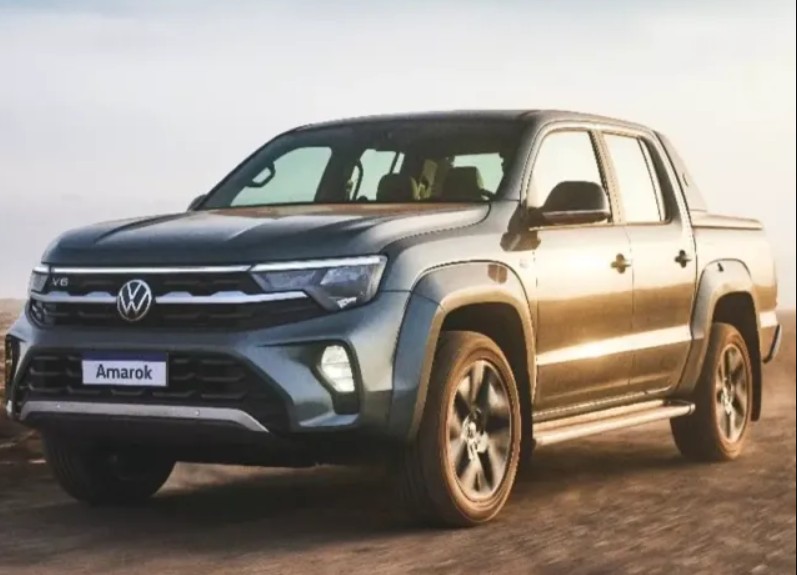
The Volkswagen Amarok has never pretended to be a tiny fuel-sipping hatchback. It is a substantial pickup built for towing, carrying loads, tackling rough roads, and covering long distances comfortably. Still, fuel economy matters. Whether we use an Amarok as a workhorse during the week, a family vehicle at the weekend, or a tow vehicle for long trips, knowing the Volkswagen Amarok MPG can make a meaningful difference to running costs.
The slightly frustrating part is that there isn't one universal Amarok MPG figure.
Fuel consumption changes considerably depending on the engine, model year, transmission, four-wheel-drive system, wheels, tyres, payload, driving environment, and even which country's measurement system we're reading. A UK MPG figure isn't directly interchangeable with a US MPG figure because an Imperial gallon is larger than a US gallon.
Current UK Volkswagen information, for example, lists an Amarok consumption figure around 27.4 mpg, while the PanAmericana configurator has shown approximately 27.2 mpg, depending on specification. Volkswagen also stresses that laboratory figures are intended primarily for comparison and real-world consumption will vary.
Meanwhile, Australian specifications express consumption in litres per 100 kilometres. Recent Amarok specifications include combined figures as low as approximately 7.2 L/100 km on certain versions and around 8.0 L/100 km on others.
So what should we actually expect when we own one?
Let's dig beneath the brochure numbers.
Content in this publication
- What Is the Volkswagen Amarok MPG?
- Volkswagen Amarok MPG by Engine
- Volkswagen Amarok V6 MPG
- Volkswagen Amarok Petrol MPG
- Imperial MPG vs US MPG: Don't Compare the Wrong Numbers
- Volkswagen Amarok L/100 km to MPG
- Real-World Volkswagen Amarok MPG
- Volkswagen Amarok Motorway MPG
- Volkswagen Amarok City MPG
- Volkswagen Amarok MPG While Towing
- Does 4MOTION Reduce Amarok MPG?
- How Wheel and Tyre Size Affects Amarok MPG
- How Payload Changes Volkswagen Amarok Fuel Economy
- Does an Amarok Canopy Affect MPG?
- Why Has My Volkswagen Amarok MPG Dropped?
- How to Improve Volkswagen Amarok MPG
- Is Eco Driving Bad for the Amarok Engine?
- How Accurate Is the Amarok Trip Computer MPG?
- Older Volkswagen Amarok MPG vs New Amarok MPG
- Is the Volkswagen Amarok Fuel Efficient for a Pickup?
- Is the Amarok V6 Worth the Extra Fuel?
- Volkswagen Amarok MPG Compared With Other Pickups
- How Much Can Better MPG Save Us?
- Should We Trust Official Volkswagen Amarok MPG Figures?
- The Best Volkswagen Amarok for Fuel Economy
- Conclusion: What Is Good Volkswagen Amarok MPG?
- Frequently Asked Questions About Volkswagen Amarok MPG
What Is the Volkswagen Amarok MPG?
Broadly speaking, many diesel Volkswagen Amarok models can return somewhere around the high-20s to mid-30s in Imperial MPG under suitable conditions, although generation, engine and configuration make a substantial difference.
Some efficient versions can do better during gentle motorway driving. Heavier V6 models, aggressive off-road specifications, towing situations, and urban driving can drop noticeably below those numbers.
That's why asking, "What MPG does an Amarok get?" is a little like asking, "How fast does a boat go?" We need to know which boat.
For the Amarok, we need to consider:
- model year and generation;
- 2.0-litre diesel, V6 diesel, or petrol engine;
- automatic or manual transmission;
- 4MOTION configuration;
- wheel and tyre size;
- city, motorway, mixed or off-road driving;
- payload and towing weight;
- Imperial MPG versus US MPG.
Once those factors are clear, Amarok fuel economy becomes much easier to understand.
Volkswagen Amarok MPG by Engine
Engine choice has perhaps the greatest effect on fuel consumption.
Over its lifetime, the Amarok has been offered with multiple powertrains across different markets, so we shouldn't assume that two trucks wearing the same badge necessarily have identical fuel economy.
2.0 TDI Amarok MPG
The 2.0 TDI has historically been one of the strongest choices for owners prioritising economy.
Four-cylinder diesel engines generally have less displacement and lower internal losses than the bigger V6, and they can deliver particularly respectable results during steady highway driving.
Modern versions also benefit from advanced automatic transmissions designed to keep engine speed relatively low while cruising.
Under favourable conditions, we'd expect a 2.0 diesel Amarok to be among the most economical versions of the truck.
Why the 2.0 TDI Can Be So Efficient
Diesel engines naturally suit pickup duties because they produce substantial torque without needing to rev particularly high.
Imagine moving a heavy sofa. A strong person pushing steadily is often more efficient than somebody repeatedly sprinting at it. That's roughly how a turbo-diesel feels in a pickup: plenty of torque arrives relatively early, reducing the need for constant high-rpm acceleration.
Of course, economy disappears quickly if we repeatedly bury the accelerator.
Volkswagen Amarok V6 MPG
The V6 diesel is one of the engines most closely associated with the Amarok.
And understandably so.
The V6 gives the truck effortless torque, strong overtaking performance and relaxed towing ability. But we're feeding six cylinders rather than four, and there is no magic wand capable of making the additional performance completely free.
Volkswagen's UK configurator has listed the current V6 Amarok PanAmericana at approximately 27.2 Imperial mpg in its published consumption data.
Older Australian V6 documentation provides another useful reference. One previous Amarok V6 specification quoted 8.9 L/100 km combined, equivalent to roughly 31.7 Imperial mpg or 26.4 US mpg.
Those figures shouldn't be compared directly without considering different test cycles and generations, but they illustrate an important point: the exact V6 MPG depends heavily on the vehicle we're examining.
Does the Amarok V6 Use Much More Fuel?
Sometimes, but perhaps not as dramatically as we'd expect.
A bigger engine working gently can occasionally be surprisingly economical. The V6 doesn't have to work terribly hard to maintain highway speed, particularly with a modern multi-speed automatic transmission.
The gap grows when we use its performance.
Heavy acceleration, towing, hills and higher cruising speeds make the V6's appetite considerably more noticeable.
If we drive it like a relaxed diesel cruiser, it can be relatively sensible. Drive it like we've suddenly remembered we're late for a ferry, and the fuel gauge will tell another story.
Volkswagen Amarok Petrol MPG
Some markets also receive petrol-powered Amaroks.
The current-generation vehicle, for example, is offered with a 2.3-litre turbocharged petrol engine in selected countries. Volkswagen Mexico lists both diesel and 2.3-litre petrol choices within its Amarok range.
Petrol engines can offer smoother responses and strong performance, but they generally aren't the obvious choice if minimising fuel expenditure is our primary concern.
Drivers covering relatively low annual mileage may not mind.
Someone travelling hundreds of highway miles every week probably will.
Petrol vs Diesel Amarok Economy
Diesel still makes tremendous practical sense in this sort of vehicle.
A pickup is heavy, aerodynamically blunt and frequently asked to carry or tow significant weight. Diesel torque suits those characteristics.
Petrol can feel livelier and quieter in certain situations, but the diesel normally provides the more attractive combination of torque and range for high-mileage drivers.
Imperial MPG vs US MPG: Don't Compare the Wrong Numbers
This point causes endless confusion online.
The UK and several other markets commonly use Imperial MPG. American websites usually report US MPG.
They're not the same.
One Imperial gallon contains approximately 4.546 litres, while one US gallon contains approximately 3.785 litres. Consequently, the same vehicle produces a numerically higher MPG figure when measured using Imperial gallons.
Suppose an Amarok consumes 8.0 L/100 km.
That's roughly:
35.3 Imperial mpg
but only about:
29.4 US mpg
Nothing changed mechanically. We merely changed the measurement system.
This explains why an Australian or European consumption figure converted into UK MPG can look surprisingly high compared with a US-oriented website.
Volkswagen Amarok L/100 km to MPG
Many Amarok markets use litres per 100 kilometres rather than miles per gallon.
Here, lower is better.
A truck consuming 7.5 L/100 km is more economical than one using 10 L/100 km.
Recent Australian Amarok specifications demonstrate just how much variation can occur across the range, with combined consumption figures including approximately 7.2 L/100 km and 8.0 L/100 km, depending on the configuration. Volkswagen notes that official fuel figures come from controlled testing and that road, traffic and driving conditions influence actual consumption.
That's roughly the difference between excellent pickup economy and merely respectable pickup economy.
Real-World Volkswagen Amarok MPG
Official numbers are useful, but they're not fortune-tellers.
Think of them as a common measuring stick.
They tell us how two vehicles performed under standardised testing, not precisely what our vehicle will achieve during a rainy commute while carrying tools, roof bars and three passengers.
What MPG Should We Expect in Daily Driving?
A lightly loaded diesel Amarok driven smoothly over longer roads has the best chance of approaching or occasionally beating its official combined figure.
Short trips usually hurt fuel economy.
Urban traffic hurts it further.
Towing hurts it again.
And once we add all-terrain tyres, a suspension lift and roof-mounted equipment, we've essentially started stacking small aerodynamic and mechanical penalties on top of each other.
Real-world MPG can therefore vary by several miles per gallon between two owners driving apparently identical trucks.
Why Some Owners Get Better MPG Than Others
Driving environment matters tremendously.
Imagine two identical Amaroks.
The first travels 40 miles each morning on flowing rural roads at moderate speeds.
The second spends an hour crawling through stop-start traffic.
Both have covered 40 miles. Their fuel consumption could be dramatically different.
Engines are generally most efficient once warm, at consistent speeds and under moderate loads. Constant acceleration converts fuel into speed, while braking immediately throws much of that energy away as heat.
Smoothness matters more than we sometimes realise.
Volkswagen Amarok Motorway MPG
Long-distance driving is where the Amarok can surprise us.
Once the engine is warm and the transmission settles into a high gear, a diesel Amarok can cruise relatively efficiently considering its size.
The crucial word is relatively.
The Amarok still has the aerodynamic profile of a pickup, not a teardrop.
Air resistance rises rapidly as speed increases. Moving from a moderate cruise to sustained high-speed motorway driving can therefore make a surprisingly large dent in MPG.
The Sweet Spot for Highway Economy
There's rarely one magic speed applicable to every engine and transmission, but moderate, consistent cruising generally gives us the best results.
Using cruise control on relatively flat terrain can help.
On rolling terrain, though, an attentive driver may sometimes do slightly better by allowing speed to fluctuate gently rather than forcing the truck to maintain an exact number up every incline.
Why 70 mph Can Cost More Than Expected
Aerodynamic drag isn't linear.
As speed climbs, pushing the Amarok's large body through the air requires disproportionately more energy.
A truck cruising at 60 mph may therefore use noticeably less fuel than the same truck at 70 or 75 mph.
The journey takes longer, naturally, so there is a balance.
But when maximum range matters, speed is one of the easiest variables we can control.
Volkswagen Amarok City MPG
Urban driving represents the opposite end of the spectrum.
The Amarok's weight becomes more noticeable because we're repeatedly accelerating that mass from low speeds.
Automatic stop-start systems can reduce unnecessary idling on compatible versions, but they cannot eliminate the fundamental inefficiency of repeatedly accelerating and braking a heavy pickup.
Short journeys also prevent the engine and drivetrain from spending much time at ideal operating temperature.
Anyone buying an Amarok exclusively for short city journeys shouldn't expect headline-worthy MPG.
It's simply not where this vehicle shines.
Volkswagen Amarok MPG While Towing
Now things get interesting.
Towing is one of the reasons people buy an Amarok in the first place, but fuel consumption can climb substantially when a trailer enters the equation.
Trailer weight matters, yet aerodynamics can matter just as much.
A relatively heavy but aerodynamic trailer might create less MPG damage at motorway speeds than a lighter but tall caravan punching a giant hole through the air.
How Much Does Towing Reduce Amarok MPG?
There isn't a universal percentage.
Trailer shape, mass, gradient, wind, speed and engine all influence the result.
What we can confidently expect is a meaningful reduction compared with solo driving, especially at highway speeds.
Strong diesel torque helps the Amarok tow without constantly hunting for gears, but physics still sends the bill to the fuel pump.
V6 Amarok for Towing
This is where choosing the V6 can make sense even if its unloaded fuel figure isn't the absolute best.
The larger engine has substantial torque reserves.
Rather than evaluating towing vehicles purely by unloaded MPG, we should consider how comfortably and efficiently the drivetrain performs once the trailer is attached.
Fuel economy is only one part of the equation.
Does 4MOTION Reduce Amarok MPG?
Four-wheel-drive hardware adds mechanical complexity and, often, weight.
That can create a small economy penalty compared with a simpler two-wheel-drive configuration.
The trade-off is capability.
For many Amarok buyers, giving up a little MPG is worthwhile for better traction on wet grass, gravel, snow, mud, worksites or rough tracks.
Fuel efficiency looks wonderful on a spreadsheet. Traction looks even better when we're trying to pull a trailer out of a slippery campsite.
How Wheel and Tyre Size Affects Amarok MPG
Large wheels look fantastic.
Unfortunately, the atmosphere isn't impressed.
Wider tyres can increase rolling resistance and aerodynamic drag. More aggressive all-terrain tread compounds may also consume more energy than highway-focused rubber.
Heavy aftermarket wheels create additional rotating mass.
None of those changes necessarily destroys economy individually, but together they can become noticeable.
Tyre pressure matters too.
Underinflated tyres increase rolling resistance and generate extra heat. Maintaining the manufacturer's recommended pressure for the relevant load is one of the simplest ways to avoid wasting fuel.
How Payload Changes Volkswagen Amarok Fuel Economy
Weight matters most during acceleration and climbing.
An Amarok carrying hundreds of kilograms of equipment requires more energy to get moving than an empty truck.
Once cruising steadily on level ground, the aerodynamic penalty can matter more than weight itself, but an overloaded or permanently heavily laden vehicle is still unlikely to deliver its best MPG.
This is why removing unnecessary cargo makes sense.
Do we really need that box of heavy tools in the bed for six months because we might use it someday?
Probably not.
Does an Amarok Canopy Affect MPG?
Potentially.
Aerodynamics around pickup beds are complicated, and the exact result depends on the canopy, roof height, accessories and driving speed.
A properly integrated canopy may have a modest effect, while large roof-mounted racks, ladders, awnings and storage boxes often introduce much more obvious aerodynamic drag.
The faster we travel, the more those additions matter.
If MPG suddenly deteriorates after modifying the truck, we shouldn't automatically blame the engine.
Sometimes the culprit is sitting three feet above it.
Why Has My Volkswagen Amarok MPG Dropped?
A sudden decline in fuel economy deserves attention, particularly if our driving routine hasn't changed.
Potential contributors include low tyre pressure, dragging brakes, dirty filters, wheel-alignment problems, unsuitable tyres, injector or emissions-system issues, additional payload, frequent DPF regeneration, colder weather and excessive idling.
Not every drop indicates a mechanical problem.
Seasonal temperature changes alone can affect consumption.
But if the Amarok previously returned consistent figures and suddenly begins using substantially more fuel, checking the basics is sensible.
DPF Regeneration and Fuel Consumption
Diesel particulate filters periodically need to burn accumulated soot.
During active regeneration, extra fuel may be used to raise exhaust temperature.
Consequently, instantaneous economy can temporarily worsen.
Drivers who repeatedly make very short journeys may interrupt regeneration cycles, potentially creating additional complications.
A single disappointing MPG reading therefore doesn't necessarily tell us much. Long-term averages are more informative.
How to Improve Volkswagen Amarok MPG
We don't need to drive everywhere at bicycle speed to improve fuel efficiency.
The biggest gains usually come from simple habits: accelerate progressively, anticipate traffic, minimise unnecessary idling, maintain proper tyre pressures, remove unused external accessories and avoid carrying dead weight.
Keep the truck serviced correctly.
Use appropriate tyres.
Let the automatic transmission do its job instead of repeatedly demanding full throttle.
And think about speed.
Highway speed can influence fuel use more dramatically than practically any gadget marketed as a fuel-saving miracle.
Consistency wins.
Is Eco Driving Bad for the Amarok Engine?
Not when we're sensible.
Smooth acceleration and moderate cruising aren't harmful.
What we want to avoid is forcing the engine to labour at extremely low rpm under heavy load simply because we're obsessed with keeping the rev counter as low as possible.
Engines need suitable rpm for the situation.
A transmission downshift while climbing a steep hill isn't wasted fuel—it may be exactly what the drivetrain needs.
Efficient driving should feel smooth, not strained.
How Accurate Is the Amarok Trip Computer MPG?
Trip computers are extremely useful for spotting trends, but we shouldn't assume they're laboratory-grade fuel meters.
If we want to measure consumption more accurately, the old-fashioned full-tank method remains valuable.
Fill the tank.
Reset the trip meter.
Drive normally.
Refill at roughly the same pump angle and filling level.
Then divide distance travelled by fuel added, using the appropriate conversion for MPG or L/100 km.
Repeat this across several tanks.
One tank can be distorted by filling differences, traffic, weather or towing. Five or ten tanks reveal a much more meaningful pattern.
Older Volkswagen Amarok MPG vs New Amarok MPG
Comparing generations requires caution.
Older Amarok models were tested under different regulatory procedures, sometimes using driving cycles that don't correspond directly with today's WLTP methodology.
Newer trucks may also be bigger, heavier, safer, more powerful and equipped with more emissions hardware.
So seeing an older brochure with a wonderful MPG number doesn't automatically mean that truck will outperform a modern Amarok in real traffic.
Indeed, Volkswagen's historical Australian documentation shows earlier Amarok versions with combined consumption figures around the 8–9 L/100 km region, depending on powertrain.
We should compare like with like whenever possible.
Is the Volkswagen Amarok Fuel Efficient for a Pickup?
That's the question that matters more than whether the Amarok is "fuel efficient" in isolation.
Compared with a small diesel hatchback?
No contest. The hatchback wins.
Compared with another powerful double-cab pickup capable of towing, carrying substantial loads and tackling difficult terrain?
The Amarok can be quite competitive.
Recent Australian figures ranging from approximately 7.2 to 9.7 L/100 km across different Amarok variants illustrate just how much engine and specification affect the answer.
Context matters.
Buying a pickup and complaining that it cannot match a compact car's MPG is like buying hiking boots and complaining they aren't as light as flip-flops.
They're designed for different jobs.
Is the Amarok V6 Worth the Extra Fuel?
For some buyers, absolutely.
For others, no.
If our priority is commuting economically with an empty bed, a smaller diesel option deserves serious consideration.
If we regularly tow, carry loads, travel through mountainous terrain or simply value effortless performance, the V6's fuel premium may feel entirely reasonable.
We shouldn't choose an engine entirely by one MPG number.
Purchase price, maintenance, expected annual mileage, towing needs, resale value and driving enjoyment all matter.
Sometimes spending slightly more on fuel gives us the engine that better suits the vehicle's purpose.
Volkswagen Amarok MPG Compared With Other Pickups
The Amarok operates in a fiercely competitive pickup segment.
Fuel economy differences between rivals can look substantial on paper, but specification can dramatically alter any comparison.
Comparing a modest four-cylinder Amarok with a rival's high-output six-cylinder flagship isn't especially useful.
Likewise, comparing a two-wheel-drive work truck with a heavily equipped 4x4 lifestyle model tells us very little.
Match equivalent engines, transmissions, body styles and drivetrains whenever possible.
Then examine official economy alongside real-world ownership reports.
A difference of one or two MPG may be less important than reliability, towing behaviour, service costs or the price we actually pay for the truck.
How Much Can Better MPG Save Us?
Small improvements become meaningful for high-mileage drivers.
Imagine two otherwise identical trucks where one consistently consumes noticeably less fuel.
Over a few hundred miles, the difference may barely register.
Over tens of thousands of miles, it can become substantial.
That's why fleet operators care so much about apparently tiny consumption improvements.
For private owners covering limited annual mileage, however, chasing the absolute best MPG may not make financial sense if it requires sacrificing an engine or trim level they genuinely prefer.
The best Amarok isn't necessarily the one with the smallest fuel bill.
It's the one whose total package fits how we're actually going to use it.
Should We Trust Official Volkswagen Amarok MPG Figures?
Yes—but understand what they mean.
Official figures are standardised benchmarks.
Volkswagen explicitly notes that laboratory fuel-consumption figures are influenced in real use by factors such as driving style, traffic and road conditions.
That's precisely why they're valuable.
Standardisation lets us compare vehicles under broadly similar conditions.
What they don't guarantee is that we'll reproduce the exact figure on Monday morning with four passengers, a cold engine, a roof rack and gridlocked traffic.
Use official MPG for comparison.
Use our own long-term records for budgeting.
The Best Volkswagen Amarok for Fuel Economy
If efficiency sits at the top of our shopping list, a four-cylinder diesel generally deserves attention before the more powerful alternatives.
We should also resist unnecessary oversized wheels and aggressive accessories if most driving happens on paved roads.
Yet the most economical Amarok on paper isn't necessarily the cheapest Amarok to own.
Suppose the V6 costs slightly more in fuel but better suits our towing requirements and makes long journeys easier.
That can still be the smarter purchase.
Fuel economy is an important number—not the only number.
Conclusion: What Is Good Volkswagen Amarok MPG?
The Volkswagen Amarok MPG varies enough that we shouldn't reduce the entire range to a single figure.
Engine, generation, drivetrain and specification all matter. So do tyres, payload, traffic, temperature, towing and driving style.
Official UK information for current Amarok configurations sits around the upper-20s Imperial MPG in some specifications, while Australian documentation demonstrates consumption figures spanning roughly the low-7s through upper-9s L/100 km depending on model.
In daily life, a diesel Amarok driven steadily over longer distances can deliver respectable fuel economy for a substantial pickup. Frequent urban trips, towing, high speeds and heavy modifications will naturally drag those numbers downward.
Ultimately, that's the sensible way to view Amarok MPG.
We're not asking whether a heavy 4x4 pickup can sip fuel like a supermini. It can't.
We're asking whether it delivers reasonable consumption while providing the performance, towing ability, practicality and toughness we bought it for.
Viewed through that lens, the Amarok can strike an impressively balanced compromise.
Frequently Asked Questions About Volkswagen Amarok MPG
1. What MPG does a Volkswagen Amarok get?
Depending on engine, generation and specification, Amarok fuel consumption can vary considerably. Current UK Volkswagen figures for some models sit around 27 mpg Imperial, while more economical configurations in other markets can produce substantially better equivalent figures under their respective test procedures. Always check the specification for the exact engine and model year.
2. What MPG does the Volkswagen Amarok V6 get?
Current V6 figures vary by trim and market. Volkswagen's UK PanAmericana configurator has published approximately 27.2 mpg for the V6 diesel version, while historical Amarok V6 specifications from other markets have quoted different numbers because of vehicle configuration and testing methodology.
3. Is the 2.0 TDI Amarok more economical than the V6?
Generally, a smaller four-cylinder diesel is the logical choice when maximum fuel economy is the priority. However, actual results depend on workload. A V6 towing comfortably may not suffer as dramatic a real-world disadvantage as its larger displacement might suggest.
4. Why is my Amarok using so much fuel?
Heavy traffic, short journeys, towing, underinflated tyres, roof accessories, aggressive all-terrain tyres, high cruising speeds, cold weather and carrying unnecessary weight can all increase consumption. Mechanical issues can also cause worsening economy, particularly when consumption changes suddenly without a corresponding change in driving conditions.
5. How can I get better MPG from my Volkswagen Amarok?
Drive progressively, maintain sensible highway speeds, keep tyres correctly inflated, remove unnecessary payload and aerodynamic accessories, service the truck on schedule and monitor consumption over several tanks rather than judging it from one short journey. Smooth, consistent driving usually delivers greater savings than complicated fuel-saving tricks.
If you want to know other articles similar to Volkswagen Amarok MPG: Fuel Economy, Real-World Figures and What to Expect you can visit the category Driving.
Kia Sorento Fuel Economy: MPG, Hybrid, and Plug-In Hybrid Explained
BYD Shark 6 Fuel Consumption: Real-World Economy, Range and What to Expect
Vauxhall Agila MPG: Real-World Fuel Economy and Engine Guide

Honda Passport MPG: Real-World Fuel Economy, Ratings, and What to Expect

Nissan Rogue Fuel Economy: MPG, Range, Costs, and Real-World Efficiency
BYD Shark 6 Long Range Fuel Tank: Is the 120L Upgrade Worth It?
Leave a Reply
More content of your interest