

VW Amarok 8 Speed Auto Problems: Symptoms, Causes, Fixes, and What Owners Should Know

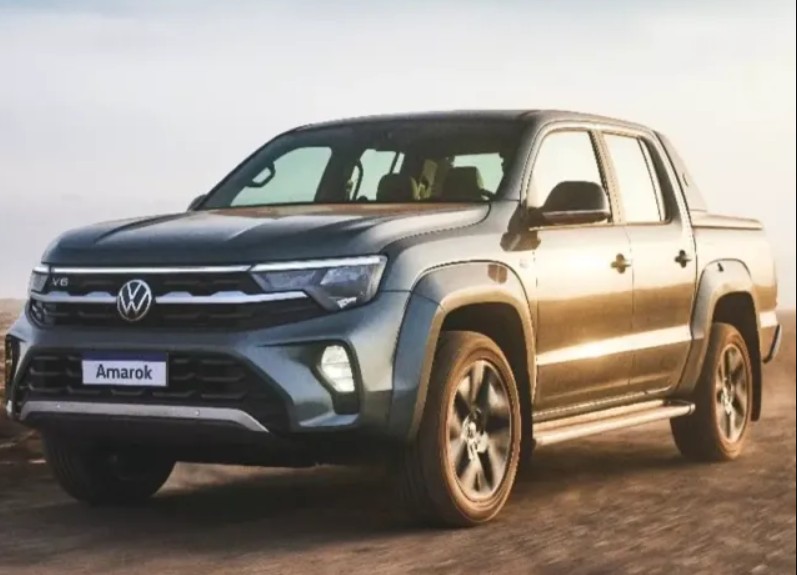
The Volkswagen Amarok has built a reputation as one of the more refined pickups in its class. It can tow, haul, cruise comfortably at highway speeds, and still feel remarkably composed compared with many traditional work trucks. A major part of that character comes from its automatic transmission, particularly the 8-speed automatic gearbox fitted to many Amarok models.
Yet no transmission is completely trouble-free.
Search for VW Amarok 8 speed auto problems, and we quickly find owners describing everything from hesitation and harsh shifting to transmission warnings and expensive repair bills. Does that mean the Amarok's 8-speed transmission is unreliable? Not necessarily. Some symptoms are relatively minor, while others deserve immediate attention.
The tricky part is telling the difference.
Think of the transmission like the conductor of an orchestra. When everything works correctly, the engine and gearbox barely seem separate. Gears change quietly, torque arrives exactly when we need it, and the truck simply gets on with the job. When something falls out of rhythm, though, even a small fault can make the entire vehicle feel wrong.
In this guide, we'll explore the most commonly discussed VW Amarok 8 speed auto problems, their potential causes, warning signs, repair considerations, maintenance habits, and what we should check before buying a used Amarok.
Content in this publication
- What 8-Speed Automatic Transmission Does the VW Amarok Use?
- Is the Amarok 8-Speed Automatic Generally Reliable?
- Most Common VW Amarok 8 Speed Auto Problems
- Jerking or Harsh Gear Changes
- Delayed Engagement Into Drive or Reverse
- VW Amarok Transmission Shudder
- Hesitation When Accelerating
- Gear Hunting Between Ratios
- Transmission Warning Light or Gearbox Fault Message
- Amarok Transmission Limp Mode
- Transmission Fluid Leaks
- Does the VW Amarok 8-Speed Transmission Need Fluid Changes?
- Can Changing Transmission Fluid Cause Problems?
- Valve Body and Solenoid Problems
- Torque Converter Problems
- Overheating and Heavy Towing
- Software and Transmission Adaptation Issues
- Could a Weak Battery Affect Transmission Behaviour?
- Problems That Feel Like Transmission Failure but Aren't
- How to Diagnose VW Amarok 8 Speed Auto Problems
- How Much Does an Amarok 8-Speed Transmission Repair Cost?
- Should We Repair or Replace the Transmission?
- Buying a Used VW Amarok: Transmission Checks
- Should We Avoid an Amarok Because of the 8-Speed Automatic?
- How to Help the Amarok Automatic Transmission Last Longer
- Is the Amarok 8-Speed Auto Good for Towing?
- Final Thoughts on VW Amarok 8 Speed Auto Problems
- Frequently Asked Questions
- 1. Are VW Amarok 8-speed automatic transmissions reliable?
- 2. Why is my VW Amarok jerking when changing gears?
- 3. Why does my Amarok hesitate before going into Drive or Reverse?
- 4. Can changing the transmission fluid improve Amarok shifting?
- 5. What should I check before buying an automatic VW Amarok?
What 8-Speed Automatic Transmission Does the VW Amarok Use?
Many first-generation Amarok models equipped with higher-output diesel engines use an eight-speed torque-converter automatic transmission. Depending on market, model year, and engine specification, gearbox configurations can differ, so we should always identify the exact transmission fitted to a particular vehicle before ordering parts or planning repairs.
The transmission was designed to combine several qualities that pickup owners normally struggle to get from the same gearbox:
- Smooth everyday driving
- Strong towing capability
- Low-speed control
- Efficient highway cruising
- Quick access to engine torque
- Reduced fuel consumption compared with older automatics
Eight ratios allow the gearbox to keep the engine within a useful operating range more frequently.
During acceleration, the lower gears help the Amarok move its substantial weight. At motorway speeds, taller gears reduce engine rpm.
When everything is healthy, the result feels effortless.
Is the Amarok 8-Speed Automatic Generally Reliable?
Overall, we shouldn't assume that every Amarok automatic transmission is waiting to fail.
Many examples travel substantial distances without requiring major gearbox repairs, particularly when they have been properly maintained and haven't spent their lives towing excessive loads or being abused off-road.
However, reliability depends heavily on several factors.
Maintenance history matters. Driving conditions matter. Towing frequency matters. Previous repairs matter. Even software calibration can influence how the gearbox behaves.
Two Amaroks of the same age and mileage can therefore feel completely different.
One might shift almost like new.
Another might behave like it's arguing with itself every time we press the accelerator.
Most Common VW Amarok 8 Speed Auto Problems
Transmission complaints rarely arrive wearing a convenient name tag telling us exactly which component has failed. Instead, we usually notice changes in how the vehicle drives.
Some frequently reported symptoms include:
- Jerking between gears
- Delayed engagement into Drive or Reverse
- Hesitation when accelerating
- Harsh downshifts
- Transmission shudder
- Gear hunting
- Transmission warning messages
- Limp mode
- Fluid leaks
- Torque converter-related vibration
The presence of one symptom doesn't automatically mean the gearbox needs replacing.
Diagnostics come first.
Jerking or Harsh Gear Changes
One of the most noticeable Amarok transmission complaints is a harsh or jerky shift.
Instead of moving cleanly from one ratio to another, the truck may give us a small kick through the seat. In more severe cases, the shift can feel almost like another vehicle has lightly bumped the rear bumper.
What Causes Harsh Shifting?
Potential causes include transmission fluid condition, adaptive shift values, electronic control problems, valve-body issues, worn transmission components, or torque-converter behaviour.
Engine problems can occasionally mimic transmission faults too.
If engine torque delivery becomes inconsistent, the gearbox may seem responsible even when it isn't the original source of the problem.
When Should We Be Concerned?
A slightly noticeable cold shift isn't necessarily catastrophic.
Repeated banging into gear, violent shifts, or worsening symptoms should receive professional attention.
The key word is change.
If an Amarok that used to shift smoothly suddenly begins thumping between gears, something has changed and deserves investigation.
Delayed Engagement Into Drive or Reverse
We select Drive.
Nothing happens.
Then, after a pause, the transmission engages.
That delay can feel particularly worrying when reversing out of a parking space or joining traffic.
Possible Causes of Delayed Engagement
A noticeable delay may be associated with:
- Incorrect transmission fluid level
- Degraded transmission fluid
- Hydraulic pressure issues
- Valve-body problems
- Internal seal wear
- Electronic control faults
A short engagement delay can occasionally occur under specific conditions, but a long or increasingly frequent delay isn't something we should ignore.
Repeatedly revving the engine while waiting for the transmission to engage can make matters worse.
VW Amarok Transmission Shudder
Shudder often feels different from a conventional harsh shift.
Instead of one obvious jolt, the vehicle may vibrate briefly during acceleration or while the transmission is trying to lock the torque converter.
Some drivers describe it as driving across faint rumble strips.
Others say the truck feels like it's travelling over a rough patch of road even though the pavement is smooth.
Could the Torque Converter Cause the Shudder?
Yes.
Torque-converter lock-up operation is one possible source of vibration.
However, we shouldn't diagnose the converter based solely on how the truck feels.
Engine mounts, driveline components, tyres, prop shafts, differentials, and engine misfires can produce surprisingly similar sensations.
That's why road testing with diagnostic equipment is valuable.
Hesitation When Accelerating
Press the accelerator and expect the Amarok's diesel torque to arrive immediately.
Sometimes it doesn't.
Instead, we get a pause before the gearbox chooses a lower gear.
A small delay may simply reflect transmission programming. Modern transmissions constantly balance performance, emissions, fuel economy, and smoothness.
Excessive hesitation is different.
Why the Amarok May Hesitate
Possible reasons include transmission adaptation, throttle input signals, engine management problems, boost-related issues, transmission control faults, or delayed downshifting.
Before condemning the gearbox, we should check whether the engine itself is producing the expected torque.
An automatic transmission can only respond properly to the information and power it receives.
Gear Hunting Between Ratios
Gear hunting happens when the transmission can't seem to settle on one ratio.
It shifts up.
Then down.
Then perhaps up again.
This behaviour may be particularly noticeable on hills or when towing.
Why Gear Hunting Happens
Sometimes it's perfectly normal.
Imagine towing a caravan up a rolling motorway. Vehicle speed, throttle position, gradient, wind resistance, and engine load keep changing. The gearbox may shift frequently simply because driving conditions demand it.
Constant hunting on relatively flat roads deserves closer investigation.
Potential contributors include sensor problems, incorrect adaptation values, engine performance issues, or transmission control concerns.
Using Manual Mode When Towing
When towing on repeated climbs, selecting a suitable gear manually can sometimes prevent unnecessary shifting.
Rather than allowing the gearbox to bounce between two ratios, we can hold the engine in a more useful torque range.
We should still remain within the vehicle manufacturer's operating recommendations.
Transmission Warning Light or Gearbox Fault Message
Electronic transmission control means the Amarok constantly monitors gearbox operation.
If the control system detects something outside its expected parameters, the vehicle may store a fault code and display a warning.
Never assume the warning means one specific component has failed.
Transmission fault codes might relate to:
- Temperature
- Hydraulic pressure
- Solenoids
- Sensors
- Communication faults
- Gear ratio errors
- Electrical voltage
A proper diagnostic scan can save enormous amounts of guesswork.
Replacing parts before reading the fault memory is rather like buying new glasses because the television picture looks blurry. We might eventually solve the problem, but we're starting at the wrong end.
Amarok Transmission Limp Mode
Limp mode is essentially the vehicle protecting itself.
If the transmission control system detects a potentially serious problem, it may restrict gearbox operation. The transmission might stay in one gear or offer only limited shifting.
Performance becomes poor, but that's intentional.
What Should We Do If Limp Mode Appears?
Avoid continuing to drive aggressively.
If safe, stop the vehicle and assess the situation.
A temporary electrical or sensor fault can sometimes disappear after restarting, but that does not mean the underlying fault never happened.
Stored diagnostic codes may remain.
Repeated limp-mode events deserve professional diagnosis as soon as possible.
Transmission Fluid Leaks
Automatic transmissions rely heavily on their fluid.
Transmission fluid lubricates internal parts, transfers hydraulic pressure, helps control temperature, and contributes to smooth operation.
Losing it can quickly turn a small leak into a large repair.
Signs of a Possible Transmission Leak
Look for:
- Fluid beneath the vehicle
- Dampness around transmission components
- New shifting problems
- Delayed engagement
- Unusual transmission noises
Fluid colour isn't always a reliable way to identify the source because leaks can collect dirt or mix with other fluids.
A workshop can clean the area and trace where the leak originates.
Does the VW Amarok 8-Speed Transmission Need Fluid Changes?
This question generates plenty of debate.
Owners sometimes hear terms such as "filled for life" and assume the gearbox never needs attention.
But what exactly does "life" mean?
Vehicle operating conditions vary enormously.
An Amarok spending its days cruising unloaded on open highways experiences a very different life from one towing heavy trailers through summer heat or crawling through mud at low speeds.
For vehicles exposed to severe use, preventive transmission servicing can become especially important.
Transmission Fluid Doesn't Stay New Forever
Heat, friction, contamination, and repeated operating cycles gradually affect lubricants.
Fresh fluid can't repair damaged mechanical parts, but keeping the correct fluid in good condition helps the gearbox operate as intended.
Use the Correct Transmission Fluid
This point matters enormously.
Automatic transmissions require fluid meeting precise specifications.
Using whatever ATF happens to be sitting on a workshop shelf isn't good enough.
We should identify the gearbox, follow the correct filling procedure, and use an approved fluid specification.
Fluid level is often temperature-dependent as well.
That means checking it isn't always as simple as pulling out a dipstick.
Can Changing Transmission Fluid Cause Problems?
We sometimes hear stories about an old automatic transmission failing immediately after a fluid change.
That doesn't necessarily mean fresh fluid destroyed it.
A heavily worn gearbox may already contain significant internal wear. Servicing it can simply expose problems that were close to appearing anyway.
However, incorrect servicing can absolutely create new issues.
Problems may arise if someone:
- Uses the wrong fluid
- Sets the level incorrectly
- Introduces contamination
- Uses an unsuitable flushing procedure
- Damages seals or connectors
- Fails to follow temperature requirements
Transmission servicing should therefore be performed by someone familiar with the Amarok's gearbox.
Valve Body and Solenoid Problems
Inside an automatic transmission, the valve body acts like a hydraulic traffic controller.
Fluid needs to travel through precisely controlled passages to engage different clutches and gears.
Electronic solenoids regulate that movement.
When something in this system isn't behaving correctly, shifting quality can deteriorate dramatically.
Symptoms That May Point Toward Valve-Body Trouble
Possible symptoms include delayed shifts, harsh engagement, inconsistent gear changes, flare between gears, or transmission fault codes.
However, these symptoms overlap with several other faults.
A specialist may need to examine pressure readings, adaptation values, stored codes, and fluid condition before reaching a conclusion.
Torque Converter Problems
The torque converter sits between the engine and transmission and performs a job similar to a clutch in a manual vehicle, although it works very differently.
Modern converters also use a lock-up clutch to improve efficiency.
If something begins going wrong, symptoms can include vibration, shudder, excessive slipping, unusual heat, or inconsistent engine rpm.
Torque Converter Shudder Versus Normal Diesel Vibration
The Amarok is still a diesel pickup.
Some vibration under load is normal.
Torque-converter shudder tends to occur under specific conditions and may repeat consistently at a certain speed, throttle position, or gear.
A technician who can reproduce the symptom while monitoring transmission data has a far better chance of identifying it accurately.
Overheating and Heavy Towing
Heat is one of an automatic transmission's greatest enemies.
The Amarok was built to work, but towing capacity doesn't mean we can ignore operating conditions.
Long climbs, heavy trailers, hot weather, low-speed off-road driving, and excessive payload can combine into demanding conditions.
How We Can Reduce Transmission Stress While Towing
We can make life easier for the gearbox by driving intelligently.
Avoid constant full-throttle acceleration when unnecessary. Give the transmission time to select gears. Reduce speed on steep climbs, and don't force the vehicle to hold an excessively tall gear under heavy load.
Most importantly, stay within the vehicle's legal and mechanical towing and payload limits.
A transmission hauling beyond its intended limits is like someone carrying a refrigerator upstairs. They might manage it once. Asking them to do it every day is another story.
Software and Transmission Adaptation Issues
Modern automatic transmissions aren't purely mechanical.
Software plays an enormous role.
The control system learns and adjusts shift behaviour based on operating conditions.
In certain cases, adaptation procedures or software updates may improve gearbox behaviour.
That doesn't mean every harsh shift can be fixed with a laptop.
Mechanical wear won't disappear because we reset adaptive values.
But electronic diagnosis should form part of the investigation before expensive mechanical work begins.
Could a Weak Battery Affect Transmission Behaviour?
This possibility is easy to overlook.
Modern vehicles depend on stable electrical voltage.
A weak battery, charging-system fault, corroded connection, or voltage drop can produce strange electronic symptoms across multiple systems.
Transmission control modules are no exception.
If gearbox warnings appear alongside unrelated electronic faults, checking battery condition and charging voltage is sensible.
Electrical diagnosis is often cheaper than transmission replacement, so it's a useful place to rule out problems.
Problems That Feel Like Transmission Failure but Aren't
Not every clunk, vibration, or hesitation originates inside the gearbox.
The Amarok has an entire driveline working behind the transmission.
Potential sources of similar symptoms can include:
- Engine mounts
- Driveshaft components
- Differential components
- CV joints
- Engine management problems
- Turbocharger or boost issues
- Fuel-delivery faults
- Electrical problems
This is why replacing a gearbox based purely on a road-test impression can become an extremely expensive mistake.
How to Diagnose VW Amarok 8 Speed Auto Problems
A systematic approach saves money.
Step 1: Describe the Exact Symptom
We should note when the problem occurs.
Is the engine cold or warm?
What speed are we travelling?
Does it happen under hard acceleration or light throttle?
Does towing make it worse?
These details help technicians reproduce the fault.
Step 2: Scan the Vehicle for Fault Codes
Diagnostic equipment can reveal stored or intermittent problems that aren't visible on the dashboard.
Step 3: Inspect Transmission Fluid and Leaks
Correct fluid level and condition matter.
Any leak should be investigated.
Step 4: Check Engine Operation
A gearbox can't compensate indefinitely for an engine running poorly.
Step 5: Road Test With Live Data
Watching slip values, requested gear, actual gear, temperature, and related parameters can provide clues that a simple drive around the block won't reveal.
Step 6: Investigate Mechanical Components
If electronic and maintenance issues are ruled out, deeper transmission inspection may become necessary.
How Much Does an Amarok 8-Speed Transmission Repair Cost?
There isn't one meaningful price.
A software adaptation, sensor replacement, fluid service, valve-body repair, torque converter replacement, and complete transmission rebuild are completely different jobs.
Labour rates also vary dramatically between countries and workshops.
The smartest approach is therefore to diagnose first and price second.
Replacing the entire transmission simply because the Amarok shifts poorly can be the most expensive possible form of guesswork.
Should We Repair or Replace the Transmission?
The answer depends on damage severity.
If the problem involves an external sensor, wiring, servicing issue, or valve-body component, repairing the original transmission may make sense.
Extensive internal damage changes the equation.
At that point, options may include rebuilding the gearbox or installing a replacement unit.
Consider:
- Vehicle mileage
- Overall vehicle condition
- Repair warranty
- Replacement gearbox history
- Workshop expertise
- Total repair cost
A cheap used gearbox with an unknown past isn't necessarily cheaper in the long run.
Buying a Used VW Amarok: Transmission Checks
A careful test drive is essential when shopping for a used automatic Amarok.
Start the vehicle cold if possible.
Some transmission problems become less noticeable once the oil warms up.
What Should We Test?
Move between Park, Reverse, and Drive and check for excessive delays or harsh engagement.
Then drive under different throttle conditions.
We want smooth shifts during gentle acceleration and predictable responses when accelerating harder.
Find a hill if possible.
Allow the gearbox to downshift.
Listen and feel for clunks, flare, vibration, or repeated hunting.
Check the Service History
Receipts tell us more than promises.
Look for transmission servicing, previous gearbox repairs, towing history, diagnostic work, and evidence of regular maintenance.
An Amarok with slightly higher mileage and excellent records may be a safer purchase than a lower-mileage truck with no history whatsoever.
Should We Avoid an Amarok Because of the 8-Speed Automatic?
For most buyers, no.
The existence of transmission complaints doesn't automatically make the Amarok a bad vehicle.
Every complex automatic gearbox has potential failure points.
What matters is the individual truck.
A well-maintained Amarok that shifts correctly, has no warning lights, shows no suspicious leaks, and comes with strong maintenance records can still be an appealing used pickup.
A neglected example displaying several gearbox symptoms is another matter.
We buy the condition and history, not merely the badge on the tailgate.
How to Help the Amarok Automatic Transmission Last Longer
Preventive habits won't guarantee infinite transmission life, but they can reduce unnecessary stress.
Pay attention to changing shift behaviour. Repair leaks quickly. Use the correct fluid and service procedure. Avoid excessive towing loads. Keep the engine and cooling system healthy. Allow the gearbox to work rather than constantly forcing aggressive throttle inputs.
And perhaps most importantly, don't ignore early symptoms.
A minor leak today may become a low-fluid transmission tomorrow.
A small shudder can turn into greater wear.
Mechanical problems rarely improve because we pretend not to notice them.
Is the Amarok 8-Speed Auto Good for Towing?
When operating properly, the 8-speed automatic suits towing well.
Multiple ratios allow the transmission to balance acceleration and cruising efficiency, while the torque converter helps with smooth low-speed movement.
But towing also increases heat and load.
We should therefore treat heavily used towing vehicles differently from lightly driven pickups.
Transmission condition, cooling performance, vehicle loading, tyres, brakes, and engine health all become more important when a trailer is attached.
Final Thoughts on VW Amarok 8 Speed Auto Problems
The phrase VW Amarok 8 speed auto problems can sound frightening when we're considering buying one of these trucks. Search forums for long enough and almost any vehicle begins to look like an engineering disaster.
Reality is more balanced.
The Amarok's eight-speed automatic can deliver smooth shifting, excellent highway behaviour, and strong towing performance. At the same time, owners may encounter symptoms such as harsh shifts, hesitation, shuddering, delayed engagement, warning messages, fluid leaks, or limp mode.
Those symptoms don't all point to the same repair.
Some originate with fluid condition or electronic control. Others may involve the valve body or torque converter. A smaller percentage can indicate serious internal transmission wear.
The best defence is simple: pay attention.
When the gearbox starts behaving differently, investigate early. Use proper diagnostic equipment, work with technicians who understand the transmission, and avoid replacing parts based on guesswork.
When buying used, insist on a thorough test drive and meaningful service history.
A healthy Amarok transmission should largely disappear into the driving experience. That's the goal. We shouldn't spend every journey listening anxiously for the next gear change. When everything works correctly, the eight-speed automatic simply gets on with its job—and that's exactly how a good gearbox should behave.
Frequently Asked Questions
1. Are VW Amarok 8-speed automatic transmissions reliable?
Many Amarok 8-speed transmissions provide long service when properly maintained and driven within the vehicle's limits. Reliability depends heavily on maintenance history, towing use, fluid condition, mileage, and previous repairs. A professional inspection is particularly worthwhile when buying a high-mileage used Amarok.
2. Why is my VW Amarok jerking when changing gears?
Jerking can have several causes, including transmission fluid issues, adaptation values, valve-body problems, electronic faults, driveline wear, or engine performance issues. Because different faults can produce similar symptoms, diagnostic scanning and a proper road test are recommended before replacing components.
3. Why does my Amarok hesitate before going into Drive or Reverse?
Delayed engagement may occur when hydraulic pressure takes too long to build or when the transmission has fluid, valve-body, seal, control, or internal wear problems. Increasing delays or strong bangs when the gear finally engages should be investigated promptly.
4. Can changing the transmission fluid improve Amarok shifting?
Correct servicing may improve shifting when fluid condition or level is contributing to the problem. However, fresh fluid cannot repair worn internal components. The correct transmission fluid specification, temperature procedure, and filling method are essential.
5. What should I check before buying an automatic VW Amarok?
Test the vehicle from cold, check engagement into Drive and Reverse, drive under light and heavy acceleration, listen for unusual noises, watch for warning lights, and feel for shuddering or harsh shifts. We should also review maintenance records and consider a pre-purchase diagnostic scan before committing to the vehicle.
If you want to know other articles similar to VW Amarok 8 Speed Auto Problems: Symptoms, Causes, Fixes, and What Owners Should Know you can visit the category Common Problems.
Volvo XC40 Sound Not Working? Complete Troubleshooting Guide

Mazda Diesel Engine Problems: Common Faults and Fixes
Volkswagen Key Not Detected or No Key Error: Causes and Fixes

Volvo S90 Common Problems: Reliability & Repair Guide
Volvo S90 No Sound: Causes, Fixes and Solutions

Nissan Rogue Smells Like Gas: Causes and Fixes
Leave a Reply
More content of your interest