

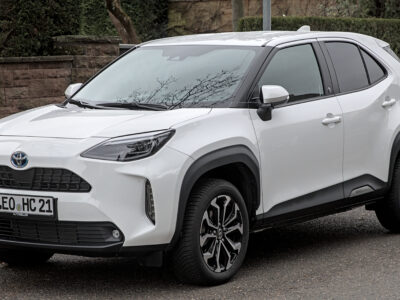
Toyota Yaris Cross Common Problems: Reliability, Known Issues, and What Owners Should Know


The Toyota Yaris Cross has become one of the most popular small SUVs thanks to its excellent fuel economy, practical design, and Toyota's strong reputation for reliability. However, like any vehicle, it is not completely free from mechanical problems, electrical faults, or everyday ownership frustrations.
If you are considering buying a used Toyota Yaris Cross or already own one, understanding the most common Toyota Yaris Cross problems can help you avoid unexpected repair bills and identify potential issues before they become serious.
Although the Yaris Cross is generally considered a dependable vehicle, owners have reported problems involving the 12V battery, infotainment system, electronic safety features, and occasional hybrid system warnings. Some drivers have also complained about engine noise, transmission behaviour, and interior quality.
In this guide, we examine the most frequently reported Toyota Yaris Cross issues, explain their possible causes, discuss which model years deserve additional attention, and provide practical maintenance advice.
Content in this publication
- Is the Toyota Yaris Cross a Reliable Car?
- 1. Toyota Yaris Cross 12V Battery Problems
- 2. Toyota Yaris Cross Hybrid System Problems
- 3. Toyota Yaris Cross Infotainment System Problems
- 4. Toyota Yaris Cross Engine Noise and Vibration
- 5. Toyota Yaris Cross Transmission Problems
- 6. Toyota Yaris Cross Brake Problems
- 7. Toyota Yaris Cross Safety System Warning Lights
- 8. Toyota Yaris Cross Air Conditioning Problems
- 9. Toyota Yaris Cross Suspension and Ride Quality Complaints
- 10. Toyota Yaris Cross Interior Quality Problems
- Toyota Yaris Cross Problems by Model Year
- Toyota Yaris Cross Recalls: What Owners Should Know
- How Much Does It Cost to Fix Toyota Yaris Cross Problems?
- How to Avoid Common Toyota Yaris Cross Problems
- What to Check Before Buying a Used Toyota Yaris Cross
- Toyota Yaris Cross Petrol vs Hybrid: Which Has Fewer Problems?
- Frequently Asked Questions About Toyota Yaris Cross Problems
- What is the most common problem with the Toyota Yaris Cross?
- Does the Toyota Yaris Cross have engine problems?
- Are Toyota Yaris Cross hybrid batteries reliable?
- Does the Toyota Yaris Cross have gearbox problems?
- Which Toyota Yaris Cross years should I avoid?
- Why does my Toyota Yaris Cross battery keep going flat?
- Is the Toyota Yaris Cross expensive to maintain?
- How long can a Toyota Yaris Cross last?
- Final Verdict: Should You Worry About Toyota Yaris Cross Common Problems?
Is the Toyota Yaris Cross a Reliable Car?
Overall, the Toyota Yaris Cross is a reliable compact SUV, particularly when compared with many similarly priced competitors.
Introduced in 2020 in some markets and launched across much of Europe in 2021, the Yaris Cross shares important components with the Toyota Yaris hatchback. Its platform, efficient three-cylinder engines, and established Toyota hybrid technology help keep major mechanical problems relatively uncommon.
Several characteristics contribute to its dependability:
- Proven Toyota hybrid technology.
- Relatively simple petrol engine designs.
- Efficient and generally durable transmissions.
- Good fuel economy that reduces everyday running costs.
- Strong manufacturer support in many countries.
- Relatively low rates of major engine and gearbox failures reported so far.
Nevertheless, reliability does not mean that every example will be trouble-free.
The 12V auxiliary battery deserves particular attention, especially on hybrid models that are driven infrequently or regularly parked for extended periods.
Minor electronic faults and occasional warning messages can also inconvenience owners, even when the engine and transmission remain mechanically sound.
1. Toyota Yaris Cross 12V Battery Problems
One of the most widely reported Toyota Yaris Cross problems involves the 12-volt auxiliary battery.
This issue is particularly noticeable on some hybrid models, where owners discover that their vehicle will not start after being parked for several days.
Unlike the high-voltage hybrid battery, the smaller 12V battery supplies power to the vehicle's electronic control systems, locks, lighting, and other electrical components.
Common symptoms
Drivers experiencing 12V battery problems may notice:
- The vehicle refuses to enter READY mode.
- Dashboard lights fail to illuminate normally.
- The central locking system becomes unresponsive.
- Multiple warning messages appear simultaneously.
- The car requires jump-starting after being parked.
- Electrical functions behave unpredictably.
Some owners have reported repeated battery discharge even when their vehicles are relatively new.
Why does the battery drain?
Several factors can contribute to this problem.
The Yaris Cross contains electronic systems that consume small amounts of electricity while the vehicle is switched off. If the car remains parked for extended periods, these electrical loads can gradually reduce the battery's charge.
Frequent short journeys may also leave insufficient time for the battery to recover.
In hybrid models, the 12V battery is charged through the vehicle's electrical system while the car is in READY mode. It does not require the petrol engine to run continuously, but the vehicle still needs adequate operating time to maintain its charge.
Battery capacity, battery condition, electrical accessories, and unusual parasitic power consumption can all influence the problem.
Toyota has introduced improved 12V batteries during the model's production life, although the timing and specifications vary by market.
How to fix Toyota Yaris Cross battery problems
If your Yaris Cross repeatedly suffers from a flat battery, consider these steps:
- Have the battery professionally tested for capacity and state of health.
- Check whether the vehicle has any outstanding manufacturer updates or service recommendations.
- Avoid leaving unnecessary electrical accessories connected.
- Use a suitable battery maintainer when storing the vehicle for extended periods.
- Ask a Toyota dealer whether an updated battery is available for your particular model.
- Investigate excessive standby electrical consumption if the battery continues to discharge.
Replacing the battery may solve the issue when the original unit has deteriorated, but recurrent discharge should be properly diagnosed rather than treated as normal.
2. Toyota Yaris Cross Hybrid System Problems
The Toyota Yaris Cross Hybrid combines a 1.5-litre petrol engine with an electric motor and a high-voltage battery.
This system is designed to reduce fuel consumption and improve efficiency during urban driving.
Toyota's hybrid technology has a strong reliability record, and major hybrid battery or electric motor failures are not generally considered widespread Yaris Cross problems.
However, some owners may encounter warning messages or irregular hybrid system behaviour.
Symptoms of hybrid system trouble
Potential warning signs include:
- A Check Hybrid System warning.
- Reduced acceleration or limited power.
- Unexpected changes in battery charge indication.
- The petrol engine running more frequently than usual.
- Failure to enter READY mode.
- Unusual mechanical noises or vibrations.
Importantly, these symptoms do not automatically indicate a failed hybrid battery.
A weak 12V battery, faulty sensor, wiring issue, or electronic control problem can sometimes trigger similar warnings.
What should owners do?
If a hybrid warning appears, the best approach is to have the vehicle checked with diagnostic equipment capable of reading Toyota-specific fault codes.
Avoid replacing expensive hybrid components without confirming the actual cause.
Regular maintenance and keeping the hybrid battery cooling intake clear can also help support long-term reliability.
High-voltage components should only be inspected or repaired by properly trained technicians.
3. Toyota Yaris Cross Infotainment System Problems
Another area that generates occasional owner complaints is the infotainment system.
Some earlier Toyota Yaris Cross models have been criticised for their slower touchscreen response, dated graphics, and occasional smartphone connectivity problems.
While these faults are usually less serious than mechanical failures, they can become frustrating for drivers who depend on navigation and smartphone integration.
Common infotainment complaints
Reported symptoms include:
- Touchscreen freezing or becoming unresponsive.
- Apple CarPlay disconnecting unexpectedly.
- Android Auto connection difficulties.
- Delayed response when selecting menus.
- Bluetooth pairing problems.
- Navigation software operating slowly.
- The display occasionally restarting.
These problems may depend on the infotainment system installed, smartphone compatibility, and software version.
Possible solutions
Start by restarting the infotainment system and checking whether your phone's software is up to date.
If you use a wired connection, inspect the USB cable and connector. Poor-quality or damaged cables can cause repeated disconnections.
Removing and reconnecting the phone may also resolve pairing problems.
For persistent issues, ask a Toyota dealership to check for available infotainment software updates.
Newer versions of the Yaris Cross have received multimedia improvements, although equipment differs between countries and trim levels.
4. Toyota Yaris Cross Engine Noise and Vibration
The Toyota Yaris Cross uses a three-cylinder petrol engine in many markets.
While efficient and generally durable, this engine can produce noticeable vibrations and a distinctive sound, particularly during acceleration.
Some drivers unfamiliar with three-cylinder engines mistake these characteristics for mechanical problems.
Why is the engine noisy?
Three-cylinder engines naturally have a different vibration pattern from four-cylinder engines.
In the hybrid Yaris Cross, the petrol engine can also start automatically when additional power is needed or when the hybrid battery requires charging.
During hard acceleration, engine speed may remain relatively high, especially in models equipped with Toyota's hybrid e-CVT transmission.
This can create a noticeable engine drone.
When should engine noise become a concern?
Normal engine noise should be distinguished from symptoms such as:
- Loud metallic knocking.
- Persistent rattling.
- Strong vibrations at idle.
- Engine hesitation.
- Misfiring.
- Sudden loss of power.
- Unusual noises that become progressively worse.
These symptoms may indicate worn engine mounts, ignition problems, exhaust-related faults, or another issue requiring inspection.
A smooth-running Yaris Cross should not produce severe vibrations or obvious mechanical knocking.
5. Toyota Yaris Cross Transmission Problems
Transmission reliability is another important consideration for buyers.
Hybrid versions of the Toyota Yaris Cross generally use an electronically controlled continuously variable transmission, commonly known as an e-CVT.
This transmission operates differently from a conventional automatic gearbox.
Rather than relying on traditional stepped gear changes, it manages power delivery through the hybrid drivetrain.
Common complaints about transmission behaviour
Some drivers mention:
- Engine revs increasing sharply during acceleration.
- A noticeable engine drone at motorway speeds.
- Delayed-feeling acceleration when pressing the accelerator suddenly.
- An unfamiliar relationship between engine speed and road speed.
These characteristics are often normal for an e-CVT and do not necessarily indicate gearbox damage.
The hybrid e-CVT is also mechanically different from a conventional belt-driven CVT.
Signs of a genuine transmission problem
Potential warning signs include:
- Severe shuddering under acceleration.
- Grinding or metallic noises.
- Loss of drive.
- Repeated drivetrain warnings.
- Significant hesitation accompanied by abnormal vibration.
An early Australian recall involving certain 2020 Yaris Cross Hybrid vehicles addressed a hybrid transmission input-damper issue that could cause shuddering and, in severe cases, loss of propulsion.
This was a specific recall affecting identified vehicles, not evidence that all Yaris Cross transmissions have the same defect.
If your vehicle develops unusual drivetrain symptoms, check its recall status and arrange a professional diagnosis.
6. Toyota Yaris Cross Brake Problems
The Toyota Yaris Cross Hybrid uses regenerative braking to recover energy during deceleration.
This reduces reliance on conventional friction brakes in many everyday driving situations.
Although regenerative braking improves efficiency, some hybrid vehicles can experience brake disc corrosion when their friction brakes are used less frequently.
Possible issues include:
- Surface rust developing on brake discs.
- Squeaking noises during low-speed braking.
- Grinding sounds after the vehicle has been parked.
- Uneven brake disc wear.
- Unusual brake pedal sensations.
A small amount of surface rust after rain or overnight parking is generally normal.
However, persistent grinding, heavy corrosion, reduced braking performance, or noticeable vibration should be investigated.
How to prevent brake problems
Have the braking system inspected during routine servicing, particularly if the vehicle is used mainly for short urban journeys.
Keeping the vehicle clean and regularly checking brake condition can help identify deterioration.
Brake fluid should also be maintained according to Toyota's schedule for the relevant market.
Never ignore a red brake warning light or a significant reduction in braking performance.
7. Toyota Yaris Cross Safety System Warning Lights
The Yaris Cross is available with Toyota Safety Sense driver-assistance technology, although features vary by model year and specification.
Depending on the vehicle, these systems may include automatic emergency braking, lane departure warnings, adaptive cruise control, and traffic sign recognition.
Some owners have experienced occasional warnings or temporary interruptions involving these features.
Common warning messages
Examples include:
- Pre-Collision System Unavailable.
- Lane Tracing Assist Malfunction.
- Radar Cruise Control Unavailable.
- Front Camera Unavailable.
- Parking sensor warnings.
Such messages can appear when sensors or cameras are obstructed.
Heavy rain, snow, dirt, bright sunlight, and condensation may temporarily interfere with sensor operation.
What should you check?
Inspect the windscreen area around the forward-facing camera and the vehicle's exterior sensors.
Make sure these areas are clean and unobstructed.
If the warning persists in clear conditions, a diagnostic check may be required.
Repeated false collision alerts or unexpected braking should never be dismissed without inspection, because these systems directly influence driving safety.
8. Toyota Yaris Cross Air Conditioning Problems
Some Yaris Cross owners have complained about cabin ventilation, heating performance, or air conditioning effectiveness.
However, not every heating or cooling complaint indicates a widespread mechanical defect.
Air conditioning performance can be influenced by outside temperatures, driving conditions, the selected climate settings, and the condition of the system.
Symptoms to watch for
- Weak airflow from the vents.
- Air conditioning that does not cool properly.
- Unpleasant smells when ventilation starts.
- Unusual noises from the blower motor.
- Windows that take longer than expected to demist.
Possible causes include a blocked cabin filter, refrigerant leakage, sensor problems, or blower-related faults.
How to resolve these issues
Begin by checking the cabin air filter and climate-control settings.
A dirty cabin filter can significantly restrict airflow.
If the system continues to blow warm air when cooling is requested, have it professionally inspected for refrigerant or compressor-related problems.
Do not assume that refrigerant simply needs topping up; a low charge may indicate a leak.
9. Toyota Yaris Cross Suspension and Ride Quality Complaints
The Yaris Cross is designed primarily for everyday driving rather than sporty handling or serious off-road use.
Its compact dimensions make it practical around town, but some drivers find the suspension relatively firm on uneven roads.
Road noise and vibrations can also become more noticeable when driving over rough surfaces.
Common owner complaints
These may include:
- Firm suspension over potholes.
- Noticeable tyre noise on coarse asphalt.
- Occasional interior rattles.
- A less refined ride on uneven roads.
- Increased cabin noise at motorway speeds.
These are often characteristics of the vehicle rather than mechanical faults.
However, persistent knocking noises from the suspension should be investigated.
Potential causes include worn suspension bushes, damaged shock absorbers, loose components, or problems caused by pothole impacts.
Checking tyre pressure is also important because excessive pressure can make the ride unnecessarily harsh.
10. Toyota Yaris Cross Interior Quality Problems
Although Toyota generally builds durable vehicles, the Yaris Cross has attracted criticism for some of its interior materials.
Certain models feature extensive hard plastic surfaces, particularly around the dashboard and door panels.
These materials are reasonably durable but may scratch or develop rattles over time.
Interior complaints include
- Hard plastic dashboard surfaces.
- Occasional rattling from interior trim.
- Limited rear passenger legroom.
- Restricted storage space.
- Relatively narrow rear door openings.
- Noticeable road and wind noise.
These shortcomings are primarily comfort and practicality considerations rather than reliability defects.
Buyers should nevertheless inspect the interior carefully, especially when purchasing a used example.
Check that all buttons, electric windows, door locks, and seat adjustments operate correctly.
Toyota Yaris Cross Problems by Model Year
Although the Yaris Cross has generally performed well mechanically, the age and specification of an individual vehicle can influence the problems owners encounter.
| Model year | Issues worth checking |
|---|---|
| 2021 | 12V battery discharge, early infotainment performance, outstanding recalls |
| 2022 | Auxiliary battery health, smartphone connectivity, electronic warnings |
| 2023 | Battery condition, eCall software recall, wheel-nut recall on a limited production batch |
| 2024 | Battery specification, multimedia operation, brake condition |
| 2025 | Battery performance, relevant display and camera-related recalls in some markets |
| 2026 | Confirmed service history, software updates, and any applicable recall notices |
This table highlights inspection priorities rather than suggesting every vehicle from these years will develop those faults.
Are older Toyota Yaris Cross models less reliable?
Not necessarily.
The 2021 and 2022 models are worth checking carefully because they are older and some examples may have the earlier auxiliary battery specification.
However, a well-maintained 2021 Yaris Cross can be a better purchase than a poorly maintained newer vehicle.
Service history, battery condition, driving habits, and previous repairs matter more than registration year alone.
Toyota Yaris Cross Recalls: What Owners Should Know
Toyota has issued several recalls and service campaigns affecting particular Yaris Cross vehicles.
The precise campaigns depend on the market, production dates, and equipment installed.
Examples include:
2023 eCall software recall: Certain vehicles required a software update because the emergency communication module might fail to restart correctly, potentially preventing the emergency calling system from operating.
2023 wheel-nut recall: A limited number of vehicles were affected by incorrectly tightened wheel nuts during production.
2025 instrument display recall: Some vehicles in the UK were included in a campaign involving software that could cause the instrument display to stop functioning.
2025 parking camera recall: Selected vehicles were included in campaigns concerning rear-view or panoramic camera display problems.
Because recall coverage differs by country, owners should check their vehicle identification number with Toyota or the appropriate national vehicle safety authority.
Outstanding safety recalls should be addressed promptly, and eligible manufacturer recall repairs are normally completed without charge.
How Much Does It Cost to Fix Toyota Yaris Cross Problems?
Repair costs depend heavily on the affected component, labour rates, warranty coverage, and location.
Fortunately, many Yaris Cross issues involve relatively inexpensive maintenance items rather than major mechanical failures.
| Problem | Typical repair or solution | Cost impact |
|---|---|---|
| Flat 12V battery | Battery test or replacement | Low to moderate |
| Infotainment freezing | Software update or system diagnosis | Low to moderate |
| Sensor warning | Cleaning, diagnostics, or calibration | Low to high |
| Brake noise or corrosion | Inspection, servicing, or replacement | Low to moderate |
| Air conditioning fault | Filter, refrigerant leak, or component repair | Low to high |
| Suspension noise | Bush, mount, or shock absorber replacement | Moderate |
| Hybrid system malfunction | Specialist diagnosis and component repair | Potentially high |
These are relative cost categories rather than guaranteed repair prices.
A fault covered by warranty or a manufacturer recall may cost the owner nothing.
Before authorising expensive repairs, confirm whether the problem is covered by Toyota's warranty, an extended service programme, or an active recall.
How to Avoid Common Toyota Yaris Cross Problems
Preventative maintenance can significantly reduce the likelihood of developing avoidable problems.
Although the Yaris Cross is designed to be relatively inexpensive to maintain, regular inspections remain essential.
Follow the recommended service schedule
Keep up with scheduled engine oil changes, filter replacements, brake inspections, and other maintenance requirements.
Service intervals can differ between petrol and hybrid models and between markets.
Always follow the schedule specified for your vehicle.
Maintain the 12V battery
If you drive infrequently, pay particular attention to the auxiliary battery.
Avoid repeatedly leaving the vehicle parked for long periods with a partially discharged battery.
A suitable battery maintainer may be useful when the car is not being used regularly.
Monitor warning lights
Never ignore persistent dashboard warnings.
A single warning can sometimes be caused by a minor sensor problem, but repeated or simultaneous warnings require proper diagnosis.
Inspect the brakes
Hybrid regenerative braking may reduce conventional brake usage.
Regular inspections help identify excessive rust, uneven wear, or sticking components before they become expensive problems.
Check software updates
Software updates may improve compatibility or correct certain electronic faults.
Ask your Toyota dealer whether any outstanding updates apply to your specific vehicle.
Use the correct tyres and pressures
Incorrect tyre pressure can increase wear, reduce fuel efficiency, and negatively affect ride comfort.
Check tyre pressures regularly using the values recommended for your wheel size and vehicle loading.
What to Check Before Buying a Used Toyota Yaris Cross
A used Yaris Cross can represent excellent value, provided it has been properly maintained.
Before purchasing, inspect the following:
- 12V battery: Confirm that the vehicle starts normally and ask whether the battery has ever been replaced.
- Service history: Look for consistent servicing and evidence of required maintenance.
- Hybrid operation: Check that the vehicle enters READY mode and drives without abnormal warning messages.
- Transmission: Listen for grinding, excessive vibration, or unusual noises during acceleration.
- Infotainment: Test Bluetooth, smartphone connectivity, touchscreen response, and navigation if fitted.
- Brakes: Inspect discs and pads for corrosion or uneven wear.
- Suspension: Listen for knocking when driving over uneven surfaces.
- Recalls: Confirm that all applicable safety recalls have been completed.
- Air conditioning: Test cooling, heating, and airflow.
- Dashboard: Check for warning lights during startup and make sure they behave normally.
A professional pre-purchase inspection can be worthwhile, particularly for vehicles with higher mileage or incomplete service records.
Toyota Yaris Cross Petrol vs Hybrid: Which Has Fewer Problems?
The answer depends on the market and the available engine options.
The petrol-only Yaris Cross has a relatively straightforward drivetrain, while the hybrid adds electric components and a high-voltage battery.
However, Toyota's hybrid technology has been used extensively across its vehicle range and is generally regarded as dependable.
Petrol advantages
Petrol-only versions may appeal to drivers who prefer a more conventional powertrain.
Depending on the market, they may also cost less to purchase.
Nevertheless, they can still develop ordinary engine, transmission, battery, and electrical problems.
Hybrid advantages
The hybrid offers particularly strong fuel efficiency in urban driving.
Its regenerative braking system can reduce friction brake wear, while its electric assistance improves low-speed efficiency.
The main concern is the reported auxiliary 12V battery issue on certain vehicles, rather than widespread failure of the high-voltage hybrid drivetrain.
For drivers who frequently travel in urban traffic, the hybrid remains an attractive option.
Frequently Asked Questions About Toyota Yaris Cross Problems
What is the most common problem with the Toyota Yaris Cross?
One of the most frequently reported problems is 12V auxiliary battery discharge, especially in certain hybrid models.
Some owners have experienced flat batteries after leaving their vehicles parked for several days or using them mainly for short journeys.
Does the Toyota Yaris Cross have engine problems?
Major engine failures do not appear to be widespread.
The 1.5-litre three-cylinder engine is generally dependable when maintained correctly.
However, its relatively noticeable noise and vibration characteristics can concern drivers who are unfamiliar with this engine configuration.
Are Toyota Yaris Cross hybrid batteries reliable?
The high-voltage hybrid battery is generally considered reliable.
It is important to distinguish this component from the smaller 12V auxiliary battery, which has generated more owner complaints.
A failed 12V battery does not automatically mean there is a problem with the expensive hybrid battery.
Does the Toyota Yaris Cross have gearbox problems?
The hybrid e-CVT has a generally strong reliability reputation.
Some drivers dislike the way engine revs rise during acceleration, but this is normally a characteristic of the transmission rather than evidence of failure.
Unusual shuddering, grinding, or loss of drive should be investigated immediately.
Which Toyota Yaris Cross years should I avoid?
There is no clear evidence that an entire Yaris Cross model year should universally be avoided.
Earlier examples may deserve extra attention regarding battery condition, multimedia operation, and completed recalls.
A vehicle's service history and condition are more important than its model year alone.
Why does my Toyota Yaris Cross battery keep going flat?
Repeated battery discharge can result from insufficient charging time, battery deterioration, electrical accessories, or excessive standby power consumption.
If the problem continues after charging or replacement, ask a qualified technician to investigate the charging system and parasitic electrical drain.
Is the Toyota Yaris Cross expensive to maintain?
Generally, no.
Routine servicing and everyday maintenance costs are relatively manageable compared with many larger SUVs.
Unexpected electrical repairs or out-of-warranty hybrid component failures can be expensive, but serious drivetrain failures are not considered typical ownership experiences.
How long can a Toyota Yaris Cross last?
With appropriate maintenance, a Toyota Yaris Cross has the potential to exceed 150,000 miles (approximately 240,000 kilometres).
Some vehicles may travel considerably further.
However, this is a reasonable long-term ownership expectation rather than a guaranteed lifespan, and actual durability will depend on servicing, driving conditions, and component condition.
Final Verdict: Should You Worry About Toyota Yaris Cross Common Problems?
The Toyota Yaris Cross remains a sensible choice for drivers looking for a compact, fuel-efficient, and generally dependable SUV.
Its main mechanical components have a strong foundation, and serious engine or hybrid transmission failures do not appear to be widespread.
The most important issue to investigate is 12V battery reliability, particularly on some earlier hybrid models. Infotainment glitches, occasional safety system warnings, brake corrosion, and cabin noise are also worth considering.
Fortunately, many of these concerns can be managed through proper servicing, software updates, careful inspections, and timely repairs.
For used-car buyers, the best approach is to choose a well-maintained example with a documented service history, a healthy auxiliary battery, and no outstanding recalls.
Ultimately, while the Toyota Yaris Cross is not entirely problem-free, its efficient drivetrain, manageable maintenance needs, and generally strong reliability make it a competitive option in the small SUV market.
If you want to know other articles similar to Toyota Yaris Cross Common Problems: Reliability, Known Issues, and What Owners Should Know you can visit the category Common Problems.
Toyota RAV4 Issues: Common Problems, Worst Years, and What Owners Should Know

The Most Common Kia Ceed Problems: Reliability, Known Faults, Repair Costs and What to Watch For

Common Kia Sportage Problems: What Owners Should Know

Toyota Corolla Cross Issues: Common Problems and Fixes

MG HS Problems: Common Faults, Reliability and Years to Avoid (2019–2026)
Toyota Yaris Cross Battery Problems: Causes & Fixes
Leave a Reply
More content of your interest