

Oil for VW Amarok: The Complete Guide to Choosing the Right Engine Oil

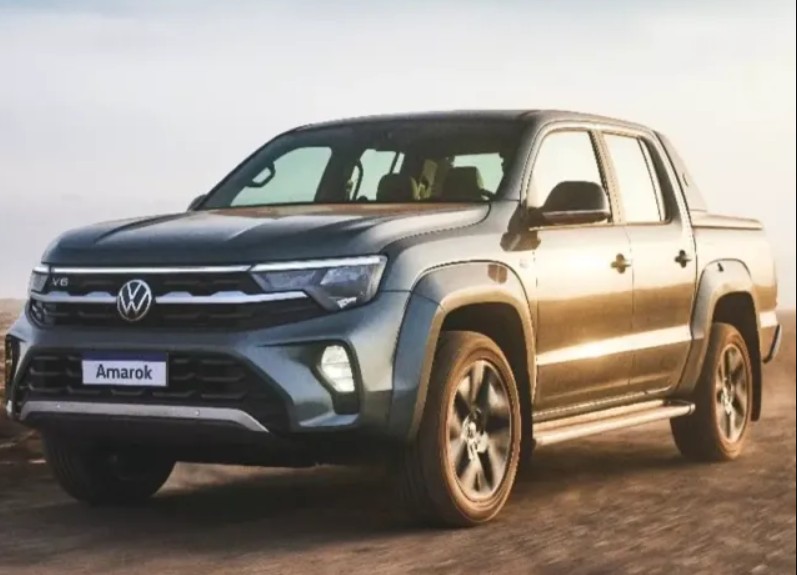
Choosing the correct oil for VW Amarok sounds simple until we stand in front of a shelf packed with bottles marked 0W-30, 5W-30, 5W-40, ACEA C3, VW 507 00, and half a dozen other specifications. Suddenly, an ordinary oil change feels more like decoding a technical manual.
The good news? We do not need to make it complicated.
For most Amarok owners, the biggest lesson is this: the oil specification matters more than simply choosing a familiar viscosity such as 5W-30. Volkswagen itself recommends checking the oil standard listed in the vehicle's owner's manual against the approval printed on the oil container.
That detail becomes particularly important with the Amarok because the nameplate covers several different engines and two substantially different generations. Depending on market and year, we can find 2.0-litre TDI engines, older Volkswagen 3.0-litre V6 TDIs, newer-generation 2.0 diesels, newer 3.0 V6 diesels, and even a 2.3-litre petrol engine in certain countries. Volkswagen Mexico's current Amarok range, for example, includes both 2.0 TDI diesel and 2.3 TSI petrol options.
So, rather than blindly saying, "Put 5W-30 in it," let's work through what actually matters.
Content in this publication
- What Oil Does a VW Amarok Take?
- Why the Amarok's Engine Makes Such a Difference
- VW Amarok 2.0 TDI Oil Type
- VW Amarok 2.0 BiTDI Oil
- VW Amarok V6 Oil Type
- VW Amarok 5W-30 Oil: Is It the Best Choice?
- What About 0W-30 Oil in an Amarok?
- Can You Use 5W-40 in a VW Amarok?
- VW 507 00 Oil and the Amarok
- Oil for New-Generation VW Amarok Models
- How to Find the Correct Amarok Engine Oil
- How Often Should You Change VW Amarok Oil?
- Should We Change the Oil Filter With the Oil?
- Can You Mix Different Oils in a VW Amarok?
- What Happens If We Use the Wrong Oil?
- Synthetic vs Conventional Oil for VW Amarok
- Best Oil Brand for VW Amarok
- Checking the Amarok Oil Level Correctly
- Signs Your Amarok May Need Oil Attention
- Does Climate Change the Best Oil for an Amarok?
- What Oil Should High-Mileage Amarok Owners Use?
- VW Amarok Oil Change Checklist
- The Biggest Mistakes Amarok Owners Make With Oil
- Conclusion: What Is the Best Oil for VW Amarok?
- Frequently Asked Questions About Oil for VW Amarok
What Oil Does a VW Amarok Take?
Many first-generation diesel Amaroks commonly use fully synthetic 5W-30 or 0W-30 engine oil, but the correct Volkswagen approval must match the engine.
On several first-generation 3.0 V6 TDI applications, VW 507 00-approved oil is commonly specified, with 5W-30 and 0W-30 being typical viscosity grades. One published technical listing for a first-generation 3.0 TDI, for instance, identifies VW 507 00 along with those two viscosities.
However, that should not be interpreted as a universal recommendation for every Amarok ever produced.
The safest hierarchy is:
- Find your exact engine and model year.
- Check the required manufacturer oil approval.
- Choose an appropriate viscosity permitted for that engine.
- Use a quality oil carrying the actual required approval.
Think of viscosity as the shoe size and the oil specification as the type of shoe. A size 10 hiking boot and a size 10 running shoe are both size 10, but they are designed for very different jobs.
Engine oil works the same way.
Why the Amarok's Engine Makes Such a Difference
The Amarok has been sold globally since 2010, and its mechanical layout has evolved considerably.
The original generation was fundamentally a Volkswagen-developed pickup. The newer generation is a different proposition, using a platform developed alongside the Ford Ranger while retaining Amarok-specific styling, equipment, calibration, and positioning. Current model ranges therefore cannot automatically use the same service-fluid assumptions as older trucks.
That means advice that was perfectly reasonable for a 2017 Amarok V6 may be completely inappropriate for a newer Amarok.
This distinction matters even more when we're buying oil online, where product pages sometimes group vehicles together rather broadly.
First-Generation VW Amarok
Depending on country and year, first-generation Amaroks were offered with engines including:
- 2.0 TDI four-cylinder diesel
- 2.0 BiTDI twin-turbo diesel
- 3.0 V6 TDI diesel
The 3.0 V6 became one of the Amarok's defining engines after its introduction and remained especially popular among owners who wanted stronger towing performance and effortless highway torque.
In Argentina, Volkswagen's current locally offered Amarok still uses its 3.0 TDI V6 architecture in several trim levels, illustrating how Amarok generations and powertrains can overlap depending on region.
Second-Generation VW Amarok
The newer Amarok offers a different engine family in many markets.
Volkswagen's current Mexican specifications, for example, list a 2.0 TDI four-cylinder diesel alongside a 2.3 TSI petrol engine, while other markets offer a 3.0-litre V6 turbodiesel.
This is why searching only for "VW Amarok oil" is not enough.
Our real question should be:
What oil does my exact Amarok engine require?
VW Amarok 2.0 TDI Oil Type
The 2.0 TDI is one of the most common Amarok engines worldwide, particularly in first-generation trucks.
Many owners will encounter 5W-30 synthetic oil when servicing these engines, although certain applications and climates may permit other viscosities.
For diesel Amaroks fitted with emissions equipment such as a diesel particulate filter, using the correct low-ash oil specification is especially important.
Why?
Because diesel engines inevitably produce small quantities of combustion-related contaminants. Unlike ordinary soot that the particulate filter may burn during regeneration, metallic ash from inappropriate lubricants cannot simply disappear.
Over thousands of kilometres, that residue can contribute to DPF loading.
Don't Choose 2.0 TDI Oil by Viscosity Alone
Here lies one of the most common Amarok maintenance mistakes.
We see "5W-30" in the manual, walk into an auto-parts store, grab any premium-looking 5W-30, and assume we're finished.
Not necessarily.
Two 5W-30 oils can have completely different manufacturer approvals and additive packages.
One might be formulated specifically for modern European diesels with particulate filters. Another might be designed primarily for gasoline engines or vehicles requiring a completely different specification.
Always check the approval line on the bottle.
VW Amarok 2.0 BiTDI Oil
The twin-turbo 2.0 BiTDI deserves particular attention because owners often expect its servicing requirements to be interchangeable with any other 2.0 diesel.
The engine's turbochargers rely on a steady supply of clean oil.
Turbocharger shafts rotate incredibly quickly, while the oil passing through them simultaneously lubricates bearings and absorbs heat. That's why oil quality, oil level, and sensible change intervals matter so much in a hard-working turbo diesel.
If we regularly tow, drive through dusty areas, idle extensively, make repeated short journeys, or operate the Amarok in severe heat, oil receives a much harder workout than it does during relaxed motorway cruising.
Why Turbo Diesel Oil Quality Matters
Engine oil in a turbocharged diesel has several jobs at once.
It must:
- lubricate bearings and moving components;
- withstand high temperatures around the turbocharger;
- control sludge and deposits;
- suspend contaminants;
- protect against wear;
- function during cold starts;
- cooperate with modern emissions systems.
That's quite a résumé for something we usually think of as simply "oil."
Using the correct specification gives the lubricant a fighting chance to do all of those jobs.
VW Amarok V6 Oil Type
Now we arrive at the engine many enthusiasts associate most strongly with the Amarok: the 3.0 V6 TDI.
For various first-generation V6 TDI versions, VW 507 00-approved fully synthetic oil, commonly in 5W-30 or 0W-30 viscosity, is a widely applicable specification. A technical listing for a 3.0 TDI Amarok identifies an approximately 8-litre engine-oil capacity together with VW 507 00 and 0W-30/5W-30 recommendations.
Another lubricant application database lists an approximately 8-litre service fill for a first-generation 3.0 TDI application.
But again, we should verify our engine code rather than assuming every V6 Amarok is identical.
How Much Oil Does a VW Amarok V6 Take?
For several first-generation 3.0 V6 TDI versions, the service-fill quantity is roughly 8 litres.
Treat that number as a useful reference rather than a blind filling target.
Oil capacity can vary depending on engine code, whether the oil filter was replaced, how thoroughly the old oil drained, and the exact vehicle specification.
The sensible technique is simple:
Add slightly less than the nominal capacity, wait for the oil to settle, measure the level according to the vehicle's instructions, and add small amounts until the correct level is achieved.
Overfilling is not a bonus.
Engines do not award extra protection for having extra oil.
VW Amarok 5W-30 Oil: Is It the Best Choice?
For many Amarok diesels, 5W-30 is indeed a common viscosity.
It's popular because it performs well across a broad temperature range.
The "5W" represents the oil's low-temperature viscosity classification. Lower winter numbers generally indicate easier flow under cold conditions.
The "30" describes viscosity behavior at operating temperature.
But here's the crucial point again:
5W-30 is a viscosity grade, not an engine approval.
When we're choosing between two bottles, an oil meeting the correct VW requirement is more important than choosing a bottle simply because the front label says 5W-30.
What About 0W-30 Oil in an Amarok?
Some Amarok engines permit 0W-30, and it can offer excellent cold-start flow.
At very low temperatures, thinner cold-start performance can help the lubricant circulate rapidly after starting.
For someone regularly starting an Amarok through freezing winters, that characteristic becomes considerably more relevant than it is for an owner living in a consistently warm climate.
However, climate alone does not authorize us to switch specifications.
The engine manufacturer's approved oil requirements remain the foundation of the decision.
Can You Use 5W-40 in a VW Amarok?
This question appears constantly in owner communities.
We might hear statements such as:
"My mechanic always uses 5W-40."
"My Amarok has high mileage, so thicker oil is better."
"My friend runs it and his truck has 300,000 km."
Those anecdotes can be interesting, but they aren't substitutes for engineering specifications.
Certain Amarok engine variants and service conditions may allow 5W-40 oils carrying appropriate approvals, particularly among older vehicles or specific regional specifications. But we should not replace a prescribed 5W-30 or 0W-30 oil with 5W-40 solely because the engine is older.
Higher mileage does not magically rewrite the manufacturer's lubrication requirements.
If an engine consumes excessive oil, leaks heavily, or has low oil pressure, using thicker oil to hide the symptom may postpone diagnosis rather than solve the underlying problem.
VW 507 00 Oil and the Amarok
If we've spent any time researching Volkswagen diesel oil, we've probably seen VW 507 00 mentioned repeatedly.
It's an important Volkswagen oil standard associated with many diesel applications, especially vehicles with modern exhaust after-treatment systems.
For several first-generation Amarok V6 engines, it is a particularly relevant specification.
When shopping, we should look for wording indicating that the oil actually carries the required Volkswagen approval rather than relying solely on marketing phrases such as:
"Suitable for European vehicles."
"Recommended for VW."
"German technology."
Those statements sound impressive, but the specification printed on the container tells us far more.
VW 507 00 vs SAE 5W-30
These aren't competing descriptions.
An oil can simultaneously be:
SAE 5W-30 + VW 507 00
The first tells us its viscosity.
The second tells us about the manufacturer's performance specification.
It's similar to saying a tire is 265/60 R18 and also carries the appropriate load rating. We need more than one number to know whether the product is right for the job.
Oil for New-Generation VW Amarok Models
This is where we need to be particularly careful.
The newer Amarok shares major engineering foundations with the current Ford Ranger, and Volkswagen's technical information identifies newer Amarok engine codes that differ from the first-generation units. Available workshop information lists separate 2.0 four-cylinder diesel and 3.0 six-cylinder diesel engine families for the 2023-generation Amarok.
Consequently, we should not automatically pour VW 507 00 5W-30 into a new-generation Amarok just because that's what an older V6 used.
The owner's manual, VIN-specific service information, or authorized dealer data should take priority.
Volkswagen itself advises owners to compare the oil standard specified in their manual with the standard printed on the lubricant container.
That one habit can save us from a very expensive assumption.
How to Find the Correct Amarok Engine Oil
Fortunately, we don't need to become lubrication engineers.
We only need to identify a few details.
Step 1: Find the Model Year
Start with the vehicle's actual model year rather than simply the year we bought it.
A truck registered in one year may have been manufactured during the previous year.
Step 2: Identify the Engine
Determine whether we have:
- 2.0 TDI
- 2.0 BiTDI
- 3.0 V6 TDI
- newer-generation 2.0 diesel
- newer-generation 3.0 diesel
- 2.3 TSI petrol
- another market-specific variant
Step 3: Check the Engine Code or VIN
The engine code eliminates a lot of uncertainty.
Different versions of engines with the same displacement may carry different requirements.
Step 4: Read the Owner's Manual
This should be our primary reference.
Volkswagen's own guidance directs owners to compare their manual's required oil standard with the labeling on the bottle.
Step 5: Match the Approval Exactly
Once we've found the required standard, choose an oil carrying that approval.
Only then do we compare brands, prices, synthetic formulations, bottle sizes, and other secondary considerations.
How Often Should You Change VW Amarok Oil?
Oil-change intervals vary by market, engine, operating conditions, and service schedule.
Some modern Amarok applications use 15,000 km or 12-month service intervals. Australian vehicle data for current Amarok models, for example, lists servicing at 15,000 km or 12 months.
But waiting until the maximum interval isn't always ideal for every driver.
Consider an Amarok used every day to tow a trailer through hot weather.
Now compare it with an Amarok cruising mostly unloaded for long motorway journeys.
Both might accumulate 15,000 kilometres, yet their oil experiences dramatically different stress.
Conditions That Can Be Hard on Engine Oil
More severe use can include:
- frequent towing;
- heavy payloads;
- repeated short trips;
- extensive idling;
- dusty roads;
- off-road driving;
- extreme heat;
- repeated cold starts;
- stop-and-go traffic.
When our usage falls into that category, consulting the severe-duty maintenance recommendations for the exact vehicle is worthwhile.
Should We Change the Oil Filter With the Oil?
Yes, in normal servicing we should change the filter at the same time.
Volkswagen states that the oil filter collects combustion residue and contaminants over time and notes that its retailers replace the filter, seals, and drain plug during an oil change.
Installing fresh oil while leaving a heavily contaminated old filter in place is like taking a shower and putting yesterday's muddy clothes back on.
Technically possible?
Sure.
Ideal?
Not exactly.
Can You Mix Different Oils in a VW Amarok?
If the oil level is dangerously low and the choice is between topping up with a compatible lubricant or continuing to drive with insufficient oil, restoring the correct level may prevent much greater harm.
However, routine servicing is different.
We'd rather use one appropriate product carrying the required specification instead of creating a cocktail of different oils.
If we find ourselves frequently topping up, investigate why.
A small amount of consumption can occur in normal operation, but rapid or increasing oil loss deserves attention.
What Happens If We Use the Wrong Oil?
The consequences may not appear immediately.
That's what makes incorrect lubricant selection deceptive.
The engine can start normally.
It can idle smoothly.
There may be no warning light.
Thousands of kilometres later, however, unsuitable oil can contribute to problems involving lubrication, deposits, emissions equipment, turbocharger wear, or long-term engine durability.
Potential concerns include:
- accelerated component wear;
- sludge or deposit formation;
- increased oil consumption;
- poor cold-start lubrication;
- turbocharger stress;
- DPF contamination;
- reduced long-term reliability.
Oil is relatively inexpensive.
Turbochargers and diesel engines are not.
Synthetic vs Conventional Oil for VW Amarok
For modern turbocharged Amarok engines, the oils meeting the required manufacturer specifications are typically high-performance synthetic or synthetic-technology lubricants.
The old argument about whether "synthetic oil is worth it" matters less here because our first concern is approval.
If the required specification is carried by a modern full-synthetic lubricant, that's what we use.
We should not downgrade simply to save a small amount during an oil change.
A pickup that can tow, travel off-road, haul equipment, and cover hundreds of thousands of kilometres deserves more than the cheapest bottle on the shelf.
Best Oil Brand for VW Amarok
Owners often ask whether Castrol, Mobil, Shell, Liqui Moly, Motul, Ravenol, TotalEnergies, or another brand is "best."
That's the wrong starting point.
A premium brand selling the wrong specification is still the wrong oil.
A reputable brand selling an oil with the exact approval our Amarok requires is the better option.
So our priority should look like this:
Correct specification → correct viscosity → reputable manufacturer → price
Not:
famous logo → attractive bottle → discount → hope
Checking the Amarok Oil Level Correctly
Even the perfect oil cannot protect an engine when the quantity is wrong.
Oil level should be checked according to the instructions for the exact vehicle, generally with the truck parked level and under the temperature/waiting conditions prescribed by the manufacturer.
Avoid judging the level immediately after dumping fresh oil into the engine.
Give the lubricant time to settle.
And never assume that because the nominal capacity is eight litres, exactly eight litres must be poured in regardless of what the measuring system shows.
Oil capacity is a servicing reference.
The level indicator is the final referee.
Signs Your Amarok May Need Oil Attention
Some warning signs deserve immediate investigation.
Watch for:
- an oil-pressure warning;
- unexpectedly low oil level;
- visible oil leaks;
- blue exhaust smoke;
- burning-oil smells;
- unusual turbocharger noise;
- rapidly increasing oil consumption;
- engine knocking or ticking;
- oil contamination;
- repeated dashboard warnings.
An oil-pressure warning is particularly serious.
Low pressure and low oil level are related concepts, but they are not the same thing. An engine can theoretically contain oil yet fail to maintain proper lubrication pressure.
If the vehicle displays a critical oil-pressure warning, continuing to drive can turn a manageable problem into catastrophic engine damage.
Does Climate Change the Best Oil for an Amarok?
Climate matters, but not as much as some people think.
Cold weather places greater emphasis on low-temperature flow.
Very hot operating conditions can increase thermal stress.
Yet we should never treat weather as permission to disregard the prescribed manufacturer specification.
Modern engine oils are engineered to work across surprisingly broad temperature ranges.
That's exactly why multi-grade oils such as 0W-30 and 5W-30 exist.
The correct approach is to select from the viscosity grades approved for our engine and then consider which is most appropriate for local conditions.
What Oil Should High-Mileage Amarok Owners Use?
A high odometer reading alone does not automatically mean we need thicker oil.
Suppose our Amarok has covered 250,000 km, maintains healthy oil pressure, doesn't consume abnormal quantities of oil, and runs quietly.
Why deliberately abandon the correct specification?
Instead, high-mileage ownership should make us more attentive to:
- oil consumption;
- leaks;
- crankcase ventilation;
- turbo condition;
- cooling system performance;
- service intervals;
- oil-pressure behavior.
If wear has created a genuine mechanical issue, proper diagnosis beats trying to solve everything with thicker lubricant.
VW Amarok Oil Change Checklist
Before starting an Amarok oil service, it's worth checking a few essentials:
- Confirm the model year and engine code.
- Read the required oil specification in the owner's manual.
- Buy enough approved engine oil for the complete service.
- Purchase the correct oil filter.
- Obtain any required drain-plug washer, seal, or replacement plug.
- Warm the engine appropriately before draining, if specified.
- Drain the old oil safely.
- Replace the filter.
- Reinstall the drain plug correctly.
- Add slightly less than the full nominal capacity initially.
- Check the oil level according to manufacturer instructions.
- Top up gradually.
- Inspect for leaks.
- Reset the service reminder when appropriate.
- Dispose of used oil responsibly.
A careful oil change isn't glamorous, but neither is rebuilding a turbo diesel because someone saved five minutes.
The Biggest Mistakes Amarok Owners Make With Oil
Most oil-related mistakes don't come from neglect.
They come from assumptions.
We assume all 5W-30 oils are alike.
We assume every V6 Amarok uses the same fluid.
We assume newer and older generations share service specifications.
We assume more oil means more protection.
We assume thicker oil is automatically better for an older engine.
And perhaps most commonly, we assume the guy behind the parts counter knows exactly which Amarok we own.
Sometimes he does.
Sometimes he doesn't.
The owner's manual, VIN, engine code, and actual oil approval remove the guesswork.
Conclusion: What Is the Best Oil for VW Amarok?
The best oil for VW Amarok isn't defined by one viscosity, one brand, or one bottle that works in every truck.
For numerous first-generation diesel Amaroks—particularly certain 3.0 V6 TDI versions—fully synthetic 5W-30 or 0W-30 oil meeting VW 507 00 is a common requirement.
But the Amarok range now spans different generations and substantially different engines. Current markets can include 2.0 TDI diesels, 3.0 V6 diesels, and even 2.3-litre TSI petrol variants.
That's why our golden rule is simple:
Match the manufacturer's oil specification for the exact engine before worrying about viscosity or brand.
If we remember only one thing from this guide, let it be that.
Engine oil is the bloodstream of a turbocharged engine. Buying the right one costs little compared with the components it's protecting.
Frequently Asked Questions About Oil for VW Amarok
1. What oil does a VW Amarok 2.0 TDI use?
Many 2.0 TDI Amaroks use synthetic oil in viscosities such as 5W-30, but the required manufacturer approval varies with engine code, model year, emissions equipment, and market. Check the specification in the owner's manual rather than buying oil based on viscosity alone.
2. What oil does a VW Amarok 3.0 V6 take?
Several first-generation 3.0 V6 TDI Amaroks specify oil meeting VW 507 00, commonly in 5W-30 or 0W-30 viscosity. Some have an oil capacity of around eight litres. Newer-generation V6 models should be checked separately because their engine family differs.
3. Can I use 5W-40 instead of 5W-30 in my Amarok?
Only if the required specifications for your particular engine permit it. Don't switch to 5W-40 purely because the truck has high mileage or because another Amarok owner uses it. Engine code and manufacturer approval matter more than anecdotal experience.
4. How often should I change Amarok engine oil?
The interval depends on model, year, market, and usage. Current Amarok service information in some markets lists 15,000 km or 12 months, but severe operating conditions can justify closer attention to maintenance requirements. Always follow the schedule applicable to your exact vehicle.
5. Is 5W-30 good for a Volkswagen Amarok?
Yes, 5W-30 is widely used in numerous Amarok diesel engines, provided the oil also carries the manufacturer specification required by that specific engine. The number "5W-30" alone does not prove that a particular oil is suitable.
If you want to know other articles similar to Oil for VW Amarok: The Complete Guide to Choosing the Right Engine Oil you can visit the category Service and Parts.
MG HS Tyre Pressure Guide: Correct PSI and TPMS
Toyota Yaris Cross Dashboard Symbols

BMW 3 Series Warning Lights: The Complete Guide to Understanding Every Dashboard Symbol

Nissan Qashqai Fuel Tank Capacity: Complete Guide

Suzuki Swift Fuel Tank Capacity: Complete Guide

Mazda CX-5 Weight (2013–2026): Complete Guide in Pounds and KG
Leave a Reply
More content of your interest