

Is Hyundai Veloster a Sports Car? A Practical Look at What the Veloster Really Is

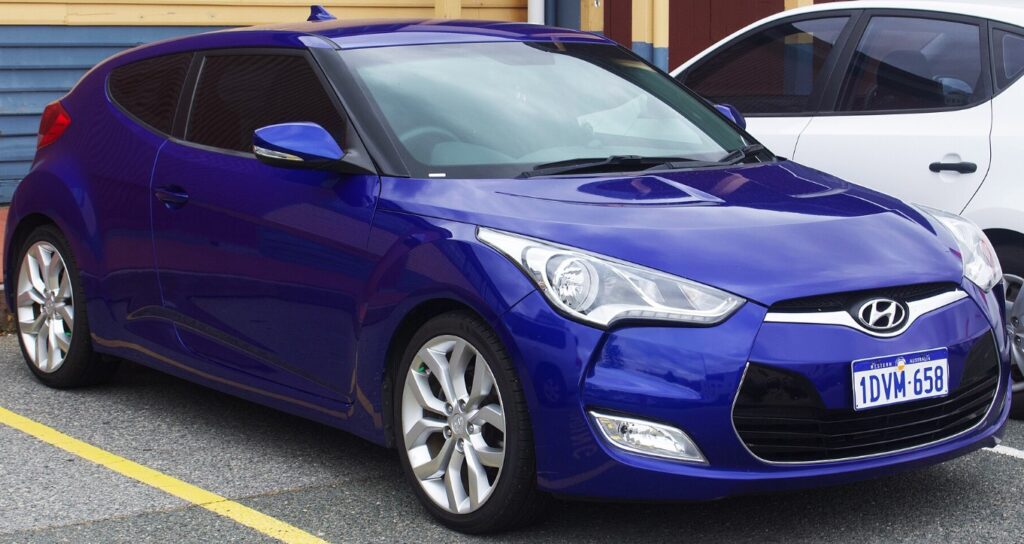
The Hyundai Veloster has always been a difficult car to place inside a neat little box. It looks sporty. It has an unusual coupe-like body. Some versions came with turbocharged engines, while the range-topping Veloster N was engineered specifically for drivers who care about corners, braking, grip, and acceleration.
So, is Hyundai Veloster a sports car?
The simplest answer is yes, in some forms—but not every Veloster qualifies as a traditional sports car.
A standard Hyundai Veloster is better described as a sporty compact hatchback or sport compact, while the Veloster Turbo moves noticeably closer to sports-car territory. The Veloster N, meanwhile, is a genuine high-performance hot hatch that can comfortably be considered a sports car in everyday conversation.
That distinction matters because the term "sports car" is surprisingly slippery. Some enthusiasts reserve it for lightweight, two-seat, rear-wheel-drive machines. Others use the term for practically anything designed primarily around performance.
The Veloster sits right in the middle of that argument.
Let's pull it apart and figure out exactly where Hyundai's quirky three-door hatchback belongs.
Content in this publication
- What Type of Car Is the Hyundai Veloster?
- What Technically Makes a Car a Sports Car?
- Is the Base Hyundai Veloster a Sports Car?
- Is the Hyundai Veloster Turbo a Sports Car?
- Is the Hyundai Veloster N a Sports Car?
- Is the Hyundai Veloster Fast?
- How Does the Veloster Handle?
- Is the Veloster Rear-Wheel Drive?
- Is the Hyundai Veloster a Coupe?
- Veloster vs Traditional Sports Cars
- Veloster vs Hyundai Elantra: Which Is Sportier?
- Veloster vs Volkswagen GTI
- Veloster vs Honda Civic Si
- Veloster vs Toyota GR86
- Veloster vs Mazda MX-5 Miata
- Can You Daily Drive a Hyundai Veloster?
- Is the Hyundai Veloster Good for Beginners?
- Is the Hyundai Veloster a Muscle Car?
- Is the Hyundai Veloster a JDM Car?
- Why Enthusiasts Like the Veloster
- Which Hyundai Veloster Is the Sportiest?
- Should You Buy a Veloster If You Want a Sports Car?
- Why the Veloster N Changed the Car's Reputation
- Does Insurance Consider a Hyundai Veloster a Sports Car?
- Does the Veloster Have Sports-Car Practicality Problems?
- What Makes the Veloster Different From Normal Hatchbacks?
- So, Is Hyundai Veloster a Sports Car or Not?
- Final Verdict
- Frequently Asked Questions
What Type of Car Is the Hyundai Veloster?
At its core, the Hyundai Veloster is a compact hatchback with a sporty design and unconventional door layout.
Unlike a traditional two-door coupe, the Veloster has one large door on the driver's side and two passenger doors on the opposite side. Add the rear hatch and you get a car that blends several categories at once.
It combines elements of:
- A compact hatchback
- A sport compact
- A coupe
- A hot hatch, depending on the trim
- A performance car in Veloster N form
That's part of what made the Veloster distinctive.
It never wanted to be another anonymous compact car. Hyundai gave it the visual drama of a coupe while retaining enough practicality for everyday use.
Why the Veloster Looks Like a Sports Car
Park a Veloster beside a conventional family hatchback and the difference is obvious.
The Veloster has a low roofline, broad stance, sculpted bodywork, short rear overhang, aggressively shaped front fascia, and a profile that looks far more energetic than an ordinary commuter.
Even non-car enthusiasts often assume they're looking at some kind of sports coupe.
That's deliberate.
Hyundai designed the Veloster around youthful, performance-inspired styling rather than maximum passenger space.
Yet appearance alone doesn't determine whether a vehicle is actually a sports car.
What Technically Makes a Car a Sports Car?
Here's where things become complicated.
There isn't one globally accepted definition of a sports car.
Traditionally, sports cars were lightweight vehicles emphasizing acceleration, steering, braking, and cornering rather than passenger capacity or cargo space.
Think of vehicles such as the Mazda MX-5 Miata, Porsche 718 Cayman, Toyota GR86, or older British roadsters.
Traditional Sports Car Characteristics
Classic sports cars usually have several of these traits:
- Performance-focused chassis tuning
- Low center of gravity
- Responsive steering
- Strong acceleration relative to size
- Firm suspension
- Two doors
- Limited rear seating or no rear seats
- Rear-wheel drive in many cases
- Low curb weight
- Driver-focused interior
The Hyundai Veloster checks several of those boxes—but certainly not all of them.
That's why calling every Veloster a pure sports car is a stretch.
Sport Compact vs Sports Car
A sport compact starts with an affordable compact-car platform and adds styling, suspension tuning, stronger brakes, bigger wheels, or additional engine performance.
That description fits the Veloster particularly well.
A traditional sports car, by comparison, is normally designed around performance from the beginning.
In other words, the difference is similar to running shoes versus track spikes. Both can move quickly, but they're designed with different priorities.
Is the Base Hyundai Veloster a Sports Car?
The regular naturally aspirated Veloster is more accurately classified as a sporty compact hatchback than a true sports car.
It certainly looks athletic, but its performance was developed primarily for ordinary road use rather than aggressive driving.
The base Veloster provides:
- Distinctive styling
- Compact dimensions
- Responsive everyday handling
- Front-wheel drive
- Practical hatchback cargo space
- Rear passenger seating
- Reasonable fuel economy
These characteristics make it entertaining without making it a dedicated performance machine.
Why Styling Can Be Misleading
This is where many owners get caught in the terminology.
A car can look extremely sporty without delivering traditional sports-car performance.
Manufacturers have been doing this for decades.
Big wheels, aggressive bumpers, spoilers, twin exhaust outlets, and coupe-shaped roofs can transform an ordinary compact vehicle visually.
The base Veloster certainly isn't boring, but its mission is broader than outright speed.
Think of the Base Veloster as a Sporty Daily Driver
That's probably the fairest label.
It gives us the appearance and personality of a performance vehicle while remaining practical enough for commuting, errands, road trips, and everyday ownership.
For many drivers, that's actually more useful than owning a dedicated sports car.
Is the Hyundai Veloster Turbo a Sports Car?
Now the answer becomes more interesting.
The Veloster Turbo can reasonably be considered an entry-level sports car or performance-oriented sport compact, depending on how strict we are with terminology.
The turbocharged model significantly increased the Veloster's performance character.
Additional power changed the personality of the vehicle considerably.
Suddenly, the dramatic bodywork had performance to match.
What the Turbo Changes
Turbocharged Velosters generally deliver stronger:
- Acceleration
- Midrange torque
- Passing power
- Highway performance
- Driver engagement
The result is a car that feels noticeably more eager.
Press the throttle and the Turbo doesn't simply make more noise—it actually moves with urgency.
That helps push the Veloster beyond being merely sporty-looking.
Front-Wheel Drive Doesn't Disqualify It
Some enthusiasts argue that "real" sports cars must be rear-wheel drive.
That's far too restrictive.
Front-wheel-drive performance cars have proven for decades that excellent handling and entertaining driving don't require power to the rear wheels.
Cars such as the Volkswagen GTI, Honda Civic Type R, Ford Focus ST, Renault Megane RS, and Hyundai's own N models demonstrate the point beautifully.
Front-wheel drive changes the driving experience. It doesn't automatically eliminate performance credentials.
Is the Hyundai Veloster N a Sports Car?
If we're discussing the Veloster N, the answer becomes much easier.
Yes—the Veloster N is absolutely a serious performance car.
Calling it a hot hatch may technically be more precise, but calling it a sports car isn't unreasonable at all.
Hyundai's N performance division transformed the Veloster from a stylish compact into something much more aggressive.
The Veloster N Was Built for Driving
The Veloster N wasn't merely given a stronger engine and a badge.
Its engineering focused heavily on driver engagement.
Depending on configuration, the N included performance-oriented features such as:
- Turbocharged power
- Sport-tuned or electronically controlled suspension
- Performance brakes
- Limited-slip differential technology
- Aggressive exhaust tuning
- Performance driving modes
- Manual transmission availability
- Dual-clutch transmission availability on later examples
- Heavily revised chassis tuning
That list tells us something important.
The N version isn't pretending.
It's designed for people who might genuinely take the long route home just because the road has better corners.
Hot Hatch or Sports Car?
Technically, hot hatch is probably the most accurate term.
A hot hatch combines the basic practicality of a hatchback with serious performance hardware.
The formula sounds almost contradictory.
Take a practical little car, give it far more power than it needs, sharpen the suspension, install stronger brakes, and encourage the owner to attack corners.
Yet that's exactly why hot hatches are so entertaining.
The Veloster N fits this category beautifully.
Is the Hyundai Veloster Fast?
That depends entirely on the version.
A base Veloster isn't particularly fast by modern performance-car standards.
The Veloster Turbo is substantially quicker.
The Veloster N is where genuinely serious performance begins.
But outright acceleration isn't the whole story.
Performance Isn't Just About 0–60 Times
We sometimes become obsessed with acceleration figures.
They're easy to compare, so manufacturers and enthusiasts love them.
But imagine driving down a winding mountain road.
Would you rather have a heavy car with enormous horsepower or a lighter machine with precise steering, strong brakes, and a responsive chassis?
That's why sports-car performance is about more than straight-line speed.
Handling matters.
Braking matters.
Balance matters.
Throttle response matters.
And perhaps most importantly, the way a car communicates with its driver matters.
The sportier Veloster versions perform strongly in those areas.
How Does the Veloster Handle?
Handling is one of the reasons the Veloster earns legitimate performance credibility.
Its compact footprint makes it naturally suited to tight roads and urban environments.
The steering and suspension vary considerably across trims, but performance-oriented Velosters feel noticeably sharper than ordinary commuter cars.
Veloster N Handling
The Veloster N takes things much further.
Its chassis was engineered to remain composed under aggressive cornering.
You may be interested in reading Is Ram 1500 a Half Ton Truck? What the Half-Ton Rating Really Means
Rather than floating over bumps like a soft family sedan, it feels deliberately connected to the road.
For enthusiasts, that's a compliment.
For passengers who just spilled their coffee over a pothole, perhaps less so.
Performance Cars Trade Comfort for Control
That's an important point.
Sports-oriented cars generally sacrifice some comfort to reduce body movement and improve response.
The Veloster N follows that philosophy.
Its suspension communicates far more information about the road beneath the tires.
And when the road starts twisting, that firmness begins to make sense.
Is the Veloster Rear-Wheel Drive?
No. Hyundai Veloster models use front-wheel drive.
That differentiates the Veloster from traditional rear-wheel-drive sports cars such as the Mazda MX-5 Miata, Toyota GR86, Subaru BRZ, and many BMW performance models.
Rear-wheel drive allows the front tires to focus largely on steering while the rear wheels handle propulsion.
Front-wheel-drive cars ask the front tires to perform both tasks.
Does Front-Wheel Drive Make the Veloster Less Sporty?
Not necessarily.
Modern chassis engineering, electronic differentials, sophisticated suspension geometry, performance tires, and limited-slip differentials can make front-wheel-drive cars astonishingly capable.
The Veloster N is proof.
Its layout may differ from the textbook sports-car recipe, but the driving experience remains firmly performance-focused.
Is the Hyundai Veloster a Coupe?
This is another surprisingly complicated question.
Visually, the Veloster looks like a coupe.
Mechanically and practically, it behaves more like a hatchback.
Then Hyundai added that unusual third passenger door.
So what do we call it?
The Famous Three-Door Layout
On one side, the Veloster appears to be a traditional two-door coupe.
Walk around to the other side and suddenly there's an extra rear door.
It sounds strange.
It is strange.
That's precisely what made it memorable.
The design gives rear passengers easier entry without dramatically changing the coupe-like appearance.
Coupe Styling With Hatchback Practicality
This unusual configuration lets the Veloster occupy a rare middle ground.
You get sporty proportions without abandoning cargo space and rear seats.
For drivers who love coupe styling but hate coupe inconvenience, that's a clever compromise.
Veloster vs Traditional Sports Cars
Let's compare the Veloster conceptually with vehicles generally accepted as traditional sports cars.
| Characteristic | Hyundai Veloster | Traditional Sports Car |
|---|---|---|
| Body style | Hatchback/coupe-inspired | Coupe or roadster |
| Seats | Usually four | Often two or 2+2 |
| Drivetrain | Front-wheel drive | Often rear-wheel drive |
| Cargo space | Relatively practical | Usually limited |
| Performance focus | Depends on trim | Generally high |
| Daily practicality | Strong | Moderate |
| Fuel economy | Generally reasonable | Varies |
| Sporty appearance | Yes | Yes |
| Track capability | Strongest with N | Often significant |
The comparison makes the answer clearer.
The Veloster blends sports-car personality with everyday usability.
Veloster vs Hyundai Elantra: Which Is Sportier?
A standard Hyundai Elantra has traditionally focused more heavily on comfort, passenger accommodation, efficiency, and everyday transportation.
The Veloster has always taken a more playful approach.
Its lower, more dramatic shape immediately gives it a sportier personality.
Veloster N vs Elantra N
Things change when we compare Hyundai's N performance models.
Both represent serious performance machinery.
The Elantra N offers a more conventional sedan shape and extra practicality, while the Veloster N gives us the unusual hatchback body that enthusiasts associate with the original N experience in North America.
Neither behaves like a normal economy car once the performance hardware enters the equation.
Veloster vs Volkswagen GTI
The Volkswagen GTI is one of the easiest vehicles to compare with the Veloster Turbo and Veloster N.
Both follow the same broad philosophy:
Take something practical.
Add power.
Sharpen the handling.
Make commuting considerably more entertaining.
The GTI typically emphasizes refinement and everyday usability, while performance Velosters often feel more theatrical.
The Hyundai's styling is louder.
Its personality is louder.
And in N specification, even its exhaust can be louder.
The GTI may arrive wearing a tailored jacket. The Veloster N shows up wearing racing shoes.
Veloster vs Honda Civic Si
The Honda Civic Si occupies a similar sport-compact niche.
Both cars appeal to drivers who want performance without accepting the compromises or price associated with more specialized sports cars.
The Civic Si traditionally provides:
- Practical seating
- Manual-transmission engagement
- Sportier suspension tuning
- Strong enthusiast appeal
- Everyday reliability and usability
The Veloster offers more unconventional styling and, depending on trim, potentially more aggressive character.
Again, we're in sport-compact territory rather than classic two-seat sports-car territory.
Veloster vs Toyota GR86
The Toyota GR86 highlights exactly why the Veloster's classification is debatable.
The GR86 follows the traditional sports-car recipe more closely.
It's low.
It's rear-wheel drive.
Its cabin and chassis revolve primarily around the driver.
Practicality comes second.
The Veloster Is More Practical
The Veloster goes the opposite direction.
It gives us:
- Easier rear-seat access
- A large hatch opening
- Useful cargo capacity
- Front-wheel-drive packaging
- More everyday versatility
That makes the GR86 a purer sports car.
But it doesn't necessarily make the Veloster less enjoyable.
They're simply different interpretations of performance.
Veloster vs Mazda MX-5 Miata
If we wanted to create a textbook example of a sports car, the Mazda MX-5 Miata would be difficult to beat.
Two seats.
Rear-wheel drive.
Light weight.
Convertible roof.
Minimal unnecessary complexity.
The Veloster sits almost at the opposite end of the sports-car spectrum.
It's more practical, more spacious, and easier to live with when carrying passengers or luggage.
Which Philosophy Makes More Sense?
That depends on what we want.
Want maximum driving purity?
The Miata makes more sense.
Want to drive enthusiastically Monday through Friday while still carrying groceries, bags, or friends?
The Veloster suddenly becomes very compelling.
Can You Daily Drive a Hyundai Veloster?
Absolutely.
In fact, daily usability is one of the Veloster's strongest qualities.
Unlike many traditional sports cars, it doesn't force us to surrender much practicality.
There's a hatch.
There are rear seats.
Fuel consumption is generally more manageable than with large performance vehicles.
And the compact dimensions make parking relatively easy.
The Veloster Turbo as a Daily Driver
The Turbo hits a particularly appealing middle ground.
It's quick enough to be fun while remaining civilized enough for normal commuting.
Think of it as adding hot sauce rather than replacing the entire meal.
Daily Driving the Veloster N
The Veloster N is more intense.
Its ride is firmer, its personality is louder, and its performance capabilities are dramatically higher.
You may be interested in readingIs Ram 1500 a Half Ton Truck? What the Half-Ton Rating Really MeansYou may be interested in reading
 Audi A4 Insurance Group: Complete UK Guide to Ratings, Costs, and Cheaper Cover
But it still retains the underlying practicality of a compact hatch.
That's a major advantage compared with traditional sports cars.
Is the Hyundai Veloster Good for Beginners?
For someone entering the performance-car world, a Veloster can make a lot of sense.
The front-wheel-drive layout generally provides predictable behavior, and the car's compact dimensions make placement easier.
A standard or Turbo model can be especially approachable.
The Veloster N deserves more respect because its performance capability is significantly higher, but it still offers a relatively friendly platform compared with some high-powered rear-wheel-drive vehicles.
Performance Should Grow With Driver Experience
Power alone doesn't make driving enjoyable.
Learning braking technique, steering inputs, cornering lines, throttle control, and situational awareness can make almost any car more entertaining.
A modest performance car often teaches those skills better than something with enormous horsepower.
Is the Hyundai Veloster a Muscle Car?
No.
Muscle cars belong to an entirely different tradition.
The classic formula emphasizes a powerful engine—historically a large-displacement V8—inside a relatively affordable rear-wheel-drive coupe.
Think Ford Mustang, Dodge Challenger, and Chevrolet Camaro.
The Veloster relies on compact dimensions, lighter weight, turbocharging in performance versions, and front-wheel drive.
Its philosophy is closer to European and Japanese hot hatches than American muscle cars.
Is the Hyundai Veloster a JDM Car?
No.
JDM means Japanese Domestic Market.
Hyundai is a South Korean manufacturer, not a Japanese company.
Therefore, the Veloster cannot technically be considered JDM.
It can certainly appeal to the same enthusiast crowd that loves Japanese sport compacts, but the terminology isn't interchangeable.
Why Enthusiasts Like the Veloster
The Veloster's greatest strength may be personality.
There are faster cars.
There are more luxurious cars.
There are more practical cars.
But relatively few combine performance potential, strange styling, affordability, hatchback utility, and genuine character in quite the same way.
It Doesn't Look Like Everything Else
That's increasingly valuable.
Walk through a crowded parking lot filled with conventional crossovers and sedans, and a Veloster immediately stands apart.
Its asymmetrical doors alone guarantee that.
Some people love the design.
Others can't stand it.
Indifference is less common.
Character Matters in an Enthusiast Car
Performance numbers can tell us how fast something accelerates.
They can't tell us whether we'll glance backward at the car after parking it.
The Veloster has that slightly rebellious quality.
It's not trying to be universally appealing.
That's part of the charm.
Which Hyundai Veloster Is the Sportiest?
The hierarchy is fairly straightforward.
The Veloster N is the most performance-focused version, followed by turbocharged Veloster variants.
Base models prioritize affordability and everyday usability.
In general, we can think of the lineup like this:
- Veloster N — Serious high-performance hot hatch
- Veloster Turbo — Sporty turbocharged compact
- Veloster R-Spec — Driver-focused turbo variant
- Standard Veloster — Sporty-looking everyday hatchback
Different model years and markets offered varying trim structures, but the broad hierarchy remains useful.
Should You Buy a Veloster If You Want a Sports Car?
That depends on what "sports car" means to you.
If your dream involves rear-wheel drive, two seats, perfect weight distribution, and a low-slung coupe body, there are more traditional choices.
If you want something that delivers performance while remaining practical, the Veloster becomes much more attractive.
Buy a Veloster If You Want
A Veloster makes sense when you value:
- Sporty styling
- Hatchback practicality
- Compact dimensions
- Distinctive design
- Enthusiast personality
- Turbocharged performance in higher trims
- Everyday usability
- A relatively unconventional alternative to mainstream compacts
Look Elsewhere If You Want
Another sports car may suit you better if you prioritize:
- Rear-wheel drive
- Two-seat simplicity
- Convertible driving
- Luxury-car refinement
- Large-engine performance
- Maximum straight-line acceleration
It's less about whether the Veloster earns some imaginary sports-car certificate and more about whether its personality matches the kind of driving you enjoy.
Why the Veloster N Changed the Car's Reputation
The original Veloster generated plenty of attention for its styling, but enthusiasts sometimes felt the appearance promised more performance than the early base versions delivered.
The N model changed that perception dramatically.
Suddenly, Hyundai wasn't simply making a sporty-looking compact.
It was building a serious enthusiast machine.
Hyundai's N Philosophy
Hyundai's N division focuses on performance that works both on ordinary roads and more demanding environments.
That philosophy helped turn otherwise practical Hyundai vehicles into genuine performance contenders.
The Veloster N became one of the clearest demonstrations that Hyundai could build a car enthusiasts wanted for emotional reasons rather than simply because it offered good value.
Does Insurance Consider a Hyundai Veloster a Sports Car?
Possibly, but insurance companies don't necessarily use enthusiast definitions when classifying vehicles.
Rates can depend on numerous factors including:
- Trim level
- Engine output
- Driver age
- Driving history
- Location
- Theft statistics
- Repair costs
- Accident frequency
- Vehicle safety features
A Veloster Turbo or Veloster N may therefore cost more to insure than a conventional compact Hyundai.
But an insurer's internal classification doesn't automatically determine whether enthusiasts consider the vehicle a sports car.
Does the Veloster Have Sports-Car Practicality Problems?
Compared with traditional sports cars, not really.
That's one of its advantages.
The rear seats aren't enormous, and the sloping roof can affect rear headroom, but the hatchback design provides useful cargo flexibility.
Rear Seats
The Veloster isn't a limousine.
Tall rear passengers may complain.
But having functional rear seats at all gives it a major advantage over two-seat sports cars.
Cargo Space
Fold the rear seats and the Veloster can swallow surprisingly practical loads.
Try doing that with a tiny roadster.
Suddenly, the strange little Hyundai starts looking rather sensible.
What Makes the Veloster Different From Normal Hatchbacks?
The answer is attitude.
Most hatchbacks were designed primarily around practicality.
The Veloster reverses the priorities slightly.
It starts by asking, "How can we make this interesting?"
Then it works practicality back into the equation.
That's why it doesn't resemble conventional hatchbacks such as a basic Corolla hatchback or ordinary compact commuter.
The Veloster wants the driver to notice it.
So, Is Hyundai Veloster a Sports Car or Not?
Here's the clearest way to answer the question.
The Hyundai Veloster family covers several performance categories rather than fitting neatly into one definition.
A base Veloster is primarily a sporty compact hatchback.
A Veloster Turbo is a genuine sport compact and can reasonably be described as an entry-level sports car.
The Veloster N is a high-performance hot hatch and unquestionably belongs in the broader sports-car world.
If we're using the traditional definition—two doors, rear-wheel drive, lightweight chassis, limited practicality—then no, the Veloster isn't a pure sports car.
But if we're asking whether certain Velosters are performance cars designed to entertain enthusiastic drivers, the answer is absolutely yes.
Final Verdict
The Hyundai Veloster lives in the wonderfully messy space between hatchback, coupe, sport compact, and sports car.
And frankly, that's what makes it interesting.
The regular Veloster offers sports-car styling without forcing us to live with sports-car compromises. The Turbo adds the power needed to make the appearance feel more convincing. And the Veloster N takes the concept all the way into genuine enthusiast territory with serious chassis and performance upgrades.
So when someone asks, "Is Hyundai Veloster a sports car?", our response would be:
The base Veloster is a sporty hatchback, the Veloster Turbo is a sport compact that approaches sports-car territory, and the Veloster N is a genuine performance car best described as a hot hatch.
It may not follow the traditional sports-car recipe, but that's arguably the entire point.
The Veloster takes practicality, performance, and eccentric styling, tosses them into the same blender, and creates something that doesn't look or feel quite like anything else.
And sometimes, being difficult to classify is far more interesting than fitting perfectly into a box.
Frequently Asked Questions
1. Is a Hyundai Veloster considered a sports car for insurance?
It depends on the insurer, trim, engine, driver profile, and region. Performance versions such as the Veloster Turbo or Veloster N may receive higher insurance rates than conventional compact cars because insurers consider horsepower, accident history, repair costs, theft statistics, and other risk factors.
2. Is the Hyundai Veloster Turbo a real sports car?
The Veloster Turbo is best described as a sport compact or sporty hot hatch. It offers stronger performance than the base model and can reasonably be considered an entry-level sports car in casual conversation, although it doesn't follow the classic rear-wheel-drive, two-seat sports-car formula.
3. Is the Hyundai Veloster N faster than the regular Veloster?
Yes. The Veloster N was engineered as a dedicated high-performance version with significantly stronger acceleration, sharper suspension tuning, improved braking, and additional performance-focused technology compared with the standard Veloster.
You may be interested in readingIs Ram 1500 a Half Ton Truck? What the Half-Ton Rating Really MeansYou may be interested in reading
Audi A4 Insurance Group: Complete UK Guide to Ratings, Costs, and Cheaper CoverYou may be interested in reading
 BMW M5 Reliability: What Owners Need to Know Before Buying
4. Is the Hyundai Veloster rear-wheel drive?
No. Hyundai Veloster models use front-wheel drive. While traditional sports cars frequently use rear-wheel drive, front-wheel drive doesn't prevent performance versions such as the Veloster N from offering excellent handling and serious enthusiast appeal.
5. Is the Hyundai Veloster a good first sports car?
It can be. A Veloster Turbo provides a useful combination of manageable performance, compact dimensions, practical rear seats, and hatchback cargo capacity. The Veloster N offers considerably greater performance for drivers wanting a more serious enthusiast experience.
If you want to know other articles similar to Is Hyundai Veloster a Sports Car? A Practical Look at What the Veloster Really Is you can visit the category Blog.
Honda Passport Life Expectancy: How Many Miles Can It Last?
Honda Passport Depreciation: How Well Does It Hold Its Value?
Nissan Rogue Reliability Rating: How Reliable Is the Rogue?
Nissan Rogue Life Expectancy: How Long Does It Last?
Vauxhall Agila Reliability: Common Problems, Best Engines and What to Check
Vauxhall Agila Insurance Group UK: Complete Guide to Insurance Costs
Leave a Reply
More content of your interest