
Mazda 6 vs Mazda 3: Which Mazda Is Better for You?

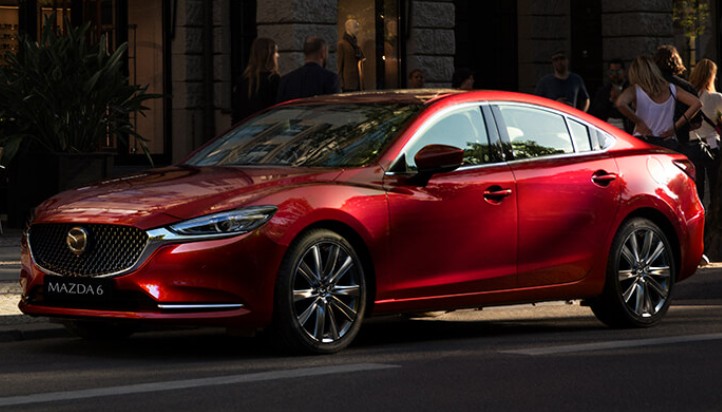
Choosing between the Mazda 6 vs Mazda 3 can feel a little like choosing between two versions of the same great suit. Both have Mazda’s sharp styling, driver-focused personality, and cabins that tend to feel more upscale than their badges suggest. Yet once we spend some time with them—or simply compare how each fits into everyday life—the differences become surprisingly clear.
The Mazda 3 is the smaller, more agile option. It fits easily into crowded streets, offers hatchback and sedan versatility in many markets, and remains part of Mazda's current lineup in places such as the United States. The Mazda 6, meanwhile, was positioned as the larger midsize car, offering extra passenger room, a longer body, and a more relaxed highway personality. Mazda discontinued the Mazda6 in the U.S. after the 2021 model year, so American shoppers comparing these cars today are generally comparing a new Mazda 3 with a used Mazda 6.
So, which one deserves space in our driveway?
For city driving, younger buyers, smaller households, and anyone who enjoys a compact car with a sporty edge, the Mazda 3 usually makes more sense. For families, highway commuters, and buyers who value rear-seat comfort and a more substantial road presence, the Mazda 6 often wins.
But that simple answer barely scratches the surface.
Content in this publication
- Mazda 6 vs Mazda 3 at a Glance
- What Is the Main Difference Between the Mazda 3 and Mazda 6?
- Mazda 3 vs Mazda 6 Exterior Size
- Interior Space: Mazda 6 Wins
- Mazda 6 vs Mazda 3 Cargo Space
- Driving Experience: Which Mazda Is More Fun?
- Mazda 3 Handling
- Mazda 6 vs Mazda 3 Engine Performance
- Mazda 3 vs Mazda 6 Fuel Economy
- Ride Comfort: Mazda 6 Has the Edge
- Cabin Quality and Design
- Technology Comparison
- Mazda 3 vs Mazda 6 Reliability
- Mazda 6 vs Mazda 3 Maintenance Costs
- Mazda 3 vs Mazda 6 Safety
- Which One Is Easier to Park?
- Which One Is Better on the Highway?
- Which One Is Better for Young Drivers?
- Which One Is Better for Families?
- Mazda 6 vs Mazda 3 for Tall Drivers
- What About the Mazda 3 Hatchback?
- Mazda 6 vs Mazda 3 Used-Car Value
- Should You Buy a New Mazda 3 or Used Mazda 6?
- Mazda 6 vs Mazda 3: Pros and Cons
- Mazda 6 vs Mazda 3: Which One Should We Buy?
- Final Verdict: Mazda 3 or Mazda 6?
- Frequently Asked Questions
Mazda 6 vs Mazda 3 at a Glance
Before diving deeper, here is the easiest way to think about these two Mazdas:
| Category | Mazda 3 | Mazda 6 |
|---|---|---|
| Vehicle class | Compact car | Midsize car |
| Body styles | Sedan/hatchback, depending on year | Primarily sedan in the U.S. |
| Best environment | Cities and mixed driving | Highway and longer trips |
| Passenger space | Good up front, tighter in back | More spacious overall |
| Handling | Light and agile | Stable and composed |
| Parking | Easier | Requires more room |
| Cargo flexibility | Hatchback especially useful | Larger traditional sedan trunk |
| Fuel use | Generally lower | Generally higher |
| Used-market appeal | Strong | Excellent value potential |
| Best for | Singles, couples, small households | Families and frequent travelers |
Neither vehicle is universally better. We're really comparing two different interpretations of the same Mazda philosophy.
What Is the Main Difference Between the Mazda 3 and Mazda 6?
The biggest difference is size and purpose.
The Mazda 3 competes in the compact segment. Think Toyota Corolla, Honda Civic, Hyundai Elantra, or Volkswagen Golf territory.
The Mazda 6 belongs to the midsize category, historically competing with cars such as the Toyota Camry, Honda Accord, Hyundai Sonata, and Nissan Altima.
That one-step jump in vehicle class changes almost everything.
The Mazda 6 gives us more wheelbase, more body length, more interior breathing room, and a more planted feel on open roads. Mazda's published specifications for the later-generation Mazda6 show a body length around 4.8 metres and a 2.75-metre wheelbase, highlighting just how substantial the midsize sedan is.
The Mazda 3 trades some of that roominess for compact dimensions and agility.
Think of the Mazda 3 as a fitted jacket and the Mazda 6 as a tailored overcoat. Both can look elegant, but they're designed for different situations.
Mazda 3 vs Mazda 6 Exterior Size
Put the cars side by side and the size difference becomes obvious.
Mazda 3 Is Easier Around Town
A compact footprint is one of the Mazda 3's biggest everyday advantages.
When we're squeezing into a parallel parking spot, navigating a crowded car park, or driving through narrow urban streets, smaller dimensions matter far more than horsepower figures printed on a brochure.
The Mazda 3 feels easier to position.
That makes it particularly attractive for:
- City commuters
- Apartment dwellers
- Drivers using small garages
- University students
- Couples without children
- Anyone regularly parking downtown
A smaller vehicle can simply remove friction from daily driving.
Mazda 6 Feels Like More Car
The Mazda 6 is noticeably larger.
That gives it a more mature stance and usually translates into additional cabin space. The downside is predictable: parking requires slightly more thought, tight turns demand a little more room, and small garages can become less forgiving.
But once we're cruising down a motorway or interstate, those larger dimensions become an advantage.
The Mazda 6 feels settled rather than cramped—a comfortable long-distance runner rather than a nimble sprinter.
Interior Space: Mazda 6 Wins
Interior room may be the strongest reason to choose a Mazda 6.
Front Seat Space
Both vehicles provide a driver-focused cockpit, and Mazda has long emphasized placing controls in ways that support natural driver interaction.
The Mazda 3 doesn't necessarily feel tiny from the driver's seat. In fact, two adults can sit comfortably up front.
The difference becomes clearer once we start filling the remaining seats.
Rear Seat Comfort
This is where the Mazda 6 earns its larger footprint.
Adults sitting in the back generally have more room to stretch out. Parents installing child seats also benefit from the extra space because we don't have to slide the front seats forward as aggressively.
The Mazda 3's rear seats are usable, but tall passengers may feel more confined, particularly when taller adults occupy the front seats.
For occasional passengers? No major concern.
For regularly carrying four adults? We'd lean toward the Mazda 6.
Which One Is Better for Families?
The Mazda 6 is normally the stronger family vehicle of these two.
Children themselves may fit perfectly well in either car, but family ownership introduces more than passenger height. We're dealing with child seats, school bags, groceries, sports equipment, pushchairs, luggage, and the mysterious mountain of possessions that seems to appear whenever children enter a vehicle.
That extra cabin and luggage room starts feeling valuable very quickly.
Mazda 6 vs Mazda 3 Cargo Space
Cargo capacity isn't simply about which boot has the larger number.
Body style matters.
Mazda 3 Hatchback Changes the Equation
The Mazda 3 hatchback provides something the traditional Mazda 6 sedan can't easily imitate: a large rear opening and fold-down rear seats that make bulky items easier to load.
Mazda still offers the Mazda3 as both a sedan and hatchback in the U.S. for the 2026 model year.
That can make the hatchback surprisingly practical.
Need to carry a bicycle with the wheel removed? Furniture boxes? A large television? Camping equipment?
The Mazda 3 hatchback may actually be easier to live with than expected.
Mazda 6 Offers Traditional Sedan Space
The Mazda 6 gives us a sizable conventional boot and a larger overall body.
For suitcases, groceries, work equipment, or family luggage, that makes plenty of sense.
The Mazda 3 hatchback wins on cargo flexibility.
The Mazda 6 wins on the feeling of overall spaciousness.
Driving Experience: Which Mazda Is More Fun?
Here's where things become interesting.
Mazda has built much of its reputation around making ordinary cars feel engaging from behind the wheel. The Mazda 3 and Mazda 6 both reflect that philosophy, but they deliver it differently.
Mazda 3 Handling
The Mazda 3's compact dimensions give it a lively personality.
Turn into a corner and the car tends to feel responsive and eager. The shorter overall package makes changing direction feel natural.
We could describe it as wearing running shoes.
There's less sensation of dragging a large body behind us.
For winding roads, city traffic, and drivers who simply enjoy steering, the Mazda 3 has real charm.
Mazda 6 Handling
The Mazda 6 isn't clumsy by comparison.
Far from it.
Mazda designed the 6 as more than an appliance-like family sedan. Historically, it has been praised for combining midsize comfort with driver-focused handling, and Mazda itself positioned the model around style, performance, and driving enjoyment.
The difference is character.
Where the Mazda 3 feels playful, the Mazda 6 feels composed.
We notice the Mazda 6's strengths most when sweeping through faster corners or spending several hours on the highway. Its larger dimensions help create a calmer, more substantial impression.
Mazda 6 vs Mazda 3 Engine Performance
Engine choices vary substantially by market and model year, so comparing the badges alone can be misleading.
A basic Mazda 3 may be slower than a powerful Mazda 6.
A turbocharged Mazda 3 may be quicker than many Mazda 6 versions.
For example, Mazda currently offers a turbocharged Mazda3 in the U.S. capable of producing up to 250 horsepower and 320 lb-ft of torque when using the specified premium fuel.
Meanwhile, later North American Mazda6 models were available with a 2.5-litre turbocharged engine, introduced as part of Mazda's effort to give the larger sedan stronger performance.
So rather than asking whether the Mazda 3 or Mazda 6 is faster, we should ask:
Which engine and model year are we comparing?
Naturally Aspirated Models
Non-turbocharged versions prioritize smoothness and simplicity over dramatic acceleration.
For everyday driving, that's perfectly fine.
The Mazda 3's lighter, smaller nature can make modest power feel energetic enough.
The Mazda 6 carries more vehicle around, so additional torque tends to be appreciated.
You may be interested in reading Mazda 6 vs CX-5: Which Mazda Is the Better Choice?
Turbocharged Models
Turbocharging changes the character of either car.
Strong mid-range torque makes overtaking easier and gives the accelerator noticeably more authority.
A turbo Mazda 3 becomes something of a compact sleeper.
A turbo Mazda 6 feels like a mature sports sedan hiding beneath business clothes.
Neither needs to shout to move quickly.
Mazda 3 vs Mazda 6 Fuel Economy
The Mazda 3 generally has the advantage when efficiency is our priority.
Why?
Physics.
A smaller, lighter car typically requires less energy to move. Engine, transmission, wheel size, tyre choice, drivetrain, driving conditions, and model year still influence real-world consumption, so exact figures should always be checked for the specific vehicle.
But broadly speaking, the Mazda 3 is the safer choice for buyers trying to reduce fuel costs.
Does the Mazda 6 Use Much More Fuel?
Not necessarily much more.
A normally aspirated Mazda 6 driven gently on the motorway can still deliver reasonable efficiency. Long gearing and steady-speed cruising help large sedans more than stop-and-start city traffic does.
Still, when two similar engines are compared under similar conditions, the smaller Mazda 3 normally holds the advantage.
If we're driving 20,000 miles or more per year, even a modest difference in fuel use starts adding up.
Ride Comfort: Mazda 6 Has the Edge
Ride quality is an area where larger cars often shine.
The Mazda 6's longer wheelbase helps it feel less nervous over uneven pavement. It tends to glide through motorway journeys with more maturity.
The Mazda 3 is comfortable enough for its class, but depending on wheel size and trim, rough roads may feel more noticeable.
Which Is Better for Long Trips?
We'd choose the Mazda 6.
Long journeys expose weaknesses that short test drives hide.
After three hours behind the wheel, things such as seat comfort, road stability, suspension movement, cabin space, and passenger legroom suddenly matter far more than touchscreen graphics.
The Mazda 6's personality suits this job beautifully.
It feels built for distance.
Cabin Quality and Design
One reason these two cars attract similar buyers is their interior design.
Mazda often avoids the visual clutter found in some mainstream vehicles. Buttons and displays tend to look intentionally placed rather than scattered across the dashboard like confetti.
Current-generation Mazda 3 models moved noticeably upmarket in presentation.
Clean surfaces, restrained styling, soft-touch materials in key areas, and relatively simple controls can make the Mazda 3 feel like a compact premium car without the premium badge.
That's a major selling point.
Someone considering a used entry-level luxury car may discover that a newer Mazda 3 provides a similarly polished environment with potentially simpler ownership.
Mazda 6 Has an Executive-Car Feel
Later Mazda 6 interiors also aged remarkably well visually.
A well-equipped example can feel mature, elegant, and pleasantly understated.
The Mazda 3 feels modern and intimate.
The Mazda 6 feels spacious and executive.
Neither approach is wrong.
Technology Comparison
This category depends heavily on model year.
A newer Mazda 3 naturally has access to newer infotainment and driver-assistance technology than an older Mazda 6.
This matters because buyers today may be comparing something like a 2026 Mazda 3 against a 2019-2021 Mazda 6 rather than two vehicles built in the same year.
Current Mazda3 models remain actively updated in Mazda's lineup, including 2026 versions, while the Mazda6 is no longer offered as a new U.S. model.
That gives the Mazda 3 an obvious advantage for buyers prioritizing newer equipment.
Don't Assume Newer Means Better Everywhere
There's a catch.
A top-spec used Mazda 6 may include features missing from an entry-level new Mazda 3.
We may find:
- Heated or ventilated seats
- Premium upholstery
- Upgraded audio
- Power-adjustable seats
- Driver-assistance technology
- Larger wheels
- More powerful engines
- Higher-quality interior trim
This is why trim level matters almost as much as model.
Mazda 3 vs Mazda 6 Reliability
Both models have generally benefited from Mazda's relatively straightforward approach to conventional petrol powertrains, but reliability varies by year, engine, transmission, maintenance history, and market.
When buying used, the logo on the bonnet matters less than the history behind it.
A meticulously maintained Mazda 6 can be a better purchase than a neglected Mazda 3 with half the mileage.
Used Mazda Buying Checklist
When examining either car, we should pay special attention to:
- Service records
- Oil-change history
- Accident repairs
- Transmission operation
- Suspension noises
- Uneven tyre wear
- Warning lights
- Battery condition
- Brake wear
- Signs of water damage
- Turbocharger condition on turbo models
- Recalls applicable to the exact VIN
A pre-purchase inspection remains one of the cheapest forms of insurance we can buy.
Mazda 6 vs Mazda 3 Maintenance Costs
The Mazda 3 normally wins by a small margin.
Smaller cars often use less expensive tyres, potentially smaller brakes, and less fuel. Certain higher trims complicate the comparison, though.
A turbocharged AWD Mazda 3 can easily cost more to operate than a simple front-wheel-drive Mazda 6.
So when estimating ownership costs, don't compare model names.
Compare configurations.
Tyres Can Make a Big Difference
Large wheels look fantastic in dealership photos.
They also tend to mean:
- More expensive tyres
- Thinner sidewalls
- Greater risk of wheel damage
- Firmer ride quality
Drivers trying to minimize running costs may prefer a lower or mid-level trim with sensible wheel sizes.
It's not glamorous advice, but your wallet may appreciate it.
Mazda 3 vs Mazda 6 Safety
Safety equipment varies significantly according to year and trim.
Newer Mazda 3 models benefit from years of continued development after Mazda stopped selling the Mazda 6 in several markets.
This gives a newer Mazda 3 an inherent advantage when comparing available technology.
But a late-model Mazda 6 can still offer a strong collection of active driver-assistance features depending on specification.
The important rule is simple:
Never assume a safety feature is included just because you've seen it advertised on another version of the same car.
Check the exact VIN and specification.
Which One Is Easier to Park?
Mazda 3.
No suspense here.
Shorter overall dimensions make parking easier and reduce the amount of car we need to manage in cramped areas.
If our daily routine includes underground car parks, narrow streets, tight apartment parking bays, or frequent parallel parking, the difference can become meaningful.
A Mazda 6 isn't enormous.
The Mazda 3 is simply easier.
Which One Is Better on the Highway?
Mazda 6.
The larger sedan feels more at home covering distance.
You may be interested in readingMazda 6 vs CX-5: Which Mazda Is the Better Choice?You may be interested in reading
Mazda 6 Similar Cars: The Best Alternatives for Style, Comfort, and Driving FunIt gives passengers more personal space and generally feels calmer on long, flowing roads.
This is exactly why midsize sedans became such popular business and family cars before SUVs swallowed much of the market.
A Mazda 6 can devour highway miles like a comfortable pair of walking shoes.
Which One Is Better for Young Drivers?
The Mazda 3 is often the smarter option.
It's smaller, easier to maneuver, potentially cheaper to fuel, and practical without feeling dull.
More importantly, young drivers don't necessarily need a large midsize sedan unless they regularly carry passengers.
A Mazda 3 sedan gives us the appearance of a conventional four-door car.
A Mazda 3 hatchback adds more versatility.
Both are easy to grow into.
Which One Is Better for Families?
Mazda 6.
Parents generally appreciate extra rear-seat space faster than they expect.
Child seats consume huge amounts of room. Rear-facing seats in particular can force front passengers forward in compact cars.
The Mazda 6 gives families more breathing room.
That said, a family with one young child living in a dense city may still find a Mazda 3 easier overall.
Context always wins.
Mazda 6 vs Mazda 3 for Tall Drivers
Tall drivers themselves can often fit reasonably well in either vehicle because front seats typically offer more adjustment than rear seats.
Problems arise when a tall driver needs to carry another tall adult behind them.
That's where the Mazda 6 becomes much more attractive.
We shouldn't judge interior room from the driver's seat alone.
Sit behind your own driving position.
That ten-second test can reveal more than twenty online reviews.
What About the Mazda 3 Hatchback?
The hatchback deserves separate attention because it changes the Mazda 3's personality.
Mazda currently continues to offer both sedan and hatchback versions of the Mazda3 in the U.S. market.
The hatchback offers greater cargo flexibility and arguably a sportier appearance, although its rear styling can slightly reduce outward visibility compared with more conventional shapes.
For buyers who need to transport awkward objects but don't want an SUV, it can be an excellent middle ground.
Mazda 3 Sedan vs Mazda 6 Sedan
If we're comparing sedan against sedan, the choice becomes simpler.
Choose the Mazda 3 sedan when we want:
- Easier parking
- Better urban maneuverability
- Potentially lower operating costs
- Newer technology
- A smaller footprint
Choose the Mazda 6 when we want:
- Better rear-seat space
- Greater long-distance comfort
- A more substantial road feel
- More family-friendly proportions
- Strong used-car value
Mazda 6 vs Mazda 3 Used-Car Value
Here's where the Mazda 6 becomes particularly interesting.
Since the Mazda 6 is no longer offered new in the United States, buyers shopping there are looking at used vehicles. Mazda officially announced that the model would leave its U.S. lineup for the 2022 model year.
Used midsize sedans can sometimes offer a lot of vehicle for the money because buyer attention has shifted toward SUVs and crossovers.
That means a well-maintained Mazda 6 may deliver:
More space.
More comfort.
Plenty of equipment.
And potentially a lower purchase price than we'd expect.
The Mazda 3 tends to hold strong appeal because compact cars remain easy to own and newer examples are still available.
Neither is automatically the bargain.
Condition determines value.
Should You Buy a New Mazda 3 or Used Mazda 6?
This may actually be the most relevant modern comparison.
If our budget puts a brand-new Mazda 3 alongside a three-to-six-year-old Mazda 6, what should we do?
The new Mazda 3 gives us the security and convenience of buying a current model, potentially including warranty coverage depending on the market and purchase conditions. Mazda's 2026 U.S. lineup continues to include the Mazda3 sedan and hatchback.
The used Mazda 6 gives us more physical car for our money.
Buy the Mazda 3 If You Want Simplicity
A newer car often means fewer unknowns.
We know more about its history.
Modern equipment is easier to find.
Financing may be simpler.
And we're not immediately wondering how the previous owner treated the transmission on a freezing Monday morning.
Buy the Mazda 6 If You Want Maximum Car for the Money
A clean Mazda 6 can be a clever purchase.
Instead of spending our entire budget on a smaller new vehicle, we may get a larger, better-equipped car with plenty of life left.
We simply need to inspect it carefully.
Mazda 6 vs Mazda 3: Pros and Cons
Mazda 3 Pros
- Compact and easy to park
- Fun, responsive handling
- Available in sedan and hatchback forms
- Premium-looking cabin
- Strong engine choices in certain markets
- New examples remain available
- Potentially lower fuel and ownership costs
Mazda 3 Cons
- Rear seat can feel cramped for adults
- Less ideal for large families
- Some trims can become expensive
- Smaller overall cargo/passenger envelope
Mazda 6 Pros
- More passenger room
- Better suited to long journeys
- Comfortable midsize proportions
- Attractive cabin design
- Strong available turbo performance on some versions
- Potentially excellent value on the used market
Mazda 6 Cons
- Larger footprint
- Usually consumes somewhat more fuel
- No longer available new in markets such as the U.S.
- Older examples may lack newer technology
- Used-car condition varies substantially
Mazda 6 vs Mazda 3: Which One Should We Buy?
If we strip away the specifications, trim names, and marketing language, the answer becomes fairly intuitive.
The Mazda 3 is the better choice for most buyers who don't genuinely need the extra size.
It handles city life beautifully, remains enjoyable to drive, looks sophisticated, and provides enough practicality for singles, couples, and smaller families.
The Mazda 6 makes more sense when comfort and passenger space matter more than compact dimensions.
For long commutes, four-adult households, road trips, or families using bulky child seats, the additional room is difficult to ignore.
Choose the Mazda 3 If…
We would choose the Mazda 3 if we:
- Drive mainly in cities
- Regularly use tight parking spaces
- Want a new Mazda passenger car
- Rarely carry adults in the rear
- Prefer a compact, agile driving feel
- Want hatchback practicality
- Prioritize fuel economy
Choose the Mazda 6 If…
We would choose the Mazda 6 if we:
- Frequently carry passengers
- Spend many hours on highways
- Want more rear-seat comfort
- Need a larger family sedan
- Prefer a planted, mature driving feel
- Don't mind buying used
- Find a clean, well-maintained example at a good price
Final Verdict: Mazda 3 or Mazda 6?
The Mazda 6 vs Mazda 3 debate doesn't have a dramatic loser.
Instead, it gives us two cars built around a similar idea but aimed at different stages of life.
The Mazda 3 is compact without feeling cheap. It's agile without becoming exhausting. And in current markets where it remains available, it benefits from newer technology and ongoing development. Mazda continues to sell the 2026 Mazda3 in sedan and hatchback form in the United States.
The Mazda 6 is the roomier, more mature alternative. Although Mazda discontinued it for the U.S. market beginning with the 2022 model year, that doesn't make existing examples irrelevant. Quite the opposite: a clean used Mazda 6 can be an appealing option for shoppers who want midsize comfort without moving into an SUV.
If we primarily drive alone or with one passenger, we'd take the Mazda 3.
If we regularly load the rear seats and spend weekends covering long distances, we'd take the Mazda 6.
Think of it this way: the Mazda 3 wants us to find the interesting road home.
The Mazda 6 wants us to keep driving once we get there.
Frequently Asked Questions
1. Is a Mazda 6 better than a Mazda 3?
The Mazda 6 is better for buyers who prioritize passenger room, rear-seat comfort, and long-distance cruising. The Mazda 3 is better for drivers who want a smaller, easier-to-park car with lower potential running costs and a more agile feel. Neither is objectively superior; the best choice depends on how we use the vehicle.
2. Is the Mazda 6 bigger than the Mazda 3?
Yes. The Mazda 6 belongs to the midsize-car category, while the Mazda 3 is a compact car. The Mazda 6 therefore provides a longer overall body and generally more passenger room, particularly in the rear seats. Mazda specifications for later Mazda6 models list an overall length of roughly 4.8 metres and a 2.75-metre wheelbase.
3. Is the Mazda 3 faster than the Mazda 6?
It depends on the engine, trim, and year. Turbocharged versions of both cars have offered strong performance. For example, the current U.S.-spec turbo Mazda3 can produce up to 250 horsepower and 320 lb-ft of torque with the specified premium fuel. Comparing specific engines is therefore more useful than comparing model names.
4. Is the Mazda 3 or Mazda 6 better for a family?
The Mazda 6 is generally better for families because its larger midsize body provides more rear-passenger room and greater overall cabin space. However, families with one child who drive mostly in urban areas may prefer the smaller Mazda 3 because it is easier to park and maneuver.
5. Can you still buy a new Mazda 6?
Availability depends on the country, but in the United States the traditional Mazda6 is no longer sold new. Mazda announced that it would discontinue the Mazda6 for the U.S. market for the 2022 model year, and Mazda's current U.S. website states that the Mazda6 is no longer available. The Mazda3, by contrast, continues in the 2026 U.S. lineup.
You may be interested in readingMazda 6 vs CX-5: Which Mazda Is the Better Choice?You may be interested in reading
Mazda 6 Similar Cars: The Best Alternatives for Style, Comfort, and Driving FunYou may be interested in reading
Mazda 6 vs Skoda Octavia: Which Car Is the Better Choice?If you want to know other articles similar to Mazda 6 vs Mazda 3: Which Mazda Is Better for You? you can visit the category Models.
Haval Jolion vs Omoda C5: Which SUV Is Better?
Haval Jolion vs Chery Tiggo 4 Pro: Full Comparison
Haval Jolion vs H6: Which SUV Is Better in 2026?
Haval Jolion vs Toyota Corolla Cross: Which SUV Is Better?
Haval Jolion vs Jaecoo J5: Which SUV Is Better?
Volkswagen T-Cross vs Volkswagen T-Roc: Which Is Better?
Leave a Reply
More content of your interest