
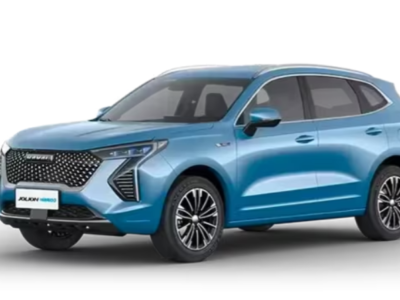
Haval Jolion vs Omoda C5: Which SUV Is Better?

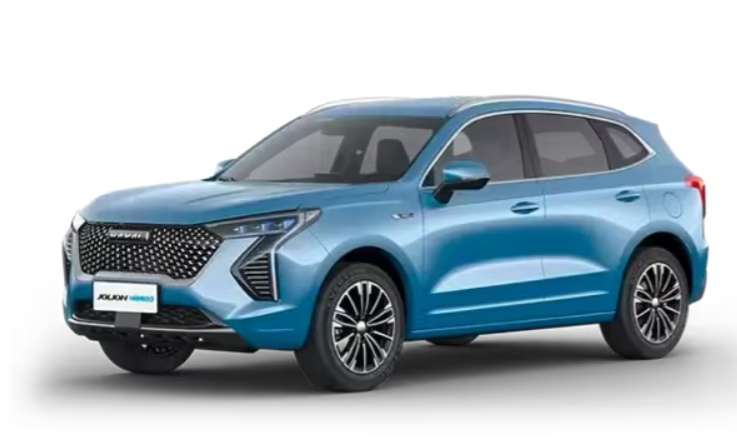
The Haval Jolion vs Omoda C5 comparison is becoming increasingly interesting as Chinese automakers continue to challenge established SUV brands. Both vehicles promise modern technology, attractive styling, turbocharged engines, and competitive pricing, but which one is actually the better choice?
The Haval Jolion has built its reputation around interior space, comfort, practicality, and value for money. Meanwhile, the Omoda C5 takes a different approach, offering futuristic styling, a technology-focused cabin, and an increasingly competitive range of petrol and hybrid powertrains.
Both SUVs are designed for drivers who want premium-looking features without paying premium-brand prices. However, there are important differences in performance, fuel consumption, safety equipment, passenger space, and long-term ownership considerations.
In this detailed comparison, we'll examine the Haval Jolion and Omoda C5 to discover which SUV is better for families, daily commuting, highway driving, and overall value.
Content in this publication
- Haval Jolion vs Omoda C5: Quick Comparison
- Exterior Design: Which SUV Looks Better?
- Haval Jolion vs Omoda C5 Dimensions
- Boot Space: Haval Jolion vs Omoda C5
- Engine Performance: Which SUV Is More Powerful?
- Fuel Consumption: Which SUV Is More Economical?
- Haval Jolion Hybrid vs Omoda C5 Hybrid
- Driving Experience and Ride Comfort
- Interior Quality and Cabin Design
- Infotainment and Technology Comparison
- Safety: Is the Haval Jolion or Omoda C5 Safer?
- Reliability: Haval Jolion vs Omoda C5
- Warranty and Maintenance Costs
- Haval Jolion vs Omoda C5 Price Comparison
- Long-Term Ownership and Resale Value
- Which SUV Is Better for City Driving?
- Which SUV Is Better for Families?
- Haval Jolion: Main Advantages and Disadvantages
- Omoda C5: Main Advantages and Disadvantages
- Haval Jolion vs Omoda C5: Which Should You Buy?
- Frequently Asked Questions
- Final Verdict: Haval Jolion or Omoda C5?
Haval Jolion vs Omoda C5: Quick Comparison
Before exploring the differences, let's compare the key specifications of the petrol-powered versions.
The figures below use representative South African specifications. Exact features and outputs may vary depending on model year, trim level, and market.
| Specification | Haval Jolion City 1.5T | Omoda C5 1.5T |
|---|---|---|
| Vehicle type | Compact SUV | Compact crossover SUV |
| Engine | 1.5L turbo petrol | 1.5L turbo petrol |
| Power | 105 kW | 115 kW |
| Torque | 210 Nm | 230 Nm |
| Transmission | 6-speed manual or 7-speed DCT | CVT or DCT, depending on trim |
| Drivetrain | Front-wheel drive | Front-wheel drive |
| Length | 4,472 mm | Approximately 4,400 mm |
| Wheelbase | 2,700 mm | Approximately 2,630 mm |
| Seating capacity | 5 | 5 |
| Claimed fuel consumption | 7.8–8.1 L/100 km | Approximately 6.9–7.5 L/100 km |
| Boot capacity | Approximately 337 L | Approximately 378–442 L |
| Hybrid available | Yes, Jolion Pro HEV | Yes, C5 SHS HEV |
Quick verdict: The Jolion offers a longer wheelbase and particularly generous rear passenger accommodation, while the Omoda C5 delivers stronger performance in comparable standard turbo-petrol versions and competitive fuel efficiency.
However, the comparison becomes more interesting when we consider the Jolion Pro and hybrid models.
Exterior Design: Which SUV Looks Better?
Haval Jolion Exterior Design
The Haval Jolion combines contemporary styling with traditional SUV proportions.
Its relatively upright body, wide front grille, sculpted bonnet, and distinctive lighting give it a substantial road presence.
Depending on the version, exterior highlights may include:
- LED headlights and daytime running lights
- Large alloy wheels
- Chrome or dark exterior detailing
- Contrasting body accents
- Panoramic sunroof
- Roof rails
- Rear spoiler
The Jolion Pro takes the design further with a more aggressive front end, revised lighting, and sportier detailing.
One advantage of the Jolion's styling is its relatively conventional crossover shape. Its roofline makes the vehicle feel practical rather than excessively focused on appearance.
This design should appeal to buyers looking for a family SUV that still feels modern.
Omoda C5 Exterior Design
The Omoda C5 is arguably the more adventurous-looking vehicle.
Its styling is inspired by futuristic automotive design, combining sharp bodywork with a coupe-like silhouette.
Depending on the version, notable features include:
- Distinctive front grille design
- Slim LED lighting
- Sporty alloy wheels
- Contrasting roof colours
- Sweeping roofline
- Sculpted rear styling
- Full-width or distinctive rear lighting treatments
The Omoda C5 looks particularly striking from the side, where its sloping roofline creates a sportier profile.
Unlike many conventional SUVs, the C5 prioritises visual character.
This can be attractive to younger buyers or drivers who want something more distinctive than a traditional family vehicle.
Exterior Design Verdict
We would choose the Omoda C5 for sporty and futuristic styling, while the Haval Jolion is likely to appeal more to buyers who prefer a conventional SUV shape.
Of course, exterior design is subjective, and both vehicles offer considerably more visual appeal than their relatively affordable prices might suggest.
Haval Jolion vs Omoda C5 Dimensions
Size plays an important role when choosing an SUV, particularly if we regularly carry passengers.
| Dimension | Haval Jolion City | Omoda C5 |
|---|---|---|
| Length | 4,472 mm | Approx. 4,400 mm |
| Width | 1,874 mm | Approx. 1,830–1,842 mm |
| Height | 1,581 mm | Approx. 1,588 mm |
| Wheelbase | 2,700 mm | Approx. 2,630 mm |
| Seats | 5 | 5 |
These dimensions demonstrate that the Jolion has a slight advantage in overall length and a more substantial wheelbase.
The Omoda C5, however, is compact enough to remain convenient for urban driving.
Which SUV Has More Rear Legroom?
The Haval Jolion generally has the advantage when it comes to rear passenger legroom.
Its 2,700 mm wheelbase helps provide generous space between the front and rear axles.
This translates into a rear seating area that can accommodate adults comfortably.
The Omoda C5 also offers usable rear seating, but its shorter wheelbase and coupe-inspired shape make it feel less spacious in certain situations.
Taller passengers should pay particular attention to rear headroom and the shape of the door openings.
Winner for rear passenger space: Haval Jolion.
Boot Space: Haval Jolion vs Omoda C5
Boot capacity is another important consideration, but the numbers require some care because both manufacturers offer different body and powertrain configurations.
In representative South African specifications:
| Model | Approximate Boot Capacity |
|---|---|
| Haval Jolion City | 337 litres |
| Haval Jolion Pro petrol | 291 litres |
| Haval Jolion Pro HEV | 255 litres |
| Omoda C5 earlier petrol versions | 378 litres |
| Omoda C5 updated X Series | 442 litres |
| Omoda C5 SHS HEV | Around 372 litres |
The latest Omoda C5 petrol variants can offer a substantial advantage in quoted boot volume.
However, litres alone do not determine practicality.
A boot with a broad opening, relatively low loading lip, and regular shape may be more useful than one with a larger advertised capacity but awkward dimensions.
We should also consider whether the vehicle includes a spare wheel, tyre repair kit, or additional storage underneath the boot floor.
Which Is Better for Family Luggage?
The Omoda C5 can be the better option for carrying suitcases, shopping bags, and holiday luggage, especially in versions with the larger boot.
The Jolion compensates with particularly generous passenger accommodation.
For families travelling with children, we recommend checking whether a stroller fits alongside other luggage before making a final decision.
Engine Performance: Which SUV Is More Powerful?
Engine performance is one of the most interesting parts of the Haval Jolion vs Omoda C5 comparison.
Both manufacturers offer multiple powertrains, so comparing equivalent versions is essential.
Haval Jolion Engine Options
The standard Jolion City uses a 1.5-litre turbocharged petrol engine producing approximately:
- 105 kW of power
- 210 Nm of torque
The Jolion Pro range also includes versions with this engine.
Higher-performance Jolion Pro S variants increase output to approximately:
- 130 kW of power
- 270 Nm of torque
This provides noticeably stronger performance on paper.
The hybrid Jolion Pro HEV offers a combined output of approximately 140 kW and 375 Nm.
Consequently, the Jolion range covers several different driving requirements.
Omoda C5 Engine Options
The updated Omoda C5 petrol range in South Africa uses a 1.5-litre turbocharged engine producing approximately:
- 115 kW of power
- 230 Nm of torque
Depending on the variant, it is paired with a continuously variable transmission or dual-clutch transmission.
The Omoda C5 SHS hybrid is considerably more powerful, producing a combined output of approximately:
- 165 kW of power
- 295 Nm of torque
This makes the hybrid Omoda particularly interesting for drivers who want both responsive acceleration and improved efficiency.
Which SUV Accelerates Faster?
If we compare the standard petrol versions, the Omoda C5 has an advantage in power and torque.
However, engine output does not tell the whole story.
Acceleration also depends on vehicle weight, gearbox calibration, traction, and throttle response.
The updated Omoda C5 Style X has a manufacturer-claimed 0–100 km/h acceleration time of approximately nine seconds.
The C5 SHS hybrid has a claimed time of approximately 7.9 seconds.
The more powerful Jolion Pro S should not be confused with the standard 105 kW Jolion when comparing performance.
Performance verdict: The Omoda C5 has the stronger standard turbo-petrol specification in this comparison, while both brands offer more powerful alternatives.
Fuel Consumption: Which SUV Is More Economical?
Fuel efficiency can make a noticeable difference to long-term ownership costs.
Let's compare the manufacturer's combined-cycle figures.
| Model | Claimed Fuel Consumption |
|---|---|
| Haval Jolion City manual | 7.8 L/100 km |
| Haval Jolion City Plus automatic | 8.1 L/100 km |
| Haval Jolion Pro S | 7.5 L/100 km |
| Haval Jolion Pro HEV | 5.1 L/100 km |
| Omoda C5 updated petrol DCT | 6.9 L/100 km |
| Omoda C5 petrol CVT | Around 7.5 L/100 km |
| Omoda C5 SHS HEV | 4.9 L/100 km |
These figures suggest that the Omoda C5 has an efficiency advantage when comparing certain equivalent petrol variants.
The C5 hybrid also has a slightly lower official consumption figure than the Jolion Pro HEV.
Nevertheless, manufacturer figures should be treated as laboratory-based estimates rather than guaranteed real-world results.
Real-World Fuel Consumption
Actual consumption can change significantly depending on:
- Traffic congestion
- Average driving speed
- Air-conditioning use
- Vehicle load
- Tyre pressure
- Road gradients
- Driving style
- Temperature and weather conditions
Turbocharged petrol engines can consume considerably more fuel when frequently accelerating or operating under heavy loads.
Hybrid vehicles tend to show their greatest advantages in urban conditions where regenerative braking and electric assistance can recover or conserve energy.
For buyers covering substantial annual mileage, a hybrid may justify its higher initial price, but the calculation depends on the specific purchase-price difference.
Haval Jolion Hybrid vs Omoda C5 Hybrid
The hybrid versions deserve their own comparison because they offer substantially different driving experiences from the petrol-only models.
| Specification | Jolion Pro HEV | Omoda C5 SHS HEV |
|---|---|---|
| Engine | 1.5L petrol hybrid | 1.5L turbo-petrol hybrid |
| Combined power | 140 kW | 165 kW |
| Combined torque | 375 Nm | 295 Nm |
| Claimed fuel consumption | 5.1 L/100 km | 4.9 L/100 km |
| Transmission | Dedicated hybrid transmission | Dedicated hybrid transmission |
| Drivetrain | Front-wheel drive | Front-wheel drive |
| External charging required | No | No |
The Jolion hybrid offers a higher quoted combined torque figure, while the Omoda C5 delivers more combined power.
These specifications are not perfectly interchangeable because hybrid systems deliver torque differently.
Which Hybrid Should We Choose?
The Omoda C5 SHS HEV looks particularly attractive for drivers prioritising acceleration, fuel efficiency, and value.
The Jolion Pro HEV remains appealing thanks to its spacious cabin, high equipment levels, and established hybrid offering.
Neither requires plugging into an external charger.
We would compare actual driving refinement, brake feel, cabin noise, and service costs before deciding.
Driving Experience and Ride Comfort
Haval Jolion Driving Experience
The Jolion is primarily designed around everyday comfort.
Its steering is generally light, making it manageable in city traffic and parking situations.
The higher driving position also provides a familiar SUV experience.
However, the transmission deserves attention.
Petrol versions equipped with a dual-clutch gearbox may feel different from conventional torque-converter automatics, especially during slow-speed manoeuvres.
The Jolion Pro S and HEV also have different mechanical characteristics from the basic Jolion City.
Omoda C5 Driving Experience
The Omoda C5 has a more fashion-oriented character, but its driving experience also depends heavily on the version.
CVT-equipped variants typically prioritise smooth power delivery.
Newer DCT-equipped models provide a more direct relationship between engine speed and acceleration.
The updated Style X also benefits from revised rear suspension hardware.
The hybrid offers improved low-speed responsiveness thanks to electric assistance.
Some drivers may prefer the Omoda's more modern driving character, while others may find the Jolion's straightforward SUV layout more comfortable.
Which Is Better on the Highway?
For highway journeys, we should consider more than horsepower.
Cabin insulation, seat support, steering stability, overtaking performance, and suspension control are equally important.
The Jolion's spacious cabin is particularly useful when carrying several adults.
The Omoda C5, especially in stronger versions, provides competitive overtaking performance.
Our recommendation is to test both vehicles at typical highway speeds rather than choosing solely from technical specifications.
Interior Quality and Cabin Design
Haval Jolion Interior
Inside, the Jolion combines a modern dashboard with a relatively spacious cabin.
Depending on trim, features can include:
- Digital instrument display
- Large central infotainment touchscreen
- Electronic gear selector
- Leather-look upholstery
- Electrically adjustable seats
- Panoramic sunroof
- Wireless smartphone charging
- Automatic climate control
The Jolion Pro introduces updated technology and premium-looking finishes.
Its strongest interior selling point remains the overall sense of space.
Omoda C5 Interior
The Omoda C5 arguably has the more dramatic dashboard design.
Its cockpit uses a screen-focused layout and modern materials to create a distinctly technological atmosphere.
Depending on trim, features may include:
- Dual digital displays
- Sport-inspired front seats
- Wireless smartphone charging
- Ambient lighting
- Apple CarPlay and Android Auto
- Electrically adjustable seats
- Sony-branded audio system
- Panoramic camera system
- Dual-zone climate control
The Omoda's cabin is particularly appealing to buyers who enjoy minimalist, technology-focused interiors.
However, touchscreen-heavy controls can require more attention while driving than traditional physical buttons.
Interior Verdict
Choose the Haval Jolion for passenger space and a more traditional SUV experience. Choose the Omoda C5 for a sportier, technology-focused cabin.
Individual trim levels may change this conclusion, particularly when comparing entry-level models with fully equipped versions.
Infotainment and Technology Comparison
Technology is one of the strongest selling points of both vehicles.
Large touchscreens, digital instruments, smartphone connectivity, and advanced parking cameras are increasingly common.
However, the quality of the technology matters more than simply having a long equipment list.
Before buying either SUV, we recommend checking:
- How quickly the infotainment system responds.
- Whether Apple CarPlay and Android Auto connect reliably.
- How easy it is to adjust the air conditioning.
- Whether the reversing and 360-degree cameras provide a clear picture.
- How frequently driver-assistance warnings interrupt driving.
- Whether software updates are available locally.
The Omoda C5 may have an advantage in dashboard presentation, but it is worth testing the touchscreen interface carefully.
The Jolion also delivers impressive features for its price, particularly in more expensive trims.
Safety: Is the Haval Jolion or Omoda C5 Safer?
Safety deserves more attention than almost any other category in this comparison.
Both vehicle families have achieved strong results in certain international crash tests, but those results must not automatically be applied to every version sold around the world.
Haval Jolion Safety Ratings
The Australian and New Zealand specification Haval Jolion achieved a five-star ANCAP safety rating under the 2022 assessment criteria.
However, there is an important distinction for South African buyers.
In June 2026, the entry-level South African Haval Jolion received:
- Two stars for adult occupant protection
- Three stars for child occupant protection
This result came from Global NCAP's Safer Cars for Africa programme.
The tested vehicle had four airbags but lacked side curtain airbags, contributing to the weaker result.
The tested configuration should not be treated as identical to the Australian specification.
Omoda C5 Safety Ratings
The Chery Omoda 5, closely related to the Omoda C5, achieved a five-star ANCAP result for specified Australian-market versions.
The Omoda C5 sold in New Zealand also has a five-star ANCAP rating covering the applicable tested configurations.
However, local safety equipment can differ.
For example, certain entry-level South African variants have fewer airbags than international versions.
Therefore, the overseas five-star rating should not automatically be assumed to describe every locally sold C5.
Essential Safety Features to Check
Before purchasing either vehicle, we recommend checking the exact variant for:
- Front airbags
- Side airbags
- Side curtain airbags
- Electronic stability control
- Autonomous emergency braking
- Blind-spot monitoring
- Lane-keeping assistance
- Rear cross-traffic alert
- ISOFIX child-seat mounting points
Safety verdict: Neither model should be declared universally safer across all markets. We would prioritise the exact locally sold variant with comprehensive occupant protection and a crash-test rating applicable to that configuration.
Reliability: Haval Jolion vs Omoda C5
Reliability is often a major concern when buying a Chinese SUV.
Both GWM and Chery have expanded internationally, but their relatively recent product generations do not have the same extensive long-term ownership histories as some established Japanese competitors.
That does not mean either vehicle is inherently unreliable.
It means we should avoid making definitive claims about ten-year durability without sufficient evidence.
Is the Haval Jolion Reliable?
The Haval Jolion uses modern turbocharged engines, electronic control systems, and, in certain versions, dual-clutch transmissions.
Potential ownership considerations include:
- Transmission behaviour
- Software updates
- Electronic components
- Turbocharger maintenance
- Availability of replacement parts
- Quality of dealer servicing
None of these factors automatically represents a known defect.
Instead, they are areas worth investigating when purchasing a modern turbocharged SUV.
The presence of an established local dealership network can make regular servicing and warranty repairs more convenient.
Is the Omoda C5 Reliable?
The Omoda C5 also uses modern engine management, turbocharging, digital electronics, and automatic transmissions.
Its long-term reliability will depend on engineering quality, maintenance, driving conditions, and after-sales support.
For a used Omoda C5, we recommend examining the following:
- Complete maintenance records
- Evidence of software updates
- Transmission operation when cold and warm
- Air-conditioning performance
- Electronic warning messages
- Suspension noise
- Warranty transfer conditions
Reliability Verdict
There is not enough consistent, long-term comparative data to confidently declare one model more reliable than the other in every market.
We would place considerable importance on local workshop quality, warranty coverage, parts availability, and verified ownership history.
Warranty and Maintenance Costs
Warranty coverage can significantly influence the total cost of owning either SUV.
In South Africa, the Haval Jolion range has been offered with substantial warranty and service-plan coverage.
The Omoda C5 also comes with competitive coverage, including an extended engine warranty under specific conditions.
For example, published South African terms have included:
| Coverage | Haval Jolion | Omoda C5 |
|---|---|---|
| General vehicle warranty | Up to 7 years / 200,000 km | 5 years / 150,000 km |
| Service plan | Up to 7 years / 75,000 km | Varies by trim |
| Extended engine warranty | Market-specific conditions | Up to 10 years / 1 million km for eligible first owners |
| Hybrid battery coverage | Variant-specific | Extended coverage on eligible hybrids |
These terms are market-specific and may change.
A long engine warranty does not necessarily cover every mechanical or electronic component for the same period.
We should examine exclusions, maintenance requirements, transferability, and the authorised dealer network before signing a purchase agreement.
Haval Jolion vs Omoda C5 Price Comparison
Both vehicles are positioned as affordable alternatives to more established compact SUVs.
For a practical example, published 2026 South African list prices have included the following:
| Model | Indicative List Price |
|---|---|
| Omoda C5 Street+ | R339,900 |
| Haval Jolion City | R348,950 |
| Haval Jolion City Plus automatic | R373,950 |
| Omoda C5 Style X | R374,900 |
| Haval Jolion Pro Premium | R392,150 |
| Omoda C5 SHS HEV | R479,900 |
| Haval Jolion Pro HEV | R521,450 |
These are reference list prices rather than guaranteed current dealer offers. Promotions, on-road costs, and model-year changes can affect the final amount.
Which Offers Better Value for Money?
At entry level, the Omoda C5 Street+ offers a compelling package because it combines a turbocharged engine with an automatic transmission.
The standard Jolion City provides a larger-feeling cabin but uses a manual gearbox in the South African entry-level configuration.
The comparison becomes closer when we consider the automatic Jolion City Plus.
At higher price points, the equipment differences matter significantly more.
We should compare equivalent trim levels instead of assuming that one manufacturer's entry-level price reflects its entire range.
Long-Term Ownership and Resale Value
Buying an SUV is not just about the purchase price.
Over several years, depreciation, maintenance, fuel, insurance, and repairs can become major expenses.
Depreciation
Both manufacturers operate in a competitive market where strong pricing and frequent product updates may influence used-vehicle values.
We would not automatically expect either model to retain value as strongly as every established competitor.
Instead, we recommend comparing actual used-vehicle transactions in the local market.
Asking prices alone can be misleading because they do not necessarily represent completed sales.
Insurance
Insurance premiums depend on several factors, including:
- Driver age and history
- Vehicle location
- Theft risk
- Repair costs
- Insured value
- Replacement-part availability
A more expensive vehicle is not always proportionally more expensive to insure.
Requesting quotations for the exact variants can reveal differences that are not obvious from their purchase prices.
Maintenance
Both vehicles require scheduled servicing.
For petrol variants, regular engine oil changes and proper turbocharged-engine maintenance are important.
Hybrid variants also introduce electrical and battery-related components that should be serviced according to manufacturer requirements.
We recommend comparing the total scheduled-maintenance cost over at least five years.
Which SUV Is Better for City Driving?
For daily commuting, the Omoda C5 has several attractive qualities.
Its compact dimensions, available automatic transmissions, and modern cabin make it particularly suited to urban driving.
The hybrid model adds improved low-speed response and lower official fuel consumption.
However, the Jolion is also convenient around town thanks to its light steering and elevated driving position.
A hybrid Jolion can be especially comfortable in traffic because its electrified drivetrain reduces reliance on the petrol engine during suitable driving conditions.
Our choice for urban commuting would lean towards the Omoda C5, especially when comparing automatic petrol versions or the SHS hybrid.
Which SUV Is Better for Families?
The Haval Jolion has several advantages for family use.
Its generous rear legroom makes it easier to accommodate adult passengers and growing children.
The relatively conventional body shape also contributes to a spacious cabin environment.
However, the Omoda C5 offers an important advantage in certain configurations: a larger boot.
For families carrying pushchairs, sports equipment, or several suitcases, cargo capacity could make the C5 more convenient.
The best decision depends on what the family needs most.
We would choose the Jolion when rear-seat space is the priority and consider the C5 when luggage capacity and technology are more important.
In either case, crash-test applicability and local safety equipment should come before convenience features.
Haval Jolion: Main Advantages and Disadvantages
Advantages
- Generous rear passenger accommodation
- Comfortable compact-SUV proportions
- Multiple petrol and hybrid configurations
- Competitive equipment levels
- Attractive warranty and service coverage in certain markets
- Powerful Jolion Pro S and hybrid options
Disadvantages
- Standard petrol versions can use more fuel than equivalent C5 models
- Boot capacity varies considerably across the range
- Some entry-level variants have limited safety equipment
- DCT behaviour may not appeal to every driver
- Long-term resale values require local research
Omoda C5: Main Advantages and Disadvantages
Advantages
- Distinctive futuristic exterior design
- Attractive digital dashboard
- Stronger output than the standard Jolion in comparable petrol versions
- Competitive official fuel consumption
- Larger boot in certain updated petrol models
- Powerful and efficient SHS hybrid option
- Competitive entry-level automatic pricing
Disadvantages
- Less generous rear-seat accommodation
- Sloping roofline can affect access and visibility
- Touchscreen-heavy controls may be distracting
- Safety specifications differ between markets
- Long-term ownership history is still developing
- Warranty and service-plan coverage varies by model
Haval Jolion vs Omoda C5: Which Should You Buy?
The answer depends on how we intend to use the vehicle.
| Buying Priority | Our Preferred Choice |
|---|---|
| Rear passenger space | Haval Jolion |
| Futuristic styling | Omoda C5 |
| Standard turbo-petrol performance | Omoda C5 |
| Petrol fuel efficiency | Omoda C5 in comparable versions |
| Hybrid combined power | Omoda C5 SHS HEV |
| Hybrid combined torque | Haval Jolion Pro HEV |
| Boot space in updated petrol versions | Omoda C5 |
| Traditional SUV proportions | Haval Jolion |
| Technology-focused cabin | Omoda C5 |
| Safety | Depends on exact local variant |
| Reliability | No conclusive overall winner |
Choose the Haval Jolion If...
We recommend considering the Jolion if we regularly carry adults in the rear seats, prefer conventional SUV styling, or value a spacious interior.
It is also worth considering if local GWM after-sales support is particularly strong.
The Jolion Pro offers additional alternatives for drivers who want more performance, equipment, or hybrid technology.
Choose the Omoda C5 If...
We would consider the Omoda C5 if we prioritise exterior styling, modern interior technology, competitive performance, and lower official fuel consumption.
It can also make sense for buyers who want an automatic vehicle at an accessible price.
The updated SHS hybrid is especially compelling for drivers who want an efficient SUV without sacrificing acceleration.
Frequently Asked Questions
1. Is the Haval Jolion better than the Omoda C5?
The Haval Jolion is generally better suited to buyers prioritising rear passenger space and traditional SUV practicality. The Omoda C5 offers distinctive styling, a technology-focused interior, and stronger performance in comparable standard petrol versions.
Neither is automatically better for every buyer. The ideal choice depends on driving requirements, price, equipment, and local support.
2. Which is more fuel-efficient, the Haval Jolion or Omoda C5?
In comparable South African petrol specifications, the Omoda C5 generally has lower official combined fuel consumption.
The updated C5 DCT is rated at approximately 6.9 L/100 km, compared with around 7.8–8.1 L/100 km for standard Jolion variants.
Among hybrids, the Omoda C5 SHS has a claimed 4.9 L/100 km, while the Jolion Pro HEV is rated at approximately 5.1 L/100 km.
Real-world results will differ.
3. Is the Omoda C5 more reliable than the Haval Jolion?
There is insufficient comparable long-term reliability evidence to conclude that one is definitively more dependable.
Both use modern turbocharged engines and sophisticated electronic systems.
Regular maintenance, dealership support, warranty conditions, and spare-parts availability are important factors when assessing ownership risk.
4. Which has more boot space, the Omoda C5 or Haval Jolion?
The Omoda C5 generally offers more quoted boot capacity in the petrol variants compared here.
Updated C5 X Series models can provide approximately 442 litres, while the standard Jolion City is commonly listed at approximately 337 litres.
However, boot capacity varies between trim levels, hybrid configurations, and measurement standards.
5. Is the Haval Jolion or Omoda C5 better for a family?
The Haval Jolion has an advantage in rear legroom, making it appealing to families carrying older children or adult passengers.
The Omoda C5 can be better for luggage-heavy journeys thanks to its larger boot in certain versions.
For family use, we would prioritise the exact vehicle's crash protection, rear-seat space, child-seat compatibility, and practical luggage capacity.
Final Verdict: Haval Jolion or Omoda C5?
After comparing the Haval Jolion vs Omoda C5 across design, performance, technology, fuel efficiency, practicality, safety, and ownership considerations, we can see that both SUVs have genuine strengths.
The Haval Jolion is a strong choice for buyers who prioritise cabin space and conventional SUV practicality. Its generous wheelbase and broad range of powertrains make it worth considering for everyday family transport.
The Omoda C5 is particularly appealing for drivers who want modern design, competitive engine performance, a technology-focused cabin, and good fuel economy.
If we had to select one based on the representative South African petrol models compared here, we would lean towards the Omoda C5 for overall value, especially for urban drivers seeking an automatic SUV.
However, we would favour the Jolion for buyers who regularly carry rear-seat passengers and value the roomier cabin.
The hybrid comparison is closer, with the Omoda C5 SHS offering more combined power and slightly better official fuel consumption, while the Jolion Pro HEV provides generous passenger space and a different hybrid driving experience.
Ultimately, the most important step is to compare the exact locally available trim levels, check their safety equipment, and test-drive both SUVs under similar conditions.
Both vehicles demonstrate how competitive modern Chinese SUVs have become, but choosing the right version matters far more than choosing solely by brand.
If you want to know other articles similar to Haval Jolion vs Omoda C5: Which SUV Is Better? you can visit the category Models.
Haval Jolion vs Chery Tiggo 4 Pro: Full Comparison
Haval Jolion vs H6: Which SUV Is Better in 2026?
Haval Jolion vs Toyota Corolla Cross: Which SUV Is Better?
Haval Jolion vs Jaecoo J5: Which SUV Is Better?
Volkswagen T-Cross vs Volkswagen T-Roc: Which Is Better?
Hyundai Tucson Weight: Complete Guide to Curb, Gross, and Payload Specs
Leave a Reply
More content of your interest