

Hyundai Palisade Elite vs Calligraphy: Which Trim Is Better?

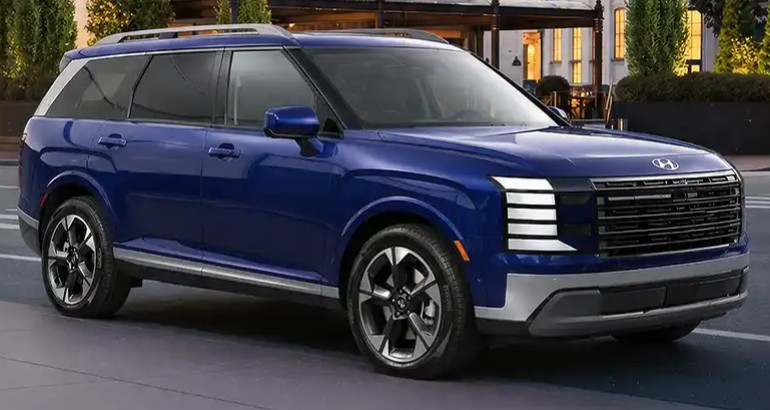
Choosing between the Hyundai Palisade Elite vs Calligraphy sounds simple until we look at what Hyundai actually gives us for the extra money. Both versions sit firmly in premium-family-SUV territory, both use the same sophisticated hybrid drivetrain in the latest Australian lineup, and even the Elite arrives loaded with technology that would have been luxury-car material only a few years ago.
So, is the Calligraphy genuinely worth stepping up to, or is the Elite the smarter place to spend our money?
For the current Australian-market Palisade Hybrid, the answer is more interesting than simply saying "Calligraphy has more features." The Elite offers nearly all the essentials: the same engine output, the same all-wheel-drive system, impressive safety technology, a large digital cabin, Bose audio and seating for eight. The Calligraphy builds on that foundation with finer materials, more elaborate seating, bigger wheels, extra convenience systems and a cabin that feels considerably closer to a luxury SUV.
In other words, we are not really choosing between basic and premium. We are choosing between very well equipped and genuinely indulgent.
Let's break it down.
Content in this publication
- Hyundai Palisade Elite vs Calligraphy at a Glance
- Price Difference: How Much More Is the Calligraphy?
- Performance: Elite and Calligraphy Are Essentially Equal
- Fuel Economy: No Meaningful Winner
- Exterior Design: Elegant or More Elegant?
- Interior Quality: This Is Where Calligraphy Pulls Away
- Front-Seat Comfort: Calligraphy Has a Clear Advantage
- Seven Seats vs Eight Seats
- Technology: The Elite Is Surprisingly Strong
- Safety: Much Closer Than We Might Expect
- Ride Comfort: Could the Elite Actually Be Better?
- Cargo Space and Family Practicality
- Towing Capacity: No Advantage for Calligraphy
- Elite Ownership Costs May Be Friendlier
- Which One Looks Better?
- Hyundai Palisade Elite: Pros and Cons
- Hyundai Palisade Calligraphy: Pros and Cons
- Who Should Buy the Palisade Elite?
- Who Should Buy the Palisade Calligraphy?
- What About a Used 2024 or 2025 Palisade Elite vs Calligraphy?
- Which Palisade Has the Better Resale Potential?
- Our Verdict: Elite or Calligraphy?
- Frequently Asked Questions
- 1. What is the main difference between Hyundai Palisade Elite and Calligraphy?
- 2. Is the Palisade Calligraphy worth the extra money?
- 3. Does the Palisade Calligraphy have a better engine than the Elite?
- 4. Is the Palisade Elite a seven-seater or eight-seater?
- 5. Which is better for a family, Palisade Elite or Calligraphy?
- Closing Thoughts
Hyundai Palisade Elite vs Calligraphy at a Glance
The latest Australian Palisade has moved into an entirely new era. Instead of the previous generation's choice between a petrol V6 and turbo-diesel, the current Elite and Calligraphy share Hyundai's 2.5-litre turbocharged hybrid powertrain, six-speed automatic transmission and HTRAC all-wheel drive. Combined system output is rated at 245 kW and 460 Nm. Hyundai also lists the same official combined fuel consumption of 6.8 L/100 km for both grades.
That immediately tells us something important: paying more for a Calligraphy does not buy more engine performance.
The real differences are equipment, seating flexibility, interior materials, convenience and styling.
| Feature | Palisade Elite | Palisade Calligraphy |
|---|---|---|
| Powertrain | 2.5L turbo hybrid AWD | 2.5L turbo hybrid AWD |
| Combined output | 245 kW / 460 Nm | 245 kW / 460 Nm |
| Transmission | 6-speed automatic | 6-speed automatic |
| Claimed combined economy | 6.8 L/100 km | 6.8 L/100 km |
| Wheels | 20-inch | 21-inch |
| Seating | 8 seats | 8 seats or optional 7-seat layout |
| Upholstery | Leather-appointed | Nappa leather-appointed |
| Head-up display | No | Yes |
| Digital centre mirror | No | Yes |
| Front ventilation | No | Yes |
| Second-row ventilation | No | Yes, outer seats |
| Premium relaxation seats | No | Yes |
| Powered third-row functions | More limited | Yes |
| Remote Smart Parking Assist | No | Yes |
The official 2026 specification sheet confirms that both variants are surprisingly close in core technology, while the Calligraphy concentrates its upgrades heavily on comfort and luxury.
Price Difference: How Much More Is the Calligraphy?
Price is where the debate gets serious.
The 2026 Hyundai Palisade Elite was introduced in Australia at $76,500 before on-road costs, while the Calligraphy was listed at $89,900 before on-roads in eight-seat form and $90,900 in seven-seat form.
That means we are looking at roughly a $13,400 jump from Elite to an eight-seat Calligraphy before registration, dealer charges and other on-road expenses.
That's hardly pocket change.
It is enough money to make us ask the question every smart SUV buyer should ask: Will we actually use the extra equipment?
If the answer is no, the Elite starts looking extremely convincing.
If the Palisade will spend years hauling the family on long trips, however, the Calligraphy's comfort upgrades may feel worthwhile every single day.
Is the Elite the Better Value?
For pure equipment-per-dollar value, we'd give the early advantage to the Elite.
Unlike many entry-level versions of large SUVs, it does not feel deliberately stripped to push us toward a higher trim. Features such as a 12.3-inch touchscreen, 12.3-inch digital instrument display, Bose premium audio, wireless Apple CarPlay and Android Auto, satellite navigation, surround-view monitoring and extensive driver-assistance technology are already included.
That's a serious standard package.
The Elite is the restaurant meal that already comes with the side dishes. The Calligraphy is where we order dessert, coffee and the table by the window.
Performance: Elite and Calligraphy Are Essentially Equal
This is perhaps the easiest category.
Both use Hyundai's 2.5-litre turbocharged petrol-electric hybrid system developing 245 kW and 460 Nm, paired with a six-speed automatic and HTRAC AWD.
There is no Calligraphy-exclusive power boost.
No special engine tune.
No extra cylinder hiding beneath the bonnet.
That means buyers primarily interested in acceleration, overtaking performance or AWD capability lose very little by choosing the Elite.
What Does the Hybrid System Change?
The latest Palisade is quite different mechanically from the previous Australian model.
The older Elite and Calligraphy could be ordered with either a 3.8-litre petrol V6 driving the front wheels or a 2.2-litre turbo-diesel paired with AWD. The 2025 range, for example, listed the Elite V6 from $66,800 and the Calligraphy V6 from $75,900 before on-roads.
The new generation simplifies the choice around a hybrid AWD platform.
For buyers comparing used models, this matters enormously. A 2024 or 2025 Elite-vs-Calligraphy comparison is mechanically different from a 2026 comparison.
Why Model Year Matters
Whenever we shop for a Palisade, we should check the build year rather than relying solely on the badge.
"Elite" and "Calligraphy" tell us the trim level, but they don't tell us which generation or engine we're looking at.
That's particularly important in the used market, where listings from different generations may appear side by side.
Fuel Economy: No Meaningful Winner
Since both current versions share the same hybrid system, neither trim has a meaningful claimed fuel-economy advantage.
Hyundai lists 6.8 L/100 km combined for both Elite and Calligraphy. The fuel tank capacity is 72 litres.
Real-world consumption will naturally depend on traffic, temperature, payload, tyre pressure, driving style and how heavily we use the accelerator.
The Calligraphy's larger wheels could theoretically influence real-world efficiency slightly under some conditions, but the official combined rating remains identical.
Exterior Design: Elegant or More Elegant?
The Palisade Elite doesn't visually scream "base model."
That's important.
It has the same broad, upright proportions and distinctive lighting philosophy that make the new Palisade look considerably more imposing than the outgoing generation.
Where the Calligraphy starts separating itself is in the details.
20-Inch vs 21-Inch Wheels
The Elite rides on 20-inch wheels with 255/50 R20 tyres, while the Calligraphy steps up to 21-inch wheels wearing 265/45 R21 tyres.
Visually, the Calligraphy has more road presence.
But bigger wheels aren't automatically better.
The Elite's additional tyre sidewall may make it the more sensible option if we regularly drive across potholes, rough suburban streets or uneven regional roads. Replacement tyres may also be less painful financially.
The Calligraphy's 21-inch setup wins the driveway beauty contest. The Elite could win the pothole contest.
Calligraphy Styling Details
Hyundai gives the Calligraphy higher-lustre exterior treatments and other trim-specific finishes, helping the flagship appear richer without turning it into a rolling jewellery cabinet.
The difference is noticeable, but restrained.
For some of us, that subtle sophistication is precisely the appeal. Others may actually prefer the Elite's slightly simpler treatment.
Interior Quality: This Is Where Calligraphy Pulls Away
If performance doesn't justify the extra money, the cabin has to.
And this is where the Calligraphy begins earning its badge.
The Elite uses leather-appointed seating, while the Calligraphy receives Nappa leather-appointed seats. Hyundai also gives the flagship a suede headlining treatment rather than the Elite's melange-knit material.
Those aren't features that make the vehicle faster or safer.
They simply make it nicer.
And in a family SUV we may spend hundreds of hours inside, "nicer" can matter more than specifications suggest.
Does the Elite Feel Cheap?
No.
That's the tricky part for the Calligraphy.
The Elite's cabin is already modern, spacious and technology-rich. We're unlikely to climb aboard and wonder where all the equipment went.
The Calligraphy instead layers luxury onto an already impressive foundation.
Think of the Elite as a high-end hotel room.
You may be interested in reading Audi A4 Years to Avoid: The Used Buyer’s Reliability Guide
The Calligraphy is the suite upstairs.
Front-Seat Comfort: Calligraphy Has a Clear Advantage
Drivers who cover long distances should pay particular attention here.
The Elite provides a 10-way power-adjustable driver's seat and an eight-way power passenger seat. The Calligraphy raises that to an 18-way driver's seat and 12-way passenger seat, adding additional lumbar, bolster and comfort adjustments.
The Calligraphy also introduces relaxation-focused seating functions and leg rests.
These aren't gimmicks if we're regularly doing three-, four- or five-hour highway drives.
Heated and Ventilated Seats
The Elite's front seats are heated.
Calligraphy seats take climate comfort much further, adding ventilation up front and extending premium temperature-control features farther into the cabin. Hyundai's specification sheet lists heated and ventilated outboard second-row seating for the Calligraphy, plus heated outboard third-row seats.
This is one of those upgrades that sounds unnecessary until we use it through a hot Australian summer.
Then it quickly becomes something we don't want to give back.
Seven Seats vs Eight Seats
Seating configuration could decide the comparison before anything else does.
The Elite is configured as an eight-seater with a second-row bench, while Calligraphy buyers can choose an eight-seat layout or an available seven-seat configuration using individual second-row seating.
Who Should Choose Eight Seats?
Eight seats make sense if maximum passenger capacity matters.
Large families, school runs, grandparents, children's friends and occasional extra passengers all make that extra seat valuable.
A conventional bench can also be useful when installing multiple child seats.
Who Should Choose Seven Seats?
The seven-seat Calligraphy layout creates a more executive-lounge feel.
Second-row individual seats improve personal space and can make access to the third row easier depending on how the cabin is configured.
If our usual passenger count is four to six rather than seven or eight, captain-style second-row seating may be the more enjoyable arrangement.
Luxury Versus Maximum Flexibility
This distinction captures the entire Elite-vs-Calligraphy debate rather nicely.
The Elite prioritises practical value.
The Calligraphy prioritises passenger experience.
Neither philosophy is wrong.
Technology: The Elite Is Surprisingly Strong
Normally, technology is where manufacturers make a lower trim feel obviously inferior.
Hyundai doesn't do that here.
Both versions receive a 12.3-inch digital instrument cluster, 12.3-inch infotainment touchscreen, wireless and wired Apple CarPlay/Android Auto compatibility, satellite navigation, fingerprint authentication, Bluetooth multi-connection and Bose 14-speaker premium audio.
Yes, even the Elite gets Bose audio.
That significantly weakens the argument for upgrading purely for infotainment.
What Technology Does the Calligraphy Add?
The Calligraphy still has a few tricks in its pocket.
Most notably, it adds a head-up display and Digital Centre Mirror.
The head-up display projects important information closer to our line of sight, reducing the need to glance down.
The digital rear-view mirror can provide a camera-generated rear view when passengers, luggage or head restraints obstruct visibility.
Neither is essential.
Both are wonderfully easy to appreciate once we become accustomed to them.
Safety: Much Closer Than We Might Expect
This category strongly favours the Elite from a value perspective because Hyundai has not locked most of its important active-safety technology behind the highest trim.
Both Elite and Calligraphy include technologies such as:
- Forward Collision-Avoidance Assist 2
- Blind-Spot View Monitor
- Blind-Spot Collision-Avoidance Assist
- Highway Driving Assist 2
- Lane Following Assist
- Lane Keeping Assist
- Rear Cross-Traffic Collision-Avoidance Assist
- Surround View Monitor
- Navigation-based Smart Cruise Control
- Smart Cruise Control 2
- Front, side and rear parking-distance warning
Hyundai's current specification sheet lists these systems across both grades.
That's excellent news because choosing the more affordable version doesn't require sacrificing many of the systems families are likely to care about most.
What Safety and Parking Feature Does Calligraphy Add?
One notable convenience addition is Remote Smart Parking Assist, which Hyundai reserves for the Calligraphy.
It's useful when parking spaces become frustratingly narrow.
Is it worth more than $13,000 on its own?
Of course not.
But that's not really the point. It's one ingredient in the larger Calligraphy luxury package.
Ride Comfort: Could the Elite Actually Be Better?
Here's an interesting twist.
The Calligraphy is more luxurious inside, but its larger 21-inch wheels mean it uses lower-profile tyres.
Generally speaking, more tyre sidewall can help absorb sharp road imperfections. That gives the Elite's 20-inch setup a potential real-world advantage on broken surfaces.
We wouldn't call the Elite definitively more comfortable without driving both back to back on identical roads, because suspension calibration, tyre construction and pressure also matter.
Still, buyers prioritising plushness shouldn't automatically assume the largest wheel is the best wheel.
Sometimes luxury wears sensible shoes.
Cargo Space and Family Practicality
Whichever version we choose, we're buying a seriously large family vehicle.
Hyundai quotes 300 litres of VDA cargo capacity behind the third row, 712 litres behind the second row and as much as 2,081 litres behind the first row in the current Palisade.
The wheelbase measures 2,970 mm, while overall length is just over five metres depending on trim.
That means both variants offer the fundamental packaging advantages of the same large SUV architecture.
Calligraphy's Powered Rear Seats
Where the flagship improves the experience is operation rather than raw space.
The Calligraphy offers additional powered second- and third-row functionality, including power-operated third-row folding and adjustment features that aren't matched by the Elite's more conventional arrangement.
If we're constantly transforming the Palisade from people carrier to cargo hauler, those powered functions can become genuinely useful.
Towing Capacity: No Advantage for Calligraphy
If towing influences our decision, there's little reason to upgrade based on capacity alone.
Hyundai rates the current Palisade at 2,000 kg braked towing capacity and 750 kg unbraked, with a maximum tow-ball weight of 160 kg.
These specifications apply across the current range rather than giving the Calligraphy a higher tow rating.
So if we're buying primarily to tow a moderate trailer, the Elite performs the same basic job.
Elite Ownership Costs May Be Friendlier
A cheaper purchase price isn't the only potential saving.
The Elite's 20-inch tyres could cost less to replace than the Calligraphy's broader 21-inch rubber, depending on brand and specification.
You may be interested in readingAudi A4 Years to Avoid: The Used Buyer’s Reliability GuideYou may be interested in reading
 Ford Edge Years to Buy: The Best Model Years for a Used SUV
Insurance may also vary with vehicle value and replacement cost.
Meanwhile, both trims use the same basic powertrain, so we're not choosing a cheaper engine to maintain in the Elite and a substantially more complicated one in the Calligraphy.
This makes the Elite especially appealing to buyers who want premium equipment without voluntarily increasing every ownership cost they can.
Which One Looks Better?
This is entirely subjective, and we're glad it is.
Not every top-spec vehicle looks better simply because it contains more chrome, larger wheels and fancier trim.
Some buyers will love the Calligraphy's more polished appearance.
Others may prefer the Elite because its styling feels slightly less formal and its 20-inch wheels remain substantial without dominating the vehicle.
There's no spreadsheet for taste.
We should look at both in person before allowing the badge hierarchy to make the decision for us.
Hyundai Palisade Elite: Pros and Cons
The Elite works brilliantly as the rational choice.
Its biggest strengths are its lower entry price, shared hybrid performance, eight-seat practicality, strong standard safety package and remarkably complete infotainment equipment.
Its weaknesses only become obvious once we sit in the Calligraphy.
We lose Nappa upholstery, the head-up display, premium relaxation seats, additional seat ventilation, the digital centre mirror, some powered seat functions and several flagship convenience touches.
But that's hardly the same as getting a stripped-out car.
The Elite feels like Hyundai deliberately protected the features that matter most.
Hyundai Palisade Calligraphy: Pros and Cons
Calligraphy buyers receive the fullest interpretation of the Palisade.
The richer upholstery, expanded power seat adjustment, 21-inch wheels, HUD, Digital Centre Mirror, extra heated and ventilated seating, optional seven-seat configuration and powered rear-seat functions make the vehicle feel noticeably more special.
Hyundai's own brochure describes the Calligraphy as adding equipment such as dual sunroofs, premium relaxation front seats, an 18-way power driver's seat, 12-way passenger seat, Nappa-appointed leather, suede headlining and additional convenience systems over the Elite.
The downside is unavoidable: price.
When both vehicles accelerate with the same 245 kW hybrid system and achieve the same official combined fuel figure, the extra money is fundamentally buying luxury rather than capability.
Who Should Buy the Palisade Elite?
We'd lean toward the Elite if value is our priority.
It's particularly appealing when:
- We need eight seats regularly.
- We care more about drivetrain and safety than luxury trim.
- We don't need ventilated second-row seats.
- We can live without a head-up display.
- We prefer 20-inch wheels.
- We want to keep purchase costs under control.
- We'd rather put the price difference toward fuel, holidays, accessories or future ownership expenses.
For many families, this is probably the sweet spot.
Who Should Buy the Palisade Calligraphy?
The Calligraphy makes more sense when comfort is part of the reason we're buying a Palisade in the first place.
Choose it if:
- We want the available seven-seat configuration.
- Adults frequently occupy the second row.
- Long-distance comfort matters enormously.
- Nappa leather and premium cabin finishes appeal to us.
- We want ventilated seating.
- A head-up display matters.
- We like having powered second- and third-row functions.
- We're willing to pay significantly more for convenience rather than additional performance.
This is the version that transforms the Palisade from a highly equipped family SUV into something approaching a luxury people mover.
What About a Used 2024 or 2025 Palisade Elite vs Calligraphy?
Used buyers need to approach the comparison differently.
The outgoing generation offered a 3.8-litre naturally aspirated V6 petrol engine with front-wheel drive or a 2.2-litre turbo-diesel with AWD in Australia. The V6 produced 217 kW and 355 Nm, while the diesel produced 147 kW and 440 Nm.
That generation's Calligraphy also added equipment over the Elite, including items such as Blind-Spot View Monitor, surround-view camera functionality and Remote Smart Park Assist, depending on model year and specification.
So when searching used listings, don't assume everything in this current-generation comparison carries backward unchanged.
Always verify the exact model year.
Old Elite vs New Elite Isn't the Same Comparison
The new-generation Elite is far richer technologically than older versions.
That's why online comparisons can become confusing: two articles titled "Palisade Elite vs Calligraphy" may both be correct while describing completely different vehicles.
Check the year first.
Then compare the badge.
Which Palisade Has the Better Resale Potential?
Predicting resale value is never precise.
Calligraphy models may remain desirable because used buyers often like high-spec SUVs. Premium features can make a vehicle easier to advertise, especially when competing against otherwise similar examples.
But the Elite begins with a substantially lower purchase price.
That means even if a Calligraphy sells for more years later, it doesn't automatically mean it has lost less money.
Condition, mileage, service history, colour, accident history, tyre condition and local demand can matter more than trim level alone.
Our Verdict: Elite or Calligraphy?
For most buyers comparing the current Hyundai Palisade Elite vs Calligraphy, we'd call the Elite the better-value choice and the Calligraphy the better luxury choice.
The Elite already provides the things we can't easily add later: the same 245 kW/460 Nm hybrid drivetrain, AWD, large displays, Bose audio, sophisticated active safety technology, surround-view monitoring and genuine eight-seat usefulness.
Calligraphy doesn't transform how quickly the Palisade accelerates or how economically Hyundai claims it drives.
Instead, it transforms how luxurious the journey feels.
That's an important distinction.
If we're buying with the calculator, the Elite is difficult to beat.
If we're buying the Palisade because we want our family SUV to feel like a lounge on wheels, the Calligraphy makes a compelling case.
The decision ultimately comes down to one question:
Would we rather save roughly five figures upfront, or enjoy the Calligraphy's extra comfort features every time we open the door?
For practical family transport, we'd pick the Elite.
For maximum comfort and a more premium ownership experience, we'd take the Calligraphy.
Frequently Asked Questions
1. What is the main difference between Hyundai Palisade Elite and Calligraphy?
The primary difference is luxury equipment rather than mechanical performance. In the current Australian Palisade Hybrid range, both use the same 2.5-litre turbo-hybrid AWD powertrain producing 245 kW and 460 Nm. The Calligraphy adds equipment such as Nappa leather-appointed seating, more extensive power-seat adjustment, a head-up display, Digital Centre Mirror, 21-inch wheels, additional heated and ventilated seats and more powered seating functions.
2. Is the Palisade Calligraphy worth the extra money?
It can be if comfort and interior luxury are priorities. Buyers who frequently travel long distances or regularly carry adults in the second row may appreciate the Calligraphy's ventilation, premium seating, richer materials and convenience equipment. If we're mostly interested in performance, safety and practicality, the Elite delivers much of the same fundamental experience for considerably less money.
3. Does the Palisade Calligraphy have a better engine than the Elite?
Not in the current Australian lineup. Both Elite and Calligraphy use the same 2.5-litre turbocharged hybrid AWD system with a six-speed automatic transmission, producing a combined 245 kW and 460 Nm.
4. Is the Palisade Elite a seven-seater or eight-seater?
The current Australian Elite uses an eight-seat configuration with a second-row bench. The Calligraphy is available with eight seats and can also be configured as a seven-seater with individual second-row seating.
5. Which is better for a family, Palisade Elite or Calligraphy?
For most families, the Elite offers the stronger value equation because it combines eight-seat capacity, the same hybrid AWD drivetrain and extensive standard safety and technology equipment at a substantially lower price. The Calligraphy is better suited to families prepared to spend more for premium seating, richer materials and greater passenger comfort.
Closing Thoughts
The Hyundai Palisade has reached an interesting point where even the less expensive trim feels genuinely premium.
That's why the Hyundai Palisade Elite vs Calligraphy decision isn't a battle between compromise and luxury. It's a question of how much luxury we actually want.
The Elite gives us nearly everything needed for a comfortable, powerful and technologically sophisticated family SUV. The Calligraphy takes the same foundation and wraps it in softer materials, smarter seating and more elaborate convenience features.
Neither is a bad choice.
You may be interested in readingAudi A4 Years to Avoid: The Used Buyer’s Reliability GuideYou may be interested in reading
Ford Edge Years to Buy: The Best Model Years for a Used SUVYou may be interested in reading
Ford Edge Model Years: Complete Guide From 2007 to 2024But if every dollar matters, we'd start with the Elite.
If every passenger matters just as much as the dollars, the Calligraphy deserves the test drive.
If you want to know other articles similar to Hyundai Palisade Elite vs Calligraphy: Which Trim Is Better? you can visit the category Models.
Honda Passport vs Toyota 4Runner: Which SUV Is Better?
Honda Passport vs Ford Bronco: Which SUV Is Better?
Honda Passport vs Ford Explorer: Which SUV Is Better?
Honda Passport or Pilot: Which SUV Is Better?
Honda Passport vs Jeep Grand Cherokee: Which SUV Is Better?
Honda Passport vs Nissan Pathfinder: Which SUV Is Better?
Leave a Reply
More content of your interest