Hyundai Palisade warning lights tell us when a system needs attention, when a safety feature is unavailable and when an everyday function is operating normally. To understand a warning correctly, we need its symbol, color, whether it flashes and any message on the instrument display. A green AUTO HOLD indication and an amber AUTO HOLD warning refer to very different conditions.
This illustrated guide explains the main Palisade dashboard symbols and the action we should take. We cover engine and brake warnings, tire pressure, AWD, driver assistance and normal lighting indicators, with each image beside its explanation.
Coverage: meanings and symbol images are based on Hyundai’s U.S. 2025 Palisade LX2 owner’s manual. Equipment and displays vary by trim, market and model year. This is not an exhaustive guide to the newer Palisade Hybrid or diesel-market versions. Use the handbook for your exact vehicle before following a reset, service or emergency procedure.
Urgent fault, immediate driving alert or safety reminder
Identify the symbol at once. Stop safely for oil-pressure, overheating or serious braking faults.
Yellow or amber
Malfunction, disabled feature or condition requiring attention
Read the message and arrange the appropriate checks.
Green
Feature operating or its conditions satisfied
Confirm that the selected function is appropriate.
White or gray
Often selected, ready or standby status
Check the individual system’s meaning.
Blue
High-beam headlights
Dip the lights when they could dazzle other drivers.
We should not judge urgency by color alone. A red seat belt reminder does not indicate an engine failure, and an amber warning can still make continued driving unsafe if the vehicle behaves abnormally. Read the full message before deciding what to do.
Why warning lights illuminate when starting the Palisade
Several lights appear briefly when the ignition is switched on so the vehicle can check its systems. Different indicators have different timing; the airbag light, for example, normally remains on for about six seconds during its check in the covered manual.
A lamp that stays on after its normal check, returns while driving or behaves differently from the handbook needs attention. Remember that a parking-brake indication can remain because the brake is applied. A startup display alone should not be mistaken for multiple simultaneous failures.
Red warning lights and important safety reminders
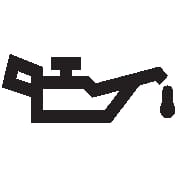
Engine oil pressure warning
Oil can: stop safely and switch the engine off.Low oil pressure can prevent proper lubrication. If this warning illuminates while the engine is running, move to a safe location, shut the engine down and check the oil level according to the handbook. Continued driving can cause engine failure.Add the correct oil only if required, without overfilling. If the warning remains, oil is unavailable or the level is already correct, arrange assistance. A normal oil quantity does not guarantee adequate pressure. This is not the same as a routine oil-change reminder.
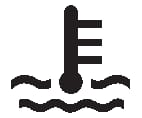
Engine coolant temperature warning
Thermometer over waves: engine overheating.This warning means coolant temperature is extremely high. Stop driving and follow the overheating procedure for the vehicle. Steam, escaping coolant or severe engine distress requires particular care; do not attempt to continue to the next destination.Wait for the system to cool before inspecting fluid levels and never open a hot coolant cap. A leak or recurring warning needs diagnosis. Repeatedly refilling without identifying the cause can leave the engine at risk of further damage.
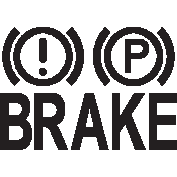
Parking brake and brake fluid warning
Brake symbol: applied parking brake or low brake fluid.The light can remain illuminated while the parking brake is applied. If it stays on after the brake is released, stop safely and check the fluid level and displayed message. The manual identifies low brake fluid as a possible cause.If fluid is leaking, the warning remains or the brakes do not operate normally, do not drive the vehicle. Arrange inspection or recovery. Topping up alone is not a repair: a loss of fluid or another braking problem must be investigated.
Charging system warning
Battery symbol: alternator or electrical charging fault.The battery-shaped warning relates to the charging system, not just the condition of the battery. Stop somewhere safe and switch the engine off. The handbook calls for checking the alternator drive belt and arranging inspection if the charging problem remains.Only inspect components when it is safe and the engine is stopped. A replacement battery will not necessarily fix a belt, wiring or alternator fault. Continued driving can eventually exhaust electrical power and leave the vehicle unable to operate or restart normally.
Airbag warning light
Seated person and circle: restraint-system problem.After its normal startup check, the airbag warning should go out. A persistent light can indicate a malfunction in the Supplemental Restraint System. We cannot tell from the icon alone which component or protection is affected.Arrange professional inspection promptly and continue to wear seat belts correctly. Do not probe airbag connectors, disconnect under-seat wiring or clear codes simply to remove the warning. The intended protection is only restored when the underlying fault has been correctly repaired.
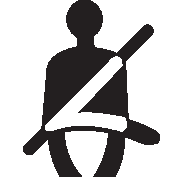
Seat belt reminder
Seat belt symbol: fasten the relevant belt.Check that every occupant has a correctly positioned and securely latched seat belt. If the display identifies a seating position, inspect that seat rather than assuming the reminder is only for the driver.Objects on a passenger seat may influence occupant detection. Secure luggage appropriately and check any persistent false warning. Using a dummy buckle or bypassing the reminder does not solve a sensor or buckle issue and removes an important safety prompt.
Braking and steering warning lights
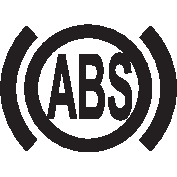
ABS warning light
ABS: anti-lock braking malfunction.A persistent ABS warning means the anti-lock function may be unavailable. The hydraulic brakes can still operate, but wheel locking during hard braking can affect control. Increase following distance and arrange inspection as soon as possible.If the red brake warning also appears, or pedal feel changes, stop safely and obtain assistance. Do not assume that advice for an isolated amber ABS light applies when the regular braking system is also reporting a problem.
ABS and brake warnings together: EBD
Combined ABS and brake symbols: braking may not work normally.These two lights together can indicate a problem involving Electronic Brake Force Distribution or the braking systems it depends on. Hyundai warns that sudden braking can create an unexpected and dangerous situation in this condition.Avoid high speed and abrupt braking while reaching a safe stopping place. Arrange prompt inspection, and recovery if braking performance is uncertain. Other symptoms can include changes in steering effort or instrument readings; report the complete group of warnings rather than only the ABS light.
Electronic parking brake warning
EPB lettering: parking-brake system needs attention.This malfunction lamp is different from the normal red indication that the parking brake is applied. A persistent EPB warning needs inspection. Hyundai also notes that an ESC problem can illuminate it without proving a separate parking-brake malfunction.Read the other messages and verify whether the brake actually releases or applies. Do not force the vehicle to move against an engaged brake. If operation is unreliable, seek help and make sure the Palisade is securely parked before leaving it.
Motor Driven Power Steering warning
Steering wheel warning: electric steering assistance fault.MDPS is Hyundai’s term for the motor-driven steering assistance system. A warning that remains on after its initial check indicates that the system requires inspection. Steering effort may change, so pay attention to how the vehicle responds.Reduce speed and pull over safely if steering becomes difficult or unpredictable. Do not assume a restart that temporarily clears the lamp has repaired the fault. Record any brake, ABS or electrical warnings appearing at the same time because they may help explain the cause.
AUTO HOLD indicator
White: selected. Green: holding. Yellow: malfunction.The AUTO HOLD colors describe different states. White confirms the function is selected; green means it is holding the stopped vehicle after brake-pedal operation. Yellow indicates a problem that requires attention.If the status is uncertain or a fault appears, control the vehicle with the brake pedal. AUTO HOLD is not a substitute for properly parking the vehicle. Confirm the gear position and parking brake before getting out, especially on an incline or when any brake-system warning is present.
Engine, fuel and tire-pressure warnings
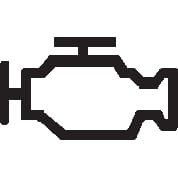
Check engine light: Malfunction Indicator Lamp
Engine outline: engine, emissions or powertrain fault.The MIL can identify a problem with the engine, emissions-control system or powertrain. The light itself does not name a failed sensor or prove a particular repair is necessary. Diagnostic information and operating symptoms are needed.Arrange inspection promptly and report rough running, hesitation, unusual smells or loss of power. Avoid heavy loading while the fault is unresolved. If the vehicle runs severely badly or cannot maintain a safe speed, stop and seek assistance rather than continuing solely because the warning is amber.
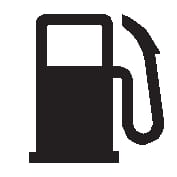
Low fuel warning
Fuel pump: refuel promptly.This light indicates that the fuel tank is nearly empty. Driving repeatedly with very low fuel can cause misfiring and damage the catalytic converter. Plan a suitable stop instead of using the last range estimate as a guaranteed distance.Traffic, speed, hills and load affect how far the remaining fuel will take us. Refuel with the specified grade. If the engine runs abnormally after running low or empty, do not assume that adding fuel automatically resolves every resulting warning.
Low tire pressure or TPMS warning
Tire outline: inspect the tires and check pressures.A steady lamp can indicate one or more significantly underinflated tires, with the affected position shown on the display. Reduce speed smoothly, stop safely and inspect for damage. Use a reliable gauge and the cold-pressure values on the vehicle label.Flashing for around 60 seconds followed by steady illumination can indicate a TPMS malfunction; the handbook also describes repeated flashing patterns. Monitoring may be unreliable in that state. Correcting pressure cannot repair a failed sensor, while resetting a system cannot repair a puncture.
Master warning triangle
Triangle and exclamation mark: read the display.The master warning draws attention to another condition. The Palisade manual lists possible causes involving collision assistance, blocked radar, blind-spot assistance, headlights, Smart Cruise Control, TPMS and certain drivetrain equipment.Read the specific message rather than replacing parts based on the triangle. A blocked sensor requires different checks from a confirmed malfunction. Follow the highest-priority instruction, record persistent wording for the workshop and do not assume all master warnings have the same severity.
Traction, AWD and downhill-control symbols
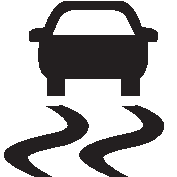
Electronic Stability Control indicator
Skidding car: intervention or malfunction.A flashing ESC symbol can mean the system is actively intervening. Ease off the accelerator and adapt to the road conditions. The tyres still determine the available grip, even while stability assistance is working.A steady light after the normal check can indicate a fault. Have the system inspected and do not assume normal assistance remains available. Repeated traction intervention should also prompt us to consider speed, surface conditions, load and tire condition instead of simply switching the system off.
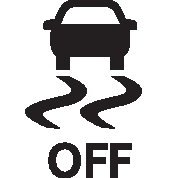
ESC OFF indicator
Skidding car with OFF: stability control disabled or reduced.This indicator normally appears after the ESC OFF control is used. The degree of deactivation depends on the vehicle and control operation, so check the handbook rather than assume every assistance function has been removed.Restore the normal setting for ordinary driving. If the light appears unexpectedly, cannot be cleared through the correct control or accompanies a malfunction message, arrange inspection. Disabling the system is not a repair for a persistent warning or poor traction.
All Wheel Drive warning
AWD symbol: all-wheel-drive malfunction.This warning indicates a problem with the AWD system on an equipped Palisade. It is not simply confirmation that all-wheel traction is operating. Have the system inspected and avoid relying on normal torque distribution until the cause is known.Do not continue into demanding slippery terrain or deep snow just because the vehicle still moves. Report any unusual vibration, noises or recent tire changes. The lamp alone cannot distinguish a sensor problem from a mechanical or electrical drivetrain fault.
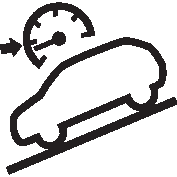
Downhill Brake Control indicator
Slope symbol: selected, operating or faulty descent assistance.The DBC light comes on when the system is activated and flashes during operation. A yellow indication can mean a malfunction. Match the color and behavior to the handbook before relying on assistance for a descent.Maintain a suitable speed and be ready to control the vehicle yourself. If a fault appears, avoid a slope that cannot be negotiated safely without assistance. Downhill control cannot create tire grip, remove obstacles or make every steep surface suitable for the Palisade.
Driver-assistance warning lights
Forward Safety warning
Forward-collision symbol: disabled, unavailable, faulty or intervening.In the covered manual, a continuous yellow warning can indicate that the relevant Forward Safety function is off, disabled or malfunctioning. A blinking red indication can appear during intervention. The accompanying message helps distinguish these situations.React immediately to a developing collision risk and keep full control of braking. Once parked, check any indicated sensor obstruction as instructed. Persistent malfunction messages need inspection. Never deliberately approach a person or object to test automatic emergency braking.
Emergency Steering warning
Steering-safety symbol: collision-assistance status.This warning concerns the relevant Forward Collision-Avoidance Assist steering-safety function. It is separate from the MDPS warning for the vehicle’s basic power-steering system. Yellow can indicate disabled or malfunctioning assistance; blinking red can indicate intervention on the covered version.Keep your hands on the wheel and control the vehicle. Read the exact message and equipment description before diagnosing a steering fault from the icon alone. If an explicit malfunction remains, arrange inspection and do not rely on the affected assistance.
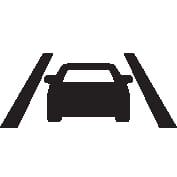
Lane Safety indicator
Lane graphic: check color and operating state.Green indicates that Lane Keeping Assist operating conditions are satisfied, while flashing green can show intervention. Gray means conditions are not satisfied. Yellow can indicate that Lane Safety is disabled or a malfunction is detected.Watch the road and maintain lane position yourself. Poor markings, weather or camera obstruction can affect availability without proving hardware failure. If a yellow indication is unexpected, check the selected settings and message, then have persistent faults inspected.
LED headlight warning
Lamp warning: headlight system malfunction.This warning indicates a problem with the LED headlight system. Hyundai advises inspection if it remains on and notes that continuing with the warning can reduce LED headlight life. It should not be confused with the normal lights-on indicator.Check actual exterior lighting before a night journey. Do not assume that one lamp appearing bright means the complete system is safe. An LED unit or its controls may require a different repair from replacing an ordinary bulb.
Icy road warning
Snowflake: conditions may allow ice.The icy-road reminder can appear around an outside temperature below 40°F or 4°C. It warns about possible conditions rather than measuring whether the road surface is icy. Bridges and shaded areas can be particularly slippery.Reduce speed, allow additional stopping distance and avoid abrupt acceleration, braking or steering. Ice can still exist when the displayed temperature is higher, so the absence of the symbol does not guarantee traction. This reminder normally does not indicate a vehicle malfunction.
Starting and convenience indicators
Immobilizer and smart key indicator
Car and key: key recognition or security-system status.Brief illumination can confirm that the vehicle has detected the smart key. A missing-key condition, failed recognition or immobilizer problem can produce different illumination patterns. Read the displayed message before deciding that the key battery is the only possible cause.Check that an authorized key is inside the vehicle and use the handbook’s backup starting procedure when appropriate. Persistent recognition problems need inspection. Do not attempt to bypass the immobilizer or assume a replacement key will work without the required programming.
AUTO STOP and Idle Stop and Go indicator
White: conditions met. Green: active. Yellow: fault.The AUTO STOP indicator relates to Idle Stop and Go, which can stop the engine during suitable stationary periods. In the covered manual, white shows that operating conditions are satisfied, green indicates activation and yellow indicates a malfunction.An automatically stopped engine can restart, so switch the vehicle off correctly before servicing it or leaving it unattended. Read any requested action. A normal automatic stop is different from an engine stall, and the indicator alone should not be used to diagnose a battery fault.
Normal lighting symbols
High beam indicator
Blue headlamp: main beams are on.This indicator appears when the headlights are in the high-beam position or when the flash-to-pass function is used. It is normally an operating indication rather than a warning that something needs repair.Dip the headlights whenever they could dazzle approaching traffic or drivers ahead. If the symbol remains unexpectedly, check the stalk and automatic-lighting settings. The blue main-beam symbol is different from the indicator showing that High Beam Assist is ready.
Low beam indicator
Dipped-headlamp symbol: low beams selected.This light confirms low-beam headlight operation. It helps us verify the selected setting when entering darkness or poor visibility. It is not an LED-headlight malfunction warning.Do not assume daytime running lamps provide the same full lighting arrangement. Check the switch position and actual road illumination if visibility seems poor. A normal dashboard indicator does not prove every exterior lamp is undamaged, correctly aimed or free of dirt.
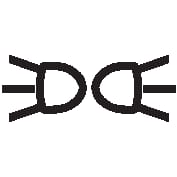
Light ON indicator
Paired lamps: position lamps or headlights operating.The lights-on indicator confirms that the position lamps or headlights are on. It does not mean that the high beams are selected, and it should not be confused with a headlamp malfunction symbol.Use the appropriate lighting for the conditions and check actual lamp operation if something appears wrong. When parked, make sure the selected setting will not leave unnecessary lighting on. The indicator describes an operating state, not the condition of every lamp in the circuit.
High Beam Assist indicator
Automatic headlamp symbol: ready or operating.In the covered handbook, white identifies readiness and green identifies High Beam Assist operation. The system can switch to low beams when it detects traffic ahead. This differs from the blue indicator confirming actual main-beam illumination.Continue supervising the lights and override automatic operation when needed. Weather, road layout and detection conditions can affect performance. If a malfunction message appears, use the correct manual lighting setting and have persistent faults inspected.
Turn signal and hazard indicators
Flashing arrows: signaling or hazards operating.Flashing arrows normally confirm turn-signal operation. Both directions flash with the hazard lights. A lamp that stays on without flashing, flashes unusually rapidly or fails to illuminate can indicate a signaling problem.Check the exterior indicators when safely parked and arrange repair if required. Cancel the signal after completing a maneuver. Hazard lights help alert other drivers to a problem, but they do not make a dangerous stopping location safe; move clear of traffic whenever possible.
Why several Palisade warning lights can appear together
One underlying problem can affect several functions, so multiple lamps do not always mean several independent failures. The handbook also notes that some lights may briefly illuminate during an ISG restart because of a momentary low-voltage condition. That specific temporary behavior is different from warnings that remain on.
Do not dismiss persistent brake, steering or engine warnings as “just the battery.” Record the sequence, duration and messages. If control, braking or engine operation is abnormal, stop safely and obtain assistance.
Can we drive with a Palisade warning light on?
There is no universal safe distance. Low oil pressure requires a safe stop and engine shutdown; a low-fuel reminder requires prompt refueling; an assistance malfunction may leave manual control available. The exact message and symptoms determine the action.
Identify the symbol and read the complete warning.
Stop safely if braking, steering, temperature or engine operation is affected.
Photograph the display once parked.
Record when it appeared and any recent service or tire work.
Contact a workshop or roadside assistance with the exact information.
Avoid disconnecting the battery or erasing codes merely to remove the lights. Those actions can delete useful evidence without repairing the fault. A warning that disappears after restarting may still need diagnosis if it returns or was accompanied by serious symptoms.
Conclusion
Understanding Hyundai Palisade warning lights means combining the symbol, color, behavior and message. Act immediately on oil-pressure, overheating and serious braking faults, distinguish normal indicator states from malfunctions, and use the correct model-year handbook. A reliable repair addresses the cause rather than simply clearing the display.
Frequently asked questions
1. What does the triangle with an exclamation mark mean?
It is the master warning light. Read the instrument display for the specific condition. The triangle can accompany several different systems and does not identify a failed part by itself.
2. Can I drive with the red oil light on?
Stop safely and switch the engine off if the oil-pressure light appears while running. Check the level as instructed, but remember that a correct level does not guarantee pressure. Obtain assistance if the warning remains.
3. Why is the tire-pressure light flashing?
Flashing for about a minute and then remaining on can indicate a TPMS malfunction. Check tire pressures manually and arrange inspection. A monitoring fault is different from an ordinary low-pressure condition.
4. What do the AUTO HOLD colors mean?
White means selected, green means the vehicle is being held and yellow indicates a malfunction. If operation is uncertain, use the brake pedal and secure the vehicle correctly before leaving it.
5. Does a green AUTO STOP light mean the engine has stalled?
No. It normally indicates Idle Stop and Go activation. The engine can restart automatically. A yellow warning or an accompanying malfunction message needs a different response and should be investigated.
If you want to know other articles similar to Hyundai Palisade Warning Lights you can visit the category Service and Parts.
Auto Guide
I show you the best reviews of all car brands, the information we collect and show is verified by our mechanics, we hope that everything you read here is useful to buy the car of your dreams



























More content of your interest