

BMW M5 Years to Avoid: The Generations and Model Years We’d Approach Carefully

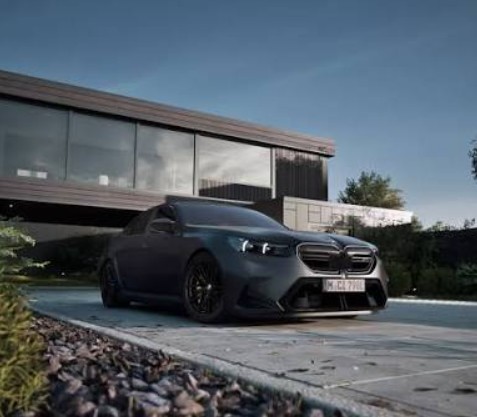
Buying a used BMW M5 can feel like discovering a supercar hiding inside a business sedan. One moment we are cruising quietly with four adults and luggage; the next, the accelerator turns the car into something that seems determined to rearrange the horizon.
That combination explains why used M5s can be incredibly tempting. Depreciation puts cars that once carried premium price tags within reach of ordinary performance-car shoppers.
But there is a catch.
A cheap BMW M5 can become an extraordinarily expensive BMW M5.
When researching BMW M5 years to avoid, we shouldn't simply look for a list of bad model years. Mileage, maintenance history, modifications, previous owners, and preventative repairs often matter just as much as the number printed on the registration document.
Still, certain generations deserve substantially more caution than others.
The E60 M5, particularly cars whose major preventative work hasn't been completed, sits at the top of our caution list. Early F10 M5s, especially around the 2013 model year in the U.S., also deserve careful inspection. Meanwhile, later F10 and F90 cars generally represent less intimidating ownership propositions, although no M5 should ever be treated like an inexpensive ordinary sedan.
Let's break down the generations, problematic years, expensive failure points, and the M5s we'd be more comfortable buying.
Content in this publication
- Quick Answer: Which BMW M5 Years Should We Avoid?
- Why the BMW M5 Requires a Different Kind of Reliability Research
- 2006–2010 BMW M5: The E60 Is the Biggest Gamble
- The E60 M5 Rod-Bearing Problem
- The SMG Transmission Makes Some E60s Even Riskier
- Should We Avoid the 2006 BMW M5?
- Are 2007–2009 BMW M5 Models Better?
- 2013 BMW M5: Early F10 Cars Deserve Extra Scrutiny
- 2014 BMW M5: Better, but Not Automatically a Safe Bet
- 2015 BMW M5: Check the Driveshaft Recall History
- Is the 2016 BMW M5 a Better F10 to Buy?
- 2018 BMW M5: Should We Avoid the First F90?
- 2019–2020 BMW M5: A Used-M5 Sweet Spot?
- 2021–2023 BMW M5: Among the Safer Modern Choices
- What About the New G90 BMW M5?
- Which BMW M5 Generation Is the Most Unreliable?
- Which Used BMW M5 Years Would We Prefer?
- What Is the Best BMW M5 for Reliability?
- How Much Maintenance History Should a Used M5 Have?
- Modifications Can Turn a Good M5 Into One We'd Avoid
- Always Get a Pre-Purchase Inspection
- Check the VIN for Outstanding Recalls
- BMW M5 Red Flags That Would Make Us Walk Away
- Is a High-Mileage BMW M5 Worth Buying?
- How Much Money Should We Keep for Repairs?
- E39 M5: Old, but Worth Mentioning
- Does the BMW M5 Become Reliable After a Certain Year?
- Our Final Verdict on BMW M5 Years to Avoid
- Frequently Asked Questions
Quick Answer: Which BMW M5 Years Should We Avoid?
If we're shopping for a used M5 and want to reduce our exposure to major repair bills, these are the cars we'd investigate especially carefully:
| BMW M5 | Approximate Generation | Our Risk Level | Main Concerns |
|---|---|---|---|
| 2006–2010 M5 | E60 | Very high | Rod bearings, SMG, throttle actuators, VANOS |
| 2013 M5 | Early F10 | High | Early-production issues, oil-pump recall exposure, cooling/engine complexity |
| 2014–2015 M5 | F10 | Moderate-high | Turbo V8 heat, oil leaks, cooling components, drivetrain wear |
| 2016 M5 | Later F10 | Moderate | Better-developed platform but expensive aging components |
| 2018 M5 | Early F90 | Moderate | First-year complexity and electronics |
| 2019–2023 M5 | F90 | Moderate-low | Generally stronger, but expensive maintenance remains |
| 2025+ M5 | G90 | Too new to judge | Long-term reliability not established |
BMW identifies seven generations of the M5, beginning with the E28 in 1985 and continuing through the current G90 generation introduced in 2024. The E60 arrived in 2005, the F10 in 2011, and the F90 in 2017 on the global timeline.
Keep in mind that exact model-year availability varies by country. A generation introduced in Europe during one calendar year may appear as a later model year in North America.
Why the BMW M5 Requires a Different Kind of Reliability Research
We can't judge an M5 the same way we'd judge a Toyota Camry or Honda Accord.
An M5 contains highly stressed engines, sophisticated suspension hardware, massive brakes, complicated cooling systems, performance transmissions, advanced electronics, and components designed to cope with tremendous horsepower.
Even when everything works perfectly, maintenance costs are significant.
Then age enters the picture.
Rubber deteriorates. Gaskets harden. Cooling hoses become brittle. Electronic modules fail. Suspension bushings wear. Turbochargers operate through thousands of extreme heat cycles.
A neglected M5 isn't merely an old luxury sedan. It is an old high-performance machine with supercar-grade mechanical complexity.
That's why the cheapest example for sale frequently isn't the bargain it appears to be.
Maintenance History Matters More Than Mileage
Suppose we find two E60 M5s.
Car A has 70,000 miles and incomplete maintenance records.
Car B has 105,000 miles but documented rod-bearing replacement, throttle-actuator work, recent fluids, refreshed suspension, and detailed invoices.
Which one would we prefer?
Probably Car B.
With performance BMWs, documented preventative maintenance can be much more valuable than unusually low mileage.
Low Mileage Doesn't Automatically Mean Safe
A low-mileage M5 might have:
- Spent years sitting unused
- Been driven repeatedly on short trips
- Received maintenance based only on mileage instead of age
- Been driven aggressively before reaching proper operating temperature
- Developed leaking seals or aging rubber components
- Missed preventative repairs because the owner assumed low mileage meant nothing could fail
We want evidence, not assumptions.
2006–2010 BMW M5: The E60 Is the Biggest Gamble
If our search is specifically about BMW M5 years to avoid, the E60 deserves the longest conversation.
And that's painful to say because the E60 is arguably one of the most fascinating M5s ever made.
BMW gave it the S85, a naturally aspirated 5.0-liter V10 capable of revving to approximately 8,250 rpm. BMW rated the European version at 507 hp, making it radically different from both the V8-powered E39 before it and the turbocharged F10 that followed.
Driving one can feel theatrical.
Owning the wrong one can feel equally theatrical—but for entirely different reasons.
Why We Wouldn't Buy an E60 M5 Blindly
The E60 M5 has several famous mechanical vulnerabilities:
- Connecting-rod bearing wear
- Throttle-actuator failures
- VANOS-related problems
- Oil-pressure concerns
- SMG hydraulic-system problems
- Clutch wear on SMG-equipped cars
- Oil leaks
- Cooling-system deterioration
- Expensive electronic faults
BMW-focused specialists and enthusiasts frequently identify rod-bearing wear, SMG issues, throttle actuators, and VANOS-related concerns among the major weaknesses of the platform.
None of those problems automatically makes every E60 M5 unreliable.
Together, however, they create one of the most maintenance-sensitive modern BMWs.
The E60 M5 Rod-Bearing Problem
Rod bearings are probably the first words we'll hear when researching an E60.
The engine's connecting-rod bearings can experience accelerated wear. If deterioration progresses far enough, internal engine damage may follow.
And replacing bearings preventatively is considerably less frightening than replacing an S85 V10.
BMW-focused technical discussions and specialist coverage consistently identify premature rod-bearing wear as one of the S85's best-known concerns.
Should We Automatically Avoid Every E60 M5?
No.
We'd divide them into two groups.
An E60 with incomplete records, unknown bearing history, deferred maintenance, warning lights, or suspiciously cheap pricing belongs in the avoid unless you're prepared for a project category.
An E60 with extensive records from reputable BMW specialists, documented preventative work, clean diagnostics, and a strong pre-purchase inspection is a completely different proposition.
The model year matters.
The individual car matters more.
What We Want to See Before Buying an E60
We'd look for documentation covering:
- Rod-bearing replacement
- Throttle-actuator repair or replacement
- VANOS inspection or repairs
- SMG hydraulic-pump work
- Clutch replacement where applicable
- Regular engine-oil service
- Differential and transmission fluids
- Cooling-system maintenance
- Engine mounts
- Suspension components
One documented used E60 highlighted by BMWBLOG, for example, had already received rod bearings, VANOS-related work, engine mounts, transmission work, an SMG pump, and a clutch—illustrating just how important major preventative maintenance becomes on these cars.
That is the sort of paperwork we like seeing.
The SMG Transmission Makes Some E60s Even Riskier
Most E60 M5s were equipped with BMW's SMG III automated manual transmission.
It isn't a conventional automatic.
Think of it more like a computer operating the clutch and shifting a manual gearbox on our behalf.
When working properly, it adds character.
When hydraulic components begin failing, character turns into invoices.
Common SMG Concerns
Potential trouble spots include:
- Hydraulic pump failure
- Pump motor problems
- Hydraulic-pressure faults
- Clutch wear
- Gear-position sensors
- Jerky low-speed operation
- Expensive diagnosis when multiple faults appear
BMWBLOG notes that SMG III is particularly associated with hydraulic-pump trouble.
The Six-Speed Manual Is Desirable, but Not Maintenance-Free
U.S.-market shoppers may encounter the rare six-speed manual E60 M5.
Removing the SMG eliminates one major layer of complexity.
But it does nothing to eliminate S85 engine concerns.
Rod bearings, throttle actuators, VANOS components, leaks, cooling-system parts, and ordinary age-related repairs still exist.
A manual E60 is simpler.
It isn't simple.
Should We Avoid the 2006 BMW M5?
For shoppers prioritizing reliability, we would approach a 2006 BMW M5 cautiously.
It combines early-production age with the full mechanical complexity of the E60 platform.
By now, however, chronological age matters almost as much as model-year differences.
A meticulously maintained 2006 M5 can be a better purchase than a neglected 2010.
So we wouldn't reject 2006 solely because of the badge on the title. We'd reject one because the service history fails to demonstrate that expensive vulnerabilities have been addressed.
Are 2007–2009 BMW M5 Models Better?
Not enough to remove them from the high-risk category.
The magnificent V10 remains.
So do its major known weak points.
By 2026, we're dealing with vehicles approaching two decades of age. That means even supposedly "better" years are vulnerable to deterioration unrelated to original factory defects.
Bushings, hoses, seals, electronic modules, pumps, sensors, suspension components, and interior electronics can all enter the ownership equation.
What About the 2010 BMW M5?
The final model year can be attractive because later-production cars benefit from years of incremental refinement.
That makes a 2010 one of the E60s we'd examine first.
But we'd still require essentially the same inspection standards.
A late E60 without rod-bearing documentation doesn't suddenly become safe because it was built near the end of production.
2013 BMW M5: Early F10 Cars Deserve Extra Scrutiny
The F10 M5 completely changed personality.
The naturally aspirated V10 disappeared.
In its place arrived a 4.4-liter twin-turbocharged V8.
BMW states that the F10 generation produced roughly 560 hp in standard form and up to 575 hp in Competition specification, depending on version.
The new engine delivered huge torque and improved everyday usability.
But it also introduced turbochargers, substantially more heat, additional cooling requirements, and another level of mechanical complexity.
Why 2013 Is One of the F10 M5 Years We'd Inspect Closely
The 2013 M5 is particularly notable because certain cars were involved in an engine oil-pump safety recall.
NHTSA documentation for campaign 12V-475 identifies 2013 BMW M5, M6 Coupe, and M6 Convertible models in an engine oil-pump recall affecting 696 vehicles overall.
That doesn't mean every 2013 M5 is defective today.
You may be interested in reading Subaru Impreza Trim Levels: Complete Guide to Sport, RS, and Earlier Models
Recall work may have been completed many years ago.
But it gives us another reason to verify the exact VIN and confirm all applicable recalls have been performed.
F10 M5 Problems We Would Check
On any used F10, we'd pay attention to:
- Cooling-system condition
- Oil leaks
- Turbocharger-related issues
- Ignition coils and spark plugs
- Fuel-system components
- Engine mounts
- DCT operation
- Differential noise
- Suspension wear
- Battery and charging health
- Electronic faults
- Signs of aggressive tuning
The last item matters enormously.
F10 M5s respond extremely well to software tuning.
Unfortunately, extra horsepower also increases stress.
A heavily modified car with unknown ownership history can resemble a gym athlete who claims never to skip recovery days while limping into the room.
We'd want proof.
2014 BMW M5: Better, but Not Automatically a Safe Bet
The 2014 M5 wouldn't be at the top of our avoid list, but neither would we shop casually.
Some 2013–2014 M5s were also included in a U.S. recall concerning rear reflex reflectors, according to NHTSA documentation.
That particular recall isn't remotely as frightening as an internal-engine problem, but it reinforces a basic used-BMW rule: check every VIN individually.
More importantly, a 2014 F10 is now old enough for maintenance history to dominate the conversation.
What Can Make a 2014 F10 Expensive?
The engine compartment runs hot.
Heat isn't a turbocharged performance engine's best friend.
Over time we can see deteriorating hoses, seals, gaskets, plastic fittings, and cooling components. Add worn suspension, large performance brakes, expensive tires, and aging electronics, and the cost of bringing a neglected car back to excellent condition climbs quickly.
2015 BMW M5: Check the Driveshaft Recall History
Certain F10 M5 vehicles produced between September 3 and December 5, 2014 were covered by a driveshaft recall campaign that called for inspection and, where necessary, driveshaft replacement.
Again, we're not suggesting every 2015 M5 is dangerous or unreliable.
We're suggesting something much simpler:
Check the VIN.
Never trust a seller's statement that "all recalls are done."
Verify it.
NHTSA allows U.S. owners and shoppers to search a vehicle's recall status using the VIN.
Is the 2016 BMW M5 a Better F10 to Buy?
Generally, a later F10 is where we'd start if we wanted this generation.
By the end of a vehicle's production cycle, manufacturers have usually accumulated years of real-world information and implemented running improvements.
The 2016 M5 still possesses the same basic ingredients that make the F10 expensive.
But we'd usually prefer a clean late-production car over an early example when mileage, price, service history, and condition are otherwise comparable.
Why Service Records Still Beat Model Year
Imagine we have a choice:
A 2016 M5 with six owners, an aftermarket tune, missing maintenance records, mismatched tires, and suspicious diagnostic codes.
Or a stock 2014 owned for years by one enthusiast with comprehensive invoices.
We're taking a closer look at the 2014.
Every time.
2018 BMW M5: Should We Avoid the First F90?
The F90 marked another dramatic turning point.
BMW retained the 4.4-liter twin-turbo V8 but introduced the M xDrive all-wheel-drive system.
BMW rated the standard F90 at 600 hp, while Competition versions reached 625 hp in global specifications.
Performance became astonishing.
We're talking about a luxurious executive sedan capable of acceleration that would've embarrassed many exotic cars not long before.
First-Year Cars Always Deserve a Little More Attention
The 2018 M5 was an early F90.
We wouldn't call it a year that must be avoided.
But if a 2018 and a similarly maintained later F90 cost roughly the same amount, we'd normally lean toward the newer example.
Why?
Because early production often carries a greater chance of software updates, revised components, or small engineering changes that become standardized later.
What We Would Inspect on an F90 M5
Pay particular attention to:
- Coolant leaks
- Cooling expansion components
- Oil leaks
- Transfer-case behavior
- Front and rear differential operation
- Transmission servicing
- Suspension noise
- Brake condition
- Battery voltage
- Driver-assistance electronics
- Previous tuning
- Tire matching across all four corners
On an all-wheel-drive performance car, mismatched tires deserve particular attention.
Different rolling circumferences can stress drivetrain components.
Cheap tires on an M5 are also a clue.
If an owner saved money on the four contact patches controlling 600-plus horsepower, where else did they save money?
2019–2020 BMW M5: A Used-M5 Sweet Spot?
For many buyers, these years strike an appealing balance.
We get F90 performance and modern technology without paying new-M5 money.
They aren't inexpensive cars to maintain, but they avoid some of the drama associated with owning an E60.
That difference matters.
An F90 is complicated.
An E60 can occasionally feel like mechanical roulette.
Why We Like Later F90 Cars
Relative advantages include:
- Proven turbocharged V8 architecture
- Excellent automatic transmission
- M xDrive traction
- More modern cooling and engine management
- Strong everyday usability
- Fewer infamous catastrophic weaknesses than the S85 V10 era
"Fewer" doesn't mean "none."
We still need a sizeable maintenance budget.
2021–2023 BMW M5: Among the Safer Modern Choices
If reliability is our highest priority and budget allows it, later F90 examples are among the M5s we'd be happiest to own.
The facelifted versions combine astonishing performance with years of platform development.
They're still filled with expensive parts.
But compared with purchasing an unknown-history E60, the ownership equation looks much friendlier.
What Could Still Go Wrong?
Any 600-plus-horsepower German luxury sedan can generate expensive repairs.
Potential costs include:
- Adaptive suspension components
- Large brake rotors and pads
- Cooling hardware
- Turbocharger-related components
- Electronics
- Sensors
- All-wheel-drive hardware
- Differential components
- Transmission service
- Premium tires
Even normal consumables cost more.
That's the invisible part of M5 ownership.
Reliability isn't merely about whether the engine explodes.
It's about the total cost required to keep the car performing as BMW intended.
What About the New G90 BMW M5?
BMW introduced the seventh-generation G90 M5 in 2024, adding an electrified plug-in hybrid powertrain to the M5 formula.
As of 2026, it is simply too early to create a meaningful long-term reliability verdict.
This is important for SEO articles because it's tempting to call something "reliable" based on only a year or two of ownership data.
We won't.
Long-term issues often emerge after warranties expire, mileage accumulates, batteries age, and components experience thousands of heat cycles.
So for now, the G90 belongs in the too new to judge category.
Which BMW M5 Generation Is the Most Unreliable?
For us, the E60 M5 is the clear answer.
Not because it is a bad car.
Quite the opposite.
It might be one of BMW M's most memorable creations.
A naturally aspirated V10 sedan revving beyond 8,000 rpm is the sort of machine that probably won't exist again.
But complexity, age, S85 rod-bearing concerns, throttle actuators, VANOS systems, and SMG problems create an ownership profile that demands dedication. BMW-specialist coverage repeatedly identifies those components as key E60 trouble spots.
It's the M5 we'd buy with our heart.
It's also the M5 we'd inspect with our brain switched fully on.
Which Used BMW M5 Years Would We Prefer?
If reliability were important, our shopping order would roughly look like this:
- 2021–2023 F90 M5 – excellent combination of maturity, performance, and modern engineering.
- 2019–2020 F90 M5 – strong value if condition and records are excellent.
- 2016 F10 M5 – appealing late-production F10 when properly maintained.
- 2014–2015 F10 M5 – potentially worthwhile but requires careful history checks.
- 2018 F90 M5 – impressive, though we'd inspect an early-production example carefully.
- 2013 F10 M5 – worth considering only after detailed VIN, recall, and service-history checks.
- 2006–2010 E60 M5 – enthusiast purchase rather than low-risk transportation.
This isn't a scientific reliability ranking.
It is a practical used-buying hierarchy based on complexity, known weaknesses, age, and the amount of risk we'd willingly accept.
What Is the Best BMW M5 for Reliability?
Among relatively modern used models, we'd focus on a later F90 M5.
Why?
You may be interested in readingSubaru Impreza Trim Levels: Complete Guide to Sport, RS, and Earlier ModelsYou may be interested in reading
Subaru Impreza Years to Buy: The Best Model Years for a Smart PurchaseIt provides supercar acceleration without some of the notorious engine and transmission concerns that define the E60 ownership experience.
We'd particularly like a stock example with:
- Complete service history
- No accident history
- Original engine software
- Matching premium tires
- Regular fluid changes
- No unexplained warning lights
- Professional pre-purchase inspection
A boringly documented M5 is exciting enough.
We don't need additional excitement from surprise repair bills.
How Much Maintenance History Should a Used M5 Have?
A thick folder is beautiful.
We want invoices, not merely stamps in a booklet.
The records should ideally reveal what was performed, when it was performed, at what mileage, and by whom.
Important Records to Look For
We'd want evidence covering:
- Engine-oil changes
- Spark plugs
- Ignition coils when replaced
- Brake-fluid service
- Transmission servicing
- Differential fluid
- Cooling-system repairs
- Suspension repairs
- Brake replacement
- Tires
- Battery replacement
- Recalls
- Known generation-specific preventative repairs
Service Gaps Are a Warning
A three-year hole in the maintenance history deserves questions.
Maybe the owner serviced the car independently.
Maybe receipts were lost.
Or maybe nothing happened.
Never assume the most convenient explanation when buying a performance car.
Modifications Can Turn a Good M5 Into One We'd Avoid
BMW M5 engines are popular tuning platforms.
That doesn't make modified cars inherently bad.
But modifications change our risk calculation.
An extra 100 horsepower isn't created by positive thinking. More boost and torque create additional thermal and mechanical stress.
Mods That Make Us Look More Closely
These include:
- ECU tunes
- Downpipes
- Upgraded turbochargers
- Aggressive exhaust changes
- Lowering springs
- Aftermarket suspension controllers
- Drag-racing tires
- Methanol injection
- Removed emissions equipment
- Launch-control-heavy ownership history
A professionally modified and meticulously maintained M5 can be fantastic.
An anonymously tuned car purchased from an auction can be a financial trap wearing carbon-fiber trim.
Always Get a Pre-Purchase Inspection
For an ordinary used car, skipping a PPI may be risky.
For an M5, we think it's borderline reckless.
A proper BMW specialist should inspect more than whether the headlights work.
We want diagnostic scans, fluid leaks, underbody inspection, suspension condition, brake measurement, tire condition, cooling-system checks, drivetrain behavior, and an evaluation of generation-specific weak points.
Ask the Shop to Scan Every Module
Modern BMWs store enormous amounts of diagnostic information.
A seller can clear a warning light.
That doesn't guarantee the underlying problem disappeared.
BMW-capable diagnostic equipment may reveal stored, pending, or historical faults that a generic code reader misses.
Check the VIN for Outstanding Recalls
Recall status should always be verified before purchase.
For U.S. cars, NHTSA provides a VIN-based recall lookup. The agency notes that VIN searches can identify unrepaired safety recalls, although completed recalls and certain older campaigns may not appear in the same way.
That nuance matters.
A clean current recall result does not substitute for historical service documentation.
BMW M5 Red Flags That Would Make Us Walk Away
One minor imperfection doesn't scare us.
Five suspicious clues together do.
We'd be extremely cautious if we saw:
- Cold engine already running when we arrive
- Persistent engine ticking or knocking
- Transmission warnings
- Drivetrain-malfunction messages
- Coolant smell after the test drive
- Heavy smoke
- Multiple oil leaks
- Cheap mismatched tires
- Missing maintenance history
- Freshly cleared diagnostic codes
- Questionable performance modifications
- Seller refusing an independent inspection
- Repeated short ownership periods
- Obvious accident repairs
- Very low asking price without explanation
That final point is important.
When an M5 seems dramatically cheaper than every comparable car, it usually isn't because the seller hates money.
Is a High-Mileage BMW M5 Worth Buying?
It can be.
Mileage isn't our biggest concern.
Neglect is.
A 120,000-mile M5 with documented servicing and major preventative repairs can make more sense than a 60,000-mile car that has spent its life jumping between owners.
High mileage can even provide evidence that the car has been regularly used and maintained.
But we'd budget more aggressively for wear items.
Suspension components, engine mounts, wheel bearings, cooling parts, seals, brakes, drivetrain mounts, and electronics don't live forever.
How Much Money Should We Keep for Repairs?
There is no universal amount because labor rates and vehicle condition vary enormously.
But we'd never buy an M5 with our entire available budget.
If we can afford a $30,000 used M5 but have virtually nothing left for maintenance, we probably can't afford that particular M5.
The purchase price opens the door.
Maintenance determines whether we get to stay inside.
The Cheapest BMW M5 Can Become the Most Expensive
Imagine two cars.
One costs $25,000.
The other costs $32,000.
The cheaper car immediately needs tires, brakes, cooling-system work, suspension repairs, an oil leak repaired, and overdue drivetrain servicing.
Suddenly that $7,000 saving evaporates like rain on a hot exhaust manifold.
Condition beats sticker price.
E39 M5: Old, but Worth Mentioning
Although most searches for BMW M5 years to avoid focus on the E60 and later cars, the earlier E39 M5 deserves a brief mention.
BMW launched the E39-generation M5 in 1998 with a naturally aspirated 5.0-liter V8 producing 400 hp in European specification.
Many enthusiasts consider it one of the finest M5s ever built.
Yet these cars are now classics.
Age creates its own set of problems.
Cooling systems, suspension components, VANOS hardware, timing-related components, seals, bushings, electronics, and corrosion all deserve inspection.
We wouldn't classify the E39 as a particular "bad year."
Instead, we'd classify poorly maintained E39s as cars to avoid.
Does the BMW M5 Become Reliable After a Certain Year?
Not exactly.
The M5 never transforms into a low-maintenance economy car.
What changes is the type of risk.
The E60 carries unusually well-known powertrain concerns.
The F10 introduces turbocharged-V8 complexity.
The F90 adds an intricate all-wheel-drive performance system but benefits from a considerably more modern and mature platform.
Every generation requires serious maintenance.
The question is how much uncertainty we're willing to buy.
Our Final Verdict on BMW M5 Years to Avoid
If our main goal is avoiding expensive surprises, we'd be most cautious with 2006–2010 E60 M5 models, particularly cars lacking documentation for rod bearings and other major known weaknesses.
We'd also scrutinize the 2013 F10 M5 carefully because it represents an early turbocharged-generation car and certain vehicles were involved in BMW's engine oil-pump recall campaign.
Later F10 cars can make more sense, particularly when maintenance has been exceptional.
For shoppers who want massive M5 performance without quite as much vintage-BMW drama, the 2019–2023 F90 generation would generally be where we'd concentrate our search.
But there's one rule we'd place above every model-year recommendation:
Buy the history, not the odometer.
A well-documented M5 that has received preventative maintenance is worth paying extra for.
A neglected example can devour the apparent savings remarkably quickly.
The M5 is like adopting a retired racehorse. The purchase itself might be surprisingly affordable. Feeding it, caring for it, and keeping it healthy is where commitment begins.
Choose carefully, inspect everything, and leave enough money in the budget to actually enjoy the car after we bring it home.
Frequently Asked Questions
What BMW M5 years should we avoid?
We'd be most cautious with 2006–2010 E60 M5s, especially examples without documented rod-bearing, throttle-actuator, VANOS, and transmission-related maintenance. Early F10 models such as the 2013 M5 also deserve additional scrutiny. A well-maintained example, however, can be preferable to a supposedly better year with poor service history.
What is the most unreliable BMW M5 generation?
The E60 M5 is generally the generation we'd consider the riskiest financially. Its S85 V10 is spectacular but associated with expensive vulnerabilities including rod-bearing wear, throttle-actuator trouble, VANOS-related faults, and SMG hydraulic issues.
Is a 2013 BMW M5 a bad car?
No. The 2013 F10 M5 is incredibly capable, but we'd inspect it carefully. Certain 2013 M5s were included in NHTSA recall campaign 12V-475 concerning the engine oil pump, so VIN-specific recall verification is important.
You may be interested in readingSubaru Impreza Trim Levels: Complete Guide to Sport, RS, and Earlier ModelsYou may be interested in reading
Subaru Impreza Years to Buy: The Best Model Years for a Smart PurchaseYou may be interested in reading
 BMW M5 vs M3: Which BMW M Car Is Better?
Which BMW M5 is the best used buy?
For buyers balancing performance, modern technology, and reliability risk, a properly maintained 2019–2023 F90 M5 is particularly attractive. We'd still insist on a professional inspection, diagnostic scan, full maintenance history, and evidence that the car hasn't been abused or poorly modified.
Is a used BMW M5 expensive to maintain?
Yes. Even a reliable M5 uses expensive performance components. Tires, brakes, suspension parts, cooling components, fluids, drivetrain servicing, and unexpected electronic repairs can cost substantially more than those of an ordinary 5 Series. Buying a cheaper M5 without leaving money for repairs is rarely a good strategy.
If you want to know other articles similar to BMW M5 Years to Avoid: The Generations and Model Years We’d Approach Carefully you can visit the category Models.
Honda Passport vs Toyota 4Runner: Which SUV Is Better?
Honda Passport vs Ford Bronco: Which SUV Is Better?
Honda Passport vs Ford Explorer: Which SUV Is Better?
Honda Passport or Pilot: Which SUV Is Better?
Honda Passport vs Jeep Grand Cherokee: Which SUV Is Better?
Honda Passport vs Nissan Pathfinder: Which SUV Is Better?
Leave a Reply
More content of your interest