
Is the BMW M5 a Good Car? A Complete Ownership Guide

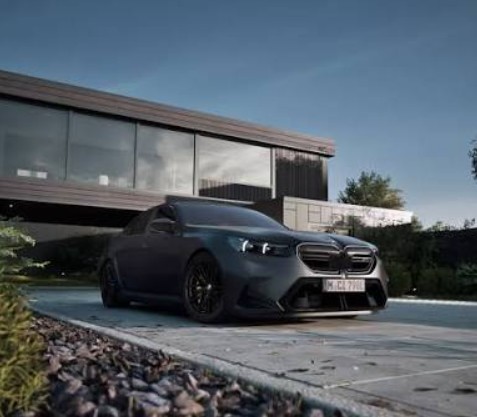
Yes, the BMW M5 is a very good car—but calling it merely “good” almost misses the point.
The M5 has spent decades doing something that sounds contradictory on paper: combining the comfort and practicality of a luxury executive sedan with performance capable of embarrassing dedicated sports cars. It can carry passengers to dinner in comfort, swallow highway miles without drama, and then turn into something considerably more aggressive when the road opens up.
That dual personality is the M5's biggest attraction.
It is also why answering “is the BMW M5 a good car?” requires more than looking at horsepower figures. A car can be breathtakingly fast yet miserable to own. It can be beautifully engineered yet brutally expensive once the warranty disappears. And because M5 generations vary enormously, the experience of owning an E39, E60, F10, F90, or today's hybrid M5 can feel like owning completely different automobiles.
So, should we actually buy one?
For the right driver, absolutely. But we need to understand what we're signing up for first.
Content in this publication
- Is the BMW M5 a Good Car Overall?
- What Makes the BMW M5 So Special?
- How Fast Is the BMW M5?
- Is the BMW M5 Comfortable for Daily Driving?
- Is the BMW M5 Practical?
- What Is the Current Hybrid BMW M5 Like?
- Is the BMW M5 Reliable?
- Common BMW M5 Ownership Concerns
- Is the BMW M5 Expensive to Maintain?
- How Much Does an M5 Really Cost to Own?
- Which BMW M5 Generation Is Best?
- Is the BMW M5 a Good Family Car?
- Is the BMW M5 Good in Snow?
- Is the BMW M5 Fuel Efficient?
- Is the BMW M5 Fun to Drive?
- BMW M5 vs Regular BMW 5 Series
- BMW M5 vs BMW M3: Which Is Better?
- Should You Buy a Used BMW M5?
- Who Should Buy a BMW M5?
- Who Should Avoid the BMW M5?
- The Biggest Advantages and Disadvantages
- Is the BMW M5 Worth the Money?
- Final Verdict: Is the BMW M5 a Good Car?
- Frequently Asked Questions
Is the BMW M5 a Good Car Overall?
As an all-around high-performance luxury sedan, the BMW M5 remains one of the most impressive cars of its type.
Its formula is fairly straightforward: start with the spacious BMW 5 Series, strengthen practically everything underneath it, add a powerful M-developed drivetrain, install serious brakes and suspension hardware, and give the driver enough technology to alter how the car behaves.
The result feels less like a normal sedan with a big engine and more like a sports car disguised as one.
Modern M5s are especially remarkable because they eliminate many compromises traditionally associated with super-sedan ownership. We can drive comfortably through traffic, carry four adults, fit luggage in the trunk, cruise quietly on the highway, and still have enormous acceleration available whenever we want it.
The latest M5 takes this philosophy further with a plug-in-hybrid V8 powertrain. BMW lists the current U.S.-market M5 at 717 horsepower and 738 lb-ft of torque, with M xDrive all-wheel drive and a claimed 0–60 mph time of 3.4 seconds.
Those numbers belong in supercar territory.
Yet we're still talking about a four-door BMW.
What Makes the BMW M5 So Special?
Plenty of luxury sedans are fast. That's not enough to explain the M5.
What makes the M5 distinctive is the breadth of its abilities.
Imagine wearing a perfectly tailored business suit with running shoes hidden underneath. That's essentially the M5 philosophy. From the outside, particularly with older generations, it can look surprisingly restrained. Press the accelerator, however, and its personality changes immediately.
We get strong acceleration, sophisticated chassis tuning, powerful brakes, premium materials, useful passenger space, and enough everyday refinement to make commuting realistic.
That versatility has always been one of the M5's strongest arguments.
Performance Without Sacrificing Everyday Usability
Some performance cars demand sacrifices every morning.
They're low. They're noisy. Visibility can be terrible. Storage space disappears. Passengers complain. After an hour in traffic, we may begin wondering why we didn't simply buy something comfortable.
The M5 generally avoids that trap.
It remains fundamentally based around a premium executive car, meaning doors are large, seats are usable, climate control works properly, highway refinement is strong, and carrying passengers doesn't require advanced gymnastics.
Then we reach a winding road and discover the other half of the equation.
That transformation is what keeps the M5 fascinating.
A Long History of Serious Engines
Another reason enthusiasts love the M5 is its engine history.
BMW hasn't followed one single recipe throughout the model's life. Different generations have delivered naturally aspirated inline-six engines, high-revving V8s, a screaming V10, twin-turbocharged V8s, and now a V8 plug-in hybrid.
Each era has its own personality.
That means buying an M5 isn't merely choosing a model year. We're choosing an experience.
An E39 appeals to drivers wanting analog character and a manual transmission. An E60 attracts people who want one of the wildest engines ever installed in a production sedan. F10 models deliver enormous turbocharged torque. The F90 combines devastating performance with remarkably effective all-wheel-drive traction.
And today's M5 adds electrification without abandoning the V8.
How Fast Is the BMW M5?
Very fast.
Modern M5 acceleration has reached a level that would've seemed ridiculous for a family-sized sedan not long ago.
The current car uses BMW's M Hybrid system, combining a 4.4-liter twin-turbocharged V8 with an electric motor. Total output is 717 horsepower and 738 lb-ft of torque. BMW quotes 0–60 mph in 3.4 seconds, while the standard electronically limited top speed is 155 mph. With the available M Driver's Package, BMW says the maximum rises to 190 mph.
But numbers tell only half the story.
The appeal comes from how effortlessly the M5 produces speed. Strong engines, quick transmissions, enormous tire grip, and sophisticated drivetrain management make overtaking feel almost comically easy.
You squeeze the accelerator.
The scenery suddenly begins moving backward.
Is the M5 Too Fast for Normal Roads?
In some ways, yes.
Today's performance cars can reach illegal speeds so quickly that accessing their full ability on public roads is practically impossible—and shouldn't be attempted.
That doesn't make the performance useless, though.
Strong acceleration makes overtaking easier, and excellent chassis engineering can make normal-speed driving enjoyable. An M5 doesn't need to operate at ten-tenths for us to appreciate responsive steering, effortless torque, powerful brakes, or beautifully controlled body movements.
The key is restraint.
Owning an M5 is a little like having a professional kitchen at home. We don't need to cook a ten-course meal every evening to appreciate the equipment.
Is the BMW M5 Comfortable for Daily Driving?
Surprisingly, yes.
One of the M5's greatest tricks is its ability to settle down.
Adaptive suspension systems allow modern versions to provide softer settings for normal driving while offering firmer configurations when we want sharper responses. BMW specifically describes the current M5's Adaptive M Suspension as combining comfort and agility while adapting to road conditions and driving style.
That doesn't mean it rides like a standard luxury sedan.
Large wheels, performance tires, firmer suspension hardware, and the basic demands of controlling a powerful heavy vehicle inevitably introduce some stiffness.
But compared with many dedicated sports cars, an M5 is remarkably civil.
City Driving
Around town, an M5 generally behaves much like a sophisticated luxury sedan.
Automatic transmissions remove the inconvenience associated with older manual or automated-manual performance cars. Parking cameras and driver-assistance technology also make newer models less intimidating than their dimensions might suggest.
The main frustrations are more practical: expensive wheels near curbs, low-profile tires around potholes, and considerable fuel consumption if we're repeatedly exercising that V8.
Highway Driving
The highway may actually be where an M5 makes the strongest argument for itself.
It has the power to overtake without hesitation, excellent high-speed stability, supportive seats, good climate control, and the composure expected from a premium German executive car.
Covering long distances becomes easy.
And unlike many smaller performance cars, we don't arrive feeling as though we've spent three hours inside a washing machine.
Is the BMW M5 Practical?
For something this powerful, enormously so.
Four doors immediately make the M5 easier to live with than most sports cars. Adults can realistically occupy the rear seats, the trunk is usable, and the cabin provides the technology and storage expected from an executive sedan.
That's one reason the M5 works beautifully as an only car.
Instead of owning one comfortable commuter and another weekend performance vehicle, some buyers can combine both roles.
The current generation even has a Touring version for buyers wanting substantially more cargo versatility. BMW positions the M5 Touring specifically as a model combining sports-car-level performance with additional practicality.
What Is the Current Hybrid BMW M5 Like?
The latest generation is arguably the biggest philosophical change in M5 history.
Instead of relying purely on a combustion engine, the current M5 uses a plug-in-hybrid drivetrain.
Some enthusiasts initially hear “hybrid” and imagine efficiency taking priority over excitement.
That's not what's happening here.
The electric system primarily works with the V8 to create astonishing performance while also permitting short-distance electric driving. BMW estimates up to roughly 25 miles of electric range for the M5 Sedan under ideal conditions.
That can be genuinely useful.
Someone who charges at home could potentially complete short errands without waking the V8. Then, when maximum performance is requested, the gasoline and electric systems work together.
The Hybrid System's Biggest Advantage
Electric motors produce torque instantly.
Pair that characteristic with a muscular turbocharged V8 and we get ferocious response.
The combination helps explain the current car's 717-horsepower system output.
It also gives the M5 something previous generations couldn't offer: genuine EV-only operation for short distances.
The Biggest Drawback: Weight
Here's where the elephant enters the garage.
BMW lists the M5 Sedan at approximately 5,390 pounds.
That's substantial.
Weight influences handling, braking, tire wear, and ultimately how connected a performance car feels. BMW has thrown considerable engineering at the problem, and the M5 remains extremely capable, but physics doesn't disappear simply because talented engineers are arguing with it.
You may be interested in reading Subaru Impreza Pros and Cons: Is It Worth Buying?
Drivers wanting maximum delicacy and lightweight feedback may prefer an M3—or an older M5.
Is the BMW M5 Reliable?
This is where our answer becomes more complicated.
An M5 can be reliable when maintained properly, but it isn't a simple car and shouldn't be purchased with economy-car expectations.
Every M5 is a high-performance luxury machine packed with expensive components operating under significant mechanical and thermal loads.
Engines are sophisticated. Suspensions are complex. Brakes are large. Tires are expensive. Electronics are extensive.
Something doesn't necessarily have to “break” for ownership to become costly.
Normal maintenance alone can be substantial.
For example, Edmunds' current ownership-cost model for a used 2023 M5 estimates significant five-year spending on maintenance and repairs, though actual costs vary tremendously with mileage, location, vehicle condition, and servicing choices.
Reliability Depends Heavily on the Generation
We shouldn't talk about M5 reliability as though every generation shares the same mechanical risks.
They don't.
Older cars introduce age-related problems, while individual generations have their own weak points.
The legendary E39, for example, can suffer VANOS-related concerns, carbon buildup, suspension wear, clutch wear, oil consumption, and other age-dependent issues. Car and Driver's E39 buyer guidance specifically highlighted VANOS, suspension components, carbon accumulation, and consumables as areas deserving attention.
The V10-powered E60 is even more famous for demanding ownership.
It offers one of the most intoxicating engines ever fitted to a sedan, but potential buyers need to enter with eyes wide open. The SMG transmission can be awkward in low-speed driving, and older examples can require serious maintenance expenditure.
In other words, reliability isn't simply about choosing “an M5.”
It's about choosing the right M5.
Common BMW M5 Ownership Concerns
Before buying, we should realistically budget beyond the purchase price.
The expenses most likely to surprise first-time M-car owners include:
- Maintenance: premium synthetic oil, performance components, specialized labor, and preventative servicing can cost considerably more than on an ordinary sedan.
- Tires: enormous horsepower and wide performance tires aren't exactly a recipe for endless tread life.
- Brakes: M-specific braking hardware can be expensive, particularly if the vehicle has optional carbon-ceramic equipment.
- Fuel: older gasoline-only M5s can drink aggressively, especially when driven enthusiastically.
- Insurance: high horsepower, expensive replacement parts, and high vehicle values can raise premiums.
- Depreciation: newer luxury performance cars can lose substantial value during their first years.
- Complexity: sophisticated electronics, adaptive suspension systems, turbochargers, drivetrain hardware, and hybrid components mean there is simply more technology that could eventually require attention.
None of these necessarily makes the M5 a bad car.
They simply make it an expensive car to run correctly.
Is the BMW M5 Expensive to Maintain?
Yes.
We shouldn't soften this one.
An M5 may look like a BMW 5 Series wearing gym clothes, but maintaining one is closer to maintaining an exotic performance car than servicing an ordinary family sedan.
Consumables alone can sting.
Big tires cost money. Big brakes cost money. High-output engines demand proper fluids and timely maintenance.
And deferred maintenance is often where seemingly inexpensive used M5s become financial traps.
A $30,000 used performance sedan that originally cost well into luxury-car territory doesn't suddenly develop $30,000-car parts prices.
That distinction matters enormously.
Why Cheap Used M5s Can Become Expensive
Depreciation can make older M5s look incredibly tempting.
We see supercar performance, leather everywhere, legendary badges, and an attainable asking price.
What could possibly go wrong?
Plenty.
The market value of the car may fall dramatically while replacement components, specialist labor, performance tires, and mechanical complexity remain expensive.
Think of depreciation as reducing the admission price, not necessarily the operating cost.
That's why the cheapest example on the market is rarely the smartest M5 to buy.
How Much Does an M5 Really Cost to Own?
Ownership cost depends strongly on generation, age, annual mileage, insurance profile, maintenance history, and where we live.
Still, available estimates illustrate the scale.
Edmunds currently estimates five-year ownership costs of more than $140,000 for a new 2025 M5 under its assumptions, with depreciation, financing, fuel, maintenance, insurance, taxes, and repairs all contributing. Its calculation assumes 15,000 miles of driving per year, so individual results can differ substantially.
Used cars don't eliminate the expense either.
Edmunds' five-year model for a 2020 M5 Competition includes substantial estimated maintenance and repair costs.
That's why we should never ask only, “Can I afford the M5?”
The better question is, “Can I comfortably afford to maintain the M5 after I've bought it?”
Which BMW M5 Generation Is Best?
There's no universal winner because each generation serves a different enthusiast.
E39 M5: Best for Old-School Driving Feel
The E39 is frequently treated as the sweet spot of classic M5 ownership.
It offers a naturally aspirated V8, manual transmission, understated styling, and a more mechanical driving experience than modern models.
Its age now matters as much as its mileage, though.
Finding a properly maintained example is crucial.
Who Should Buy an E39?
We'd choose one if driving involvement matters more than technology, maximum horsepower, or modern convenience.
It's the romantic choice.
E60 M5: Best for Drama
The E60's V10 is unforgettable.
Its sound, rev-happy character, and sheer theatricality make the car feel special even by M5 standards.
But this is not the generation we'd recommend casually to someone prioritizing predictable ownership expenses.
Buying one without a comprehensive maintenance history and specialist inspection is rolling dice with a very expensive table.
F10 M5: Best for Turbocharged Value
The F10 brought twin-turbo V8 torque to the M5 formula.
Compared with the E60, it feels more muscular and less manic.
Used examples can offer huge performance for surprisingly approachable purchase prices, but aging turbocharged luxury performance cars require careful inspection and documented servicing.
F90 M5: Best Modern All-Rounder
For many buyers, the F90 may be the easiest M5 generation to recommend.
It combines tremendous power with M xDrive all-wheel drive, an excellent automatic transmission, luxurious accommodations, and astonishing everyday usability.
The F90 can feel calm one minute and brutally quick the next.
It represents the M5 philosophy beautifully.
G90 M5: Best for Maximum Technology
The current plug-in-hybrid M5 pushes the concept into new territory.
It delivers more system power, electric-only capability, updated technology, and extraordinary acceleration.
The tradeoff is mass.
Drivers who love technology and effortless performance will probably find it fascinating. Those chasing lightweight, analog sensations may prefer older generations.
Is the BMW M5 a Good Family Car?
Strangely enough, yes.
At least by performance-car standards.
Four proper doors make child seats easier to manage. Rear passengers receive genuine space. The trunk handles normal family luggage. Safety and driver-assistance technology is extensive on newer models.
BMW says the current M5 includes features such as Active Blind Spot Detection, Lane Keeping Assistant, Forward Collision Mitigation, and Speed Limit Assistant as standard equipment in the U.S. market.
There is one obvious problem.
Once children discover what happens when Dad or Mom presses the accelerator, every school run may suddenly come with requests for “the fast mode.”
Is the BMW M5 Good in Snow?
Modern xDrive-equipped M5 models can perform surprisingly well in cold conditions when fitted with appropriate winter tires.
That last part matters.
All-wheel drive helps us accelerate, but tires determine much of the car's actual grip when braking and turning.
Hundreds of horsepower combined with summer performance tires and freezing weather isn't a clever combination.
With proper winter rubber, though, an AWD M5 becomes much more versatile than traditional rear-wheel-drive super sedans.
The current M5's M xDrive system even provides selectable 4WD, 4WD Sport, and 2WD configurations.
You may be interested in readingSubaru Impreza Pros and Cons: Is It Worth Buying?You may be interested in reading
Subaru Impreza Reliability: Is It Really a Dependable Car?Is the BMW M5 Fuel Efficient?
Fuel economy has never been the primary reason to buy an M5.
Older V8 and V10 models can be particularly thirsty.
The current plug-in-hybrid setup changes the equation because owners who regularly charge can handle some short journeys electrically.
That doesn't transform a 717-horsepower V8 sedan into an economy champion.
But it makes its energy usage more flexible.
Someone with home charging and a short commute may use significantly less gasoline for everyday errands than a previous-generation owner.
Someone who never plugs the car in and constantly explores full throttle?
Different story entirely.
Is the BMW M5 Fun to Drive?
Absolutely—but the flavor of fun depends on the generation.
Older M5s communicate through relatively simple controls and mechanical feedback.
Modern versions deliver excitement through colossal acceleration, grip, configurable drive modes, advanced suspension control, and staggering capability.
Neither approach is inherently better.
They're simply different.
If we want steering involvement and classic sports-sedan character, an older M5 may feel richer.
If we want to bend space and time while sitting in ventilated luxury seats, newer cars make a compelling argument.
BMW M5 vs Regular BMW 5 Series
A regular 5 Series is the sensible purchase for most people.
It's comfortable, quieter about its intentions, generally cheaper to buy, cheaper to insure, and more affordable to maintain.
So why buy the M5?
Because sensible isn't always memorable.
The M5 adds far more than horsepower. Suspension tuning, brakes, drivetrain calibration, steering response, cooling systems, body hardware, seats, software, and numerous other components transform the experience.
The regular 5 Series is designed to accomplish transportation brilliantly.
The M5 wants transportation to feel like an event.
BMW M5 vs BMW M3: Which Is Better?
Choosing between the M3 and M5 largely depends on priorities.
The M3 is smaller, lighter, and usually feels more energetic on tight roads.
The M5 offers more cabin space, additional luxury, greater long-distance refinement, and V8 character in current form.
BMW lists the current M3 Competition xDrive at up to 523 horsepower, while the M5 produces 717 horsepower.
But don't assume bigger output automatically means more fun.
Someone who regularly attacks twisty roads may prefer the M3's smaller footprint.
Someone who wants cross-country comfort with missile-launch acceleration may gravitate toward the M5.
Should You Buy a Used BMW M5?
A used M5 can be one of the most exciting performance bargains available.
It can also become an astonishingly effective mechanism for moving money from our bank account to a specialist repair shop.
The difference is preparation.
Service records matter enormously.
A professional pre-purchase inspection from a technician familiar with BMW M cars is worth every penny. We should check for accident history, modifications, fluid leaks, cooling-system condition, suspension wear, tire condition, brake life, drivetrain behavior, electronics, diagnostic fault codes, and evidence of consistent maintenance.
Modifications deserve particular attention.
An upgraded exhaust isn't necessarily concerning.
Aggressive engine tuning combined with questionable maintenance might be.
Buy the condition and history—not merely the badge.
Who Should Buy a BMW M5?
The M5 makes the most sense for someone who wants serious performance without abandoning real-world practicality.
It fits drivers who enjoy fast cars but still need rear seats. It suits enthusiasts who drive long distances. It works for people wanting one vehicle capable of commuting during the week and entertaining them on weekends.
Most importantly, it suits buyers financially comfortable with premium-car maintenance.
If routine repairs would constantly create stress, a less complicated BMW—or another sports sedan entirely—will probably provide more enjoyment.
A performance car shouldn't make us nervous every time we hear a strange sound.
Who Should Avoid the BMW M5?
We'd think twice about an M5 if low running costs are a major priority.
The same applies if fuel economy, inexpensive tires, simple DIY maintenance, or minimal depreciation matter more than performance.
Buyers considering old M5s merely because the purchase price seems cheap should be particularly cautious.
There's nothing expensive like a cheap German performance car with neglected maintenance.
It's a cliché because it keeps proving itself.
The Biggest Advantages and Disadvantages
Strip away the mystique and the M badge, and our judgment becomes straightforward.
The M5's strengths are extraordinary performance, excellent practicality, luxurious road-trip ability, sophisticated chassis engineering, strong everyday comfort, and the ability to perform several automotive roles simultaneously.
Its weaknesses are equally clear: purchase price, maintenance expense, tire and brake costs, complexity, depreciation on newer examples, and substantial weight in the latest generation.
So the question isn't whether the M5 has flaws.
Every interesting car does.
The question is whether its strengths matter enough to justify them.
For enthusiasts, the answer is often yes.
Is the BMW M5 Worth the Money?
If we're evaluating transportation alone, no.
Nobody needs 717 horsepower to commute to work.
A normal 5 Series will carry passengers to exactly the same destination while consuming fewer financial resources.
But enthusiast cars have never been about need.
They're about what happens between departure and arrival.
An M5 can turn a late-night highway ramp, mountain road, or ordinary Sunday morning drive into something we remember.
That experience has value.
Whether it's worth the money depends on our priorities, but few cars combine luxury, speed, practicality, and personality in quite the same way.
Final Verdict: Is the BMW M5 a Good Car?
Yes—the BMW M5 is an excellent car for the right owner.
It remains one of the most complete high-performance sedans ever conceived. We get astonishing acceleration, real passenger space, genuine long-distance comfort, premium materials, advanced technology, and enough everyday usability to make the M5 a realistic daily driver.
But we shouldn't confuse “good car” with “cheap car to own.”
Maintenance can be expensive. Tires and brakes aren't budget items. Older generations can hide serious repair needs. Newer cars are tremendously complex, and depreciation can be substantial.
That means buying wisely matters almost as much as choosing the M5 itself.
Find a well-maintained example, arrange a proper inspection when shopping used, budget realistically for upkeep, and resist the temptation to buy the cheapest car available.
Do that, and an M5 can provide something increasingly rare: one machine that behaves like a luxury sedan when life demands maturity and like a supercar when the road gives us permission to play.
That's the magic of the M5.
It doesn't force us to choose between sensible and exciting.
It simply asks whether we're prepared to pay for both.
Frequently Asked Questions
1. Is the BMW M5 a reliable car?
The BMW M5 can be reliable when properly maintained, but reliability varies significantly between generations. Because every M5 uses sophisticated high-performance components, repairs and routine maintenance can be considerably more expensive than on a standard BMW 5 Series. A complete service history is particularly important when purchasing used.
2. Is the BMW M5 good for daily driving?
Yes. Daily usability is one of the M5's greatest strengths. It offers four doors, usable rear seats, a practical trunk, comfortable highway manners, automatic transmission options on modern versions, and adjustable suspension settings. Newer M5s can behave surprisingly calmly during normal commuting.
3. Is a used BMW M5 worth buying?
A good used M5 can offer extraordinary performance for the money, particularly after depreciation. However, we should prioritize maintenance history and condition over a low purchase price. A specialist pre-purchase inspection is strongly recommended because neglected maintenance can quickly erase any savings.
You may be interested in readingSubaru Impreza Pros and Cons: Is It Worth Buying?You may be interested in reading
Subaru Impreza Reliability: Is It Really a Dependable Car?You may be interested in reading
Subaru Impreza: Is It a Good Car? An In-Depth Look at Ownership, Reliability, Performance, and Value4. Which BMW M5 is best to buy?
It depends on what we want. The E39 is ideal for classic, analog driving character; the E60 offers unforgettable V10 drama but can be demanding to maintain; the F10 delivers strong turbocharged performance; the F90 is arguably the strongest modern all-rounder; and the current G90 provides the most advanced technology and hybrid performance.
5. Is the BMW M5 expensive to own?
Yes. Insurance, fuel, premium tires, large brakes, specialized maintenance, and potential repairs make the M5 significantly more expensive to operate than an ordinary sedan. Edmunds' ownership-cost estimates for recent M5 models illustrate how depreciation, maintenance, fuel, financing, and repairs can accumulate rapidly over several years.
If you want to know other articles similar to Is the BMW M5 a Good Car? A Complete Ownership Guide you can visit the category Blog.
Kia Sportage Gas Tank Size: Complete Guide
BMW X1 Life Expectancy: How Long Does It Last?
Is the Toyota Yaris Cross Reliable? 2026 Guide
Kia Sportage Weight Guide: Curb, Kerb & GVWR
Toyota RAV4 Gas Tank Size (Chart & Explanation)
Toyota RAV4 Depreciation: Complete Resale Value Guide
Leave a Reply
More content of your interest