
BMW M5 vs M3: Which BMW M Car Is Better?

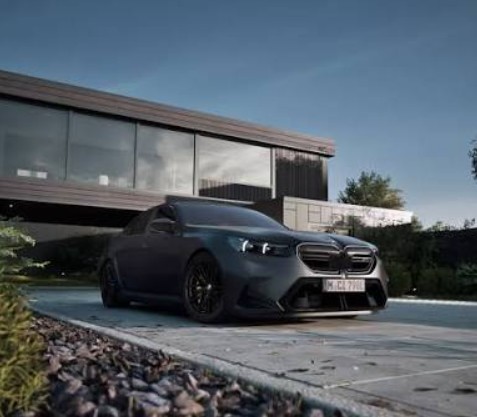
Few comparisons in BMW’s performance world are as tempting as BMW M5 vs M3. Both cars wear the famous M badge. Both are ridiculously fast. Both can carry passengers and groceries without looking like they escaped from a racing paddock. Yet once we spend time looking beneath the badges, we discover two very different interpretations of the performance sedan.
The BMW M3 is the smaller, lighter, more traditional driver's car. It feels like the athlete who arrives at the track wearing running shoes and asking where the starting line is.
The BMW M5, meanwhile, is closer to a private jet with license plates. It's larger, more luxurious, substantially more powerful, and—particularly in its newest plug-in-hybrid generation—loaded with enough technology to make its performance seem almost absurd.
So, which one should we actually buy?
That depends less on which car is objectively "better" and more on what kind of driving experience we want. Let's break down the BMW M3 vs M5 debate from performance and handling to comfort, practicality, ownership costs, and everyday usability.
Content in this publication
- BMW M5 vs M3 at a Glance
- BMW M3 vs M5: The Fundamental Difference
- BMW M5 vs M3 Engine Comparison
- BMW M5 Engine and Hybrid System
- BMW M3 vs M5 Acceleration
- BMW M5 vs M3 Handling
- BMW M3 Manual vs M5 Automatic
- BMW M5 vs M3 Size
- BMW M5 vs M3 Interior
- BMW M3 vs M5 Practicality
- BMW M5 vs M3 Fuel Economy
- BMW M3 vs M5 Daily Driving
- BMW M5 vs M3 on a Twisty Road
- BMW M3 vs M5 on the Highway
- BMW M3 vs M5 Styling
- BMW M5 vs M3 Ownership Costs
- BMW M3 vs M5 Reliability
- BMW M3 vs M5 for Enthusiasts
- BMW M5 vs M3 for Luxury Buyers
- Does the M5's Extra Power Make It Better?
- Is the BMW M3 Fast Enough?
- BMW M5 vs M3: Which One Should We Buy?
- BMW M5 vs M3: Final Verdict
- Frequently Asked Questions
BMW M5 vs M3 at a Glance
Before diving into the details, here's the simplest way to understand these cars.
The current M3 sticks with BMW's legendary turbocharged inline-six formula. Depending on configuration, it produces between 473 and 523 horsepower in the U.S. market. The entry-level M3 even retains something becoming increasingly rare among high-performance sedans: a six-speed manual transmission.
The latest M5 has gone in a radically different direction. BMW pairs a twin-turbocharged 4.4-liter V8 with an electric motor, producing 717 horsepower and 738 lb-ft of torque. BMW lists a 0–60 mph time of 3.4 seconds.
| Specification | BMW M3 | BMW M3 Competition xDrive | BMW M5 |
|---|---|---|---|
| Engine | 3.0L twin-turbo I6 | 3.0L twin-turbo I6 | 4.4L twin-turbo V8 + electric motor |
| Horsepower | 473 hp | 523 hp | 717 hp |
| Torque | 406 lb-ft | 479 lb-ft | 738 lb-ft |
| Drivetrain | RWD | AWD | AWD |
| Transmission | 6-speed manual | 8-speed automatic | 8-speed automatic |
| 0–60 mph | 4.1 sec | 3.4 sec | 3.4 sec |
| Curb weight | 3,840 lb | 3,990 lb | 5,390 lb |
| Length | 189.1 in | 189.1 in | 200.6 in |
Official BMW specifications reveal perhaps the most important difference of all: the M5 weighs roughly 1,400 to 1,550 pounds more than an M3, depending on the M3 configuration.
That's not a minor distinction. It affects nearly everything about how the two cars feel.
BMW M3 vs M5: The Fundamental Difference
Think of the M3 as BMW's sports sedan and the M5 as BMW's super sedan.
Yes, that's simplifying things, but it's surprisingly accurate.
The M3 prioritizes driver involvement. Its smaller dimensions, lower weight, aggressive chassis setup, and available rear-wheel-drive manual configuration make it the more intimate machine.
The M5 pursues another target entirely. It wants to provide explosive acceleration while surrounding us with 5 Series comfort, technology, space, and refinement.
The M3 Wants Us Involved
Drive an M3 quickly and the car constantly communicates what it's doing. We notice weight transfer, steering inputs, throttle changes, and the behavior of the rear axle.
There's enough power to be outrageous, but the chassis remains a central part of the experience.
That's an important distinction.
Sometimes enormous horsepower figures can dominate a car's personality. In the M3, the engine and chassis still feel like equal partners.
The M5 Wants to Bend Physics
The M5 is more surreal.
A sedan weighing well over two tons shouldn't accelerate, corner, or brake with this much authority. Yet BMW's engineers have thrown an arsenal of hardware and software at the problem.
The result is the automotive equivalent of watching an elephant win a sprint.
It's fascinating because we know how much mass is there, yet the car works remarkably hard to disguise it.
BMW M5 vs M3 Engine Comparison
Under the hood—or, in the M5's case, under the hood and beneath the floor—the philosophies separate dramatically.
BMW M3 Engine
The current M3 uses BMW's 3.0-liter twin-turbocharged inline-six.
The standard manual M3 produces 473 horsepower and 406 lb-ft of torque, while the rear-wheel-drive M3 Competition increases output to 503 horsepower. The Competition xDrive goes farther still, producing 523 horsepower and 479 lb-ft according to BMW's current U.S. specifications.
It's a superb engine because it has layers.
At moderate speeds, it's perfectly usable. Push harder, and the engine becomes increasingly urgent as the revs rise. There's turbocharged torque down low without completely sacrificing the excitement of chasing the upper end of the tachometer.
Why the Inline-Six Suits the M3
An M3 shouldn't simply be fast.
It should feel energetic.
The six-cylinder engine helps preserve that character. It keeps the front end comparatively lighter while offering more than enough power to overwhelm public roads.
In fact, that's one of the funny things about modern performance cars: the "smaller" M3 is already absurdly quick.
BMW M5 Engine and Hybrid System
The M5 sits in another universe.
Its powertrain combines a 4.4-liter twin-turbocharged V8 with an electric motor, delivering 717 horsepower and 738 lb-ft of torque.
The electric assistance isn't simply there to improve efficiency.
It fills gaps in power delivery, provides immediate response, and contributes to the M5's massive system output.
Press the accelerator hard and there isn't much waiting around. The car simply launches.
Does the M5 Sound Better Than the M3?
For many enthusiasts, probably yes.
A V8 has a deeper, more muscular voice than an inline-six. The M3 still sounds aggressive, but there's something naturally dramatic about eight cylinders working hard.
That said, sound isn't the whole experience.
Some drivers may prefer the M3 because its lighter structure allows us to enjoy the engine without the sensation that we're commanding an extremely powerful luxury machine.
The M5 sounds like thunder approaching.
The M3 sounds like it wants a fight.
BMW M3 vs M5 Acceleration
Here's where the numbers become interesting.
BMW lists both the current M3 Competition xDrive and M5 sedan at 3.4 seconds from 0–60 mph.
Yes, despite the M5 having almost 200 additional horsepower.
Why?
Weight.
The M5's hybrid hardware contributes to a curb weight of about 5,390 pounds, while BMW lists the M3 Competition xDrive at 3,990 pounds.
Once speeds rise, however, the M5's extraordinary horsepower advantage becomes much more meaningful.
Which Feels Faster?
The M5.
Even if the headline 0–60 numbers look similar, the M5's huge torque output creates a sense of relentless thrust.
At highway speeds, it feels like the acceleration simply keeps coming.
The M3 is ferociously quick.
The M5 feels almost excessive.
And depending on what we're looking for, "excessive" may either be the greatest compliment possible or the reason we'd rather have the M3.
BMW M5 vs M3 Handling
This might be the most important section of the entire comparison.
If straight-line speed were everything, the M5's enormous output would settle the debate quickly.
But we're comparing M cars.
Corners matter.
The M3 Is the More Agile Car
The M3's biggest weapon isn't horsepower.
It's mass—or rather, the lack of it relative to the M5.
A standard M3 weighs around 3,840 pounds, which certainly isn't lightweight in traditional sports-car terms, but it is dramatically lighter than the M5.
We notice that difference when roads tighten.
The M3 changes direction more eagerly. It feels smaller beneath us. There's less inertia to manage under braking and through rapid transitions.
It is easier to place.
Why Weight Still Matters
Modern adaptive dampers, rear-wheel steering, sophisticated differentials, and electronic control systems can perform miracles.
They cannot repeal physics.
Weight affects how quickly a vehicle responds, how much energy the brakes must absorb, how tires behave, and how the chassis communicates movement.
That's why an M5 can post spectacular numbers and still feel fundamentally different from an M3.
The M5 Is More Stable and Effortless
The M5 counters with enormous composure.
Long sweepers, autobahn-style roads, highway ramps, and fast cross-country driving are its playground.
Where the M3 dances, the M5 charges.
We might work harder in the M3, but that's precisely why some of us will enjoy it more.
BMW M3 Manual vs M5 Automatic
Here's an easy win for the M3 if we love shifting our own gears.
BMW still offers the base M3 with a six-speed manual and rear-wheel drive.
That's becoming remarkably unusual.
The M5 comes exclusively with an eight-speed automatic.
The automatic is faster, smoother, and better suited to the M5's enormous torque output. But numbers don't explain why enthusiasts love manuals.
The Manual M3 Has Something the M5 Cannot Replicate
Changing gears ourselves makes even moderate-speed driving interactive.
You may be interested in reading BMW M5 vs M4: Which BMW M Car Is Better?
A commute can become entertainment.
A downshift before a corner gives us something to do beyond pressing pedals and turning the wheel.
The M5 is unquestionably more technologically advanced, but the manual M3 offers something technology struggles to recreate: mechanical participation.
BMW M5 vs M3 Size
The M5 isn't simply heavier. It's physically much larger.
BMW lists the M5 at 200.6 inches long with a 118.3-inch wheelbase.
The M3 measures 189.1 inches long with a 112.5-inch wheelbase.
Eleven and a half inches might not sound enormous on paper.
Try parking both cars in a tight garage.
Suddenly, those inches become very real.
Which Is Easier to Drive in the City?
The M3 wins.
It's narrower, shorter, and easier to place on crowded roads.
The M5 certainly isn't difficult to drive—modern cameras and driver-assistance technology help enormously—but there's no hiding its footprint.
If our daily routine involves narrow parking structures, older city streets, or tight garages, the M3 makes life easier.
BMW M5 vs M3 Interior
The M3 cabin is premium.
The M5 cabin is luxurious.
That's the distinction.
Both provide modern BMW technology, digital displays, sophisticated infotainment, quality materials, and supportive seats.
But the M5 begins with the larger, more comfort-focused 5 Series platform.
M5 Comfort Is on Another Level
Spend three hours driving down the highway and the M5 starts explaining why it exists.
There's greater space, a more substantial feeling, and the sense that BMW designed the car to cross countries quickly rather than simply attack a mountain road.
Passengers may prefer it too.
If our performance car frequently performs family-sedan duties, the M5's additional room becomes meaningful.
M3 Cabin Feels More Driver-Focused
The M3 feels more intimate.
That's not another word for cheap—it isn't.
Instead, the smaller environment better matches the car's personality. The driver feels closer to the action rather than isolated from it.
For an enthusiast, that can actually be preferable.
BMW M3 vs M5 Practicality
Both are remarkably practical considering their performance.
That's part of the magic of the M formula.
We can drive them to work Monday through Friday, take passengers to dinner, carry luggage, and then spend Saturday morning attacking an empty back road.
Still, each favors different priorities.
Choose the M3 If We Want:
- A smaller performance sedan that's easier to park and maneuver
- Lower weight and sharper handling
- An available six-speed manual transmission
- Rear-wheel drive without choosing the Competition model
- Serious performance without moving into a full-size luxury experience
- A car that feels more playful on ordinary roads
Choose the M5 If We Want:
The M5 makes more sense when maximum performance and luxury matter more than lightness. Its larger cabin, greater road presence, extraordinary powertrain, and more relaxed long-distance character make it a stronger all-purpose executive sedan.
And then there's the sheer absurdity of having more than 700 horsepower available while carrying four adults comfortably.
Sometimes rationality isn't the point.
BMW M5 vs M3 Fuel Economy
Neither car exists primarily to save fuel.
Still, the differences are fascinating because the M5 now uses plug-in-hybrid technology while the M3 remains purely gasoline-powered.
BMW currently lists the M3 automatic variants at 16 mpg city and 23 mpg highway in U.S. specifications.
The M5 introduces another variable: charging.
Its battery allows it to operate using electric assistance, making ownership behavior more important. Someone who charges regularly and makes short journeys may experience the car very differently from someone who almost exclusively drives long distances with a depleted battery.
Hybrid Doesn't Mean Lightweight or Simple
The M5 demonstrates an important shift in modern performance engineering.
Electrification can deliver enormous power and new possibilities, but the battery, motors, cooling systems, and associated hardware add mass.
That's the trade-off.
We're receiving sensational acceleration and partial electric capability, but we're also driving a 5,390-pound sedan.
BMW M3 vs M5 Daily Driving
Which car would we rather commute in every morning?
That depends on the commute.
On highways, the M5 is magnificent. Power is effortless, the cabin is spacious, and the car feels built to devour distance.
On narrow roads and congested urban streets, we'd take the M3.
Its smaller dimensions reduce the mental effort required to maneuver it, while its performance still borders on ridiculous.
Which Is Better for Long Trips?
M5.
This is where its additional size and luxury pay dividends.
A good grand touring car should make 500 miles feel like 300.
The M5 has that character.
It doesn't merely tolerate highways between interesting roads. It dominates them.
Which Is More Fun at Normal Speeds?
M3.
And this question matters more than enthusiasts sometimes admit.
A car can become so capable that the speeds required to explore its personality become impractical.
The M3 isn't slow—not remotely—but its smaller dimensions and lighter chassis give us more to enjoy without needing enormous stretches of open road.
BMW M5 vs M3 on a Twisty Road
Give us a tight mountain road and we'd reach for the M3 keys.
The M5 might ultimately be astonishingly quick, but speed and enjoyment aren't always the same currency.
The M3 feels more eager to rotate, change direction, and communicate what the chassis is doing.
It has that classic compact sports-sedan recipe.
The M5 approaches the road differently.
Instead of tiptoeing through corners like a lightweight boxer, it punches through them with immense grip, technology, and power.
Both methods work.
One feels delicate.
The other feels devastating.
BMW M3 vs M5 on the Highway
Now reverse the situation.
Wide highway. Long distances. Fast overtaking.
M5.
Its gigantic torque output makes passing traffic almost effortless. The longer wheelbase contributes to a settled character, and the larger 5 Series architecture naturally lends itself to long-distance work.
The M3 remains excellent, but we become more aware of its sportier mission.
The M5 Is the Ultimate Autobahn Idea
This has always been central to the M5 identity.
Imagine a luxury executive sedan capable of cruising calmly with the family one moment and chasing exotic sports cars the next.
That's the formula.
The newest M5 merely turns the dial considerably farther.
BMW M3 vs M5 Styling
Styling is subjective, perhaps more so with modern BMW than ever.
The M3 is visually aggressive. Its huge vertical kidney grilles remain one of the most controversial elements of the design, yet the overall package has gained familiarity over time.
The M5 looks broader and more substantial.
Neither is trying to hide.
Which Looks More Special?
We'd give the M5 a slight edge in road presence.
You may be interested in readingBMW M5 vs M4: Which BMW M Car Is Better?You may be interested in reading
BMW M5 vs Audi RS7: Which Super Sedan Deserves Your Garage?Its width and proportions make it look expensive and serious.
But the M3's smaller body may appeal more to traditional BMW enthusiasts who associate the M badge with relatively compact performance cars.
BMW M5 vs M3 Ownership Costs
The M3 is the sensible choice here—using "sensible" very loosely.
Both are sophisticated high-performance German sedans with expensive tires, brakes, maintenance requirements, insurance, and potentially costly repairs after the warranty period.
The M5 adds another level of complexity.
We're dealing with a twin-turbocharged V8, plug-in-hybrid components, a high-voltage battery system, sophisticated all-wheel drive, and extensive luxury technology.
Will the M5 Cost More to Maintain?
We should generally expect so.
Even ignoring unexpected repairs, consumables can become expensive because we're maintaining a heavier, more powerful car.
Tires and brakes on vehicles of this performance level aren't economy-car items.
Neither M model should be purchased with the expectation of inexpensive ownership.
The M3 simply represents the less extreme financial proposition.
BMW M3 vs M5 Reliability
Reliability is difficult to reduce to a simple winner because long-term results depend heavily on model year, maintenance history, usage, modifications, and previous ownership.
However, complexity matters.
The M3's turbocharged six-cylinder powertrain is still sophisticated, but the new M5 combines a turbo V8 with plug-in-hybrid hardware and considerably more systems.
More technology doesn't automatically mean unreliability, but it does create more expensive components that could eventually require attention.
Buying Used Changes the Comparison
When shopping new, warranty coverage reduces much of the anxiety.
When shopping used—especially far outside warranty—we'd pay enormous attention to maintenance documentation.
A neglected M car can turn a tempting purchase price into a painful ownership experience surprisingly quickly.
Service history matters more than finding the cheapest example.
BMW M3 vs M5 for Enthusiasts
This is where the M3 makes its strongest case.
If driving itself is the hobby, the M3 gives us more ways to participate.
We can choose rear-wheel drive.
We can choose a manual.
We get lower weight.
We get smaller dimensions.
And we still get nearly supercar levels of real-world performance.
The M3 Is Closer to the Traditional M Formula
Older BMW M cars built their reputation around responsiveness, balance, high-performance engines, and chassis engagement—not merely enormous horsepower numbers.
Modern regulations, technology, and customer expectations have changed every performance car, including the M3.
Yet of these two, the M3 remains closer to that traditional idea.
BMW M5 vs M3 for Luxury Buyers
Now the equation flips.
If we want one vehicle that can replace both a luxury sedan and an extreme performance car, the M5 becomes incredibly appealing.
There's no need to sacrifice passenger space simply because we want massive acceleration.
No need to sacrifice refinement.
No need to drive something that announces itself like a two-seat exotic.
The M5 quietly contains several personalities.
That's its superpower.
Does the M5's Extra Power Make It Better?
Not automatically.
Horsepower is wonderfully easy to compare because it's a number.
Driving enjoyment isn't.
A 717-horsepower M5 objectively produces far more power than a 473-horsepower base M3.
But if we spend most of our time on winding roads, the M3's lower weight might matter more than another 200 horsepower.
It's like comparing a speedboat with a jet ski.
The larger machine might be much more powerful.
That doesn't guarantee it's more entertaining everywhere.
Is the BMW M3 Fast Enough?
Absolutely.
Modern performance has distorted our expectations.
A vehicle capable of reaching 60 mph in approximately 3.4 seconds in Competition xDrive form is objectively extremely fast.
Unless we're regularly driving on a circuit or unrestricted road, extracting all of that capability is already difficult.
The M5 doesn't solve a shortage of performance.
It adds another layer of excess.
That's part of its charm.
BMW M5 vs M3: Which One Should We Buy?
For most enthusiastic drivers, we'd pick the BMW M3.
Not because it's faster—it isn't overall.
Not because it's more luxurious—it isn't.
We'd choose it because it concentrates the things that make an M car enjoyable into a smaller package.
It's lighter, more maneuverable, available with a manual transmission, and easier to enjoy on ordinary roads.
The BMW M5, however, wins if we're searching for one car that can seemingly do everything.
Want extraordinary acceleration? Check.
Four-door practicality? Check.
Luxury-car comfort? Check.
All-wheel-drive traction? Check.
Long-distance ability? Absolutely.
It's an engineering tour de force.
Who Should Buy the BMW M3?
The M3 suits drivers who prioritize involvement over outright extravagance. We'd choose it if Saturday morning back-road drives matter just as much as Monday commuting.
The manual rear-wheel-drive configuration is particularly appealing for purists, while the Competition xDrive provides astonishing acceleration without completely abandoning the M3's smaller-car character.
Who Should Buy the BMW M5?
The M5 suits someone who wants maximum performance without giving up executive-sedan comfort.
It's the choice for drivers who frequently travel long distances, carry passengers, appreciate luxury, and still want the accelerator pedal to behave like a teleportation button.
If our ideal car needs to feel sophisticated during a business meeting and borderline ridiculous afterward, the M5 understands the assignment.
BMW M5 vs M3: Final Verdict
The BMW M5 vs M3 comparison doesn't produce a universal winner because these cars solve different problems.
The M3 asks: How much performance can we pack into a relatively compact sports sedan while keeping the driver involved?
The M5 asks: How fast can a luxurious four-door become before physics files a complaint?
For pure driving enjoyment, agility, lower weight, and enthusiast appeal, we'd choose the M3.
For breathtaking power, highway performance, passenger comfort, and all-around luxury, the M5 is the stronger machine.
If we had to own only one and our priority were driving fun, the M3 would get our vote. It's already astonishingly fast, but its smaller footprint makes more of that performance accessible.
If money and garage space weren't concerns?
Well, we'd probably find room for both.
Frequently Asked Questions
1. Is a BMW M5 faster than an M3?
Generally, yes, particularly once speeds rise. The latest M5 produces 717 horsepower and 738 lb-ft of torque, substantially more than any regular M3 configuration. Interestingly, BMW lists both the M5 and M3 Competition xDrive at 3.4 seconds from 0–60 mph, largely because the M5 carries considerably more weight.
2. Is the BMW M3 better for daily driving than the M5?
For city driving, we'd generally prefer the M3 because it's smaller and easier to maneuver. For frequent highway travel and long-distance commuting, the M5's extra space and luxury make it more relaxing.
3. Which handles better, BMW M3 or M5?
The M3 is generally the more agile and engaging choice because it is significantly lighter and smaller. The M5 counters with impressive grip and sophisticated chassis technology, but its additional mass can't completely disappear.
You may be interested in readingBMW M5 vs M4: Which BMW M Car Is Better?You may be interested in reading
BMW M5 vs Audi RS7: Which Super Sedan Deserves Your Garage?You may be interested in reading
BMW M5 vs M8: Which BMW M Car Is Better?4. Can you get a BMW M5 with a manual transmission?
No. The current M5 uses an eight-speed automatic. BMW still offers the standard M3 with a six-speed manual transmission and rear-wheel drive, making the M3 especially attractive to traditional enthusiasts.
5. Should I buy an M3 or M5?
Buy the M3 if we prioritize handling, engagement, smaller dimensions, and a more traditional sports-sedan experience. Buy the M5 if we want maximum power, luxury, passenger comfort, and extraordinary long-distance performance. Neither choice is wrong—they simply represent two very different interpretations of the BMW M philosophy.
If you want to know other articles similar to BMW M5 vs M3: Which BMW M Car Is Better? you can visit the category Models.
BYD Shark 6 2025 vs 2026: What Actually Changed?
BMW i7 vs Porsche Taycan: Luxury EVs With Very Different Personalities
BMW i7 vs 7 Series: Which BMW Flagship Makes More Sense?
BMW i7 vs Mercedes EQS: The Ultimate Luxury EV Comparison
BMW i7 vs M760e: Electric Luxury or Plug-In Hybrid Power?
NFINITI QX60 or Similar: Luxury SUVs Worth Comparing
Leave a Reply
More content of your interest