
BMW M5 vs M8: Which BMW M Car Is Better?

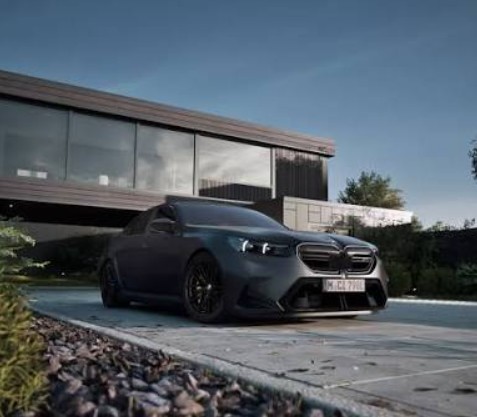
The BMW M5 vs M8 comparison looks straightforward at first. Both are brutally fast luxury cars. Both have deep roots in BMW M performance. Both can embarrass sports cars while keeping their occupants surrounded by leather, technology, and enough comfort to cross a continent.
Yet these two machines approach performance from very different directions.
The modern M5 is the technological powerhouse of the pair: a four-door super sedan built around a plug-in-hybrid V8 powertrain, enormous torque, everyday practicality, and a chassis designed to make its substantial size disappear once the road starts bending.
The M8 Competition, meanwhile, represents a slightly older and arguably more traditional formula. In coupe form, it combines a twin-turbo V8 with dramatic proportions, lower weight, two-door grand-touring style, and genuinely exotic straight-line speed. The 2025 M8 Competition Coupe was also effectively the final chapter of the M8 in the U.S. market, making this comparison partly a battle between BMW M's outgoing V8 flagship and its newer hybrid era.
So, which one would we rather have?
That depends on whether we want the ultimate all-rounder or the more dramatic occasion.
Let's dig into the BMW M5 vs BMW M8 comparison and find out where each car really shines.
Content in this publication
- BMW M5 vs M8 at a Glance
- BMW M5 vs M8: Two Different Interpretations of an M Flagship
- BMW M5 vs M8 Engine Comparison
- BMW M8: The Old-School Twin-Turbo V8 Approach
- BMW M5 vs M8 Performance
- Rolling Acceleration: Where the M5 Fights Back
- M5 vs M8 Handling
- BMW M5 vs M8 Driving Feel
- BMW M5 vs M8 Interior
- M8 Interior: More Intimate and Traditional
- BMW M5 vs M8 Comfort
- BMW M5 vs M8 Practicality
- BMW M5 vs M8 Size
- BMW M5 vs M8 Styling
- BMW M5 vs M8 Sound
- BMW M5 vs M8 Fuel Economy
- BMW M5 vs M8 Range and Road Trips
- BMW M5 vs M8 Technology
- BMW M5 vs M8 Price
- BMW M5 vs M8 Maintenance Costs
- BMW M5 vs M8 Reliability
- Which Is Better for Daily Driving?
- Which Is Better for Weekend Driving?
- Which Is More Fun to Drive?
- BMW M5 vs M8 for Highway Driving
- BMW M5 vs M8 for Track Driving
- BMW M5 vs M8 Exclusivity
- Does the M8 Feel More Expensive Than the M5?
- Reasons to Choose the BMW M5
- Reasons to Choose the BMW M8
- BMW M5 vs M8: Which One Is Faster?
- BMW M5 vs M8: Which Sounds Better?
- BMW M5 vs M8: Which Holds More Appeal Long Term?
- Should You Buy an M5 or M8?
- BMW M5 vs M8: Our Verdict
- Frequently Asked Questions About BMW M5 vs M8
- Conclusion
BMW M5 vs M8 at a Glance
Before diving into the details, here is the basic picture.
| Specification | BMW M5 Sedan | BMW M8 Competition Coupe |
|---|---|---|
| Engine | 4.4L twin-turbo V8 + electric motor | 4.4L twin-turbo V8 |
| Power | 717 hp | 617 hp |
| Torque | 738 lb-ft | 553 lb-ft |
| Transmission | 8-speed automatic | 8-speed automatic |
| Drivetrain | M xDrive AWD | M xDrive AWD |
| Factory 0-60 mph | 3.4 sec | Around 3.0 sec |
| Curb weight | 5,390 lb | Around 4,560 lb |
| Body style | Four-door sedan | Two-door coupe |
| Fuel system | Plug-in hybrid | Gasoline |
| Main personality | Super sedan | Luxury grand tourer |
BMW currently rates the M5 at 717 horsepower and 738 lb-ft of torque, with a claimed 0-60 mph time of 3.4 seconds. Its curb weight is approximately 5,390 pounds.
The 2025 M8 Competition Coupe produces 617 horsepower and 553 lb-ft of torque, with a manufacturer-listed 0-60 mph figure of roughly 3.0 seconds.
That immediately gives us an interesting contradiction.
The M5 has substantially more power.
The M8 is lighter.
And that difference shapes almost everything about how these cars feel.
BMW M5 vs M8: Two Different Interpretations of an M Flagship
Think of the M5 as a business jet with afterburners.
Its fundamental purpose remains practical transportation. Four proper doors, generous rear-seat room, a sizable trunk, and sedan proportions make it perfectly usable as an everyday luxury car.
Then BMW M turns the performance dial until things become slightly ridiculous.
The M8 works in reverse.
It begins with theater.
Long hood. Low roof. Wide stance. Two huge doors. A cabin that feels wrapped around its occupants. The coupe silhouette immediately announces that practicality wasn't the first item discussed during the design meeting.
The M8 is still comfortable and surprisingly usable, but it feels like an event before we've even pressed the starter button.
The M5 Is the Discreet Supercar Alternative
One of the M5's greatest talents has always been understatement.
People who aren't deeply interested in cars may simply see a large BMW sedan.
That changes immediately when the accelerator hits the carpet.
The current-generation M5's M Hybrid system produces 717 hp from its electrified twin-turbo V8 powertrain. BMW also gives it M xDrive with selectable 4WD, 4WD Sport, and 2WD modes.
Essentially, it can behave like a civilized executive sedan on Monday morning and a tire-smoking lunatic on Sunday afternoon.
The M8 Wants More Attention
The M8 isn't exactly subtle.
Its proportions tell everyone what it is.
The roof sits lower, the body looks wider, and the long hood visually stretches the car toward something closer to an Aston Martin-style grand tourer than a traditional sports sedan.
We wouldn't necessarily call it flashy, but it has presence.
Park an M5 outside a restaurant and enthusiasts notice.
Park an M8 outside the same restaurant and everyone looks.
BMW M5 vs M8 Engine Comparison
Both cars use a 4.4-liter twin-turbocharged V8 as their combustion-engine foundation, but that similarity hides a major technological divide.
BMW M5: Electrified V8 Muscle
The newer M5 combines its high-performance V8 with an electric motor.
Total system output reaches:
- 717 horsepower
- 738 lb-ft of torque
- 8-speed automatic transmission
- M xDrive all-wheel drive
BMW lists the engine itself at 4,395 cc, while the combined hybrid system creates considerably more total output than the outgoing non-hybrid M5 generations.
The electric assistance matters for more than the headline horsepower figure.
Electric motors generate torque immediately.
That means the M5 doesn't simply feel powerful at high rpm. It feels muscular almost everywhere.
Press the accelerator while cruising and the response can feel like someone pulled the horizon toward the windshield.
Is Hybridization Good for the M5?
From a pure performance perspective, absolutely.
The system delivers astonishing power, fills gaps in combustion-engine response, and gives the M5 limited electric-driving capability.
Yet there's a tradeoff.
Weight.
At approximately 5,390 pounds, the current M5 is exceptionally heavy for a performance sedan.
BMW's engineers have thrown an impressive arsenal of chassis technology at that problem, but physics never completely disappears.
BMW M8: The Old-School Twin-Turbo V8 Approach
The M8 Competition uses a 4.4-liter twin-turbocharged V8 producing:
617 hp and 553 lb-ft of torque.
No plug.
No large traction battery.
No hybrid motor helping the engine.
Just an extremely powerful gasoline V8 feeding an eight-speed automatic and M xDrive.
Ironically, the less complicated powertrain gives the M8 a major advantage in one area: mass.
Depending on specification and source methodology, curb-weight figures vary, but a 2025 M8 Competition Coupe is roughly 800 pounds lighter than the current M5. Edmunds lists the M8 Competition Coupe at 4,560 pounds.
That difference is enormous.
It's roughly the weight of several adult passengers permanently removed from the car.
BMW M5 vs M8 Performance
This is where the comparison becomes fascinating.
Judging solely by horsepower, we might expect the M5 to destroy the M8.
Reality isn't that simple.
0-60 MPH: Which One Is Faster?
BMW rates the current M5 at 3.4 seconds from 0-60 mph.
Published specifications for the 2025 M8 Competition Coupe place its manufacturer 0-60 mph time at approximately 3.0 seconds.
Independent testing has demonstrated that the M8 can be considerably quicker under ideal conditions. Car and Driver previously recorded an extraordinary 2.5-second 0-60 mph run in an M8 Competition Coupe.
That's supercar territory.
Why Can the Less Powerful M8 Be Quicker?
Weight matters.
A lot.
The M5's additional 100 horsepower sounds dramatic until we remember that the hybrid sedan carries hundreds of extra pounds.
The M8's power-to-weight balance and extremely effective launch-control system allow it to leap from a standstill like a frightened cat.
The M5 feels savage.
The M8 can feel explosive.
Rolling Acceleration: Where the M5 Fights Back
Once we're already moving, the situation becomes more complicated.
The M5's 738 lb-ft of combined torque gives it tremendous passing capability.
Imagine cruising at highway speed and suddenly needing to overtake.
The M5 doesn't seem to gather momentum.
It simply produces it.
The electrified powertrain gives the car a massive reservoir of immediate thrust, which can make ordinary overtaking feel almost absurdly effortless.
At legal road speeds, both cars provide far more acceleration than anyone genuinely needs.
That's precisely why they're entertaining.
M5 vs M8 Handling
Straight-line acceleration is only part of an M car's personality.
And here, weight and dimensions become impossible to ignore.
The M8 Feels More Like a Traditional Performance Car
The M8 Competition Coupe sits lower and carries considerably less mass.
Its shorter wheelbase and coupe proportions contribute to a more intimate driving experience.
We feel closer to the action.
The seating position feels sportier.
The car changes direction with less of that initial sensation of moving a large mass.
It's still a substantial grand tourer rather than a featherweight sports car, but relative to the M5, the M8 feels lean.
The M5 Uses Technology to Fight Physics
The M5 takes the opposite route.
Instead of becoming physically light, BMW engineers use sophisticated suspension, drivetrain, steering, braking, and chassis-control systems to make the car behave lighter than its specifications suggest.
And it works remarkably well.
But there's a distinction between hiding weight and not having the weight in the first place.
On flowing roads, the M5 can feel astonishingly composed.
Through repeated tight corners, we become more conscious that nearly 5,400 pounds of automobile is changing direction underneath us.
BMW M5 vs M8 Driving Feel
This category may matter more than acceleration figures.
Because once every car we're discussing can reach 60 mph in roughly three seconds, fractions on a stopwatch stop telling the whole story.
M5 Driving Personality
The M5 feels relentlessly capable.
Grip seems endless.
Acceleration arrives instantly.
The chassis inspires confidence.
The powertrain always seems to have another layer of performance waiting beneath the throttle.
It feels like a car built to solve every problem.
Need comfortable commuting?
Done.
Highway road trip?
Easy.
Four passengers?
No problem.
Track day?
It can handle that too.
The M5's weakness is almost philosophical: when a machine becomes this capable, some drivers may find themselves wishing it were slightly simpler.
M8 Driving Personality
The M8 feels more specialized.
We're sitting lower.
There's more coupe drama around us.
The V8 feels central to the experience.
The car communicates that we're driving something built primarily because someone wanted to create an outrageously fast luxury coupe.
That emotional distinction shouldn't be underestimated.
BMW M5 vs M8 Interior
BMW knows how to build expensive-feeling cabins, and neither model disappoints.
However, their interiors serve different purposes.
M5 Interior: Modern and Technology-Heavy
The latest M5 follows BMW's newest cabin philosophy.
Expect large digital displays, extensive configurable technology, modern ambient lighting, premium materials, and deeply bolstered performance seats.
It's a combination of luxury lounge and command center.
There is a lot happening visually.
Some drivers will love the futuristic presentation.
Others may prefer the simpler layout found in earlier BMW M cars.
M8 Interior: More Intimate and Traditional
The M8's cabin feels lower and more cocoon-like.
You may be interested in reading BMW M5 vs Mercedes E63 AMG: Which Super Sedan Wins?
Instead of sitting upright within a large sedan, we feel enclosed by the dashboard, center console, doors, and roof.
That makes the experience inherently sportier.
The M8 also comes from the generation of BMW interiors immediately preceding the company's current display-heavy philosophy.
For some enthusiasts, that's a positive.
There are still plenty of physical controls.
The driver orientation feels familiar.
And because the car sits at the top of the 8 Series hierarchy, material quality is appropriately luxurious.
BMW M5 vs M8 Comfort
Want to cross several states in one day?
Either car could do it.
But we'd choose the M5.
Why the M5 Is Better for Everyday Comfort
The sedan body brings obvious advantages.
We get proper rear doors, easier entry and exit, generous passenger space, and an environment designed to accommodate adults rather than merely tolerate them.
The M5 also benefits from its broader mission.
It's supposed to be an executive sedan and an M car simultaneously.
That means comfort isn't a secondary consideration.
Rear-Seat Comfort Matters
Anyone regularly carrying passengers should think carefully before choosing the M8 Coupe.
The M8 technically has four seats, but the rear pair aren't where we'd voluntarily place full-size adults for a long journey.
The M5 wins this category without breaking a sweat.
BMW M5 vs M8 Practicality
This might be the simplest category in our comparison.
M5 wins.
Four doors.
More usable rear seating.
Better family usability.
Easier child-seat access.
More convenient everyday loading.
A shape that doesn't require the parking space next door to open its enormous coupe doors.
The M8 Coupe's practicality isn't terrible by sports-car standards. Edmunds lists 14.8 cubic feet of cargo capacity, which is actually respectable for the segment.
But comparing it directly with an M5 is like comparing a tailored leather weekender bag with a suitcase.
One looks better.
The other handles real life better.
BMW M5 vs M8 Size
The M5 measures approximately 200.6 inches long with a 118.3-inch wheelbase.
The M8 Competition Coupe is roughly 191.8 inches long with a wheelbase of around 111.3 inches, depending on specification source.
That's a meaningful difference.
The M5 is about nine inches longer.
We notice that while parking.
We notice it navigating tight garages.
And despite modern rear-wheel steering and parking aids helping large luxury cars feel manageable, the M5 remains a substantial automobile.
BMW M5 vs M8 Styling
Style is subjective, but these two BMWs send completely different messages.
M5: Muscular Without Becoming a Supercar
The M5 retains the recognizable three-box sedan silhouette.
It's aggressive, certainly, but functional.
Big air openings, wide arches, aggressive wheels, M-specific details, and quad exhaust outlets announce its performance credentials.
Still, the basic formula remains:
engine → cabin → trunk.
Classic sedan.
M8: The Beauty Contest Winner?
The M8 Coupe is harder to ignore.
Its long hood, dramatically low roofline, short rear deck, frameless doors, and wide stance give it an elegance the taller M5 simply can't replicate.
Look at them side by side and the M8 almost seems to be wearing a tuxedo while the M5 arrives in an expensive tailored business suit.
Both look serious.
One looks more special.
For us, the M8 wins styling.
BMW M5 vs M8 Sound
Here's another advantage for the traditional M8.
A twin-turbocharged V8 already produces one of the most charismatic soundtracks available in a modern BMW.
The M8's combustion-focused drivetrain places that V8 experience at the center of the car's personality.
The newer M5 still has a V8—and we're grateful BMW retained eight cylinders—but its hybrid architecture means the driving experience is more complex.
Sometimes complexity creates performance.
Sometimes simplicity creates emotion.
The M8 falls into the second category.
BMW M5 vs M8 Fuel Economy
Neither machine should be purchased primarily because we're trying to save fuel.
The M8 Competition Coupe carries EPA estimates of 15 mpg city, 22 mpg highway, and 17 mpg combined according to published 2025 specifications.
The M5 approaches efficiency differently.
It's a plug-in hybrid.
That means short journeys can potentially incorporate electric driving, and plugging the vehicle in regularly allows owners to exploit the electric portion of the drivetrain more effectively.
BMW currently lists Level 2 AC charging from 0-100 percent at roughly 1 hour 45 minutes under its stated test conditions.
But Don't Confuse the M5 With an Economy Car
The M5's hybrid system exists primarily in support of performance and electrification requirements, not because BMW suddenly turned its flagship sports sedan into a Prius competitor.
Drive aggressively and the 4.4-liter V8 still behaves like a 4.4-liter V8.
Physics keeps sending invoices.
BMW M5 vs M8 Range and Road Trips
For conventional long-distance driving, the M8's large fuel tank works in its favor.
Published specifications give the coupe a 20.1-gallon fuel tank.
The M5 has a smaller 15.9-gallon tank, although its plug-in hybrid system changes the overall efficiency equation.
Which one would we take on a 700-mile road trip?
The M5.
Not because it necessarily wins every efficiency calculation, but because its passenger space, seating position, four-door layout, and overall versatility make it easier to live with for hours at a time.
BMW M5 vs M8 Technology
The M5 benefits from being the newer design.
That means BMW's latest software ecosystem, display architecture, connectivity features, driver-assistance systems, and electrified powertrain management.
Technology lovers will probably find the M5 more impressive.
The M8's advantage is different.
It feels slightly less digitally dominant.
Some drivers prefer that.
There are enthusiasts who don't necessarily want every function buried within large displays. The M8 sits at a sweet spot where there's plenty of advanced technology without the cabin feeling completely defined by it.
BMW M5 vs M8 Price
Pricing gets interesting because we're no longer comparing two models occupying exactly the same point in their production cycles.
BMW currently lists the M5 Sedan from approximately $123,300 in the United States.
The 2025 M8 Competition Coupe carried a starting MSRP around $138,800 before destination and options according to published specifications.
When new, the M8 was therefore positioned as the more expensive and exclusive machine.
But depreciation changes everything.
Used M8 vs New M5
This could be the most compelling version of the BMW M5 vs M8 debate.
A lightly used M8 may cost considerably less than it did when new.
High-end luxury performance cars often experience significant early depreciation because:
- The original transaction prices are high.
- Options rarely retain their full value.
- Maintenance concerns reduce the used-buyer pool.
- New-car customers frequently lease.
- Luxury buyers often prioritize having the newest model.
That means a used M8 can potentially offer extraordinary performance for the money.
However, purchase price is only the entrance fee.
BMW M5 vs M8 Maintenance Costs
Neither vehicle belongs in the category of inexpensive cars to own.
We're dealing with:
high-performance V8 engines, sophisticated AWD systems, huge performance tires, enormous brakes, adaptive suspension systems, complicated electronics, and expensive luxury-car components.
The M5 adds a high-voltage hybrid system.
The M8 adds the reality that its original sticker price placed it deep into six-figure territory.
Tires Can Be Shockingly Expensive
This sounds mundane until we've owned one.
Ultra-high-performance tires on an M car are consumable items.
Drive aggressively and they can disappear faster than expected.
The same applies to brake components.
Carbon-ceramic brakes may resist track abuse better and reduce unsprung mass, but replacement costs can become eye-watering.
Anyone shopping used should inspect consumable items carefully rather than focusing solely on the sale price.
BMW M5 vs M8 Reliability
Neither car is simple enough for us to casually describe it as bulletproof.
And that's okay.
People don't buy an M5 or M8 because they want Toyota Corolla levels of mechanical simplicity.
They buy them because they're engineering showcases.
Still, complexity affects long-term ownership.
M8 Reliability Considerations
The M8's twin-turbo V8 and drivetrain had already been used across several BMW M applications, which means the basic architecture is relatively well understood.
But repairs can still be expensive.
Used buyers should prioritize:
service history, oil-change records, cooling-system condition, suspension health, tire wear, previous modifications, accident history, and evidence of track or abusive use.
M5 Reliability Considerations
The M5 introduces additional hybrid hardware.
That doesn't automatically mean it will be unreliable.
But more systems mean more components that could potentially require diagnosis later in the vehicle's life.
Buyers planning to keep either car for a decade should budget generously rather than assuming routine economy-car ownership costs.
Which Is Better for Daily Driving?
The M5.
By a comfortable margin.
That's essentially why the M5 exists.
It delivers outrageous speed without asking us to abandon normal sedan functionality.
We can commute.
Carry colleagues.
Take children to school.
Load luggage.
Sit in traffic.
Drive through rain.
You may be interested in readingBMW M5 vs Mercedes E63 AMG: Which Super Sedan Wins?You may be interested in reading
BMW M5 vs Audi RS6: Which High-Performance Icon Wins?Then press the M button and transform the same car into something capable of humiliating dedicated sports machinery.
That duality is the M5's greatest trick.
Which Is Better for Weekend Driving?
Now we're choosing the M8.
Especially the coupe.
Why?
Because weekend cars benefit from irrationality.
We don't need giant rear seats.
We don't need effortless child-seat access.
We don't necessarily care about maximizing cargo space.
We want drama.
And the M8 provides more of it.
The long hood stretching ahead of us, the low seating position, the two-door body, the smaller footprint, and the traditional V8 powertrain make it feel like something chosen deliberately rather than something optimized for every possible situation.
Which Is More Fun to Drive?
Fun is difficult to quantify.
The M5 is enormously impressive.
The M8 may be more emotionally memorable.
That's the distinction we'd make.
Driving the M5 can leave us thinking:
How did BMW make something this big move like that?
Driving the M8 can leave us thinking:
I want another empty road.
Both reactions are valuable.
They simply come from different places.
BMW M5 vs M8 for Highway Driving
Both cars are phenomenal highway machines.
At high cruising speeds, each settles into the road with tremendous stability.
Passing power is effortless.
Cabins remain luxurious.
Seats provide excellent support.
Wind noise is well controlled.
Yet we'd still give the M5 the advantage for long journeys because of passenger comfort and overall space.
The M8 is the cooler road-trip car.
The M5 is the better road-trip car.
There's a difference.
BMW M5 vs M8 for Track Driving
Neither is a lightweight track special.
Let's establish that immediately.
If lap times and razor-sharp feedback were our only priorities, we'd probably be looking farther down BMW's lineup at something smaller and lighter.
Between these two, though, the M8's lower mass gives it an appealing advantage.
Weight affects everything on a circuit:
acceleration, braking, tire temperatures, cornering transitions, and component wear.
The M5's sophisticated electronics and enormous output can compensate impressively, but repeatedly throwing 5,390 pounds toward a braking zone inevitably asks a lot from tires and brakes.
BMW M5 vs M8 Exclusivity
M8 wins.
The M5 has prestige, but it remains rooted in BMW's executive-sedan lineage.
The M8 was BMW M's grand-touring flagship.
It was more expensive.
It sold in lower volumes.
And with the M8 reaching the end of its production cycle, seeing one on the road should become increasingly uncommon. The 2025 model was described as the final model year for the M8 Competition in the U.S. market.
Rarity adds something.
Not necessarily measurable value.
But character.
Does the M8 Feel More Expensive Than the M5?
In certain ways, yes.
The M8's coupe proportions, frameless doors, low seating position, and flagship positioning create more ceremony.
When we approach one in a parking garage, it feels expensive.
The M5's luxury emerges more gradually.
Its appeal is less about theatrical proportions and more about astonishing capability hiding beneath a sedan body.
One whispers wealth.
The other whispers insanity.
Reasons to Choose the BMW M5
We'd choose the M5 if we wanted one car capable of doing virtually everything.
Its main strengths include:
- More horsepower and torque
- Four-door practicality
- Much better rear-seat usability
- Latest-generation BMW technology
- Plug-in-hybrid capability
- Outstanding highway comfort
- Enormous everyday performance
- Better family usability
- New-car availability and warranty support
- The classic M5 super-sedan formula
In other words, the M5 is the rational choice inside a fundamentally irrational category.
Reasons to Choose the BMW M8
The M8 is for us if emotion matters more than maximum versatility.
Its highlights include:
- Lower curb weight
- Quicker factory 0-60 mph performance
- More dramatic coupe styling
- Lower seating position
- More intimate driving environment
- Traditional non-hybrid V8 character
- Greater exclusivity
- Potentially attractive used prices
- Grand-touring personality
- End-of-an-era appeal
The M8 feels less like a tool and more like a reward.
BMW M5 vs M8: Which One Is Faster?
This answer depends on what we mean by faster.
The M5 produces more power and significantly more torque.
The M8 is lighter and has historically delivered spectacular launch performance.
From 0-60 mph, manufacturer figures favor the M8 Competition Coupe at about 3.0 seconds versus 3.4 seconds for the current M5.
Independent tests have shown the M8 running even quicker.
But pure acceleration shouldn't automatically decide the purchase.
At this level, both cars are absurdly fast.
We aren't comparing fast with slow.
We're comparing violent with slightly more violent.
BMW M5 vs M8: Which Sounds Better?
We lean toward the M8.
The current M5 still benefits from a glorious V8 foundation, but the M8 belongs to a more combustion-focused chapter of BMW M.
If sound, mechanical drama, and traditional performance-car character dominate our priorities, the M8 feels more emotionally satisfying.
BMW M5 vs M8: Which Holds More Appeal Long Term?
This may become one of the most interesting questions years from now.
The M5 represents where BMW M is going.
Electrification.
Huge system outputs.
Increasing integration between software and mechanical hardware.
The M8 represents what BMW M has been moving away from.
Massive gasoline V8.
No plug-in hybrid system.
Low grand-touring coupe.
Flagship pricing.
Limited practicality.
As the industry evolves, machines like the M8 may increasingly feel like artifacts from an unusually extravagant era.
That doesn't guarantee collector status.
But it gives the M8 something the newer M5 hasn't had time to develop yet:
nostalgia.
Should You Buy an M5 or M8?
Here's the simplest way we can frame it.
Buy the BMW M5 if:
You need four genuinely usable doors, frequently carry passengers, want the latest technology, prefer a new vehicle, appreciate plug-in capability, and want one car that can handle virtually every situation.
Buy the BMW M8 if:
You don't need maximum practicality, prefer coupe styling, want lower weight, love the traditional twin-turbo V8 experience, value exclusivity, and want every drive to feel slightly more ceremonial.
What If We Can Only Own One Car?
M5.
No hesitation.
What If We Already Have Another Practical Vehicle?
M8.
Now the argument changes completely.
When practicality is already handled by another car, the M8's weaknesses become much less important.
At that point, why not choose the dramatic one?
BMW M5 vs M8: Our Verdict
The BMW M5 vs M8 comparison doesn't produce one universal winner because these cars solve different problems.
The M5 is objectively the more complete automobile.
It produces an astonishing 717 horsepower and 738 lb-ft of torque, carries four adults comfortably, works as an everyday sedan, incorporates plug-in-hybrid technology, and can still accelerate from 0-60 mph in around 3.4 seconds.
That's borderline ridiculous.
And that's exactly what an M5 should be.
The M8 Competition offers something harder to capture on a spreadsheet.
Drama.
With 617 horsepower, dramatically lower weight than the current M5, a low-slung coupe body, traditional gasoline-only V8 powertrain, and supercar-level acceleration, the M8 feels like an indulgence rather than a compromise.
If we were picking one BMW to handle commuting, family duties, business trips, road trips, and weekend drives, we'd take the M5.
If another practical car were already sitting in the garage and we simply wanted the BMW we'd turn around to admire after parking?
We'd take the M8 Competition Coupe.
The M5 is the better answer.
The M8 may be the better question.
Frequently Asked Questions About BMW M5 vs M8
1. Is the BMW M5 faster than the M8?
Not necessarily from a standing start. Although the current M5 produces more power at 717 hp, BMW's published specifications put its 0-60 mph time around 3.4 seconds. The lighter 2025 M8 Competition Coupe was rated at roughly 3.0 seconds.
2. Does the BMW M5 have more horsepower than the M8?
Yes. The current M5 produces 717 horsepower and 738 lb-ft of torque from its M Hybrid V8 powertrain. The 2025 M8 Competition Coupe produces 617 horsepower and 553 lb-ft from its twin-turbo 4.4-liter V8.
3. Is the BMW M8 more expensive than the M5?
When new, the M8 Competition Coupe occupied a higher price position. The 2025 M8 Competition Coupe started around $138,800, while BMW currently lists the M5 Sedan from roughly $123,300 in the U.S. Used-car pricing can reverse that relationship because luxury performance vehicles may depreciate substantially.
4. Which is better for daily use, the M5 or M8?
The M5 is considerably better for daily use. Its four doors, usable rear seats, sedan packaging, and broader everyday mission make it easier to live with. The M8 Coupe sacrifices practicality in exchange for styling, exclusivity, and a more intimate grand-touring experience.
5. Is an M8 worth buying instead of an M5?
Yes, particularly if practicality isn't your highest priority. The M8 is lighter, more dramatic, more exclusive, and delivers a traditional twin-turbo V8 experience without the M5's plug-in-hybrid architecture. The M5 remains the better all-rounder, while the M8 is arguably the more emotional choice.
Conclusion
Choosing between the BMW M5 and M8 ultimately reveals what we expect a high-performance luxury car to do.
If we want one machine capable of playing executive sedan, family transporter, highway cruiser, plug-in hybrid, and supercar hunter simultaneously, the M5 is extraordinarily difficult to beat.
If we want something that makes an ordinary trip feel special before the engine even starts, the M8 has stronger emotional pull.
The M5 represents BMW M's future: electrified, incredibly powerful, technologically dense, and almost unbelievably versatile.
The M8 represents a disappearing recipe: big twin-turbo V8, low-slung coupe body, enormous performance, minimal concern for practicality, and just enough excess to make everything memorable.
Sometimes the smartest choice isn't the one we'd frame and hang on the garage wall.
That's the BMW M5 vs M8 debate in a nutshell.
The M5 wins with our heads.
You may be interested in readingBMW M5 vs Mercedes E63 AMG: Which Super Sedan Wins?You may be interested in reading
BMW M5 vs Audi RS6: Which High-Performance Icon Wins?You may be interested in reading
BMW M5 vs M6: Which High-Performance BMW Is Better?The M8 makes a very convincing argument to our hearts.
If you want to know other articles similar to BMW M5 vs M8: Which BMW M Car Is Better? you can visit the category Models.
Haval Jolion vs Omoda C5: Which SUV Is Better?
Haval Jolion vs Chery Tiggo 4 Pro: Full Comparison
Haval Jolion vs H6: Which SUV Is Better in 2026?
Haval Jolion vs Toyota Corolla Cross: Which SUV Is Better?
Haval Jolion vs Jaecoo J5: Which SUV Is Better?
Volkswagen T-Cross vs Volkswagen T-Roc: Which Is Better?
Leave a Reply
More content of your interest