
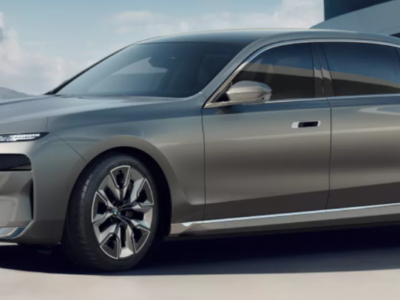
BMW M5 vs Audi RS7: Which Super Sedan Deserves Your Garage?

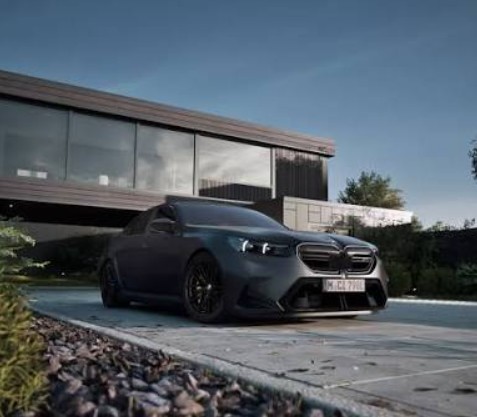
The BMW M5 vs Audi RS7 debate is one of those automotive arguments that can turn a quiet dinner into a two-hour discussion. Both cars have four doors, outrageous power, all-wheel drive, luxury-car comfort, and the ability to embarrass dedicated sports cars when the road opens up. Yet they approach the same mission from noticeably different angles.
The latest BMW M5 has changed the formula more dramatically than almost any M5 before it. It combines a 4.4-liter twin-turbo V8 with an electric motor, producing 717 horsepower and 738 lb-ft of torque in U.S. specification. BMW quotes 0-60 mph in 3.4 seconds. The trade-off? At roughly 5,390 pounds, this plug-in-hybrid M5 is a seriously heavy machine.
The 2026 Audi RS7 Performance, meanwhile, sticks to a more traditional recipe. Its 4.0-liter twin-turbo V8 produces 621 horsepower and 627 lb-ft, with Audi quoting 0-60 mph in 3.3 seconds.
So the BMW has substantially more power, yet the Audi is officially a tenth quicker to 60 mph. Interesting already, isn't it?
Let's dig deeper because this rivalry isn't won on a spreadsheet.
Content in this publication
- BMW M5 vs Audi RS7 Specifications at a Glance
- BMW M5 vs Audi RS7 Performance: Two Different Philosophies
- Audi RS7 Performance Keeps Things Comparatively Simple
- BMW M5 vs Audi RS7 0-60: Which Is Faster?
- BMW M5 vs Audi RS7 Handling
- Steering Feel and Driver Engagement
- BMW M5 vs Audi RS7 Design
- Interior Quality: BMW M5 vs Audi RS7
- Comfort and Everyday Driving
- Practicality: Audi RS7 Has a Secret Weapon
- Technology and Driver Assistance
- BMW M5 vs Audi RS7 Sound
- Fuel Economy and Running Costs
- BMW M5 vs Audi RS7 Reliability
- BMW M5 vs Audi RS7 Price
- Which Car Has More Presence?
- BMW M5 vs Audi RS7 for Daily Driving
- BMW M5 vs Audi RS7 for Enthusiasts
- Which Is Better for Long Road Trips?
- Which One Is More Exclusive?
- BMW M5 Pros and Cons
- Audi RS7 Pros and Cons
- Who Should Buy the BMW M5?
- Who Should Buy the Audi RS7?
- BMW M5 vs Audi RS7: Which One Wins?
- Conclusion: Two Different Ways to Build the Ultimate Daily Supercar
- Frequently Asked Questions
BMW M5 vs Audi RS7 Specifications at a Glance
Before we start dissecting personality, here's the basic picture.
| Specification | BMW M5 | Audi RS7 Performance |
|---|---|---|
| Engine | 4.4L twin-turbo V8 + electric motor | 4.0L twin-turbo V8 |
| Power | 717 hp | 621 hp |
| Torque | 738 lb-ft | 627 lb-ft |
| Transmission | 8-speed automatic | 8-speed Tiptronic |
| Drivetrain | M xDrive AWD | quattro AWD |
| 0-60 mph | 3.4 sec | 3.3 sec |
| Electrification | Plug-in hybrid | Gasoline V8 |
| Body style | Sedan | Sportback |
| Character | Aggressive, technical, enormously powerful | Sleek, fast, refined |
BMW's figures come directly from BMW USA, while Audi lists the RS7 Performance at 621 hp, 627 lb-ft and 3.3 seconds to 60 mph.
Those numbers, however, tell only half the story.
BMW M5 vs Audi RS7 Performance: Two Different Philosophies
Imagine two heavyweight boxers.
The M5 walks into the ring carrying every piece of modern performance technology BMW could find. Turbocharging? Of course. Electrification? Yes. All-wheel drive? Absolutely. Adaptive chassis systems? Naturally.
The RS7 walks in wearing a perfectly tailored suit, cracks its knuckles and simply says, "V8."
That's an oversimplification, but it captures their personalities surprisingly well.
The BMW feels like the newer interpretation of the super-sedan formula. The Audi feels like the ultimate evolution of the older one.
The M5 Has Entered the Hybrid Era
BMW's decision to electrify the M5 generated plenty of discussion, but the reasoning is easy to understand.
Electric assistance delivers immediate torque while the V8 builds boost. The hybrid system can also allow limited electric driving and adds another layer of flexibility to a car that is supposed to handle commuting just as convincingly as high-speed driving.
The downside is mass.
At around 5,390 pounds, the M5 weighs more like a luxury SUV than our mental image of a traditional sports sedan.
BMW therefore had to engineer around the weight with sophisticated suspension, steering, braking and torque-management systems.
Does the Extra Weight Ruin the M5?
Not necessarily.
Modern chassis engineering can hide tremendous amounts of mass. The M5 isn't suddenly lumbering around like a delivery truck. Its immense torque, powerful brakes and advanced chassis systems are designed specifically to make that weight disappear from the driver's attention.
Physics hasn't been cancelled, though.
Push hard enough through repeated direction changes and the M5's mass eventually introduces itself.
Audi RS7 Performance Keeps Things Comparatively Simple
The Audi RS7 Performance looks almost traditional next to the electrified BMW.
Underneath that long hood sits Audi's 4.0-liter twin-turbocharged V8, producing 621 hp. Power travels through an eight-speed Tiptronic automatic transmission and quattro all-wheel drive. Audi also equips the car with RS-tuned adaptive air suspension and a sport rear differential capable of actively distributing torque between the rear wheels.
There's something refreshing about the recipe.
Engine. Turbos. Transmission. All-wheel drive.
Go.
No plug required.
Which Engine Feels More Special?
Pure numbers favor the BMW.
An extra 96 horsepower and 111 lb-ft of torque are hardly insignificant.
Put your foot down in the M5 and the acceleration can feel like someone suddenly shortened the road ahead. Electric torque fills gaps while the V8 delivers the drama.
Yet the RS7's V8 has an appealing mechanical purity.
Audi has even reduced some insulation in the RS7 Performance so that more engine sound reaches the cabin.
For drivers who worry that high-performance cars are becoming increasingly digital, the Audi may feel like the more familiar friend.
BMW M5 vs Audi RS7 0-60: Which Is Faster?
Here's the amusing part.
BMW: 3.4 seconds.
Audi: 3.3 seconds.
Despite having considerably less horsepower, the Audi carries the quicker manufacturer-estimated 0-60 figure.
Of course, real-world acceleration depends on tires, temperature, road surface, launch technique and specification. Manufacturer acceleration figures aren't laboratory laws.
Still, the lesson is useful: horsepower alone doesn't determine acceleration.
Rolling Acceleration Could Tell a Different Story
Once both cars are already moving, the M5's enormous combined output should make the contest extremely interesting.
This is where that 717-hp hybrid system becomes particularly relevant.
Floor either car from highway speeds and you're entering a world where the scenery starts arriving much faster than expected.
The distinction we're making isn't that one feels fast and the other doesn't.
They both feel absurdly fast.
We're choosing between different flavors of absurdity.
BMW M5 vs Audi RS7 Handling
Straight-line speed is almost the easy part these days.
Building a 600-plus-horsepower luxury car that can also navigate corners gracefully is much harder.
This is where BMW's traditional reputation enters the conversation.
BMW M5: More Driver-Focused
Historically, the M5 has been positioned as the enthusiast's executive sedan, and the latest model still tries hard to maintain that identity.
Its M xDrive system, adaptive chassis technology and enormous reserves of power give the driver tremendous control over how aggressively the car behaves.
The M5 feels engineered around the idea that somebody might actually wake up early on Sunday morning just to drive it.
That's important.
It may carry executives Monday through Friday, but there's still an M badge on the trunk.
Audi RS7: Devastatingly Effective
The RS7 approaches corners with a slightly different attitude.
Its quattro system provides tremendous traction, while the sport rear differential actively distributes torque across the rear axle when accelerating through corners.
The result is confidence.
Where the BMW encourages us to interact with the chassis, the Audi often seems to say, "Don't worry, I've got this."
For wet roads, cold mornings and unpredictable conditions, that security becomes genuinely valuable.
Which Is More Fun?
We'd lean toward the M5 for drivers who actively seek involvement.
The RS7 may feel more polished and less theatrical while covering ground at an astonishing pace.
Think of the BMW as a roller coaster where we can see every twist coming.
The Audi is more like a high-speed train: smoother, quieter and almost disturbingly effective.
Steering Feel and Driver Engagement
Neither car is a lightweight analog sports machine, so anyone expecting Lotus Elise levels of communication is shopping in the wrong aisle.
Within this category, however, BMW generally places more emphasis on making the steering and chassis part of the experience.
The M5's cockpit, seating position and performance controls remind us constantly that we're driving the flagship M sedan.
The RS7 has a slightly different vibe.
It feels like a luxury GT that happens to possess supercar acceleration rather than a sports sedan that happens to possess luxury-car comfort.
That distinction may sound tiny.
Spend several hours behind the wheel and it becomes much more obvious.
BMW M5 vs Audi RS7 Design
Now we enter dangerous territory because styling is subjective.
But these cars don't even try to make the same visual statement.
BMW M5 Exterior: Muscular and Confrontational
The current M5 looks broad, aggressive and substantial.
Its bodywork announces performance rather loudly. Large intakes, muscular proportions and distinctive M details give it considerable road presence.
Subtle?
Not particularly.
Park it outside a restaurant and nobody is likely to confuse it with an ordinary 5 Series.
Audi RS7 Exterior: Sleeker and More Exotic
The RS7 is one of Audi's best examples of making a large performance car look low and fast even when standing still.
The Sportback roofline flows toward the rear like someone pulled the bodywork backward in a wind tunnel.
It looks more exotic than the BMW without necessarily looking louder.
Audi's signature lighting and wide stance help too.
Our Design Winner: Audi RS7
If we judge purely by exterior elegance, we'd give the RS7 the advantage.
It mixes aggression with restraint beautifully.
The M5 looks mean.
The Audi looks expensive, fast and slightly sinister.
Interior Quality: BMW M5 vs Audi RS7
Both cabins remind us where a large portion of the purchase price goes.
We're talking premium materials, huge displays, powerful sound systems, configurable driving modes and enough computing power to make yesterday's luxury cars feel ancient.
You may be interested in reading BMW M5 vs M8: Which BMW M Car Is Better?
BMW M5 Interior
The BMW cabin feels newer and more digital.
Large screens dominate the dashboard, while M-specific displays and performance settings give owners endless opportunities to tailor the car.
Depending on your personality, that configurability is either brilliant or slightly exhausting.
Want to change the steering weight?
Sure.
Powertrain response?
Naturally.
Suspension?
Of course.
Regenerative behavior, drivetrain settings and performance displays?
Welcome to the modern M5.
Audi RS7 Interior
Audi's cockpit feels cleaner and more understated.
The 12.3-inch Audi Virtual Cockpit Plus provides customizable information, including RS-specific layouts, while wireless Apple CarPlay and Android Auto are supported. Audi also offers a 19-speaker, 1,820-watt Bang & Olufsen Advanced sound system.
There's plenty of technology, but it doesn't always shout for attention.
Which Cabin Feels More Luxurious?
We'd call this one close.
Choose the BMW if you love futuristic interfaces and configurability.
Choose the Audi if you prefer minimalist sophistication.
Comfort and Everyday Driving
This section matters more than enthusiasts occasionally admit.
Nobody buys an M5 or RS7 solely for 0-60 runs.
These cars will sit in traffic.
They'll commute.
They'll carry passengers.
They'll probably visit supermarkets.
And that's precisely why they are so fascinating.
The Audi Is an Excellent Grand Tourer
The RS7's adaptive air suspension deserves attention here. Audi specifically tunes the system for RS duty, balancing control with the type of long-distance comfort expected from an executive car.
Settle into a highway cruise and the RS7 can calm down remarkably well.
That dual personality might actually be its greatest talent.
The BMW Offers Another Trick: Electric Driving
Because the M5 is a plug-in hybrid, it can approach routine urban driving differently.
Short journeys may be completed with electric assistance depending on battery charge, conditions and operating mode.
For an owner who can regularly plug in at home, that changes the daily ownership experience.
You could theoretically enjoy quiet electrified commuting during the week and unleash the full V8 hybrid powertrain when the road becomes interesting.
That's a strange combination.
It's also rather clever.
Practicality: Audi RS7 Has a Secret Weapon
This might be the RS7's most underrated advantage.
It isn't a conventional sedan.
It's a Sportback.
That large rear hatch makes the Audi unusually practical for something capable of running with genuine sports cars.
Open the back and loading bulky luggage becomes considerably easier than with a normal sedan trunk.
Golf equipment, suitcases, shopping bags and awkward cargo fit the Audi's personality surprisingly well.
BMW M5 Still Works Brilliantly as a Sedan
The M5 remains a spacious four-door executive sedan with useful rear seating and a conventional trunk.
For normal family duties, it's hardly impractical.
But if we're comparing cargo flexibility directly, the RS7's hatchback configuration wins.
There is, of course, another solution: BMW also offers the M5 Touring for buyers wanting maximum cargo practicality with the same 717-hp powertrain.
That's another article entirely.
Technology and Driver Assistance
Neither vehicle leaves us wishing for more screens.
Both offer sophisticated infotainment, connected services, cameras and driver-assistance systems.
Audi offers technology including:
- Audi Virtual Cockpit Plus
- Wireless Apple CarPlay and Android Auto
- Available head-up display
- Top-view camera system
- Available remote park assist plus
- Adaptive cruise assist with lane guidance
- Available night vision assistance
- Available Bang & Olufsen premium audio
Audi's current U.S. specifications confirm these available systems, although equipment varies by package and market.
BMW counters with its latest operating system, curved displays, M-specific performance interfaces and a broad collection of driver-assistance and parking technologies.
At this price point, neither feels technologically deprived.
BMW M5 vs Audi RS7 Sound
An executive super sedan should occasionally wake up the neighborhood.
Otherwise, what's the point?
The M5's V8 remains central to its identity despite the hybrid assistance. Its soundtrack mixes traditional eight-cylinder muscle with the almost instantaneous response of the electric system.
The Audi sounds a little more old-school.
Its RS-specific exhaust terminates in those unmistakable oval outlets, while Audi offers a sport exhaust with black tips for buyers who want additional character.
We'd give the RS7 a slight emotional advantage here.
The Audi's powertrain simply feels like a celebration of the twin-turbo V8 era.
Fuel Economy and Running Costs
Nobody buys either car because filling stations are too far apart.
Still, operating costs matter.
The BMW's plug-in hybrid system creates a fascinating equation.
Owners who regularly charge and make short daily journeys may use considerably less gasoline during routine driving than someone who never plugs the car in.
But once the battery's assistance isn't the central factor and the 4.4-liter V8 is doing serious work, miracles shouldn't be expected.
The RS7 follows a more straightforward pattern.
It's a powerful twin-turbo V8 luxury performance car.
Feed it premium fuel.
Often.
Maintenance Won't Be Cheap Either
Performance vehicles consume expensive things.
Think:
- Large performance tires
- High-performance brake components
- Premium synthetic oil
- Specialized suspension hardware
- Complex electronics
- Expensive insurance
- Premium fuel
- Potentially enormous out-of-warranty repair bills
The BMW also introduces the long-term complexity of a high-performance plug-in-hybrid system.
The Audi avoids the traction battery and electric-drive layer, but a 621-hp twin-turbo German V8 is hardly a Toyota Corolla when repair time arrives.
Anyone buying either car used should place service history near the top of the checklist.
BMW M5 vs Audi RS7 Reliability
Neither should be purchased because we're hunting for the cheapest possible long-term transportation.
These are extremely sophisticated machines.
More performance generally means more heat, more specialized components and tighter engineering tolerances.
Add active suspension, all-wheel-drive systems, turbochargers, complex infotainment and enormous brakes, and potential repair costs increase quickly.
Which One Would We Keep Outside Warranty?
The RS7's simpler non-plug-in-hybrid powertrain may appeal to buyers thinking ten years down the road.
Yet simpler doesn't mean simple.
The Audi still has twin turbochargers, complicated electronics, quattro hardware and adaptive suspension.
For either model, we'd prioritize condition and maintenance records over a blanket claim that one badge is inherently more reliable.
BMW M5 vs Audi RS7 Price
Current U.S. pricing puts these cars firmly in six-figure territory.
For 2027, BMW lists the M5 Sedan from $123,300, while the 2026 Audi RS7 Performance starts at $130,700 before options, taxes and destination-related costs.
Options can quickly send either car significantly higher.
And let's be realistic: very few examples sitting on dealer lots will resemble the absolute base configuration.
Carbon trim?
Upgraded sound?
Premium paint?
Driver-assistance packages?
You may be interested in readingBMW M5 vs M8: Which BMW M Car Is Better?You may be interested in reading
BMW M5 vs Mercedes E63 AMG: Which Super Sedan Wins?Fancy wheels?
Suddenly our already expensive performance sedan has entered another financial universe.
Which Car Has More Presence?
The answer depends on what kind of attention we want.
The M5 has an unmistakable performance-sedan identity. Enthusiasts know exactly what it is, and BMW has made sure the current model doesn't hide its muscular proportions.
The RS7 attracts attention differently.
Its low roof, wide shoulders and Sportback profile make it look closer to a four-door exotic GT.
Drive the BMW and people see an M car.
Drive the Audi and some people may simply wonder, "What is that?"
We rather like that.
BMW M5 vs Audi RS7 for Daily Driving
For pure everyday usability, we'd lean slightly toward the Audi RS7.
Why?
Its hatchback provides additional cargo versatility. The air suspension suits long-distance driving beautifully. Quattro inspires confidence in poor weather. And the cabin remains quiet and sophisticated when we're not pretending the highway entrance ramp is Nürburgring qualifying.
The BMW fights back with something Audi can't duplicate: plug-in capability.
If our normal commute is short and charging is convenient, the M5 suddenly makes enormous practical sense despite having 717 horsepower.
What a bizarre sentence.
Yet here we are.
BMW M5 vs Audi RS7 for Enthusiasts
This is where the M5 regains momentum.
BMW has spent decades conditioning us to associate the M5 badge with the idea of a driver's sedan.
The latest version is heavier and more technologically complex than its ancestors, but the mission remains recognizable.
It invites experimentation.
Change a mode.
Tighten the suspension.
Sharpen the powertrain.
Attack a corner.
Do it again.
The Audi is incredibly capable but feels more like a high-speed luxury missile.
For some drivers, that's actually preferable.
Which Is Better for Long Road Trips?
We'd choose the RS7.
Its combination of effortless V8 torque, adaptive air suspension, excellent cabin refinement and hatchback practicality makes it almost purpose-built for crossing countries at serious speed.
The M5 is hardly uncomfortable, though.
In fact, its enormous performance envelope makes highway overtaking laughably easy.
But the Audi's personality simply suits grand touring better.
Pack the luggage.
Fill the tank.
Point toward another state.
Disappear over the horizon.
Which One Is More Exclusive?
Neither M5s nor RS7s appear on every street corner, but the RS7 has a slightly more exotic aura.
Part of this comes from the shape.
There aren't many large performance liftbacks with a low, coupe-like roofline and a twin-turbo V8.
The BMW carries arguably the more legendary badge, however.
"M5" means something in automotive culture.
The lineage stretches back through several generations of benchmark sports sedans.
So which is more special?
The Audi looks more exotic.
The BMW carries more historical weight.
BMW M5 Pros and Cons
The M5's case is compelling.
Pros:
- Monumental 717-hp output
- Huge 738 lb-ft torque figure
- Plug-in-hybrid capability
- Strong driver-focused personality
- M xDrive traction
- Luxurious, technology-rich interior
- Legendary M5 heritage
Cons:
- Extremely heavy
- Complex hybrid powertrain
- Styling may be too aggressive for some
- Potentially expensive long-term ownership
- Conventional trunk less versatile than RS7 hatch
The new M5 is almost absurdly ambitious.
BMW didn't merely improve the old formula.
It reinvented it.
Audi RS7 Pros and Cons
Audi takes the opposite approach.
Pros:
- Beautiful Sportback proportions
- 621-hp twin-turbo V8
- Manufacturer-quoted 3.3-second 0-60 time
- Excellent quattro traction
- Practical hatchback design
- Superb long-distance character
- Refined interior
- More traditional non-PHEV performance experience
Cons:
- Less power than the M5
- Still extremely expensive
- High fuel consumption is unavoidable when driven hard
- Some drivers may find it less playful than the BMW
- Options can dramatically increase the price
The RS7 doesn't need to shout.
It simply gets on with being brutally fast.
Who Should Buy the BMW M5?
Buy the BMW M5 if performance involvement matters most.
It makes particular sense when we:
- Want maximum horsepower
- Enjoy adjusting driving settings
- Prefer a traditional sedan
- Appreciate BMW M heritage
- Can benefit from plug-in charging
- Want the newest performance technology
- Prioritize driver engagement over minimalist elegance
The M5 feels like a car built for someone who reads the owner's manual specifically to discover what every performance setting does.
That's a compliment.
Who Should Buy the Audi RS7?
Buy the Audi RS7 Performance if we want effortless speed wrapped in a more elegant package.
It fits buyers who:
- Prefer understated aggression
- Love the Sportback design
- Need flexible cargo space
- Want quattro confidence
- Prefer a conventional V8 drivetrain
- Regularly take long road trips
- Value comfort as much as cornering excitement
The RS7 is the car we'd choose when we want to travel ridiculously quickly without making the journey feel like work.
BMW M5 vs Audi RS7: Which One Wins?
There isn't a universal winner, and that's precisely why this comparison is so interesting.
If we're chasing raw output, technology and driver involvement, the BMW M5 gets our vote.
Its 717-hp hybrid powertrain is outrageous. The acceleration is devastating. The chassis engineering required to make such a heavy car behave like an M product is fascinating. And despite becoming more complicated, the M5 still makes the driver feel central to the experience.
If we're judging design, grand-touring ability and everyday versatility, we'd choose the Audi RS7 Performance.
It's beautiful, brutally quick, surprisingly practical and powered by a 621-hp V8 that doesn't need electrification to provide enormous performance. Audi's official 3.3-second 0-60 estimate also reminds us that raw horsepower numbers don't tell the whole story.
Our Final Score
For a simple comparison:
Performance: BMW M5
Acceleration: Audi RS7, narrowly by official figures
Handling involvement: BMW M5
Exterior design: Audi RS7
Interior technology: BMW M5
Grand touring: Audi RS7
Cargo practicality: Audi RS7
Powertrain excitement: Tie
Daily usability: Audi RS7
Driver engagement: BMW M5
And the overall winner?
By the smallest possible margin, BMW M5.
But we'd understand completely if someone walked straight past it and bought the RS7.
Conclusion: Two Different Ways to Build the Ultimate Daily Supercar
The BMW M5 vs Audi RS7 contest proves that incredible performance doesn't require giving up comfort, four doors or real-world usability.
BMW approaches the challenge like an engineer with an unlimited toolbox. It combines a twin-turbo V8, electric assistance, all-wheel drive and sophisticated chassis electronics to produce a 717-hp technological monster.
Audi takes a slightly purer route. The RS7 Performance combines a 621-hp twin-turbo V8 with quattro, adaptive air suspension and one of the most attractive four-door profiles on sale.
The M5 feels more rebellious.
The RS7 feels more effortless.
One grabs us by the collar.
The other quietly bends the horizon.
If our perfect weekend involves hunting down twisty roads and exploring every performance setting, we'd take the BMW.
If we're packing luggage, pointing toward a distant city and wanting one machine that looks gorgeous while doing almost everything brilliantly, the Audi might actually be the better car.
Either way, we're dealing with two machines that make the phrase "daily driver" sound hilariously inadequate.
Frequently Asked Questions
Is the BMW M5 faster than the Audi RS7?
It depends on how we define faster. The current BMW M5 produces significantly more power at 717 hp versus 621 hp for the Audi RS7 Performance. However, Audi quotes a 3.3-second 0-60 mph time, while BMW quotes 3.4 seconds for the M5. Real-world results can vary depending on conditions and testing methodology.
Does the BMW M5 have more horsepower than the Audi RS7?
Yes. The current BMW M5 produces 717 horsepower and 738 lb-ft of torque, while the Audi RS7 Performance develops 621 horsepower and 627 lb-ft. The BMW's advantage comes partly from its plug-in-hybrid system, which pairs an electric motor with its 4.4-liter twin-turbo V8.
Is the Audi RS7 more practical than the BMW M5?
For cargo, generally yes. The RS7 uses a Sportback body with a large rear hatch, making it easier to load bulky items than the conventional sedan trunk of the M5. Both offer four doors and usable rear seating, so either can function comfortably as an everyday luxury performance car.
Which is better for everyday driving, BMW M5 or Audi RS7?
We'd give the Audi RS7 a slight advantage for conventional daily driving because of its hatchback practicality, refined road manners and adaptive air suspension. The BMW may be more attractive for owners who can regularly charge at home, however, because its plug-in-hybrid drivetrain adds electric-driving flexibility.
You may be interested in readingBMW M5 vs M8: Which BMW M Car Is Better?You may be interested in reading
BMW M5 vs Mercedes E63 AMG: Which Super Sedan Wins?You may be interested in reading
BMW M5 vs Audi RS6: Which High-Performance Icon Wins?Which should I buy: BMW M5 or Audi RS7?
Choose the BMW M5 if you prioritize horsepower, chassis involvement, cutting-edge hybrid performance and BMW M heritage. Choose the Audi RS7 if you prioritize styling, cargo flexibility, long-distance comfort and the character of a more traditional twin-turbo V8 performance car. Neither choice is wrong; they simply serve slightly different types of enthusiast.
If you want to know other articles similar to BMW M5 vs Audi RS7: Which Super Sedan Deserves Your Garage? you can visit the category Models.
BMW i7 vs Porsche Taycan: Luxury EVs With Very Different Personalities
BMW i7 vs 7 Series: Which BMW Flagship Makes More Sense?
BMW i7 vs Mercedes EQS: The Ultimate Luxury EV Comparison
BMW i7 vs M760e: Electric Luxury or Plug-In Hybrid Power?
NFINITI QX60 or Similar: Luxury SUVs Worth Comparing
Infiniti QX60 vs VW Atlas: Which Three-Row SUV Makes More Sense?
Leave a Reply
More content of your interest