

Do Hyundai Palisades Hold Their Value? A Complete Resale Guide

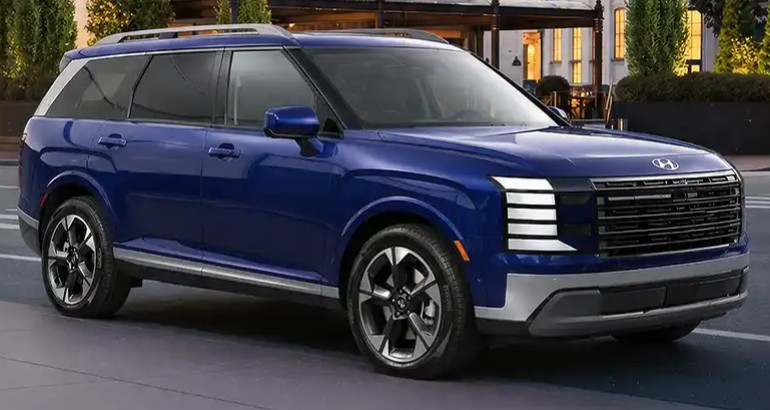
When we buy a three-row SUV, the sticker price is only part of the financial story. The other big question waits quietly in the background: what will this vehicle be worth when we eventually sell or trade it? That matters whether we keep our SUV for three years, five years, or until the kids are old enough to drive it themselves.
So, do Hyundai Palisades hold their value?
The short answer is reasonably well, but they are not class-leading resale champions. Current depreciation studies suggest the Hyundai Palisade performs around the average for midsize SUVs. iSeeCars estimates that a Palisade loses approximately 45.3% of its value after five years, meaning it retains about 54.7%. Interestingly, its estimated five-year depreciation is slightly better than the midsize SUV category average of roughly 46.3%.
Another analysis from CarEdge is somewhat more conservative, estimating that the Palisade retains about 50.5% of its value after five years.
Those numbers aren't spectacular, but they're certainly not disastrous either.
The Palisade sits in an interesting position. It gives us a premium-looking cabin, lots of equipment, family-friendly practicality, and a relatively attainable starting price. Those qualities make used examples attractive, which helps support resale demand. On the other hand, Hyundai traditionally hasn't commanded the same used-car premium as certain Toyota or Honda SUVs.
Let's dig deeper into what Palisade depreciation actually looks like, which versions may hold their value best, and what we can do to protect our money.
Content in this publication
- How Well Does a Hyundai Palisade Hold Its Value?
- Hyundai Palisade Depreciation Explained Simply
- Is Hyundai Palisade Resale Value Good or Bad?
- Why Hyundai Palisades Can Hold Their Value Relatively Well
- What Hurts Hyundai Palisade Resale Value?
- Does Mileage Affect Palisade Resale Value?
- Does Palisade Condition Matter More Than Age?
- Do Accidents Hurt Hyundai Palisade Resale Value?
- Which Hyundai Palisade Trim Holds Its Value Best?
- Does AWD Help Hyundai Palisade Resale Value?
- What Colors Hold Value Best?
- Does Maintenance History Improve Palisade Resale Value?
- Is a Used Hyundai Palisade a Better Value Than a New One?
- Should We Buy a Palisade If Resale Value Matters?
- How Long Should We Keep a Hyundai Palisade?
- How the 2026 Palisade Could Affect Older Palisade Values
- How to Make a Hyundai Palisade Hold Its Value Better
- Should We Trade or Sell a Palisade Privately?
- Are Hyundai Palisades Expensive to Own Because of Depreciation?
- Does Buying a Palisade Make Financial Sense?
- Who Should Buy a Hyundai Palisade?
- Who Should Think Twice?
- Final Verdict: Do Hyundai Palisades Hold Their Value?
- Frequently Asked Questions
How Well Does a Hyundai Palisade Hold Its Value?
Think of depreciation as gravity for cars. Almost every new vehicle experiences it, and resisting it completely is nearly impossible.
What really matters is how quickly the vehicle falls.
According to iSeeCars' analysis of millions of vehicles, a new Hyundai Palisade depreciates approximately:
- 26.7% after three years
- 45.3% after five years
- 56.8% after seven years
- 69.8% after ten years
That leaves an estimated residual value of roughly 54.7% after five years.
CarEdge's model predicts somewhat heavier depreciation, estimating approximately 49% depreciation after five years, leaving around 50.5% of the original value. Its calculations assume normal condition and typical annual mileage.
Different valuation companies use different assumptions, so we shouldn't become obsessed with one percentage. The broader conclusion is more useful:
A typical Hyundai Palisade may retain roughly half to a little more than half of its original value after five years.
That's respectable for a mainstream three-row crossover.
Hyundai Palisade Depreciation Explained Simply
Suppose we purchase a Palisade for $48,000.
If our SUV retains approximately 54% of that value five years later, it could theoretically be worth somewhere around $26,000, depending on mileage, condition, trim, location, market conditions, and equipment.
That's about $22,000 disappearing through depreciation.
Sounds painful, right?
Unfortunately, that's simply the reality of purchasing most new vehicles.
CarEdge currently estimates roughly $24,452 in five-year Palisade depreciation in one of its ownership scenarios, using an average new transaction price of $49,438.
However, depreciation isn't perfectly linear. The first owner generally absorbs the steepest drop.
Why New Cars Lose Value So Quickly
A brand-new vehicle becomes used the moment we start driving it.
That sounds almost comically unfair, but markets work that way. Buyers expect a discount when purchasing something previously owned, even if it has only a few thousand miles.
During the first few years, depreciation can be influenced by:
- New-car incentives
- Dealer discounts
- Manufacturer price changes
- Mileage accumulation
- New generations arriving
- Updated technology
- Used-car supply
- Consumer demand
- Interest rates
Once a vehicle reaches several years old, depreciation usually becomes less aggressive.
The Palisade's Depreciation Curve Is Not a Straight Line
CarEdge's current projection illustrates this nicely. Its model estimates residual values of approximately 72% after the first year, 63% after three years, and 50.5% after five years under its assumptions.
That means buying a two- or three-year-old Palisade can sometimes be financially attractive because another owner has already absorbed part of the initial depreciation.
Is Hyundai Palisade Resale Value Good or Bad?
We would describe Palisade resale value as average to reasonably good for the segment.
It's not the SUV we'd purchase purely because we expect extraordinary resale performance. But it's also not something we should avoid because we're afraid its value will collapse.
iSeeCars estimates Palisade five-year depreciation at 45.3%, compared with approximately 46.3% for midsize SUVs overall.
That's an important distinction.
The Palisade doesn't need to beat every Toyota, Honda, Lexus, or off-road SUV to qualify as a sensible ownership proposition. If it offers the space, comfort, features, and purchase price we want, average depreciation may be perfectly acceptable.
Why Hyundai Palisades Can Hold Their Value Relatively Well
Resale value isn't magic. Several practical forces help create demand for used Palisades.
Strong Demand for Three-Row SUVs
Families love three-row crossovers.
They're essentially the Swiss Army knives of modern transportation. They can carry children to school Monday morning, groceries Monday afternoon, sports equipment Saturday, and luggage for a road trip Sunday.
That broad usefulness creates a large pool of potential used buyers.
A five-year-old Palisade can still appeal to:
- Growing families
- Buyers upgrading from compact SUVs
- People needing occasional third-row seating
- Used-car shoppers wanting premium features
- Drivers who don't want minivans
- Buyers who cannot justify a brand-new large SUV
More potential buyers generally means healthier resale demand.
The Palisade Looks More Expensive Than It Is
One of Hyundai's smartest tricks with the Palisade has always been perceived luxury.
Higher trims can feature upscale materials, large displays, sophisticated exterior styling, ventilated seating, premium audio, and numerous convenience features.
Park a well-kept Palisade beside some luxury SUVs and it doesn't look like it wandered into the wrong parking lot.
That matters on the used market.
A three- or four-year-old Palisade can offer buyers a lot of visual and technological appeal without requiring luxury-brand money.
Useful Technology Keeps Used Models Appealing
Cars age quickly when their technology feels ancient.
Fortunately, relatively recent Palisades were developed during an era when smartphone integration, active driver assistance, large infotainment screens, multiple USB ports, and digital conveniences were becoming standard expectations.
That can help older models remain attractive.
A used SUV that still feels modern has a stronger chance of maintaining demand than something that looks technologically frozen in another decade.
What Hurts Hyundai Palisade Resale Value?
Now we reach the other side of the coin.
Several factors prevent the Palisade from becoming a depreciation superstar.
Brand perception matters tremendously in the used market.
Some buyers automatically associate brands such as Toyota with longevity. Whether every individual model deserves that reputation is another discussion, but perception alone can influence used prices.
Hyundai has improved enormously over the past couple of decades, yet older perceptions don't vanish overnight.
That means a Hyundai sometimes needs to compete harder on price when it reaches the secondhand market.
New-Car Incentives Can Pressure Used Prices
Imagine we're selling a two-year-old Palisade for $39,000.
Now imagine local dealers start offering significant discounts or attractive financing on brand-new Palisades.
Suddenly buyers may think, "Why buy used?"
That's the resale problem created by aggressive new-car incentives.
Whenever the effective transaction price of a new vehicle falls, used examples may need to become cheaper as well.
Does Mileage Affect Palisade Resale Value?
Absolutely.
Mileage is one of the clearest signals buyers use when evaluating a used vehicle.
Two otherwise identical Palisades can have noticeably different values if one shows 35,000 miles and the other shows 80,000.
Mileage affects value because buyers associate higher odometer readings with:
- Greater mechanical wear
- Shorter remaining component life
- More upcoming maintenance
- Higher probability of repairs
- Reduced warranty coverage
- Harder future resale
Driving isn't something we should fear—we bought the vehicle to use it—but excessive mileage can accelerate depreciation.
How Many Miles Per Year Is Reasonable?
Roughly 10,000 to 15,000 miles annually is commonly treated as a normal range in many U.S. valuation scenarios.
CarEdge, for example, uses mileage assumptions around 13,500 miles annually in its Palisade depreciation model.
If we're considerably below average mileage, our Palisade may command a premium.
If we're dramatically above average, expect buyers to negotiate harder.
Does Palisade Condition Matter More Than Age?
Sometimes, yes.
You may be interested in reading How Long Audi A4 Last? A Complete Lifespan and Mileage Guide
Imagine choosing between two five-year-old SUVs.
One has immaculate paint, a clean cabin, documented maintenance, matching tires, and no warning lights.
The other smells like wet Labrador, has scratched doors, stained seats, three different tire brands, and a dashboard glowing like a Christmas tree.
They're technically the same age.
They're definitely not worth the same amount.
Exterior Condition Matters
Common value killers include:
- Large dents
- Deep scratches
- Cracked lighting
- Wheel damage
- Windshield cracks
- Faded paint
- Rust
- Poorly repaired collision damage
Minor cosmetic wear is normal. Buyers understand that used vehicles aren't museum pieces.
Neglect is different.
Interior Condition Matters Too
The Palisade is commonly used as a family vehicle, which means interiors can take a beating.
Food spills, muddy shoes, pets, child seats, luggage, and daily commuting slowly leave their fingerprints.
A professionally cleaned interior before resale can sometimes deliver surprising value because presentation heavily influences first impressions.
Do Accidents Hurt Hyundai Palisade Resale Value?
Yes, particularly accidents that appear on vehicle history reports.
Even when repairs are performed properly, many used-car shoppers prefer vehicles with clean histories.
A repaired accident can trigger questions:
Was there structural damage?
Were factory parts used?
Was the paint matched correctly?
Will something appear later?
That uncertainty creates a discount.
Minor documented cosmetic damage isn't necessarily catastrophic, but significant collision history can reduce both trade-in and private-party value.
Which Hyundai Palisade Trim Holds Its Value Best?
There isn't one universally perfect answer because resale performance changes by region and market conditions.
However, middle and upper-middle trims often provide an attractive balance.
Why?
Because resale buyers want features, but they usually don't want to pay anywhere near the original premium for every luxury option.
Base Trims Can Be Good Value
Lower trims generally have smaller upfront prices.
Even if they sell for less later, we invested less money initially.
That means looking only at resale price can be misleading. What matters is the percentage and dollar amount lost.
Mid-Level Trims Often Hit the Sweet Spot
Mid-range Palisades can offer desirable features without pushing the new purchase price into luxury territory.
Used buyers often search for equipment such as:
- Heated seats
- Power liftgate
- Larger displays
- Driver assistance technology
- Leather or upgraded upholstery
- Premium wheels
- Second-row captain's chairs
Vehicles equipped with commonly desired features can be easier to market.
Top Trims Don't Always Return Every Dollar
High-end versions look fantastic and can feel genuinely luxurious.
But if we spend thousands extra on premium equipment, we shouldn't assume we'll recover that entire premium when selling.
Options depreciate too.
The buyer shopping for a six-year-old Palisade may love premium leather and fancy wheels, but they're probably not willing to pay what those features cost when new.
Does AWD Help Hyundai Palisade Resale Value?
Location matters.
In snowy or mountainous areas, all-wheel drive may meaningfully improve desirability.
Buyers in colder regions often intentionally search for AWD vehicles, creating stronger local demand.
In warm climates where snow is practically mythical, AWD might matter less.
So rather than declaring AWD universally better for resale, we'd say this:
AWD generally gives a Palisade broader market appeal, especially in regions where winter traction matters.
What Colors Hold Value Best?
Conservative colors usually create the broadest resale audience.
White, black, gray, silver, and dark blue rarely frighten anyone away.
An unusual color can be fantastic if we love it, but resale is ultimately a popularity contest. The more buyers who can imagine the SUV in their driveway, the easier it becomes to sell.
Color won't transform a depreciating vehicle into an investment, but unusual combinations can occasionally narrow the buyer pool.
Does Maintenance History Improve Palisade Resale Value?
Absolutely—and this is one of the easiest areas we can control.
A folder full of maintenance documentation silently tells the next buyer:
"This vehicle wasn't ignored."
Keep records for items such as:
- Oil changes
- Tire replacements
- Brake service
- Fluid changes
- Battery replacement
- Scheduled maintenance
- Warranty repairs
- Recall work
Documentation reduces uncertainty.
Used buyers aren't only purchasing metal and electronics. They're purchasing confidence.
Is a Used Hyundai Palisade a Better Value Than a New One?
For buyers focused heavily on depreciation, a lightly used Palisade can make excellent sense.
The original owner may have absorbed the sharpest early depreciation while the second owner receives most of the practical benefits.
A three-year-old Palisade can still feel modern, look contemporary, provide three rows of seating, and include plenty of technology.
Yet its purchase price may be substantially below its original MSRP.
That's where depreciation changes sides.
When we're buying new, depreciation works against us.
When we're shopping used, depreciation becomes our friend.
The Two- to Four-Year Window Can Be Attractive
Vehicles around two to four years old often offer an appealing combination of:
- Lower purchase price
- Modern styling
- Relevant technology
- Reasonable mileage
- Significant remaining useful life
Of course, market conditions matter. Sometimes used prices remain unusually high and the gap between new and used becomes too small.
Always compare actual transaction prices rather than assuming used automatically means better value.
Should We Buy a Palisade If Resale Value Matters?
Yes—provided resale isn't our only priority.
Cars aren't stocks. We're purchasing transportation, comfort, safety features, space, and convenience.
The smarter question isn't simply:
"Which SUV depreciates the least?"
It is:
"Which SUV gives us the best overall ownership experience for the amount of money we ultimately lose?"
That difference is enormous.
Suppose another SUV retains 5% more value but costs considerably more when new, lacks features we want, or feels less comfortable.
Have we really saved money?
You may be interested in readingHow Long Audi A4 Last? A Complete Lifespan and Mileage GuideYou may be interested in reading
 How Long Subaru Impreza Last: A Realistic Mileage and Lifespan Guide
Maybe not.
How Long Should We Keep a Hyundai Palisade?
If our goal is minimizing the annual pain of depreciation, constantly buying brand-new cars and replacing them after two years is usually difficult to justify financially.
Keeping the Palisade longer allows us to spread the original depreciation across more years of ownership.
Three Years
Selling after three years often means we've absorbed much of the steep early depreciation.
However, the vehicle remains relatively new and desirable, so resale demand can still be strong.
Five Years
Five years is a common ownership benchmark.
At this point, current estimates suggest we might retain somewhere around half of the original value, although actual results vary considerably.
Seven to Ten Years
Long-term ownership often makes more sense for people who want maximum utility from their purchase.
By this stage, depreciation continues, but we've also enjoyed many more years of transportation from the initial investment.
If the vehicle remains reliable and maintenance costs stay reasonable, keeping it can be cheaper than restarting the depreciation cycle with another new vehicle.
How the 2026 Palisade Could Affect Older Palisade Values
Generational changes can influence resale values.
A newly redesigned model can make previous versions look older almost overnight. Suddenly the dashboard, exterior styling, technology, and powertrain of yesterday's model feel dated.
That's normal.
Kelley Blue Book currently projects substantial depreciation as part of the five-year ownership cost of the 2026 Palisade as well, reinforcing the idea that even newly redesigned models remain subject to normal SUV depreciation.
However, older generations can also become attractive bargains.
A buyer who doesn't care about having the newest styling may happily choose a previous-generation Palisade if the price difference is substantial.
How to Make a Hyundai Palisade Hold Its Value Better
We can't stop depreciation, but we can certainly avoid accelerating it.
Here's the practical playbook:
- Buy at a competitive price. Depreciation begins with what we actually pay, not simply MSRP.
- Avoid unnecessary dealer add-ons. Expensive accessories rarely return their full cost at resale.
- Keep mileage reasonable when practical.
- Follow the maintenance schedule.
- Keep service receipts.
- Repair small cosmetic damage before it becomes large damage.
- Protect the interior from permanent stains and odors.
- Use quality replacement tires and components.
- Avoid questionable modifications.
- Compare multiple offers before selling or trading.
That first point deserves extra emphasis.
Purchase Price Is the Secret Weapon Against Depreciation
Imagine MSRP is $50,000.
Buyer A pays $50,000.
Buyer B negotiates the same vehicle to $46,500.
Five years later, both vehicles are worth $27,000.
Buyer A lost $23,000.
Buyer B lost $19,500.
Same vehicle. Same resale value.
Different depreciation experience.
We often focus obsessively on what the car will be worth later while ignoring what we pay today.
Should We Trade or Sell a Palisade Privately?
Trading is convenient.
Private selling may bring more money.
That's the classic trade-off.
Dealers need margin when purchasing our SUV because they may need to inspect it, recondition it, advertise it, finance inventory, and eventually resell it.
A private buyer doesn't need that same margin.
However, selling privately requires dealing with inquiries, test drives, payment arrangements, paperwork, and occasionally people whose opening message is simply, "What's your lowest?"
Convenience has value too.
Get several trade quotes before deciding. Even a difference of $1,500 can materially change the ownership economics.
Are Hyundai Palisades Expensive to Own Because of Depreciation?
Depreciation is significant, but it isn't the only ownership cost.
Fuel, financing, insurance, maintenance, repairs, taxes, and registration all matter.
CarEdge currently estimates depreciation as the largest single component of its modeled five-year Palisade ownership cost, accounting for roughly $24,452 in its scenario.
That's why resale value deserves attention.
A vehicle with low maintenance costs can still be expensive to own if it sheds value like autumn leaves.
Conversely, a vehicle with higher service costs may still have competitive total ownership costs if resale values remain exceptionally strong.
We need to view the entire picture.
Does Buying a Palisade Make Financial Sense?
For the right household, yes.
The Palisade isn't primarily an investment. It's a practical family vehicle.
We're getting three-row seating, substantial passenger space, useful technology, competitive equipment, comfort, and an upscale feel.
The financial question becomes whether we're receiving enough usefulness to justify the depreciation.
If we purchase intelligently, maintain the SUV properly, avoid unnecessary upgrades, and keep it for several years, depreciation becomes much easier to absorb.
Who Should Buy a Hyundai Palisade?
The Palisade makes particular sense for buyers who prioritize:
- Family-friendly interior space
- Three-row practicality
- Strong feature content
- Comfortable road-trip manners
- Upscale styling without luxury-brand pricing
- Modern technology
- Long-term ownership rather than frequent trading
Someone planning to buy a new vehicle today and replace it 18 months later should pay much closer attention to short-term depreciation.
Someone planning to keep a Palisade for eight or ten years may care considerably less about five-year resale rankings.
Who Should Think Twice?
The Palisade may not be ideal if resale value is the single most important criterion in the purchase.
Buyers who flip vehicles frequently may prefer models known for exceptional residual values.
Likewise, purchasing the most expensive Palisade trim and loading it with dealer-installed accessories purely because we expect to recover those costs later isn't a particularly strong strategy.
Buy expensive features because we want to enjoy them—not because we expect the next buyer to reimburse us.
Final Verdict: Do Hyundai Palisades Hold Their Value?
So, do Hyundai Palisades hold their value?
Yes, reasonably well for a mainstream midsize three-row SUV, although we shouldn't expect class-leading depreciation resistance.
Available estimates vary by methodology. iSeeCars calculates about 45.3% depreciation after five years, leaving approximately 54.7% residual value, while CarEdge's current projection puts five-year retained value closer to 50.5%.
Those figures put the Palisade somewhere in the broad middle of the depreciation conversation rather than at either extreme.
And that isn't necessarily bad.
The Palisade's strength is the complete package: spacious seating, abundant features, attractive styling, useful technology, and near-premium comfort without requiring premium-brand pricing.
If we buy at a competitive price, select a desirable configuration, maintain it carefully, keep mileage sensible, preserve service records, and own it for several years, its depreciation can be entirely manageable.
Ultimately, the Palisade doesn't need to become a resale-value superstar to be a smart purchase.
It simply needs to give us enough value while we own it—and leave enough value when it's time to say goodbye.
Frequently Asked Questions
1. How much value does a Hyundai Palisade lose after five years?
Current estimates vary. iSeeCars estimates approximately 45.3% depreciation after five years, while CarEdge projects depreciation of roughly 49% under its assumptions. Actual resale value depends on purchase price, mileage, trim, condition, accident history, region, and market demand.
2. Is the Hyundai Palisade resale value good?
Its resale performance is best described as average to reasonably good for a midsize SUV. iSeeCars estimates its five-year depreciation slightly below the midsize SUV category average, meaning the Palisade performs competitively even though it isn't among the strongest value-retention vehicles overall.
3. Which Palisade trim holds its value best?
There is no universal winner because local demand changes resale pricing. Mid-range trims can be particularly attractive because they combine popular comfort and technology features with a lower original price than fully loaded versions. AWD can also improve desirability in regions with snow or challenging weather.
4. Is it better to buy a new or used Hyundai Palisade?
A lightly used Palisade can be financially attractive because the first owner has already absorbed part of the initial depreciation. However, buyers should compare actual new-car discounts, financing offers, used prices, mileage, condition, and warranty coverage before deciding.
5. How can we improve Hyundai Palisade resale value?
Keep mileage reasonable, follow scheduled maintenance, retain service documentation, repair cosmetic damage, keep the interior clean, avoid excessive modifications, choose broadly desirable equipment, and compare several purchase offers when it's time to sell. Most importantly, negotiate a competitive price when buying because paying less upfront directly reduces the amount of money exposed to depreciation.
You may be interested in readingHow Long Audi A4 Last? A Complete Lifespan and Mileage GuideYou may be interested in reading
How Long Subaru Impreza Last: A Realistic Mileage and Lifespan GuideYou may be interested in reading
 Is Hyundai Palisade a Good Car? A Complete Look at Reliability, Comfort, Value, and Ownership
If you want to know other articles similar to Do Hyundai Palisades Hold Their Value? A Complete Resale Guide you can visit the category Blog.
Does Mercedes A-Class Have a Renault Engine?
Kia Sportage Gas Tank Size: Complete Guide
BMW X1 Life Expectancy: How Long Does It Last?
Is the Toyota Yaris Cross Reliable? 2026 Guide
Kia Sportage Weight Guide: Curb, Kerb & GVWR
Toyota RAV4 Gas Tank Size (Chart & Explanation)
Leave a Reply
More content of your interest