
BMW M5 vs Audi RS6: Which High-Performance Icon Wins?

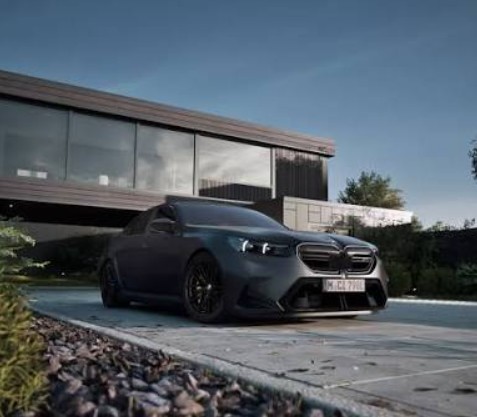
Choosing between the BMW M5 and Audi RS6 is a little like choosing between a private jet and a fighter jet with a luggage compartment. Both are brutally fast, beautifully engineered, packed with technology, and perfectly capable of turning an ordinary commute into something that feels vaguely illegal—even when we're obeying every speed limit.
Yet these two German performance icons approach the same problem from surprisingly different angles.
The BMW M5 has traditionally been the ultimate executive super-sedan: understated enough for a corporate parking garage, yet powerful enough to embarrass sports cars when the road opens up. The Audi RS6, meanwhile, takes the family-wagon formula and injects it with an almost ridiculous dose of V8 performance.
The difference becomes even more interesting with the newest generation. The current M5 combines a twin-turbocharged V8 with plug-in-hybrid assistance, while the RS6 Avant performance sticks closer to the old-school recipe of a twin-turbo V8 supported by mild-hybrid technology.
So which one deserves our money?
Let's put the BMW M5 vs Audi RS6 debate under the microscope.
Content in this publication
- BMW M5 vs Audi RS6 at a Glance
- The Philosophy Behind the BMW M5
- The Philosophy Behind the Audi RS6
- BMW M5 vs Audi RS6 Performance
- Engine Character: Hybrid Muscle vs Traditional V8 Attitude
- BMW M5 vs Audi RS6 Sound
- Handling and Driving Experience
- Which Car Feels More Fun?
- BMW M5 vs Audi RS6 Interior
- Practicality: Audi Lands a Heavy Punch
- Exterior Design: Understatement vs Menace
- Comfort and Everyday Driving
- Four Reasons We'd Pick One Over the Other
- BMW M5 vs Audi RS6 Price
- Running Costs and Ownership
- Fuel Economy: Neither Is Trying to Be a Prius
- BMW M5 vs Audi RS6 in Bad Weather
- Which One Is Better for Long Trips?
- BMW M5 vs Audi RS6 for Enthusiasts
- BMW M5 vs Audi RS6: Which Is Better for Families?
- Which Is Better for Pure Performance?
- BMW M5 vs Audi RS6: Which One Would We Buy?
- Final Verdict: BMW M5 or Audi RS6?
- Frequently Asked Questions
BMW M5 vs Audi RS6 at a Glance
Before diving into steering feel, interior quality and everyday practicality, let's establish where the modern versions stand.
The current BMW M5 sold in the United States produces 717 horsepower and 738 lb-ft of torque from its electrified V8 powertrain. BMW quotes 0-60 mph in around 3.4 seconds for the M5 Sedan.
The 2026 Audi RS6 Avant performance produces 621 horsepower and 627 lb-ft of torque, with Audi quoting a 3.3-second 0-60 mph time. Its power comes from a 4.0-liter twin-turbocharged V8 paired with an eight-speed Tiptronic transmission and quattro all-wheel drive.
| Category | BMW M5 | Audi RS6 Avant Performance |
|---|---|---|
| Engine concept | Twin-turbo V8 plug-in hybrid | Twin-turbo V8 mild hybrid |
| Output | 717 hp | 621 hp |
| Torque | 738 lb-ft | 627 lb-ft |
| Transmission | 8-speed automatic | 8-speed Tiptronic |
| Drivetrain | AWD | quattro AWD |
| 0-60 mph | Approx. 3.4 sec | Approx. 3.3 sec |
| Body style | Sedan / Touring | Avant wagon |
| Personality | Technical, explosive | Mechanical, planted |
Those numbers reveal something important immediately: more horsepower doesn't automatically mean quicker acceleration.
The M5 carries significantly more mechanical complexity and weight because of its plug-in-hybrid system. BMW lists the M5 Sedan at approximately 5,390 pounds, meaning we're dealing with an astonishingly powerful but undeniably substantial machine.
The battle therefore isn't simply about horsepower.
It's about how each car uses it.
The Philosophy Behind the BMW M5
The M5 has always lived a fascinating double life.
From across a parking lot, it can resemble a normal executive sedan. Sit behind the wheel, push the correct buttons and lean into the accelerator, however, and the disguise disappears remarkably quickly.
BMW's philosophy has traditionally centered around making a large luxury sedan behave like something substantially smaller.
The M5 Has Become a Technological Powerhouse
The latest generation pushes that concept farther than ever.
Its plug-in-hybrid architecture combines electrification with a 4.4-liter V8, creating tremendous total system output. BMW officially lists 717 hp and 738 lb-ft of torque for the current U.S.-spec M5.
That's an outrageous amount of power for something with four doors, comfortable rear seats and the ability to cruise quietly through traffic.
But electrification changes its personality.
Earlier M5 generations often felt like enormous engines wrapped in business attire. The modern car feels more like an extraordinarily sophisticated computer controlling an enormous engine.
Whether that's better depends heavily on what we want from our performance car.
The M5's Secret Weapon Is Versatility
It can behave sensibly one moment and become ferocious the next.
We're dealing with a car that can handle commuting, motorway travel, bad weather and spirited driving without requiring many sacrifices.
That ability remains the essence of the M5.
The Philosophy Behind the Audi RS6
Audi looked at the traditional performance-sedan formula and apparently decided it wasn't practical enough.
Enter the RS6 Avant.
Rather than hiding its performance inside a conventional sedan silhouette, the RS6 proudly embraces its wagon body.
And somehow, that makes it even cooler.
The RS6 Is a Supercar for People With Luggage
The RS6 Avant performance uses a 4.0-liter twin-turbo V8 producing 621 hp and 627 lb-ft in current U.S. specification. Audi combines it with quattro all-wheel drive and an eight-speed automatic transmission.
That's less output than the M5.
Does that make it slow?
Absolutely not.
Audi quotes 0-60 mph in 3.3 seconds.
That's supercar acceleration wrapped around a cargo area.
Practicality Is Part of the RS6's Character
This isn't practicality reluctantly attached to a performance vehicle.
It's baked into the entire concept.
One official Audi specification sheet lists 548 liters of luggage capacity behind the rear seats and up to 1,658 liters with the rear seating area folded, although exact measurements vary by market specification.
Few vehicles combine that much usable space with this level of performance.
BMW M5 vs Audi RS6 Performance
Here's where things get serious.
Both cars are extraordinarily fast, but they deliver speed differently.
The M5 feels like it has been engineered to overwhelm physics through technology. Its hybrid assistance helps deliver enormous torque almost immediately, and the drivetrain can distribute that power effectively.
The RS6 feels somewhat more traditional.
There's still plenty of sophisticated electronics working behind the scenes, of course, but the experience revolves around that twin-turbo V8 and Audi's legendary quattro traction.
Acceleration: Which One Is Faster?
On paper, they're practically inseparable.
The Audi's quoted 3.3-second sprint gives it a tiny advantage over BMW's roughly 3.4-second claim for the M5 Sedan.
But arguing about one tenth of a second here is like arguing whether lightning or thunder feels more dramatic.
Both are absurdly quick.
Launch either aggressively and the scenery begins behaving like someone pressed fast-forward.
Rolling Acceleration Changes the Conversation
Once already moving, the BMW's extra horsepower and torque can become more meaningful.
The M5's 717 hp gives it formidable reserves at higher speeds.
Plant the accelerator when overtaking and the car doesn't simply accelerate. It seems to compress the distance between itself and the horizon.
The RS6 isn't lacking anything meaningful in real-world driving, though. Its 627 lb-ft arrives with tremendous authority, and its all-wheel-drive system gives it the ability to translate that output into relentless forward progress.
Engine Character: Hybrid Muscle vs Traditional V8 Attitude
This may be one of the most important differences in the entire comparison.
The BMW represents where high-performance luxury cars are heading.
The Audi feels closer to where they've been.
BMW M5 Plug-In Hybrid System
BMW's hybrid architecture isn't primarily about turning the M5 into an economy champion.
It's about combining electrification with serious performance.
Electric torque complements the turbocharged combustion engine, helping create the M5's enormous system output.
The advantage is immediate response and tremendous flexibility.
The disadvantage?
Weight and complexity.
Does Electrification Dilute the M5?
For some enthusiasts, yes.
Part of the charm of older M cars came from mechanical simplicity—or at least the illusion of it.
The modern M5 is anything but simple.
Yet dismissing it merely because it's electrified misses what BMW has accomplished. The car produces supercar output while retaining the refinement expected from a premium executive model.
It's less old-school muscle car and more technological sledgehammer.
Audi RS6 Twin-Turbo V8
Audi stays closer to the familiar recipe.
The RS6 performance uses its 4.0-liter V8 with twin turbochargers nestled within the engine's V.
The result is muscular, immediate and deeply satisfying.
There's something wonderfully straightforward about asking for power and receiving a wall of V8 torque.
Its RS exhaust system adds another ingredient that numbers can't adequately capture.
Emotion.
BMW M5 vs Audi RS6 Sound
Performance cars shouldn't merely accelerate.
They should make us turn around after parking them.
Sound plays a major role in that experience.
The Audi has an advantage here for drivers who prefer a more traditional V8 soundtrack. Its exhaust note complements its personality: deep, aggressive and slightly theatrical without becoming cartoonish.
The M5 still delivers V8 drama, but its hybrid powertrain introduces another layer between driver and combustion engine.
Neither sounds disappointing.
But if engine noise matters enormously to us, the RS6 may feel more emotionally direct.
Handling and Driving Experience
This is where numbers stop being particularly useful.
You may be interested in reading BMW M5 vs M6: Which High-Performance BMW Is Better?
Two cars can record similar lap times while feeling completely different from behind the wheel.
BMW M5: Controlled Violence
BMW M engineers have decades of experience convincing large sedans that they aren't large sedans.
The newest M5 continues that tradition but faces a difficult opponent: its own mass.
At more than 5,000 pounds in sedan form, this isn't a featherweight sports car.
Sophisticated chassis systems, all-wheel drive and electronics work constantly to manage that mass.
The result can be extraordinary.
Yet physics never completely disappears.
The M5 Rewards an Involved Driver
Push harder and the BMW reveals layers.
Drive modes alter its character. Steering, drivetrain response and suspension behavior can be configured to suit the occasion.
That adjustability appeals to drivers who enjoy tailoring the car around themselves.
It's a performance laboratory with leather seats.
Audi RS6: Confidence Above Everything
The Audi's personality is different.
Where the BMW can feel eager to play, the RS6 often feels eager to conquer.
Its quattro drivetrain gives the car tremendous confidence, particularly when conditions aren't perfect.
Audi also equips the RS6 performance with RS-tuned adaptive air suspension and a sport rear differential designed to actively distribute torque across the rear axle.
The result is stability that borders on absurd.
Wet road?
Cold morning?
Fast motorway ramp?
The RS6 often feels as if it has already solved the problem before we've noticed it existed.
Which Car Feels More Fun?
Fun is subjective, but there's a useful distinction.
The BMW M5 feels more interactive.
The Audi RS6 feels more unstoppable.
If we enjoy adjusting the car's attitude and exploring how the chassis responds, the BMW arguably offers more personality.
If we enjoy deploying enormous power with effortless confidence, the Audi is enormously satisfying.
Neither philosophy is objectively better.
They're simply different flavors of ridiculous.
BMW M5 vs Audi RS6 Interior
Step inside either car and we're reminded that these aren't stripped-out track specials.
They're luxury vehicles first.
BMW M5 Cabin
BMW's cabin emphasizes digital technology, configurability and modern design.
Large displays dominate the dashboard, while M-specific controls allow quick access to performance settings.
The seating position feels appropriately sporty without destroying everyday comfort.
Materials are suitably premium, although longtime BMW fans may find the increasingly digital environment less intimate than older generations.
Everything feels advanced.
Sometimes almost aggressively advanced.
BMW Technology Experience
This is where the M5 suits drivers who love menus, personalization and configuration.
We can tailor practically everything.
For gadget lovers, it's brilliant.
For drivers who simply want to turn a knob and get on with it, the interface can occasionally feel like configuring a gaming PC before driving to the supermarket.
Audi RS6 Cabin
Audi's cabin has traditionally excelled at making technology feel integrated rather than decorative.
The RS6 provides plenty of screens, performance displays and customization, but its interior retains a distinctly architectural feel.
And because it's an Avant, the space behind the passengers isn't merely theoretical.
It's genuinely useful.
Practicality: Audi Lands a Heavy Punch
If practicality is remotely important, the RS6 immediately becomes difficult to ignore.
We're getting true wagon versatility.
Dogs, suitcases, bicycles, camping equipment, shopping bags—the RS6 handles real life exceptionally well.
Audi's 40/20/40 split-folding rear seats further increase flexibility.
The M5 Sedan provides respectable passenger and luggage capability, but it can't compete with a wagon's cargo opening.
There's an important twist, however.
What About the BMW M5 Touring?
BMW now also offers an M5 Touring, dramatically narrowing Audi's practicality advantage.
BMW currently lists both the M5 Sedan and M5 Touring in its U.S. M lineup, each with the same headline 717-hp output.
Suddenly the comparison becomes considerably more interesting.
If we're shopping M5 Touring vs RS6 Avant, Audi loses the easy victory provided by body style.
Then it becomes philosophy versus philosophy rather than sedan versus wagon.
Exterior Design: Understatement vs Menace
Nobody accidentally buys either of these cars.
Still, their visual approaches differ.
The M5 has become more aggressive with each generation. Large openings, sculpted surfaces and muscular proportions make the latest car substantially less discreet than classic M5s.
The RS6 looks like someone stretched a racing helmet into the shape of a wagon.
And somehow it works.
Wide arches, huge wheels, aggressive intakes and the long Avant roof create one of the most recognizable silhouettes in the performance-car world.
Which One Turns More Heads?
The Audi.
Probably.
The RS6's proportions are inherently unusual, especially in markets where high-performance wagons are rare.
The BMW has presence, but people unfamiliar with M cars might still see an expensive 5 Series.
Nobody sees an RS6 and thinks, "That's probably the sensible version."
Comfort and Everyday Driving
This category matters more than enthusiasts sometimes admit.
Nobody wants a 600-plus-horsepower car that feels miserable during a two-hour traffic jam.
Both perform impressively here.
M5 Daily Comfort
The BMW's sophisticated suspension gives it a wide operating range.
In softer settings, it's completely capable of behaving like a premium long-distance sedan.
Seats are supportive. Refinement is strong. Highway cruising feels natural.
The ability to use electric assistance also gives the modern M5 a different character during quieter driving.
RS6 Daily Comfort
Audi's adaptive air suspension makes the RS6 similarly versatile.
It can settle into relaxed highway driving before transforming when we switch modes.
More importantly, that spacious cargo compartment means fewer compromises when daily life gets complicated.
Taking children to school before heading toward an empty mountain road?
That's basically the RS6's job description.
Four Reasons We'd Pick One Over the Other
When the decision starts feeling impossible, these distinctions simplify things:
- Choose the BMW M5 if maximum output, chassis adjustability and the newest performance technology matter most.
- Choose the Audi RS6 if wagon practicality, traditional V8 character and quattro confidence dominate our priorities.
- Choose the M5 Touring if we want BMW's hybrid firepower without sacrificing the cargo flexibility that makes the RS6 special.
- Choose the RS6 if we want something that feels slightly more mechanical and emotionally old-school in an increasingly electrified performance-car world.
BMW M5 vs Audi RS6 Price
Pricing inevitably changes by year and market, but their positioning remains similar: these are premium performance flagships.
For context, BMW currently lists the M5 Sedan in the U.S. from $123,300, while the M5 Touring starts from $125,300.
Audi lists the 2026 RS6 Avant performance from $130,700 before destination and options.
You may be interested in readingBMW M5 vs M6: Which High-Performance BMW Is Better?You may be interested in reading
BMW M5 vs Porsche Panamera: Which Performance Luxury Sedan Wins?At this level, options matter enormously.
Carbon-ceramic brakes, premium audio, upgraded trim, wheels and driver-assistance packages can push transaction prices much higher.
The meaningful question isn't simply which one costs less.
It's which one delivers more of what we actually value.
Running Costs and Ownership
Here's the part where our wallets begin sweating.
Neither car was designed for bargain motoring.
Huge performance tires wear quickly. Large brakes can be expensive. Insurance may be substantial. Premium fuel disappears rapidly when we're enjoying the throttle.
The M5's hybrid system adds another layer of long-term complexity.
The Audi's traditional V8 architecture may look simpler by comparison, though we're still dealing with a sophisticated high-performance European vehicle containing turbochargers, advanced suspension systems, numerous electronic modules and expensive components.
Which Should Be More Reliable Long Term?
Predicting long-term reliability of current vehicles is difficult because sufficient high-mileage data simply doesn't exist yet.
The BMW's electrified drivetrain introduces additional hardware.
The Audi's platform and V8 configuration have had more time to mature.
That doesn't automatically guarantee Audi superiority, but buyers planning to keep either car beyond warranty should budget accordingly.
A cheap used M5 or RS6 can become a remarkably expensive M5 or RS6 once deferred maintenance appears.
Fuel Economy: Neither Is Trying to Be a Prius
Let's manage expectations.
A twin-turbocharged V8 performance car isn't what we'd choose because fuel prices are keeping us awake at night.
The BMW's hybrid system does introduce opportunities for lower-consumption driving, particularly when charging is incorporated into a normal routine.
The RS6 relies more heavily on conventional combustion performance, although its mild-hybrid system and cylinder-deactivation technologies help improve efficiency under certain conditions.
Real-world consumption depends enormously on driving style.
And let's face it: purchasing an RS6 and never hearing the V8 under load requires a level of self-control we probably don't possess.
BMW M5 vs Audi RS6 in Bad Weather
Audi built much of its performance reputation around quattro.
That heritage still matters.
The RS6 inspires enormous confidence when roads become wet or slippery.
BMW's modern M xDrive systems are similarly sophisticated, however, meaning the old stereotype that Audi automatically dominates every all-wheel-drive comparison is no longer particularly useful.
Both generate tremendous traction.
Tires will matter as much as the badge when winter genuinely arrives.
Which One Is Better for Long Trips?
This is closer than expected.
The M5 is an extraordinary highway machine. Powerful, stable, luxurious and comfortable, it can swallow long distances effortlessly.
The RS6 does the same while carrying more awkwardly shaped luggage.
If we're traveling with several passengers and luggage, Audi's body style makes life easier.
If we're primarily transporting people rather than cargo, the BMW gives away very little.
The Ultimate Autobahn Question
Imagine an empty stretch of unrestricted German Autobahn.
Which key would we grab?
That's difficult.
The M5's enormous output is intoxicating.
But something about seeing a wagon effortlessly devour motorway miles at enormous speed feels wonderfully rebellious.
For that experience alone, the RS6 has a special charm.
BMW M5 vs Audi RS6 for Enthusiasts
Traditional enthusiasts may gravitate toward the Audi because the RS6 still feels closer to the classic twin-turbo V8 recipe.
Technology enthusiasts may find the M5 fascinating because its electrified powertrain represents the next chapter of performance engineering.
Neither answer is wrong.
In fact, the contrast tells us something interesting about today's performance market.
We're standing between two eras.
Audi's RS6 is perhaps the ultimate refinement of the combustion-dominated super-wagon formula.
BMW's M5 shows how electrification can be used not merely to reduce emissions but to create extraordinary performance.
BMW M5 vs Audi RS6: Which Is Better for Families?
The Audi wins.
That's hardly controversial.
Its wagon body offers the flexibility needed for family life while maintaining supercar performance.
Put child seats in the rear, fill the boot with luggage and the RS6 still doesn't feel compromised.
The M5 Sedan handles family duty perfectly well, but the shape imposes natural limitations.
Once we introduce the M5 Touring, though, things change.
Then BMW can fight Audi using essentially the same weapon.
Which Is Better for Pure Performance?
The M5 wins the horsepower battle.
Audi narrowly wins the manufacturer-quoted 0-60 sprint in current U.S. specification.
But neither statistic tells the full story.
For straight-line brutality at higher speeds, BMW's enormous combined system output is hard to ignore.
For effortless launches and predictable traction, the Audi feels nearly impossible to unsettle.
We're splitting hairs between two machines operating at a level far beyond what public roads realistically require.
BMW M5 vs Audi RS6: Which One Would We Buy?
If we're comparing the M5 Sedan against the RS6 Avant, we'd choose the Audi RS6 for most buyers.
Why?
Because it delivers almost everything.
It's ridiculously fast, luxurious, spacious, distinctive, usable in poor weather and powered by a charismatic V8.
There's very little it can't do.
But that's not the whole story.
If driving involvement, technology and outright horsepower matter more than maximum cargo flexibility, the M5 becomes enormously compelling.
And if we're comparing M5 Touring vs RS6 Avant, the decision becomes painfully close.
BMW brings more system power and a radically modern electrified drivetrain.
Audi brings one of the most charismatic and proven high-performance wagon formulas ever created.
That's less a comparison and more a philosophical choice.
Final Verdict: BMW M5 or Audi RS6?
The BMW M5 vs Audi RS6 rivalry doesn't produce one universal winner because these cars prioritize different forms of excellence.
The M5 is the technological powerhouse.
It's more powerful, deeply configurable and engineered around the idea that electronics, electrification and a monstrous V8 can cooperate to make an executive car perform absurd feats.
The Audi RS6 is the charismatic all-rounder.
It combines enormous pace with luggage space, aggressive styling, quattro security and an engine that still feels connected to the traditional golden age of fast German V8s.
We'd give the RS6 the overall everyday-use victory, particularly against the M5 Sedan.
We'd give the M5 the technological and powertrain-performance victory.
And if the question becomes M5 Touring vs RS6 Avant?
Grab a coin.
We'd happily live with whichever side it lands on.
Frequently Asked Questions
Is the BMW M5 faster than the Audi RS6?
Not necessarily from a standing start. The current M5 Sedan produces considerably more power, at 717 hp, but BMW quotes approximately 3.4 seconds from 0-60 mph. Audi quotes 3.3 seconds for the 621-hp RS6 Avant performance. Real-world results can vary with tires, road conditions, temperature and testing methodology.
Which has more horsepower, BMW M5 or Audi RS6?
The modern BMW M5 has more horsepower. BMW lists the current M5 at 717 hp, compared with 621 hp for the current U.S.-spec Audi RS6 Avant performance.
Is the Audi RS6 more practical than the BMW M5?
Compared with the M5 Sedan, yes. The RS6 Avant's wagon body gives it substantially more versatility for bulky cargo. However, the BMW M5 Touring provides a much closer practicality comparison and removes much of Audi's traditional body-style advantage.
You may be interested in readingBMW M5 vs M6: Which High-Performance BMW Is Better?You may be interested in reading
BMW M5 vs Porsche Panamera: Which Performance Luxury Sedan Wins?You may be interested in reading
BMW M5 vs M5 Competition: Which One Is Better?Which is better for daily driving, M5 or RS6?
Both are excellent daily drivers, but we'd lean toward the RS6 when cargo space and family practicality matter. The M5 may appeal more to drivers prioritizing performance technology, configurability and maximum power.
Should we buy an M5 or RS6?
Buy the BMW M5 if we want enormous hybrid-assisted output, sophisticated chassis technology and a more configurable driving experience. Buy the Audi RS6 if we prioritize wagon practicality, quattro confidence and the character of a traditional twin-turbo V8 performance car. Neither represents a bad choice—they simply solve the supercar-for-every-day problem differently.
If you want to know other articles similar to BMW M5 vs Audi RS6: Which High-Performance Icon Wins? you can visit the category Models.
Haval Jolion vs Omoda C5: Which SUV Is Better?
Haval Jolion vs Chery Tiggo 4 Pro: Full Comparison
Haval Jolion vs H6: Which SUV Is Better in 2026?
Haval Jolion vs Toyota Corolla Cross: Which SUV Is Better?
Haval Jolion vs Jaecoo J5: Which SUV Is Better?
Volkswagen T-Cross vs Volkswagen T-Roc: Which Is Better?
Leave a Reply
More content of your interest