
BMW M5 vs Porsche Panamera: Which Performance Luxury Sedan Wins?

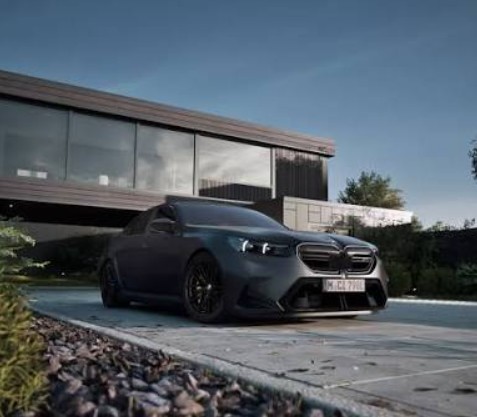
Few automotive comparisons create quite as much tension as BMW M5 vs Porsche Panamera. Both cars promise something that sounds almost unreasonable on paper: genuine sports-car performance wrapped inside a luxurious four-door machine you can comfortably drive to work, take on a road trip, or use for the weekly grocery run.
Yet they approach that mission from very different directions.
The BMW M5 has traditionally been the ultimate sleeper super sedan. It takes the familiar shape of a BMW 5 Series, adds an outrageous powertrain, upgrades practically every component underneath, and turns an executive sedan into something capable of embarrassing dedicated sports cars.
The Porsche Panamera starts from another philosophy. Instead of making a conventional luxury sedan dramatically faster, Porsche essentially stretches its sports-car DNA into a four-door grand tourer. The result feels more exotic, more specialized, and—in its highest-performance versions—considerably more expensive.
The latest generations make this battle particularly interesting because electrification has changed both cars. The current M5 combines a twin-turbocharged V8 with plug-in-hybrid assistance for 717 horsepower, while Porsche offers several Panamera configurations ranging from relatively restrained V6 models to the formidable 771-hp Panamera Turbo S E-Hybrid.
So, which one belongs in our garage?
Let's break it down.
Content in this publication
- BMW M5 vs Porsche Panamera at a Glance
- Performance: Two Different Ways to Bend Physics
- Handling: Where Porsche Earns Its Badge
- Weight: The Elephant Wearing an M Badge
- Engines and Sound: Thank Goodness the V8 Survives
- Transmission: Automatic vs PDK
- Interior Quality and Design
- Comfort: Which One Makes the Better Daily Driver?
- Practicality and Cargo Space
- Technology and Infotainment
- Hybrid Systems: Performance Electrification Done Differently
- BMW M5 vs Porsche Panamera Price
- Styling: Aggression vs Elegance
- BMW M5 vs Porsche Panamera Reliability and Ownership Costs
- Which Car Has More Personality?
- BMW M5 vs Panamera GTS
- BMW M5 vs Panamera Turbo E-Hybrid
- BMW M5 vs Panamera Turbo S E-Hybrid
- Which One Is Better for Long Road Trips?
- Which One Is Better as an Only Car?
- Who Should Buy the BMW M5?
- Who Should Buy the Porsche Panamera?
- BMW M5 vs Porsche Panamera: Final Verdict
- Frequently Asked Questions
BMW M5 vs Porsche Panamera at a Glance
Before diving into steering feel, luxury, technology, and everyday practicality, here's the basic character of each car.
| Category | BMW M5 | Porsche Panamera |
|---|---|---|
| Body style | Performance luxury sedan | Luxury sport fastback |
| Engine | 4.4L twin-turbo V8 + electric motor | V6/V8 and plug-in-hybrid options |
| M5 output | 717 hp | Up to 771 hp Turbo S E-Hybrid |
| Drivetrain | AWD with performance-focused modes | RWD or AWD depending on model |
| Transmission | 8-speed automatic | 8-speed PDK on high-performance models |
| Personality | Muscle sedan meets technology | Sports car meets grand tourer |
| Practicality | Excellent | Excellent hatchback versatility |
| Value | Strong for its performance | Expensive, especially with options |
| Best for | Maximum performance per dollar | Handling, prestige, customization |
There's one important caveat: the Panamera is a model family rather than a direct one-model rival.
A standard Panamera isn't really competing with an M5 in outright performance. The Panamera GTS, Turbo E-Hybrid, and Turbo S E-Hybrid are much closer philosophically. Porsche currently lists outputs ranging from 493 hp for the GTS to 771 hp for the Turbo S E-Hybrid.
Therefore, throughout this comparison we'll examine the Panamera range while focusing mainly on versions that realistically cross-shop with the M5.
Performance: Two Different Ways to Bend Physics
This is where things get ridiculous—in the best possible way.
Today's high-performance luxury sedans weigh as much as some SUVs, carry four adults in comfort, offer sophisticated infotainment systems, surround their occupants with leather, and still accelerate like supercars.
The latest M5 may be the ultimate example.
BMW M5: A Hybrid Hammer
Under the hood of the modern M5 sits BMW's familiar 4.4-liter twin-turbocharged V8. On its own, the combustion engine produces 577 hp, but an electric motor integrated into the drivetrain pushes combined output to 717 hp and 738 lb-ft of torque.
That's enough firepower to make almost every highway entrance feel like an aircraft carrier catapult.
BMW routes that output through an eight-speed automatic transmission and its M xDrive all-wheel-drive system.
Floor the accelerator and the M5 doesn't gradually gather speed. It seems to compress distance.
Independent testing by Car and Driver recorded 0–60 mph in 3.0 seconds and the quarter-mile in 10.9 seconds at 130 mph.
Those numbers would have belonged to exotic supercars not long ago.
The M5's Secret Weapon Is Usability
Raw horsepower isn't what makes the M5 remarkable.
It's how accessible that horsepower feels.
You don't need racing-driver reflexes to exploit it. The all-wheel-drive system provides enormous traction, the electronics carefully manage power delivery, and the chassis works constantly beneath you.
You press the throttle.
The car sorts out the chaos.
Suddenly you're moving extremely quickly.
It's brutally effective.
Porsche Panamera: Precision Before Drama
The Panamera approaches performance differently.
Where the M5 feels like an executive sedan that discovered nuclear propulsion, the Porsche feels like engineers started with a sports-car blueprint and simply created additional space around it.
There are several engines available.
The current Panamera lineup includes:
- A 348-hp entry-level Panamera
- A 463-hp Panamera 4 E-Hybrid
- A 536-hp Panamera 4S E-Hybrid
- A 493-hp Panamera GTS
- A 670-hp Panamera Turbo E-Hybrid
- A 771-hp Panamera Turbo S E-Hybrid
Porsche's official U.S. specifications list the Turbo S E-Hybrid at 771 hp, with a manufacturer-claimed 0–60 mph time of 2.8 seconds with Sport Chrono and a maximum track speed of 202 mph.
That's serious territory.
BMW M5 vs Panamera Turbo S E-Hybrid Acceleration
Independent testing makes the Porsche's advantage even clearer.
Car and Driver recorded a Panamera Turbo S E-Hybrid accelerating from 0–60 mph in 2.5 seconds, completing the quarter-mile in 10.5 seconds at 132 mph.
The tested figures therefore look roughly like this:
| Test | BMW M5 | Panamera Turbo S E-Hybrid |
| 0–60 mph | 3.0 sec | 2.5 sec |
| Quarter-mile | 10.9 sec | 10.5 sec |
| Quarter-mile trap speed | 130 mph | 132 mph |
| Top speed* | Up to 190 mph | 202 mph |
*Depending on specification/packages.
Does half a second to 60 mph matter in normal driving?
Probably not.
Can we feel it?
Absolutely.
Below three seconds, acceleration stops feeling merely "fast." Your internal organs start questioning the decisions that brought you there.
Performance winner: Porsche Panamera Turbo S E-Hybrid
But considering what the BMW costs, the M5's performance remains extraordinary.
Handling: Where Porsche Earns Its Badge
Power is relatively easy in the modern automotive world.
Handling is harder.
Making a two-and-a-half-ton luxury car behave as though it weighs substantially less requires clever suspension geometry, sophisticated dampers, advanced electronics, and endless chassis tuning.
Both companies have done impressive work.
Porsche, however, has something of a home-field advantage.
Porsche Panamera Steering and Chassis Feel
The Panamera has always felt unusually connected for a car of its size.
Turn into a corner and there is a clarity to its responses. The nose goes exactly where we point it. The chassis communicates what the tires are doing. Body movements feel carefully controlled rather than simply suppressed.
Higher Panamera trims can also use Porsche's advanced Active Ride suspension technology.
The system can actively counteract pitch and roll, helping the Panamera remain remarkably composed during acceleration, braking, and cornering. Reviewers have highlighted how effectively the system keeps the body controlled when driving aggressively.
It can feel almost unnatural.
Brake hard and the nose barely dives.
Attack a corner and the body refuses to flop onto the outside suspension.
It's like watching a large yacht suddenly maneuver like a speedboat.
BMW M5 Handling
The M5 isn't exactly clumsy.
Far from it.
Rear-wheel steering, adaptive suspension, electronically controlled differentials, configurable all-wheel drive, huge tires, and sophisticated stability systems allow BMW to disguise much of the car's considerable mass.
Car and Driver measured 0.98 g on the skidpad, demonstrating just how much mechanical grip this enormous sedan can generate.
Push harder and the M5 remains impressively neutral.
The issue isn't capability.
It's sensation.
The BMW tends to isolate us slightly more from what's happening underneath. Steering is accurate but comparatively light, and the car's electronics sometimes feel like an invisible engineering committee sitting between the driver and the road.
Which Is More Fun?
If we're chasing lap times without considering price, the Panamera has the edge.
If we're sliding around an empty track and want something playful, the M5 can be enormously entertaining thanks to its configurable drivetrain.
But when the road begins twisting through mountains?
We'd rather hold the Porsche steering wheel.
Handling winner: Porsche Panamera
Weight: The Elephant Wearing an M Badge
We have to talk about weight.
The new M5 is heavy.
Really heavy.
BMW's plug-in-hybrid system brings undeniable advantages—electric driving, instant torque, additional horsepower—but batteries and electric motors don't weigh nothing.
Car and Driver measured its test car at 5,251 pounds, despite that vehicle having weight-saving equipment.
Ironically, the high-performance Panamera Turbo S E-Hybrid isn't exactly a featherweight either.
Car and Driver measured that car at approximately 5,350 pounds.
So why does the Porsche often feel lighter?
Chassis tuning.
Low seating position.
Steering calibration.
Suspension control.
Driving position.
Each detail helps manipulate our perception.
Physics never disappears, though. Push either car beyond the limits of its tires and five thousand-plus pounds eventually introduces itself.
Engines and Sound: Thank Goodness the V8 Survives
Electrification has transformed the performance-car landscape, but both BMW and Porsche still understand something enthusiasts care about:
Sound matters.
The BMW M5 retains a twin-turbo V8.
High-performance Panamera Turbo hybrids retain a twin-turbo V8.
That alone feels worth celebrating.
How Does the M5 Sound?
The M5's V8 produces a deep, aggressive soundtrack when we switch into its sportier settings.
It isn't as raw as older M cars.
Turbocharging muffles some exhaust character, and modern emissions requirements further polish the edges.
Still, put your foot down and the M5 sounds appropriately serious.
It growls rather than screams.
How Does the Panamera Sound?
The Porsche V8 has a slightly more sophisticated personality.
The Panamera GTS deserves particular attention here.
With less emphasis on maximum hybrid-assisted horsepower and greater emphasis on traditional sporting character, it may actually be the sweet spot for enthusiasts who value sound and response above drag-strip numbers.
The Turbo hybrids are faster.
The GTS can feel more organic.
That's an important distinction.
Not every victory happens on a spreadsheet.
Engine character winner: Tie
Transmission: Automatic vs PDK
The BMW uses an eight-speed M Steptronic automatic.
It's excellent.
Shifts are smooth when we're commuting and satisfyingly quick when the drivetrain is configured aggressively.
But Porsche's eight-speed dual-clutch PDK transmission remains one of the benchmarks.
Why Porsche PDK Feels Special
Pull a paddle and the gear change seems instantaneous.
There is almost no interruption.
No hesitation.
Just click—next gear.
Porsche's transmission programming also seems unusually good at predicting what the driver wants. Enter a corner aggressively and it usually chooses the correct ratio without unnecessary hunting.
BMW's transmission prioritizes a slightly broader balance between refinement and aggression.
For everyday driving, that might actually be preferable.
For enthusiast driving?
PDK wins.
Transmission winner: Porsche Panamera
Interior Quality and Design
Open the doors and both cars remind us why they cost serious money.
Neither feels remotely ordinary.
You may be interested in reading BMW M5 vs M5 Competition: Which One Is Better?
Yet once again their philosophies differ.
BMW M5 Interior
The M5 cabin feels technological, dramatic, and unapologetically modern.
Large curved displays dominate the dashboard. Ambient lighting runs through the cabin. Performance graphics are everywhere when we want them.
The seats provide tremendous support without becoming uncomfortable during long drives.
Materials are appropriately premium.
Still, the interior can occasionally feel busy.
BMW gives us so many menus, modes, shortcuts, displays, configurations, and performance settings that learning the M5 sometimes resembles setting up a gaming PC.
Enthusiasts will love the customization.
Others may wonder why changing basic vehicle behavior requires so much thought.
Porsche Panamera Interior
The Panamera feels different.
The seating position immediately makes the car feel sporty.
We're sitting low rather than perched above the dashboard.
The center console wraps around the driver, and Porsche mixes traditional performance cues with an increasingly digital dashboard environment.
Depending on configuration, passengers can even have dedicated displays.
Porsche's cabin has a slightly more bespoke feel.
A BMW M5 still shares much of its fundamental design language with other BMW products.
The Panamera feels more like its own thing.
Which Interior Feels More Expensive?
Porsche.
But there's an asterisk large enough to see from space.
Options.
Porsche is famous for allowing buyers to customize seemingly everything—and charging accordingly.
Want special leather?
Different stitching?
Premium trim?
Massage seats?
Different wheels?
A particular steering wheel?
Porsche's configurator can turn a reasonably expensive car into a breathtakingly expensive one faster than the Turbo S reaches 60 mph.
Interior winner: Porsche Panamera
Value winner: BMW M5
Comfort: Which One Makes the Better Daily Driver?
Here's where the comparison becomes more complicated.
We're not buying stripped-out track toys.
These are luxury performance cars.
They need to survive potholes, traffic, parking garages, passengers, conference calls, school runs, and long highway drives.
The M5 excels at this.
BMW M5 Everyday Comfort
Switch the BMW into Comfort mode and much of its aggression disappears.
The suspension relaxes.
The transmission becomes calmer.
The exhaust quiets down.
The cabin becomes an exceptionally refined place to spend hours.
This personality transformation remains one of the M5's greatest tricks.
One minute we're chasing corners.
Ten minutes later we're drinking coffee while adaptive cruise control handles highway traffic.
Panamera Comfort
The Panamera is also an exceptional long-distance machine.
Its sophisticated suspension provides excellent body control without automatically translating into a harsh ride.
With the right specification, the Porsche may actually deliver the more sophisticated ride-and-handling balance.
But the M5 feels slightly more conventional and effortless during mundane daily use.
That's not an insult.
Sometimes we don't want our performance sedan reminding us that it's a performance sedan.
Sometimes we just want to get home.
Daily comfort winner: BMW M5
Practicality and Cargo Space
The BMW looks like the more conventional practical choice.
Surprisingly, Porsche has a trick up its sleeve.
The Panamera's liftback design provides excellent cargo access.
Instead of a normal sedan trunk opening, the entire rear hatch lifts upward, making bulky items easier to load.
Car and Driver lists approximately 15 cubic feet behind the rear seats for the Turbo S E-Hybrid and significantly more space with the seats folded.
The M5 uses a traditional trunk, with Car and Driver measuring/listing around 17 cubic feet.
On paper, BMW wins.
In awkward real-world loading situations, Porsche's hatch can be more useful.
What About Rear Passengers?
Both cars can transport adults comfortably.
The BMW feels more like a traditional executive sedan and arguably suits families better.
Depending on configuration and market, Panamera seating arrangements can differ, and the rear cabin has traditionally had a sportier, more individual-seat feeling.
If maximum versatility is our priority, however, BMW has another answer entirely:
The M5 Touring.
At that point, we've effectively combined super-sedan power with wagon practicality.
Technology and Infotainment
Both vehicles contain enough computing power to make an early-2000s office look primitive.
The BMW system is feature-rich and visually impressive.
Wireless smartphone integration, navigation, configurable performance menus, digital instrumentation, parking technology, driving assistance, and numerous connected features make the M5 feel thoroughly modern.
Porsche offers an equally sophisticated digital environment.
Which is better?
BMW's system tends to offer more immediately visible functionality.
Porsche's feels slightly more focused.
Neither is perfect.
And both manufacturers have moved enough functions onto screens that we'll occasionally miss the glorious simplicity of a physical button.
Hybrid Systems: Performance Electrification Done Differently
Calling these cars hybrids might make someone imagine fuel economy.
That's not really the point.
Electric motors are being used partly as performance devices.
Instant electric torque fills gaps while combustion engines build boost, producing smoother and more immediate acceleration.
BMW M5 Electric Driving
The M5 can operate for short trips using electricity alone.
EPA figures cited by Car and Driver put its electric range around 25 miles for the 2025 model.
That means someone with a short commute could theoretically perform many routine journeys without starting the V8.
Then, on Saturday morning, both power sources combine and deliver 717 hp.
That's a rather entertaining interpretation of environmental responsibility.
Panamera E-Hybrid Electric Capability
The high-performance Panamera hybrids use a larger battery.
For the Turbo models, Car and Driver cites an EPA-rated electric range of roughly 27–28 miles, while its own highway testing extracted significantly more in certain conditions.
Again, fuel savings aren't the entire story.
Electric assistance enhances throttle response and outright performance.
Hybrid system winner: Porsche Panamera by a narrow margin
BMW M5 vs Porsche Panamera Price
This may decide everything.
The BMW M5 is expensive.
The Porsche Panamera can become stratospheric.
The M5 occupies an unusual part of the market where its price seems enormous until we examine how much performance we're getting.
The Panamera lineup starts lower in less powerful configurations, but a genuinely comparable high-performance Panamera quickly moves far beyond M5 money.
Porsche currently lists the 2027 Panamera Turbo E-Hybrid from $207,900 and the Turbo S E-Hybrid from $245,200 in the U.S., before destination and the inevitable temptation of optional equipment.
That changes the conversation dramatically.
A Panamera Turbo S may outperform the M5.
It should.
It costs substantially more.
Performance per Dollar
If our imaginary budget is unlimited, the Porsche becomes extremely compelling.
If value matters at all, the M5 begins throwing punches.
We're getting:
- More than 700 horsepower
- A twin-turbo V8
- Plug-in-hybrid capability
- All-wheel drive
- Supercar acceleration
- Five-passenger luxury
- Serious track capability
- Everyday comfort
Finding another car combining all of those qualities at roughly M5 money isn't easy.
Value winner: BMW M5, comfortably
Styling: Aggression vs Elegance
Styling is subjective, so we'll avoid pretending there's a mathematically correct answer.
The M5 looks aggressive.
Wide arches, muscular proportions, enormous air intakes, dramatic lighting, and unmistakable M details ensure it doesn't disappear into the parking lot.
Some people will love its theatrical appearance.
Others may miss the understated menace of older M5 generations.
The Panamera takes a smoother approach.
Its sloping roofline, wide rear shoulders, and 911-inspired details create something that feels more exotic without screaming for attention.
Earlier Panameras had… challenging proportions.
Let's leave it at that.
Modern versions look considerably more resolved.
If the M5 is a boxer walking into a board meeting wearing an expensive suit, the Panamera is an athlete who owns the company.
Styling winner: Porsche Panamera, by our subjective vote
BMW M5 vs Porsche Panamera Reliability and Ownership Costs
Neither vehicle belongs in the "cheap to own" category.
We're dealing with enormously complicated performance machines featuring turbocharged engines, sophisticated suspension systems, advanced electronics, high-voltage hybrid components, giant brakes, and enormous performance tires.
Routine maintenance won't resemble servicing a Toyota Corolla.
BMW Running Costs
BMW's larger production scale and dealer network can sometimes make ownership somewhat easier.
You may be interested in readingBMW M5 vs M5 Competition: Which One Is Better?You may be interested in reading
BMW M5 vs M550i: Which BMW V8 Sedan Is the Better Choice?Consumables remain expensive.
A set of high-performance tires can hurt.
Carbon-ceramic brake replacement?
Let's just say we wouldn't casually ignore unusual noises.
Porsche Running Costs
Porsche service is rarely inexpensive.
Neither are Porsche parts.
Neither are Porsche options.
Neither is practically anything involving a Porsche logo.
However, owners aren't paying merely for transportation.
They're buying one of the most engineering-focused luxury performance products in the market.
Our recommendation with either vehicle is simple: understand maintenance costs before purchasing, especially if buying used and outside warranty coverage.
Which Car Has More Personality?
This question matters more than specifications suggest.
Extremely capable modern performance cars sometimes become victims of their own competence.
They're so fast, stable, quiet, and electronically managed that the driver can feel slightly detached.
The Porsche generally avoids this better.
Its steering, chassis behavior, seating position, and transmission give it a clearer enthusiast identity.
The M5 counters with something different:
Drama.
Hit full throttle and the BMW feels slightly outrageous.
Its acceleration is violent.
Its size seems absurd.
The fact that something this comfortable can move this quickly creates its own form of character.
One feels engineered around precision.
The other feels engineered around excess.
Pick your poison.
BMW M5 vs Panamera GTS
Here's an interesting comparison.
Forget the Turbo S for a moment.
The Panamera GTS produces 493 hp and Porsche currently claims 0–60 mph in 3.6 seconds with Sport Chrono.
The M5 has dramatically more power.
It accelerates harder.
Yet some enthusiasts might still choose the GTS.
Why?
Because the GTS isn't chasing the biggest number.
Its appeal lies in the relationship between engine, chassis, transmission, sound, and steering.
It's arguably the Panamera for people who genuinely enjoy driving rather than simply owning the fastest Panamera.
Who Should Buy the Panamera GTS?
Choose it if we prioritize:
- Steering feel
- Chassis balance
- V8 character
- Porsche dynamics
- Traditional sports-car sensations
Choose the M5 if we prioritize:
- Acceleration
- Horsepower
- Value
- Rear-seat usability
- Everyday practicality
This may actually be the most emotionally interesting version of the BMW M5 vs Porsche Panamera battle.
BMW M5 vs Panamera Turbo E-Hybrid
Now we're entering closer territory.
The Turbo E-Hybrid produces 670 hp, putting its output closer to the M5's 717 hp.
Both combine V8 engines with electrification.
Both use all-wheel drive.
Both offer absurd acceleration.
Both can operate electrically.
But their priorities remain obvious.
BMW gives us astonishing capability for the money.
Porsche gives us a more carefully polished driving experience.
For many buyers, the BMW is the logical purchase.
The Porsche is the emotional purchase.
And cars at this level are rarely purchased entirely with logic.
BMW M5 vs Panamera Turbo S E-Hybrid
This is the heavyweight championship fight.
The Porsche has more horsepower.
It's quicker.
It has a higher maximum speed.
Its chassis feels sharper.
Its tested skidpad performance is also exceptional: Car and Driver recorded 1.05 g, versus 0.98 g for the tested M5.
If we're simply asking:
Which is the superior high-performance machine?
Panamera Turbo S E-Hybrid.
But here's the more useful question:
Is it sufficiently better to justify the enormous price difference?
That's harder.
For buyers operating with a finite budget, we'd probably choose the BMW and keep the remaining money.
For someone whose garage already contains several exotic cars and who simply wants the most accomplished four-door Porsche possible?
Turbo S.
No hesitation.
Which One Is Better for Long Road Trips?
This is nearly a draw.
The Panamera's grand-touring DNA makes it spectacular at covering large distances quickly.
The driving position is excellent.
High-speed stability is remarkable.
Cargo access is useful.
The M5 counters with slightly more conventional luxury-sedan ergonomics and an effortless cruising personality.
If our road trip includes Alpine passes?
Panamera.
If it includes children, luggage, traffic, boring highways, and frequent city stops?
M5.
Which One Is Better as an Only Car?
BMW.
This might be the M5's biggest victory.
The Porsche is arguably the more special driving machine.
But the M5 requires fewer compromises.
It behaves convincingly as:
A luxury sedan.
A commuter.
A family car.
A highway cruiser.
A muscle car.
A track weapon.
A technological showcase.
And, for short distances, an electric vehicle.
Few cars cover such an enormous spectrum.
The Porsche can do almost all of those things too.
It simply reminds us more frequently that we're driving something exotic—and charges accordingly.
Who Should Buy the BMW M5?
The BMW M5 makes the most sense if we want one vehicle capable of performing nearly every task.
Buy the M5 if:
- Maximum horsepower per dollar matters.
- We need genuine rear-seat usability.
- We want explosive acceleration.
- We prefer understated supercar capability over exotic-car pricing.
- We enjoy configuring drivetrain and handling settings.
- We want a performance car that can disappear into daily life.
- A plug-in hybrid fits our commute.
- We want V8 performance without spending Panamera Turbo S money.
The M5 remains one of the world's ultimate all-rounders.
Who Should Buy the Porsche Panamera?
Buy the Panamera if the driving experience matters more than the spreadsheet.
The Porsche makes particular sense if:
- Steering feel matters deeply.
- We regularly drive demanding roads.
- Cabin craftsmanship and customization matter.
- Budget isn't the dominant concern.
- We prefer Porsche's design philosophy.
- Hatchback cargo access appeals to us.
- We want something rarer and more distinctive.
- We're considering the incredibly fast Turbo S E-Hybrid.
The Panamera feels more special.
Whether "more special" is worth tens of thousands of additional dollars depends entirely on our priorities.
BMW M5 vs Porsche Panamera: Final Verdict
So where does the BMW M5 vs Porsche Panamera comparison leave us?
With two extraordinary cars—and two different winners.
The Porsche Panamera is the better driver's car.
Its steering has more clarity. The chassis communicates more naturally. PDK is sensational. Active Ride technology borders on witchcraft, and the Turbo S E-Hybrid delivers performance capable of challenging legitimate supercars.
If money isn't a consideration and we want the most accomplished machine, we'd take the Panamera Turbo S E-Hybrid.
But reality matters.
And in reality, the BMW M5 may be the smarter purchase.
Its 717-hp hybrid drivetrain delivers absurd performance. It carries five people. It's comfortable enough for daily commuting. It can travel short distances electrically. It provides enormous luggage capacity for a sedan. And despite costing serious money, it offers considerably more performance per dollar than Porsche's equivalent high-output Panamera variants.
The Porsche feels like the sharper scalpel.
The BMW feels like a Swiss Army knife with a rocket attached.
Which would we choose?
For an unlimited-budget weekend in the mountains, give us the Panamera.
For one car to drive every single day?
We'd take the M5.
Sometimes the best performance car isn't the one that dominates every category.
It's the one we're happiest driving when the racetrack disappears and Monday morning arrives.
Frequently Asked Questions
Is the Porsche Panamera faster than the BMW M5?
It depends on the Panamera version. Lower-powered Panamera models are slower than the M5, but the Panamera Turbo S E-Hybrid is quicker. Car and Driver recorded approximately 2.5 seconds from 0–60 mph for the Porsche compared with 3.0 seconds for the current M5.
Which has more horsepower, BMW M5 or Porsche Panamera?
The current BMW M5 produces 717 hp. Panamera output varies considerably by trim, ranging from 348 hp in the standard model to 771 hp in the Turbo S E-Hybrid. Therefore, the M5 is more powerful than most Panameras but not the flagship Turbo S E-Hybrid.
Is the BMW M5 better value than the Porsche Panamera?
Generally, yes—especially when comparing the M5 with high-performance Panamera variants capable of matching its acceleration. The BMW delivers more than 700 hp and supercar-level performance at a substantially lower starting price than the Panamera Turbo E-Hybrid and Turbo S E-Hybrid.
Which is more comfortable, BMW M5 or Porsche Panamera?
Both are excellent long-distance cars. The M5 feels slightly more like a conventional luxury sedan in everyday driving, while the Panamera offers an impressive combination of comfort and sharper chassis control. We'd give the BMW a slight advantage for relaxed daily commuting and the Porsche an advantage for fast grand touring.
You may be interested in readingBMW M5 vs M5 Competition: Which One Is Better?You may be interested in reading
BMW M5 vs M550i: Which BMW V8 Sedan Is the Better Choice?You may be interested in reading
BMW M5 vs Hellcat: Which High-Horsepower Monster Wins?Should I buy a BMW M5 or Porsche Panamera?
Choose the BMW M5 if performance value, practicality, acceleration, and everyday usability matter most. Choose the Porsche Panamera if steering feel, handling precision, exclusivity, customization, and sports-car character are higher priorities. For most buyers seeking one high-performance daily driver, the M5 offers the more compelling overall package.
If you want to know other articles similar to BMW M5 vs Porsche Panamera: Which Performance Luxury Sedan Wins? you can visit the category Models.
Haval Jolion vs Omoda C5: Which SUV Is Better?
Haval Jolion vs Chery Tiggo 4 Pro: Full Comparison
Haval Jolion vs H6: Which SUV Is Better in 2026?
Haval Jolion vs Toyota Corolla Cross: Which SUV Is Better?
Haval Jolion vs Jaecoo J5: Which SUV Is Better?
Volkswagen T-Cross vs Volkswagen T-Roc: Which Is Better?
Leave a Reply
More content of your interest