
BMW M5 vs M5 Competition: Which One Is Better?

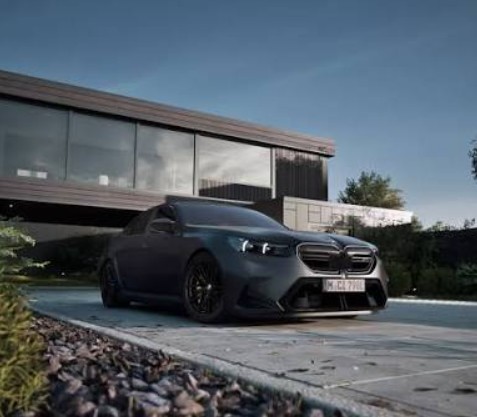
Choosing between the BMW M5 and M5 Competition sounds easy until we look beyond the badges. At first glance, they are essentially two versions of the same super sedan: both combine executive-car comfort with outrageous performance, both can swallow highway miles without complaint, and both can turn an empty back road into something resembling a racetrack.
But the differences matter.
The regular M5 is already ferociously quick. The M5 Competition takes that basic formula and sharpens it. Depending on the model year and market, that usually means more power, firmer chassis tuning, revised suspension components, sportier styling details, and a slightly more aggressive personality.
So, is the Competition automatically better?
Not necessarily.
The answer depends on what we actually want from the car. For some drivers, the standard M5 is the smarter all-rounder. For others, buying an M5 without the Competition upgrades feels a little like ordering a steak and leaving the pepper sauce untouched.
In this BMW M5 vs M5 Competition comparison, we'll break down performance, handling, comfort, styling, ownership costs, daily usability, and value to determine which version deserves a place in our garage.
Content in this publication
- BMW M5 vs M5 Competition at a Glance
- Understanding the Standard BMW M5
- What Is the BMW M5 Competition?
- BMW M5 vs M5 Competition Engine Performance
- BMW M5 vs M5 Competition 0-60 Performance
- Transmission: Do They Use the Same Gearbox?
- M xDrive and Traction
- BMW M5 vs M5 Competition Handling
- Ride Comfort: Where the Standard M5 Fights Back
- BMW M5 vs M5 Competition Exterior Styling
- Interior and Cabin Differences
- Exhaust Sound and Character
- Braking Performance
- BMW M5 vs M5 Competition Weight
- Fuel Economy
- Maintenance and Running Costs
- Reliability: Is the Competition Less Reliable?
- BMW M5 vs M5 Competition for Daily Driving
- BMW M5 Competition for Enthusiast Drivers
- Which M5 Is Better for Long-Distance Driving?
- Which One Is Better on a Track?
- M5 vs M5 Competition Price Difference
- Resale Value and Desirability
- BMW M5 vs M5 Competition: Pros and Cons
- Which BMW M5 Should We Buy?
- Best Choice for Different Buyers
- Is the M5 Competition Noticeably Better?
- Final Verdict: BMW M5 vs M5 Competition
- Frequently Asked Questions
BMW M5 vs M5 Competition at a Glance
The easiest way to understand the difference is to think of the M5 Competition as a more focused interpretation of the standard car rather than an entirely different machine.
Both versions of the F90-generation M5, for example, use BMW's 4.4-liter twin-turbocharged V8, an eight-speed automatic transmission, and the sophisticated M xDrive all-wheel-drive system.
The Competition version turns up the intensity.
Broadly speaking, the differences include:
- Higher engine output on applicable model years
- More aggressive suspension tuning
- Firmer engine mounts
- Different wheels and exterior details
- Competition-specific badging
- A slightly louder or sportier exhaust character
- Sharper chassis responses
- A modest sacrifice in ride comfort
On paper, those changes may look small.
From behind the wheel, however, they can alter the personality of the car noticeably.
Understanding the Standard BMW M5
Before comparing the two, we need to appreciate how extreme the regular M5 already is.
This isn't a watered-down performance sedan waiting for an optional package to wake it up. The standard M5 is brutally capable in its own right.
Its combination of a twin-turbo V8, intelligent all-wheel drive, adaptive suspension, strong brakes, and sophisticated electronics means it can accelerate with the urgency of a dedicated sports car while still carrying four adults comfortably.
That's the magic of the M5.
It's a business suit with boxing gloves hidden in the pockets.
Who Is the Regular M5 Designed For?
The standard M5 suits drivers who want the broadest possible range of abilities.
We can commute in it.
We can take it on a long road trip.
We can carry passengers without apologizing every time the road becomes rough.
Then, when the opportunity appears, we can press the right buttons and unleash a car capable of astonishing performance.
That versatility is one reason the normal M5 shouldn't automatically be dismissed in favor of the Competition.
What Is the BMW M5 Competition?
The BMW M5 Competition was designed for buyers who looked at an already outrageous M5 and thought, "Could this be a little more serious?"
BMW's answer was yes.
Instead of transforming the car completely, BMW concentrated on dozens of smaller changes intended to improve responsiveness and make the driving experience more intense.
The engine gained additional output on key F90 Competition variants, while suspension and chassis revisions made the car feel more connected to the road.
Competition Means More Than Extra Horsepower
Horsepower gets headlines, but it isn't necessarily the most important difference.
The M5 Competition's character comes from the complete package.
Changes to suspension calibration, ride height on certain versions, engine mounting, wheel design, exhaust tuning, and chassis behavior combine to make it feel more alert.
Imagine sharpening a kitchen knife that was already extremely sharp.
That's essentially what BMW did.
BMW M5 vs M5 Competition Engine Performance
Both cars revolve around one magnificent centerpiece: BMW's twin-turbocharged V8.
It's an engine with an enormous spread of torque, delivering effortless acceleration almost anywhere in the rev range.
In everyday driving, both cars feel tremendously powerful.
Punch the throttle at highway speed and the M5 lunges forward with almost absurd enthusiasm.
Does the M5 Competition Have More Power?
On prominent F90-era versions, yes.
For example, earlier standard F90 M5 models were rated at around 600 horsepower, while corresponding M5 Competition models increased output to roughly 617 horsepower.
Numbers can vary by model year and market, but the theme remains consistent: the Competition typically offers a modest power advantage.
Does 17 horsepower transform a 600-horsepower sedan?
Of course not.
The standard M5 isn't exactly struggling.
Yet the Competition's additional tuning contributes to a slightly more urgent character, particularly when we're pushing the car hard.
Torque Delivery and Real-World Acceleration
The bigger story is how effortlessly both cars deploy their performance.
Thanks to turbocharging and all-wheel drive, torque arrives with tremendous force while traction remains remarkably strong.
Floor the accelerator from a standstill and the experience feels almost violent.
There's little drama in terms of wheelspin. Instead, the car simply hooks up and disappears.
Which One Feels Faster?
In ordinary road driving, the gap is much smaller than the specifications might suggest.
Unless we're accelerating both cars back-to-back, the regular M5 already feels spectacularly quick.
The Competition becomes more convincing when driven aggressively, where the sharper responses and extra power work together.
BMW M5 vs M5 Competition 0-60 Performance
Performance figures vary by model year, testing method, tires, temperature, and surface conditions, but both cars live comfortably in supercar territory.
The Competition generally has a slight advantage.
Yet the important takeaway isn't whether one model reaches 60 mph a fraction of a second sooner.
The important takeaway is that either M5 accelerates far harder than we can realistically exploit on most public roads.
The difference is measured with a stopwatch.
The sensation is measured with a grin.
Transmission: Do They Use the Same Gearbox?
Both versions typically use BMW's eight-speed M Steptronic automatic transmission in the F90 generation.
That gearbox plays a major role in making the M5 usable every day.
Leave it in its calmer setting and gear changes happen smoothly.
Switch into more aggressive modes and shifts become quicker and more forceful.
Is the Competition Transmission Different?
The hardware is fundamentally similar, although calibration and overall drivetrain tuning can create a more aggressive impression.
The Competition often feels more eager because every part of the powertrain and chassis has been calibrated toward performance.
Still, we aren't choosing between a lazy gearbox and a race transmission.
Both are exceptionally capable.
M xDrive and Traction
The arrival of M xDrive fundamentally changed the M5.
Earlier generations were famous for sending enormous power exclusively to the rear wheels. That was entertaining, but it also meant traction could become the limiting factor.
M xDrive changed the equation.
Power can be distributed intelligently, giving the car incredible acceleration while preserving the rear-biased behavior enthusiasts expect.
Can the M5 Still Be Rear-Wheel Drive?
On applicable M xDrive-equipped versions, driver-selectable settings can dramatically change how power is delivered, including modes intended to provide a rear-wheel-drive experience.
It's essentially BMW giving us two personalities in one car.
Want maximum traction?
Use all-wheel drive.
Want more playful behavior in a controlled environment?
The car can become much more rear-biased—or effectively rear-driven depending on the selected mode and specification.
Both the standard M5 and Competition benefit from this versatility.
BMW M5 vs M5 Competition Handling
This is where the Competition begins to justify its badge more convincingly.
The regular M5 handles extraordinarily well for a large luxury sedan, but the Competition feels more tightly wound.
Steering inputs produce immediate responses, body movements are better controlled, and the chassis communicates its intentions more clearly.
Suspension Differences
BMW gave the Competition more aggressive suspension tuning.
Depending on the specific version, changes can include firmer springs, revised dampers, different anti-roll behavior, a lower ride height, and more rigid connections between major components.
Individually, each change seems minor.
Together, they create a car that feels noticeably more planted.
Is the Competition Better in Corners?
Yes, particularly when we're driving quickly.
The standard M5 can feel slightly more relaxed and forgiving.
The Competition removes some of that softness. It changes direction with greater urgency and settles more quickly after aggressive steering or braking inputs.
On a smooth winding road, the Competition feels fantastic.
You may be interested in reading BMW M5 vs M550i: Which BMW V8 Sedan Is the Better Choice?
On broken city pavement, the regular M5 may suddenly seem like the wiser choice.
Ride Comfort: Where the Standard M5 Fights Back
Performance enthusiasts sometimes treat comfort like a weakness.
In a luxury super sedan, it isn't.
A major part of the M5's appeal is that we can drive it every day. If the suspension makes every pothole feel like we've rolled over a brick, some of that magic disappears.
The standard M5 generally delivers the more compliant ride.
Is the M5 Competition Too Stiff?
"Too stiff" depends heavily on our tolerance, wheel size, road quality, tires, and expectations.
On smooth highways, the Competition can remain perfectly comfortable.
On rough urban roads, however, its firmer setup becomes more noticeable.
Small imperfections make their way into the cabin more clearly.
Sharp impacts can feel harsher.
If our typical driving involves cracked pavement, speed bumps, and crowded city streets, we may actually enjoy the regular M5 more.
Daily Driver Verdict
For pure everyday comfort, we'd give the advantage to the standard M5.
For drivers who happily sacrifice some softness for sharper responses, the Competition wins.
BMW M5 vs M5 Competition Exterior Styling
Visually, these cars aren't dramatically different.
That's intentional.
BMW didn't redesign the M5 Competition from scratch. Instead, it added details designed to signal that we're looking at the more focused version.
Depending on the year, Competition-specific touches may include darker trim, unique badging, distinctive wheels, black exterior accents, and other subtle changes.
Which One Looks Better?
This is subjective, but the Competition often looks slightly more menacing.
The darker details complement the M5's muscular proportions nicely.
Still, the differences are subtle enough that casual observers may not immediately recognize which version they're seeing.
That can actually be part of the charm.
An M5 doesn't need a giant rear wing to announce its potential.
It whispers before it punches.
Interior and Cabin Differences
Inside, both versions share the same basic premium environment.
We get supportive sport seats, quality materials, performance-oriented displays, programmable M buttons, and a cockpit designed to transition between luxury-car calm and aggressive driving modes.
Competition versions may feature distinctive trim, seat details, badges, or other visual touches depending on specification.
Does the Competition Feel More Special Inside?
A little.
But not dramatically.
If interior luxury is our top priority, there isn't enough difference to justify choosing the Competition purely for its cabin.
The real reason to buy the Competition sits underneath the bodywork.
Exhaust Sound and Character
A high-performance V8 should sound exciting, and both versions deliver plenty of character.
The Competition can have a slightly more aggressive exhaust note depending on configuration and market.
Under full throttle, the V8 develops a deep, muscular voice.
Yet the M5 remains civilized enough for commuting.
That's important.
Nobody wants their executive sedan behaving like a modified track car every morning at 6 a.m.
Which Sounds Better?
The Competition usually gets the nod for intensity.
The standard M5, however, still delivers an authentic high-performance V8 soundtrack without feeling unnecessarily theatrical.
Braking Performance
Brakes are incredibly important in a car this fast.
Both M5 versions receive serious braking systems designed to repeatedly slow a large, powerful sedan from high speeds.
Optional carbon-ceramic brakes may also be available depending on year and specification.
Do We Need Carbon-Ceramic Brakes?
For normal road use, probably not.
They offer excellent performance and reduced unsprung weight, but replacement costs can be eye-watering.
If we're regularly taking the car to a circuit, they become more attractive.
For street driving, the standard high-performance braking setup is more than capable.
BMW M5 vs M5 Competition Weight
Neither car is lightweight.
The M5 combines a large body, luxury equipment, sophisticated drivetrain hardware, turbocharged V8 power, and all-wheel-drive components.
Yet BMW's engineering makes the car feel surprisingly agile considering its size.
The Competition doesn't magically turn into a featherweight sports coupe.
Instead, sharper suspension and chassis tuning disguise the mass more effectively.
Can We Feel the Weight?
Yes.
Physics doesn't negotiate.
Push hard enough and we eventually become aware that we're driving a substantial four-door sedan.
The impressive part is how long the M5 manages to hide that fact.
Fuel Economy
Anyone shopping for an M5 probably knows efficiency isn't the main event.
A twin-turbo V8 producing roughly 600 horsepower or more needs fuel.
Lots of it when driven enthusiastically.
The Competition's additional performance doesn't fundamentally change that reality.
Which M5 Is Better on Fuel?
Real-world differences are likely to be relatively small compared with the enormous impact of driving style.
Drive gently and either car can be surprisingly reasonable for what it is.
Repeatedly explore the boost from the V8 and the fuel gauge starts behaving like a countdown timer.
If fuel economy is a major purchasing concern, neither M5 should be near the top of our shortlist.
Maintenance and Running Costs
Here's where the romance meets reality.
An M5 is not an inexpensive car to maintain.
Even a used example with an attractive purchase price remains a sophisticated German performance sedan that originally carried premium-car running costs.
Potential expenses include:
- Performance tires
- Premium fuel
- Brake pads and rotors
- Suspension components
- Cooling-system repairs
- Electronic components
- Turbocharged engine maintenance
- Drivetrain servicing
- Insurance
- Regular oil changes using approved fluids
The Competition can become slightly more expensive because of larger or more specialized components, particularly wheels, tires, suspension hardware, and optional braking equipment.
Used M5 Buyers Should Prioritize History
Condition matters more than the badge.
We'd rather buy a meticulously maintained standard M5 than a neglected Competition every single time.
Maintenance records, proper servicing, tire condition, brake health, accident history, and evidence of modifications matter enormously.
A cheap M5 can become an extraordinarily expensive M5 very quickly.
Reliability: Is the Competition Less Reliable?
There isn't necessarily a dramatic reliability divide simply because one car carries Competition branding.
They share much of the same fundamental engineering.
However, Competition models may be driven more aggressively on average, simply because enthusiasts often buy them specifically for performance.
That makes inspection important.
Watch for Modified Cars
The tuning potential of turbocharged BMW engines means many M5s have been modified.
Extra power can be entertaining, but it also increases stress on drivetrain components.
Before buying used, we'd want to know whether the car has been tuned, tracked, launched repeatedly, or modified.
Factory specification isn't automatically better, but transparency matters.
BMW M5 vs M5 Competition for Daily Driving
Here's where the choice becomes genuinely interesting.
The Competition sounds like the obvious winner until we stop thinking about racetracks and start thinking about Tuesday morning.
Traffic.
Potholes.
Parking garages.
Long motorway drives.
Passengers.
Groceries.
You may be interested in readingBMW M5 vs M550i: Which BMW V8 Sedan Is the Better Choice?You may be interested in reading
BMW M5 vs Hellcat: Which High-Horsepower Monster Wins?School runs.
The standard M5 does all of those things exceptionally well while retaining absurd performance.
Why the Standard M5 May Actually Be Better
The regular car offers practically all the acceleration we could ever need.
It remains ferociously capable on a winding road.
Yet its slightly softer character can make daily life easier.
In other words, the standard M5 may represent the purest interpretation of the M5 philosophy: supercar pace without abandoning luxury-sedan usability.
BMW M5 Competition for Enthusiast Drivers
The Competition is for the driver who notices small differences.
If we care about body control, chassis stiffness, steering response, throttle behavior, exhaust character, and cornering precision, the Competition's upgrades start making sense.
It's not about bragging rights.
It's about feel.
The Competition Makes More Sense When Roads Get Interesting
Drive both cars gently through traffic and the differences shrink.
Drive them aggressively on a flowing road and they expand.
The Competition feels more eager to attack corners.
Its reactions are sharper.
Its body movements feel more disciplined.
The car seems more alert.
That's exactly what its target buyer wants.
Which M5 Is Better for Long-Distance Driving?
For long motorway journeys, we'd lean toward the regular M5.
It still has immense overtaking performance, excellent seats, plenty of technology, and strong high-speed stability.
But its slightly more compliant suspension gives it the advantage when covering hundreds of miles.
The Competition remains an outstanding long-distance machine.
It simply reminds us more often that we're driving the sportier version.
Which One Is Better on a Track?
Here the Competition wins.
The firmer chassis tuning, sharper response, stronger body control, and extra performance make it better suited to circuit driving.
That doesn't mean the standard M5 suddenly becomes clumsy.
Far from it.
Either car can embarrass machines that look far more exotic.
But if track performance is genuinely important, the Competition gives us more of what we're looking for straight from the factory.
Should We Buy an M5 for Track Days?
That's another question entirely.
The M5 is breathtakingly fast on a circuit, but it's still a heavy luxury sedan.
Consumables such as tires and brakes can disappear quickly under repeated track abuse.
A lighter dedicated sports car may be cheaper and more rewarding for frequent circuit use.
For occasional track days, however, the M5 Competition is astonishingly capable.
M5 vs M5 Competition Price Difference
When new, the Competition naturally commanded a premium.
On the used market, however, pricing becomes more complicated.
Mileage, specification, color, service history, condition, accident history, number of owners, and regional demand can matter just as much as whether the car is a Competition.
Is the M5 Competition Worth Paying More For?
If the price difference is modest, we'd usually choose the Competition.
Its additional performance hardware, sharper character, styling details, and enthusiast appeal make it attractive.
If the price gap is substantial, the standard M5 becomes much harder to ignore.
Remember: we're not comparing a slow car with a fast car.
We're comparing a ridiculously fast car with a slightly more focused ridiculously fast car.
Resale Value and Desirability
Competition variants often enjoy stronger enthusiast appeal.
Buyers like special badges.
They like higher horsepower numbers.
They like factory performance upgrades.
That can support resale desirability over time.
However, condition always matters.
A pristine standard M5 with excellent documentation may be far more valuable to a knowledgeable buyer than a heavily modified or poorly maintained Competition.
BMW M5 vs M5 Competition: Pros and Cons
Standard BMW M5 Advantages
The regular M5 offers several compelling benefits:
- Slightly more comfortable ride
- Outstanding acceleration
- Excellent everyday usability
- Potentially lower purchase price
- Superb long-distance capability
- Less compromise on rough roads
- Nearly all the performance most drivers could ever use
Standard BMW M5 Disadvantages
Its main disadvantages are relative rather than absolute:
- Less aggressive chassis setup
- Slightly lower output on relevant model years
- Less exclusive enthusiast appeal
- Competition may hold stronger desirability
BMW M5 Competition Advantages
The Competition brings:
- More power on applicable generations
- Sharper suspension tuning
- Improved body control
- More aggressive styling
- Greater enthusiast appeal
- Stronger track-focused character
- Potentially better resale desirability
BMW M5 Competition Disadvantages
The trade-offs include:
- Firmer ride
- Higher purchase price
- Potentially more expensive tires and hardware
- Performance improvements can be difficult to exploit on public roads
Which BMW M5 Should We Buy?
For most people, either car provides far more performance than necessary.
That's exactly why this comparison is so fascinating.
The logical choice may actually be the standard M5.
It gives us astonishing speed, excellent handling, genuine luxury, and slightly better comfort.
But performance cars aren't purchased entirely with logic.
The M5 Competition feels more special.
Its changes aren't revolutionary, but they sharpen almost every part of the driving experience.
If we're the type of driver who would always wonder whether we should have bought the Competition, we probably already know the answer.
Best Choice for Different Buyers
If we had to simplify the decision, we'd look at it this way:
Choose the standard M5 if we prioritize comfort, value, daily usability, and effortless performance.
Choose the M5 Competition if we prioritize handling precision, enthusiast appeal, maximum factory performance, and a more aggressive personality.
Choose based on condition if buying used. A properly maintained example should always take priority over chasing a badge.
Is the M5 Competition Noticeably Better?
"Better" isn't quite the right word.
"Different" is more accurate.
The Competition is better at being a performance car.
The standard M5 may be better at being an M5.
That sounds contradictory, but think about what made the M5 famous in the first place.
It wasn't simply speed.
It was duality.
The ability to behave like a refined executive sedan one moment and something completely unhinged the next.
The Competition moves the slider a little further toward the unhinged side.
Final Verdict: BMW M5 vs M5 Competition
The BMW M5 vs M5 Competition debate ultimately comes down to priorities.
The standard M5 is an extraordinary all-rounder. It provides devastating acceleration, excellent traction, impressive handling, everyday luxury, and enough performance to make almost every normal road feel frustratingly restrictive.
The M5 Competition takes that formula and tightens every screw.
It's sharper, more focused, slightly faster, and generally more desirable among enthusiasts. On the right road, the differences become clear. The Competition feels more alive and more connected, like the regular M5 finished its morning coffee and decided to go hunting for corners.
But that added intensity comes with compromises.
The ride is firmer. The price is usually higher. And unless we're regularly driving hard, much of its additional capability can remain unused.
So which one would we choose?
If the price difference were reasonable and both cars were equally well maintained, we'd take the M5 Competition. Its sharper chassis and extra sense of occasion make it worth the premium for an enthusiast.
If comfort, value, and everyday usability mattered more, we'd happily buy the standard M5 and never feel short-changed.
Either way, we're getting one of the most remarkable performance sedans ever created.
Frequently Asked Questions
1. What is the main difference between the BMW M5 and M5 Competition?
The M5 Competition is generally a more performance-focused version of the regular M5. Depending on model year, it may include additional horsepower, firmer suspension tuning, revised chassis components, distinctive wheels, darker exterior details, and other Competition-specific upgrades.
2. Is the BMW M5 Competition faster than the standard M5?
Yes, applicable M5 Competition models generally offer slightly better acceleration thanks to increased engine output and performance-oriented tuning. However, the difference is relatively small in everyday road driving because the standard M5 is already extremely fast.
3. Is the M5 Competition less comfortable?
Usually, yes. Its firmer suspension setup improves body control and responsiveness but can transmit more road imperfections into the cabin. Drivers who frequently travel on rough roads may prefer the regular M5.
4. Is the M5 Competition worth the extra money?
It can be worthwhile for enthusiasts who value sharper handling, increased performance, special styling details, and stronger enthusiast desirability. Buyers primarily interested in comfort and daily driving may find the standard M5 offers better value.
You may be interested in readingBMW M5 vs M550i: Which BMW V8 Sedan Is the Better Choice?You may be interested in reading
BMW M5 vs Hellcat: Which High-Horsepower Monster Wins?You may be interested in reading
BMW M5 vs Audi RS5: Which Performance Car Is Better?5. Which is better used: M5 or M5 Competition?
When buying used, condition and maintenance history should come first. A well-maintained standard M5 is usually a smarter purchase than a neglected M5 Competition. If two comparable examples have similar history, mileage, and condition, the Competition may justify a reasonable price premium.
If you want to know other articles similar to BMW M5 vs M5 Competition: Which One Is Better? you can visit the category Models.
Haval Jolion vs Omoda C5: Which SUV Is Better?
Haval Jolion vs Chery Tiggo 4 Pro: Full Comparison
Haval Jolion vs H6: Which SUV Is Better in 2026?
Haval Jolion vs Toyota Corolla Cross: Which SUV Is Better?
Haval Jolion vs Jaecoo J5: Which SUV Is Better?
Volkswagen T-Cross vs Volkswagen T-Roc: Which Is Better?
Leave a Reply
More content of your interest