

How Long Subaru Impreza Last: A Realistic Mileage and Lifespan Guide

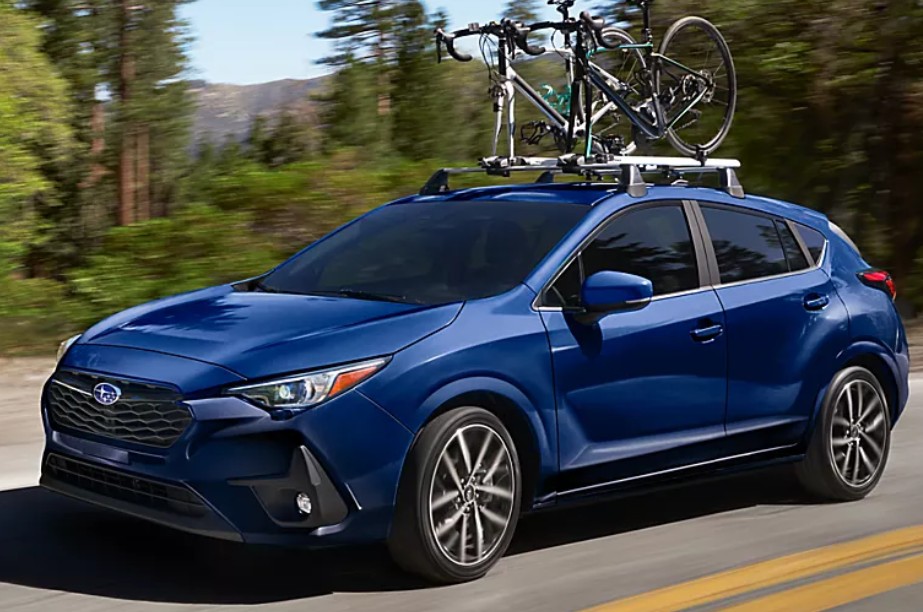
If you're wondering how long Subaru Impreza last, the encouraging answer is that a well-maintained Impreza can remain useful for a surprisingly long time. Many owners can reasonably expect somewhere around 150,000 to 200,000 miles, while carefully maintained examples may push beyond 250,000 miles.
But mileage alone never tells the whole story.
Two Subaru Imprezas with 150,000 miles on their odometers can feel like completely different cars. One might still start every morning, track straight down the highway, and barely use oil. The other could be sitting in a repair shop waiting for thousands of dollars in drivetrain work.
Why the difference? Maintenance, climate, driving habits, model year, previous ownership, and even where the car was parked can dramatically affect longevity.
So, rather than throwing out one magic mileage number, we're going to look at what actually determines Subaru Impreza life expectancy, what tends to fail as these cars age, and what we can do to keep one running for as many years as possible.
Content in this publication
- How Many Miles Does a Subaru Impreza Last?
- Is the Subaru Impreza a Long-Lasting Car?
- What Determines How Long a Subaru Impreza Lasts?
- How Long Does a Subaru Impreza Engine Last?
- How Long Does a Subaru Impreza Transmission Last?
- What Usually Wears Out First on a High-Mileage Impreza?
- Can a Subaru Impreza Reach 200,000 Miles?
- Does All-Wheel Drive Reduce Subaru Impreza Lifespan?
- How Maintenance Changes Subaru Impreza Life Expectancy
- Does Highway Driving Help an Impreza Last Longer?
- Signs Your Subaru Impreza Still Has Plenty of Life Left
- Signs an Impreza May Be Near the End of Its Economical Life
- How Long Do Subaru Imprezas Last Compared With Other Compact Cars?
- Is It Worth Buying a Subaru Impreza With 100,000 Miles?
- Is a 200,000-Mile Subaru Impreza Worth Buying?
- How Can We Make a Subaru Impreza Last Longer?
- What Mileage Is Too High for a Subaru Impreza?
- Does Subaru Impreza Reliability Change by Model Year?
- How Long Can a Subaru Impreza Last With Perfect Maintenance?
- The Real Secret Behind High-Mileage Subaru Imprezas
- Conclusion: How Long Subaru Impreza Last in the Real World
- Frequently Asked Questions
How Many Miles Does a Subaru Impreza Last?
For most drivers, a reasonable expectation for a Subaru Impreza is approximately:
- 150,000 miles: achievable with routine maintenance
- 200,000 miles: realistic for a properly cared-for vehicle
- 250,000 miles: possible with excellent maintenance and timely repairs
- 300,000+ miles: achievable in exceptional cases, but shouldn't be treated as normal
Think of 200,000 miles as a useful benchmark rather than an expiration date.
Cars don't suddenly stop working when they cross a certain number on the odometer. Instead, parts gradually wear out. Bushings crack, wheel bearings age, seals leak, suspension components loosen, and electronic accessories eventually begin acting their age.
A Subaru Impreza reaching 200,000 miles with good service history may actually be a safer purchase than one with 100,000 neglected miles.
How Many Years Can a Subaru Impreza Last?
Mileage is only half the equation.
If we assume an owner drives around 12,000 to 15,000 miles per year, a 200,000-mile lifespan translates into approximately 13 to 17 years of use.
Drivers covering fewer miles annually may keep their Impreza much longer.
An owner driving only 8,000 miles per year could theoretically need 25 years to reach 200,000 miles. At that point, however, age becomes just as important as mileage.
Rubber seals deteriorate. Plastics become brittle. Suspension components corrode. Electrical connections age.
In other words, a lightly driven 20-year-old Impreza isn't automatically healthier than a well-maintained 10-year-old example with higher mileage.
Is the Subaru Impreza a Long-Lasting Car?
Generally speaking, yes.
The Impreza has several characteristics that can contribute to longevity. Subaru's familiar horizontally opposed engines have been produced and refined over many generations, and the brand's symmetrical all-wheel-drive system is designed for everyday durability rather than occasional use.
But Subaru ownership has always come with an important caveat: maintenance matters enormously.
An Impreza isn't necessarily the kind of car we can ignore for five years, occasionally add oil, and expect everything to remain perfect.
It tends to reward attentive ownership.
Treat it well and it can become that slightly battered old car that simply refuses to retire. Neglect it and repair bills can snowball surprisingly quickly.
What Is Considered High Mileage for a Subaru Impreza?
We'd generally start calling an Impreza "high mileage" somewhere around 100,000 miles.
That doesn't mean 100,000 miles is bad.
It simply means we need to evaluate the vehicle differently.
At this point, maintenance history matters more than shiny paint or a polished interior. We'd want to know whether scheduled fluids were replaced, whether oil consumption has been monitored, whether suspension components have already been renewed, and whether previous owners addressed problems immediately.
Is 150,000 Miles Too Much for an Impreza?
Not necessarily.
A Subaru Impreza with 150,000 documented highway miles and consistent servicing may still have plenty of life left.
Meanwhile, an 80,000-mile car that spent years making short trips, missing oil changes, and sitting outdoors in a road-salt-heavy climate might be considerably closer to expensive repairs.
Mileage gives us clues. Service records give us answers.
What Determines How Long a Subaru Impreza Lasts?
Several factors influence Impreza longevity, but some matter far more than others.
1. Regular Oil Changes
Oil is arguably the most important maintenance item for engine longevity.
The engine depends on proper lubrication to protect bearings, cylinder walls, camshafts, timing components, and countless moving surfaces.
Repeatedly stretching oil-change intervals can accelerate internal wear.
Checking the oil level between services is equally important, particularly as a vehicle accumulates mileage.
A small amount of oil consumption may become more noticeable as an engine ages. Driving with the oil level dangerously low can turn a manageable maintenance issue into catastrophic engine damage.
2. Cooling System Maintenance
Engines hate excessive heat.
Coolant deterioration, leaking hoses, worn water pumps, radiator problems, or thermostat failures can all contribute to overheating.
Even one severe overheating event can potentially shorten an engine's life.
That's why we'd never ignore a rising temperature gauge or unexplained coolant loss.
3. Transmission Maintenance
Transmission longevity deserves just as much attention as engine longevity.
Depending on generation and specification, Imprezas have been offered with different transmission designs, including manual gearboxes, conventional automatic transmissions in older generations, and continuously variable transmissions in newer models.
Each has its own service requirements.
Fluid shouldn't be viewed as something that magically lasts forever.
Following the correct maintenance schedule and using the proper fluid can make a substantial difference in how the transmission ages.
4. Driving Style
Driving habits leave fingerprints on a car.
Constant full-throttle acceleration, hard launches, aggressive cornering, and abrupt braking place more stress on components than smooth everyday driving.
Cold engines deserve particular care.
Oil needs time to circulate and reach its normal operating temperature. Repeatedly revving an engine hard immediately after starting it isn't a great recipe for long-term mechanical health.
5. Climate and Road Conditions
Where an Impreza lives can matter almost as much as how it is driven.
Cars exposed to heavy winter road salt may develop corrosion underneath, especially around suspension hardware, brake components, exhaust systems, and structural areas.
In hotter climates, rubber and plastic components may age faster.
Bad roads also punish wheel bearings, tires, shocks, bushings, and alignment components.
An Impreza that spent its life on smooth dry highways may age very differently from an identical model driven through salted winters and pothole-filled city streets.
How Long Does a Subaru Impreza Engine Last?
A properly maintained Subaru Impreza engine can often reach 150,000 to 200,000 miles or more.
Many engines will go beyond that range, but longevity depends heavily on generation, engine design, service history, and previous repairs.
We shouldn't treat every Subaru engine as mechanically identical.
Different Impreza generations used different engine families, and common concerns vary accordingly.
Older EJ-Series Engines
Older Imprezas are frequently associated with Subaru's EJ engine family.
Some versions earned a reputation for head-gasket concerns, particularly in certain naturally aspirated applications.
That reputation sometimes gets exaggerated into "every old Subaru will blow a head gasket," which isn't especially helpful.
The more useful question is whether a particular car has experienced coolant loss, overheating, oil contamination, external leakage, or previous gasket repairs.
A properly repaired engine can continue running for many years.
Newer FB-Series Engines
Later generations increasingly moved toward Subaru's FB engine family.
These engines improved several areas but aren't entirely immune to age-related problems.
Depending on year and usage, owners may encounter oil consumption, gasket seepage, sensors, cooling-system components, or general wear as mileage climbs.
No engine becomes maintenance-free simply because it's newer.
How Long Does a Subaru Impreza Transmission Last?
A well-maintained transmission may last well beyond 150,000 miles, and some will exceed 200,000 miles.
However, transmission replacement can represent one of the more financially painful repairs on an aging vehicle.
That's why transmission behavior should be watched closely.
Manual Transmission Longevity
Manual transmissions themselves can be extremely durable.
The clutch is another story.
Clutch lifespan varies enormously depending on traffic and driving technique. A driver commuting through heavy stop-and-go traffic may wear a clutch considerably faster than someone covering mostly highway miles.
Replacing a clutch doesn't necessarily mean the transmission is worn out.
It's a normal wear item.
CVT Longevity
CVTs sometimes make buyers nervous because replacement costs can be significant.
You may be interested in reading Is Hyundai Palisade a Good Car? A Complete Look at Reliability, Comfort, Value, and Ownership
Still, we shouldn't assume that every Subaru CVT fails at high mileage.
Plenty remain operational for long periods when properly maintained and driven sensibly.
Before buying a high-mileage CVT-equipped Impreza, we'd pay attention to unusual whining, hesitation, shuddering, delayed engagement, warning lights, or inconsistent acceleration.
What Usually Wears Out First on a High-Mileage Impreza?
The engine doesn't necessarily need to fail for an old Impreza to become expensive.
As mileage climbs, numerous smaller components begin reaching the end of their normal service lives.
Common age-related repairs may involve:
- Wheel bearings
- Suspension bushings
- Struts and shocks
- Engine mounts
- CV joints and axle boots
- Battery and charging-system components
- Brake calipers
- Sensors
- Exhaust components
- Cooling-system parts
None of these automatically makes the Impreza unreliable.
They're simply reminders that a 180,000-mile vehicle contains many components that have traveled 180,000 miles together.
Wheel Bearings and Suspension Components
Subarus sometimes develop noticeable wheel-bearing noise as they age.
The familiar symptom is a humming or growling sound that changes with road speed.
Suspension components can also become tired.
A car that once felt planted and precise may begin floating, knocking, or wandering over uneven pavement.
Replacing worn suspension parts can dramatically rejuvenate an older Impreza.
Can a Subaru Impreza Reach 200,000 Miles?
Absolutely.
Reaching 200,000 miles isn't unrealistic for a properly maintained Impreza.
What becomes less predictable is how many repairs will be required along the way.
That's an important distinction.
A car can technically "last" 250,000 miles while receiving several thousand dollars' worth of repairs between 180,000 and 250,000.
For most owners, therefore, the better question isn't simply whether the Impreza can keep moving.
It's whether keeping it moving still makes financial sense.
Can a Subaru Impreza Reach 300,000 Miles?
Yes, but we'd consider 300,000 miles exceptional rather than expected.
Vehicles reaching that distance usually have a few things in common: attentive owners, regular maintenance, rapid repairs when problems appear, favorable driving conditions, and a little mechanical luck.
At 300,000 miles, it's also unrealistic to expect every component to be original.
A long-lived vehicle is often more like an old house than a sealed appliance. Parts are repaired and replaced over time while the underlying vehicle continues functioning.
Does All-Wheel Drive Reduce Subaru Impreza Lifespan?
Not inherently.
Subaru's all-wheel-drive system is one of the defining characteristics of the Impreza, and it can remain durable for many years.
However, AWD adds components and makes tire maintenance particularly important.
Substantial differences in tire circumference can create unnecessary drivetrain stress.
That's why we should keep tires properly inflated and reasonably matched in size, tread depth, and overall wear.
Ignoring tire differences on an AWD vehicle isn't the type of shortcut we'd recommend.
How Maintenance Changes Subaru Impreza Life Expectancy
Imagine two identical Imprezas leaving the dealership on the same morning.
The first owner changes fluids on schedule, checks oil levels, warms the engine before driving aggressively, replaces worn parts promptly, and keeps detailed records.
The second skips services, ignores warning lights, buys mismatched tires, and keeps driving whenever strange noises appear.
Ten years later, they're no longer comparable cars.
Maintenance compounds over time much like interest in a bank account.
Small good decisions today can prevent large bills tomorrow.
Essential Maintenance for Maximum Mileage
If our goal is keeping an Impreza well past 150,000 miles, we'd prioritize several habits:
- Change engine oil and filters according to the appropriate schedule.
- Check engine oil levels regularly between services.
- Maintain transmission and differential fluids as required.
- Replace coolant and inspect the cooling system.
- Keep all four tires properly inflated and closely matched.
- Address leaks before they become severe.
- Replace worn suspension components instead of ignoring them.
- Investigate warning lights promptly.
- Avoid repeatedly abusing a cold engine.
- Inspect the underbody for corrosion in harsh winter climates.
None of these steps is glamorous.
That's precisely the point.
Cars typically survive high mileage through boring consistency rather than miracle products.
Does Highway Driving Help an Impreza Last Longer?
In many situations, yes.
Highway mileage is often gentler mechanically than repeated short urban trips.
Once cruising, the engine remains at a stable operating temperature, braking is reduced, the transmission shifts less frequently, and the vehicle avoids constant acceleration cycles.
City driving can be harder.
Imagine an Impreza completing 20 separate five-minute journeys every day. The engine repeatedly heats and cools without spending much time at full operating temperature.
Compare that with another Impreza covering the same distance during one relaxed highway commute.
Identical mileage doesn't necessarily mean identical wear.
Signs Your Subaru Impreza Still Has Plenty of Life Left
High mileage alone shouldn't scare us away.
Several signs can indicate an older Impreza has been cared for properly.
A Strong Maintenance History
Receipts are worth more than promises.
A folder containing service invoices gives us valuable evidence about how the vehicle was treated.
Maintenance records also reveal whether expensive jobs have already been completed.
That's especially valuable when evaluating cars beyond 100,000 miles.
Smooth Cold Starts
We like to inspect used vehicles when the engine is completely cold.
A seller who already warmed the engine before our arrival may simply have moved the car—but it can also hide startup noises, smoke, or rough running.
A healthy engine should generally start cleanly and settle into a stable idle.
No Major Fluid Loss
A tiny seep on an old vehicle isn't automatically catastrophic.
Heavy oil leaks, repeated coolant loss, or puddles beneath the car deserve much more attention.
Small leaks rarely improve on their own.
Consistent Transmission Behavior
Whether manual or automatic, the drivetrain should behave predictably.
We'd be cautious about:
- Harsh engagement
- Unusual vibration
- Persistent shuddering
- Delayed response
- Grinding noises
- Transmission warning lights
The earlier these issues are investigated, the better.
Signs an Impreza May Be Near the End of Its Economical Life
A car doesn't necessarily become unusable because it needs repairs.
The problem arrives when repairs begin stacking on top of each other.
Imagine a 190,000-mile Impreza that suddenly needs suspension work, an exhaust repair, air-conditioning work, new wheel bearings, and a major drivetrain repair.
Technically, every problem can be fixed.
Financially, the total bill may exceed what the vehicle is worth.
That's what we mean by economic lifespan.
The mechanical lifespan of a car can be nearly unlimited if someone keeps replacing components. Economic lifespan ends when continuing to repair it no longer feels sensible.
How Long Do Subaru Imprezas Last Compared With Other Compact Cars?
The Impreza can deliver strong longevity, although it competes in a segment containing several famously durable cars.
Toyota Corollas, Honda Civics, Mazda3s, and similar compact vehicles regularly attract high-mileage shoppers.
The Subaru's biggest distinction is standard or widely available all-wheel-drive capability depending on market and generation.
That advantage comes with slightly more drivetrain complexity.
So if we only care about owning the simplest possible commuter for 20 years, another compact car might sometimes provide fewer components to maintain.
If we want AWD versatility while still targeting high mileage, however, the Impreza becomes particularly appealing.
You may be interested in readingIs Hyundai Palisade a Good Car? A Complete Look at Reliability, Comfort, Value, and OwnershipYou may be interested in reading
 BMW M4 Reliability: What Owners Should Know Before Buying
Is It Worth Buying a Subaru Impreza With 100,000 Miles?
It certainly can be.
At this mileage, condition and history become more important than the odometer alone.
We'd rather buy a 110,000-mile Impreza with complete maintenance documentation than an 80,000-mile example with mysterious history.
Before purchasing, a pre-purchase inspection by an independent mechanic is one of the smartest investments we can make.
That inspection can reveal problems we might never notice during a 15-minute test drive.
What Should We Check Before Buying?
We'd focus on:
- Engine oil level and condition
- Evidence of coolant or oil leaks
- Transmission behavior
- Suspension noises
- Wheel-bearing noise
- Tire wear and matching tire sizes
- Rust underneath the vehicle
- Warning lights
- Service records
- Accident or repair history
A seller claiming the car "never needed anything" isn't necessarily giving us good news.
On an older vehicle, we'd often rather see proof that necessary maintenance was actually completed.
Is a 200,000-Mile Subaru Impreza Worth Buying?
This is where we need to be much more selective.
A 200,000-mile Impreza might still provide years of inexpensive transportation, but the purchase price needs to reflect its age and mechanical risk.
The ideal candidate would have excellent service records, minimal corrosion, no serious drivetrain symptoms, and evidence of recent maintenance.
At this mileage, we'd also keep money aside for repairs.
Buying a high-mileage vehicle with absolutely no emergency repair budget is a risky strategy regardless of brand.
How Can We Make a Subaru Impreza Last Longer?
We don't need secret additives or elaborate rituals.
Long vehicle life mostly comes down to removing avoidable stress.
Drive smoothly while the engine is cold. Check fluids. Keep the tires matched. Repair coolant leaks. Don't ignore strange noises for six months.
A minor mechanical whisper can eventually become an expensive scream.
Don't Ignore Small Changes
Owners become familiar with how their vehicles normally feel.
That makes subtle changes valuable.
Maybe the starter sounds slower. Perhaps the steering develops a faint vibration. Maybe a humming sound appears around 45 mph.
These clues are often the car's earliest warning system.
Catching problems before they escalate can dramatically reduce repair costs.
Avoid Deferred Maintenance
Deferred maintenance is where cheap ownership turns expensive.
Skipping a modest repair today can sometimes create a much bigger repair tomorrow.
A leaking cooling-system component is a perfect example.
Fix the leak early and we may simply replace a hose or gasket.
Ignore it until the engine overheats and suddenly we're discussing cylinder heads, gaskets, or complete engine replacement.
Keep Good Maintenance Records
Even if we plan to keep the car forever, records matter.
They help us remember what was replaced and when.
If we eventually sell the vehicle, detailed records can also make a high-mileage Impreza considerably more attractive to knowledgeable buyers.
What Mileage Is Too High for a Subaru Impreza?
There's no universal number.
For one buyer, 150,000 miles may feel uncomfortable.
For another owner who performs their own repairs, a clean 220,000-mile Impreza could be perfectly reasonable.
Instead of asking whether the mileage is "too high," we should ask:
Does the condition justify the price and expected repair costs?
That's the better question.
An older car becomes a poor purchase when its problems, price, and future repair exposure no longer line up—not merely because the odometer displays six digits.
Does Subaru Impreza Reliability Change by Model Year?
Yes.
The Impreza has gone through multiple generations, engine designs, transmissions, electronics packages, and manufacturing updates.
Consequently, reliability isn't identical across every model year.
Certain generations have better reputations than others, while specific years may have recurring concerns worth researching before purchase.
This becomes especially important when shopping used.
Instead of searching only "Is the Subaru Impreza reliable?" we'd recommend researching the exact model year, engine, and transmission combination we're considering.
That's much more useful than treating decades of Imprezas as one mechanically identical vehicle.
How Long Can a Subaru Impreza Last With Perfect Maintenance?
Perfect maintenance doesn't guarantee immortality.
Manufacturing tolerances, accidents, climate, component defects, and plain old luck still matter.
But attentive maintenance gives the car its best possible chance.
With excellent care, reaching 200,000 miles is entirely plausible, and moving toward 250,000 miles or beyond becomes possible.
Still, eventually we'll replace more than oil and filters.
High-mileage ownership means accepting that components wear out.
The objective isn't preventing every repair. It's preventing unnecessary catastrophic failures.
The Real Secret Behind High-Mileage Subaru Imprezas
The secret is surprisingly boring.
There isn't one.
A 250,000-mile Impreza probably didn't survive because its owner discovered some mysterious mechanical trick.
It survived because somebody consistently did ordinary things:
They checked the oil.
They serviced it.
They replaced worn parts.
They didn't ignore overheating.
They noticed strange noises.
They spent money when preventative maintenance was cheaper than waiting for something to break.
Longevity is usually built one uneventful service appointment at a time.
Conclusion: How Long Subaru Impreza Last in the Real World
So, how long Subaru Impreza last?
For a well-maintained example, 150,000 to 200,000 miles is a sensible expectation, while 200,000 to 250,000 miles or more is achievable with strong maintenance and favorable conditions. Some exceptionally well-kept cars can even cross 300,000 miles.
But the odometer shouldn't become our obsession.
Maintenance history, rust, engine health, transmission condition, previous repairs, driving habits, and model year can matter much more than an arbitrary mileage threshold.
If we're buying used, we'd choose the well-documented Impreza over the suspiciously cheap one every time.
And if we already own one?
Keep the fluids fresh, keep an eye on the oil level, listen when the car tells us something has changed, and don't treat small problems like they'll disappear on their own.
Do that, and an Impreza can remain a faithful daily driver long after the odometer enters six-digit territory.
Frequently Asked Questions
1. How many miles can a Subaru Impreza last?
A properly maintained Subaru Impreza can commonly reach around 150,000 to 200,000 miles. Well-cared-for examples may reach 250,000 miles or more, although major components and wear items may require replacement along the way.
2. Can a Subaru Impreza last 20 years?
Yes. An Impreza driven moderate annual mileage and maintained consistently can potentially remain on the road for 20 years. Age-related corrosion, seals, rubber components, electronics, and suspension wear become increasingly important on vehicles this old.
3. Is 100,000 miles high mileage for a Subaru Impreza?
It's high enough that maintenance history becomes particularly important, but 100,000 miles doesn't automatically mean the vehicle is near the end of its life. A properly serviced Impreza can potentially travel another 100,000 miles or more.
4. Is 200,000 miles a lot for a Subaru Impreza?
Yes, 200,000 miles is significant mileage, but it isn't necessarily the end of the road. Some Imprezas continue well beyond this point. Buyers should carefully inspect the engine, transmission, suspension, rust condition, and maintenance history before purchasing one.
5. What helps a Subaru Impreza last the longest?
Regular oil changes, correct fluid maintenance, proper tire care, preventing overheating, addressing leaks promptly, avoiding aggressive driving on a cold engine, and repairing worn components before they cause additional damage are among the best ways to extend an Impreza's lifespan.
You may be interested in readingIs Hyundai Palisade a Good Car? A Complete Look at Reliability, Comfort, Value, and OwnershipYou may be interested in reading
BMW M4 Reliability: What Owners Should Know Before BuyingYou may be interested in reading
 Is Subaru Impreza a Sedan? A Complete Guide to Its Body Styles
If you want to know other articles similar to How Long Subaru Impreza Last: A Realistic Mileage and Lifespan Guide you can visit the category Blog.
How to Reset the Oil Light on a Kia Sportage
Volvo S90 Reliability: Problems, Costs & Best Years
Is Haval Jolion a Good Car? Honest Review, Reliability, Pros and Cons
How to Start Haval Jolion With Spare Key: Complete Guide
How to Calculate Per Diem on an Auto Loan

How to Calculate the Residual Value of a Car
Leave a Reply
More content of your interest