
Hyundai Palisade Features: Complete Guide to Comfort, Tech, Safety, and Capability

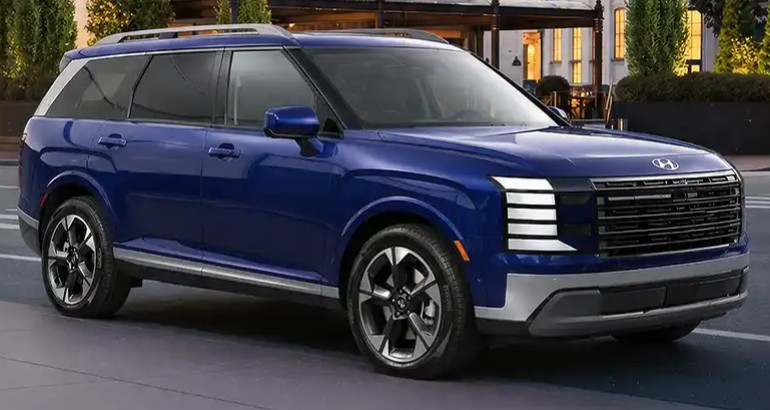
The Hyundai Palisade features list has become one of the biggest reasons this three-row SUV attracts families who might otherwise shop for something considerably more expensive. Hyundai has steadily pushed the Palisade beyond the basic definition of a family hauler. Instead of simply giving us three rows, a large trunk, and enough cupholders to survive a road trip, the Palisade blends those practical qualities with technology, comfort, driver-assistance systems, and surprisingly upscale touches.
The latest generation takes that philosophy even further. For the 2026 U.S.-market Palisade, Hyundai offers both gasoline and hybrid powertrains, seating for seven or eight depending on configuration, a standard 12.3-inch infotainment touchscreen, wireless smartphone integration, and an increasingly sophisticated collection of comfort and safety equipment. Higher trims venture into territory that once belonged almost exclusively to luxury SUVs, adding things such as Nappa leather, relaxation seats, premium audio, surround-view cameras, and even an integrated dashcam.
So, what actually matters when we get beyond the brochure? Which Palisade features make everyday ownership easier, and which are simply nice extras? Let's dig through the cabin, technology, safety equipment, performance, cargo versatility, and premium features to see what makes this SUV tick.
Note: Features vary by model year, trim level, drivetrain, and country. This guide uses the current 2026 U.S.-market Palisade as the main reference while discussing features that broadly define the model.
Content in this publication
- What Are the Main Hyundai Palisade Features?
- Hyundai Palisade Interior Features
- Relaxation Seats Add a Luxury-SUV Touch
- Hyundai Palisade Technology Features
- 100W USB-C Charging Ports
- Bose Premium Audio System
- Hyundai Digital Key 2 Premium
- Hyundai Palisade Safety Features
- Surround View Monitor
- Parking Assistance Features
- Integrated Front and Rear Dashcam
- Hyundai Palisade Performance Features
- HTRAC All-Wheel Drive
- Hyundai Palisade XRT PRO Features
- Hyundai Palisade Towing Features
- Hands-Free Smart Liftgate
- Cargo and Practicality Features
- Dual-Pane Sunroof
- Integrated Memory System
- Palisade Calligraphy Features
- Which Hyundai Palisade Features Are Actually Worth Having?
- Are Hyundai Palisade Features Better Than Luxury SUVs?
- How Useful Are the Palisade Features for Families?
- Does the Palisade Feel High-Tech Without Being Complicated?
- Who Should Consider the Hyundai Palisade?
- Conclusion: Hyundai Palisade Features Make It More Than a Family Hauler
- Frequently Asked Questions About Hyundai Palisade Features
What Are the Main Hyundai Palisade Features?
At its heart, the Palisade is designed around one simple idea: transporting several people without making anyone feel as though they drew the short straw.
That sounds obvious, but plenty of three-row SUVs put most of their effort into the first two seats. The third row becomes an emergency bench best reserved for children, while charging ports, ventilation, storage, and easy access seem like afterthoughts.
Hyundai approaches the Palisade differently.
Depending on configuration, the current model can accommodate seven or eight passengers. Even beyond its seating capacity, however, the Palisade packs in convenience features aimed at real family life. Hyundai offers heated and ventilated seating in multiple rows, abundant USB-C charging, passenger communication technology, flexible cargo arrangements, and multiple camera-based parking aids.
Some standout Hyundai Palisade features include:
- Three-row seating for seven or eight passengers
- Standard 12.3-inch touchscreen
- Wireless Apple CarPlay and Android Auto
- Available HTRAC all-wheel drive
- Hyundai SmartSense driver-assistance technologies
- Available Surround View Monitor
- Available heated and ventilated second-row seats
- Available third-row heated seats
- Up to 100W USB-C charging capability
- Available premium Nappa leather
- Available Bose 14-speaker sound system
- Available Hyundai Digital Key 2 Premium
- Hands-free smart liftgate on eligible trims
- Available front and second-row relaxation seats
- Available integrated front and rear dashcam
- Gasoline and hybrid powertrain choices
- Towing capability of up to 5,000 pounds for properly equipped gasoline models with trailer brakes
That is already quite a toolbox, but the way these features work together matters more than the headline numbers.
Hyundai Palisade Interior Features
Walk into a Palisade and the first surprise is usually not a particular gadget. It's the overall atmosphere.
The interior doesn't feel designed merely to survive children, groceries, luggage, and muddy shoes. It feels intentionally upscale. The dashboard is broad and horizontal, the displays are integrated cleanly, and higher trims introduce materials that push the Palisade surprisingly close to premium-brand territory.
Three-Row Seating
Passenger flexibility remains one of the Palisade's strongest cards.
The current model is offered with seating for up to eight occupants, while several trims can be configured for seven passengers using second-row captain's chairs. Hyundai lists eight-passenger seating on the base SE, while other configurations vary between seven seats and optional eight-passenger layouts.
For families, this distinction matters.
An eight-seat configuration makes sense when maximum capacity is the priority. Captain's chairs, however, create a more open cabin and make accessing the third row easier. They also give second-row passengers a little kingdom of their own rather than asking three people to negotiate elbow territory on one bench.
The materials become increasingly sophisticated as we climb the trim ladder.
Entry versions use cloth or Hyundai's H-Tex leatherette-style upholstery, while higher specifications introduce leather and, at the top end, premium Nappa leather seating surfaces.
Nappa leather is not essential to the Palisade experience, of course. A family SUV doesn't become bad because its seats aren't wrapped in luxury-grade hides. Still, it helps explain why the Palisade can feel far more expensive than we might expect from a mainstream Hyundai badge.
Heated and Ventilated Seats
Climate-controlled seating is one of those features that seems unnecessary until we've lived with it.
Available configurations provide heated and ventilated front and second-row seating, and certain higher trims even offer heated third-row seats. The 2026 Palisade Limited and Calligraphy variants are particularly generous with passenger comfort equipment.
On a freezing morning, heated seats make the first few miles dramatically more pleasant. In summer, ventilation keeps the seatback from feeling like a frying pan.
More importantly, Hyundai hasn't reserved every comfort benefit exclusively for the driver.
Second-Row Comfort Matters
That deserves attention because many SUVs behave as though rear passengers are cargo with smartphones.
The Palisade's available second-row heating and ventilation makes long-distance family trips considerably more civilized, especially for adults regularly riding in the back.
Relaxation Seats Add a Luxury-SUV Touch
One of the more unusual Hyundai Palisade features is the availability of relaxation seats for the front and second rows on higher-spec models.
These seats are designed to provide a more laid-back seating position and improved comfort during breaks or extended journeys. Hyundai specifically highlights available first- and second-row relaxation seating on the latest Palisade, including top Calligraphy configurations.
Do we absolutely need relaxation seats in a family SUV?
Probably not.
Do they make waiting in a parking lot, resting during a road trip, or killing time during children's activities noticeably nicer?
Absolutely.
It's precisely this kind of feature that separates the Palisade from SUVs designed strictly around specifications.
Hyundai Palisade Technology Features
Modern family vehicles live or die by their technology.
We aren't merely connecting one phone anymore. There may be several phones, tablets, wireless earbuds, gaming devices, navigation apps, streaming services, and passengers wondering why their battery is sitting at 7%.
The Palisade is clearly designed for that reality.
12.3-Inch Touchscreen
A 12.3-inch touchscreen infotainment display is standard across the current 2026 U.S. Palisade lineup. Depending on configuration, it integrates navigation, entertainment functions, vehicle settings, and connectivity features.
The screen is large enough to present information clearly without making the dashboard resemble a television bolted to a refrigerator.
That's an important distinction.
Technology should help us operate a vehicle, not force us to study it.
Wireless Apple CarPlay and Android Auto
Wireless Apple CarPlay and Android Auto are standard across the current Palisade range, allowing compatible smartphones to connect without having to plug in every time we start the vehicle.
For daily driving, this might be one of the most useful technologies in the entire SUV.
Our navigation apps, music, podcasts, messages, and familiar voice assistants follow us directly into the dashboard.
Once we're accustomed to wireless smartphone integration, going back to plugging in a cable every trip feels strangely prehistoric.
Alexa Built-In
The all-new 2026 Palisade also introduced Alexa Built-In integration in the U.S. market.
Hyundai says Alexa can be accessed through the vehicle itself rather than requiring a separate Echo device, giving occupants voice-based access to various connected functions and services.
Voice control is especially useful in a vehicle because the best touchscreen interaction while driving is often no touchscreen interaction at all.
If we can request information or perform certain functions while keeping our eyes forward and hands where they belong, the technology has a genuine purpose rather than simply adding another icon to the display.
100W USB-C Charging Ports
Here's a feature that doesn't sound glamorous but could prevent a family uprising halfway through a road trip.
The latest Palisade offers USB-C charging ports across all three rows, including high-power ports capable of delivering up to 100 watts. Hyundai specifically emphasizes the availability of charging access throughout the cabin so passengers in different rows can keep devices powered.
A high-output USB-C port can support considerably more than slow phone charging. Depending on the connected device and charging compatibility, it can be useful for tablets and some laptops as well.
In other words, the Palisade recognizes a modern truth: passenger peace is sometimes directly proportional to battery percentage.
Higher trims receive an available Bose 14-speaker premium audio system with Centerpoint and SoundTrue technology. Hyundai currently lists the system as standard on certain premium gasoline trims.
A fourteen-speaker setup may sound excessive when we're listening to a podcast on the morning school run, but the benefit becomes more noticeable with music.
A large three-row cabin can be challenging acoustically. A well-engineered multi-speaker system spreads sound more evenly so passengers don't feel as if everything is blasting from somewhere near the dashboard.
Rear Seat Quiet Mode
Sometimes, though, we want the opposite.
Hyundai's Rear Seat Quiet Mode is designed for moments when rear passengers are resting. The Palisade also includes Passenger Talk, an in-car intercom feature that helps front occupants communicate with passengers farther back. Hyundai lists both technologies across the current trim comparison.
Parents will understand the appeal instantly.
Instead of turning around and projecting our voice toward row three like we're addressing a small theater, Passenger Talk makes conversation easier.
On compatible trims, Hyundai Digital Key 2 Premium allows a compatible smartphone to act as a vehicle key.
Depending on device compatibility and vehicle configuration, Digital Key functionality can make it possible to lock, unlock, or access the Palisade through supported smart devices. Hyundai notes that compatibility requirements apply.
This is another example of technology moving from novelty to genuine convenience.
Keys are surprisingly easy to misplace. Our phones? Most of us notice their absence before we've walked ten feet.
Hyundai Palisade Safety Features
A three-row SUV is often carrying the people who matter most to us, so safety equipment is hardly a secondary consideration.
The current Palisade incorporates Hyundai's SmartSense collection of driver-assistance technologies. The exact feature package varies by trim, but the broader system includes technologies designed to monitor traffic, help maintain lane position, assist with collision avoidance, and reduce some of the workload associated with highway driving and parking.
No driver-assistance system replaces an attentive driver, but good systems work like a second set of eyes.
They don't drive responsibly for us. They simply provide another layer between an ordinary mistake and a potentially serious outcome.
Blind-Spot Assistance
Blind spots are especially relevant in larger three-row vehicles.
Depending on specification, Palisade configurations offer blind-spot monitoring and collision-avoidance technology designed to alert the driver to vehicles that may be difficult to see when changing lanes.
On crowded highways, this is the kind of feature we stop thinking about precisely because it quietly works in the background.
Smart Cruise Control
Available smart cruise technologies can automatically manage vehicle speed in relation to traffic ahead while helping reduce the constant accelerate-brake-accelerate rhythm of long highway journeys.
That does not make the Palisade autonomous.
What it can do is make a 300-mile highway trip feel less mentally exhausting.
And when we've got several passengers asking when we'll arrive, reduced fatigue is worth more than another decorative dashboard trim.
Surround View Monitor
Parking a three-row SUV is easier when we can virtually look down at the entire vehicle.
The available Surround View Monitor combines camera images to generate a bird's-eye perspective around the Palisade. For 2026, Hyundai lists it on trims including SEL Premium, XRT PRO, Limited, and Calligraphy configurations.
This technology is especially useful around:
tight garages, shopping-center parking spaces, low obstacles, children's bicycles, curbs, and narrow driveways.
The Palisade isn't an enormous full-size SUV, but it's hardly a compact hatchback either. A 360-degree camera makes its physical footprint easier to judge.
Parking Assistance Features
Parking technology continues beyond a basic reversing camera.
Depending on trim, the Palisade offers parking-distance warning systems and more advanced parking assistance features. Hyundai's current feature filters also identify Remote Smart Parking Assist among available safety technologies.
Features like these are at their best when they disappear into our routine.
Nobody buys a family SUV because they're passionate about parking sensors. Yet the hundredth time those sensors help prevent a bumper scrape, we suddenly appreciate them.
Integrated Front and Rear Dashcam
One of the standout additions on higher-end 2026 Palisade configurations is an integrated front and rear dashcam, highlighted by Hyundai for Calligraphy models.
That's interesting because dashcams have historically been something owners installed themselves.
Factory integration can produce a cleaner installation without dangling wires or aftermarket hardware stuck onto the windshield.
For drivers who already planned to purchase a dashcam, an integrated solution is a genuinely useful premium feature rather than another decorative luxury.
Hyundai Palisade Performance Features
The Palisade isn't intended to behave like a sports SUV.
Its performance mission is different: move passengers smoothly, merge confidently, tow when required, and provide enough traction for changing conditions.
For 2026, Hyundai offers two significantly different powertrain approaches.
3.5-Liter V6 Gasoline Engine
Gasoline Palisade models use a 3.5-liter V6 producing 287 horsepower in the U.S. specification.
That naturally aspirated V6 should appeal to buyers who prefer the straightforward feel of a traditional gasoline powertrain.
The numbers aren't designed to win drag races. They are designed to give a large family SUV enough muscle for highway merging, passengers, luggage, and towing duties.
Palisade Hybrid Features
The bigger mechanical story is the availability of the Palisade Hybrid.
Hyundai's 2026 U.S.-market hybrid combines a 2.5-liter turbocharged four-cylinder engine with an electric hybrid system producing 329 combined horsepower. Depending on configuration, EPA estimates reach as high as 34 mpg combined for certain front-wheel-drive versions.
No external charging cable is required because this is a conventional hybrid rather than a plug-in hybrid. The battery can recover energy through regenerative braking while the gasoline engine and hybrid system manage propulsion.
Why the Hybrid Changes the Palisade Equation
Three-row SUVs traditionally ask us to accept mediocre fuel economy as the admission price for space.
The hybrid changes that calculation.
We can retain a spacious cabin and substantial power while reducing fuel consumption, particularly in stop-and-go driving where hybrid systems often make good use of electric assistance.
For families covering thousands of urban and suburban miles annually, that could become one of the most meaningful Palisade features of all.
HTRAC All-Wheel Drive
Available HTRAC all-wheel drive gives the Palisade additional traction for slippery roads and loose surfaces. Hyundai also combines AWD with terrain-oriented functionality on appropriate versions, while the more rugged XRT PRO receives AWD as standard.
Do most Palisade drivers need serious off-road capability?
Probably not.
But AWD can still be valuable for snow, rain, gravel roads, steep driveways, or weekend trips beyond perfect pavement.
The important thing is understanding what the Palisade is.
It's an exceptionally comfortable family SUV that can handle rougher conditions—not a body-on-frame rock crawler wearing leather seats.
Hyundai Palisade XRT PRO Features
The XRT PRO gives the Palisade lineup a more adventurous personality.
While luxury-focused trims emphasize leather, comfort, and technology, the XRT PRO leans toward additional capability and rugged styling.
It is aimed at the buyer who wants family practicality Monday through Friday but sees a dirt road as an invitation rather than a warning sign on Saturday morning.
Hyundai's current lineup places the XRT PRO alongside premium trims rather than treating it merely as an appearance package, and standard HTRAC AWD forms an important part of its capability-focused identity.
Hyundai Palisade Towing Features
Properly equipped gasoline Palisade models can tow up to 5,000 pounds with trailer brakes, according to Hyundai's current U.S. specifications. An available integrated tow hitch and dedicated towing mode support trailer use.
That's enough for many small campers, utility trailers, motorcycles, personal watercraft, or modest boats, provided the total trailer weight and vehicle loading remain within the manufacturer's limits.
Towing capacity is never simply a headline number, though.
Payload, tongue weight, passenger load, trailer brakes, hitch equipment, and local regulations all matter. We should always verify the exact owner's manual and specifications for the Palisade we're driving.
Hands-Free Smart Liftgate
Few features demonstrate the difference between brochure appeal and everyday usefulness better than a hands-free liftgate.
On eligible Palisade trims, the hands-free smart liftgate can automatically open for easier access to the cargo area. Hyundai lists the feature from multiple configurations above the entry model.
Imagine walking toward the car carrying shopping bags in both hands.
Suddenly, automatic tailgate operation no longer looks like a luxury feature. It looks like someone at Hyundai has actually carried groceries before.
Cargo and Practicality Features
Three rows are useful only if the rest of the cabin adapts around them.
The Palisade gives owners several possible passenger-and-cargo combinations, which is crucial because family transportation rarely involves the same load twice.
Monday may mean school bags and sports equipment. Friday means groceries. Saturday might bring bicycles or camping equipment. Sunday could mean grandparents, children, and enough luggage to suggest we're relocating permanently.
Flexible seating allows the Palisade to change shape according to the mission rather than forcing every journey into one layout.
Third-Row Usability
Third-row comfort is one of the areas where larger midsize SUVs distinguish themselves from compact three-row crossovers.
The Palisade's size allows the rear seating area to function as a genuine part of the cabin rather than a folding bench we keep hidden most of the year.
And because Hyundai places charging capability and available comfort equipment deeper into the cabin, third-row occupants don't feel quite as forgotten.
Dual-Pane Sunroof
An available dual-pane sunroof helps make the Palisade's large interior feel brighter and more open.
Panoramic glass won't improve acceleration, fuel economy, or towing capacity by a single measurable unit.
Yet this is where specifications sometimes fail to tell the whole story.
On a cloudy morning or scenic mountain road, additional natural light can completely change the atmosphere inside a three-row cabin.
Sometimes a feature earns its place simply because it makes the car nicer to inhabit.
Integrated Memory System
Available Integrated Memory System functionality lets drivers store and recall seating positions. Hyundai specifically highlights driver-seat memory among the Palisade's comfort features.
For a vehicle shared between two adults, memory seats are far more valuable than they sound.
Without them, every driver change begins with a small ritual: seat forward, seat down, backrest up, mirrors adjusted, steering position corrected.
Memory functionality turns that ritual into a button press.
Small convenience? Yes.
But the Palisade is good at stacking small conveniences until the entire ownership experience feels easier.
Palisade Calligraphy Features
Calligraphy sits at the luxury-oriented end of the lineup.
Current gasoline Calligraphy models combine features such as 21-inch alloy wheels, premium Nappa leather, front and second-row relaxation seats, and an integrated front-and-rear dashcam, alongside the broader suite of Palisade comfort and technology equipment.
This is where the Palisade begins asking an interesting question:
How much does the badge on a luxury SUV matter?
A similarly equipped premium-brand three-row SUV can cost significantly more. Hyundai isn't pretending the Palisade suddenly becomes a German luxury vehicle, but the gap in everyday features has become remarkably small.
Which Hyundai Palisade Features Are Actually Worth Having?
Not every buyer needs the highest trim.
In fact, one of the Palisade's strengths is that many important technologies appear lower in the range.
The standard 12.3-inch touchscreen, wireless Apple CarPlay and Android Auto, three-row seating, proximity key functionality, and Hyundai's core safety technologies give even more affordable configurations a strong baseline.
If we had to prioritize extras for frequent family use, we'd focus on features that affect us every day rather than those we show friends once.
A surround-view camera, heated and ventilated seating, power liftgate, Digital Key, upgraded driver assistance, and plentiful high-output charging are likely to matter much more over five years than a larger wheel design or decorative trim.
That's the trick when choosing a Palisade.
Buy the technology you'll actually touch.
Are Hyundai Palisade Features Better Than Luxury SUVs?
“Better” depends on what we're measuring.
Luxury SUVs may still deliver finer materials, quieter cabins, more sophisticated suspension systems, greater performance, and stronger brand prestige.
But feature-for-feature?
The Palisade can make the comparison uncomfortable for them.
Nappa leather, multi-row heated seats, ventilated seats, relaxation seating, premium audio, extensive cameras, digital-key access, connected technology, large screens, and sophisticated safety systems cover most of the features ordinary drivers actually experience daily.
The Palisade's cleverest trick isn't pretending to be something it isn't.
It simply borrows much of the experience people associate with luxury vehicles and packages it inside a practical mainstream SUV.
How Useful Are the Palisade Features for Families?
This is arguably where Hyundai gets the formula right.
Family vehicles operate in chaos.
Someone is hungry. Someone's tablet is dead. Someone dropped something under the seat. Someone can't hear the person in front. Someone needs the air cooler. Someone needs it warmer.
The Palisade's best features directly attack those annoyances.
Multiple charging ports keep electronics running. Passenger Talk improves communication. Rear Seat Quiet Mode helps sleeping passengers. Captain's chairs simplify access. Surround-view cameras make tight parking easier. Heated and ventilated seating reduces climate arguments.
These aren't science-fiction technologies.
They're solutions to boring problems.
And boring problems are exactly what we experience every day.
Does the Palisade Feel High-Tech Without Being Complicated?
Mostly, yes—and that's crucial.
A vehicle can have tremendous technology yet become frustrating if common functions require endless menu diving.
The Palisade's broader philosophy has traditionally blended physical controls with digital interfaces, while smartphone integration allows us to bring familiar apps into the vehicle environment.
That's a smarter approach than reinventing every function simply because a touchscreen exists.
Good automotive technology should behave like electricity in a house: always available, extremely useful, and rarely demanding our attention.
Who Should Consider the Hyundai Palisade?
The Palisade makes the most sense for buyers who need substantial passenger room but don't want the bulk, fuel consumption, or pricing of a traditional full-size SUV.
It's particularly appealing for families who regularly use the second and third rows, drivers who take long road trips, buyers who value technology, and shoppers who want premium-style equipment without moving fully into luxury-brand pricing.
The arrival of the hybrid expands that audience further.
People who previously rejected large three-row SUVs because of fuel consumption now have another reason to look at the Palisade.
Conclusion: Hyundai Palisade Features Make It More Than a Family Hauler
The impressive thing about the Hyundai Palisade features list isn't any single item.
It's the accumulation.
A large touchscreen alone isn't special anymore. Neither are heated seats, smartphone integration, parking cameras, or adaptive driver aids.
Put them together with seven- or eight-passenger seating, high-output USB-C charging, available Nappa leather, relaxation seats, Digital Key functionality, all-wheel drive, towing capability, an integrated dashcam, multi-row comfort features, and a genuinely useful hybrid option, and the Palisade becomes far more interesting.
The SUV succeeds because Hyundai appears to understand that families don't need technology simply for technology's sake.
They need features that remove friction.
A camera makes parking easier. A charging port prevents a dead tablet. An intercom saves us from shouting toward row three. Ventilated seats make summer traffic tolerable. A hands-free liftgate helps when our arms are full. A hybrid powertrain can make constant family driving less painful at the pump.
None of those features individually transforms a vehicle.
Together, they're like hundreds of small gears turning behind the scenes, quietly making everyday life smoother.
And that may be the Palisade's strongest feature of all.
Frequently Asked Questions About Hyundai Palisade Features
1. What features come standard on a Hyundai Palisade?
Current 2026 U.S.-market Palisade models include a 12.3-inch touchscreen, wireless Apple CarPlay and Android Auto, three-row seating, proximity-key entry with push-button start, and Hyundai SmartSense safety technology. Equipment varies by trim and market.
2. Does the Hyundai Palisade have seven or eight seats?
Both configurations are available. The exact arrangement depends on trim, with some versions using an eight-passenger second-row bench and others featuring seven-passenger layouts with second-row captain's chairs.
3. Does the Hyundai Palisade have wireless Apple CarPlay?
Yes. Hyundai lists wireless Apple CarPlay and Android Auto as standard across the current 2026 U.S. Palisade range.
4. Does the Hyundai Palisade have a 360-degree camera?
Selected trims offer Hyundai's Surround View Monitor, which combines camera feeds to provide a bird's-eye-style view around the SUV. On the 2026 model, Hyundai lists the system on SEL Premium, XRT PRO, Limited, and Calligraphy versions.
5. What are the best Hyundai Palisade luxury features?
Among the most notable premium features are available Nappa leather seating, heated and ventilated seats, front and second-row relaxation seats, a Bose 14-speaker audio system, integrated memory settings, Digital Key 2 Premium, surround-view cameras, and an integrated front-and-rear dashcam on selected high-spec configurations.
If you want to know other articles similar to Hyundai Palisade Features: Complete Guide to Comfort, Tech, Safety, and Capability you can visit the category Service and Parts.
Vauxhall Mokka Tyre Pressure Reset: Complete Guide
How to Reset the Tire Pressure System on Your Hyundai Tucson
Hyundai Kona Tire Pressure: Complete PSI Guide
Vauxhall Corsa Timing Belt Replacement Cost UK 2026
Mazda CX-5 Tire Size Chart: 2013–2026 Guide
How to Reset a Honda Civic: Complete Step-by-Step Guide
Leave a Reply
More content of your interest