
Ford Edge vs RAV4: Which SUV Makes More Sense?

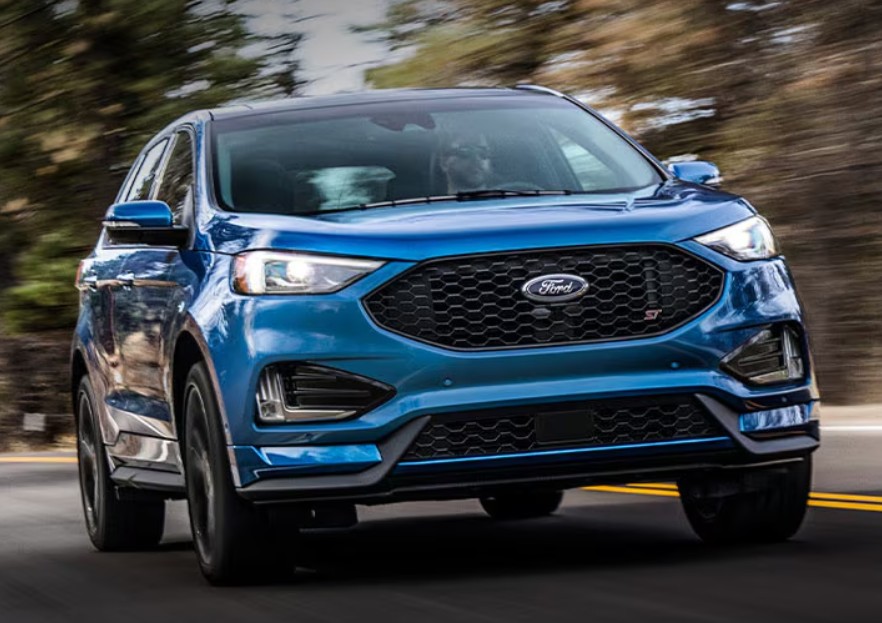
Choosing between the Ford Edge vs RAV4 sounds simple until we put the two SUVs side by side. Both have five seats, generous cargo areas, available all-wheel-drive capability, and the sort of practical shape that makes grocery runs, road trips, school runs, and weekend escapes considerably easier.
Yet they belong to different classes.
The Ford Edge is a two-row midsize SUV. It is wider, roomier, more powerful in its traditional gasoline forms, and generally feels more substantial on the highway. The Toyota RAV4 is a compact SUV, built around efficiency, maneuverability, lower operating costs, and broad everyday usefulness.
There is another important wrinkle. In the United States, the 2024 Ford Edge was the final model year, while Toyota has moved the RAV4 into an all-new sixth generation for 2026. So anyone shopping today is generally comparing a used or leftover Edge with a newer RAV4 rather than two equivalent new vehicles.
That changes the conversation.
Instead of asking, "Which SUV is objectively better?" we should ask something more useful: Which one better fits the way we actually drive?
Content in this publication
- Ford Edge vs Toyota RAV4 at a Glance
- Ford Edge vs RAV4 Size: The Difference Is Bigger Than It Looks
- Ford Edge vs RAV4 Interior Space
- Ford Edge vs RAV4 Cargo Space
- Ford Edge vs RAV4 Performance
- Toyota RAV4 Hybrid Performance
- Ford Edge vs RAV4 Fuel Economy
- Ford Edge vs RAV4 Towing Capacity
- Ford Edge vs RAV4 AWD Systems
- Ford Edge vs RAV4 Ride Quality
- Ford Edge vs RAV4 Technology
- Ford Edge vs RAV4 Safety
- Ford Edge vs RAV4 Reliability
- Ford Edge vs RAV4 Maintenance Costs
- Ford Edge vs RAV4 Resale Value
- Ford Edge ST vs RAV4 Plug-in Hybrid
- Which SUV Is Better in the City?
- Which SUV Is Better on the Highway?
- Which One Is Better for Snow?
- Which One Is Better for Tall Drivers?
- Which SUV Is Better for a Small Family?
- Reasons to Choose the Ford Edge or RAV4
- Ford Edge vs RAV4: Which Is the Better Buy?
- Ford Edge vs RAV4 for Different Buyers
- Final Verdict: Ford Edge vs RAV4
- Frequently Asked Questions
Ford Edge vs Toyota RAV4 at a Glance
Before diving into the details, here's the basic personality of each SUV.
| Category | Ford Edge | Toyota RAV4 |
|---|---|---|
| Vehicle class | Midsize SUV | Compact SUV |
| Seating | 5 | 5 |
| Main strength | Space and power | Efficiency and practicality |
| Highway character | Quiet, substantial | Light, efficient |
| City driving | Larger footprint | Easier to maneuver |
| Performance option | 335-hp Edge ST | Up to 324-hp RAV4 PHEV |
| Maximum towing | Up to 3,500 lb | Up to 3,500 lb |
| Cargo character | Wider, larger cabin | Excellent space for its size |
| Best fit | Families wanting room | Everyday efficiency seekers |
| Current U.S. status | Discontinued after 2024 | Current-generation model |
Ford offered the Edge with a 250-horsepower turbocharged four-cylinder and a 335-horsepower twin-turbo V6 in the ST, giving it noticeably more traditional muscle than most compact crossovers.
The current RAV4 takes a very different approach. Toyota's 2026 generation is exclusively electrified in the U.S., offering hybrid and plug-in-hybrid powertrains rather than a conventional gasoline-only setup. Hybrid versions produce up to 236 combined horsepower with AWD, while the RAV4 Plug-in Hybrid reaches 324 net combined horsepower.
That contrast sums up these SUVs beautifully: the Edge approaches performance with turbochargers and displacement; the RAV4 increasingly approaches it with electric motors and efficiency.
Ford Edge vs RAV4 Size: The Difference Is Bigger Than It Looks
Park them several spaces apart and they can appear relatively similar. Park them nose-to-nose and the distinction becomes obvious.
The Edge belongs to the class above the RAV4.
That means the Ford occupies more road, provides a wider cabin, and generally gives passengers more breathing room. Older official Edge specifications list a length of roughly 188.8 inches and a generous 113.9 cubic feet of passenger volume.
The RAV4's compact proportions work differently. Toyota packages a surprisingly useful interior into a smaller body, which makes it easier to live with in congested areas.
Why the Edge Feels Bigger Inside
Width makes an enormous difference.
It isn't merely about a specification buried in a brochure. A wider cabin means our shoulders aren't competing for exactly the same territory. The front seats feel farther apart, the center console feels substantial, and adults in the second row generally enjoy a more relaxed environment.
The Edge therefore works particularly well when the SUV regularly carries four adults.
Imagine an airport run with luggage and four passengers. The Ford feels more like a lounge chair; the RAV4 feels more like intelligently organized carry-on luggage. Both work, but they solve the problem differently.
Why the RAV4's Smaller Size Can Be Better
Bigger is not automatically better.
A smaller SUV is easier to park, easier to thread through tight streets, and usually less stressful in cramped garages. Anyone regularly maneuvering through urban parking structures will understand the appeal immediately.
The RAV4 feels like it shrinks around us.
That's valuable every single day, whereas the Edge's additional width may only become essential when passengers or cargo demand it.
Ford Edge vs RAV4 Interior Space
Both SUVs seat five, but they use those five seats differently.
The Edge emphasizes passenger room. The RAV4 emphasizes packaging efficiency.
Ford's cabin has always been one of the Edge's strongest arguments. Rear-seat passengers get generous space, and the broad body helps the interior avoid feeling cramped even when everybody aboard is an adult.
Front-Seat Comfort
The Edge feels more substantial from the driver's seat.
There's more vehicle surrounding us, which can create a sense of solidity on long highway drives. Depending on trim, Edge models can also offer the sort of comfort equipment we'd expect from an upscale midsize crossover.
The RAV4 takes a more upright, practical approach.
Visibility is good, controls are positioned logically, and Toyota uses the available space efficiently. The newer generation also pushes technology considerably further than older RAV4s.
Neither interior philosophy is wrong.
We'd take the Edge for hours of interstate travel and the RAV4 for repeated short journeys across a crowded city.
Rear-Seat Space
This is where the Edge starts earning its larger footprint.
Adults riding in the second row have plenty of room to stretch out. Families with taller teenagers may appreciate that more than they expect.
The RAV4 remains perfectly usable for families, but its dimensions reveal its compact-SUV roots. If the rear seats spend most of their lives carrying children, we probably won't care.
Put three adults across the back frequently, though, and the larger Ford begins looking attractive.
Ford Edge vs RAV4 Cargo Space
Cargo specifications can be deceptive because the shape of the luggage area matters almost as much as the number.
Ford listed up to 73.4 cubic feet behind the front seats in Edge specifications.
Toyota currently advertises up to 37.8 cubic feet of cargo capacity behind the rear seats for the 2026 RAV4.
The Ford's broader body is especially useful for awkward objects.
Think large coolers, bulky suitcases, flat-packed furniture, sports equipment, dog crates, or camping gear. Sometimes width matters more than absolute volume.
Which Is Better for Families?
For sheer passenger-and-cargo flexibility, we'd give the advantage to the Edge.
But there is an interesting catch.
The RAV4 delivers an enormous amount of usable cargo room considering its exterior size. That's why it has become such a popular family vehicle. It gives us SUV utility without requiring us to drive something that feels enormous.
If your typical cargo consists of groceries, luggage, a stroller, backpacks, or weekend equipment, the Toyota provides plenty.
If your definition of "cargo" occasionally resembles moving day, the Edge is the friend we'd call first.
Ford Edge vs RAV4 Performance
Now the personalities separate dramatically.
The Edge was always intended to feel stronger than the average compact crossover.
Most versions use Ford's turbocharged four-cylinder, while the Edge ST turns the temperature up considerably.
Ford Edge 2.0 EcoBoost
Ford rated the 2.0-liter EcoBoost at approximately 250 horsepower, delivering strong midrange response rather than requiring high engine speeds for useful acceleration.
That's plenty for everyday driving.
Highway merging is effortless, passing power is good, and carrying several passengers doesn't make the SUV feel dramatically overwhelmed.
The turbocharged engine also suits the Edge's character: relaxed most of the time, punchy when asked.
Ford Edge ST Performance
The Edge ST is a different animal.
Its 2.7-liter twin-turbocharged EcoBoost V6 produces 335 horsepower and 380 lb-ft of torque, according to Ford specifications.
That's serious output for a practical five-passenger crossover.
Press the accelerator and the Edge ST stops behaving like a family appliance. It charges forward with the enthusiasm of a much smaller vehicle.
It isn't a sports car pretending to be an SUV. Instead, think of it as a family SUV that occasionally remembers it drank too much coffee.
Toyota RAV4 Hybrid Performance
Toyota's current strategy is almost the opposite.
Rather than chasing performance exclusively through turbocharging, Toyota uses electrification to combine acceleration with fuel economy.
For 2026, the RAV4 Hybrid produces 226 combined horsepower in FWD form and 236 horsepower with AWD.
Around town, the electric assistance makes the drivetrain feel responsive.
There's immediate torque when pulling away from intersections, and the hybrid system doesn't require us to think about charging. We simply drive it like a normal SUV.
RAV4 Plug-in Hybrid Changes the Equation
Here's where the comparison becomes interesting.
The 2026 RAV4 Plug-in Hybrid produces 324 net combined horsepower, nearly matching the muscular Edge ST on paper. Toyota also quotes a 0–60 mph time of about 5.4 seconds for the plug-in model.
So we can no longer say, "Buy the Ford if you want performance and the Toyota if you want economy."
The PHEV can provide both.
It also offers an EPA-estimated all-electric range of up to 54 miles in SE specification, meaning many commuters could complete substantial portions of their daily driving without starting the gasoline engine.
That's a remarkable evolution for the humble RAV4.
Ford Edge vs RAV4 Fuel Economy
Fuel economy may be the Toyota's strongest argument.
The Edge was designed in an era when turbocharged gasoline engines represented a good compromise between power and economy. It isn't disastrously thirsty, but physics still sends the bill.
We have a larger, heavier SUV pushing more air down the highway.
The RAV4's newer hybrid systems dramatically change that calculation.
Toyota says 2026 RAV4 Hybrid versions can achieve around 41 mpg combined in certain configurations, with some official specifications showing city/highway ratings in the low-40-mpg range.
You may be interested in reading Ford Edge vs Nissan Rogue: Which SUV Is the Better Choice?
That difference compounds over years of ownership.
The Commute Test
Suppose our daily life involves a long commute, traffic jams, school runs, and repeated short trips.
Hybridization loves that environment.
Regenerative braking can recover energy that conventional vehicles simply convert into heat, while electric assistance reduces how hard the gasoline engine must work.
On those terms, the RAV4 is the obvious winner.
But someone driving relatively few miles each year might value the Edge's extra room and performance more than the fuel savings.
Context matters.
Ford Edge vs RAV4 Towing Capacity
This category produces a surprising result.
A properly equipped 2024 Ford Edge can tow up to 3,500 pounds. Ford specifies that reaching the higher rating depends on the appropriate configuration and towing equipment.
The 2026 RAV4 can also tow up to 3,500 pounds in suitable configurations.
So the maximum headline figure can essentially tie.
But we shouldn't stop reading there.
Tow ratings vary significantly by trim, drivetrain, equipment, load, and powertrain. Never assume every RAV4 or every Edge has the maximum rating simply because the model line can achieve it.
Which Would We Prefer for Towing?
For occasional towing close to modest weights, either can work when properly configured.
Yet the Edge's larger dimensions and torque-rich powertrains may provide a more relaxed subjective towing experience.
The RAV4 counters with remarkable capability relative to its compact footprint.
The right answer depends less on the badge and more on the exact vehicle configuration we're considering.
Ford Edge vs RAV4 AWD Systems
All-wheel drive matters for rain, loose surfaces, winter roads, and sometimes simply getting confidently up a steep driveway.
The Edge has long offered intelligent AWD capability, with systems designed to distribute power according to conditions.
The RAV4's electrified architecture changes how AWD can operate because hybrid systems can use electric motor assistance as part of the drivetrain strategy.
The practical result?
Both can provide useful additional traction, but neither should automatically be confused with a hardcore body-on-frame off-roader.
RAV4 Woodland for Outdoor Drivers
Toyota has expanded the adventurous side of the RAV4 lineup with the Woodland grade, which incorporates features intended for drivers who regularly venture beyond pavement.
Toyota describes the latest Woodland as offering AWD and trail-oriented equipment, while maintaining the efficient hybrid philosophy of the broader lineup.
This is less "crawl across boulders" and more "confidently reach the campsite."
For most buyers, that's exactly the right balance.
Ford Edge vs RAV4 Ride Quality
The Edge wins an intangible category that specifications struggle to explain: big-car relaxation.
Its longer wheelbase, broad stance, and midsize proportions give it a substantial feel. On highways, the Edge tends to settle into the road rather than dance over every imperfection.
The RAV4 feels lighter and more alert.
That's fantastic in town. It changes direction more eagerly, fits through smaller openings, and generally demands less concentration when maneuvering.
But the Edge can feel calmer during long journeys.
Which Is Better for Road Trips?
We'd choose based on priorities.
For four adults traveling hundreds of miles with luggage, the Edge is difficult to dismiss. Its roomier cabin feels designed for exactly that mission.
For a couple or small family covering similar distances while caring about fuel consumption, the RAV4 makes enormous sense.
It's the difference between stretching out on a sofa and sitting in a very well-designed airline seat.
Ford Edge vs RAV4 Technology
This comparison heavily depends on model year.
A late-model Edge still offers the expected smartphone connectivity, infotainment, driver assistance, and convenience features, but Toyota's new-generation RAV4 benefits from arriving years later.
The 2026 RAV4 introduces Toyota's newer multimedia architecture and Toyota Safety Sense 4.0, along with a standard 12.3-inch digital gauge cluster and wireless Apple CarPlay and Android Auto compatibility.
That's an important consideration for long-term ownership.
Does the Edge Feel Outdated?
Not necessarily.
A well-equipped late Edge still feels modern enough for ordinary use. Huge specification sheets are rarely what make us love or hate a car after six months anyway.
What matters is whether the technology we actually touch works conveniently.
Navigation? Smartphone integration? Climate controls? Parking assistance? Driver aids?
If those functions meet our needs, the Edge's age may not bother us at all.
But buyers who want the newest software platform and driver-assistance technology naturally have stronger reasons to choose the current RAV4.
Ford Edge vs RAV4 Safety
Both model families have offered broad sets of active safety features, including technologies designed to help with collision avoidance, lane keeping, blind spots, and highway driving.
Ford progressively expanded its Co-Pilot360 suite across Edge models, while Toyota continues developing Toyota Safety Sense.
The difference once again comes down to generation.
Toyota Safety Sense 4.0 debuts in the latest RAV4 generation, giving the Toyota a technological advantage simply because it is much newer.
That doesn't automatically make an older Edge unsafe.
It simply means shoppers comparing used vehicles should evaluate the exact year and trim, not assume every car wearing the same model name contains identical equipment.
Ford Edge vs RAV4 Reliability
This is probably one of the first questions buyers ask.
Toyota's RAV4 enjoys a strong reputation for long-term dependability, and its huge sales volume means independent repair shops are familiar with it and parts availability is generally broad.
The Edge can also deliver long service, but powertrain configuration matters considerably.
A turbocharged gasoline SUV with an automatic transmission is mechanically different from Toyota's hybrid arrangement. Maintenance history therefore becomes enormously important when shopping used.
Buying a Used Edge Requires More Homework
Because the Edge is no longer a current U.S. model, condition matters more than reputation.
A pristine, regularly maintained Edge with complete service records may be a far better purchase than a neglected RAV4 carrying a supposedly bulletproof badge.
We should inspect the actual vehicle.
Mileage, accident history, fluid servicing, tire condition, ownership history, warning lights, transmission behavior, cooling system condition, and documented maintenance all matter.
A used SUV is not its reputation. It's its history.
The RAV4's Long-Term Advantage
Toyota's advantage is consistency.
Buyers who intend to keep their SUV for a decade often appreciate the RAV4's reputation, widespread servicing support, and historically strong resale demand.
There are never guarantees with machinery, of course.
But if our priority hierarchy begins with reliability, efficiency, and resale value, the Toyota deserves serious attention.
Ford Edge vs RAV4 Maintenance Costs
The RAV4 will generally be the easier vehicle to justify economically, particularly when we're comparing a new hybrid against an aging turbocharged Edge.
Fuel use is lower.
The vehicle is smaller.
Toyota's hybrid systems eliminate some conventional drivetrain components while regenerative braking can reduce friction-brake usage in certain driving conditions.
The Edge, especially the ST, asks us to accept potentially greater running expense in exchange for its performance and size.
That's not inherently bad.
We don't buy hiking boots because they're lighter than flip-flops. Different tools have different costs.
Ford Edge vs RAV4 Resale Value
Resale is one of Toyota's traditional strengths.
The RAV4 occupies one of the most desirable parts of today's automotive market: efficient compact SUVs with practical interiors.
You may be interested in readingFord Edge vs Nissan Rogue: Which SUV Is the Better Choice?You may be interested in reading
Ford Edge or Chevy Equinox: Which SUV Makes More Sense?Demand tends to be broad because almost anyone can find a use for one.
The Edge occupies a slightly more complicated position. Since production has ended, depreciation may create attractive opportunities for used buyers.
That's actually good news if we're buying rather than selling.
A few years of depreciation can turn a well-equipped Edge into a lot of SUV for the money.
Used Edge vs New RAV4: The More Relevant Comparison
This may be the most realistic scenario.
Imagine having enough money for either a nicely equipped used Ford Edge or a newer RAV4.
The Edge could give us more space, more luxury equipment, and more horsepower per dollar.
The Toyota could give us newer technology, better efficiency, potentially lower operating expenses, and additional remaining warranty coverage depending on the vehicle.
Suddenly the answer isn't obvious.
And that's exactly why the Edge remains interesting even after leaving the new-car market.
Ford Edge ST vs RAV4 Plug-in Hybrid
Here's the fun comparison.
One represents old-school turbocharged performance. The other demonstrates where mainstream SUVs are heading.
The Edge ST makes 335 horsepower from its twin-turbo V6. The current RAV4 Plug-in Hybrid produces 324 net combined horsepower.
Their personalities, however, couldn't be more different.
The Ford delivers its performance with engine noise, turbo boost, torque, and the character of a conventional performance crossover.
The RAV4 PHEV uses electric assistance to deliver startling acceleration from a vehicle traditionally associated with sensible family transportation.
It's a little like comparing an espresso machine with an electric kettle that somehow learned karate.
Both are fast.
Only one can potentially complete many daily journeys primarily on electricity.
Which SUV Is Better in the City?
The RAV4.
This is one of the easiest categories to call.
Its compact dimensions, efficiency, easier parking manners, and hybrid powertrain options make it ideally suited to stop-and-go driving.
The Edge isn't unwieldy, but we'll notice its size.
If we're navigating tight underground garages several times per week, the novelty of a wide cabin can quickly meet the reality of narrow parking spaces.
Which SUV Is Better on the Highway?
The Edge deserves the advantage for traditional highway comfort.
Its larger footprint and spacious cabin suit long-distance cruising exceptionally well.
The RAV4 fights back with dramatically better fuel economy and, in current form, more advanced electrified powertrains.
So the question becomes fascinating:
Would we rather stop less often because we're comfortable, or stop less often because we're barely using fuel?
Which One Is Better for Snow?
With appropriate tires and AWD, either can work extremely well in winter weather.
And those last two words matter: appropriate tires.
AWD helps us accelerate. Tires influence acceleration, cornering, and braking.
A front-wheel-drive RAV4 wearing excellent winter tires may behave more confidently in many conditions than an AWD Edge wearing worn all-season tires.
The badge on the liftgate cannot rewrite physics.
Which One Is Better for Tall Drivers?
The Edge.
Its larger cabin simply gives us more room to work with.
Tall front-seat occupants are unlikely to struggle in either vehicle, but the Ford becomes especially attractive when tall people also occupy the rear seats.
Families sometimes focus obsessively on cargo capacity while forgetting that teenagers grow.
Rear legroom suddenly becomes a very expensive problem when everybody reaches six feet.
Which SUV Is Better for a Small Family?
The RAV4 arguably offers the sweetest balance.
It carries five people, offers substantial cargo capacity, returns excellent fuel economy, fits comfortably into urban life, and provides enough capability for vacations and weekend adventures.
That's precisely why compact SUVs became so dominant.
They're automotive Swiss Army knives.
The Edge is closer to the larger toolbox we reach for when the Swiss Army knife starts feeling cramped.
Reasons to Choose the Ford Edge or RAV4
If we're narrowing the decision quickly, these are the practical dividing lines:
- Choose the Ford Edge if we prioritize a larger cabin, generous rear-seat room, broad cargo space, relaxed highway comfort, strong turbocharged performance, or the excitement of the 335-hp ST.
- Choose the Toyota RAV4 if we prioritize fuel economy, hybrid technology, maneuverability, current-generation safety technology, long-term ownership economics, or access to a new vehicle rather than a used one.
- Consider the Edge especially seriously on the used market, where depreciation can make higher trims surprisingly affordable.
- Consider the RAV4 Hybrid for heavy commuting, because fuel savings become increasingly meaningful as annual mileage rises.
- Consider the RAV4 Plug-in Hybrid if performance and efficiency both matter, since its 324-hp output changes the traditional assumption that the Edge is automatically the quicker choice.
- Verify towing equipment rather than relying on model-wide claims, because both vehicles' maximum ratings depend on configuration.
- Test the rear seats with your real passengers, because the Edge's midsize dimensions matter much more when adults regularly occupy row two.
Ford Edge vs RAV4: Which Is the Better Buy?
For most buyers purchasing a vehicle today, we'd lean toward the Toyota RAV4.
Its efficiency is difficult to ignore. The newest generation combines hybrid power, modern technology, strong practical cargo space, available AWD, and impressive towing capability without growing into a large SUV.
It's the sensible choice without feeling painfully sensible.
But that doesn't make the Edge obsolete.
A well-kept Ford Edge can be an excellent used-car value precisely because it offers something the RAV4 cannot fully replicate: midsize-SUV spaciousness without a third row.
That layout has an almost Goldilocks quality.
No unnecessary third-row seats stealing cargo space. No giant body requiring its own postal code. Just five comfortable seats, a broad luggage area, and enough horsepower to make highway driving effortless.
The Edge ST adds genuine personality on top of that.
Ford Edge vs RAV4 for Different Buyers
A high-mileage commuter should probably choose the RAV4 Hybrid.
A family with tall teenagers may prefer the Edge.
Someone living downtown will appreciate the RAV4.
Someone frequently taking four adults on interstate trips may appreciate the Edge.
A performance buyer should compare the Edge ST directly against the RAV4 Plug-in Hybrid rather than automatically assuming the Ford wins.
A budget-conscious used-SUV shopper should look very closely at depreciated Edge examples.
And someone who simply wants to buy a brand-new vehicle and keep it for many years will find the RAV4 much easier to recommend.
That's the beauty of this comparison.
They overlap enough to compete but differ enough that our lifestyle can actually produce a clear winner.
Final Verdict: Ford Edge vs RAV4
The Ford Edge vs RAV4 comparison isn't really about Ford versus Toyota. It's about space versus efficiency.
The Edge feels like the bigger hammer. It is roomy, powerful, comfortable, and particularly satisfying on open roads. In ST form, it can even be legitimately quick.
The RAV4 feels like the sharper multitool. It's smaller outside without feeling tiny inside, drastically more efficient in its current hybrid forms, available with impressive electrified performance, and easier to justify financially for drivers covering lots of miles.
If we were choosing one vehicle for maximum everyday usefulness at minimum operating fuss, we'd take the RAV4.
If we found an excellent used Edge at the right price and valued space, comfort, and turbocharged performance more than fuel economy, we'd happily choose the Ford.
Sometimes the better vehicle isn't the one winning the most specification categories.
It's the one whose compromises match ours.
Frequently Asked Questions
1. Is the Ford Edge bigger than the Toyota RAV4?
Yes. The Ford Edge is a midsize two-row SUV, while the Toyota RAV4 belongs to the compact SUV category. The Edge provides a broader cabin and generally feels more spacious for passengers, especially adults riding in the second row.
2. Is the Ford Edge more powerful than the RAV4?
Most conventional comparisons favor the Edge, particularly the Edge ST with its 335-horsepower twin-turbo V6. However, the latest RAV4 Plug-in Hybrid produces 324 net combined horsepower, making the performance gap remarkably small.
3. Which gets better gas mileage, the Ford Edge or RAV4?
The RAV4 wins comfortably, particularly in hybrid form. Toyota's latest hybrid RAV4 models can achieve fuel-economy figures around the low-40-mpg range depending on configuration, while the larger turbocharged Edge uses considerably more fuel.
4. Can a Toyota RAV4 tow as much as a Ford Edge?
In selected configurations, yes. Both model lines can reach a maximum advertised towing capacity of up to 3,500 pounds when properly equipped. Individual trims and powertrains can have lower limits, so the specific vehicle's manual and tow rating should always be checked.
You may be interested in readingFord Edge vs Nissan Rogue: Which SUV Is the Better Choice?You may be interested in reading
Ford Edge or Chevy Equinox: Which SUV Makes More Sense?You may be interested in reading
Ford Edge vs Nissan Murano: Which Midsize SUV Is Better?5. Is a used Ford Edge worth buying instead of a RAV4?
Absolutely, under the right circumstances. A well-maintained late-model Edge can provide more interior space, stronger conventional performance, and generous equipment for the money. The RAV4 remains the stronger choice for buyers prioritizing efficiency, newer technology, maneuverability, and long-term operating costs.
If you want to know other articles similar to Ford Edge vs RAV4: Which SUV Makes More Sense? you can visit the category Models.
Haval Jolion vs Omoda C5: Which SUV Is Better?
Haval Jolion vs Chery Tiggo 4 Pro: Full Comparison
Haval Jolion vs H6: Which SUV Is Better in 2026?
Haval Jolion vs Toyota Corolla Cross: Which SUV Is Better?
Haval Jolion vs Jaecoo J5: Which SUV Is Better?
Volkswagen T-Cross vs Volkswagen T-Roc: Which Is Better?
Leave a Reply
More content of your interest