
Ford Edge vs Nissan Rogue: Which SUV Is the Better Choice?

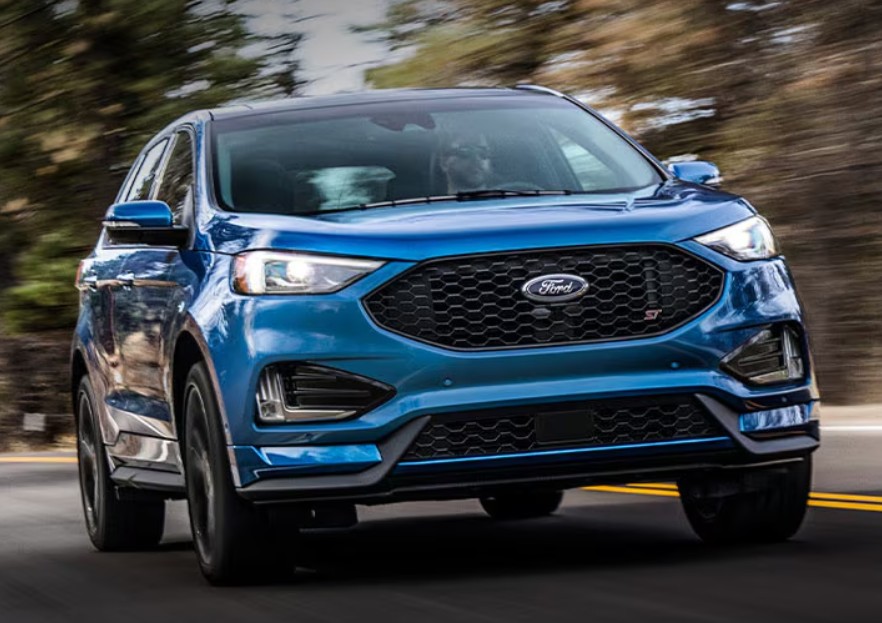
Choosing between the Ford Edge vs Nissan Rogue is a little more complicated than lining up two SUVs and asking which one has the bigger touchscreen. These vehicles approach the crossover formula from different directions.
The Ford Edge is the larger, stronger, more substantial machine. It feels broad-shouldered, offers impressive passenger space, and can deliver genuinely punchy acceleration—especially in ST form. The Nissan Rogue, meanwhile, is lighter on its feet, dramatically more economical, easier to maneuver, and still surprisingly spacious inside.
There is also an important 2026 reality to understand before we get started: Ford has ended Edge production, with 2024 representing the final U.S. model year. Ford now directs shoppers toward other SUVs while continuing support for existing Edge owners. The Rogue remains in production, so many shoppers today are effectively deciding between a used or certified pre-owned Ford Edge and a new or used Nissan Rogue.
That changes the buying equation considerably.
So, which makes more sense? Let's dig into the details.
Content in this publication
- Ford Edge vs Nissan Rogue at a Glance
- Ford Edge vs Nissan Rogue Size: They're Not Really Twins
- Interior Space: Does the Bigger Edge Feel Bigger?
- Ford Edge vs Nissan Rogue Cargo Space
- Engine Performance: Edge Wins Easily
- Fuel Economy: Rogue Strikes Back Hard
- Driving Experience: Comfort vs Agility
- Transmission: Traditional Automatic vs CVT
- AWD and Bad-Weather Capability
- Ford Edge vs Nissan Rogue Towing Capacity
- Technology and Infotainment
- Safety and Driver Assistance
- Ford Edge vs Nissan Rogue Reliability
- Maintenance Costs
- Ford Edge vs Nissan Rogue for Families
- Which SUV Is Better for Road Trips?
- Which SUV Is Better for Tall Drivers?
- Which SUV Is Better for Seniors?
- Ford Edge vs Nissan Rogue for Snow
- Styling: Muscular or Modern?
- The Biggest Reason to Choose the Ford Edge
- The Biggest Reason to Choose the Nissan Rogue
- Why Buying an Edge in 2026 Is Different
- Ford Edge vs Nissan Rogue: Which Is Better Used?
- Ford Edge vs Nissan Rogue: Which Is Better New?
- Who Should Buy the Ford Edge?
- Who Should Buy the Nissan Rogue?
- Ford Edge vs Nissan Rogue: Final Verdict
- Frequently Asked Questions
Ford Edge vs Nissan Rogue at a Glance
Before getting buried under numbers, we can summarize the personalities pretty easily.
| Category | Ford Edge | Nissan Rogue |
|---|---|---|
| Vehicle class | Midsize two-row SUV | Compact two-row SUV |
| Seating | 5 | 5 |
| Final/current generation considered | 2024 Edge | Current Rogue |
| Base engine | 2.0L turbo four-cylinder | 1.5L VC-Turbo three-cylinder |
| Base output | 250 hp | 201 hp |
| Available performance engine | 335-hp 2.7L twin-turbo V6 | No comparable performance engine |
| Drivetrain | AWD on late U.S. Edge models | FWD or available AWD |
| Transmission | Automatic | CVT |
| Cargo behind second row | About 39.2 cu ft | Around 36.3–36.5 cu ft |
| Maximum cargo | About 73.4 cu ft | Up to roughly 74.1 cu ft depending on configuration |
| Maximum towing | Up to 3,500 lb when properly equipped | Up to 1,500 lb |
| Main strength | Power, width, comfort | Efficiency, practicality, maneuverability |
Ford's 2.0-liter EcoBoost produces 250 horsepower, while the Edge ST's 2.7-liter EcoBoost V6 makes 335 horsepower. The current Rogue uses a 1.5-liter VC-Turbo three-cylinder rated at 201 horsepower and 225 lb-ft of torque.
Those numbers immediately reveal the fundamental difference. The Rogue is engineered around efficiency. The Edge is engineered around effortless power and midsize-SUV comfort.
Ford Edge vs Nissan Rogue Size: They're Not Really Twins
This is probably the most important thing to understand.
Despite frequently appearing together in online searches, the Ford Edge and Nissan Rogue traditionally occupied different segments. The Rogue is a compact crossover. The Edge sits one class higher as a midsize crossover.
A late-generation Edge measures roughly 188.8 inches long and 75.9 inches wide, while today's Rogue measures approximately 183 inches long and 72.4 inches wide.
Six inches of length might not sound transformational. The extra width matters more.
The Edge has that wide, planted feeling we associate with bigger SUVs. Sit two adults shoulder-to-shoulder in the rear and the benefit becomes obvious. Drive through narrow downtown parking garages, however, and suddenly the Rogue's smaller footprint starts looking clever.
Which Is Easier to Drive Around Town?
The Rogue wins.
Its smaller exterior dimensions make parking, navigating narrow streets, and squeezing through congested areas less stressful. Nissan lists a turning diameter of 35.4 feet for the current Rogue.
The Edge never feels enormous, but there's no disguising its additional width.
Think of the Rogue as a good pair of running shoes: flexible, light, and easy to live with.
The Edge is more like a comfortable pair of hiking boots. Heavier, sturdier, and more substantial.
Interior Space: Does the Bigger Edge Feel Bigger?
Yes—particularly across the cabin.
The Ford Edge has long been one of the roomier two-row midsize crossovers. Published specifications list approximately 42.6 inches of front legroom and 40.6 inches in the second row.
The Rogue is no penalty box, though. Nissan lists 41.5 inches of front legroom and 38.5 inches in the rear for the current model.
That makes the Edge especially attractive if we're frequently transporting tall teenagers or adults.
Rear-Seat Comfort
This is one of the Edge's strongest cards.
The combination of extra width, generous rear legroom, and a relatively flat two-row layout makes it an excellent road-trip machine. Three people across the back still isn't first-class air travel, obviously, but the wider body gives everyone more breathing room.
The Rogue remains excellent for a compact SUV.
Families with two children may never need anything larger.
Families regularly carrying three adults in back probably will.
Which One Feels Airier?
We'd give the Edge the advantage.
Its broad dashboard, wide center console, generous shoulders and large glass area create that satisfying feeling of sitting inside a substantial vehicle rather than merely wearing one.
Yet the Rogue's newer cabin design can feel more modern, especially in higher trims.
That's an important distinction: space and modernity aren't the same thing.
Ford Edge vs Nissan Rogue Cargo Space
Here's where things become unexpectedly interesting.
The Edge provides about 39.2 cubic feet behind its second row and 73.4 cubic feet with the rear seats folded.
The current Rogue offers approximately 36.3–36.5 cubic feet behind the rear seats, with maximum volume reaching roughly 72.9–74.1 cubic feet, depending on configuration.
So although the Edge is physically larger, maximum cargo capacity is remarkably close.
The Edge Wins With the Seats Up
If we're loading groceries, luggage, sports equipment or a stroller without folding the second row, the Edge has a useful advantage.
Its cargo area is wide and square.
The Rogue fights back with clever packaging. Nissan has extracted an impressive amount of usable space from a vehicle that takes up significantly less room outside.
The Rogue Is the Packaging Champion
This may be one of the Rogue's most compelling qualities.
We get near-midsize cargo versatility without constantly driving a midsize footprint.
If our priorities are "small outside, big inside," the Rogue arguably executes the crossover concept better.
Engine Performance: Edge Wins Easily
Now we arrive at an area where there really isn't much debate.
The Ford Edge is faster.
Its mainstream 2.0-liter EcoBoost engine produces approximately 250 horsepower and 280 lb-ft of torque.
The Rogue's 1.5-liter VC-Turbo engine delivers 201 horsepower and 225 lb-ft.
Neither feels painfully slow in normal commuting, but the Edge has noticeably more muscle when accelerating onto a highway or passing at speed.
Ford Edge ST Changes the Conversation
Then there's the Edge ST.
Its 2.7-liter twin-turbo EcoBoost V6 produces 335 horsepower and 380 lb-ft of torque.
That's not a small difference.
Step hard onto the accelerator and the Edge ST moves with authority. It isn't merely quicker than the Rogue; it belongs to a completely different performance category.
We could compare their acceleration all day, but it would be like comparing a commuter train with an express service. Both reach the destination. One does it with considerably more urgency.
Do Most Drivers Actually Need the Edge's Power?
Probably not.
And that's where the Rogue starts fighting back.
For school runs, grocery trips, commuting and casual highway driving, 201 horsepower is perfectly workable. Choosing the Rogue means accepting less straight-line excitement in exchange for substantially better fuel economy.
Depending on our priorities, that's a sensible trade.
Fuel Economy: Rogue Strikes Back Hard
If power is the Edge's knockout punch, fuel economy belongs to the Rogue.
Ford listings for the 2024 Edge equipped with the 2.0-liter EcoBoost show an EPA estimate of approximately 21 mpg city and 28 mpg highway.
The current Rogue can reach around 30 mpg city, 37 mpg highway and 33 mpg combined in certain configurations.
That's a substantial gap.
Drive 12,000 or 15,000 miles every year and those extra miles per gallon begin turning into actual money.
Why the Rogue Uses So Much Less Fuel
Part of the explanation is obvious: it is smaller and lighter.
But Nissan also takes a very different engineering approach.
The Rogue's 1.5-liter VC-Turbo engine uses variable-compression technology and works through Nissan's Xtronic continuously variable transmission. The goal isn't muscular acceleration—it is extracting useful torque while minimizing fuel consumption.
The Edge's larger turbocharged engines and standard AWD configuration prioritize effortless performance instead.
Which SUV Is Better for Long Commutes?
For someone driving 50 miles every weekday, we'd lean heavily toward the Rogue.
The Edge's extra comfort is appealing, but filling the tank significantly more often gets old.
Fuel economy isn't exciting in a showroom.
It's considerably more exciting when gasoline prices rise.
Driving Experience: Comfort vs Agility
Numbers only tell us so much.
Behind the wheel, these SUVs have distinctly different personalities.
The Edge feels heavy, planted and mature. Highway stability is one of its strongest qualities. It settles into long journeys nicely, and its broad stance gives drivers confidence at interstate speeds.
The Rogue feels lighter.
Steering effort is easy, maneuverability is better, and the whole vehicle feels more manageable in urban environments.
Highway Driving
Edge advantage.
Its longer, wider chassis makes it a relaxed cruiser. Add the stronger turbocharged engine and highway passing requires very little drama.
Press the accelerator and the Edge simply goes.
City Driving
Rogue advantage.
It's easier to place in traffic and easier to park.
We don't have to think about its dimensions nearly as much, and that matters if our daily routine involves crowded streets rather than endless highways.
You may be interested in reading Ford Edge or Chevy Equinox: Which SUV Makes More Sense?
Sporty Driving
Edge ST, by a mile.
Neither vehicle is a sports car pretending to be an SUV, but the Edge ST at least makes an effort to bring performance into the equation.
The standard Rogue has other priorities.
Transmission: Traditional Automatic vs CVT
Transmission choice could genuinely affect which vehicle we prefer.
The Rogue uses Nissan's Xtronic continuously variable transmission.
Late Ford Edge models use conventional automatic transmissions rather than CVTs.
Some drivers won't care.
Others absolutely will.
A CVT can keep the engine near its most efficient operating range, helping fuel economy. But under hard acceleration, the engine speed and road speed don't always rise in the familiar stepped rhythm of a traditional gearbox.
The Edge therefore tends to feel more conventional.
Throttle down. Gear changes. Acceleration builds.
Simple.
If we dislike CVT behavior, the Edge immediately gains appeal.
AWD and Bad-Weather Capability
Another difference emerges here.
Late-model U.S.-market Ford Edge models were built around Intelligent All-Wheel Drive, while the Rogue gives shoppers the option of front-wheel drive or Intelligent AWD depending on configuration. Ford's own 2024 inventory listings identify Intelligent AWD on the Edge. Nissan continues to offer both FWD and AWD Rogue configurations.
Neither is a hardcore off-roader.
Let's be clear about that.
They're crossovers designed primarily for pavement.
Still, AWD can help when dealing with rain, snow, gravel roads and slippery conditions.
What About Ground Clearance?
The Rogue offers around 8.2 inches in many current configurations. That's respectable for a compact crossover and enough for most unpaved roads people realistically encounter.
Older Edge technical specifications list around 8.0 inches for conventional variants and slightly more for certain ST configurations.
Neither vehicle should tempt us into following a lifted Jeep into serious terrain.
Ford Edge vs Nissan Rogue Towing Capacity
Here the Edge pulls away—literally.
Properly configured 2024 Edge models can tow up to 3,500 pounds. Ford specifies that the 2.0-liter Edge requires the appropriate Class II Trailer Tow Package to achieve that maximum, while the Edge ST includes the relevant towing equipment.
The current Rogue is rated for up to 1,500 pounds.
That's not a small gap.
If we're regularly pulling recreational equipment, a small camper or heavier utility trailer, the Edge is the much more capable tool.
The Rogue's towing rating works better for occasional light-duty use.
Technology and Infotainment
The Edge aged surprisingly well in this department.
A 2024 Edge SE includes SYNC 4A with a 12-inch touchscreen, along with USB-A and USB-C connectivity and Ford's connected services.
That's still a substantial screen by modern standards.
The Rogue's available technology depends heavily on trim. Entry versions use simpler displays, while upper trims can bring a 12.3-inch digital instrument cluster, upgraded infotainment and additional connected features.
Which Interior Looks Newer?
Rogue.
The Edge's vertical touchscreen remains dramatic, but the surrounding interior architecture dates from an earlier design era.
The Rogue's cabin feels more contemporary because, well, it is.
That doesn't automatically make it better.
Ford's interior can feel pleasantly straightforward. Nissan's may appeal more strongly to shoppers who want their vehicle to resemble today's newest crossovers.
Safety and Driver Assistance
Both offer the kind of technology we now expect from family SUVs.
Ford equipped late Edge models with Ford Co-Pilot360 technologies, including features such as automatic high beams, blind-spot monitoring, lane-keeping assistance, pre-collision assistance and a rearview camera across relevant configurations.
The Rogue offers Nissan Safety Shield 360 and can add technologies such as ProPILOT Assist depending on trim. Nissan's current specifications also list automatic emergency braking, blind-spot warning, rear cross-traffic alert, rear automatic braking and lane-related assistance among available or standard equipment depending on configuration.
The exact equipment matters more than the badge.
On a used Edge especially, we should verify the actual trim, package and VIN rather than assuming every driver-assistance feature is present.
Ford Edge vs Nissan Rogue Reliability
Reliability is where simplistic internet arguments usually start flying.
"Ford is unreliable."
"Nissan CVTs are terrible."
Neither sentence is useful without context.
Reliability varies by model year, engine, transmission, maintenance history and individual vehicle.
The Rogue's modern 1.5-liter variable-compression turbo engine is technologically sophisticated. Likewise, the Edge combines turbocharging, AWD and increasingly complex electronics.
Neither is an old-school naturally aspirated SUV with the mechanical complexity of a garden tractor.
Used Edge Buyers Have One Big Advantage
History.
Because Edge production has ended, we're no longer guessing about a brand-new platform.
Thousands of examples have accumulated real mileage. Independent mechanics understand them. Used-car buyers can examine maintenance history and research known issues for the precise year they're considering.
New Rogue Buyers Have a Different Advantage
Warranty coverage.
Nissan lists a 3-year/36,000-mile basic warranty and 5-year/60,000-mile powertrain warranty on the current Rogue.
Buying new gives us predictability.
Buying a used Edge potentially gives us more vehicle for the money.
That's the real reliability-versus-value debate.
Maintenance Costs
The Rogue should generally have the advantage in everyday operating expenses.
It uses less fuel, wears smaller components in many configurations, and buyers can purchase one new with full warranty coverage.
A used Edge may cost less upfront than it originally did, but bigger tires, AWD hardware, stronger engines and aging components can eventually increase ownership expenses.
The Edge ST deserves special consideration.
Performance is fun.
Performance parts aren't always cheap.
Someone shopping specifically for an ST should budget like they're buying a performance-oriented SUV, not simply a slightly nicer family crossover.
Ford Edge vs Nissan Rogue for Families
Both SUVs can work beautifully for a small family.
The correct one depends on what "family use" looks like.
If we're transporting two children around suburban neighborhoods, the Rogue provides almost everything most households need while consuming less fuel.
If our children are teenagers—or if grandparents regularly ride along—the Edge's extra rear-seat width and legroom become more persuasive.
Our family-use priorities can be boiled down to this:
- Choose the Edge for more passenger room, stronger acceleration, heavier towing and a wider, more substantial road presence; choose the Rogue for better fuel economy, easier parking, a newer-vehicle buying experience and remarkably efficient use of interior space.
Which SUV Is Better for Road Trips?
This one is close.
The Edge wins on comfort and power.
The Rogue wins on fuel stops.
Imagine a 1,000-mile vacation.
In the Edge, we're enjoying a relaxed highway ride, roomy seats and effortless overtaking. In the Rogue, we're watching the fuel gauge drop considerably more slowly.
Which annoyance bothers us more: slightly less cabin width or stopping more often for gas?
There's our answer.
For four adults and luggage, we'd lean Edge.
For a couple or small family covering huge distances, the Rogue's efficiency is hard to ignore.
Which SUV Is Better for Tall Drivers?
Edge.
You may be interested in readingFord Edge or Chevy Equinox: Which SUV Makes More Sense?You may be interested in reading
Ford Edge vs Nissan Murano: Which Midsize SUV Is Better?Both provide good front legroom, but the Edge's overall width and generous cabin dimensions make it better suited to larger occupants.
Tall rear passengers especially benefit from the Edge's roughly 40.6 inches of second-row legroom, compared with about 38.5 inches in today's Rogue.
Two inches may sound trivial on paper.
Spend four hours in the back seat and ask us again.
Which SUV Is Better for Seniors?
Potentially either.
The Rogue's compact dimensions make it easy to maneuver, while its crossover ride height avoids the climb associated with large SUVs.
The Edge offers larger doors and a roomier cabin, which can make entering and exiting easier for some passengers.
This is one category where a physical test drive matters more than any specification sheet.
Hip point, seat height and door opening angle are deeply personal.
Ford Edge vs Nissan Rogue for Snow
We'd call this situation-dependent.
The Edge's standard AWD configuration on its final U.S. versions makes it attractive in regions with frequent winter weather.
The Rogue is available with Intelligent AWD, so properly configured versions can also be excellent winter commuters.
But tires matter enormously.
An AWD crossover wearing poor all-season tires can struggle more than a front-wheel-drive vehicle on proper winter rubber.
The drivetrain badge on the tailgate isn't magic.
Styling: Muscular or Modern?
Style is subjective, but the vehicles communicate different personalities.
The Edge looks wider and more aggressive. The ST in particular has an almost hot-hatch attitude stretched over an SUV body.
The Rogue looks sleeker and more contemporary.
Its visual proportions communicate efficiency and practicality rather than brute force.
Neither design is outrageous.
That's probably why both have aged reasonably well.
The Biggest Reason to Choose the Ford Edge
Value.
Used-vehicle depreciation can transform the Edge into an intriguing proposition.
We may be able to buy a roomy, powerful, well-equipped midsize SUV for money that buys a smaller new crossover.
That's especially attractive if annual mileage is modest.
Someone driving 6,000 miles annually may care far less about the Edge's fuel-economy disadvantage than someone commuting 20,000 miles per year.
And the Edge gives us qualities increasingly hard to find at compact-crossover prices: wide seating, strong turbocharged power and meaningful towing ability.
The Biggest Reason to Choose the Nissan Rogue
Efficiency without sacrificing practicality.
The Rogue is compact enough to be easy to live with but spacious enough to handle genuine family duty.
That's its secret.
It doesn't win by overwhelming the Edge in one spectacular category. Instead, it removes friction from daily ownership.
Less fuel.
Less vehicle to park.
Plenty of cargo space.
Modern technology.
Available AWD.
Current warranty coverage when purchased new.
The result is a crossover that fits everyday life almost like water fits a glass.
Why Buying an Edge in 2026 Is Different
We can't discuss this comparison today as though both SUVs are sitting new side-by-side with factory stickers.
Ford explicitly states that Edge production has ended.
That means Edge shoppers increasingly operate in the used and certified pre-owned market.
This creates both opportunities and risks.
The opportunity is depreciation.
The risk is condition.
A beautifully maintained 2024 Edge with complete service records could be a terrific purchase.
A neglected one with questionable accident repairs could become a money pit.
When buying used, the individual vehicle can matter more than generalized model reputation.
Ford Edge vs Nissan Rogue: Which Is Better Used?
If both vehicles are several years old and similarly priced, we'd usually prefer the Edge when space and power matter most.
But we'd prefer the Rogue if fuel economy and maneuverability dominate the decision.
Used-car mileage also changes everything.
A 40,000-mile Edge with excellent maintenance records may be more compelling than a poorly maintained 70,000-mile Rogue—or vice versa.
Never buy the reputation.
Buy the vehicle in front of us.
Ford Edge vs Nissan Rogue: Which Is Better New?
This question now has a straightforward answer.
The Rogue.
There is no new U.S.-market Ford Edge successor carrying the same name after Edge production ended.
So shoppers wanting a factory-new vehicle, current warranty coverage and the newest version of the platform naturally end up on the Nissan side of this specific matchup.
Those committed to Ford will need to consider other models such as the Escape or Explorer rather than a new Edge.
Who Should Buy the Ford Edge?
The Edge makes the most sense for buyers who want a used two-row SUV with genuinely spacious seating and stronger performance than typical compact crossovers.
It's particularly compelling if we value highway refinement, rear-seat space and towing capability more than fuel economy.
The ST adds another dimension for drivers who want their practical SUV with considerably more punch.
In short, the Edge suits someone who says, "I'd rather have more SUV than I technically need."
Who Should Buy the Nissan Rogue?
The Rogue is the smarter fit for commuters, urban drivers, smaller families and anyone who considers fuel economy a major ownership priority.
It also makes more sense for shoppers who specifically want to purchase new.
Its clever packaging gives us nearly as much maximum cargo flexibility as the larger Edge without forcing us to carry the Edge's dimensions and fuel consumption everywhere.
That's an impressive trick.
Ford Edge vs Nissan Rogue: Final Verdict
So, Ford Edge or Nissan Rogue?
If we're judging purely by power, passenger space, towing and highway presence, the Ford Edge wins. It's the larger and more muscular vehicle, and the Edge ST remains particularly appealing for drivers who think family SUVs shouldn't feel sleepy.
If we're judging efficiency, maneuverability, current-model availability and everyday running costs, the Nissan Rogue wins.
For most people buying a new SUV today, we'd choose the Rogue.
For someone shopping used, however, the decision becomes much closer. A well-maintained late-model Edge can offer an enormous amount of vehicle for the money, especially when we don't drive enough annual miles for its fuel consumption to become painful.
Ultimately, these two vehicles solve the same problem in different ways.
The Rogue asks, How little SUV can we use while still having enough room?
The Edge asks, Why not give everyone a little more space and power?
Neither philosophy is wrong.
We just have to decide which one sounds more like us.
Frequently Asked Questions
1. Is the Ford Edge bigger than the Nissan Rogue?
Yes. The Ford Edge is a midsize crossover, while the Nissan Rogue is traditionally classified as a compact crossover. The Edge is longer and substantially wider, giving it a more spacious feel, especially across the rear seat. Current Rogue dimensions list a length of about 183 inches and width of 72.4 inches, while late-generation Edge specifications are approximately 188.8 inches long and 75.9 inches wide.
2. Which has more cargo space, the Ford Edge or Nissan Rogue?
The Edge has more room behind the second row at approximately 39.2 cubic feet versus roughly 36.3–36.5 cubic feet in the current Rogue. Maximum cargo capacity is surprisingly similar, though, with the Edge at roughly 73.4 cubic feet and some Rogue configurations reaching around 74 cubic feet.
3. Is the Nissan Rogue more fuel-efficient than the Ford Edge?
Yes, by a significant margin. Current Rogue configurations can achieve roughly 30 mpg city and 37 mpg highway, while Ford's 2024 Edge 2.0-liter AWD versions were rated around 21 mpg city and 28 mpg highway.
You may be interested in readingFord Edge or Chevy Equinox: Which SUV Makes More Sense?You may be interested in reading
Ford Edge vs Nissan Murano: Which Midsize SUV Is Better?You may be interested in reading
Ford Edge vs Hyundai Santa Fe: Which SUV Is Better?4. Which can tow more, Ford Edge or Nissan Rogue?
The Ford Edge. Properly equipped 2024 Edge models were rated to tow as much as 3,500 pounds, while the current Nissan Rogue is rated for up to 1,500 pounds.
5. Is the Ford Edge discontinued?
Yes. Ford states that Edge production has ended, with 2024 representing the end of the model's U.S. run. Buyers can still find used and certified pre-owned examples, and Ford continues supporting existing Edge owners.
If you want to know other articles similar to Ford Edge vs Nissan Rogue: Which SUV Is the Better Choice? you can visit the category Models.
Haval Jolion vs Omoda C5: Which SUV Is Better?
Haval Jolion vs Chery Tiggo 4 Pro: Full Comparison
Haval Jolion vs H6: Which SUV Is Better in 2026?
Haval Jolion vs Toyota Corolla Cross: Which SUV Is Better?
Haval Jolion vs Jaecoo J5: Which SUV Is Better?
Volkswagen T-Cross vs Volkswagen T-Roc: Which Is Better?
Leave a Reply
More content of your interest