

Kia Carnival Fuel Consumption: MPG, L/100 km, Hybrid and Real-World Economy

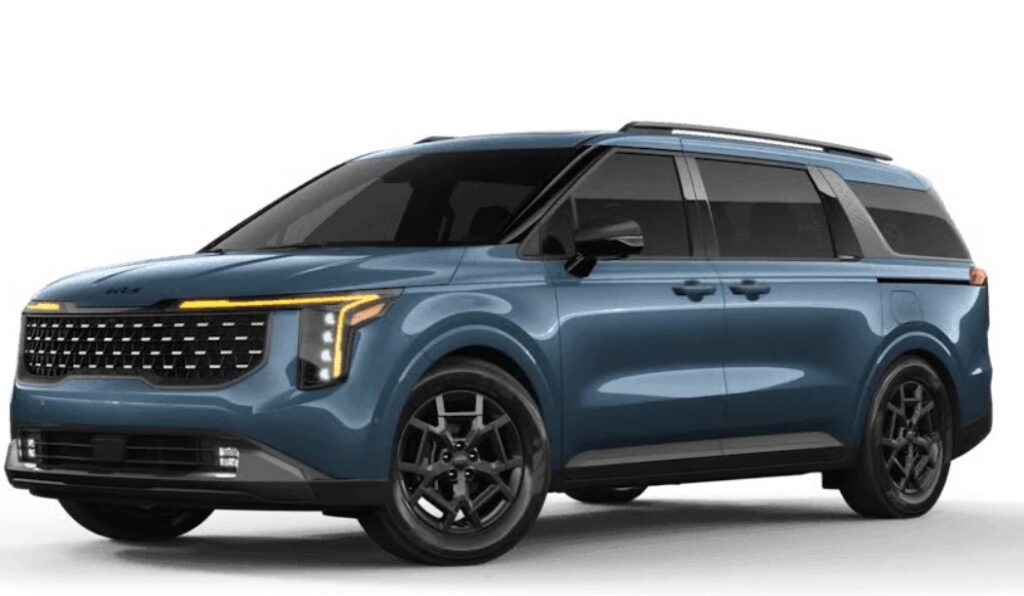
The Kia Carnival fuel consumption story is more interesting than a single MPG figure suggests. This is a large, family-focused MPV with three rows of seating, a spacious cabin, and enough versatility to swallow luggage, groceries, sports equipment, and the occasional mountain of vacation gear. Naturally, a vehicle this substantial will never sip fuel like a tiny hatchback. Still, the Carnival can be surprisingly reasonable at the pump, especially now that buyers in some markets can choose between gasoline, diesel, and hybrid powertrains.
Fuel economy depends heavily on where we live, which engine we choose, how many passengers we carry, and whether most of our miles are spent crawling through city traffic or cruising along an open highway. Even two owners driving identical Carnivals can end up with noticeably different averages.
So, rather than simply throwing a manufacturer's figure at you, we're going to dig deeper. We'll look at the Carnival's MPG, litres per 100 kilometres, kilometres per litre, hybrid efficiency, gasoline consumption, diesel economy, driving range, and the everyday factors that determine what we actually pay at the fuel station.
Content in this publication
- What Is the Kia Carnival Fuel Consumption?
- Kia Carnival Fuel Economy at a Glance
- Kia Carnival Gas Mileage Explained
- Kia Carnival MPG in City Driving
- Kia Carnival Highway Fuel Consumption
- Kia Carnival Hybrid Fuel Consumption
- Kia Carnival Litres per 100 km
- Kia Carnival Kilometres per Litre
- Gasoline vs Hybrid Kia Carnival: Which Uses Less Fuel?
- How Far Can a Kia Carnival Travel on a Tank?
- What Affects Kia Carnival Fuel Consumption?
- Does Passenger Weight Increase Carnival Fuel Consumption?
- Does Air Conditioning Use More Fuel?
- Does Eco Mode Reduce Kia Carnival Fuel Consumption?
- How to Improve Kia Carnival Fuel Economy
- Real-World Kia Carnival Fuel Consumption
- Is the Kia Carnival Fuel Efficient for Its Size?
- Is the Kia Carnival Hybrid Worth It for Fuel Savings?
- Kia Carnival Fuel Cost per Year
- Which Kia Carnival Engine Is Best for Fuel Economy?
- Should Fuel Economy Stop You From Buying a Carnival?
- Kia Carnival Fuel Consumption: Final Verdict
- Frequently Asked Questions
What Is the Kia Carnival Fuel Consumption?
For the current U.S.-market gasoline Carnival, Kia lists EPA estimates of 18 mpg city, 25 mpg highway, and 21 mpg combined. The vehicle uses a 3.5-liter V6 producing 287 horsepower and is paired with an eight-speed automatic transmission.
The Carnival Hybrid changes the picture considerably. Recent U.S.-market Carnival Hybrid specifications show approximately 34 mpg city, 31 mpg highway, and 33 mpg combined, depending on model year and specification. Kia pairs the hybrid system with a 1.6-liter turbocharged gasoline engine and electric assistance.
Those figures illustrate something important: there is no universal Carnival fuel-consumption number.
Different countries receive different engines. Some markets sell a 2.2-liter diesel Carnival, while others focus primarily on gasoline and hybrid configurations. Kia's published specifications for one diesel-market Carnival, for example, list consumption of approximately 17 km/L, while another regional 3.5-liter gasoline specification lists approximately 11.2 km/L. Kia itself notes that specifications vary by region.
In other words, always match the fuel figure to the model year, engine, transmission, and country you're researching.
Kia Carnival Fuel Economy at a Glance
To make the numbers easier to understand, we can translate the major Carnival configurations into the terminology drivers commonly encounter.
The current naturally aspirated V6 Carnival sits around the low-20-mpg range in combined U.S. testing, while the hybrid pushes efficiency into the low-30s. Diesel versions sold elsewhere can also perform well over longer journeys, although official testing standards vary by country and therefore shouldn't be compared as though they were produced under identical laboratory conditions.
Think of these ratings as a map rather than a promise. They show us where the vehicle should roughly land, but road conditions decide the actual route.
Gasoline Carnival
The conventional Carnival's 3.5-liter V6 favors smooth power and easy highway performance over maximum efficiency. In U.S. specification, the official 18/25/21 mpg city/highway/combined rating is competitive enough for a large gasoline people mover, though drivers coming from compact SUVs may initially notice the difference.
Carnival Hybrid
The hybrid is the obvious efficiency champion.
Its advantage becomes particularly noticeable in urban driving because regenerative braking and electric assistance allow the gasoline engine to work less aggressively in situations where a conventional V6 tends to consume heavily.
That creates an unusual situation: the hybrid can achieve a stronger official city figure than highway figure. Kia's U.S. specifications list approximately 34 mpg city and 31 mpg highway.
Diesel Carnival
Markets offering the 2.2-liter turbo-diesel Carnival get a different balance again. Diesel engines traditionally work well in heavy vehicles, particularly when journeys involve long stretches at steady speeds.
Kia's Laos specification page lists the 2.2-liter diesel at 17 km/L, although regional testing methods and equipment differences mean we shouldn't directly treat that number as equivalent to an EPA result.
Kia Carnival Gas Mileage Explained
Miles per gallon sounds simple: higher is better.
Yet the number can be deceptive unless we understand the test behind it.
A Carnival showing 25 mpg on a quiet motorway may fall dramatically below that figure during short urban trips. Conversely, a driver covering mostly uninterrupted highway miles could regularly outperform their normal city average.
This is why looking only at combined MPG can hide the part of the story that matters most to us.
If our daily routine means school runs, traffic lights, parking lots, and stop-start congestion, city economy deserves more attention. If we're buying the Carnival to cross states with the family every summer, highway consumption becomes much more relevant.
Kia Carnival MPG in City Driving
City driving is where a large conventional gasoline vehicle faces its hardest test.
Every time we accelerate, we ask the engine to move thousands of pounds of vehicle, passengers, and cargo from a standstill. Then we hit another red light, throw away much of that momentum, and repeat the process.
It's like pushing a loaded shopping cart down an aisle, stopping every ten feet, and starting again.
That is why the gasoline Carnival's official city rating sits at 18 mpg in current U.S. specifications.
The hybrid handles the same environment differently.
During deceleration, regenerative braking can recover energy rather than wasting all of it as heat. Electric assistance can also reduce the amount of gasoline required during low-speed operation and initial acceleration.
Consequently, drivers who spend most of their time around town have perhaps the strongest argument for choosing the Carnival Hybrid.
Short Trips Hurt Fuel Economy
A five-minute drive to school may consume disproportionately more fuel than a thirty-minute highway trip.
Why?
Cold engines aren't operating under their most efficient conditions. Climate control may work harder. We accelerate frequently, barely reach a steady cruising speed, and then switch the engine off again.
Repeat that pattern several times every day and the dashboard average can look disappointing.
Kia Carnival Highway Fuel Consumption
Highway driving is kinder to the regular V6 Carnival.
Once the vehicle reaches cruising speed, the engine no longer has to repeatedly accelerate the entire mass from zero. The transmission can settle into a taller gear, engine speed decreases, and momentum does much of the work.
The current U.S. gasoline Carnival carries an EPA highway estimate of 25 mpg.
That doesn't mean 25 mpg appears automatically every time we enter a freeway.
Speed matters enormously.
A Carnival cruising steadily at a moderate speed has a much easier job than one travelling rapidly while fighting increasing aerodynamic drag. Roof boxes, bicycles, open windows, strong headwinds, and heavy loads can further erode efficiency.
The Carnival is basically pushing a family-sized wall through the air. The faster we ask that wall to move, the more energy it needs.
Kia Carnival Hybrid Fuel Consumption
For fuel-conscious buyers, the Carnival Hybrid fundamentally changes the equation.
The U.S.-market hybrid uses a 1.6-liter turbocharged four-cylinder gasoline engine as part of its electrified powertrain rather than the conventional Carnival's 3.5-liter V6. Kia's current vehicle information shows ratings around 34 mpg city and 31 mpg highway, with published combined figures around 33 mpg.
That's a significant improvement on paper.
But what makes the hybrid particularly appealing isn't simply the headline MPG number. It's where those savings occur.
Why the Hybrid Works So Well Around Town
Traditional combustion engines don't love repeated stopping and starting. Hybrids turn this weakness into an opportunity.
When we slow down, regenerative braking can feed some energy back into the battery. When we move away again, the electric motor can contribute torque without relying exclusively on gasoline.
In suburban traffic, school zones, shopping areas, and city congestion, this cycle happens constantly.
That's why a Carnival Hybrid makes especially strong sense for a family whose weekly mileage includes relatively little uninterrupted highway driving.
Hybrid Highway Economy
Interestingly, hybrids often lose some of their dramatic advantage on long motorway journeys.
Once we're cruising continuously, there are fewer opportunities for regenerative braking. The gasoline engine remains involved for longer periods, while aerodynamic resistance dominates consumption.
The hybrid is still efficient, but the gap between it and a conventional powertrain usually becomes less spectacular than it is around town.
Kia Carnival Litres per 100 km
Outside the United States, fuel consumption is commonly expressed as L/100 km rather than MPG.
This measurement works in reverse: lower is better.
Using the U.S. EPA combined figure of 21 mpg for the gasoline Carnival as a rough mathematical conversion gives us approximately 11.2 L/100 km.
A 33-mpg combined hybrid figure translates to approximately 7.1 L/100 km.
These conversions are helpful when comparing numbers, but we need an important disclaimer. Converting EPA MPG mathematically does not turn an EPA test into a WLTP, ADR, or another regional certification result. Different testing procedures produce different official figures.
So we can use conversions for orientation, but we should compare official ratings from the same testing system whenever making a purchasing decision.
Kia Carnival Kilometres per Litre
Another way of expressing economy is kilometres per litre.
Here, higher numbers are better.
For perspective, Kia's regional pages demonstrate how much the engine lineup can vary internationally. One 3.5-liter gasoline Carnival is published at 11.2 km/L, while Kia Laos lists its 2.2-liter diesel at 17 km/L.
Those figures shouldn't be treated as universal specifications for every Carnival carrying the same badge.
Trim, wheel size, engine calibration, emissions standards, vehicle equipment, and local certification procedures may all change the result.
Gasoline vs Hybrid Kia Carnival: Which Uses Less Fuel?
If fuel economy is the deciding factor, the hybrid wins comfortably based on current U.S. official ratings.
The conventional V6's 21-mpg combined rating compares with roughly 33 mpg combined for the hybrid.
But fuel consumption isn't the only variable in the ownership equation.
Purchase price matters. So does annual mileage. Someone travelling relatively few miles per year may save less total money on fuel than a high-mileage family accumulating thousands of urban miles every few months.
We therefore shouldn't ask only, “Which Carnival burns less fuel?”
A better question is, “How much fuel will each version use for the way we drive?”
That distinction matters.
How Far Can a Kia Carnival Travel on a Tank?
Tank range is where efficiency becomes tangible.
The gasoline U.S.-market Carnival has a 19-gallon fuel tank, according to Kia's specifications.
At the official 21-mpg combined figure, a simple theoretical calculation would place range around 399 miles.
Real driving will rarely reproduce that exact calculation tank after tank. We don't normally drain the tank completely, driving conditions constantly change, and the vehicle's average consumption moves with them.
Still, the calculation gives us a useful reference point.
On a long highway journey approaching the official 25-mpg rating, theoretical range rises further. Conversely, repeated urban trips around an 18-mpg pattern reduce it.
Why Dashboard Range Changes So Quickly
Ever noticed that the estimated distance-to-empty can fall rapidly after leaving the highway and entering traffic?
The vehicle isn't discovering a leak.
Its computer is continuously recalculating range using recent consumption. If our last fifty miles were effortless highway cruising and our next ten involve hills and traffic, projected range naturally changes.
Treat distance-to-empty as a forecast, not money sitting in a bank account.
What Affects Kia Carnival Fuel Consumption?
The official sticker can't predict our children, our commute, our weather, or our right foot.
In everyday ownership, several factors can move fuel economy considerably:
- Driving speed and acceleration: hard launches and high cruising speeds increase fuel demand.
- Urban congestion: repeated acceleration and idling hurt conventional gasoline economy.
- Passenger and cargo weight: more mass requires more energy to accelerate.
- Tyre pressure: underinflated tyres increase rolling resistance.
- Roof accessories: boxes, baskets, and bicycles can increase aerodynamic drag.
- Weather: extreme heat or cold can increase climate-control use and affect efficiency.
- Trip length: repeated short journeys tend to return worse averages.
- Terrain: steep climbs demand additional energy, even if descending later recovers some of it.
- Towing: pulling a trailer adds mass and aerodynamic resistance.
- Driving style: smooth anticipation usually beats aggressive accelerator-and-brake cycles.
None of those factors works alone. Put four adults, three children, luggage, a roof box, mountain roads, and strong headwinds together, and even an efficient vehicle has its work cut out.
Does Passenger Weight Increase Carnival Fuel Consumption?
Yes, although the effect shouldn't be exaggerated.
The Carnival exists to carry people, so transporting a full family isn't abnormal use. Nevertheless, physics doesn't negotiate.
The heavier the vehicle becomes, the more energy it takes to accelerate it and climb hills.
Extra weight tends to matter most in environments where we're constantly accelerating. During steady-speed highway cruising, aerodynamic resistance becomes a larger part of the equation.
This is also why permanently carrying unnecessary heavy equipment in the cargo area isn't ideal.
One toolbox won't suddenly destroy our fuel economy. But hundreds of pounds of forgotten gear travelling everywhere with us certainly don't help.
Does Air Conditioning Use More Fuel?
Yes.
The climate-control system requires energy, and that energy ultimately has to come from somewhere.
But switching the air conditioning off isn't automatically the smartest solution.
At highway speeds, driving with windows wide open can increase aerodynamic drag. Comfort also matters, especially when a Carnival is carrying children or several passengers on a hot afternoon.
The sensible approach is moderation. Once the cabin reaches a comfortable temperature, we don't need to turn it into a refrigerator on wheels.
Does Eco Mode Reduce Kia Carnival Fuel Consumption?
The gasoline Carnival includes an Eco drive mode in current U.S. specifications.
Eco-oriented settings generally adjust vehicle responses to encourage smoother, less aggressive operation. Their actual benefit depends on circumstances and, crucially, the driver.
Eco mode cannot repeal physics.
If we floor the accelerator away from every intersection, carry excessive weight, and cruise aggressively, selecting “Eco” won't magically deliver hybrid-like consumption.
Think of it as a helpful coach rather than a magic button.
How to Improve Kia Carnival Fuel Economy
The easiest improvements are usually boring—and that's good news.
We don't need exotic modifications or questionable fuel additives. Smooth acceleration, sensible speeds, correct tyre pressures, reduced unnecessary weight, and good route planning can all contribute.
Anticipation is perhaps the most underrated technique.
If traffic is visibly slowing 200 metres ahead, maintaining acceleration until the last moment before braking wastes momentum. Easing off earlier allows the vehicle to slow more naturally. In a hybrid, it can also create additional opportunities for controlled regenerative braking.
Over thousands of miles, small decisions accumulate like coins in a jar.
Maintain the Vehicle Properly
Fuel economy can also act as a subtle health indicator.
Incorrect tyre pressure, alignment problems, dragging brakes, unsuitable tyres, neglected servicing, or mechanical faults may increase consumption.
One bad tank doesn't prove anything. But if our Carnival previously averaged a consistent figure and suddenly begins using substantially more fuel without any change in route or driving conditions, it's reasonable to investigate.
Don't Chase Tiny MPG Changes
At the same time, we shouldn't obsess over every decimal point on the trip computer.
Traffic patterns change. Temperatures change. Fuel blends change. Passengers change.
A movement from 23.8 to 23.2 mpg over one short interval isn't necessarily evidence of a problem.
Long-term averages tell a much more useful story.
Real-World Kia Carnival Fuel Consumption
Official testing gives us consistency. Real life gives us chaos.
The gap between the two depends largely on driving pattern.
A gasoline Carnival used for long-distance highway travel may operate relatively close to its highway rating during favorable conditions. The same vehicle used almost exclusively for five-mile city trips may spend much of its life near or below its city estimate.
Hybrid owners can experience the opposite pattern. Dense urban use provides more opportunities for the electrified system to contribute, whereas sustained high-speed driving reduces some of that advantage.
That's why internet forum posts saying “I get 16 mpg” or “I get 29 mpg” need context.
Both owners might be telling the truth.
Is the Kia Carnival Fuel Efficient for Its Size?
We need to judge it according to what it is.
Comparing the Carnival with a compact hybrid hatchback would be like comparing the appetite of a family of eight with someone eating lunch alone. Of course one consumes more.
The Carnival is designed around passenger capacity, luggage space, sliding-door practicality, and long-distance comfort.
Against that mission, the conventional V6 offers reasonable rather than spectacular economy. The hybrid is the version that transforms fuel efficiency into one of the Carnival's stronger selling points.
For buyers who regularly carry several passengers, replacing two smaller vehicles with one Carnival can also change the broader household fuel equation.
Context matters more than a single number.
Is the Kia Carnival Hybrid Worth It for Fuel Savings?
Potentially—especially for high-mileage drivers.
Imagine two households.
The first drives only 6,000 miles per year, mostly on weekends. The second covers 20,000 miles annually through city and suburban traffic.
Even if both enjoy the same percentage improvement from the hybrid, the second household saves far more gallons every year because it consumes far more fuel in the first place.
We therefore need four numbers when calculating whether the hybrid makes financial sense: annual mileage, expected MPG, local fuel price, and the purchase-price difference between configurations.
Once we know those, the calculation becomes far more meaningful than simply declaring that “hybrids save money.”
Kia Carnival Fuel Cost per Year
We can estimate annual fuel expense with a straightforward formula:
Annual miles ÷ MPG × price per gallon = annual fuel cost.
Suppose we drive 12,000 miles annually.
At 21 mpg, we'd use roughly 571 gallons. At 33 mpg, we'd use roughly 364 gallons.
That's a difference of about 207 gallons per year.
Multiply that by our local gasoline price and we have an approximate annual saving.
The calculation doesn't account for every ownership expense, nor does it predict real-world MPG perfectly. But it gives us a far better basis for comparing powertrains than marketing language alone.
Which Kia Carnival Engine Is Best for Fuel Economy?
Where available, the hybrid is the clear choice for drivers prioritizing lower gasoline consumption, particularly in cities.
The V6 remains attractive to drivers who value naturally aspirated power, familiar mechanical behavior, and may spend much of their time covering longer highway distances.
Diesel models deserve consideration in markets where they're sold, especially for drivers accumulating substantial long-distance mileage. However, local diesel prices, emissions equipment, maintenance requirements, and regulations also need to enter that decision.
There's no universally perfect Carnival engine.
There's only the one that best fits our usage.
Should Fuel Economy Stop You From Buying a Carnival?
For most families already shopping in the large MPV or minivan category, probably not.
A large vehicle will consume more energy than a small one. That's the cost of moving more space, more seats, and more weight.
What matters is whether we're actually going to use those advantages.
If we routinely transport five, six, or seven people, the Carnival's size is doing useful work. If we drive alone 95% of the time and never need the rear seats, we're carrying around a lot of vehicle for no practical reason.
Fuel efficiency isn't simply an engineering question.
It's a question of matching the machine to the mission.
Kia Carnival Fuel Consumption: Final Verdict
The Kia Carnival fuel consumption varies significantly according to engine and market, but the broad picture is easy to understand.
The current U.S.-spec gasoline Carnival delivers an official 18 mpg city, 25 mpg highway, and 21 mpg combined, while the hybrid raises efficiency to roughly 34 mpg city, 31 mpg highway, and 33 mpg combined. International diesel and gasoline variants can post different figures because their engines and certification standards differ.
For mostly highway use, the gasoline V6's economy may be perfectly acceptable for such a spacious vehicle. For frequent city driving or high annual mileage, however, the hybrid's efficiency advantage becomes difficult to ignore.
Ultimately, the number printed on the specification sheet is only the starting line.
Traffic, speed, temperature, passengers, tyres, cargo, terrain, and driving habits decide where we actually finish.
Frequently Asked Questions
What is the Kia Carnival fuel consumption per 100 km?
It depends on the engine and testing method. Converting the current U.S. gasoline Carnival's 21-mpg combined EPA rating gives approximately 11.2 L/100 km, while a 33-mpg hybrid rating converts mathematically to approximately 7.1 L/100 km. These are conversions rather than separate official regional test results.
What MPG does a Kia Carnival get?
The current U.S.-market gasoline Carnival is rated at 18 mpg city, 25 mpg highway, and 21 mpg combined. Actual fuel consumption varies with traffic, weather, vehicle condition, load, speed, and driving behavior.
Is the Kia Carnival Hybrid fuel efficient?
Yes, particularly compared with the conventional V6 Carnival. U.S. specifications place Carnival Hybrid economy at roughly 34 mpg city, 31 mpg highway, and 33 mpg combined, making it substantially more economical in official testing.
How many miles can a Kia Carnival travel on a full tank?
The U.S. gasoline Carnival has a 19-gallon tank. Using its 21-mpg combined EPA figure gives a theoretical range of approximately 399 miles, though actual range can be higher or lower depending on driving conditions and how much usable fuel remains.
Why is my Kia Carnival using more fuel than expected?
Short journeys, heavy traffic, low tyre pressure, high speeds, cold weather, air-conditioning demand, roof accessories, towing, extra cargo, steep terrain, and aggressive acceleration can all increase consumption. Compare several full tanks rather than judging the vehicle from one short trip, and investigate unusually large or persistent changes.
If you want to know other articles similar to Kia Carnival Fuel Consumption: MPG, L/100 km, Hybrid and Real-World Economy you can visit the category Driving.
Can Nissan Rogue Pull a Boat? Complete Towing Guide
Can Nissan Rogue Be Flat Towed? Complete Towing Guide
Are Nissan Rogue Good on Gas? MPG, Fuel Economy, and Real-World Costs
Can Nissan Rogue Drive in Snow? Complete Winter Driving Guide

Kia Sorento Diesel Fuel Consumption: MPG, Efficiency and Real-World Range
Haval Jolion Hybrid Fuel Consumption: How Efficient Is It Really?
Leave a Reply
More content of your interest