
Audi A6 Insurance Group: Complete UK Guide

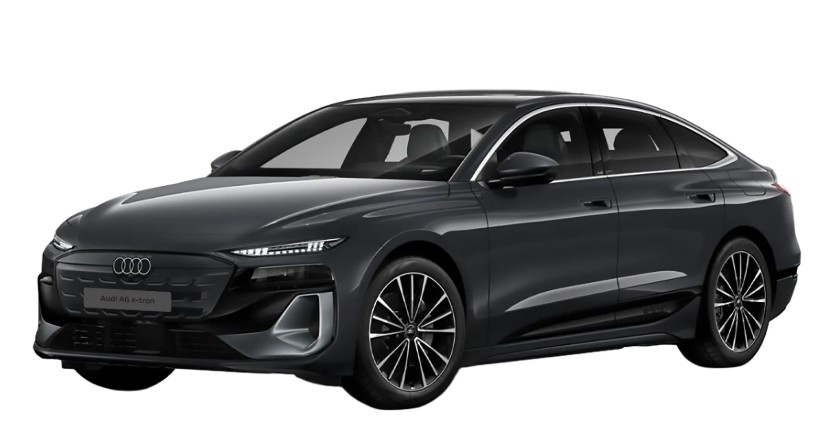
The Audi A6 insurance group is an important number to check before buying one of Audi’s executive cars. An A6 can look surprisingly affordable on the used market, but the purchase price is only one piece of the financial puzzle. Insurance, servicing, tyres, repairs, fuel, and depreciation can all change the real cost of ownership.
And insurance is where things become particularly interesting.
There is no single insurance group covering every Audi A6. Depending on the generation, engine, trim, drivetrain, equipment, and performance level, two cars wearing almost identical A6 badges can sit several insurance groups apart.
Under the traditional UK system, passenger cars receive an advisory insurance group between 1 and 50, with higher numbers generally indicating greater insurance risk. Thatcham Research explains that the Group Rating system uses vehicle information supplied by manufacturers to help insurers assess that risk.
So, is the Audi A6 expensive to insure? Usually, we'd describe it as moderately expensive to expensive, rather than outrageously costly. It is a premium executive car with sophisticated technology, relatively powerful engines, and potentially expensive replacement parts. None of those ingredients tend to produce bargain-basement insurance.
Let's unpack the numbers.
Content in this publication
- What Insurance Group Is an Audi A6?
- How UK Car Insurance Groups Work
- Why Is the Audi A6 in Relatively High Insurance Groups?
- Audi A6 Insurance Group by Engine
- Does quattro Affect Audi A6 Insurance?
- Does A6 Trim Level Change the Insurance Group?
- Audi A6 Saloon vs Avant Insurance Group
- Does the Age of an Audi A6 Lower Insurance Costs?
- Audi A6 Insurance Group for Young Drivers
- What Determines Your Actual Audi A6 Insurance Price?
- Audi A6 Security and Insurance
- How to Lower Audi A6 Insurance Costs
- Can Adding a Named Driver Reduce Audi A6 Insurance?
- Is an Audi A6 Expensive to Insure Compared With Other Audis?
- Audi A6 vs BMW 5 Series Insurance
- Audi A6 vs Mercedes E-Class Insurance
- What Is Vehicle Risk Rating, and Is Insurance Group 1–50 Disappearing?
- Should You Buy an Audi A6 Based on Insurance Group?
- How to Find the Exact Insurance Group for Your Audi A6
- Is a Lower Audi A6 Insurance Group Always Better?
- Buying a Used Audi A6: Insurance Checklist
- Are Modified Audi A6 Models More Expensive to Insure?
- Does an Audi A6 Insurance Group Change Between Model Years?
- Is the Audi A6 Worth the Insurance Cost?
- Conclusion: Understanding Audi A6 Insurance Groups
- Frequently Asked Questions
What Insurance Group Is an Audi A6?
Audi A6 insurance groups vary considerably.
Older, less powerful A6 models can sit around the middle-to-upper portion of the traditional 1–50 scale, while newer, powerful or highly specified versions may climb much higher.
For example, insurance data for the 2004-generation A6 shows a considerable spread. Some 2.0 TDIe variants fall into group 25, while more powerful versions such as certain 3.0 TFSI quattro models reach group 38.
Move forward to the C8-generation A6 introduced in 2018 and the picture remains varied. Published specifications for different A6 derivatives show examples in groups 33, 34, 37, 42 and 45, illustrating just how much the specific version matters.
That's why asking, "What insurance group is the Audi A6?" is a little like asking how much a house costs. We need to know which one.
Typical Audi A6 Insurance Group Range
Rather than treating one number as universal, it's more useful to think of the A6 as generally occupying the middle-to-higher insurance groups, particularly among modern models.
A modest diesel saloon may be considerably easier to insure than a high-output quattro model with an expensive specification.
The pattern normally looks something like this:
- Lower-powered and older Audi A6 models generally occupy the lower end of the A6's insurance spectrum.
- Mainstream 2.0-litre diesel and petrol versions commonly sit somewhere in the middle.
- quattro models can carry higher ratings depending on engine and equipment.
- Powerful 3.0-litre derivatives generally climb further.
- Performance-focused S6 and RS6 models should not be treated as ordinary A6s when estimating insurance costs.
That last point is especially important. An RS6 may share its family tree with the A6, but from an insurer's perspective it is an entirely different animal.
How UK Car Insurance Groups Work
Traditionally, UK cars have been placed into groups ranging from 1 to 50.
Group 1 contains vehicles representing relatively low insurance risk, while group 50 sits at the opposite end of the scale.
Thatcham Research describes Group Rating as an advisory risk indicator used by insurers, rather than a guaranteed price-setting formula. Insurers are not obliged to follow the group number rigidly.
That's a crucial distinction.
Suppose Driver A owns an A6 in group 34 and Driver B owns one in group 38. We would normally expect the second car to carry greater vehicle-related insurance risk.
But Driver A could still receive the more expensive quote.
Why?
Because the car is only half the story.
Your age, postcode, driving record, annual mileage, occupation, claim history, where the vehicle is kept overnight, and dozens of insurer-specific factors may dramatically alter the final premium.
This is one of the biggest misconceptions surrounding insurance groups.
Insurance group 40 does not correspond to one particular annual price.
There is no rule saying:
"Group 40 equals £1,200 per year."
It simply doesn't work that way.
Instead, the vehicle's group becomes one ingredient in the insurer's larger pricing recipe.
Think of the group number as the label on the flour bag, not the finished cake.
Why Is the Audi A6 in Relatively High Insurance Groups?
The A6 isn't an economy hatchback. It was designed to sit comfortably in the premium executive market, competing with cars such as the BMW 5 Series and Mercedes-Benz E-Class.
That brings several characteristics insurers care about.
Powerful Engines Increase Insurance Risk
Even an ordinary A6 can offer respectable performance.
As engine output increases, insurers may face greater potential risk associated with acceleration, speed, and accident severity. Performance is therefore an important component when assessing vehicle insurance risk.
Thatcham's newer Vehicle Risk Rating methodology specifically identifies performance factors including acceleration, top speed and vehicle characteristics when evaluating risk.
A restrained four-cylinder diesel and a muscular six-cylinder quattro simply don't present the same performance profile.
Audi A6 Repairs Can Be Expensive
Modern premium cars resemble rolling computers.
Behind the bumpers may sit parking sensors, radar equipment, cameras, wiring, control modules and driver-assistance technology. Headlights can contain sophisticated LED or matrix-lighting systems. Mirrors may carry cameras or monitoring equipment.
A parking scrape that once required paint and a bumper could now involve recalibration and electronic components.
Repairability and damageability have become so important that Thatcham's newer Vehicle Risk Rating framework evaluates them separately.
This helps explain why buying a used luxury car cheaply does not automatically make it cheap to insure.
The insurer is interested in what the car might cost to put back together after an accident today—not merely what the first owner paid for it years ago.
Premium Technology Comes With Premium Repair Bills
Picture two cars suffering identical front-corner impacts.
One has a simple halogen lamp and basic bumper.
The other has advanced lighting, parking sensors, cameras and driver-assistance hardware.
The sheet metal may look similarly bruised, but the repair invoice could tell a very different story.
That hidden complexity matters with cars like the A6.
Audi A6 Insurance Group by Engine
Engine choice can make a meaningful difference to insurance classification.
We shouldn't assume that every 2.0-litre engine receives the same rating, either. Power output, model generation, gearbox, trim, vehicle value and drivetrain can alter the result.
Audi A6 2.0 TDI Insurance Group
The 2.0 TDI has historically been one of the sensible A6 choices for drivers balancing performance with running costs.
Older versions demonstrate how comparatively moderate A6 insurance groups are possible. Data for the 2004-generation car, for instance, lists several 2.0 TDI versions in group 28, with economy-focused 2.0 TDIe derivatives in group 25.
That does not mean every 2.0 TDI is group 25 or 28.
Later cars became more powerful, valuable and technologically complex.
For example, a C8-generation 40 TDI quattro Sport S tronic derivative has been listed in group 34.
Same general engine capacity. Very different vehicle.
Audi A6 40 TDI Insurance Group
The 40 TDI badge became common on later-generation A6 diesels.
Rather confusingly, "40" does not mean the engine has a 4.0-litre capacity. Audi's numerical engine-badging system relates to performance bands rather than conventional engine displacement.
Specific C8 A6 40 TDI versions can occupy quite different insurance groups according to their trim and drivetrain. Published A6 specifications show examples ranging from the low-to-upper 30s and beyond depending on configuration.
This is precisely why searching using the vehicle's exact registration is preferable to relying on the words "Audi A6 40 TDI."
Audi A6 3.0 TDI Insurance Group
The 3.0-litre diesel A6 combines relaxed motorway manners with substantially greater performance.
Historically, this has meant higher insurance groups than many four-cylinder versions. For the earlier A6 generation, certain 3.0 TDI quattro models were listed in group 37.
Later 3.0-litre diesel derivatives may again differ significantly according to age, power, trim and specification.
The extra cylinders can make motorway driving feel effortless, but your insurer doesn't get hypnotised by that silky torque. It sees performance and repair exposure.
Does quattro Affect Audi A6 Insurance?
Sometimes.
Audi's quattro all-wheel-drive system can improve traction and forms a major part of the brand's identity, particularly on higher-output A6 variants.
But AWD also introduces additional mechanical components and is frequently paired with more powerful engines or expensive specifications.
That doesn't mean adding quattro automatically increases an insurance group by a predetermined amount.
There is no simple "quattro surcharge."
Instead, insurers assess the complete vehicle derivative.
You may be interested in reading Alfa Romeo Tonale Hybrid Reliability: Should We Trust It?
A quattro car can therefore receive a different classification from its front-wheel-drive counterpart, although the size of the difference varies.
Does A6 Trim Level Change the Insurance Group?
It can.
Audi has offered the A6 in numerous trims over the years, including versions such as Sport, S line and Black Edition.
Moving up the trim ladder can bring larger wheels, expensive lighting, upgraded cabin equipment, additional electronics or other costly components.
Even when two cars use the same engine, their insurance groups may therefore differ.
That's one reason we'd never recommend choosing between an A6 Sport and Black Edition using an engine-only insurance search.
Check the precise derivative.
Audi A6 S Line Insurance Group
S line models tend to look sharper and more aggressive than ordinary versions.
Depending on generation, an S line may include sporty bodywork, larger alloy wheels, suspension changes and upgraded interior equipment.
Yet "S line" doesn't automatically mean sky-high insurance.
The engine underneath remains crucial.
A lower-output A6 S line may still be considerably easier to insure than a powerful six-cylinder luxury derivative.
Audi A6 Saloon vs Avant Insurance Group
The A6 comes primarily in two familiar shapes: Saloon and Avant.
The Avant is Audi's estate-bodied version, trading a little executive-saloon formality for serious luggage-carrying ability.
Insurance ratings can differ between body styles and exact derivatives, so we shouldn't assume that an equivalent-looking Saloon and Avant will always receive identical classifications.
Historical A6 Avant data, for example, shows a 2.5 TDI quattro SE Tiptronic derivative in group 30.
If you're choosing between the two purely on ownership costs, obtain quotes for both vehicles. The difference may be smaller—or larger—than you'd expect.
Does the Age of an Audi A6 Lower Insurance Costs?
Sometimes, but not automatically.
An older A6 loses value through depreciation. If replacing the entire vehicle becomes cheaper, we might expect insurance to become cheaper too.
Unfortunately, cars don't age like bottles of discount wine.
Replacement parts can remain expensive. Certain components may become harder to source. Older vehicles can develop security disadvantages compared with newer cars. And the driver remains part of the risk calculation.
A £5,000 old A6 therefore isn't necessarily insured like a £5,000 supermini.
Old Audi A6 Insurance Groups
Older A6 models can offer relatively manageable insurance classifications.
As noted earlier, variants of the 2004-generation car ranged considerably, with examples extending from group 25 for some 2.0 TDIe derivatives to group 38 for certain 3.0 TFSI quattro models.
That wide spread gives used-car buyers an opportunity.
Instead of deciding, "I want an A6," we can narrow the search:
"I want an A6 with one of the lower-risk engines and specifications."
That's a far more useful buying strategy.
Audi A6 Insurance Group for Young Drivers
Here's where things become uncomfortable.
The A6 generally isn't our first recommendation for a very young driver seeking cheap insurance.
Even if you find an A6 with a comparatively reasonable group rating, an insurer still considers the driver's individual risk profile.
A new driver pairing limited driving history with a relatively powerful premium executive car can receive expensive quotes.
In some cases, obtaining cover may cost so much that buying a cheaper-to-insure vehicle first makes more financial sense.
We shouldn't confuse "possible to insure" with "sensible to insure."
What Determines Your Actual Audi A6 Insurance Price?
The insurance group matters, but your personal circumstances may matter just as much—or more.
Insurers can consider your age and driving experience, address, claims history, convictions, annual mileage, occupation, insurance history, voluntary excess, intended use, overnight parking arrangements and the exact vehicle.
Your cover type matters as well.
Interestingly, comprehensive insurance isn't automatically more expensive than third-party cover. Insurers price risk statistically, so assumptions that sound logical do not always translate directly into cheaper quotes.
The practical rule is simple: compare.
Audi A6 Security and Insurance
Security plays an important role in vehicle risk.
Historically, Thatcham's Group Rating methodology even allowed security performance to influence a vehicle's group rating. Its documentation explains that vehicles could receive rating-related security suffixes depending on whether their security met, exceeded or fell below required standards.
Audi has used Thatcham-recognised security systems across multiple A6 generations. Thatcham documentation lists Audi security systems covering A6 models from various production periods.
Security still matters today, especially as theft techniques evolve.
Where You Keep the A6 Matters Too
Two identical A6s can receive completely different premiums when parked in different locations.
One might sleep overnight on a private driveway in a relatively low-risk postcode.
Another might remain on a public road in an area with higher theft or accident claims.
From the insurer's perspective, those are different risks even though the VIN specifications are almost twins.
How to Lower Audi A6 Insurance Costs
We can't magically move an Audi A6 from group 40 to group 20, but we can shop more intelligently.
Start before purchasing the car.
Compare insurance quotes using the registration numbers of several actual A6s you're considering. Check different engines rather than assuming a smaller price difference means similar insurance. Compare Sport, S line and other trims. Consider whether you really need quattro or one of the highest-output engines.
Once you own the vehicle, accurate annual-mileage estimates, secure parking where genuinely available, maintaining a clean driving record and carefully comparing excess options can all influence quotes.
Never provide inaccurate information merely to obtain a cheaper premium. Incorrect details can create serious problems when making a claim.
Can Adding a Named Driver Reduce Audi A6 Insurance?
It sometimes can, particularly for younger motorists, but only when the insurance arrangement accurately reflects who actually drives the vehicle.
Adding an experienced driver may influence the insurer's assessment.
However, declaring someone else as the main driver when you are genuinely the primary user can constitute fronting.
The cheapest quote isn't worth much if the policy isn't based on truthful information.
Is an Audi A6 Expensive to Insure Compared With Other Audis?
Within Audi's range, we'd place the ordinary A6 above many smaller models in terms of likely insurance expense.
That makes sense.
It's larger, often more powerful and generally more expensive to repair than smaller Audi models.
But we also need to distinguish the regular A6 from genuine performance cars.
An everyday four-cylinder A6 is not an RS6 wearing sensible shoes. The performance difference is enormous, and insurance expectations should reflect that.
Audi A6 vs BMW 5 Series Insurance
The BMW 5 Series is perhaps the A6's most obvious rival.
Both are large premium executive cars. Both offer four- and six-cylinder engines, performance derivatives, advanced electronics and expensive replacement components.
Consequently, neither should automatically be labelled the cheap-insurance choice.
Instead of asking whether "Audi or BMW" is cheaper, compare equivalent individual cars.
A moderate A6 diesel may be cheaper to insure than a powerful 5 Series, while another BMW derivative could beat the Audi.
Badge-based assumptions are unreliable.
Audi A6 vs Mercedes E-Class Insurance
The same principle applies to the Mercedes-Benz E-Class.
These cars compete in virtually the same territory.
They are sophisticated, desirable and packed with technology. Depending on derivative, either could win the insurance comparison.
You may be interested in readingAlfa Romeo Tonale Hybrid Reliability: Should We Trust It?You may be interested in reading
 BMW M4 Years to Avoid: A Smart Used-Buyer’s Guide
If insurance cost is central to your purchase decision, run quotations for your shortlisted registration numbers before handing over a deposit.
Five minutes spent comparing quotes can reveal more than fifty forum arguments.
What Is Vehicle Risk Rating, and Is Insurance Group 1–50 Disappearing?
This is becoming increasingly important for anyone researching Audi A6 insurance groups.
Thatcham Research is transitioning away from the traditional 1–50 Group Rating framework toward its newer Vehicle Risk Rating (VRR) approach. Thatcham says the newer framework examines five areas: performance, damageability, repairability, safety and security, with individual assessments scored on a 1–99 scale.
The purpose is to provide a more detailed and dynamic view of insurance risk as cars become more technologically complex.
This matters because modern vehicles have changed dramatically.
A single traditional group number struggles to tell the entire story of a car fitted with cameras, radar, advanced lighting, expensive battery technology, complex driver-assistance systems and connected security features.
Thatcham describes VRR as the replacement for the longstanding Group Rating system, designed to incorporate richer information and real-world risk data.
So while drivers will continue encountering familiar insurance-group references—particularly when researching existing and used A6 models—the industry is evolving beyond the simple 1–50 framework.
Should You Buy an Audi A6 Based on Insurance Group?
Insurance group should influence your decision, but it shouldn't control it completely.
Imagine finding two used A6s.
Car A has a slightly lower insurance group but patchy service history, questionable tyres and overdue maintenance.
Car B costs slightly more to insure but has been meticulously maintained.
Would we blindly choose Car A?
Probably not.
A premium used car can produce repair bills that dwarf a modest annual insurance saving.
Instead, look at total ownership cost: insurance, fuel, servicing, tyres, road tax where applicable, likely repairs, depreciation and purchase price.
That's the financial picture that really matters.
How to Find the Exact Insurance Group for Your Audi A6
Don't rely solely on the model name.
You need the precise derivative.
Ideally, identify the registration number or full vehicle details including model year, engine, power output, transmission, drivetrain, body style and trim.
Why so much detail?
Because "2019 Audi A6" leaves dozens of questions unanswered.
Even "Audi A6 40 TDI" may still not identify the precise version.
An insurer works from far more detailed vehicle information.
Thatcham's vehicle database assigns cars an ABI identification code linked to standardised vehicle descriptions used across the insurance industry.
The safest approach when buying is therefore wonderfully boring: use the actual registration and request real quotations.
Boring can save money.
Is a Lower Audi A6 Insurance Group Always Better?
From a pure insurance-cost perspective, usually.
But it shouldn't push you toward an unsuitable car.
Suppose you drive 20,000 motorway miles annually. A particular A6 derivative may cost slightly more to insure but deliver substantially better fuel economy and suit your driving pattern better.
The total annual saving could still favour the supposedly "more expensive" insurance choice.
We should therefore treat the insurance group like one gauge on the dashboard—not the entire instrument cluster.
Buying a Used Audi A6: Insurance Checklist
Before buying, identify the exact registration, obtain a real quotation, compare several engines and trims, check whether modifications have been made, calculate your realistic annual mileage, compare voluntary excess levels, and look at the A6's wider running costs.
Most importantly, get the quote before buying the car.
The worst moment to discover that your dream A6 attracts a painful premium is after the keys are already sitting in your hand.
Are Modified Audi A6 Models More Expensive to Insure?
They can be.
Changes such as aftermarket wheels, suspension modifications, engine tuning and non-standard bodywork may alter an insurer's view of risk.
Always disclose relevant modifications.
Even changes that appear cosmetic can matter to an insurer because they might affect replacement costs, desirability, performance or theft risk.
An undeclared modification can turn a cheap premium into a very expensive mistake when you actually need the policy.
Does an Audi A6 Insurance Group Change Between Model Years?
Yes, it can.
Manufacturers update engines, technology, trim equipment, safety systems and security features throughout a model's life.
An A6 from the beginning of a generation may therefore not carry the same classification as a seemingly similar derivative produced several years later.
This is another reason broad online statements such as "the A6 is insurance group 35" should make us suspicious.
Which A6?
Which year?
Which engine?
Which drivetrain?
Those questions matter.
Is the Audi A6 Worth the Insurance Cost?
For the right driver, absolutely.
The A6 offers the refinement, motorway comfort, technology and cabin quality buyers expect from a premium executive vehicle. If we deliberately choose a sensible engine and shop around for insurance, the running costs can remain manageable.
But it isn't a budget car disguised behind four rings.
A cheap used purchase price can tempt us into forgetting that the car was engineered as a premium vehicle. Its components, performance and repair complexity still reflect that heritage.
That's why we'd budget first and become emotionally attached second.
Conclusion: Understanding Audi A6 Insurance Groups
The Audi A6 insurance group isn't one fixed number.
Depending on age, engine, drivetrain, body style and trim, the rating can change considerably. Historical examples illustrate this clearly: some older 2.0 TDIe A6 variants have appeared as low as group 25, while different modern C8 derivatives have been listed in the 30s and 40s.
Broadly speaking, the A6 tends to occupy moderate-to-high insurance territory because it is a premium executive car with strong performance, sophisticated technology and potentially expensive repairs.
But the group number is only an indicator.
Your personal circumstances, location, driving history and insurer can change the actual price dramatically.
There's also a bigger change happening in the UK insurance landscape. Thatcham Research is moving beyond the traditional 1–50 system toward Vehicle Risk Rating, providing a more detailed assessment of performance, repairability, damageability, security and safety.
Our takeaway is simple: never buy an A6 based on a generic insurance-group estimate.
Find the exact car.
Enter its registration.
Get several real quotes.
Then decide whether those four rings fit both your driveway and your budget.
Frequently Asked Questions
1. What insurance group is an Audi A6?
There is no single Audi A6 insurance group. The exact classification depends on the model year, engine, drivetrain, trim and body style. Published examples span from the 20s for some older economy-focused versions into the 40s for certain newer or higher-specification models.
2. Is an Audi A6 expensive to insure?
Compared with an ordinary family hatchback, it can be. The A6 is a premium executive vehicle with relatively powerful engines and potentially expensive technology and replacement components. However, lower-powered A6 variants can be substantially cheaper to insure than high-performance derivatives.
3. Which Audi A6 is cheapest to insure?
There isn't one universally cheapest version because insurance prices also depend heavily on the driver. In general, lower-powered, lower-value derivatives tend to offer a better starting point than powerful quattro or performance-oriented versions. Compare quotes using exact registrations before buying.
4. Does quattro increase Audi A6 insurance?
It may contribute to a different insurance classification, although there is no fixed quattro surcharge. The entire derivative—including power, specification, repair costs and other risk characteristics—is assessed.
You may be interested in readingAlfa Romeo Tonale Hybrid Reliability: Should We Trust It?You may be interested in reading
BMW M4 Years to Avoid: A Smart Used-Buyer’s GuideYou may be interested in reading
Are Alfa Romeo Tonale Good Cars? A Complete Owner-Focused Guide5. Does a higher insurance group always mean more expensive insurance?
Not necessarily. Higher groups generally indicate greater vehicle-related insurance risk, but insurers use numerous other factors when calculating premiums. A driver with a higher-group A6 can sometimes receive a cheaper quotation than another driver insuring a lower-group version because their personal risk profiles are different.
If you want to know other articles similar to Audi A6 Insurance Group: Complete UK Guide you can visit the category Blog.
How to Reset the Oil Light on a Kia Sportage
Volvo S90 Reliability: Problems, Costs & Best Years
Is Haval Jolion a Good Car? Honest Review, Reliability, Pros and Cons
How to Start Haval Jolion With Spare Key: Complete Guide
How to Calculate Per Diem on an Auto Loan

How to Calculate the Residual Value of a Car
Leave a Reply
More content of your interest