
BMW M4 Years to Avoid: A Smart Used-Buyer’s Guide

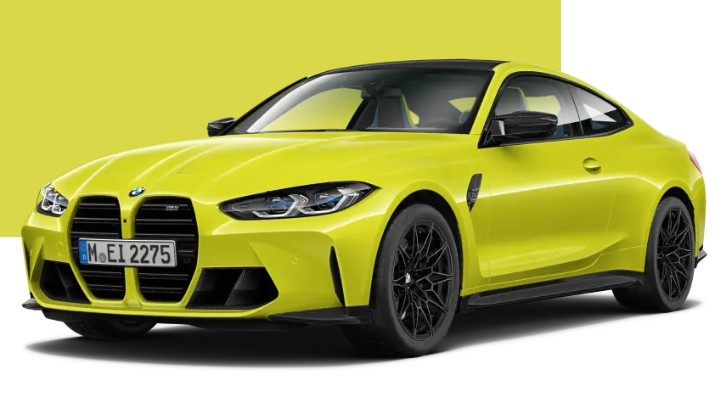
The BMW M4 is not the kind of car we buy because we need transportation from A to B. We buy one because the road between A and B suddenly looks much more interesting when there is a twin-turbo inline-six under the hood, rear-wheel drive beneath us, and an M badge staring back from the steering wheel.
But buying a used M4 requires a little more caution than buying an ordinary 4 Series.
These cars are fast, sophisticated, expensive to repair, and extremely tempting to modify. A beautifully polished example sitting in a dealer's showroom may have spent the previous three years being launched, tuned, tracked, and driven harder than its odometer suggests.
So, which BMW M4 years should we avoid?
For most used buyers, 2015 and 2016 deserve the greatest scrutiny, primarily because they represent the earliest F82-generation cars and because certain examples were affected by recalls and early-production concerns. The 2021 model year also deserves extra inspection because it introduced the G82 generation and had early recall campaigns.
That does not mean every 2015, 2016, or 2021 M4 is troublesome. In fact, an immaculate 2015 M4 with complete maintenance records can be a considerably better purchase than an abused 2019 model with questionable modifications.
That's the central idea of this guide: condition and history matter almost as much as model year.
Let's dig deeper.
Content in this publication
- BMW M4 Years to Avoid at a Glance
- Why 2015 Is the BMW M4 Year We'd Inspect Most Carefully
- Why the 2016 BMW M4 Also Deserves Caution
- The S55 Crank Hub Question Explained
- 2017 BMW M4: Better, but Still Check the VIN
- 2018 BMW M4: One of the F82 Sweet Spots
- 2019 BMW M4: Arguably an Excellent Used Choice
- 2020 BMW M4: The Final-Year Advantage
- Should We Avoid the 2021 BMW M4?
- F82 vs G82: Which Generation Is Safer Used?
- BMW M4 Problems Matter More Than Model Year Alone
- DCT or Manual: Which M4 Should We Buy?
- Why Tuned BMW M4s Need Extra Scrutiny
- The Best BMW M4 Years to Buy Used
- Mileage Isn't Everything
- What Service Records Should Tell Us?
- Check the Tires Before Anything Else
- Inspect the Brakes Closely
- Always Get a BMW-Specialist Pre-Purchase Inspection
- Run the VIN for Outstanding Recalls
- Should We Avoid High-Mileage BMW M4s?
- Should We Buy a BMW M4 With a Crank-Hub Upgrade?
- BMW M4 Ownership Costs: The Part Buyers Forget
- Which BMW M4 Year Offers the Best Value?
- Are 2015 and 2016 BMW M4s Actually Bad Cars?
- The BMW M4 We'd Walk Away From Regardless of Year
- The BMW M4 We'd Happily Buy From an "Avoid" Year
- Final Verdict: BMW M4 Years to Avoid
- Frequently Asked Questions
BMW M4 Years to Avoid at a Glance
If we're shopping for a used BMW M4, we'd put the years into three broad categories rather than declaring entire production runs "bad."
- 2015: inspect very carefully because it was the first M4 model year and some vehicles were subject to safety recalls.
- 2016: another year deserving additional scrutiny, including recalls involving certain drivetrain and chassis components.
- 2017: generally more mature, although certain cars were included in recalls involving airbags and driveshafts.
- 2018–2019: often attractive F82 choices because BMW had several years to refine the platform.
- 2020: one of the final F82 years and generally desirable, although certain cars were recalled over a fuel-system issue.
- 2021: first-year G82 M4; we'd inspect its recall history carefully before buying.
- 2022 and newer: generally preferable if our budget permits, although maintenance history and previous modifications remain critical.
Notice something important? There isn't one catastrophic M4 year that every buyer should automatically blacklist.
Instead, we're dealing with degrees of risk.
Why 2015 Is the BMW M4 Year We'd Inspect Most Carefully
The 2015 M4 deserves attention for one obvious reason: it was the beginning of the M4 story in the United States.
BMW separated the two-door M3 lineage into the M4, producing the F82 coupe and F83 convertible alongside the F80 M3 sedan. Underneath the hood sat BMW's S55 3.0-liter twin-turbocharged inline-six.
It was a dramatic change.
Previous-generation M3 buyers had grown accustomed to the naturally aspirated V8 in the E92. The S55 replaced high-rpm theater with enormous turbocharged torque.
And it worked remarkably well.
Still, first production years are where we tend to exercise the most caution.
2015 M4 Recall History Matters
Certain 2015 M4s were affected by safety recalls. NHTSA-derived recall information includes campaigns concerning rear subframe bolts, a driveshaft slip-joint issue on a limited group of vehicles, and a later head-airbag inflator recall affecting certain 2014–2015 BMW models including the M4.
A recall alone doesn't make a car unreliable.
Recalls are manufacturer-backed corrective actions, and properly completed recall work can effectively remove the concern. That's why we should never reject a used M4 solely because its model year appears on a recall list.
Instead, we should check the VIN.
NHTSA specifically allows buyers to search a vehicle's VIN for outstanding safety recalls.
That little 17-character number tells us far more than internet rumors ever will.
Early F82 Cars Can Still Be Excellent
Here's where used-car advice often becomes unnecessarily dramatic.
A well-maintained 2015 BMW M4 isn't automatically a money pit.
Quite the opposite.
By now, surviving examples have been on the road for more than a decade. If one has comprehensive service documentation, sensible ownership, stock software, good compression, clean fluids, and no evidence of repeated track abuse, it may actually represent tremendous value.
Age simply means our inspection needs to become more thorough.
Why the 2016 BMW M4 Also Deserves Caution
If 2015 represents the beginning of the F82 story, 2016 still sits close enough to that starting line that we'd approach it carefully.
According to NHTSA recall information reproduced by Cars.com, certain 2016–2017 M4s were recalled because the connection between the driveshaft and flange could potentially fail, resulting in a loss of propulsion.
Certain 2015–2016 M4s were also involved in a campaign related to rear subframe bolts that could loosen if bolts were reused during previous servicing.
Again, we're not saying every 2016 M4 has these faults.
We're saying something much simpler: before handing over our money, confirm the applicable campaigns were completed.
Would We Completely Avoid a 2016 M4?
No.
Price changes everything.
Suppose we're comparing two cars.
One is a pristine 2016 M4 owned by an enthusiast who kept every invoice, changed fluids religiously, kept the engine stock, and stored the car indoors.
The other is a cheaper 2019 M4 with five previous owners, an aggressive tune, aftermarket downpipes, mismatched tires, and no service documentation.
We'll take the 2016.
Every time.
A model year is a clue. It isn't a verdict.
The S55 Crank Hub Question Explained
Few subjects generate more anxiety among prospective F82 M4 buyers than two words:
crank hub.
The S55's timing arrangement relies on clamping force and friction rather than a conventional keyed connection between certain crankshaft and timing components. Specialist BMW sources have documented cases in which the hub can slip, putting the engine's timing out of alignment.
That sounds terrifying.
And potentially, it can be serious.
But context matters enormously.
Is Every S55 Engine Going to Spin Its Crank Hub?
Absolutely not.
The internet can magnify uncommon failures until they seem inevitable.
FCP Euro describes the S55 as an otherwise robust engine while noting that additional power places more stress on its timing system. Its technical material particularly highlights higher-output applications when discussing upgraded crank hubs.
That's why we care so much about modifications.
A completely stock M4 that has lived a relatively civilized life presents a different risk profile from a 650-horsepower car that has spent years doing hard launches.
Modifications Change the Equation
This is one area where we'd happily choose an older stock M4 over a younger heavily tuned one.
Extra boost increases cylinder pressure and torque. Aggressive transmission behavior can add shock loading. Repeated launches punish components that might live happily for years under normal conditions.
FCP Euro notes that significant shock loading from aggressive shifting or increased power can overwhelm the S55's factory crank-hub arrangement.
So when a seller casually says, "It's only Stage 2," our ears should perk up.
"Only" can become an expensive word on an M car.
2017 BMW M4: Better, but Still Check the VIN
By 2017, the F82 platform was no longer brand-new.
That alone makes the year appealing.
BMW had accumulated real-world production experience, and owners had developed a much clearer understanding of maintenance requirements.
Still, 2017 wasn't completely untouched by safety campaigns.
Certain 2017 M4s were involved in recalls concerning seat-mounted airbags, while certain 2016–2017 examples were included in the driveshaft campaign discussed earlier.
Does that make 2017 a year to avoid?
We wouldn't classify it that way.
We'd simply verify recall completion and inspect carefully.
2018 BMW M4: One of the F82 Sweet Spots
Now we're entering especially interesting territory.
A 2018 M4 gives us the original F82 character without placing us right at the beginning of production.
For many enthusiasts, this is exactly where the value curve starts looking attractive.
The car feels modern, brutally fast, mechanically engaging, and significantly less expensive than newer G82-generation examples.
Certain 2018 M4 convertibles were included in a front-seat-belt recall involving the emergency locking retractors, so VIN verification remains worthwhile.
But broadly speaking, we'd feel much more comfortable shopping among carefully maintained 2018 examples than blindly hunting for the cheapest 2015 car available.
Competition Package Cars Deserve Attention
Many shoppers understandably gravitate toward Competition Package examples.
BMW sharpened the chassis and changed numerous details that make these cars especially desirable among enthusiasts.
But desirability creates another problem.
People drive desirable M cars hard.
That's why we shouldn't become hypnotized by badges, carbon-fiber pieces, wheels, or specification sheets.
Maintenance history remains king.
2019 BMW M4: Arguably an Excellent Used Choice
If we're looking for an F82 M4 that balances age, refinement, and depreciation, the 2019 model deserves a serious look.
BMW had been building the platform for years by this point.
The underlying recipe was mature.
And compared with an early-production example, a 2019 car simply had fewer years available for previous owners to neglect it.
There was still recall activity. Certain 2019 M4s were included in a campaign involving improperly folded knee-airbag assemblies.
But once again, a completed recall shouldn't automatically frighten us.
Think of recalls like repairs to a bridge. What matters isn't merely that engineers discovered something; what matters is whether the corrective work was properly completed.
2020 BMW M4: The Final-Year Advantage
The 2020 M4 is especially appealing because it represents the final stretch of regular F82 production.
Late-generation cars often attract buyers because manufacturers have had years to refine manufacturing processes and software.
You may be interested in reading Are Alfa Romeo Tonale Good Cars? A Complete Owner-Focused Guide
We also get the classic F82 styling before BMW moved into the dramatically redesigned G82 generation.
However, there is one specific recall worth knowing.
Certain 2020 M4 Coupes were recalled because fuel injectors may have been installed without a damping component. According to the recall information, increased vibration could eventually damage the connection between the fuel line and fuel rail, potentially resulting in a fuel leak and increased fire risk.
That's serious enough to verify.
But if the campaign has been completed, it wouldn't automatically stop us from buying an otherwise excellent car.
Should We Avoid the 2021 BMW M4?
The 2021 model year represents something completely different.
BMW replaced the F82 with the G82 M4.
New body.
New cabin.
New drivetrain architecture.
New technology.
And, famously, a grille large enough to start arguments at family gatherings.
Styling aside, the G82 introduced BMW's S58 engine, bringing another leap in performance.
But 2021 was also the first production year of an entirely new M4 generation.
That alone makes us slightly more cautious.
Early G82 Recalls Are Worth Checking
Recall records for the 2021 M4 include a seat-belt campaign affecting certain vehicles.
This is exactly why we wouldn't simply say, "G82 good, F82 bad."
Cars are more complicated than that.
The G82 is fundamentally newer and technologically more advanced, but early-production examples still require normal due diligence.
Why We'd Prefer 2022+ When Prices Are Close
If a 2021 M4 and comparable 2022 example are separated by only a modest amount of money, we'd generally lean toward the newer car.
Why?
Because we're moving one step away from first-year production while potentially gaining remaining warranty coverage, depending on age, mileage, location, and warranty status.
Still, mileage and history can easily overturn that preference.
F82 vs G82: Which Generation Is Safer Used?
This becomes fascinating because the answer depends on what we mean by "safer."
The G82 is newer.
The F82 is simpler in certain respects and has been around long enough that its common maintenance patterns are extremely well understood.
A late-production F82 has something valuable on its side: time-tested familiarity.
Independent BMW specialists know these cars intimately. Parts availability is strong. Owner communities have documented almost every strange noise, leak, code, modification, and failure scenario imaginable.
The G82 brings newer engineering but considerably more technology.
We're choosing between maturity and modernity.
Neither answer is inherently wrong.
BMW M4 Problems Matter More Than Model Year Alone
When researching BMW M4 years to avoid, it's easy to become obsessed with production dates.
But the VIN plate cannot tell us how the previous owner treated the car.
And that treatment matters immensely.
A BMW M4 is basically an automotive athlete. One that received warm-ups, routine care, fresh fluids, and proper maintenance can age remarkably well.
One that was repeatedly launched cold, modified aggressively, neglected, and then cosmetically cleaned before sale can become our financial nightmare.
Cooling-System Condition Matters
Turbocharged performance engines generate plenty of heat.
FCP Euro's F82 technical overview identifies several maintenance areas worth inspecting as mileage accumulates, including the charge-cooling system, expansion tanks, oil-cooler protection, turbo-related leaks, valve-cover/PCV concerns, oil-filter-housing leaks, VANOS components, and drivetrain seals.
Not every car will experience these problems.
We're simply looking for evidence.
A coolant smell, mysterious residue, low-fluid warning, recently washed engine bay, or unexplained repair invoice deserves investigation.
Never Ignore Evidence of Overheating
We'd rather walk away from a bargain than gamble on an engine with an uncertain overheating history.
High-performance engines don't reward optimism.
DCT or Manual: Which M4 Should We Buy?
Transmission choice shouldn't necessarily determine which model year we avoid.
Instead, it determines what we inspect.
BMW's dual-clutch transmission is incredibly quick and gives the F82 its machine-gun acceleration personality.
The manual gives us greater involvement.
Either can be attractive.
Condition matters more.
On a DCT car, we want smooth operation, clean engagement, no alarming drivetrain warnings, and evidence that maintenance hasn't been ignored.
On a manual, clutch condition matters enormously. A slipping clutch on a tuned M4 can turn our exciting purchase into an immediate repair bill.
Why Tuned BMW M4s Need Extra Scrutiny
Here's a scenario we've all seen.
The advertisement says:
"Never abused."
Then three photos later, the car has upgraded downpipes, ethanol hardware, aftermarket intakes, drag-oriented rear tires, and a laptop mount.
We can connect the dots.
Modification isn't inherently bad.
In fact, some enthusiast-owned modified M4s receive spectacular maintenance.
But tuning introduces uncertainty.
We need to know who performed the work, which software was used, what fuel the car ran, how aggressively it was driven, whether supporting modifications were installed, and whether factory hardware was removed.
The more powerful the car has been, the more valuable a proper pre-purchase inspection becomes.
The Best BMW M4 Years to Buy Used
If our priority is the F82 generation, we'd generally start our search around 2018–2020.
They combine mature production with the original M4 formula and are young enough that finding clean examples remains realistic.
Among G82 cars, 2022 and newer can be attractive because we're moving beyond the first model year.
That doesn't mean those years are magically problem-free.
No German performance car receives immortality simply because engineers updated the production calendar.
We're just improving the odds.
Mileage Isn't Everything
Would we rather buy a 30,000-mile M4 with missing service history or a 55,000-mile car with meticulous records?
Probably the second one.
Mileage tells us how far the car traveled.
Maintenance records tell us how it traveled through life.
A highway-driven M4 serviced religiously may have experienced considerably less mechanical stress than a low-mileage car driven primarily on weekend track days.
We need context.
What Service Records Should Tell Us?
A thick folder of invoices can be almost as exciting as the car itself.
We're looking for consistency.
Oil changes shouldn't appear random. Brake servicing should make sense. Tires should match. Repair invoices should correspond with mileage. Recall completion should be documented or independently verified.
And beware of suspicious gaps.
If the car went from 18,000 miles to 51,000 miles with virtually no recorded maintenance, we'd want an explanation.
Check the Tires Before Anything Else
Tires tell stories.
Four matching high-quality performance tires suggest that someone was willing to spend money maintaining the car properly.
Four mismatched budget tires suggest something else.
A heavily worn rear pair can hint at aggressive driving.
Unusual inner-edge wear may indicate alignment or suspension concerns.
And brand-new tires on a car being sold immediately deserve a question: what did the old tires look like?
Sometimes rubber works like a diary.
Inspect the Brakes Closely
M4 brakes aren't economy-car brakes.
You may be interested in readingAre Alfa Romeo Tonale Good Cars? A Complete Owner-Focused GuideYou may be interested in reading
Do Alfa Romeos Break Down a Lot? A Realistic Reliability GuideReplacing performance brake components can become expensive quickly.
If we're evaluating a used M4, brake-pad thickness, rotor condition, vibration under braking, and service records deserve careful attention.
Cars that have been tracked often reveal themselves here.
Heat checking, unusual wear patterns, upgraded pads, changed brake fluid, or aftermarket cooling components aren't automatically dealbreakers—but they're clues.
We want the full story.
Always Get a BMW-Specialist Pre-Purchase Inspection
If there is one expense we'd refuse to skip, it's the pre-purchase inspection.
Not a ten-minute walkaround.
Not the salesperson saying, "Our technicians checked everything."
A genuine independent inspection from someone who understands BMW M cars.
We want diagnostic scans, suspension inspection, fluid-leak checks, cooling-system evaluation, brake measurement, underbody inspection, evidence of collision repairs, tire condition, drivetrain behavior, and signs of aftermarket software or hardware.
Spending a few hundred dollars before buying can prevent spending thousands afterward.
Run the VIN for Outstanding Recalls
This step costs us virtually nothing.
NHTSA's recall system allows consumers to search individual vehicles by VIN and see whether applicable safety recalls remain unrepaired.
That's much more useful than asking, "Does the 2016 M4 have recalls?"
The real question is:
"Does this 2016 M4 have an outstanding recall?"
Individual cars matter.
Should We Avoid High-Mileage BMW M4s?
Not automatically.
A higher-mileage M4 can make sense if its price reflects the mileage and maintenance has been excellent.
But our inspection threshold rises.
Bushings age. Dampers wear. Gaskets harden. Cooling-system components accumulate cycles. Turbo hardware experiences thousands of heating and cooling events.
At 70,000 or 80,000 miles, we're no longer simply purchasing an engine and chassis.
We're purchasing the previous owner's maintenance philosophy.
If that philosophy was "fix things when they break," we're inheriting the consequences.
Should We Buy a BMW M4 With a Crank-Hub Upgrade?
Interesting question.
An upgraded crank hub can be reassuring, particularly on a modified F82.
But we shouldn't automatically assume an aftermarket part increases a car's value.
Installation quality matters enormously.
The crank-hub job is mechanically involved. FCP Euro's technical walkthrough demonstrates that accessing and replacing the assembly requires substantial disassembly and careful engine-timing procedures.
So documentation matters.
If a respected BMW specialist performed the upgrade and there is a detailed invoice, great.
If the seller's friend installed it in a garage but can't remember which parts were used?
We'd proceed cautiously.
BMW M4 Ownership Costs: The Part Buyers Forget
Purchase price is merely admission to the theater.
Running costs are the performance.
Premium tires aren't cheap. Brakes aren't cheap. BMW-specific diagnostics aren't free. Suspension parts cost more than economy-car equivalents.
And deferred maintenance compounds.
That's why buying the cheapest M4 available is frequently the most expensive way to own one.
We'd rather spend more initially for the right car.
Think of it like buying a parachute. Price shouldn't be the only specification that interests us.
Which BMW M4 Year Offers the Best Value?
For many buyers, we'd place the sweet spot somewhere around 2018–2020 for the F82.
They give us the lighter-feeling, more analog personality enthusiasts associate with that generation while benefiting from years of production maturity.
A 2019 M4 Competition, for example, can feel spectacularly modern without carrying the price of a newer G82.
Those who prioritize outright performance, traction, interior technology, and newer engineering should look toward later G82 cars instead.
Different personalities.
Same badge.
Are 2015 and 2016 BMW M4s Actually Bad Cars?
No.
And that's worth emphasizing.
Calling them "BMW M4 years to avoid" is useful shorthand for SEO and used-car research, but reality is more nuanced.
They're better described as years to inspect more carefully.
The early F82 M4 remains an extraordinary performance car. The S55 engine can be remarkably strong, the chassis still feels special, and depreciation has brought early examples into tempting territory.
Our job isn't to fear them.
Our job is to avoid the wrong example.
The BMW M4 We'd Walk Away From Regardless of Year
Imagine a beautiful metallic-blue M4.
Freshly detailed.
Low price.
Carbon-fiber everywhere.
Sounds phenomenal.
Then we discover six owners, no service history, an unknown ECU tune, bald rear tires, warning codes recently cleared, mismatched body-panel paint, and a seller who insists every strange noise is "normal for M cars."
We walk.
Whether the registration says 2015, 2019, or 2023 becomes almost irrelevant.
A troublesome history can defeat a desirable model year.
The BMW M4 We'd Happily Buy From an "Avoid" Year
Now imagine a 2015 M4.
One mature owner.
Stock.
Detailed maintenance folder.
Regular oil services.
Correct tires.
Clean diagnostic scan.
No accident history.
All applicable recalls completed.
Independent BMW specialist says the engine, cooling system, drivetrain, suspension, and brakes look excellent.
Would we reject it because an article online says "avoid 2015"?
Absolutely not.
We'd judge the car in front of us.
Final Verdict: BMW M4 Years to Avoid
If we have plenty of choices, 2015 and 2016 are the F82 model years we'd approach with the greatest caution, largely because they're the earliest cars and because certain examples were subject to recall campaigns involving components such as airbags, driveshafts, and rear-subframe hardware.
We'd also scrutinize 2021, simply because it's the first G82 model year and certain early cars were affected by safety recalls.
Our preferred F82 shopping window would generally be 2018–2020, provided the car passes a thorough inspection. The 2020 model year did have a fuel-system recall affecting certain cars, so VIN verification remains important.
But here's the takeaway we shouldn't forget:
The worst BMW M4 year is often the one that had the worst owner.
Maintenance history, modifications, accident history, operating conditions, and mechanical inspection can matter more than the difference between neighboring model years.
Choose the cleanest car rather than the cheapest car.
That's how we keep our dream M4 from turning into a beautifully sculpted invoice generator.
Frequently Asked Questions
1. What BMW M4 year should we avoid most?
If we want the simplest answer, we'd inspect 2015 and 2016 M4s most carefully because they're early F82 examples and certain vehicles were involved in safety recall campaigns. That doesn't mean we should automatically reject them. A properly maintained, stock car with completed recall work and a clean inspection can still be an excellent purchase.
2. What are the best BMW M4 years to buy used?
For F82 shoppers, 2018 through 2020 represents an attractive range because these are later-production examples of a well-established platform. Buyers interested in the G82 may prefer 2022 or newer when pricing allows, although condition and maintenance history remain more important than simply buying the newest year possible.
3. Is the BMW M4 crank hub really a major problem?
The S55 crank-hub issue is real, but internet discussions can make it sound more universal than it is. BMW specialists have documented crank-hub misalignment or slippage, particularly where increased power or aggressive drivetrain loading is involved. A stock car with a strong maintenance history deserves a different risk assessment from a heavily tuned example.
You may be interested in readingAre Alfa Romeo Tonale Good Cars? A Complete Owner-Focused GuideYou may be interested in reading
Do Alfa Romeos Break Down a Lot? A Realistic Reliability GuideYou may be interested in reading
 How Many Miles Can a BMW M4 Last? A Realistic Longevity Guide
4. Is a high-mileage BMW M4 worth buying?
It can be. We'd rather own a properly serviced higher-mileage M4 than a suspicious low-mileage example with missing records. At higher mileage, however, we need to budget for wear involving suspension components, seals, cooling hardware, brakes, tires, and other age-related items. A specialist pre-purchase inspection becomes essential.
5. Is the F82 M4 more reliable than the G82 M4?
There isn't a simple winner. The F82 has the advantage of long-term familiarity: independent shops understand it extremely well and its potential trouble areas are extensively documented. The G82 is newer and uses more modern engineering, but early examples can still have recalls or first-year issues. For either generation, we'd prioritize service history, stock or professionally modified condition, VIN-based recall verification, and a comprehensive pre-purchase inspection.
If you want to know other articles similar to BMW M4 Years to Avoid: A Smart Used-Buyer’s Guide you can visit the category Blog.
Volvo S90 Reliability: Problems, Costs & Best Years
Is Haval Jolion a Good Car? Honest Review, Reliability, Pros and Cons
How to Start Haval Jolion With Spare Key: Complete Guide
How to Calculate Per Diem on an Auto Loan

How to Calculate the Residual Value of a Car
Is the Honda Passport Selling Well? Sales Numbers Tell the Story
Leave a Reply
More content of your interest