
Alfa Romeo Tonale Gas Tank Size: Capacity, Range, and Fuel Guide

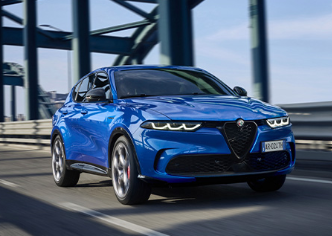
If we are trying to figure out the Alfa Romeo Tonale gas tank size, the first thing to know is that there is not one universal number for every Tonale. Fuel capacity changes according to the engine, powertrain, model year, and market.
For the 2026 U.S.-spec Alfa Romeo Tonale with the 2.0-liter gasoline engine, the fuel tank has an approximate capacity of 13.5 U.S. gallons, or 51 liters. The 1.3-liter plug-in-hybrid configuration uses a smaller tank of approximately 11.2 gallons, or 42.5 liters. These figures come directly from Alfa Romeo/Mopar technical documentation.
That sounds simple enough, right? Mostly. Things become more interesting when we look beyond North America. Current European Tonale specifications list a 55-liter tank for the gasoline hybrid and a 43-liter tank for the Plug-In Hybrid Q4.
So, rather than throwing one number at the wall and hoping it sticks, we are going to unpack exactly what those capacities mean, why they vary, how far a Tonale can realistically travel, and what owners should know before filling up.
Content in this publication
- What Is the Alfa Romeo Tonale Gas Tank Size?
- Alfa Romeo Tonale 2.0 Gas Tank Capacity
- Alfa Romeo Tonale Plug-In Hybrid Gas Tank Size
- Why European Tonale Tank Sizes Are Different
- How Far Can a Tonale Go on a Full Tank?
- Estimating Tonale Range From Tank Capacity
- Why Real-World Range Varies
- City Range vs Highway Range
- Does the Tonale Have a Fuel Reserve?
- Why You May Not Add 13.5 Gallons During a Fill-Up
- Should We Top Off the Alfa Romeo Tonale?
- How Much Does a Full Tonale Tank Cost?
- Does the Alfa Romeo Tonale Require Premium Gas?
- Gas Tonale vs Plug-In Hybrid: Which Goes Farther?
- How Tank Size Affects Road Trips
- Does Fuel Tank Size Affect Cargo Space?
- Why Alfa Romeo Doesn't Simply Install a Bigger Tank
- How to Get More Miles From Each Tonale Tank
- Understanding the Fuel Gauge
- Alfa Romeo Tonale Gas Tank Size by Model Year
- How to Confirm Your Exact Tonale Fuel Capacity
- Is the Tonale's 13.5-Gallon Tank Big Enough?
- What Tonale Owners Should Remember
- Conclusion: Alfa Romeo Tonale Fuel Capacity Explained
- Frequently Asked Questions
What Is the Alfa Romeo Tonale Gas Tank Size?
For drivers in the United States, the answer depends primarily on which engine sits beneath the hood.
| Tonale configuration | Approx. fuel capacity |
|---|---|
| U.S. 2.0L gasoline | 13.5 gal / 51 L |
| U.S. 1.3L plug-in hybrid | 11.2 gal / 42.5 L |
| European gasoline hybrid | 55 L / 14.5 US gal |
| European Plug-In Hybrid Q4 | 43 L / 11.4 US gal |
The official 2025 U.S. Tonale specification sheet likewise listed 13.5 gallons (51 liters) for the 2.0-liter turbo and 11.2 gallons (approximately 42 liters) for the 1.3-liter PHEV.
That distinction matters. Searching for “Tonale fuel tank capacity” without specifying the powertrain can lead us straight into contradictory numbers. One website might say 11.2 gallons, another 13.5 gallons, and another 55 liters. Surprisingly, all three can be correct.
Alfa Romeo Tonale 2.0 Gas Tank Capacity
The U.S.-market gasoline Tonale equipped with the turbocharged 2.0-liter four-cylinder engine carries approximately 13.5 gallons of fuel.
In metric measurements, Alfa Romeo gives the capacity as 51 liters.
This is a sensible tank size for a compact premium SUV. It does not turn the Tonale into a cross-country camel carrying enough fuel for the Sahara, but neither does it condemn us to constantly hunting for gas stations.
The tank works alongside the Tonale's relatively efficient four-cylinder engine to provide practical everyday driving range.
Is 13.5 Gallons a Large Fuel Tank?
Not especially.
Compared with larger three-row SUVs and pickup trucks, 13.5 gallons sounds fairly modest. Those vehicles can carry 18, 20, 25, or even 30-plus gallons.
But tank size needs context.
The Tonale is a compact crossover, so carrying an unnecessarily huge amount of gasoline would add weight, consume valuable packaging space, and provide little benefit to most owners.
A fuel tank is a bit like the battery in a smartphone. Bigger sounds automatically better until we remember that capacity has to coexist with weight, packaging, performance, and efficiency.
For a compact SUV, 13.5 gallons is perfectly reasonable.
Alfa Romeo Tonale Plug-In Hybrid Gas Tank Size
The plug-in-hybrid Tonale is a different animal.
The U.S.-spec 1.3-liter Tonale Plug-In Hybrid uses an approximately 11.2-gallon (42.5-liter) gasoline tank.
Why smaller?
Because gasoline is only one piece of the PHEV puzzle. The vehicle also carries a substantial high-voltage battery and electric-drive hardware. Packaging all of those components beneath one compact crossover inevitably requires compromises.
And unlike a conventional gasoline vehicle, a plug-in hybrid does not rely solely on the contents of its fuel tank.
Why the PHEV Doesn't Need 13.5 Gallons
Imagine two travelers packing for the same trip.
One carries only food. The other carries food plus another independent source of energy.
The second traveler does not necessarily need the same amount of food.
That is essentially what happens with a plug-in hybrid. Electricity can handle part of the journey, reducing how frequently the gasoline engine needs to burn fuel.
Therefore, judging the PHEV purely by its 11.2-gallon tank misses half the story.
Why European Tonale Tank Sizes Are Different
Here is where many online specifications become confusing.
Current European Alfa Romeo technical information gives the gasoline Tonale Ibrida a 55-liter fuel tank, while the Plug-In Hybrid Q4 uses a 43-liter tank.
The same official technical documentation lists 55 liters for the diesel configuration as well.
In other words, we should never blindly transfer a specification from a European Tonale onto a U.S. model—or vice versa.
Regional Specifications Matter
Manufacturers frequently alter vehicles according to market.
Different countries can receive different:
Engines
A Tonale sold in Europe may use a powertrain that is not available in North America.
Hybrid Systems
The mild-hybrid and plug-in-hybrid layouts can require different packaging.
Emissions Equipment
Regulatory requirements vary considerably between regions.
Fuel-System Components
Tank shapes, emissions-control hardware, fuel vapor systems, and related equipment may differ.
That is why the safest approach is always to check the specification for the exact model year, engine, and country.
How Far Can a Tonale Go on a Full Tank?
Now we reach the number drivers usually care about more than tank capacity itself: range.
After all, nobody really buys gallons. We buy miles between fuel stops.
For the 2026 gasoline Tonale, published U.S. specifications show approximately 21 mpg city and 29 mpg highway, with a 13.5-gallon tank. Edmunds translates those numbers into theoretical ranges of around 283.5 city miles and 391.5 highway miles.
Those are useful reference points, although real driving rarely behaves as neatly as a laboratory calculation.
Estimating Tonale Range From Tank Capacity
The basic formula could hardly be simpler:
Fuel tank capacity × fuel economy = estimated driving range
Suppose our Tonale averages 24 mpg.
With a 13.5-gallon tank:
13.5 × 24 = 324 miles
So a theoretical full-tank range is about 324 miles at that average consumption.
At 29 mpg on an uninterrupted highway trip:
13.5 × 29 = 391.5 miles
That lines up with published highway-range estimates.
Real life, however, likes to throw pebbles into tidy equations.
Why Real-World Range Varies
Fuel economy can change dramatically depending on how and where we drive.
Cold weather makes the engine work harder. Heavy acceleration sends consumption upward. Stop-and-go traffic wastes energy. Roof boxes increase aerodynamic drag. Low tire pressure creates additional rolling resistance.
Even something as simple as cruising at 80 mph rather than 65 mph can make a noticeable difference.
So two Tonale owners with identical 13.5-gallon tanks may achieve surprisingly different distances between fill-ups.
Driving Style Makes a Bigger Difference Than We Think
A turbocharged engine responds eagerly when we press the accelerator, which is part of the Tonale's charm.
But enthusiastic acceleration has a price.
Drive like every freeway on-ramp is the opening lap at Monza and fuel disappears much faster. Use smooth throttle inputs, anticipate traffic, and maintain steady speeds, and the range computer usually rewards us.
There is no magic involved. We are simply asking the engine to perform less unnecessary work.
City Range vs Highway Range
The Tonale's fuel tank does not physically grow when we leave the city, yet it can certainly feel that way.
Highway travel generally allows the engine to operate more efficiently because there is less repeated acceleration.
In urban traffic, the vehicle must continually get its mass moving again.
Accelerate.
Brake.
Stop.
Accelerate again.
That cycle burns more gasoline than maintaining a steady cruising speed.
Consequently, we might see something close to 300 miles from a tank during predominantly urban use but approach 400 miles under favorable highway conditions in the gasoline Tonale.
Neither should be treated as guaranteed.
Does the Tonale Have a Fuel Reserve?
Like modern vehicles generally, the Tonale warns us before every usable drop of fuel has disappeared.
That does not, however, mean there is a separate miniature “reserve tank” waiting behind the main tank like a backup bottle.
Instead, the low-fuel warning is designed to alert us while some fuel remains.
The exact usable distance after that warning can change according to consumption, road gradient, traffic, temperature, and driving conditions.
Don't Treat the Low-Fuel Warning as Extra Range
We have all experienced the temptation.
The light comes on. The navigation system says the gas station is 20 miles away. The range display still shows something reassuring.
Everything seems fine.
Usually it is.
But consistently driving until the vehicle is nearly empty is poor practice. Range estimates can change quickly, particularly when driving conditions suddenly become less efficient.
Think of the low-fuel warning as a request to refuel, not an invitation to start calculating how far we can push our luck.
Why You May Not Add 13.5 Gallons During a Fill-Up
This question catches many owners by surprise.
If the Tonale has a 13.5-gallon tank, why might the pump stop after adding only 11 or 12 gallons?
Because tank capacity is not the same thing as the amount required at every refill.
When the fuel gauge reaches empty—or even when estimated range becomes very low—the tank may still contain fuel. Manufacturers deliberately design warning systems to give drivers time to reach a filling station.
In addition, published capacities are often approximate.
The Pump Also Determines When Filling Stops
Gas-station nozzles use automatic shutoff systems designed to stop fuel delivery as gasoline approaches the appropriate level in the filler neck.
Variables such as pump speed, nozzle angle, fuel foaming, temperature, and station equipment can alter exactly when that happens.
Therefore, we should not keep clicking the nozzle repeatedly in an attempt to force the tank to accept precisely 13.5 gallons.
Should We Top Off the Alfa Romeo Tonale?
Once the gas pump automatically clicks off, continuing to squeeze extra fuel into the tank is generally unnecessary.
Modern vehicles have evaporative-emissions systems designed to control gasoline vapors. Repeatedly overfilling a vehicle can interfere with how those systems are intended to work.
It also creates the obvious possibility of spilled fuel.
The simple approach works best: insert the nozzle, fill normally, and stop when the pump automatically shuts off.
No contest with the gas pump required.
How Much Does a Full Tonale Tank Cost?
The exact cost changes with local gasoline prices, but calculating it takes only a few seconds.
For the 13.5-gallon gasoline Tonale:
13.5 × price per gallon = approximate cost from completely empty
If gasoline costs $3.50 per gallon:
13.5 × $3.50 = $47.25
At $4.00 per gallon:
13.5 × $4.00 = $54.00
At $4.50 per gallon:
13.5 × $4.50 = $60.75
In practice, a normal fill-up will usually cost less because we rarely arrive at the station with a completely dry tank.
Fuel requirements deserve more attention than they sometimes receive because tank capacity tells us how much fuel fits—not necessarily which fuel should go into it.
Specifications can vary with year and engine, so the owner's manual for the specific Tonale should remain the final authority.
This becomes especially important when shopping used. A previous-year plug-in hybrid and a current gasoline model may not share identical fuel recommendations merely because both wear the Tonale badge.
Before changing octane grades based on internet advice, verify the exact engine and model year.
Gas Tonale vs Plug-In Hybrid: Which Goes Farther?
A straight comparison becomes complicated because the PHEV carries two energy sources.
A gasoline Tonale relies on its fuel tank.
A plug-in Tonale combines gasoline and stored electrical energy.
The U.S. PHEV's 11.2-gallon fuel tank is therefore smaller, but the battery contributes additional travel before gasoline alone becomes responsible for propulsion.
For the 2025 U.S. Tonale PHEV, published specifications listed a 33-mile EPA electric range alongside the 11.2-gallon fuel tank.
That arrangement can dramatically change fuel-station frequency for the right owner.
The PHEV Makes Most Sense When We Actually Charge It
Suppose our commute is short enough that electricity covers a large percentage of daily driving.
We could potentially go days—or considerably longer—without using much gasoline.
But neglect to charge the battery regularly and we lose much of that advantage.
A plug-in hybrid that is never plugged in is like buying an espresso machine and using it only to boil water. It still works, but we are ignoring the feature that makes it interesting.
How Tank Size Affects Road Trips
The 13.5-gallon tank in the gasoline Tonale works reasonably well for highway travel.
With favorable fuel economy, approaching the high-300-mile range between fill-ups is plausible based on official/published economy figures.
For most road trips, that means the car can travel longer than many people comfortably want to sit without a break anyway.
By the time the Tonale wants fuel, our legs, bladder, or caffeine supply may already be requesting a stop.
Plan Around Comfortable Stops, Not Maximum Range
There is little value in squeezing every final mile from a tank.
Instead, we can plan refueling around convenient locations, food stops, rest areas, or major highway exits.
That becomes even more useful in rural regions, where gas stations can be separated by large distances.
A theoretical 390-mile highway range does not mean we should plan a 389-mile gap between stations.
Leave some breathing room.
Does Fuel Tank Size Affect Cargo Space?
Indirectly, yes.
Every major component beneath a vehicle competes for packaging space. Fuel tanks, exhaust systems, suspension components, batteries, electric motors, and cargo-floor structures all need somewhere to live.
We can see this particularly clearly in Tonale powertrain differences.
Official U.S. 2025 specifications listed 27 cubic feet of cargo volume behind the seats for the 2.0-liter model, versus 22.9 cubic feet for the PHEV. The PHEV also used the smaller 11.2-gallon fuel tank.
The battery and hybrid components need room, so engineers juggle several priorities simultaneously.
Why Alfa Romeo Doesn't Simply Install a Bigger Tank
At first glance, increasing the Tonale from 13.5 gallons to 18 gallons might sound wonderful.
More fuel. More range. Fewer stops.
Problem solved?
Not quite.
A larger tank requires additional physical space and adds weight when full. Gasoline weighs roughly six pounds per U.S. gallon, so several additional gallons are not weightless.
Engineers also have to maintain crash protection, emissions compliance, suspension geometry, passenger room, cargo capacity, and production efficiency.
Vehicle packaging is essentially three-dimensional Tetris, except every block has regulatory, engineering, and cost implications.
The final tank size represents a compromise rather than an isolated decision.
How to Get More Miles From Each Tonale Tank
We cannot stretch the tank itself, but we can improve how efficiently we use its contents.
Smooth acceleration matters. So does keeping tires correctly inflated, avoiding unnecessary idling, removing unused exterior cargo accessories, maintaining the vehicle properly, and moderating highway speed.
None of those changes transforms the Tonale into an economy car overnight.
Together, however, they can make the difference between feeling like we are always visiting a fuel station and barely thinking about it.
Tire Pressure Matters
Underinflated tires create more rolling resistance.
The engine must then work harder to move the vehicle, which consumes additional fuel.
We should use the tire-pressure specification shown for the vehicle rather than simply inflating every tire to the maximum pressure printed on its sidewall.
Extra Weight Adds Up
Leaving a few groceries in the trunk makes virtually no meaningful difference.
Carrying unnecessary heavy equipment for months can.
Every additional pound has to accelerate with the vehicle, climb hills with it, and repeatedly get moving again in city traffic.
The effect may be small individually, but efficiency is built from many small factors.
Understanding the Fuel Gauge
A fuel gauge is an indicator, not laboratory measuring equipment.
The displayed level can move differently depending on road angle, fuel sloshing, vehicle position, software filtering, and the shape of the tank itself.
This is one reason half a gauge does not necessarily correspond perfectly to exactly half of the nominal fuel capacity.
Modern fuel tanks are shaped around other chassis components rather than built as simple rectangular boxes.
Why Range Estimates Change While Driving
Drivers sometimes notice that predicted range falls faster—or slower—than actual miles traveled.
That is normal.
The vehicle continually estimates remaining distance according to fuel level and recent energy consumption.
Drive gently for a while, and the computer may become optimistic.
Enter heavy traffic or begin climbing mountains, and its estimate can shrink rapidly.
The system is adapting rather than malfunctioning.
Alfa Romeo Tonale Gas Tank Size by Model Year
The Tonale is still a relatively young model line, but powertrain offerings have already changed by market and model year.
That means we should be cautious with generic specification websites.
For example, Alfa Romeo's official 2025 U.S. technical sheet listed both a 13.5-gallon 2.0-liter gasoline model and an 11.2-gallon 1.3-liter PHEV.
The 2026 U.S. owner's documentation continues to list the 2.0-liter gasoline engine at 13.5 gallons (51 liters).
Meanwhile, current European documentation lists 55 liters for the hybrid and 43 liters for the plug-in hybrid.
Whenever we see conflicting figures online, regional powertrain differences should therefore be our first suspicion—not necessarily inaccurate reporting.
How to Confirm Your Exact Tonale Fuel Capacity
The owner's manual is the best source.
Look under technical specifications, capacities, or fluids. Make sure the document corresponds to the correct country and model year.
That last detail matters.
Downloading an Italian, British, or Australian manual for a U.S.-market Tonale can create confusion because those markets may offer engines North America never received.
When in doubt, identify the engine first.
For the current U.S. 2.0-liter gasoline Tonale, 13.5 gallons / 51 liters is the key number.
Is the Tonale's 13.5-Gallon Tank Big Enough?
For most buyers, yes.
The Tonale is not designed as a full-size expedition SUV. It is a compact premium crossover intended to blend daily practicality with Alfa Romeo's distinctive style and driving character.
A 13.5-gallon tank paired with roughly mid-20s combined fuel economy can offer more than 300 theoretical miles of mixed-driving range.
That is enough for several days of commuting for many households and entirely workable on road trips.
Could a larger tank increase convenience?
Of course.
But we would also be carrying additional fuel weight and sacrificing packaging space to solve a problem that many drivers rarely encounter.
What Tonale Owners Should Remember
The most important lesson is not simply “13.5 gallons.”
It is 13.5 gallons for the U.S. 2.0-liter gasoline Tonale.
Different Tonales genuinely have different capacities.
The U.S. PHEV uses approximately 11.2 gallons, while current European specifications give the gasoline hybrid and PHEV approximately 55 and 43 liters respectively.
That little bit of context prevents a surprising amount of confusion.
Conclusion: Alfa Romeo Tonale Fuel Capacity Explained
So, what is the Alfa Romeo Tonale gas tank size?
For the 2026 U.S.-spec Tonale with the 2.0-liter gasoline engine, the answer is approximately 13.5 gallons (51 liters). Alfa Romeo's official documentation confirms that capacity.
The U.S. 1.3-liter plug-in hybrid uses a smaller 11.2-gallon (42.5-liter) tank, while European-market Tonales can use different capacities depending on powertrain.
On the road, capacity tells only part of the story. Driving style, traffic, temperature, speed, tire pressure, and engine choice determine how useful those gallons ultimately become.
For a gasoline Tonale averaging around the mid-20s mpg, a full tank can reasonably translate into roughly 300-plus miles of mixed driving, while favorable highway conditions can push theoretical range toward 390 miles.
In other words, the Tonale's tank is neither enormous nor annoyingly tiny. It is sized much like the vehicle itself: compact, purposeful, and designed around a balance between performance, efficiency, weight, and everyday practicality.
Frequently Asked Questions
1. How many gallons does an Alfa Romeo Tonale hold?
The 2026 U.S.-spec Alfa Romeo Tonale with the 2.0-liter gasoline engine holds approximately 13.5 U.S. gallons, equivalent to 51 liters.
2. How big is the Alfa Romeo Tonale PHEV gas tank?
The U.S.-spec Tonale with the 1.3-liter plug-in-hybrid powertrain has an approximate 11.2-gallon (42.5-liter) fuel capacity. European PHEV specifications list approximately 43 liters.
3. How far can an Alfa Romeo Tonale go on a full tank?
Range depends heavily on driving conditions. For a U.S. gasoline Tonale rated around 21 mpg city and 29 mpg highway, published estimates work out to roughly 284 miles in city driving and 392 miles on the highway from a 13.5-gallon tank. Actual results can be higher or lower.
4. Why can I not put 13.5 gallons into my Tonale?
The tank normally still contains some gasoline when the low-fuel warning appears, so a typical refill does not start from a completely empty 13.5-gallon tank. Automatic pump shutoff, tank shape, fuel temperature, and other factors can also influence how much gasoline enters during a fill-up.
5. Do all Alfa Romeo Tonale models have the same gas tank?
No. The fuel capacity depends on the engine and regional specification. U.S. gasoline and plug-in-hybrid versions have different tanks, and European Tonale configurations can use different capacities again. Always verify the owner's manual or official specification sheet for the exact model year, engine, and market.
If you want to know other articles similar to Alfa Romeo Tonale Gas Tank Size: Capacity, Range, and Fuel Guide you can visit the category Service and Parts.
Volvo S90 Engine Oil: Type, Capacity & Change Guide
Volvo S90 Boot Space: Size, Capacity and Practicality
SEO Title: Volvo S90 Oil Capacity: Complete Guide by Engine

Kia Sorento Oil Type: Complete Guide by Year & Engine
Kia Sorento Engine Capacity: Complete Guide by Year
Peugeot 308 Clutch Replacement Cost: Complete UK Guide for 2026
Leave a Reply
More content of your interest