
Alfa Romeo Tonale Driving Modes: Complete DNA Guide

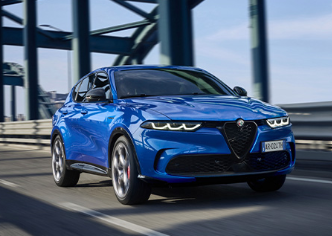
The Alfa Romeo Tonale driving modes are more than a few letters surrounding a rotary selector. They are part of Alfa Romeo's long-running DNA philosophy: give the driver one simple control that changes how the vehicle responds, rather than burying dozens of settings inside touchscreen menus.
In the Tonale, that philosophy has evolved to accommodate electrification. Depending on the powertrain, model year, trim, and market, changing the DNA setting can influence throttle response, steering feel, transmission behavior, hybrid energy management, regenerative deceleration, and—in suitably equipped versions—electronic suspension calibration.
The basic formula remains wonderfully simple: D, N, and A.
Dynamic wakes the Tonale up. Natural settles it down for normal life. Advanced Efficiency places greater emphasis on saving energy.
That sounds straightforward, but what actually happens behind the wheel? Is Dynamic genuinely useful, or is it merely a sportier throttle map? Does Advanced Efficiency make the Tonale slow? And which mode should we choose for highways, cities, wet roads, or enthusiastic driving?
Let's unpack the entire system.
Content in this publication
- What Are the Alfa Romeo Tonale Driving Modes?
- What Does DNA Mean on the Alfa Romeo Tonale?
- Alfa Romeo Tonale Dynamic Mode Explained
- Alfa Romeo Tonale Natural Mode Explained
- Alfa Romeo Tonale Advanced Efficiency Mode Explained
- Dynamic vs Natural vs Advanced Efficiency
- How the Tonale Driving Modes Affect Suspension
- Do Tonale Driving Modes Change the Steering?
- Do Driving Modes Change the Tonale AWD System?
- What Is ESC-Off on the Alfa Romeo Tonale?
- Best Alfa Romeo Tonale Driving Mode for City Driving
- Best Tonale Mode for Highway Driving
- Best Tonale Mode for Winding Roads
- Best Tonale Driving Mode for Rain
- Which Tonale Driving Mode Saves the Most Fuel?
- Can You Switch Tonale Driving Modes While Driving?
- Does Dynamic Mode Use More Fuel?
- Is Advanced Efficiency Always the Best Mode for Economy?
- Alfa Romeo Tonale Hybrid vs Plug-in Hybrid Driving Modes
- How Driving Modes Influence the Personality of the Tonale
- Which Alfa Romeo Tonale Driving Mode Should We Use Every Day?
- Are the Alfa Romeo Tonale Driving Modes Worth Using?
- Common Mistakes When Using Tonale Driving Modes
- Final Thoughts on Alfa Romeo Tonale Driving Modes
- Frequently Asked Questions
What Are the Alfa Romeo Tonale Driving Modes?
The Tonale uses Alfa Romeo's DNA Drive Mode Selector, with three principal settings:
- Dynamic (D): prioritizes stronger performance, quicker responses, and a sportier driving character.
- Natural (N): balances comfort, performance, efficiency, and everyday usability.
- Advanced Efficiency (A): prioritizes lower energy consumption and greater efficiency; its exact behavior varies with the Tonale powertrain.
Alfa Romeo describes Dynamic as the performance-focused setting, Natural as the balanced everyday mode, and Advanced Efficiency as the mode intended to maximize efficiency.
Simple? Yes. Primitive? Not really.
The clever part is that DNA doesn't merely change one parameter. On compatible versions, several vehicle systems work together so the Tonale develops a noticeably different personality.
What Does DNA Mean on the Alfa Romeo Tonale?
Historically, Alfa Romeo has used the letters D.N.A. as the names of its selectable driving programs: Dynamic, Natural, and an efficiency-oriented "A" mode.
The concept appeared on earlier Alfa models and was subsequently adapted for vehicles such as the Giulia and Stelvio. With the Tonale, Alfa Romeo developed the system around electrified powertrains as well. Stellantis specifically describes the Tonale's implementation as an evolution of Alfa DNA incorporating functions linked to electrification.
That matters because an electrified crossover has more variables to manage than a traditional petrol-powered car.
The vehicle may need to decide when to use its electric motor, when to rely on the combustion engine, how aggressively to recover energy during deceleration, how the transmission should respond, and—in certain variants—how the dampers should behave.
DNA becomes the conductor of that little mechanical orchestra.
Where Is the DNA Selector Located?
The selector sits within easy reach of the driver in the center-console area.
Rather than opening a menu, searching for "Vehicle," selecting "Drive Settings," and tapping three more screens, we turn a physical control.
That's refreshingly old-school.
The current U.S.-market Tonale continues to advertise a three-mode DNA selector comprising Dynamic, Natural, and Advanced Efficiency.
Do All Tonale Models Have Exactly the Same DNA Behavior?
No.
This is one of the most important details to understand.
The names Dynamic, Natural, and Advanced Efficiency are broadly consistent, but their underlying functions can differ according to:
- powertrain,
- model year,
- country,
- drivetrain,
- suspension specification,
- software calibration.
For example, Alfa Romeo's global Tonale information says that in the Tonale Plug-in Hybrid Q4, Advanced Efficiency can operate the vehicle entirely under electric power.
Meanwhile, current U.S. Tonale specifications have changed: Alfa Romeo explicitly notes that the plug-in-hybrid powertrain is not offered on current U.S.-market models.
So when we discuss the modes, it is better to think of them as three broad driving philosophies rather than three absolutely identical calibrations worldwide.
Alfa Romeo Tonale Dynamic Mode Explained
Dynamic is the setting most likely to make us remember why an Alfa Romeo is supposed to feel different from an ordinary crossover.
Select D, and the Tonale prioritizes responsiveness.
Official Alfa Romeo information describes Dynamic mode as delivering enhanced performance together with sharper steering response, while earlier technical material explains that the calibration can alter accelerator response, transmission management, stability-control intervention, and steering behavior.
The easiest way to describe the difference is this: Natural asks what we want; Dynamic tries to anticipate it.
Throttle Response in Dynamic Mode
Throttle response becomes more immediate.
Press the accelerator and the Tonale feels more alert, especially during initial acceleration and when exiting a corner.
It does not magically produce an enormous pile of additional horsepower. Instead, the accelerator mapping makes the available performance easier to access.
Imagine two light switches controlling the same lamp. One gradually rotates from dim to bright; the other clicks immediately toward maximum intensity. The lamp hasn't become more powerful—the response has changed.
That is broadly how a sharper throttle map feels.
Does Dynamic Mode Make the Tonale Faster?
It can make the Tonale feel substantially quicker because powertrain response becomes more aggressive.
But selecting Dynamic should not be confused with installing a performance upgrade.
Peak engine or system output doesn't suddenly leap simply because we twisted the DNA selector. What changes most noticeably is how eagerly the vehicle gives us the performance already available.
For real-world overtaking, that responsiveness can be more useful than a specification-sheet number.
Steering Feel in Dynamic
Steering is another part of the transformation.
Alfa describes Dynamic as producing a more direct steering response.
That can make the vehicle feel more connected on a winding road. Inputs seem more deliberate and the Tonale adopts a more enthusiastic character.
We're still driving a compact SUV, of course. Dynamic mode doesn't turn it into a Giulia Quadrifoglio wearing hiking boots.
Yet the difference supports the Tonale's central idea: practicality without completely abandoning driver involvement.
Transmission Behavior in Dynamic Mode
Where the specific Tonale powertrain supports it, Dynamic can also change transmission management.
Earlier Alfa Romeo technical documentation specifically identifies transmission calibration among the areas adjusted in Dynamic mode.
Practically, that means the drivetrain can favor quicker response and stronger acceleration rather than chasing maximum efficiency at every opportunity.
This is particularly useful when accelerating onto a highway, overtaking slower traffic, or driving along an enjoyable sequence of bends.
Dynamic Mode and Regenerative Deceleration
Electrification adds an interesting twist.
On the Tonale Plug-in Hybrid Q4, Alfa Romeo says its e-Coasting Descent Control operates with a more aggressive deceleration calibration when Dynamic or ESC-Off is selected. The stronger deceleration can recover additional electricity for the battery compared with the normal regeneration behavior used in Natural or Advanced Efficiency.
It's an unusual combination: a sportier setting that can also intensify energy recovery.
Performance and efficiency don't always have to live on opposite sides of the room.
Alfa Romeo Tonale Natural Mode Explained
If Dynamic is the mode we deliberately select, Natural is probably the mode most owners can leave engaged for the majority of their journeys.
Natural aims for balance.
Alfa Romeo describes it as the everyday setting, combining performance and comfort rather than heavily prioritizing either performance or maximum efficiency.
Think of Natural as the Tonale without an agenda.
It isn't trying to impress us at every traffic light, nor is it obsessively rationing every watt and drop of fuel.
It simply wants to get on with the journey.
Why Natural Works Best for Everyday Driving
City streets, suburban roads, school runs, commuting, shopping trips, and normal highway driving rarely demand aggressive calibration.
Natural keeps the accelerator progressive and the overall driving behavior predictable.
For many drivers, that is precisely what we want.
The Tonale remains responsive enough when power is needed but doesn't feel unnecessarily impatient in traffic.
Natural Mode in Hybrid Tonale Models
On electrified versions, Natural becomes more interesting beneath the surface.
Alfa Romeo says that hybrid versions use Natural to manage the compromise between the electric motor and combustion engine automatically, seeking everyday energy and fuel savings without giving up normal performance.
We don't need to micromanage anything.
The drivetrain handles the energy strategy in the background while we drive normally.
That is exactly how a good hybrid should behave. The complicated engineering remains invisible.
Is Natural Mode Good for Highway Driving?
Usually, yes.
For steady highway cruising, Natural is arguably the easiest default because it preserves normal throttle response without deliberately seeking the sportiest possible behavior.
Dynamic can be useful before an overtake or along a particularly interesting road, but leaving it permanently engaged isn't necessary for normal motorway travel.
Natural is the mode we'd choose when the destination matters more than the road getting there.
Alfa Romeo Tonale Advanced Efficiency Mode Explained
Then we arrive at A: Advanced Efficiency.
If Dynamic asks, "How much fun can we have?" Advanced Efficiency asks, "How little energy can we waste?"
Alfa Romeo describes the setting as the efficiency-oriented side of the DNA system.
Its exact operation is especially dependent on which Tonale we own.
Advanced Efficiency in the Tonale Hybrid
In hybrid versions, Advanced Efficiency is calibrated to prioritize energy efficiency.
That can mean gentler vehicle responses and an operating strategy more focused on minimizing unnecessary consumption.
It is particularly logical in dense traffic, urban environments, and journeys where aggressive acceleration offers no useful advantage.
Using Dynamic between two traffic lights 150 meters apart is rather like wearing racing boots to walk around the supermarket.
Technically possible. Not particularly beneficial.
Advanced Efficiency in the Tonale Plug-in Hybrid Q4
The plug-in hybrid is where the letter A takes on much greater significance.
Alfa Romeo states that Advanced Efficiency on the Tonale Ibrida Plug-in Q4 allows fully electric driving.
That makes A particularly suitable for urban driving, especially when the battery contains enough charge to cover a meaningful portion of the journey.
Earlier Alfa technical information also highlighted this setting as appropriate for city centers and areas where electric driving is advantageous.
Instead of simply dulling the accelerator response, the system becomes part of the Tonale's broader energy-management strategy.
Does Advanced Efficiency Reduce Performance?
Its purpose is not maximum acceleration.
Consequently, the Tonale may feel more relaxed and less eager when we press the accelerator.
That doesn't mean it becomes incapable of responding when necessary. Rather, the calibration encourages smoother inputs and efficiency-oriented driving.
For everyday traffic, many drivers may barely care about the performance sacrificed.
After all, what good is razor-sharp throttle response when we're crawling behind a bus at 20 mph?
Dynamic vs Natural vs Advanced Efficiency
The simplest way to understand the Alfa Romeo Tonale driving modes is to imagine three personalities sharing one driver's seat.
Dynamic wants the winding road.
Natural wants the commute.
Advanced Efficiency wants the lowest practical energy consumption.
None is universally "best."
The right choice depends on what we are asking the Tonale to do.
If we want the most responsive throttle and more enthusiastic chassis behavior, Dynamic makes sense. If we're covering ordinary mixed driving, Natural is the logical starting point. If the priority is conserving fuel or electrical energy, Advanced Efficiency becomes attractive.
The cleverness lies in being able to change personalities almost instantly.
How the Tonale Driving Modes Affect Suspension
Here's where equipment level becomes important.
Some Tonale variants have been offered with Alfa Romeo's Dual Stage Valve electronic suspension.
Where fitted, the system offers different damping characteristics.
According to Alfa Romeo technical information, Comfort calibration is associated predominantly with Advanced Efficiency and Natural, while Sport calibration predominates in Dynamic and ESC-Off. Sport reduces body movement and increases vertical rigidity to improve behavior through corners.
So Dynamic isn't merely tricking us with a more sensitive accelerator in appropriately equipped cars.
The chassis itself can adopt a more performance-oriented attitude.
Comfort Suspension Calibration
Natural and Advanced Efficiency favor the smoother side of the suspension's operating range where electronic dampers are present.
That makes sense.
Driving efficiently generally means driving smoothly, and a calmer suspension calibration complements that objective.
Over broken roads, the more relaxed setup may also be preferable even when fuel economy isn't our main concern.
Sport Suspension Calibration
Select Dynamic and the available electronic dampers can become firmer.
The goal is improved body control.
Through corners, less unwanted movement can make the Tonale feel more settled and precise.
It won't erase the higher center of gravity inherent in an SUV, but it can make transitions feel tidier.
Can We Combine Dynamic Powertrain Response With Softer Suspension?
On certain Tonale versions equipped with the electronic suspension, Alfa Romeo provides a dedicated control that allows the damping calibration associated with Dynamic to be adjusted independently. Technical documentation describes the ability to activate or deactivate Dynamic's suspension calibration through the DNA selector's dedicated button.
That creates an appealing combination.
We can enjoy sharper powertrain response without necessarily choosing the firmest chassis behavior all the time.
For imperfect roads, that's a genuinely useful feature rather than a marketing gimmick.
Do Tonale Driving Modes Change the Steering?
Yes, steering response forms part of the DNA philosophy.
Alfa Romeo specifically identifies sharper or more direct steering response in Dynamic mode.
The important word is response.
Drivers sometimes interpret driving-mode descriptions as meaning the mechanical steering ratio physically changes. That's not necessarily what is happening.
Electronic assistance and control calibration can change how the steering feels and responds without fundamentally rebuilding the steering hardware every time we turn the knob.
Dynamic aims to make the car feel more immediate.
Natural aims to make it easier to live with.
Do Driving Modes Change the Tonale AWD System?
This depends heavily on the version.
The Tonale Plug-in Hybrid Q4 uses electrification as part of its all-wheel-drive strategy, and Alfa Romeo has described DNA as coordinating the Q4 system, electronic controls, engine, transmission, and driver-control sensitivity.
That doesn't mean choosing Dynamic permanently locks all four wheels into some crude off-road configuration.
Rather, the vehicle's control systems adjust their priorities according to the selected mode and available traction.
This is an important distinction.
The Tonale DNA selector is primarily a driving-character control, not a conventional terrain selector offering settings such as Sand, Mud, Rock, or Snow.
What Is ESC-Off on the Alfa Romeo Tonale?
Some Tonale specifications have also included an ESC-Off setting or functionality alongside the three principal DNA modes.
For example, Alfa Romeo's UK specification material listed "Alfa DNA with ESC off" on earlier Tonale configurations.
ESC refers to Electronic Stability Control.
We shouldn't treat ESC-Off as simply a secret fourth everyday driving mode.
Stability-control systems are valuable safety aids, and disabling or reducing their intervention is relevant primarily in specific circumstances where the driver understands why doing so may be beneficial.
For normal public-road driving, leaving stability assistance active is generally the sensible approach.
Best Alfa Romeo Tonale Driving Mode for City Driving
For normal urban driving, Natural is our easiest recommendation.
It provides predictable acceleration and allows hybrid systems, where present, to manage themselves automatically.
Owners of a Tonale Plug-in Hybrid Q4 with sufficient battery charge may prefer Advanced Efficiency, particularly when they want to prioritize electric operation.
Dynamic can certainly be used in town, but unless we're repeatedly entering fast-moving traffic or simply prefer the sharper response, its advantages aren't especially important at low urban speeds.
Smoothness usually wins.
Best Tonale Mode for Highway Driving
Natural again makes the strongest all-purpose case.
At constant motorway speeds, aggressively sharpened throttle response offers relatively little benefit.
Dynamic becomes useful when the road changes character or when we want more immediate response before overtaking.
Advanced Efficiency can also make sense when energy consumption is the primary objective and we're willing to adopt gentler acceleration.
Our ideal pattern would therefore be Natural for cruising, with Dynamic reserved for moments when responsiveness becomes valuable.
Best Tonale Mode for Winding Roads
Now Dynamic earns its badge.
A winding road gives the sharper accelerator mapping, steering response, transmission strategy, and available firmer damping somewhere to work.
This is where the difference becomes more than dashboard theater.
Brake before the bend, turn in, feed the power back through the exit, and the Tonale should feel more eager than it does in Natural.
No compact SUV becomes a lightweight sports coupe simply because we turn a dial, but Dynamic lets the Tonale lean into the Alfa Romeo side of its personality.
Best Tonale Driving Mode for Rain
Natural is usually the calmer choice for wet everyday roads.
A smoother accelerator response can make precise power application easier, whereas the aggressive response we enjoy in Dynamic is not automatically desirable when grip is limited.
More importantly, the driving mode doesn't defeat physics.
Good tires, sensible speed, smooth steering, adequate following distance, and active electronic stability systems matter far more than which letter appears on the dashboard.
DNA helps manage the vehicle.
It cannot negotiate with standing water.
Which Tonale Driving Mode Saves the Most Fuel?
Advanced Efficiency is the obvious answer because efficiency is literally its purpose.
But selecting A isn't a magic fuel-saving spell.
Driver behavior still matters enormously.
Accelerating aggressively toward every red light and then braking hard will squander energy regardless of the drive mode.
Likewise, carrying unnecessary weight, maintaining incorrect tire pressures, using high speeds, or making repeated short cold-engine journeys can affect consumption.
Advanced Efficiency gives the vehicle the right priorities.
We still have to cooperate.
Can You Switch Tonale Driving Modes While Driving?
The DNA system is designed to let us select the appropriate driving calibration as conditions change, rather than requiring an elaborate stationary setup procedure.
That is one of its greatest strengths.
A morning drive might begin in Advanced Efficiency through urban streets, move into Natural on the motorway, and finish in Dynamic when the route becomes interesting.
Instead of configuring ten individual parameters, we turn one control.
Elegant solutions often feel obvious after someone else invents them.
Does Dynamic Mode Use More Fuel?
Potentially, yes—but the driver is a large part of the equation.
Dynamic encourages us to access performance more readily through sharper responses. If that leads to harder acceleration, higher engine speeds, and more enthusiastic driving, consumption will naturally increase.
Simply selecting Dynamic does not mean the fuel tank instantly develops a leak.
A careful driver can still drive smoothly in Dynamic.
The problem is that Dynamic is rather persuasive.
It whispers, "Go on, press it."
And occasionally we listen.
Is Advanced Efficiency Always the Best Mode for Economy?
It's the mode designed for that objective, but real-world economy remains contextual.
Imagine crawling uphill in traffic, cruising steadily on a motorway, descending a mountain, and driving repeatedly through stop-and-go city streets.
Those are four different energy-management problems.
The Tonale's electronics can optimize many parameters, but traffic, terrain, ambient temperature, battery state, tires, speed, and driving style remain important.
Think of Advanced Efficiency as giving the car the best instructions—not guaranteeing the same result on every road.
Alfa Romeo Tonale Hybrid vs Plug-in Hybrid Driving Modes
This distinction deserves special attention because web searches often mix information from several Tonale powertrains.
In hybrid Tonale models, DNA integrates the electrified drivetrain into familiar D, N, and A philosophies.
In the Plug-in Hybrid Q4, Advanced Efficiency goes further by prioritizing fully electric operation, while Natural automatically balances electric and combustion power and Dynamic prioritizes performance.
Current market availability must also be considered. Alfa Romeo's U.S. website for the 2026 Tonale states that the plug-in-hybrid powertrain is not available on U.S. models.
This is why owners should verify the behavior described in the manual for their exact model year and country rather than assuming every Tonale behaves identically.
How Driving Modes Influence the Personality of the Tonale
Many modern crossovers offer driving modes, but their differences can sometimes feel like changing the font on an otherwise identical document.
The Tonale's DNA system matters because it sits at the intersection of several areas that define vehicle character.
Throttle response changes what our right foot feels.
Steering calibration changes what our hands feel.
Transmission programming changes how urgently the drivetrain reacts.
Hybrid management changes when and how different energy sources are used.
Electronic suspension, where equipped, changes how the body behaves.
Regenerative deceleration can even alter what happens when we lift our foot from the accelerator.
None of these adjustments alone is revolutionary.
Together, they can make one vehicle feel meaningfully different.
Which Alfa Romeo Tonale Driving Mode Should We Use Every Day?
For most owners, Natural should be the default.
It is the middle ground, and middle ground isn't an insult here.
Natural lets the Tonale behave normally when we're parking, commuting, carrying passengers, navigating traffic, or covering long distances.
Then we can treat the other modes as tools.
Advanced Efficiency makes sense when energy conservation becomes the priority.
Dynamic comes alive when responsiveness matters.
This approach also prevents us from falling into the trap of assuming that sport mode must always be "better."
A hammer is useful.
We still don't use one to make coffee.
Are the Alfa Romeo Tonale Driving Modes Worth Using?
Absolutely.
Not because we need to switch modes every five minutes, but because they allow one vehicle to better serve different purposes.
A family crossover spends most of its life doing ordinary things. It crawls through traffic. Carries groceries. Runs errands. Covers motorways. Negotiates potholes.
But occasionally the road opens.
And that is where Dynamic gives the Tonale a second personality.
Conversely, electrification means performance isn't the only game anymore. Advanced Efficiency acknowledges that many drivers want to consume less energy without turning driving into a mathematical exercise.
DNA packages those competing priorities into three letters anyone can understand.
That is smart design.
Common Mistakes When Using Tonale Driving Modes
The first mistake is assuming Dynamic adds horsepower. It primarily changes how vehicle systems deliver and manage the available performance.
Another is assuming Advanced Efficiency guarantees spectacular fuel economy regardless of driving behavior.
It doesn't.
A third is believing that every Tonale has identical DNA programming. Powertrain, equipment, country, and production year can all matter.
And perhaps the biggest mistake is changing modes merely because we can.
Driving modes work best when we match them to circumstances.
Natural for normality.
Advanced Efficiency for conservation.
Dynamic for engagement.
There's little need to make it more complicated than that.
Final Thoughts on Alfa Romeo Tonale Driving Modes
The Alfa Romeo Tonale driving modes succeed because they simplify something that has become increasingly complicated.
Modern vehicles contain interconnected powertrain controllers, stability systems, steering assistance, transmissions, hybrid electronics, regenerative braking strategies, and sometimes adaptive dampers.
We could theoretically adjust each system independently.
But would we really want to?
Alfa Romeo instead gives us three familiar choices.
Dynamic sharpens the Tonale's responses and brings its sportier character to the surface.
Natural creates the balanced behavior most of us want in daily life.
Advanced Efficiency turns attention toward reducing energy consumption and, in compatible Tonale Plug-in Hybrid Q4 versions, prioritizes fully electric driving.
The underlying calibration varies between Tonale versions, so the owner's manual remains the final authority for a particular model year and market. But the philosophy is consistent.
The Tonale isn't trying to become three different cars.
It's trying to become the right version of itself for the road we're driving right now.
And sometimes, all that takes is one twist of the DNA dial.
Frequently Asked Questions
1. How many driving modes does the Alfa Romeo Tonale have?
The Tonale's Alfa DNA selector centers around three driving modes: Dynamic, Natural, and Advanced Efficiency. Some versions and markets may additionally provide ESC-Off functionality, but equipment and programming can differ by model year and specification. Alfa Romeo's current U.S. information continues to identify the three principal DNA modes.
2. What does Dynamic mode do in the Alfa Romeo Tonale?
Dynamic prioritizes performance and responsiveness. Depending on the Tonale version, its calibration can affect accelerator response, transmission behavior, stability-control strategy, steering response, regenerative deceleration, and available electronic suspension settings.
3. What is the best Alfa Romeo Tonale driving mode for everyday driving?
Natural is generally the best all-around setting. Alfa Romeo designed it to balance comfort and performance, while electrified versions can automatically manage the relationship between combustion and electric propulsion.
4. Does Advanced Efficiency make the Tonale electric-only?
It depends on the powertrain. Alfa Romeo states that on the Tonale Plug-in Hybrid Q4, Advanced Efficiency enables fully electric operation. On other hybrid Tonale configurations, the A setting is primarily calibrated around maximizing energy efficiency rather than functioning identically to the PHEV's electric mode.
5. Does Dynamic mode change the Tonale suspension?
On Tonale models fitted with Alfa Romeo's Dual Stage Valve electronic suspension, Dynamic is associated with the sportier damping calibration, while Natural and Advanced Efficiency favor the comfort-oriented setup. Availability varies by configuration and market.
If you want to know other articles similar to Alfa Romeo Tonale Driving Modes: Complete DNA Guide you can visit the category Driving.
Can Nissan Rogue Pull a Boat? Complete Towing Guide
Can Nissan Rogue Be Flat Towed? Complete Towing Guide
Are Nissan Rogue Good on Gas? MPG, Fuel Economy, and Real-World Costs
Can Nissan Rogue Drive in Snow? Complete Winter Driving Guide

Kia Sorento Diesel Fuel Consumption: MPG, Efficiency and Real-World Range
Haval Jolion Hybrid Fuel Consumption: How Efficient Is It Really?
Leave a Reply
More content of your interest