
Do Alfa Romeos Break Down a Lot? A Realistic Reliability Guide

Few car brands stir up reliability debates quite like Alfa Romeo. Mention buying one at a gathering of car enthusiasts and someone will probably grin, tell you how beautiful it is, praise the steering, and then make a joke about keeping a tow truck on speed dial.
But do Alfa Romeos break down a lot, or are we still judging today's cars by problems associated with older Italian models?
The short answer is reassuring but nuanced: modern Alfa Romeos do not necessarily break down frequently, but they tend to demand more attentive ownership than the most dependable mainstream cars. Models such as the Giulia and Stelvio have matured considerably since their early production years, and independent reliability data for some recent models is surprisingly respectable. For example, J.D. Power gives the 2024 Alfa Romeo Giulia an 81/100 Quality & Reliability score, while the 2024 Stelvio receives 85/100.
That doesn't mean we should pretend every Alfa behaves like a Toyota Corolla. Electrical glitches, warning lights, battery-related weirdness, recall campaigns, expensive parts, and a thinner specialist network can make ownership feel more complicated.
So let's separate reputation from reality.
Content in this publication
- Do Alfa Romeos Break Down a Lot? The Short Answer
- Why Does Alfa Romeo Have Such a Bad Reliability Reputation?
- Modern Alfa Romeos Are Different From Older Ones
- Are Alfa Romeo Engines Unreliable?
- Electrical Problems Are More Important Than Engine Problems
- Do Alfa Romeos Have Lots of Recalls?
- How Reliable Is the Alfa Romeo Giulia?
- How Reliable Is the Alfa Romeo Stelvio?
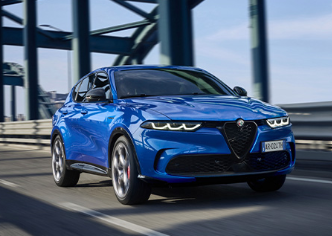
- What About the Alfa Romeo Tonale?
- What Problems Do Alfa Romeos Commonly Have?
- Are Alfa Romeos Less Reliable Than BMWs or Audis?
- Are Alfa Romeos as Reliable as Toyota or Lexus?
- Can an Alfa Romeo Last 100,000 Miles?
- Are Alfa Romeos Expensive to Repair?
- Why Cheap Used Alfa Romeos Can Be Dangerous
- Which Alfa Romeos Are More Likely to Cause Problems?
- Should We Buy an Alfa Romeo With an Extended Warranty?
- How Can We Make an Alfa Romeo More Reliable?
- Should You Avoid Alfa Romeo Completely?
- Who Should Buy an Alfa Romeo?
- Who Probably Shouldn't Buy One?
- What Should We Check Before Buying a Used Alfa Romeo?
- So, Do Alfa Romeos Break Down a Lot?
- Conclusion
- Frequently Asked Questions
Do Alfa Romeos Break Down a Lot? The Short Answer
Generally, no—modern Alfa Romeos aren't constantly breaking down.
A well-maintained recent Giulia or Stelvio can provide years of dependable service. Plenty of owners use them every day without dramatic mechanical failures. The problem is that Alfa Romeo's reputation was built over decades, and reputations move much more slowly than engineering departments.
Think of it like a restaurant that once had terrible service. Even after replacing the staff, improving the kitchen, and rewriting the menu, people continue telling stories about what happened ten years ago.
Alfa Romeo has a similar problem.
Older models helped cement an image of temperamental electrics, corrosion, inconsistent manufacturing, and mechanical quirks. Modern cars are far more sophisticated, but they still haven't completely escaped that shadow.
More importantly, reliability depends heavily on which Alfa Romeo we're discussing, what model year it is, how it was maintained, and how the previous owner treated it.
A carefully maintained 2022 Giulia is a very different ownership proposition from a neglected early-production car bought because it was unusually cheap.
Why Does Alfa Romeo Have Such a Bad Reliability Reputation?
Alfa Romeo's reliability reputation didn't appear out of nowhere.
Historically, some models genuinely suffered from electrical faults, rust, build-quality inconsistencies, and mechanical problems. Those experiences became part of automotive folklore.
The brand was also competing against German manufacturers that gradually became synonymous with premium engineering—and Japanese manufacturers that transformed reliability expectations entirely.
Unfortunately for Alfa Romeo, reliability stories have an unusually long shelf life.
Nobody tells their friends:
"My Alfa started perfectly again this morning."
But they certainly tell them:
"My Alfa left me stranded 80 miles from home."
Negative experiences travel faster.
That doesn't erase legitimate problems. It simply explains why public perception can sometimes exaggerate how commonly modern cars actually fail.
Modern Alfa Romeos Are Different From Older Ones
This distinction matters enormously.
When someone says "Alfas are unreliable," our next question should be: which Alfa?
The Giulia launched a substantially more modern era for the brand, followed by the Stelvio SUV and later Tonale. These vehicles use modern platforms, engines, safety systems, electronics, manufacturing techniques, and diagnostic systems.
That doesn't magically make them bulletproof.
However, judging a modern Giulia entirely on problems associated with decades-old Alfa Romeos is about as useful as judging today's smartphone by a mobile phone from 1998.
The Early Giulia and Stelvio Years Matter
There is another important wrinkle.
First-year cars frequently encounter more teething problems than later versions, regardless of manufacturer. Early Giulias and Stelvios weren't exceptions.
Software bugs, battery sensitivity, electrical warnings, and various recalls helped reinforce Alfa Romeo's reputation during the brand's modern revival.
Later production years generally benefited from revisions and accumulated manufacturing experience.
That means when we're shopping used, model year matters almost as much as the badge on the bonnet.
Are Alfa Romeo Engines Unreliable?
Engine failure is probably what most people imagine when they ask whether Alfa Romeos break down.
The reassuring news is that catastrophic engine failure isn't what defines the average modern Alfa Romeo ownership experience.
The widely used turbocharged 2.0-liter four-cylinder found in many Giulia and Stelvio versions can be robust when serviced properly. The extraordinary 2.9-liter twin-turbo V6 found in Quadrifoglio models delivers dramatically more performance but also introduces more complexity, heat, and potential expense.
There's a simple rule worth remembering:
Performance usually multiplies consequences.
A minor issue on a four-cylinder sports sedan may be manageable. The equivalent repair involving a tightly packaged high-performance engine can become significantly more expensive.
So we'd hesitate to describe Alfa Romeo engines as inherently unreliable. We'd describe them as engines that reward disciplined servicing and punish neglect more aggressively than simpler mainstream powertrains.
Oil Changes Matter More Than Bargain Hunters Think
A used Alfa with immaculate paint but incomplete service records should make us nervous.
Modern turbocharged engines depend heavily on clean oil, correct specifications, healthy cooling systems, and proper maintenance intervals.
Skipping an oil service because "the car still runs fine" is false economy.
The manufacturer itself emphasizes that following scheduled maintenance is essential for trouble-free operation and that owners should retain proof that required maintenance was performed.
That's especially relevant when we're evaluating a secondhand Alfa.
A stack of maintenance invoices isn't boring paperwork.
It's almost part of the drivetrain.
Electrical Problems Are More Important Than Engine Problems
This is where Alfa Romeo ownership gets interesting.
When people describe an Alfa "breaking down," they may be talking about something very different from a blown engine or failed transmission.
Modern cars contain dozens of electronic modules communicating with one another. A voltage problem can generate warnings that make the dashboard look like a Christmas tree even when the underlying mechanical systems are healthy.
Alfa Romeos have developed a particular reputation for being sensitive to battery condition.
A weak battery may produce seemingly unrelated warnings involving start-stop functionality, electronic stability systems, parking assistance, or other systems.
The car hasn't necessarily suffered five simultaneous failures.
Sometimes one unhappy battery creates a cascade of electronic complaints.
Why Battery Health Can Make an Alfa Look Unreliable
Modern electronics expect consistent voltage.
When battery voltage drops, computers may receive information outside their expected operating parameters. One module throws an error, another detects that error, and suddenly we've got several warning messages.
That's why experienced Alfa owners often check battery condition early when strange electronic symptoms appear.
Of course, that doesn't mean every warning light should be dismissed as "just the battery."
Proper diagnosis still matters.
But maintaining a strong battery can prevent a surprisingly large amount of drama.
Do Alfa Romeos Have Lots of Recalls?
Some model years have accumulated notable recall histories.
For example, NHTSA-related recall records show multiple campaigns affecting the Giulia and Stelvio over the years. A 2025 recall covers certain 2017–2019 Giulias and 2018–2019 Stelvios because a fuel delivery module could lose fuel flow and potentially cause loss of drive power.
Later models aren't entirely immune either. Certain 2020–2025 Giulia and Stelvio vehicles were included in a recall related to the rear-view camera display system.
And selected 2024 Giulias were subject to another campaign involving a potentially misrouted headlight wiring harness.
Should that scare us away?
Not automatically.
A Recall Doesn't Automatically Mean the Car Is Unreliable
Almost every major manufacturer issues recalls.
The real questions are whether the problem is serious, whether the repair is available, whether the vehicle has received it, and whether recurring failures remain after the corrective work.
When buying used, run the VIN through the relevant recall database for your country and confirm that outstanding campaigns have been completed.
That ten-minute check can prevent a very expensive surprise.
How Reliable Is the Alfa Romeo Giulia?
The Giulia is arguably the car that did the most to change perceptions of modern Alfa Romeo.
It's gorgeous, rear-wheel-drive in many configurations, wonderfully balanced, and exceptionally engaging on a twisting road. More importantly for our discussion, later Giulias have generated much stronger reliability indicators than the stereotype suggests.
J.D. Power gives the 2024 Giulia an 81/100 Quality & Reliability score, categorizing it as "Great."
That isn't the sort of result we'd expect from a car supposedly sitting at the roadside every other Tuesday.
However, earlier Giulias deserve more scrutiny. According to NHTSA-derived recall listings, the 2020 Giulia, for example, has accumulated more recall campaigns than several later model years.
So if we wanted a used Giulia primarily for everyday dependability, we'd generally feel more comfortable with a well-documented later-production example than a bargain-basement early car.
Does the Giulia Leave Owners Stranded?
It can happen, just as it can with virtually any vehicle.
You may be interested in reading How Many Miles Can a BMW M4 Last? A Realistic Longevity Guide
Fuel-delivery problems on affected early cars are one example of an issue capable of causing genuine loss of power rather than merely an annoying warning message.
But it would be misleading to interpret individual campaigns as evidence that every Giulia routinely breaks down.
Condition matters.
Service history matters.
Model year matters.
Previous ownership matters enormously.
How Reliable Is the Alfa Romeo Stelvio?
Mechanically, the Stelvio shares considerable DNA with the Giulia, and that's good news if we enjoy driving.
Most SUVs behave like comfortable furniture on wheels.
The Stelvio feels like someone stretched a sports sedan upward without removing its personality.
Reliability ratings can also surprise skeptics. J.D. Power lists the 2024 Stelvio with an 85/100 Quality & Reliability score. Its 2023 counterpart also received an 85/100 score for quality and reliability.
That doesn't establish perfect long-term reliability, and independent organizations don't always reach identical conclusions. Consumer Reports, for example, lists insufficient data for an overall 2025 Stelvio reliability prediction while noting two NHTSA recalls for that model year.
Still, the evidence doesn't support casually labeling every modern Stelvio unreliable.
What About the Alfa Romeo Tonale?
The Tonale represents another chapter entirely.
Rather than being simply a smaller Stelvio, it entered the market during Alfa Romeo's shift toward electrification and greater platform integration within the Stellantis group.
Hybrid technology brings obvious efficiency benefits, but it also introduces additional systems: batteries, control modules, electric motors, charging hardware on plug-in variants, cooling circuits, and software coordinating everything.
More components don't automatically equal unreliability.
They do, however, mean diagnosis becomes increasingly dependent on technicians who understand the system.
Because the Tonale is substantially newer than the Giulia and Stelvio, we also have less truly long-term evidence about how examples will behave at 100,000 or 150,000 miles.
That's worth acknowledging rather than pretending we already know the answer.
What Problems Do Alfa Romeos Commonly Have?
If we're evaluating a modern used Alfa, several areas deserve particular attention.
- Battery and voltage-related warnings: Weak batteries can trigger seemingly unrelated electronic faults.
- Infotainment or electronic glitches: Screens, cameras, sensors, connectivity, and driver-assistance electronics may occasionally misbehave.
- Fuel-system concerns on certain early models: Some 2017–2019 Giulia and 2018–2019 Stelvio vehicles were included in a fuel-delivery-module recall.
- Rear-view camera faults: Certain 2020–2025 Giulia and Stelvio vehicles were recalled over rear-camera display concerns.
- Cooling-system or fluid leaks: As with many turbocharged premium cars, age can expose hoses, seals, pumps, and related components.
- Suspension wear: Large wheels, performance-oriented suspension geometry, rough roads, and spirited driving can accelerate wear.
- Expensive performance-model repairs: Quadrifoglio variants deliver spectacular performance but shouldn't be maintained on an economy-car budget.
None of these guarantee trouble.
They're simply areas we'd examine carefully during a pre-purchase inspection.
Are Alfa Romeos Less Reliable Than BMWs or Audis?
This comparison isn't as simple as internet arguments make it sound.
BMW, Mercedes-Benz, and Audi manufacture complex luxury vehicles packed with turbochargers, sensors, active systems, elaborate electronics, and expensive components.
They aren't Toyota Corollas either.
A ten-year-old German luxury sedan can generate repair bills capable of making an Alfa owner feel positively relaxed.
The distinction often comes down to dealer coverage, parts availability, independent specialist availability, and familiarity among mechanics.
BMW has an enormous global footprint. Finding someone familiar with a 3 Series is relatively straightforward in many markets.
Alfa Romeo's network can be much thinner.
And that changes how reliability feels.
Repair Convenience Is Part of Real-World Reliability
Imagine two cars suffer exactly the same sensor failure.
Car A gets diagnosed locally that afternoon and receives the replacement part tomorrow.
Car B requires a specialist appointment 70 miles away and waits eight days for the same type of component.
Mechanically, the failures were equivalent.
As ownership experiences?
Completely different.
This is why anyone considering an Alfa should investigate nearby service support before buying one.
Are Alfa Romeos as Reliable as Toyota or Lexus?
We wouldn't buy an Alfa Romeo expecting Toyota-like ownership.
Toyota and Lexus have spent decades designing cars around consistency, manufacturing discipline, widespread serviceability, and exceptionally strong long-term durability.
Alfa Romeo prioritizes somewhat different qualities.
Steering.
Chassis response.
Style.
Character.
Performance.
That doesn't mean Alfa ignores reliability. It means that if maximum statistical dependability and minimum maintenance anxiety are our only priorities, there are safer choices.
An Alfa is more like a beautiful mechanical watch than a basic digital one.
Both tell time.
One asks more of its owner and gives something different back.
Can an Alfa Romeo Last 100,000 Miles?
Absolutely.
There is nothing magical about 100,000 miles that causes an Alfa Romeo to self-destruct.
A properly maintained example can pass that figure and continue for many more miles.
The more useful question is:
How expensive will those miles be?
Mileage alone doesn't determine the answer.
A 110,000-mile Giulia with meticulous servicing, long-distance motorway use, regular fluid changes, and preventive repairs could be a safer purchase than a 55,000-mile car with missing records and years of deferred maintenance.
We should buy condition and history, not just numbers on an odometer.
Maintenance History Becomes More Important With Age
Once an Alfa moves beyond its first few years, documentation becomes enormously valuable.
We want to know whether scheduled services were performed, recalls completed, warning lights investigated promptly, correct fluids used, cooling problems addressed, and battery replacements handled before low voltage created other headaches.
An Alfa that has been cared for feels completely different from one that has been maintained according to the "I'll fix it when something falls off" philosophy.
Are Alfa Romeos Expensive to Repair?
They can be.
This is arguably more important than asking how frequently they break.
Reliability has two dimensions:
frequency × consequence.
A vehicle might fail relatively infrequently but still be expensive to own because every repair carries premium-car parts and labor costs.
That's where Alfa Romeo ownership can bite.
Specialized components, limited aftermarket availability for certain parts, dealership labor rates, sophisticated electronics, and performance hardware can make repairs expensive.
Routine services usually aren't terrifying.
Neglected maintenance that snowballs into major repairs can be.
Why Cheap Used Alfa Romeos Can Be Dangerous
Depreciation creates temptation.
A used Giulia that originally competed with premium German sedans can become astonishingly affordable after several years.
Suddenly, we're staring at a gorgeous Italian sports sedan priced like a modest economy car.
That's where people make mistakes.
Purchase price and ownership cost are not the same thing.
The car may now cost $20,000, but it's still built with components designed for a premium performance vehicle.
Depreciation reduces what we pay the seller.
You may be interested in readingHow Many Miles Can a BMW M4 Last? A Realistic Longevity GuideYou may be interested in reading
 Is Nissan X-Trail a Good Car? An In-Depth Buyer’s Guide
It doesn't magically transform replacement parts into economy-car components.
The Cheapest Alfa May Become the Most Expensive
A suspiciously cheap example should trigger curiosity rather than excitement.
Why is it cheap?
Deferred maintenance?
Accident history?
Warning lights?
Electrical gremlins?
Worn tires?
Pending brake work?
Incomplete recall repairs?
Multiple owners?
The best used Alfa often isn't the least expensive one. Paying more for the right car can save thousands later.
Which Alfa Romeos Are More Likely to Cause Problems?
We'd exercise greater caution around early-production modern Alfas, especially examples with incomplete histories.
This doesn't mean every early Giulia or Stelvio is bad.
Plenty are excellent.
But recalls demonstrate that certain early examples encountered issues significant enough to require manufacturer intervention, including the fuel-delivery-module campaign affecting specific 2017–2019 Giulia and 2018–2019 Stelvio vehicles.
A later model with complete records therefore provides a more attractive risk profile when dependability matters heavily.
High-performance Quadrifoglio versions deserve additional caution—not necessarily because they are inherently fragile, but because complicated, heavily stressed performance hardware costs substantially more when something does require attention.
Should We Buy an Alfa Romeo With an Extended Warranty?
For many buyers, yes.
An extended warranty can make considerable sense on a complicated premium vehicle, especially if we're purchasing an example approaching the end of factory coverage.
But read the contract.
A warranty that excludes the systems most likely to cause expensive problems isn't especially useful.
We'd investigate coverage for electronics, infotainment modules, turbocharger-related components, cooling hardware, driveline systems, and diagnostic labor.
And we'd check whether the warranty permits repairs at a convenient Alfa Romeo specialist.
Peace of mind has value.
How Can We Make an Alfa Romeo More Reliable?
Alfa ownership becomes significantly easier when we're proactive.
Keep the battery healthy. Follow servicing schedules rather than stretching them. Use the specified oil and fluids. Investigate coolant loss immediately. Don't ignore intermittent warning lights. Complete recall work promptly. Allow qualified technicians to diagnose recurring electronic faults rather than repeatedly clearing codes.
And perhaps most importantly, don't buy an Alfa with your last dollar.
Premium vehicles need financial breathing room.
If purchasing the car leaves nothing available for maintenance, tires, brakes, or an unexpected repair, the car will feel unreliable even when its mechanical behavior is relatively normal for the segment.
Should You Avoid Alfa Romeo Completely?
No.
That would be throwing away an entire brand because of an outdated stereotype.
Modern Alfa Romeos can be dependable enough for daily use while delivering something increasingly rare: personality.
A Giulia's steering feels alive.
A Stelvio can make an ordinary roundabout oddly entertaining.
Even parking one and glancing back can remind us why people tolerate cars that aren't engineered solely around practical spreadsheets.
But emotion shouldn't erase logic.
If we live hundreds of miles from competent Alfa service, hate unexpected repair expenses, keep vehicles for 15 years with minimal maintenance, or need transportation that absolutely cannot tolerate occasional electronic drama, another brand may suit us better.
If we understand what we're buying, choose the right example, maintain it properly, and have nearby support, the equation changes dramatically.
Who Should Buy an Alfa Romeo?
An Alfa makes sense for someone who genuinely values how a car feels.
We're talking about buyers who notice steering response, chassis balance, engine character, seating position, and design rather than simply comparing boot volume and warranty length.
It also suits owners who treat maintenance as part of ownership instead of an annoying optional expense.
If that sounds like us, the Alfa's compromises can feel entirely reasonable.
Who Probably Shouldn't Buy One?
If reliability means "I want to do the absolute minimum and never think about my car," Alfa Romeo isn't the obvious answer.
Buy the Toyota.
There's nothing wrong with that.
Different cars solve different problems.
Likewise, anyone living far from Alfa Romeo specialists should investigate local servicing carefully before committing. The quality and convenience of local support may affect ownership satisfaction more than small differences in published reliability scores.
What Should We Check Before Buying a Used Alfa Romeo?
Service records come first.
Then we'd want an independent pre-purchase inspection by someone familiar with Alfa Romeo vehicles. Scan every control module for stored codes—not merely the engine computer. Test all electronics. Verify battery health. Inspect for fluid leaks. Check tire condition and whether all four tires match appropriately. Listen for suspension noises. Confirm recall completion. Examine accident history. Test every camera and driver-assistance feature.
Spend enough time driving the car for it to reach full operating temperature.
A ten-minute lap around the dealership isn't enough.
And don't let the styling hypnotize us.
That's difficult with an Alfa.
But try.
So, Do Alfa Romeos Break Down a Lot?
Not nearly as much as the stereotype suggests.
Modern Alfa Romeo reliability is considerably more nuanced than the old joke about Italian cars and tow trucks. Recent Giulia and Stelvio models have achieved respectable independent quality and reliability scores, including 81/100 for the 2024 Giulia and 85/100 for the 2024 Stelvio from J.D. Power.
At the same time, Alfa ownership still isn't completely carefree.
Certain years have substantial recall histories. Electronics and low-voltage issues can cause frustrating warnings. Specialized repairs may cost more. Dealer coverage can be limited. Performance versions raise the financial stakes further.
So we'd describe today's Alfa Romeo like this:
Not inherently unreliable, but less forgiving of poor ownership.
Find a good one, maintain it properly, and it can be an excellent daily driver.
Buy the cheapest neglected example on the internet because that red leather looks fantastic?
That's when the stereotype starts writing its own sequel.
Conclusion
The question "do Alfa Romeos break down a lot?" deserves more than a yes-or-no answer.
Older Alfa Romeo reliability problems created a reputation that still influences shoppers today. Yet modern vehicles—especially later examples of the Giulia and Stelvio—show that the brand has moved significantly beyond some of those historical weaknesses.
We shouldn't expect Toyota-level indifference to maintenance. Nor should we assume every warning light signals catastrophic failure.
Instead, Alfa ownership works best when we approach it with realistic expectations.
Choose the right model year. Check the service history. Verify recalls. Get a specialist inspection. Keep the battery healthy. Follow maintenance schedules. Budget sensibly.
Do those things and an Alfa Romeo doesn't have to be a risky romance.
It can simply be a genuinely entertaining car that asks for a little more attention in exchange for making the morning commute feel less like an appliance demonstration.
Frequently Asked Questions
1. Do Alfa Romeos break down more than other cars?
Some older Alfa Romeos earned poor reliability reputations, but modern models aren't automatically less dependable than every competing premium car. Recent Giulia and Stelvio reliability scores suggest substantial improvement, although individual model years and maintenance histories remain crucial.
2. What is the biggest reliability problem with modern Alfa Romeos?
Electrical and electronic issues tend to attract significant attention, particularly problems associated with weak batteries, sensors, cameras, and control modules. Certain model years have also been affected by specific safety recalls, so buyers should always check the VIN.
3. Are Alfa Romeo Giulias reliable?
Later Giulias can be quite dependable when properly maintained. J.D. Power rated the 2024 Giulia 81/100 for Quality & Reliability. Earlier examples deserve more careful inspection because some accumulated more recall campaigns and early-production issues.
4. How many miles can an Alfa Romeo last?
A properly maintained modern Alfa Romeo can exceed 100,000 miles. There is no fixed mileage at which they become unreliable. Service history, operating conditions, maintenance quality, accident history, and previous ownership are more meaningful than mileage alone.
5. Is buying a used Alfa Romeo a bad idea?
Not if we choose carefully. A well-maintained Alfa with complete records, completed recalls, a clean inspection, and a healthy electrical system can be a compelling used-car purchase. A neglected bargain with missing history, however, can quickly erase whatever money we saved upfront.
You may be interested in readingHow Many Miles Can a BMW M4 Last? A Realistic Longevity GuideYou may be interested in reading
Is Nissan X-Trail a Good Car? An In-Depth Buyer’s GuideYou may be interested in reading
Are Nissan X-Trail Reliable? A Complete Reliability GuideIf you want to know other articles similar to Do Alfa Romeos Break Down a Lot? A Realistic Reliability Guide you can visit the category Blog.
How to Reset the Oil Light on a Kia Sportage

Volvo S90 Reliability: Problems, Costs & Best Years
Is Haval Jolion a Good Car? Honest Review, Reliability, Pros and Cons
How to Start Haval Jolion With Spare Key: Complete Guide
How to Calculate Per Diem on an Auto Loan

How to Calculate the Residual Value of a Car
Leave a Reply
More content of your interest