
Are Nissan X-Trail Reliable? A Complete Reliability Guide

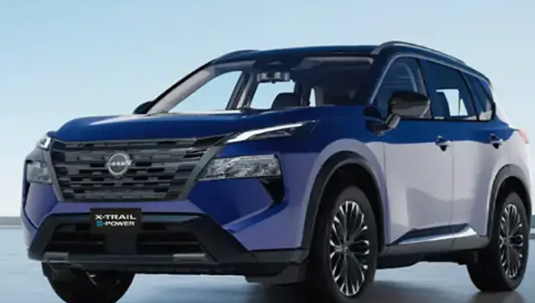
If we are wondering “are Nissan X-Trail reliable?”, the shortest useful answer is: yes, newer Nissan X-Trails can be reasonably reliable, but reliability varies dramatically depending on the generation, engine, transmission, and maintenance history.
That distinction matters.
A 2024 X-Trail e-POWER is a very different machine from a 2017 diesel X-Trail fitted with a continuously variable transmission. Treating them as though they have identical reliability is like judging every smartphone ever made by one troublesome model from ten years ago.
The latest evidence is fairly encouraging. In the 2025 What Car? Reliability Survey, the current-generation Nissan X-Trail finished 15th among 76 family SUVs, with a reliability score of 96.1%.
Older X-Trails, however, have a much more complicated history.
The previous 2014-2021 generation has appeared near the bottom of past reliability surveys, with owners reporting electrical, gearbox, battery, brake, engine and other problems.
So, should we buy one?
Let's dig beneath the badge and find out.
Content in this publication
- Are Nissan X-Trail Reliable Overall?
- How Reliable Is the Latest Nissan X-Trail?
- How Reliable Is the 2014-2021 Nissan X-Trail?
- Are Nissan X-Trail Engines Reliable?
- Are Diesel Nissan X-Trails Reliable?
- What Are the Most Common Nissan X-Trail Problems?
- Does the Nissan X-Trail Have Electrical Problems?
- Does the Nissan X-Trail Have Recall Problems?
- How Many Miles Can a Nissan X-Trail Last?
- Are Older Nissan X-Trails More Reliable Than New Ones?
- Which Nissan X-Trail Generation Is Most Reliable?
- How Does Nissan X-Trail Reliability Compare With Toyota?
- Is Nissan X-Trail Maintenance Expensive?
- How Can We Make a Nissan X-Trail Last Longer?
- What Should We Check Before Buying a Used Nissan X-Trail?
- Is a Nissan X-Trail a Good Used Car?
- Are Nissan X-Trail Reliable Enough for Families?
- Final Verdict: Are Nissan X-Trail Reliable?
- Frequently Asked Questions
Are Nissan X-Trail Reliable Overall?
We would describe the Nissan X-Trail as having average-to-good reliability overall, with newer examples substantially more reassuring than some older models.
The SUV itself is fundamentally practical. It offers family-friendly space, available seven-seat configurations in certain markets, straightforward everyday usability and relatively mainstream running costs.
But the X-Trail's reliability story has one elephant sitting in the middle of the garage: the CVT transmission used in many older versions.
Not every Nissan CVT fails. Far from it. Plenty of owners have covered high mileages without catastrophic problems. Yet complaints surrounding hesitation, shuddering, overheating and transmission failure have given certain generations a reputation that buyers should not casually dismiss.
The newest T33 generation changes the picture significantly. It uses newer petrol and electrified powertrains, including Nissan's e-POWER system, and current owner-survey data paints a considerably healthier picture.
Our Quick Nissan X-Trail Reliability Verdict
Broadly speaking, this is how we would view the range:
- Latest T33 X-Trail: generally promising reliability, although recalls and software updates should be checked.
- T32 X-Trail from 2014-2021/22: mixed reliability; purchase condition matters enormously.
- Older T31 X-Trail: mechanically simpler in many configurations and potentially durable, but age-related wear becomes increasingly important.
- CVT-equipped used X-Trails: require particularly careful inspection and documented maintenance.
- Manual versions: can remove one of the biggest areas of anxiety associated with older X-Trails.
- e-POWER versions: impressive concept and encouraging reliability data so far, but their long-term record is naturally less established than that of traditional petrol models.
In other words, the answer isn't simply “Nissan X-Trails are reliable” or “Nissan X-Trails are unreliable.”
The model year matters enormously.
How Reliable Is the Latest Nissan X-Trail?
This is where the story becomes considerably brighter.
The fourth-generation T33 X-Trail arrived in major markets from around 2022, bringing a completely redesigned platform, upgraded interior technology and Nissan's e-POWER electrified drivetrain.
Current reliability results suggest Nissan has made meaningful progress.
The latest-generation X-Trail achieved a 96.1% reliability score in What Car?'s survey of family SUVs up to five years old, ranking 15th in the category.
That's a respectable result rather than an industry-leading one.
For perspective, models including the Toyota RAV4 hybrid and Mazda CX-5 petrol scored higher in the same survey. Nevertheless, the result places the current X-Trail firmly away from the reliability basement occupied by its predecessor in some earlier surveys.
Is the Nissan X-Trail e-POWER Reliable?
Nissan's e-POWER drivetrain works differently from a conventional hybrid.
The petrol engine primarily generates electricity, while an electric motor drives the wheels. That gives the X-Trail an EV-like feeling without requiring us to plug it into a charger.
Mechanically, it's clever.
Whether clever automatically means reliable is another question.
Early evidence looks reasonably encouraging, but the technology remains relatively young compared with decades-old conventional petrol drivetrains. Buyers planning to keep a vehicle for 10 or 15 years therefore have less historical data to work with.
There is also an important current issue to know about.
In Australia, a recall announced on July 9, 2026 covers 13,795 T33 X-Trail e-POWER vehicles from the 2022-2026 model years. The Australian government recall notice says a software issue with the lithium-ion battery controller may cause the vehicle to enter fail-safe mode, potentially resulting in loss of motive power or preventing charging. Nissan dealers are instructed to reprogram affected vehicles free of charge.
That does not automatically make e-POWER unreliable. Recalls are common across today's highly computerized automotive industry. It does, however, make checking whether recall work has been completed essential.
Should the 2026 e-POWER Recall Worry Us?
It should make us attentive rather than terrified.
There's an important distinction between a manufacturer identifying a specific software defect and an entire drivetrain demonstrating widespread long-term mechanical failure.
The recall provides a defined repair: software reprogramming.
If we're buying a used e-POWER X-Trail, we would simply confirm the VIN with Nissan and ensure all outstanding campaigns have been completed before handing over the money.
How Reliable Is the 2014-2021 Nissan X-Trail?
This generation requires much more caution.
Known as the T32, it transformed the X-Trail from the relatively boxy SUV of earlier years into a softer, more crossover-like family vehicle.
It sold extremely well.
Unfortunately, reliability surveys have not always been kind to it.
A previous What Car? reliability study gave the 2014-2021 X-Trail a score of just 59.7%, with 39% of surveyed owners reporting problems. Electrical systems, brakes and interior trim were among the commonly reported areas.
Another used-car reliability survey subsequently recorded a 58.3% reliability rating, with 45% of surveyed X-Trails experiencing faults. Reported areas included air conditioning, battery, brakes, electronics, engine and gearbox problems.
Those are difficult numbers to ignore.
That doesn't mean every T32 is waiting to explode like a mechanical time bomb. Many perfectly healthy examples are still driving every day.
But when buying one, we need to inspect the individual car rather than simply trusting the Nissan badge.
Nissan X-Trail CVT Reliability
Here's where we'd pay the greatest attention.
Many automatic X-Trails use Nissan's Xtronic continuously variable transmission.
A CVT doesn't shift between conventional fixed gears in the same way as a traditional automatic gearbox. Instead, it continuously changes ratios to keep the engine operating efficiently.
When working properly, the result can be wonderfully smooth.
When something isn't right, however, drivers might experience symptoms such as juddering, delayed acceleration, unusually high engine revs, whining noises, hesitation or limp-mode behaviour.
The biggest concern is that major CVT repair or replacement can be expensive.
Maintenance therefore matters tremendously.
If we were looking at a used X-Trail with a CVT, a seller saying “the transmission oil lasts forever” wouldn't reassure us. It would do the opposite.
A documented history showing appropriate transmission servicing is far more comforting.
How Long Can a Nissan X-Trail CVT Last?
There is no honest universal mileage.
One carefully maintained CVT may cover very high mileage, while another subjected to neglected fluid, heavy towing, extreme heat or repeated hard use might fail much earlier.
That's why mileage alone isn't enough.
A 70,000-mile X-Trail with incomplete servicing can potentially represent a greater risk than a 110,000-mile vehicle accompanied by meticulous maintenance records.
Think of service history as the vehicle's medical file. Without it, we're examining the patient while blindfolded.
Are Nissan X-Trail Engines Reliable?
Generally, Nissan's X-Trail engines are not automatically the model's biggest weakness.
Nevertheless, the X-Trail has been sold worldwide with numerous engines, including petrol, naturally aspirated petrol, turbocharged petrol, diesel, mild-hybrid and e-POWER configurations.
That means reliability depends heavily on which version we're discussing.
Petrol X-Trail Reliability
A conventional petrol X-Trail can often be one of the simpler choices for private buyers.
Petrol engines generally avoid some of the diesel-specific emissions hardware associated with short-trip driving. For motorists mainly commuting around town, taking children to school or doing modest annual mileage, that simplicity can be attractive.
Naturally aspirated petrol engines in older X-Trails are particularly straightforward compared with today's complex electrified and heavily turbocharged powertrains.
You may be interested in reading How Long Nissan X-Trail Last? Lifespan and Mileage Guide
Straightforward doesn't mean maintenance-free, of course.
Oil level, cooling-system condition, spark plugs, belts, hoses, filters and ignition components still matter.
Would We Choose Petrol for Reliability?
For someone buying an older used X-Trail primarily for everyday suburban driving, we'd often lean toward a well-maintained petrol version over a neglected diesel or questionable CVT-equipped example.
Condition still beats configuration, though.
A beautifully maintained diesel can be a better purchase than an abused petrol car.
Are Diesel Nissan X-Trails Reliable?
Diesel X-Trails can make excellent long-distance vehicles.
Their torque suits motorway travel, hills and loaded family journeys, while diesel fuel economy can be attractive for high-mileage users.
The complications normally emerge when diesel vehicles spend their lives making short journeys.
Modern diesels may use diesel particulate filters, exhaust gas recirculation components, turbochargers and increasingly complicated emissions equipment. Those components work best when the vehicle regularly reaches proper operating temperature.
A diesel bought for endless five-minute school runs can become a mismatch between machinery and lifestyle.
If we're considering one, we'd check for smooth acceleration, warning lights, unusual smoke, turbo noises and evidence of proper servicing.
What Are the Most Common Nissan X-Trail Problems?
Across generations, the specific trouble spots change, but some areas deserve extra attention when we're evaluating a used X-Trail.
Transmission behaviour sits near the top of the list on CVT-equipped older vehicles. Electrical glitches are another recurring theme in owner-survey results for the T32 generation.
Battery issues can create symptoms that seem far more dramatic than the actual cause. Modern vehicles rely heavily on stable electrical voltage, so a weak 12-volt battery may sometimes produce warning messages or strange electronic behaviour.
Suspension wear is worth checking on high-mileage examples too, especially vehicles routinely driven over broken surfaces or used on rural roads.
Infotainment glitches, parking sensors, cameras and driver-assistance features deserve inspection on newer cars because increased technology inevitably means more electronic components to test.
Cooling-system health also matters. A clean engine bay isn't sufficient—we want evidence that coolant levels have been maintained and that the engine holds a stable operating temperature.
Finally, listen to the car.
A used vehicle often whispers its problems before it screams them.
Rattles, knocks, delayed engagement, vibration and inconsistent acceleration shouldn't be dismissed simply because the dashboard is currently free of warning lights.
Does the Nissan X-Trail Have Electrical Problems?
Electrical problems have appeared prominently in owner feedback concerning some older X-Trails.
The 2014-2021 generation's past reliability results included complaints involving both engine-related and non-engine electrical systems.
The difficulty with electrical problems is that they range from trivial to infuriating.
A weak battery might cost relatively little.
An intermittent module fault that disappears every time the technician connects diagnostic equipment can turn into the automotive equivalent of chasing a ghost through a haunted house.
When inspecting a used vehicle, therefore, we'd test everything.
Windows. Locks. Air conditioning. Cameras. Parking sensors. Infotainment. Heated seats. Electric tailgate. Dashboard menus. Driver-assistance systems.
Five extra minutes pressing buttons could uncover a problem that saves us hundreds later.
Does the Nissan X-Trail Have Recall Problems?
Several generations have been subject to recalls or service campaigns, which isn't particularly unusual for a vehicle sold globally in large numbers.
For example, some 2014-2015 vehicles were affected by concerns involving tailgate gas struts, while certain 2015-2016 vehicles required attention related to an oxygen sensor.
Earlier T30 X-Trails were also included in Australia's Takata airbag recall campaign. Nissan Australia lists X-Trails built between 2001 and 2007 among affected models.
And, as discussed earlier, Australian 2022-2026 e-POWER X-Trails are currently subject to the lithium-ion battery-controller software recall announced in July 2026.
The lesson is simple: always check the VIN.
A recall isn't necessarily a reason to reject a vehicle. An unresolved safety recall is something different.
Nissan notes that recall repairs are carried out free of charge through authorised dealerships, while government recall services in markets such as the UK also allow owners to check outstanding safety actions.
How Many Miles Can a Nissan X-Trail Last?
A properly maintained Nissan X-Trail can potentially travel well beyond 150,000 miles, and high-mileage examples exceeding that figure certainly exist.
But we wouldn't treat 150,000 or 200,000 miles as a guaranteed lifespan.
Vehicles don't have expiration dates stamped inside their engines.
Longevity is influenced by servicing, climate, driving style, transmission care, corrosion, accident history, towing, oil-change frequency and plain old luck.
Imagine two identical X-Trails.
One spends its life cruising gently along motorways, gets serviced on schedule and sleeps in a garage.
The second repeatedly tows heavy loads, misses oil changes and spends years battling potholes and salted winter roads.
Their odometers might display the same mileage while their mechanical condition tells entirely different stories.
Can a Nissan X-Trail Reach 200,000 Miles?
Yes, it can.
But when we're targeting extreme mileage, preventative maintenance becomes more important than the manufacturer's badge.
At that stage we'd rather own a thoroughly serviced X-Trail than a theoretically more reliable rival that has been mechanically neglected.
Are Older Nissan X-Trails More Reliable Than New Ones?
Not automatically, although older vehicles sometimes benefit from simplicity.
The T31 generation is interesting because it comes from an era when the X-Trail was more utilitarian and generally contained less sophisticated electronics.
Fewer sensors and modules can mean fewer electronic failure points.
On the other hand, age creates its own problems.
Rubber hardens. Seals deteriorate. Suspension bushes wear. Corrosion progresses. Electrical connections oxidize. Previous owners make questionable repairs.
So a 15-year-old X-Trail cannot be considered reliable merely because its mechanical design is simpler.
Age always collects its tax eventually.
Which Nissan X-Trail Generation Is Most Reliable?
If we were buying primarily on current reliability evidence, the T33 X-Trail introduced around 2022 would be our strongest choice.
Its 96.1% result in the recent What Car? family-SUV reliability study is considerably more reassuring than the historical results recorded by its predecessor.
However, buyers should verify outstanding recalls, particularly on e-POWER versions in markets affected by the 2026 battery-controller software campaign.
For older models, we'd focus less on identifying one magical year and more on finding the strongest individual vehicle.
Service history becomes increasingly powerful as a car ages.
Which Nissan X-Trail Years Should We Be Careful With?
Rather than declaring specific years universally “bad,” we'd exercise additional caution around the 2014-2021 T32 generation, especially examples with questionable automatic-transmission histories.
Its poor performance in historical owner surveys deserves attention.
That isn't the same as saying we should never buy one.
A well-maintained T32 at the right price can still make sense.
But we'd insist on an inspection rather than buying emotionally because the paint shines and the interior smells freshly detailed.
You may be interested in readingHow Long Nissan X-Trail Last? Lifespan and Mileage GuideYou may be interested in reading
 Kia Carnival Quality: Is It Really a High-Quality Family Vehicle?
How Does Nissan X-Trail Reliability Compare With Toyota?
Toyota has traditionally set a brutally high reliability benchmark in the SUV market.
The recent What Car? family-SUV results illustrate that difference: the Toyota RAV4 hybrid achieved 98.9%, while the latest X-Trail recorded 96.1%.
That's not a catastrophic gap.
Indeed, a 96.1% score is objectively respectable.
But buyers whose number-one priority is minimizing mechanical uncertainty might still feel more comfortable with Toyota's established hybrid track record.
The X-Trail counters with its own advantages, depending on market and specification, including interior versatility, available seven-seat packaging and Nissan's distinctive e-POWER driving experience.
Reliability isn't the only ingredient in a good car.
It's simply one of the most expensive ingredients to ignore.
Is Nissan X-Trail Maintenance Expensive?
The X-Trail sits in the mainstream SUV market, so routine servicing should generally cost less than maintaining a comparable premium European SUV.
Standard consumables such as filters, brake pads, tyres and fluids are not inherently exotic.
Where ownership costs can climb is when a major component fails.
Transmission replacement is the obvious example on older CVT vehicles.
Complex electrical faults can also become expensive if extensive diagnosis is required.
That is why the cheapest used X-Trail on an online marketplace isn't necessarily the cheapest X-Trail to own.
Sometimes paying more for an immaculate vehicle with documented servicing saves money later.
How Can We Make a Nissan X-Trail Last Longer?
Maintenance isn't glamorous, but reliability rarely is.
The owners who squeeze extraordinary mileage from vehicles usually do boring things exceptionally consistently.
Change the oil when required. Use the correct fluids. Investigate warning lights promptly. Maintain coolant. Keep tyres properly inflated. Don't ignore strange gearbox behaviour. Replace worn components before they damage something else.
And most importantly, follow the correct service schedule for the exact engine and transmission fitted to the vehicle.
A car does not know that we bought it cheaply.
Replacement components cost the same regardless.
Should We Change X-Trail CVT Fluid?
Transmission servicing should follow the requirements relevant to the exact model, year, transmission and market.
We would not assume that all X-Trails use identical service intervals.
For a used CVT-equipped X-Trail, we'd look carefully for documented fluid servicing and ideally have the transmission assessed if its history is uncertain.
Saving money by neglecting fluid maintenance only makes sense until the gearbox sends us the bill.
What Should We Check Before Buying a Used Nissan X-Trail?
A test drive should be long enough for the drivetrain to reach operating temperature.
We'd check cold starting, idle quality, throttle response, transmission engagement, acceleration from low speeds and behaviour under harder acceleration.
CVT-equipped vehicles deserve particular attention for juddering, hesitation, whining or abnormal rpm behaviour.
Then we'd inspect the electronics, climate control, parking systems, cameras and infotainment.
Underneath, we'd look for fluid leaks, damaged suspension components, tyre wear and corrosion.
Service records should support the mileage displayed.
Finally, we'd check the VIN for recall campaigns and strongly consider an independent pre-purchase inspection.
That last step can feel expensive when we're excited about buying a vehicle.
It feels extraordinarily cheap once it prevents us buying somebody else's £5,000 problem.
Is a Nissan X-Trail a Good Used Car?
Yes—but only if we buy intelligently.
A carefully maintained X-Trail can be spacious, comfortable and immensely useful for family life.
The problem is that used X-Trails vary enormously.
The 2014-2021 generation's historical reliability performance means we'd never recommend purchasing one solely because the price looks attractive.
Inspection matters.
Maintenance history matters.
Transmission condition matters.
On newer T33 models, the equation is more encouraging. Reliability survey data indicates substantial improvement, although current recall status should always be checked.
Are Nissan X-Trail Reliable Enough for Families?
For many families, yes.
The current generation's reliability score gives us considerably more confidence than the previous generation's historical results.
What we shouldn't do is generalize across twenty-plus years of X-Trail production.
When someone says, “My X-Trail has been flawless for 180,000 miles,” that experience can be completely genuine.
When another owner says, “My transmission failed and cost a fortune,” that can also be completely genuine.
Both stories can coexist because reliability is influenced by different engines, transmissions, generations, climates and maintenance histories.
The smart buyer doesn't ask only whether Nissan X-Trails are reliable.
The smart buyer asks:
Is this particular Nissan X-Trail reliable?
That's the question that protects our wallet.
Final Verdict: Are Nissan X-Trail Reliable?
So, are Nissan X-Trail reliable?
Overall, we'd say the current Nissan X-Trail is reasonably reliable, while older examples demand much more careful selection.
The latest T33 generation has produced encouraging owner-survey results, scoring 96.1% in the 2025 What Car? family-SUV reliability ranking. That's strong enough that we wouldn't dismiss the X-Trail on reliability grounds.
The 2014-2021 T32 is harder to recommend blindly. Historical surveys recorded substantially poorer reliability, including complaints involving electronics, batteries, engines, brakes and transmissions.
If we're buying used, we'd prioritize full servicing, smooth transmission operation, a clean diagnostic scan, completed recalls and an independent inspection.
Do that, and an X-Trail can be a dependable family companion rather than an expensive driveway ornament.
The X-Trail isn't universally bulletproof.
But choose the right one, look after it properly, and there's no reason it can't provide years of solid service.
Frequently Asked Questions
1. Are Nissan X-Trails generally reliable?
Yes, but reliability depends strongly on generation. The latest T33 X-Trail has performed respectably in recent reliability surveys, while the 2014-2021 T32 generation has a considerably more mixed record.
2. What is the biggest Nissan X-Trail reliability problem?
For many older automatic X-Trails, the CVT transmission is the component we'd investigate most carefully. Electrical, battery and engine-related faults have also appeared in owner reliability surveys.
3. Is the Nissan X-Trail e-POWER reliable?
Early reliability data is encouraging, although its long-term history is still developing. Australian 2022-2026 e-POWER models are currently affected by a 2026 software recall involving the lithium-ion battery controller, so affected owners and used-car buyers should ensure the required update has been completed.
You may be interested in readingHow Long Nissan X-Trail Last? Lifespan and Mileage GuideYou may be interested in reading
Kia Carnival Quality: Is It Really a High-Quality Family Vehicle?You may be interested in reading
 How Long Do Audi A6 Engines Last? A Complete Longevity Guide
4. How many miles can a Nissan X-Trail last?
A well-maintained X-Trail can potentially exceed 150,000 miles, and substantially higher mileages are possible. Maintenance quality, transmission care, driving conditions and mechanical history matter more than an arbitrary mileage limit.
5. Should I buy a used Nissan X-Trail?
Yes, provided the individual vehicle passes a thorough inspection. We'd particularly check service history, CVT behaviour where applicable, electronics, warning lights, suspension condition and outstanding recalls before buying.
If you want to know other articles similar to Are Nissan X-Trail Reliable? A Complete Reliability Guide you can visit the category Blog.
Kia Sportage Gas Tank Size: Complete Guide

BMW X1 Life Expectancy: How Long Does It Last?
Is the Toyota Yaris Cross Reliable? 2026 Guide
Kia Sportage Weight Guide: Curb, Kerb & GVWR

Toyota RAV4 Gas Tank Size (Chart & Explanation)

Toyota RAV4 Depreciation: Complete Resale Value Guide
Leave a Reply
More content of your interest