
How Long Nissan X-Trail Last? Lifespan and Mileage Guide

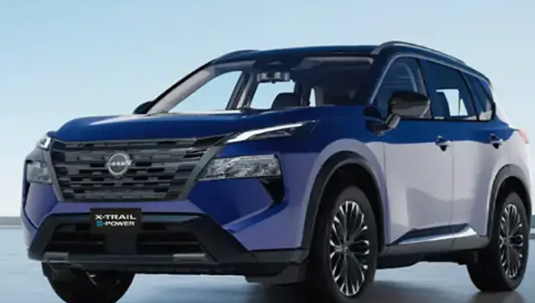
Buying a Nissan X-Trail often comes with one very practical question: how long does a Nissan X-Trail last? After all, reliability isn't simply about whether a vehicle behaves itself during the first few years. What really matters is how well it holds together after countless school runs, motorway journeys, supermarket trips, holidays, potholes, winters, and perhaps the occasional muddy adventure.
The encouraging news is that a properly maintained Nissan X-Trail can be a long-lasting SUV. As a reasonable real-world expectation, many well-cared-for examples can reach around 150,000 to 200,000 miles (240,000 to 320,000 km), while particularly well-maintained vehicles may travel beyond that. However, there is no guaranteed expiry mileage. An X-Trail with 90,000 badly maintained miles can be a riskier purchase than one showing 160,000 miles with an excellent service history.
That distinction matters.
The X-Trail has existed across several generations, with different petrol engines, diesel engines, manual transmissions, automatic gearboxes, CVTs, hybrid systems, and four-wheel-drive configurations depending on market and model year. Consequently, asking how long an X-Trail lasts is a little like asking how long a house lasts. The foundations matter, but so does everything that happens to it afterward.
Let's look at the realistic numbers, what usually determines the vehicle's lifespan, and how we can help an X-Trail stay on the road for as long as possible.
Content in this publication
- How Many Miles Can a Nissan X-Trail Last?
- How Many Years Does a Nissan X-Trail Last?
- What Determines Nissan X-Trail Life Expectancy?
- Why Maintenance History Matters More Than Mileage
- How Long Does the Nissan X-Trail Engine Last?
- How Long Does a Nissan X-Trail CVT Last?
- Does 4WD Reduce Nissan X-Trail Longevity?
- When Does a Nissan X-Trail Become High Mileage?
- What Usually Wears Out Before the Engine?
- Can Rust Shorten an X-Trail's Life?
- Does Driving Style Affect Nissan X-Trail Lifespan?
- Is Motorway Mileage Better Than City Mileage?
- How Long Does a Nissan X-Trail Hybrid Last?
- Is 100,000 Miles Too Much for a Used Nissan X-Trail?
- Should You Buy an X-Trail With 150,000 Miles?
- Signs an X-Trail May Not Last Much Longer
- How to Make a Nissan X-Trail Last Longer
- Is It Worth Keeping an Older Nissan X-Trail?
- Nissan X-Trail Lifespan vs Reliability
- When Is a Nissan X-Trail Too Old?
- Final Verdict: How Long Does a Nissan X-Trail Last?
- Frequently Asked Questions
How Many Miles Can a Nissan X-Trail Last?
A sensible lifespan target for a maintained Nissan X-Trail is approximately 150,000–200,000 miles. Converted to kilometres, that's roughly 240,000–320,000 km.
That doesn't mean the vehicle suddenly becomes unusable at 200,001 miles.
Mileage is better viewed as accumulated wear rather than a countdown clock. Some X-Trails may require expensive repairs well before 150,000 miles, while others can continue beyond 200,000 miles without requiring engine or transmission replacement.
Maintenance history often explains the difference.
A vehicle that's had regular oil changes, correct transmission servicing, cooling-system maintenance, suspension repairs, and prompt attention to warning signs stands a much better chance of reaching high mileage.
Ignore servicing, meanwhile, and even an otherwise durable drivetrain can age like milk left on a windowsill.
Can a Nissan X-Trail Reach 200,000 Miles?
Yes, an X-Trail can reach 200,000 miles, but reaching that figure in healthy condition depends heavily on how the vehicle has been treated.
At that sort of mileage, we shouldn't expect every original component to remain untouched. Suspension bushings, bearings, alternators, starter motors, air-conditioning components, sensors, hoses, engine mounts, and other wear-related parts may already have required replacement.
That is normal.
A long-lasting vehicle isn't necessarily one that never breaks. Rather, it's one that remains economically repairable as components gradually wear out.
This distinction becomes especially important when evaluating older X-Trails. A replacement wheel bearing doesn't automatically indicate an unreliable car. A failing transmission combined with corrosion, engine problems, and electrical faults is a very different story.
Can an X-Trail Reach 300,000 Miles?
Possible? Yes.
Typical? No.
Reaching 300,000 miles (about 483,000 km) puts an X-Trail firmly into exceptional high-mileage territory. At that point, maintenance quality, driving conditions, climate, previous repairs, and sheer mechanical luck all become significant.
An owner aiming for this mileage should expect more than routine servicing. Components outside the engine itself will eventually age.
Think of the X-Trail as a marathon runner. Good shoes and training may keep the runner moving, but knees, joints, muscles, and tendons still endure thousands of impacts. Cars work much the same way.
How Many Years Does a Nissan X-Trail Last?
Mileage only tells half the story.
For someone driving around 10,000–12,000 miles per year, an X-Trail capable of reaching 150,000–200,000 miles theoretically represents roughly 13–20 years of use.
Someone covering 20,000 motorway miles annually could reach those figures considerably sooner. Conversely, a lightly driven X-Trail may take decades to accumulate 150,000 miles.
Age introduces its own problems, though.
Rubber seals deteriorate. Plastic becomes brittle. Wiring connections can corrode. Paint protection deteriorates. Suspension bushes harden. Moisture attacks metal. Batteries weaken.
So an 18-year-old X-Trail with only 70,000 miles isn't automatically better than a seven-year-old example with 120,000 motorway miles.
Mileage vs Age: Which Matters More?
Neither should be considered in isolation.
When we're evaluating a used X-Trail, we want to examine mileage, age, maintenance history, driving conditions, and mechanical condition together.
Highway mileage can actually be relatively gentle. The engine reaches operating temperature, the transmission isn't constantly shifting, and the brakes aren't repeatedly stopping a heavy SUV.
Short-distance urban driving can be harsher despite producing fewer miles. Engines spend more time cold, batteries get less opportunity to recharge fully, brakes work harder, and some diesel emissions systems dislike repeated short journeys.
The odometer gives us a number.
The service history tells us the story behind it.
What Determines Nissan X-Trail Life Expectancy?
No single factor decides whether an X-Trail lasts 100,000 miles or twice that amount.
Instead, durability comes from dozens of small decisions made throughout the vehicle's life.
Here's where we'd concentrate our attention:
- Consistent engine-oil and filter changes
- Correct transmission or CVT maintenance where applicable
- Proper coolant servicing
- Immediate investigation of overheating
- Suitable driving habits
- Corrosion prevention and inspection
- Timely replacement of worn suspension components
- Correct tyre pressures and alignment
- Appropriate maintenance of diesel emissions equipment
- Repairing leaks before fluid levels become dangerously low
- Using fluids that meet Nissan's required specifications
- Keeping complete service and repair records
None of those items sounds particularly glamorous. That's precisely the point. Long vehicle life usually isn't created by one miraculous repair. It's built through boring consistency.
Why Maintenance History Matters More Than Mileage
Suppose we're comparing two used X-Trails.
Vehicle A has covered 80,000 miles but has patchy maintenance records, overdue oil changes, suspicious transmission behaviour, mismatched tyres, and coolant below the recommended level.
Vehicle B shows 130,000 miles but comes with detailed invoices, regular servicing, quality tyres, clean fluids, and evidence that previous owners repaired problems promptly.
Which would we rather own?
In many situations, Vehicle B.
That illustrates why buying exclusively according to mileage can be misleading.
Mileage measures distance travelled. It does not measure neglect.
Engine Oil Is Cheap Insurance
If longevity is our goal, engine lubrication deserves special attention.
Oil lubricates moving components while also helping manage heat, contaminants, and deposits. Over time, its protective properties deteriorate. Running excessively old oil increases the chances of sludge, accelerated internal wear, and lubrication-related trouble.
The correct servicing interval depends on the engine, model year, market, operating conditions, and manufacturer's schedule.
We shouldn't blindly apply one universal oil interval to every X-Trail ever built. Instead, follow the servicing requirements applicable to the particular vehicle and consider more frequent attention when the vehicle regularly experiences severe conditions.
Don't Ignore Oil Consumption
An older engine can consume oil without leaving an obvious puddle underneath the vehicle.
That's why checking the dipstick remains worthwhile between services.
If oil consumption suddenly increases, we shouldn't simply keep pouring more oil into the engine indefinitely. Finding the underlying reason early can prevent a minor issue from becoming an expensive one.
How Long Does the Nissan X-Trail Engine Last?
With proper maintenance and no major design-specific failure, an X-Trail engine can potentially remain useful throughout much or all of the vehicle's 150,000–200,000-mile expected high-mileage lifespan.
But we need to be careful with sweeping statements.
The X-Trail hasn't used one engine throughout its history. Different countries received different petrol and diesel powertrains, and later generations introduced electrified configurations.
Their maintenance needs aren't identical.
What remains broadly true is that overheating, insufficient lubrication, ignored warning lights, incorrect fluids, and delayed maintenance can dramatically shorten engine life regardless of engine type.
Petrol X-Trail Longevity
Petrol engines can be attractive to long-term owners because they avoid some diesel-specific emissions equipment.
That's not the same as saying they're maintenance-free.
Cooling-system condition, oil consumption, ignition components, timing-system health where relevant, sensors, gaskets, and general servicing still deserve attention.
A petrol X-Trail that's regularly serviced and frequently driven long enough to reach proper operating temperature has a reasonable foundation for high mileage.
You may be interested in reading Kia Carnival Quality: Is It Really a High-Quality Family Vehicle?
Diesel X-Trail Longevity
A diesel X-Trail may also cover substantial mileage, particularly when it regularly performs longer journeys.
However, modern diesel ownership can involve additional systems that require careful consideration. Depending on year and specification, components related to turbocharging, exhaust-gas recirculation, diesel particulate filtration, fuel injection, and other emissions equipment can become expensive as mileage grows.
Repeated short-distance driving can be particularly undesirable for some diesel particulate-filter systems because the vehicle may struggle to complete the conditions needed for proper regeneration.
For drivers routinely travelling longer motorway distances, diesel can make considerably more sense than it does for someone whose daily trip lasts ten minutes.
How Long Does a Nissan X-Trail CVT Last?
Transmission condition is one of the most important subjects when discussing X-Trail longevity.
Certain X-Trail generations and markets have used continuously variable transmissions. CVT reliability cannot sensibly be reduced to one guaranteed mileage figure because condition varies according to transmission design, model year, servicing, heat exposure, towing history, usage, and previous treatment.
A properly operating CVT should accelerate smoothly without excessive hesitation, abnormal shuddering, slipping sensations, unusual whining, warning messages, or obvious overheating behaviour.
When we're buying used, transmission history can be every bit as important as engine history.
Does CVT Maintenance Affect X-Trail Lifespan?
Absolutely.
Transmission fluid isn't merely coloured liquid sitting inside a sealed box forever. It performs important lubrication, cooling, hydraulic, and friction-management functions.
The important part is using the correct fluid specification and servicing procedures applicable to the exact transmission.
Generic assumptions can become expensive here.
If we're considering a used CVT-equipped X-Trail, documentation showing appropriate transmission maintenance is reassuring. Conversely, an owner claiming the transmission "never needs touching" shouldn't automatically give us confidence.
A neglected transmission can turn an otherwise attractive used SUV into an expensive driveway ornament.
Does 4WD Reduce Nissan X-Trail Longevity?
Not necessarily.
Four-wheel-drive systems introduce additional mechanical components, but that doesn't mean a 4WD X-Trail automatically has a shorter life.
Usage matters.
An X-Trail that spends its life travelling ordinary roads may place relatively modest stress on its drivetrain. One repeatedly used on rough tracks, driven aggressively through mud, or fitted with inappropriate tyres can face a different workload entirely.
Matching tyres is particularly important on many AWD or 4WD systems because large differences in rolling circumference can create unwanted drivetrain stress.
Off-road use also brings mud, water, impacts, and underbody damage into the picture.
When Does a Nissan X-Trail Become High Mileage?
We'd generally start considering an X-Trail high mileage somewhere around 100,000 miles, although that label doesn't mean the vehicle is approaching immediate failure.
In modern vehicle ownership, 100,000 miles is more of an inspection milestone than a death sentence.
At this point, we become especially interested in maintenance quality and major wear items.
By 150,000 miles, condition matters substantially more than appearances. A polished dashboard and shiny paint can't compensate for a transmission that's beginning to fail or an engine that's regularly losing coolant.
What Usually Wears Out Before the Engine?
The engine often attracts most of our attention because it's the most obvious major mechanical component.
Yet plenty of other parts may wear out first.
An aging X-Trail can eventually need suspension joints, bushes, shock absorbers, wheel bearings, brake components, engine mounts, sensors, electrical components, air-conditioning repairs, exhaust parts, hoses, batteries, or charging-system components.
None automatically signals the end of the vehicle.
The more useful question is whether the repair makes financial sense relative to the X-Trail's overall condition and value.
That's how most vehicles really reach the end of their lives—not because the odometer reaches some magical number, but because several expensive problems arrive together.
Can Rust Shorten an X-Trail's Life?
Definitely.
Rust can potentially matter more than engine mileage, particularly in regions where roads are heavily salted during winter or vehicles spend years near coastal environments.
Surface corrosion and serious structural deterioration are very different things.
We're especially interested in corrosion around structurally important areas, suspension mounting points, subframes, brake lines, and other safety-critical components.
Mechanical components can often be replaced.
Extensive structural corrosion can turn an otherwise healthy drivetrain into a vehicle no longer worth saving.
Why Washing the Underside Matters
Owners living in areas with road salt should pay attention to the underside rather than merely polishing visible body panels.
Salt and moisture can sit underneath the vehicle long after the exterior looks clean.
The prettiest X-Trail in the neighbourhood isn't necessarily the healthiest one underneath.
Does Driving Style Affect Nissan X-Trail Lifespan?
Absolutely.
Mechanical wear accumulates partly according to how the driver asks the vehicle to work.
Hard acceleration on a cold engine, aggressive braking, constant full-throttle driving, overloaded towing, repeated kerb impacts, and ignoring abnormal noises all add unnecessary stress.
That doesn't mean we need to drive everywhere as if we're carrying a wedding cake on the passenger seat.
Normal acceleration is fine.
The key is mechanical sympathy. Let fluids reach normal operating temperature before placing heavy demands on the drivetrain, keep the vehicle within its rated capabilities, and investigate changes in behaviour rather than pretending they don't exist.
Cars often whisper before they scream.
Is Motorway Mileage Better Than City Mileage?
In many respects, yes.
A vehicle covering 100 motorway miles in one journey experiences relatively few cold starts, gear changes, braking events, and low-speed manoeuvres.
A vehicle covering the same distance through dozens of five-mile urban trips operates under very different conditions.
Short journeys can also mean greater condensation, prolonged cold-running periods, more battery stress, and additional challenges for certain diesel emissions systems.
This is why we shouldn't automatically fear a higher-mileage former motorway vehicle with excellent maintenance documentation.
Sometimes those miles are relatively gentle ones.
How Long Does a Nissan X-Trail Hybrid Last?
Newer electrified X-Trail models introduce another variable: hybrid-system durability.
Hybrid vehicles combine internal-combustion components with electric motors, power electronics, and a traction battery. Battery capacity naturally changes with age and use, but predicting an exact lifespan in miles isn't responsible because degradation depends on temperature, usage, battery management, charging cycles where applicable, and system design.
For long-term ownership, the manufacturer's hybrid-component warranty applicable to the specific country and model year should be checked carefully.
If we're purchasing a used hybrid X-Trail, a proper diagnostic inspection becomes increasingly valuable as the vehicle ages.
Is 100,000 Miles Too Much for a Used Nissan X-Trail?
No.
A 100,000-mile X-Trail can still have plenty of useful life remaining.
But at this mileage, we want evidence—not promises.
A seller saying, "It has always been reliable," is pleasant to hear. A folder containing dated invoices, fluid changes, inspection records, transmission work, and replacement parts is much more useful.
You may be interested in readingKia Carnival Quality: Is It Really a High-Quality Family Vehicle?You may be interested in reading
 How Long Do Audi A6 Engines Last? A Complete Longevity Guide
We should also consider whether upcoming maintenance has already been performed.
A supposedly cheap high-mileage vehicle can become expensive quickly if it immediately needs tyres, brakes, suspension work, transmission servicing, and several fluid changes.
Price should reflect condition.
Should You Buy an X-Trail With 150,000 Miles?
Potentially, yes.
At 150,000 miles, however, we'd want a thorough pre-purchase inspection before committing.
We're no longer buying based mainly on the reputation of the model. We're buying one individual machine with its own history.
By this stage, two visually identical X-Trails can be worlds apart mechanically.
The strongest candidate would have consistent servicing, no serious corrosion, healthy transmission behaviour, no overheating history, good-quality tyres, clean fluid condition, sensible previous ownership, and no collection of unresolved warning lights.
If everything checks out and the price accounts for age and mileage, a 150,000-mile X-Trail can still make sense.
Signs an X-Trail May Not Last Much Longer
High mileage itself isn't necessarily frightening.
Multiple symptoms appearing simultaneously are more concerning.
An X-Trail experiencing serious engine noise, persistent overheating, substantial oil or coolant loss, severe transmission shuddering, major corrosion, repeated electrical failures, and neglected suspension repairs may require more investment than its market value can justify.
Likewise, a dashboard full of warning lights shouldn't be treated like decorative Christmas illumination.
Diagnostics matter.
A warning light doesn't always indicate catastrophic failure, but ignoring it eliminates our chance of discovering the problem while it's still manageable.
How to Make a Nissan X-Trail Last Longer
Longevity isn't complicated in principle.
Follow the correct maintenance schedule. Check fluid levels. Investigate leaks. Avoid overheating. Maintain the transmission correctly. Use quality parts and appropriate fluids. Keep tyres properly inflated. Repair suspension problems. Inspect corrosion. Don't ignore warning lights.
More importantly, pay attention to changes.
We learn the normal personality of a vehicle after driving it regularly. We know how the engine sounds, how quickly it starts, how the transmission responds, how the steering feels, and where the temperature gauge normally sits.
When something suddenly changes, that's useful information.
A new vibration isn't something to "see if it disappears" for six months.
Mechanical problems rarely become cheaper through neglect.
Is It Worth Keeping an Older Nissan X-Trail?
This becomes an economic question rather than purely a reliability question.
Suppose our 15-year-old X-Trail needs £600 worth of suspension and brake work. The immediate reaction might be, "It's old—why spend money on it?"
But what replaces it?
If the vehicle otherwise has a healthy engine, good transmission, solid body, known history, and no major upcoming problems, spending money on repairs could still be significantly cheaper than replacing it with another used SUV of uncertain history.
The calculation changes when expensive problems begin stacking up.
An aging vehicle needing major transmission work, structural rust repairs, air-conditioning repairs, tyres, suspension work, and engine repairs simultaneously is no longer the same proposition.
The question isn't simply, "How much is this repair?"
It's, "What condition will we have after spending the money?"
Nissan X-Trail Lifespan vs Reliability
Lifespan and reliability aren't exactly the same thing.
A vehicle can achieve enormous mileage while needing frequent repairs along the way. Another vehicle might travel 140,000 miles with little drama before encountering one repair expensive enough to make continued ownership uneconomical.
Therefore, saying an X-Trail "lasts 200,000 miles" shouldn't be interpreted as saying it will cover 200,000 miles without requiring replacement components.
Every vehicle ages.
Long lifespan means that the engine, transmission, chassis, electrical system, and supporting components remain repairable enough for continued ownership to make sense.
What Is More Important Than the Odometer?
Overall condition.
That's especially true once we're shopping above 100,000 miles.
A well-maintained high-mileage X-Trail can be a far smarter purchase than a neglected low-mileage alternative.
We'd happily trade 30,000 fewer miles for documented servicing, smooth transmission operation, a clean underside, consistent tyres, and an owner who fixed problems promptly.
Paperwork isn't exciting.
Neither is spending thousands fixing somebody else's neglect.
When Is a Nissan X-Trail Too Old?
There isn't one age at which every X-Trail becomes too old.
A 20-year-old vehicle in excellent condition can remain useful. A 10-year-old vehicle that's been neglected, crashed, rusted, overheated, and poorly repaired might already be nearing the end.
Instead of setting an arbitrary age limit, consider three factors: safety, reliability, and economics.
Can the vehicle remain safe?
Can it remain reasonably dependable?
Does maintaining it still make financial sense?
If the answer to all three remains yes, age alone isn't necessarily a reason to retire it.
Final Verdict: How Long Does a Nissan X-Trail Last?
So, how long can a Nissan X-Trail last?
A realistic target for a properly maintained example is around 150,000–200,000 miles, or approximately 240,000–320,000 km. Some vehicles may exceed 200,000 miles substantially, while poorly maintained examples may develop expensive problems much earlier.
In years, that could mean roughly 13–20 years or more, depending heavily on annual mileage, climate, corrosion, maintenance, and previous use.
But we'd avoid treating those numbers as promises.
The biggest lesson is simpler: condition beats mileage.
An X-Trail doesn't wake up on its 150,000th mile and decide retirement has arrived. Vehicles deteriorate gradually. Regular servicing, correct fluids, sensible driving, corrosion control, transmission care, and prompt repairs determine whether that deterioration is slow and manageable or fast and expensive.
If we're buying used, a detailed maintenance history may tell us more than the mileage displayed on the dashboard. And if we already own an X-Trail? Caring for the small things today gives us the best chance of avoiding very large things tomorrow.
A maintained X-Trail can be less like a disposable appliance and more like a trusted pair of boots: eventually worn around the edges, perhaps repaired more than once, but still perfectly capable of taking us a long way.
Frequently Asked Questions
1. How many miles is a Nissan X-Trail good for?
A properly maintained Nissan X-Trail can reasonably target around 150,000–200,000 miles. Some examples may go beyond 200,000 miles, but longevity depends on the engine and transmission fitted, maintenance history, driving conditions, corrosion, and previous ownership.
2. Is 100,000 miles high for a Nissan X-Trail?
We can consider 100,000 miles high mileage, but it isn't automatically excessive. A well-maintained X-Trail with 100,000 miles may still provide years of service. At this mileage, maintenance documentation and mechanical condition become more important than the odometer alone.
3. Can a Nissan X-Trail last 20 years?
Yes, it's possible for an X-Trail to remain usable for 20 years or longer. Vehicles driven relatively few miles annually have the best mathematical chance, although age-related deterioration such as corrosion, degraded rubber components, suspension wear, and electrical issues still needs attention.
4. What is the biggest factor affecting X-Trail longevity?
Maintenance is among the most important factors. Regular engine servicing, correct transmission care, maintaining the cooling system, addressing leaks and warning lights early, and preventing severe corrosion can significantly influence how long an X-Trail remains economically usable.
You may be interested in readingKia Carnival Quality: Is It Really a High-Quality Family Vehicle?You may be interested in reading
How Long Do Audi A6 Engines Last? A Complete Longevity GuideYou may be interested in reading
 Alfa Romeo Tonale Reliability: Is It Actually Dependable?
5. Is a high-mileage Nissan X-Trail worth buying?
It can be. A high-mileage X-Trail with comprehensive service records, smooth engine and transmission operation, minimal corrosion, and no major unresolved faults may be better value than a low-mileage example that has been neglected. A professional pre-purchase inspection is particularly worthwhile on vehicles above 100,000 miles.
If you want to know other articles similar to How Long Nissan X-Trail Last? Lifespan and Mileage Guide you can visit the category Blog.
Is Mitsubishi Pajero Sport a Good Car? A Complete Ownership Review
BYD Shark 6 Reliability: How Dependable Is This Hybrid Ute?
BYD Shark 6 Insurance Cost: What Should You Expect?
Mitsubishi Pajero Sport Reliability: Is It a Dependable SUV?
Mitsubishi Pajero Sport Years to Avoid: A Used Buyer’s Guide

Is Infiniti QX60 Reliable? A Complete Reliability Guide
Leave a Reply
More content of your interest