
Audi A6 Fuel Tank Capacity: Complete Size and Range Guide

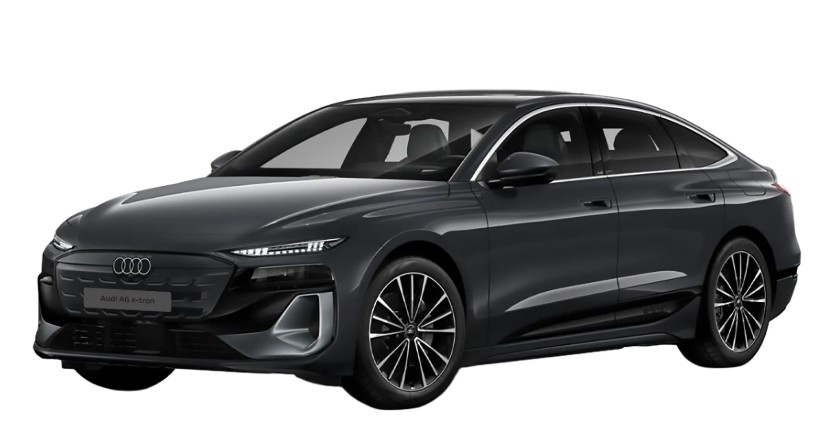
The Audi A6 fuel tank capacity is not one fixed number across every A6. That sounds inconvenient, but it makes sense once we remember how broad the A6 family has become. Different generations, petrol and diesel engines, plug-in hybrids, body styles, drivetrain layouts, and regional specifications can all change how much fuel the car carries.
If we simply want a quick answer, many recent Audi A6 combustion models have tanks in the neighborhood of 56 to 73 litres, while plug-in hybrid versions generally use smaller tanks because battery hardware occupies some of the space that would otherwise be available for fuel storage.
For example, Audi's technical data for the previous-generation C8 A6 shows a 63-litre standard tank with a 73-litre optional tank on certain versions. By comparison, the newer A6 Sedan introduced in 2025 can have a 56-litre petrol tank, while a current diesel specification lists 60 litres. The latest A6 e-hybrid uses an even smaller 46-litre tank.
So, which figure applies to your car?
Let's untangle the numbers.
Content in this publication
- What Is the Audi A6 Fuel Tank Capacity?
- Why Audi A6 Fuel Tank Sizes Vary
- Audi A6 C8 Fuel Tank Capacity
- New Audi A6 Fuel Tank Capacity
- Audi A6 e-Hybrid Fuel Tank Capacity
- Audi A6 Sedan vs Avant Fuel Tank Capacity
- Audi A6 Diesel Fuel Tank Capacity
- Audi A6 Petrol Fuel Tank Capacity
- Litres vs Gallons: Understanding A6 Tank Specifications
- How Much Does It Cost to Fill an Audi A6?
- Does the Fuel Gauge Use the Entire Tank Capacity?
- Why Your A6 May Take Less Fuel Than Its Listed Capacity
- Does Quattro Change Audi A6 Fuel Tank Capacity?
- How Fuel Tank Capacity Affects Audi A6 Range
- How to Improve Audi A6 Range per Tank
- Should We Choose an Audi A6 Based on Tank Capacity?
- How to Find the Exact Fuel Tank Capacity of Your Audi A6
- Final Thoughts on Audi A6 Fuel Tank Capacity
- Frequently Asked Questions
What Is the Audi A6 Fuel Tank Capacity?
For most owners, the useful answer is that an Audi A6 normally carries roughly 46 to 73 litres of fuel, depending on generation and powertrain.
The variation is substantial enough that we should never assume another A6 owner's figure automatically applies to ours.
A modern petrol A6 may carry 56 litres. A diesel can have a 60-litre tank. An earlier C8 can use 63 litres or, on certain specifications, a larger 73-litre tank. Meanwhile, newer plug-in hybrids can carry only 46 litres because they combine the combustion engine with a large high-voltage battery.
Think of the A6 name as an umbrella rather than one mechanical package. Two cars with the same badge on the boot can hide very different equipment underneath.
Audi A6 Fuel Tank Capacity at a Glance
Here is a useful snapshot of capacities found in official Audi documentation:
| Audi A6 version | Approximate fuel tank capacity |
|---|---|
| Newer A6 Sedan TFSI petrol | 56 L / 14.8 US gal |
| Newer A6 Sedan TDI diesel | 60 L / 15.9 US gal |
| Newer A6 Sedan e-hybrid | 46 L / 12.2 US gal |
| Newer A6 Avant e-hybrid | 46 L / 12.2 US gal |
| Previous-generation C8 A6 | 63 L / 16.6 US gal |
| Certain C8 configurations | Up to 73 L / 19.3 US gal |
Audi's documents confirm all of these figures, but the exact specification depends on engine, production year, equipment and market.
That final qualification matters. Search online for five minutes and we may find 56, 60, 63 and 73 litres all described as the "Audi A6 tank size." None is necessarily wrong. They're simply describing different cars.
Why Audi A6 Fuel Tank Sizes Vary
Fuel tanks have to coexist with a surprising amount of hardware.
Underneath an A6 we may find the exhaust system, rear suspension, quattro drivetrain components, emissions hardware, batteries and structural elements competing for packaging space. Change the powertrain and suddenly the jigsaw puzzle underneath the floor changes too.
That's why tank capacity is linked to far more than whether the badge says "A6."
Engine Choice Matters
Petrol and diesel cars can receive different tank capacities.
The latest technical specifications illustrate the point nicely. Audi lists a 56-litre fuel tank for one 150 kW TFSI A6 Sedan configuration, while its 150 kW TDI counterpart is listed with 60 litres.
Four litres does not sound dramatic, but on a fuel-efficient motorway journey it can represent dozens of extra miles between filling stations.
Optional Larger Tanks Can Complicate the Answer
This is one reason online specifications sometimes appear contradictory.
An Audi technical sheet for the previous-generation A6 35 TDI lists a 63-litre standard fuel tank and a 73-litre optional tank.
In other words, even two cars with apparently similar engines and model years may not necessarily have identical capacities.
It is a little like ordering the same suitcase in regular and extended versions: from the outside the difference isn't obvious, but the amount we can carry certainly is.
Audi A6 C8 Fuel Tank Capacity
The C8-generation Audi A6 is where many current searches for fuel capacity originate.
Introduced for the 2018 model era, the C8 brought mild-hybrid technology, increasingly sophisticated electronics and a wide selection of petrol, diesel and later plug-in-hybrid powertrains.
Audi documentation for early C8 models repeatedly lists an approximate 63-litre fuel capacity.
However, 63 litres should not automatically be treated as universal.
63-Litre Audi A6 Tank
A 63-litre tank equals approximately 16.6 US gallons.
This capacity is particularly common in C8 technical specifications. It offers a useful compromise: enough fuel for serious motorway range without carrying unnecessary fuel weight around town.
If an A6 averages 7.0 L/100 km, a simple mathematical calculation gives:
63 ÷ 7 × 100 = 900 km
That is approximately 559 miles.
Real range will normally be lower because drivers rarely use every last drop of fuel, and traffic, weather, speed and terrain all alter consumption.
73-Litre Audi A6 Fuel Tank
Some C8 specifications could be equipped with a larger 73-litre tank, equivalent to roughly 19.3 US gallons. Audi documentation explicitly identifies 73 litres as an optional capacity for certain configurations.
That extra 10 litres is meaningful.
Using the same hypothetical 7.0 L/100 km consumption figure, the mathematical range rises to roughly 1,043 km, or about 648 miles.
That's why a large-tank A6 can feel born for continental touring. Fill it, point the nose toward the horizon and motorway service stations suddenly become occasional acquaintances rather than regular companions.
How Do We Know If an A6 Has the 73-Litre Tank?
The safest method is to check the specification associated with the exact vehicle rather than estimating from the badge.
The owner's documentation, vehicle build information or Audi dealer system may identify its original configuration.
We should not rely exclusively on how much fuel fits during one refill because the car may still have several litres remaining when the pump is inserted.
New Audi A6 Fuel Tank Capacity
The latest combustion-engine A6 generation changes the numbers again.
Audi introduced a new A6 Sedan and Avant family during 2025, and tank sizes vary with powertrain rather than following one universal capacity.
This is particularly important for anyone moving from a C8. We should not assume that because the old car had 63 or 73 litres, its successor carries the same amount.
New Audi A6 Petrol Tank Capacity
Official Audi technical data lists a 56-litre tank, equivalent to approximately 14.8 US gallons, for the 150 kW A6 Sedan TFSI S tronic specification.
Compared with a 63-litre C8 tank, that is seven litres smaller.
Does that automatically mean worse touring range? Not necessarily.
Tank capacity is only one half of the equation. Efficiency is the other. A smaller tank paired with improved consumption can still produce perfectly respectable driving range.
New Audi A6 Diesel Tank Capacity
A newer A6 Sedan TDI specification uses a 60-litre tank, approximately 15.9 US gallons. Audi's technical sheet gives combined fuel consumption of roughly 4.8–5.6 L/100 km for the referenced model.
Using those official consumption boundaries simply as an illustrative calculation, a theoretical full-tank range could exceed 1,000 km under favorable conditions.
That helps explain why diesel A6 models have traditionally appealed to high-mileage drivers. Their magic isn't merely the size of the tank. It's what they can squeeze from every litre.
Audi A6 e-Hybrid Fuel Tank Capacity
Plug-in hybrids change the packaging equation considerably.
Instead of merely finding space for a combustion powertrain and fuel tank, engineers also need to accommodate a substantial high-voltage battery.
The latest A6 e-hybrid demonstrates the result clearly.
Why the A6 Plug-In Hybrid Has a Smaller Tank
Audi lists a 46-litre fuel tank, approximately 12.2 US gallons, for current A6 Sedan e-hybrid models. The equivalent Avant e-hybrid technical documentation also lists 46 litres.
At first glance, 46 litres seems small for a large executive car.
But judging a PHEV only by its petrol tank is like judging a smartphone only by how long the charging cable is. We are ignoring half the system.
Audi's newer A6 plug-in hybrids combine that petrol tank with a high-voltage battery rated at 25.9 kWh gross and 20.7 kWh net, and Audi says certain configurations can travel more than 100 km electrically under the applicable test cycle.
For owners who charge regularly, the petrol engine may spend much of the working week resting.
Is a 46-Litre Tank Enough?
For typical PHEV use, absolutely.
Suppose our commute is 25 km each way and we recharge overnight. Much of that journey could potentially occur electrically. Petrol then becomes a long-distance safety net rather than the car's only energy source.
On the other hand, someone who never plugs the car in loses much of that advantage. Carrying hybrid hardware while relying heavily on petrol is not the scenario in which a plug-in hybrid shines brightest.
Audi A6 Sedan vs Avant Fuel Tank Capacity
Many buyers wonder whether choosing the A6 Avant estate automatically means getting a larger fuel tank.
Not necessarily.
Tank capacity is usually more closely related to powertrain specification than luggage-space aspirations. In the current plug-in-hybrid range, for example, Audi documentation lists 46 litres for both the Sedan and Avant e-hybrid.
So the longer roof doesn't magically hide an extra fuel reservoir underneath.
We should compare exact engine-to-engine specifications rather than assuming Avant equals bigger tank.
Audi A6 Diesel Fuel Tank Capacity
Diesel A6 models deserve special attention because they can deliver some of the longest real-world ranges in the family.
A relatively large tank combined with low motorway fuel consumption is a beautiful recipe for covering distance.
Previous-generation diesel models could use the familiar 63-litre tank, with some specifications offering 73 litres. A newer 150 kW TDI Sedan specification carries 60 litres.
How Far Can a Diesel Audi A6 Travel on a Tank?
Let's use a straightforward example.
If an A6 consumes 5.5 L/100 km and has a 60-litre tank, its purely mathematical maximum is about:
60 ÷ 5.5 × 100 = 1,091 km
That's approximately 678 miles.
But theoretical range and practical range are cousins, not twins.
We need to account for the fuel reserve, cold starts, hills, congestion, faster motorway speeds, climate-control use and changes in driving style.
A sensible driver doesn't plan to arrive at a petrol station using the final vapors in the tank.
Audi A6 Petrol Fuel Tank Capacity
Petrol A6 models generally consume more fuel than their diesel equivalents, particularly during high-speed motorway driving, so tank capacity plays a bigger role in how often we stop.
A 56-litre newer A6 petrol tank, for example, would theoretically provide around 800 km at 7.0 L/100 km.
At 9.0 L/100 km, that figure falls to roughly 622 km.
Same tank. Completely different ownership experience.
That's why asking "How far will an Audi A6 go on a tank?" without specifying the engine is rather like asking how long a pair of shoes lasts without mentioning whether we're walking to the shops or running marathons.
Litres vs Gallons: Understanding A6 Tank Specifications
Fuel capacity becomes slightly confusing when specifications cross borders.
Audi frequently publishes technical documents showing both litres and US gallons, but drivers in Britain may naturally think in imperial gallons.
Those units are not interchangeable.
A 63-litre tank is approximately 16.6 US gallons, but only around 13.9 imperial gallons. Likewise, Audi lists 56 litres as approximately 14.8 US gallons and 60 litres as approximately 15.9 US gallons.
Always check which gallon unit a website is using before comparing numbers.
How Much Does It Cost to Fill an Audi A6?
The calculation is wonderfully simple:
Tank capacity × fuel price per litre = approximate full-tank cost
If fuel costs £1.50 per litre, filling an empty 63-litre tank would theoretically cost £94.50.
A 73-litre tank would cost £109.50.
A 56-litre tank would cost £84.
And a 46-litre hybrid tank would cost £69.
Real filling costs are usually lower because we're almost never starting from a completely dry tank.
Why a Larger Tank Does Not Necessarily Cost More to Run
A larger tank increases the amount we can spend at one visit to the petrol station, but it doesn't automatically increase fuel consumption.
If two identical cars consume the same 7 L/100 km, they'll burn roughly the same quantity of fuel over 1,000 km whether one holds 60 litres and the other 70.
The larger tank simply lets us go farther between stops.
There is a small weight penalty from carrying additional fuel, but tank capacity itself should not be confused with efficiency.
Does the Fuel Gauge Use the Entire Tank Capacity?
Not quite in the way many drivers imagine.
When the dashboard range reaches zero, the tank isn't necessarily bone dry. Manufacturers generally build a safety margin into fuel-level calculations, although we should never treat that margin as guaranteed extra driving range.
Running extremely low on fuel isn't a clever experiment.
Modern fuel systems rely on fuel for cooling and lubrication of certain components, and getting stranded in a luxury executive car is still getting stranded.
How Big Is the Audi A6 Fuel Reserve?
There isn't one universally applicable reserve quantity for every A6 generation and engine.
More importantly, the distance remaining after the low-fuel warning can vary dramatically depending on consumption.
Five litres at a calm 5 L/100 km could mathematically equal 100 km. Five litres during heavy urban driving at 12 L/100 km represents barely 42 km.
The warning light is therefore best interpreted as "refuel soon," not "begin a personal endurance record."
Why Your A6 May Take Less Fuel Than Its Listed Capacity
Imagine the specification says 63 litres, yet the pump stops after adding only 52 litres.
Nothing is necessarily wrong.
The difference may simply be the fuel already inside the tank.
If 11 litres remained when we stopped, adding 52 litres would bring the total to approximately 63 litres.
Pump shut-off behavior, parking angle, fuel expansion and filler-neck design can also introduce small differences.
We should never repeatedly force extra fuel into the filler neck after the pump automatically clicks off simply to match a specification-sheet number.
Does Quattro Change Audi A6 Fuel Tank Capacity?
Sometimes drivetrain configuration contributes to packaging differences, although there's no universal rule saying every quattro A6 has a particular tank size.
Quattro hardware occupies physical space underneath the vehicle, while engines, exhaust systems and batteries also affect packaging.
The safest approach remains painfully simple: identify the exact model, engine, production year and market.
Those four pieces of information solve far more mysteries than the boot badge alone.
How Fuel Tank Capacity Affects Audi A6 Range
Tank size matters, but consumption matters more.
We can estimate theoretical range using:
Fuel capacity ÷ consumption × 100
So with a 63-litre tank:
At 5 L/100 km, theoretical range is 1,260 km.
At 6 L/100 km, it becomes 1,050 km.
At 7 L/100 km, it drops to 900 km.
At 9 L/100 km, we're down to 700 km.
The relationship is straightforward. Every litre saved per 100 km stretches the same tank farther.
Motorway Driving
The A6 is particularly comfortable on long journeys, and steady cruising can produce impressive range, especially with efficient diesel engines.
However, aerodynamics become increasingly important as speed rises. Driving at very high motorway speeds pushes more air aside, and that invisible wall becomes increasingly stubborn.
Slow down modestly and the range display may reward us surprisingly quickly.
City Driving
Urban traffic often works in the opposite direction.
Repeated acceleration, short journeys and cold starts can push fuel consumption upward, especially in conventional petrol models.
Hybrid versions have an advantage here because electric propulsion and energy recuperation can reduce the need to run the combustion engine.
How to Improve Audi A6 Range per Tank
Tank size is fixed, but driving range isn't. We can often extract noticeably more distance from the same amount of fuel by changing a few habits:
- Keep tyre pressures at the recommended specification.
- Avoid unnecessary aggressive acceleration.
- Remove heavy cargo we don't regularly need.
- Use smooth anticipation rather than repeated braking and acceleration.
- Reduce prolonged idling where practical.
- Keep the engine properly serviced.
- Use sensible motorway speeds.
- For an A6 plug-in hybrid, charge regularly rather than treating it like a conventional petrol car.
- Check for dragging brakes or alignment issues if consumption suddenly deteriorates.
- Compare fuel economy over several tanks rather than judging from one short journey.
None of these tricks turns an A6 into a perpetual-motion machine, of course. But efficiency improvements compound. Saving just 0.5 L/100 km across a long road trip can meaningfully extend the gap between fuel stops.
Should We Choose an Audi A6 Based on Tank Capacity?
Usually, no.
Tank capacity matters, but it should sit alongside efficiency, engine performance, maintenance requirements, luggage space and the type of driving we actually do.
A 73-litre tank sounds appealing for long-distance touring, but a highly efficient 60-litre diesel may still provide excellent range. Likewise, the 46-litre tank in an A6 e-hybrid can look tiny until we remember that many everyday journeys can be completed using electricity.
The better question is not "Which A6 has the biggest tank?"
It's "Which A6 gives us the range and energy strategy that fit our life?"
That change in perspective is far more useful.
How to Find the Exact Fuel Tank Capacity of Your Audi A6
When accuracy matters, start with the car itself rather than a generic internet database.
Look at the owner's manual or official technical documentation tied to the exact year and engine. If specifications remain unclear, the VIN can help an Audi retailer or parts department identify the original configuration.
This matters particularly on C8 models because official Audi documents show both standard and optional tank sizes on some configurations.
A generic search result might say 63 litres while the particular car sitting in our driveway has 73.
Both figures can be correct.
Final Thoughts on Audi A6 Fuel Tank Capacity
The Audi A6 fuel tank capacity varies more than many buyers expect.
Recent official specifications illustrate the range clearly: a newer petrol A6 can carry 56 litres, a newer diesel 60 litres, previous-generation C8 cars commonly use 63 litres with 73 litres available on certain configurations, and current A6 e-hybrid models use a 46-litre petrol tank alongside their high-voltage battery.
The lesson is simple: don't judge capacity from the A6 badge alone.
Generation, engine, drivetrain, hybrid technology, options and regional specification can all alter the answer.
And perhaps more importantly, tank size doesn't tell us the whole story about range. A big tank paired with high consumption can travel less distance than a smaller tank feeding an efficient diesel. A plug-in hybrid's tiny-looking petrol tank can become almost irrelevant during a week of short electric journeys.
Think of fuel capacity as the size of the backpack. Efficiency tells us how quickly we're eating the snacks inside it.
Combine both figures, and the Audi A6's long-distance ability finally makes sense.
Frequently Asked Questions
1. How many litres is an Audi A6 fuel tank?
It depends on the exact version. Recent examples range from approximately 46 litres in the A6 e-hybrid to 73 litres in certain previous-generation configurations. Current combustion-engine examples include 56-litre petrol and 60-litre diesel tanks.
2. Does the Audi A6 have a 73-litre fuel tank?
Some versions do. Audi technical documentation for the previous-generation C8 A6 shows a 63-litre standard tank with a 73-litre optional tank on certain configurations.
3. How many gallons does an Audi A6 hold?
It depends on the model. Audi lists 56 litres as approximately 14.8 US gallons, 60 litres as 15.9 US gallons, 63 litres as 16.6 US gallons, 73 litres as 19.3 US gallons, and 46 litres as 12.2 US gallons in relevant technical documents.
4. How far can an Audi A6 travel on a full tank?
There is no single figure because range depends heavily on engine and driving conditions. As an example, a car averaging 6 L/100 km with a 60-litre tank has a mathematical range of roughly 1,000 km. Real usable range will normally be lower because fuel consumption fluctuates and drivers don't deliberately exhaust every litre.
5. Why does the Audi A6 e-hybrid have a smaller fuel tank?
The plug-in hybrid combines petrol propulsion with substantial battery hardware, so its packaging priorities differ from those of a conventional combustion A6. Current Audi specifications list a 46-litre fuel tank, while the newer A6 e-hybrid battery has 25.9 kWh gross capacity and 20.7 kWh usable capacity.
If you want to know other articles similar to Audi A6 Fuel Tank Capacity: Complete Size and Range Guide you can visit the category Service and Parts.
Vauxhall Mokka Tyre Pressure Reset: Complete Guide
How to Reset the Tire Pressure System on Your Hyundai Tucson
Hyundai Kona Tire Pressure: Complete PSI Guide
Vauxhall Corsa Timing Belt Replacement Cost UK 2026
Mazda CX-5 Tire Size Chart: 2013–2026 Guide
How to Reset a Honda Civic: Complete Step-by-Step Guide
Leave a Reply
More content of your interest