
Kia Carnival Engine Size: Complete Engine Guide

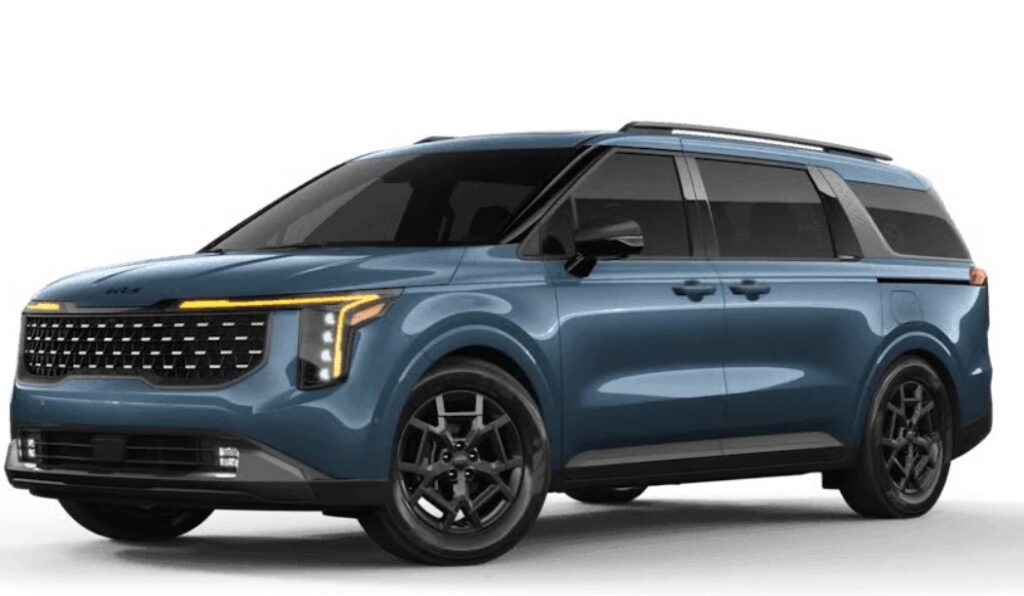
The Kia Carnival engine size sounds like a simple specification to look up. In reality, it opens the door to a much more interesting question: which Carnival engine are we actually talking about?
Depending on the country, model year, and powertrain, Kia has sold the Carnival with several different engines. In current markets, buyers may encounter a muscular 3.5-liter V6 gasoline engine, an efficient 1.6-liter turbocharged hybrid, or, in selected regions such as Australia, a 2.2-liter turbo-diesel. The engines could hardly be more different in personality. One feels like a traditional long-distance cruiser, another behaves like a fuel-conscious city machine, and the diesel pulls with the steady determination of a workhorse.
So engine capacity alone doesn't tell the whole story.
In this guide, we'll break down Kia Carnival engine sizes, explain what displacement actually means, compare gasoline, diesel and hybrid versions, look at horsepower and torque, and help determine which engine makes the most sense for different kinds of drivers.
Content in this publication
- What Is the Kia Carnival Engine Size?
- Kia Carnival Engine Size at a Glance
- Kia Carnival 3.5-Liter V6 Engine
- Kia Carnival 1.6-Liter Turbo Hybrid Engine
- Kia Carnival 2.2-Liter Diesel Engine
- What Does Engine Size Actually Mean?
- Does a Bigger Kia Carnival Engine Mean More Power?
- 3.5L V6 vs 1.6L Hybrid: Which Engine Is Better?
- 2.2 Diesel vs 3.5 Petrol Kia Carnival
- Which Kia Carnival Engine Is Best for Highway Driving?
- Which Kia Carnival Engine Is Best for City Driving?
- Does Engine Size Affect Kia Carnival Fuel Consumption?
- Does Kia Carnival Engine Size Affect Reliability?
- Is the Kia Carnival V6 Underpowered?
- Is the Kia Carnival Hybrid Underpowered?
- How Many Cylinders Does a Kia Carnival Have?
- Is the Kia Carnival Turbocharged?
- Kia Carnival Engine Size by Market
- What Engine Size Is Best for a Kia Carnival?
- Should We Buy the Bigger Kia Carnival Engine?
- Kia Carnival Engine Size and Towing
- Kia Carnival Engine Size and Everyday Performance
- What to Check Before Buying a Carnival Based on Engine Size
- Final Thoughts: Understanding Kia Carnival Engine Size
- Frequently Asked Questions
What Is the Kia Carnival Engine Size?
For current Carnival models, the main engine sizes are 3.5 liters, 2.2 liters and 1.6 liters, although availability depends heavily on the market.
Kia's Australian MY26 technical specifications list three powertrains: a 3.5-liter petrol V6 with an actual displacement of 3,470 cc, a 2.2-liter diesel four-cylinder measuring 2,151 cc, and a 1.6-liter turbo-petrol hybrid with 1,598 cc of displacement.
Meanwhile, current North American Carnivals focus primarily on two choices: the 3.5-liter V6 and the 1.6-liter turbocharged hybrid. Kia Canada, for example, lists the 2026 gasoline Carnival with 288 horsepower and the hybrid with 242 combined horsepower.
That immediately gives us an important lesson: when somebody asks, “What size engine does a Kia Carnival have?” we first need to consider where the vehicle was sold.
Kia Carnival Engine Size at a Glance
Here is the simplest way to understand the modern Carnival family:
| Engine | Actual Displacement | Configuration | Typical Character |
|---|---|---|---|
| 3.5L petrol | 3,470 cc | V6 | Smooth, powerful, highway-friendly |
| 2.2L diesel | 2,151 cc | Inline-four turbo diesel | Strong torque, long-distance efficiency |
| 1.6L hybrid | 1,598 cc | Turbo four-cylinder + electric motor | Efficient, responsive in city driving |
Those figures come from Kia's current Australian specifications, where all three engines are offered within the Carnival range.
Interestingly, the smallest combustion engine isn't necessarily the weakest where everyday driving is concerned. The hybrid combines its little 1.6-liter turbo engine with electric assistance, fundamentally changing the way we should think about engine displacement.
A decade ago, a large family vehicle with a 1.6-liter engine would have sounded almost comical. Today, electrification changes the equation.
Kia Carnival 3.5-Liter V6 Engine
The 3.5-liter V6 is probably the Carnival engine most familiar to North American drivers.
With approximately 3,470 cc of displacement, six cylinders arranged in a V formation, and naturally aspirated operation rather than turbocharging, this engine represents a fairly traditional approach to moving a large family vehicle.
And that isn't necessarily a bad thing.
How Powerful Is the 3.5L Carnival?
Canadian specifications for the 2026 Carnival rate the V6 at 288 horsepower and 260 lb-ft of torque.
Australian specifications express output slightly differently, listing the 3.5-liter petrol engine at 216 kW and 355 Nm.
Those numbers suit the character of the Carnival rather well. We're not driving a sports car disguised as a people mover. Instead, the V6 gives us the kind of relaxed strength that's useful when the vehicle is loaded with passengers, luggage, children's gear and whatever else family life throws through those sliding doors.
Why Does a V6 Suit the Carnival?
A large MPV needs power differently from a lightweight sedan.
Imagine accelerating onto a motorway with seven passengers and a cargo hold packed like a game of Tetris. What feels perfectly adequate in an empty vehicle can suddenly feel strained.
The V6's advantage is that it doesn't have to squeeze enormous output from a tiny combustion engine. Its displacement gives it breathing room.
That generally contributes to smooth acceleration and predictable power delivery.
Naturally Aspirated Power Feels Different
Because the 3.5-liter Carnival engine does not depend on turbo boost for its primary power delivery, throttle response tends to feel linear.
Push the accelerator harder and the engine progressively builds speed. There is no dramatic “nothing…nothing…now we're moving” sensation that poorly calibrated turbocharged engines can sometimes create.
For drivers who value uncomplicated power, that characteristic can be surprisingly appealing.
Kia Carnival 1.6-Liter Turbo Hybrid Engine
Now things get more interesting.
The hybrid Carnival uses a 1.6-liter turbocharged four-cylinder gasoline engine paired with an electric motor.
The combustion engine itself measures approximately 1,598 cc.
At first glance, this appears dramatically undersized beside the 3.5-liter V6.
But comparing displacement alone is like comparing two athletes only by height.
The hybrid has another weapon: electricity.
How Much Power Does the Carnival Hybrid Make?
Kia Canada lists the Carnival Hybrid at approximately 242 combined horsepower and around 270 lb-ft of combined torque, depending on model-year specification wording.
That's less peak horsepower than the V6 but slightly more combined torque.
The electric motor is particularly important because electric motors can deliver strong torque from very low speeds. As a result, the hybrid can feel responsive when pulling away from traffic lights even though its gasoline engine is less than half the displacement of the V6.
Does a 1.6-Liter Engine Feel Too Small?
This is probably the question many shoppers ask.
If we removed the hybrid hardware and asked a conventional 1.6-liter engine to move a Carnival on its own, concerns would be understandable.
But that isn't what happens here.
The electric motor assists the combustion engine, particularly where low-speed torque matters. Kia Canada specifically emphasizes the hybrid's immediate electric assistance in urban acceleration and stop-and-go driving.
So although the number 1.6L appears tiny on paper, the whole powertrain behaves like something much more substantial.
Kia Carnival 2.2-Liter Diesel Engine
In markets where diesel Carnivals remain available, the 2.2-liter turbo-diesel provides a completely different driving experience.
Kia's MY26 Australian specifications list this engine at 2,151 cc, producing 148 kW and an impressive 440 Nm of torque between 1,750 and 2,750 rpm.
That torque figure explains almost everything about the diesel Carnival's appeal.
Why Diesel Torque Matters
Horsepower gets plenty of attention because it's easy to market.
Torque is often what we actually notice when moving a heavy vehicle.
The diesel develops substantial pulling force relatively low in the rev range. That can make the Carnival feel effortless during highway cruising, overtaking and driving with a heavy passenger load.
Instead of revving eagerly like the V6, the diesel tends to lean on its torque.
It's less of a sprinter and more of a strong pair of shoulders.
Is the 2.2 Diesel Bigger Than the Hybrid?
Yes.
The diesel measures approximately 2.2 liters, compared with 1.6 liters for the hybrid's gasoline engine.
However, the diesel is still significantly smaller than the 3.5-liter petrol V6.
That illustrates why displacement alone isn't enough to rank these engines. Turbocharging, combustion type, electric assistance, gearing and vehicle calibration all dramatically influence the final result.
What Does Engine Size Actually Mean?
Engine size refers to the combined internal displacement of the engine's cylinders.
If we call the Carnival's V6 a 3.5-liter engine, we're essentially describing the amount of volume displaced by all six pistons as they travel through their cylinders.
The exact Carnival V6 displacement is roughly 3,470 cubic centimeters.
Because 1,000 cubic centimeters roughly equals one liter, manufacturers round that figure and market the engine as a 3.5L.
The same principle gives us:
3,470 cc ≈ 3.5L; 2,151 cc ≈ 2.2L; and 1,598 cc ≈ 1.6L.
The marketing numbers are therefore convenient rounded descriptions rather than perfectly literal measurements.
Does a Bigger Kia Carnival Engine Mean More Power?
Sometimes.
Not always.
This is where modern engineering makes the subject more complicated.
The 3.5-liter V6 certainly produces more peak horsepower than the current 1.6-liter Carnival Hybrid in North American specification. Kia Canada lists roughly 288 hp for the V6 versus 242 hp combined for the hybrid.
But the hybrid can generate comparable—and slightly greater—combined torque.
Meanwhile, the 2.2-liter diesel's 440 Nm torque output is particularly strong despite having much less displacement than the V6.
So the old rule that “bigger engine equals stronger vehicle” has become far less reliable.
3.5L V6 vs 1.6L Hybrid: Which Engine Is Better?
There isn't one universal winner.
The better Carnival engine depends on what we expect the vehicle to do.
Choose the 3.5L V6 for Traditional Performance
The V6 makes particular sense if highway driving, maximum gasoline-model towing ability or traditional engine feel sits near the top of our priority list.
For example, Kia Canada rates the 2026 V6 Carnival to tow up to 3,500 pounds, while its hybrid counterpart is listed at up to 3,000 pounds.
That's not an enormous gap, but it matters to drivers regularly pulling recreational equipment.
The V6 also makes more peak horsepower.
When we're travelling quickly with a fully loaded vehicle, that extra upper-end power can be useful.
Choose the Hybrid for Urban Efficiency
The hybrid turns the equation around in town.
Kia Canada publishes city fuel-consumption figures of approximately 6.9 L/100 km for the hybrid versus 13.0 L/100 km for the V6 in its 2026 comparison.
That's a massive difference.
Of course, real-world fuel consumption varies with weather, driving style, traffic, payload and other factors. Nevertheless, the underlying advantage is clear.
Hybrids thrive where conventional engines often struggle: stop-start traffic.
Every red light becomes an opportunity for regenerative braking rather than simply turning forward motion into wasted heat.
Which Feels Faster?
This answer is more nuanced than the horsepower numbers suggest.
The V6 has greater peak power and should feel stronger as speeds rise.
The hybrid can feel punchy around town because of its electric torque.
It's a bit like comparing a runner with greater top speed against someone who jumps off the starting line instantly.
Both can feel quick, just in different places.
2.2 Diesel vs 3.5 Petrol Kia Carnival
Where both engines are sold, this is perhaps the classic Carnival debate.
Do we want the smooth petrol V6 or the torque-rich diesel?
The petrol engine produces considerably more peak power, while the diesel produces stronger low-rpm torque in Kia Australia's current specifications.
Long-distance drivers may appreciate the diesel's relaxed torque and potential fuel-efficiency benefits.
Drivers taking shorter journeys—or those simply preferring smoother petrol operation—may gravitate toward the V6.
The answer depends more on usage than horsepower bragging rights.
Which Kia Carnival Engine Is Best for Highway Driving?
If our life involves long motorway trips, the 3.5-liter V6 and 2.2-liter diesel both make persuasive cases.
The V6 gives us smooth power and a strong reserve for overtaking.
The diesel gives us low-rpm torque and the kind of relaxed cruising character traditionally associated with large diesel people movers.
The hybrid can certainly handle highway journeys too. However, hybrids usually earn their biggest efficiency dividends in urban driving, where regenerative braking and electric assistance have more opportunities to work.
At a constant highway speed, there is simply less energy available to recover.
Which Kia Carnival Engine Is Best for City Driving?
The hybrid is difficult to ignore.
A family vehicle spends an enormous amount of its life doing decidedly unglamorous things: school runs, supermarket trips, traffic queues, childcare drop-offs and short suburban journeys.
That's precisely where an electrified powertrain makes sense.
The motor helps move the Carnival without forcing the gasoline engine to do all the heavy lifting every time we crawl forward ten meters in traffic.
The 1.6-liter engine may be the smallest Carnival engine, yet its surrounding hybrid system makes it arguably the most sophisticated option.
Does Engine Size Affect Kia Carnival Fuel Consumption?
Absolutely—but not in isolation.
Historically, larger displacement generally meant greater fuel consumption because bigger engines moved more air and burned more fuel.
Modern technologies complicate that relationship.
Turbocharging allows manufacturers to extract more output from smaller engines. Hybridization allows the gasoline engine to shut off or receive electric assistance. Direct injection improves combustion control. Advanced transmissions help engines remain within efficient operating ranges.
The result is that a 1.6-liter hybrid powertrain can move a vehicle as large as the Carnival while consuming dramatically less fuel in urban conditions than a 3.5-liter V6.
That's engineering progress we can actually see at the fuel pump.
Does Kia Carnival Engine Size Affect Reliability?
Not automatically.
A large engine is not inherently reliable, and a small turbocharged engine is not inherently unreliable.
Reliability depends on far more than displacement.
Cooling-system design, lubrication, turbocharger engineering, hybrid battery management, software calibration, maintenance quality, manufacturing tolerances and owner behavior all play important roles.
Still, different engines create different ownership considerations.
The naturally aspirated V6 avoids turbocharger hardware and high-voltage hybrid components, giving it a comparatively conventional layout.
The diesel introduces diesel-specific emissions equipment and turbocharging.
The hybrid adds an electric motor, battery pack and power electronics while potentially reducing how often the combustion engine needs to work under certain conditions.
Rather than choosing on engine size alone, we'd look at service history, model year, regional warranty coverage and how the vehicle will actually be driven.
Is the Kia Carnival V6 Underpowered?
No.
A 288-horsepower family van is hardly starved for power.
The Carnival is relatively large and can carry a substantial number of occupants, so it won't behave like a lightweight performance coupe. That's not the mission.
What matters is whether power delivery remains confident during merging, overtaking and loaded travel.
The V6's output is more than respectable for that purpose.
If anything, its relaxed character is one of its strengths. We don't need a people mover behaving like it's auditioning for a racetrack every time the traffic light turns green.
Is the Kia Carnival Hybrid Underpowered?
Again, we'd say no—but expectations matter.
Peak output is lower than the V6, so drivers who routinely demand maximum acceleration at highway speeds may prefer the larger engine.
Around town, however, electric assistance helps mask the combustion engine's smaller displacement remarkably well.
With approximately 242 combined horsepower and around 270 lb-ft of torque in Canadian specifications, this isn't a tiny engine desperately dragging a huge body behind it. It's an integrated electrified powertrain designed around efficiency and immediate low-speed response.
That distinction matters.
How Many Cylinders Does a Kia Carnival Have?
That depends on the engine.
The 3.5-liter gasoline Carnival uses six cylinders in a V6 configuration.
The 2.2-liter diesel uses four cylinders arranged inline.
The 1.6-liter hybrid also uses an inline four-cylinder engine, supported by an electric motor.
So shoppers asking whether the Kia Carnival is a four-cylinder or six-cylinder vehicle can technically receive both answers.
It depends entirely on the powertrain.
Is the Kia Carnival Turbocharged?
Some Carnivals are.
The 3.5-liter gasoline V6 is naturally aspirated.
The 2.2-liter diesel uses turbocharging.
The 1.6-liter hybrid gasoline engine is also turbocharged.
Turbochargers use exhaust energy to compress incoming air, allowing a smaller engine to produce considerably more power than displacement alone would suggest.
That's one reason Kia can pair a 1.6-liter combustion engine with a vehicle the size of the Carnival without turning every incline into a negotiation.
Kia Carnival Engine Size by Market
Regional differences are especially important when researching used vehicles.
North American shoppers are most likely to see recent Carnivals equipped with the 3.5-liter V6 or newer 1.6-liter hybrid powertrain. Kia Canada currently promotes both configurations in its 2026 lineup.
Australia has broader current engine availability. Kia Australia's MY26 technical data includes the 3.5-liter petrol, 2.2-liter diesel and 1.6-liter petrol hybrid.
Korea likewise publishes current Carnival specifications for gasoline and turbo-hybrid versions, including 3,470 cc and 1,598 cc displacement figures.
That means we should never assume an overseas Carnival review describes the same engine sold locally.
What Engine Size Is Best for a Kia Carnival?
If we strip away marketing and focus on real-world use, the decision becomes easier.
Drivers spending most of their time in heavy urban traffic will likely find the hybrid's efficiency attractive.
Families doing lots of highway mileage may appreciate the V6's effortless power or, where available, the diesel's strong torque.
People towing more frequently may favor the V6 where its higher tow rating applies.
High-mileage drivers in diesel-friendly markets may prefer the 2.2 CRDi.
In other words, there isn't one “best” engine size.
There is simply an engine that fits a particular lifestyle better.
Should We Buy the Bigger Kia Carnival Engine?
Not just because it's bigger.
Engine displacement once acted as a useful shorthand for vehicle capability.
Today it's only one piece of the puzzle.
A modern turbocharged hybrid can produce substantial torque from an engine less than half the displacement of the Carnival V6. Meanwhile, the diesel demonstrates how a 2.2-liter four-cylinder can generate enormous low-speed pulling force.
Instead of asking, “Which Carnival has the biggest engine?” we'd ask something more useful:
Where will we drive it?
How often will it carry a full load?
Will we tow?
Are fuel costs a priority?
Do we spend hours in stop-start traffic?
Those questions lead to a much better buying decision than the number printed on the engine specification sheet.
Kia Carnival Engine Size and Towing
Engine choice can affect towing ability.
In Canada, Kia lists the 2026 V6 Carnival with a maximum towing capability of up to 3,500 pounds compared with up to 3,000 pounds for the hybrid in the manufacturer's comparison.
However, towing capacities can vary by market, specification, equipment and model year.
We should therefore always check the owner's manual or regional Kia specification for the exact vehicle rather than assuming every Carnival with the same engine carries an identical rating.
That's especially important when buying used.
Kia Carnival Engine Size and Everyday Performance
Here's perhaps the surprising conclusion after looking at all three engines:
None of them makes the Carnival feel like the same vehicle.
The V6 gives the Carnival a traditional large-engine personality.
The diesel makes torque the centerpiece.
The hybrid transforms the Carnival into something much more modern—quiet and efficient during low-speed use yet still capable of carrying a large family.
Engine size tells us where the story begins.
It doesn't tell us how it ends.
What to Check Before Buying a Carnival Based on Engine Size
Before choosing a specific Carnival engine, it makes sense to check:
- The exact model year and country specification.
- Whether the vehicle uses petrol, diesel or hybrid power.
- Actual displacement rather than relying solely on model descriptions.
- Manufacturer towing ratings for that exact variant.
- Real-world fuel economy expected from your driving pattern.
- Full service history on a used Carnival.
- Local fuel prices and annual mileage.
- Availability and cost of maintenance for diesel or hybrid components.
- Warranty coverage for hybrid batteries and powertrain components.
- Whether most journeys will be urban, highway or mixed.
That small checklist can save us from buying the technically “better” engine that turns out to be completely wrong for our life.
Final Thoughts: Understanding Kia Carnival Engine Size
The Kia Carnival engine size varies significantly depending on the powertrain and country.
Current versions can use a 3.5-liter V6 petrol engine, a 2.2-liter turbo-diesel four-cylinder, or a 1.6-liter turbocharged four-cylinder paired with a hybrid system. Kia's published displacement figures put them at roughly 3,470 cc, 2,151 cc and 1,598 cc respectively.
If maximum traditional horsepower and relaxed highway performance appeal to us, the 3.5L V6 remains an excellent match for the Carnival.
If strong low-rpm torque and long-distance diesel characteristics matter, the 2.2L diesel makes a compelling case where it's available.
And if urban fuel economy is the priority, the 1.6L hybrid shows why modern engine size can be deceptive. Its combustion engine might look tiny beside a V6, yet electric assistance gives the entire powertrain far more muscle than its displacement suggests.
Ultimately, we shouldn't choose a Carnival by engine capacity alone.
Engine size is the number on the label.
How we actually drive the vehicle is what makes that number meaningful.
Frequently Asked Questions
1. What size engine does the Kia Carnival have?
Current Kia Carnival engine sizes vary by market. Common options include a 3.5-liter V6 petrol engine and a 1.6-liter turbocharged hybrid. Australia also offers a 2.2-liter diesel in the current MY26 range.
2. Is the Kia Carnival a V6 or four-cylinder?
It can be either. The 3.5L gasoline model uses a V6, while the 2.2L diesel and 1.6L hybrid combustion engines use inline-four configurations.
3. How many cc is the Kia Carnival 3.5 engine?
The 3.5-liter Carnival gasoline engine has an actual displacement of approximately 3,470 cc.
4. Is the 1.6L Kia Carnival Hybrid powerful enough?
For most family driving, yes. Kia Canada rates the system at approximately 242 combined horsepower and around 270 lb-ft of combined torque. Electric assistance delivers strong low-speed response despite the smaller gasoline engine.
5. Which Kia Carnival engine is best?
The best option depends on usage. The 3.5L V6 suits drivers prioritizing traditional power and higher towing capability, the 1.6L hybrid favors city efficiency, and the 2.2L diesel offers strong torque and appealing characteristics for high-mileage driving where available.
If you want to know other articles similar to Kia Carnival Engine Size: Complete Engine Guide you can visit the category Service and Parts.
Vauxhall Mokka Tyre Pressure Reset: Complete Guide
How to Reset the Tire Pressure System on Your Hyundai Tucson
Hyundai Kona Tire Pressure: Complete PSI Guide
Vauxhall Corsa Timing Belt Replacement Cost UK 2026
Mazda CX-5 Tire Size Chart: 2013–2026 Guide
How to Reset a Honda Civic: Complete Step-by-Step Guide
Leave a Reply
More content of your interest