
Audi A6 Weight: Complete Guide by Model and Generation

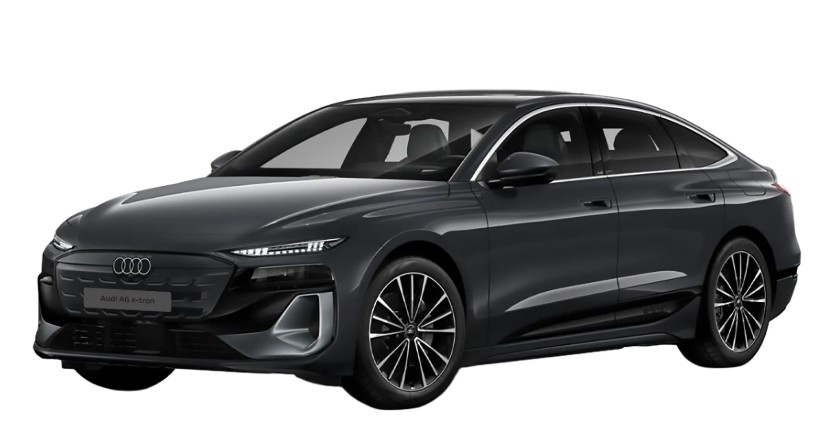
When we talk about Audi A6 weight, there is no single number that works for every car wearing the A6 badge. An older front-wheel-drive diesel sedan can weigh hundreds of kilograms less than a modern quattro plug-in hybrid, while an A6 Avant normally carries a little more mass than an equivalent sedan.
That variation matters more than we might initially think.
Vehicle weight influences acceleration, braking, fuel economy, handling, tire wear, towing behavior, payload, and even how substantial the car feels from behind the wheel. In the case of the Audi A6, weight also tells an interesting story about how luxury cars have evolved. Every generation has gained technology, structural reinforcement, larger wheels, more sophisticated suspension components, emissions equipment, batteries, motors, safety systems, and comfort features.
So, how much does an Audi A6 weigh?
As a broad rule, most modern Audi A6 models weigh somewhere around 1,700 to 2,200 kg, or approximately 3,750 to 4,850 lb, depending on specification. Some older versions fall below that range, while particularly heavy electrified configurations can move beyond 2,200 kg.
For perspective, Audi's specifications for the latest-generation A6 show just how wide the range can become. One current petrol A6 Sedan specification lists a kerb weight of 1,826 kg, while current configurations in other markets can exceed 2,200 kg depending on powertrain and equipment.
Let's unpack what those numbers actually mean.
Content in this publication
- How Much Does an Audi A6 Weigh?
- Audi A6 Weight in Kg
- Audi A6 Curb Weight Explained
- Audi A6 Gross Vehicle Weight
- Audi A6 Sedan Weight
- Audi A6 Avant Weight
- Audi A6 quattro Weight
- Audi A6 Plug-In Hybrid Weight
- Audi A6 Weight by Generation
- What Makes One Audi A6 Heavier Than Another?
- How Weight Affects Audi A6 Performance
- How Audi A6 Weight Affects Fuel Economy
- Audi A6 Weight and Towing
- Is the Audi A6 a Heavy Car?
- Audi A6 Weight Versus Driving Feel
- How to Find the Exact Weight of Your Audi A6
- Audi A6 Weight: The Bigger Picture
- Conclusion: How Much Does an Audi A6 Really Weigh?
- Frequently Asked Questions About Audi A6 Weight
How Much Does an Audi A6 Weigh?
A useful starting point for anyone searching Audi A6 weight in kg is roughly 1,600 to 2,250 kg across the broader modern A6 family.
Converted into pounds, that works out to approximately 3,530 to 4,960 lb.
That's a big spread, isn't it? Think of the Audi A6 family less like one athlete standing on a scale and more like an entire team. They wear the same uniform, but their builds are different.
A basic four-cylinder front-wheel-drive model tends to sit toward the lighter end. Add a larger engine, quattro all-wheel drive, an Avant body, luxury equipment or a plug-in-hybrid battery system, and the number climbs.
The exact figure therefore depends on the vehicle identification, model year and specification rather than simply the words "Audi A6" on the boot lid.
Typical Audi A6 Weight Range
For everyday comparison, we can think of the lineup this way:
- Older and lighter Audi A6 versions: roughly 1,500–1,700 kg
- Conventional modern A6 sedans: roughly 1,700–2,000 kg
- Audi A6 Avant models: commonly around 1,750–2,100 kg
- quattro and larger-engine versions: generally heavier than equivalent front-wheel-drive cars
- Plug-in hybrids: often close to or above 2,000 kg
- Certain highly equipped modern configurations: potentially 2,200 kg or more
Those figures are guidelines rather than universal specifications. Even two A6s from the same model year can have noticeably different official weights.
Audi A6 Weight in Kg
Kilograms are the standard measurement used for vehicle specifications throughout most of Europe and many international markets.
If we're comparing recent models, seeing an Audi A6 somewhere around the 1.8-tonne mark should not be surprising.
For example, Audi documentation for a current-generation four-cylinder petrol A6 Sedan lists a kerb weight of 1,826 kg.
That is roughly the mass of a substantial premium executive car rather than a lightweight family sedan.
Go further up the powertrain ladder, however, and things change quickly.
The previous-generation A6 50 TFSI e plug-in hybrid had an official unladen weight without the driver of 2,010 kg, highlighting the effect of batteries, electric motors and hybrid hardware.
Audi A6 Weight in Pounds
For readers using US measurements, the most relevant conversion is:
1 kilogram = approximately 2.205 pounds.
That means an 1,800 kg A6 weighs about 3,968 lb.
An 1,900 kg example comes in at approximately 4,189 lb, while a 2,000 kg Audi A6 is around 4,409 lb.
Once the car approaches 2,200 kg, we're talking about roughly 4,850 lb.
Those numbers explain why modern executive sedans feel so planted on the motorway. They're not featherweights.
Audi A6 Curb Weight Explained
This is where vehicle specifications can become confusing.
Search for Audi A6 curb weight, kerb weight, unladen weight or gross weight and we may encounter several numbers for apparently the same vehicle.
They're not necessarily contradictory.
What Is Curb Weight?
Curb or kerb weight generally refers to the vehicle in normal operating condition with necessary fluids and standard equipment but without a full passenger or cargo load.
However, the exact regulatory definition can differ between markets.
Some published European figures include a standardized allowance for the driver, while another specification may explicitly state that the driver is excluded.
Audi itself sometimes publishes both values.
For example, technical information for an earlier A6 50 TFSI e identifies an unladen weight of 2,010 kg without the driver and 2,085 kg with the driver, a neat illustration of why apparently different weight figures can both be correct.
Why Two Websites May Give Different A6 Weights
Suppose one specification says 1,825 kg and another says roughly 1,900 kg.
Our instinct might be that somebody made a mistake.
Not necessarily.
One source may include a standardized driver allowance. Another may not. One could represent the minimum equipment configuration, while another accounts for optional equipment. Regional versions can also differ.
Before comparing figures, we should always ask: what definition of weight is being used?
Audi A6 Gross Vehicle Weight
Gross vehicle weight is quite different from curb weight.
The gross vehicle weight rating, often shortened to GVWR, describes the maximum permitted total mass of the loaded vehicle rather than what the empty car itself weighs.
That total may include passengers, luggage and other permitted loads.
This is why gross figures are considerably higher than curb-weight numbers.
Current Audi technical documentation provides a good example. Certain modern A6 configurations listed in European specifications have unladen masses between roughly 1,845 and 2,240 kg, while maximum permissible gross mass can extend from approximately 2,395 to 2,775 kg, depending on configuration.
Why Gross Weight Matters
Gross vehicle weight becomes especially relevant when we're loading the A6 heavily.
Four or five adults, suitcases, equipment and accessories add up surprisingly quickly. The difference between the vehicle's running mass and its permitted gross mass effectively determines how much additional load it can legally handle.
That is particularly important for family travel and towing.
Audi A6 Sedan Weight
The Sedan is usually the lighter of the two conventional A6 body configurations when we compare equivalent engines and equipment.
Why?
The Avant needs additional body structure around its extended roof and rear cargo area, along with the larger tailgate and associated hardware.
The difference isn't enormous, though.
We aren't comparing a racing coupe with an SUV. Often we're talking about only a few dozen kilograms.
Current Audi A6 Sedan Weight
The latest A6 generation illustrates the point nicely.
A current four-cylinder petrol A6 Sedan has been listed at 1,826 kg kerb weight in one official regional specification.
Other engines and drivetrains can be heavier.
A previous-generation 50 TDI quattro Sedan, for example, was officially listed by Audi at 1,825 kg without the driver and 1,900 kg with the driver.
The amusing part is that two very different generations can occasionally produce similar headline numbers despite major differences beneath the skin.
Audi A6 Avant Weight
The Audi A6 Avant weight tends to be slightly higher than that of a comparable Sedan.
The Avant is designed to provide considerably more everyday cargo flexibility, and that usefulness comes with some structural and mechanical baggage.
Current Audi documentation for certain A6 Avant diesel configurations lists unladen weights of approximately 2,005 kg for a front-wheel-drive version and 2,075 kg for a quattro version.
That difference also demonstrates something else: body style isn't the only factor.
Drivetrain matters.
Why Does the A6 Avant Weigh More?
An Avant needs additional material in the rear body structure, a larger rear opening, different glass, a substantial tailgate and cargo-area hardware.
Some versions may also be ordered with equipment commonly chosen by estate-car buyers, adding further mass.
Yet Audi works hard to control weight because excessive mass hurts practically everything engineers care about: performance, efficiency, emissions, braking and agility.
The resulting A6 Avant feels substantial rather than cumbersome.
Audi A6 quattro Weight
Quattro is one of Audi's defining technologies, but an all-wheel-drive system cannot work through good intentions alone.
We need additional mechanical components to distribute power between the axles.
That hardware carries weight.
Does quattro Make the Audi A6 Heavier?
Yes, an equivalent Audi A6 equipped with quattro will ordinarily weigh more than a front-wheel-drive counterpart.
The size of the difference depends on generation and drivetrain technology.
Current A6 Avant specifications demonstrate this neatly: Audi lists one TDI front-wheel-drive Avant at 2,005 kg, while the comparable quattro version is listed at 2,075 kg. That's about 70 kg of additional mass in those particular specifications.
Is the extra weight worth it?
For drivers who regularly encounter rain, snow, loose surfaces or simply appreciate strong traction when accelerating, it certainly can be.
Audi A6 Plug-In Hybrid Weight
Here is where the scales really start moving.
A plug-in hybrid has to carry much of the hardware associated with a combustion-powered A6 plus an electric motor, battery pack, power electronics and related cooling components.
It's like packing for two different holidays in the same suitcase.
Why the A6 TFSI e Is Heavier
Previous-generation A6 TFSI e models illustrate the point particularly well.
Audi lists the A6 50 TFSI e Sedan at 2,010 kg without the driver or 2,085 kg including the standardized driver figure.
Compare that with lighter conventional-engined A6 versions and the battery's influence becomes obvious.
Yet pure weight isn't the whole story.
Electric motors provide immediate torque, which can mask much of that mass during acceleration. Batteries are also positioned relatively low in the structure, helping control the center of gravity.
So a heavier hybrid doesn't necessarily feel as lumbering as its weight figure suggests.
Audi A6 Weight by Generation
The A6 lineage stretches across decades, and vehicle mass has moved up and down depending on engineering philosophy.
New generations don't simply become heavier in a straight line.
Manufacturers add equipment and then fight to remove kilograms through aluminum, high-strength steel and smarter structural design.
Older Audi A6 Generations
Earlier Audi A6 models could be considerably lighter than the cars we're familiar with today.
They generally had less sophisticated crash structures, smaller wheels, fewer electronics, simpler seating systems and far fewer driver-assistance technologies.
A well-equipped modern A6 contains computers, sensors, cameras and modules that simply didn't exist in its ancestors.
Yet older cars weren't universally lightweight either. Large engines, quattro hardware and traditional automatic transmissions could push their mass upward.
Audi A6 C7 Weight
The C7 generation, sold through much of the 2010s, offers one of the widest spreads because it was available with numerous engines and drivetrains.
Depending on configuration, C7-era A6 variants could range from somewhere near 1,600 kg to well over 2,000 kg at the heavy end of the family.
That enormous gap shows why searching only "2016 Audi A6 weight" is sometimes not enough.
Was it a 2.0 TDI? A petrol model? quattro? Sedan? Avant?
Each detail narrows down the answer.
Audi A6 C8 Weight
The C8 generation introduced more electronics, advanced driver assistance, mild-hybrid technology and increasingly sophisticated comfort systems.
Many C8 models therefore operate in the broad neighborhood of 1,700 to 2,100 kg, depending on engine and drivetrain.
Plug-in hybrids sit toward the upper end.
Even so, clever chassis engineering allows the C8 to disguise its mass remarkably well during normal driving.
Latest Audi A6 Weight
The newest A6 generation continues that balancing act.
It adds modern electronics, electrified powertrain technology and increasingly sophisticated suspension options while engineers simultaneously try to prevent mass from spiraling out of control.
Audi describes the new-generation A6 as using its Premium Platform Combustion architecture, with modern petrol and diesel engines and available MHEV plus mild-hybrid technology.
Depending on powertrain, current official figures demonstrate that we're comfortably in large premium-car territory.
What Makes One Audi A6 Heavier Than Another?
Imagine building an A6 through an online configurator.
Each individual choice might appear relatively innocent. But by the end, we've effectively slipped a collection of invisible suitcases into the car.
A larger engine adds weight. quattro adds driveline components. Bigger wheels can increase unsprung mass. Electrically adjustable luxury seats contain motors and mechanisms. Panoramic glass roofs require glass and structural reinforcement. Hybrid systems add batteries and motors.
No single component necessarily transforms the car, but together they can create a substantial difference.
Engine Size and Audi A6 Weight
Four-cylinder engines generally help keep the front end lighter than larger six-cylinder units.
That influences more than the scale.
Less mass over the nose can improve steering response and make the vehicle feel more eager to change direction.
Larger engines bring a different character: more effortless power, stronger acceleration and relaxed high-speed cruising.
There's always a trade-off.
Transmission and Drivetrain
Transmissions also contribute to overall mass.
Modern dual-clutch and conventional automatic systems contain substantial internal hardware, while quattro requires equipment to transmit torque to all four wheels.
Again, an individual part may not sound particularly heavy.
Combine everything, though, and our 1.7-tonne executive sedan can gradually become a two-tonne machine.
Optional Equipment
Luxury equipment is the sneaky contributor.
Electric seats, upgraded audio systems, larger wheels, panoramic roofs, additional sound insulation and chassis technology all add something.
Few owners will notice the weight of one option.
Stack enough of them together and the difference becomes measurable.
Does Wheel Size Affect Audi A6 Weight?
It can.
Larger alloy wheels and wider tires may weigh more than smaller alternatives, although wheel construction varies significantly.
More importantly, wheel mass is partly unsprung and rotating weight, meaning its effect can be felt differently from kilograms hidden beneath the rear seat.
Large wheels may sharpen appearance and steering response, but they can also alter ride comfort and efficiency.
How Weight Affects Audi A6 Performance
Physics doesn't care whether our car has four rings on its grille.
Accelerating more mass requires more energy.
Stopping it does too.
That's why two vehicles with identical horsepower figures can feel completely different if one is significantly lighter.
Acceleration
A lighter A6 generally needs less power to achieve a given level of acceleration.
But modern powertrains complicate the picture.
A heavy plug-in hybrid can have substantial combined output and instant electric torque. It may therefore accelerate much harder than a lighter entry-level model.
Power-to-weight ratio matters more than vehicle weight alone.
A 2,000 kg car with plenty of power can feel dramatically faster than a 1,700 kg car with a modest engine.
Handling
Weight influences the amount of inertia the suspension and tires must manage.
Broadly, less mass makes changing direction easier.
But distribution matters enormously.
A well-balanced 1,900 kg sedan can feel more composed than a poorly set-up 1,700 kg one.
Audi uses suspension tuning, electronic control systems and, on certain newer versions, technologies such as all-wheel steering and adaptive air suspension to reconcile comfort with agility.
Braking
More mass means the brakes have more kinetic energy to deal with.
That's one reason powerful and heavier A6 variants often use larger or more capable braking systems.
During gentle daily driving, we may barely notice.
Repeated hard braking is where the relationship between mass, heat and braking performance becomes far more obvious.
How Audi A6 Weight Affects Fuel Economy
Weight isn't the only factor controlling fuel consumption, but it certainly participates.
Every time we accelerate, energy is required to move the vehicle's mass.
Stop-and-go urban driving magnifies the effect because the car repeatedly accelerates and slows down.
On a steady motorway journey, aerodynamics and engine efficiency become comparatively more important.
That's one reason a heavy diesel A6 can still return impressive long-distance fuel economy.
Does Carrying Passengers Make a Noticeable Difference?
Absolutely.
Put four adults and their luggage inside the car and we can easily add several hundred kilograms.
The engine then has to move that mass every time we accelerate.
The difference may be subtle around town in a powerful A6, but fuel consumption, braking distance and suspension behavior can all change.
That doesn't mean we need to leave our friends at home to save petrol. It simply illustrates why real-world consumption rarely matches every laboratory figure perfectly.
Audi A6 Weight and Towing
Weight also plays an interesting role in towing.
A reasonably substantial tow vehicle can feel stable because the trailer has less ability to push the car around.
However, vehicle weight does not automatically equal towing capacity.
Manufacturers determine towing limits using powertrain cooling, brakes, chassis design, transmission capability and homologation requirements.
For example, current technical information for certain A6 Avant versions lists a 2,000 kg braked towing capacity, despite differences in their own unladen weights.
Payload Is Different From Towing Capacity
This distinction is easy to miss.
Towing capacity describes the permitted trailer mass.
Payload describes how much weight the car itself can carry.
The trailer's nose weight also places a load on the vehicle, so we can't simply fill the cabin, fill the boot and hook up the maximum trailer without checking limits.
Numbers on a specification sheet suddenly matter when everything is loaded at once.
Is the Audi A6 a Heavy Car?
By ordinary passenger-car standards, yes, especially in its newer configurations.
By modern premium executive-car standards, however, the A6 isn't unusually heavy.
That's an important distinction.
An A6 competes in a segment where owners expect near-silent cabins, powerful engines, advanced infotainment, sophisticated suspension, extensive safety technology, large wheels and luxurious interiors.
All of that equipment has mass.
A lightweight A6 could be built, but would we want it if achieving that figure meant throwing away the features that make an A6 feel like an A6?
Probably not.
Audi A6 Weight Versus Driving Feel
Here's the strange thing about weight: we don't always perceive it in kilograms.
We perceive it through steering, body control, acceleration, braking and ride quality.
A well-engineered heavy car can feel lighter than the number printed in its specifications.
That has long been part of the A6 formula.
At motorway speeds, the mass contributes to a reassuring planted sensation. Wind gusts and imperfect surfaces seem less dramatic. The car settles into its stride like a long-distance train.
Push hard into a tight corner, though, and physics eventually sends us the bill.
Two tonnes cannot disappear completely.
Is a Lighter A6 Always Better?
Not necessarily.
A lighter specification may offer better efficiency and slightly more responsive handling.
A heavier model may provide quattro traction, hybrid capability, more power or additional comfort features.
The question isn't simply, "Which A6 weighs less?"
A better question is, "What am I getting in exchange for that extra weight?"
That's where the specification starts making sense.
How to Find the Exact Weight of Your Audi A6
If we need the precise weight rather than a general estimate, the model designation alone isn't enough.
The safest approach is to identify the model year, body style, engine, transmission and drivetrain and then consult the official documentation for that particular market.
Registration documents may also show relevant mass figures, although terminology varies from country to country.
The manufacturer's identification plate can provide maximum permitted vehicle and axle weights, while the owner's documentation explains how those ratings should be interpreted.
For situations where accuracy is legally important—towing is the obvious example—we shouldn't rely on a generic internet figure.
Audi A6 Weight: The Bigger Picture
The evolution of Audi A6 weight mirrors the evolution of the luxury automobile itself.
Older cars were mechanically simpler. New ones have become rolling networks of sensors, computers, motors and safety systems.
Yet manufacturers haven't simply thrown steel at the problem.
Modern A6 generations make extensive use of advanced materials and optimized structures to counterbalance the increasing demands of technology and safety.
It's an engineering tug-of-war.
Customers ask for more equipment. Regulations demand better protection and cleaner powertrains. Engineers try to add everything without making the finished vehicle feel like a bank vault on wheels.
And somehow, the modern A6 still manages to move with impressive grace.
Conclusion: How Much Does an Audi A6 Really Weigh?
There isn't one universal Audi A6 weight.
Across generations and configurations, we're looking broadly at around 1,500 kg for some lighter older versions to more than 2,200 kg for particularly heavy modern configurations, with many recent conventional A6 models sitting somewhere around 1,700 to 2,100 kg.
Body style matters. Engine choice matters. quattro matters. Hybrid technology matters. Even optional equipment can shift the final number.
A recent four-cylinder A6 Sedan specification, for example, lists 1,826 kg, while previous plug-in-hybrid models can cross the 2,000 kg threshold before the driver climbs aboard.
So when someone asks, "How much does an Audi A6 weigh?" our best answer is another question:
Which Audi A6?
Once we know the generation, engine, drivetrain and body style, the answer becomes much more meaningful.
The headline number is interesting, but what Audi does with those kilograms—turning them into stability, refinement, traction, technology and comfort—is the part we actually feel from the driver's seat.
Frequently Asked Questions About Audi A6 Weight
1. What is the average Audi A6 weight?
Most relatively modern Audi A6 models weigh approximately 1,700 to 2,100 kg, or roughly 3,750 to 4,630 lb. Lighter older versions can fall below this range, while some plug-in hybrids and heavily equipped modern configurations exceed it.
2. How much does an Audi A6 weigh in pounds?
Depending on model and specification, an Audi A6 can weigh roughly 3,500 to almost 5,000 lb. Many conventional modern versions fall somewhere around the 4,000-lb mark.
3. Is the Audi A6 Avant heavier than the Sedan?
Usually, yes. When comparing similar engines and drivetrains, the A6 Avant generally weighs slightly more than the A6 Sedan because of its larger rear body structure, tailgate and cargo-area components.
4. Does Audi quattro add weight to an A6?
Yes. quattro requires additional drivetrain hardware compared with front-wheel drive. As one current example, comparable A6 Avant diesel specifications show approximately a 70 kg difference between front-wheel-drive and quattro versions.
5. Why is an Audi A6 plug-in hybrid so heavy?
A plug-in hybrid carries a combustion engine as well as a traction battery, electric motor, power electronics and additional cooling equipment. That can push an A6 TFSI e beyond 2,000 kg; Audi listed the previous-generation 50 TFSI e Sedan at 2,010 kg without the driver.
If you want to know other articles similar to Audi A6 Weight: Complete Guide by Model and Generation you can visit the category Service and Parts.
Vauxhall Mokka Tyre Pressure Reset: Complete Guide
How to Reset the Tire Pressure System on Your Hyundai Tucson

Hyundai Kona Tire Pressure: Complete PSI Guide
Vauxhall Corsa Timing Belt Replacement Cost UK 2026
Mazda CX-5 Tire Size Chart: 2013–2026 Guide

How to Reset a Honda Civic: Complete Step-by-Step Guide
Leave a Reply
More content of your interest