

Are Alfa Romeos Expensive to Maintain? A Real-World Ownership Guide

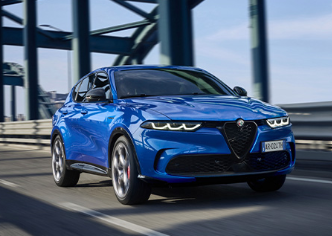
Alfa Romeo has never been the sensible beige cardigan of the automotive world. These cars are designed to stir something. Sharp steering, unmistakable Italian styling, powerful engines, and cabins with genuine personality make models such as the Giulia and Stelvio tempting alternatives to the familiar BMW, Audi, Mercedes-Benz, and Lexus choices.
But eventually, nearly every prospective owner asks the uncomfortable question: are Alfa Romeos expensive to maintain?
The short answer is yes, Alfa Romeos can be relatively expensive to maintain, especially compared with mainstream Japanese or Korean cars. However, the reality isn't quite as frightening as Alfa Romeo's historic reputation sometimes suggests.
Routine maintenance on a modern Alfa Romeo generally isn't outrageous for a premium European vehicle. Where ownership can become costly is when repairs appear outside warranty, when performance components need replacement, or when the car has been poorly maintained by a previous owner.
RepairPal currently estimates average Alfa Romeo repair and maintenance expenditure at about $834 per year in the United States, although actual costs vary considerably according to the model, mileage, age, location, and workshop used.
So should we avoid Alfa Romeo altogether?
Not necessarily.
The better question is whether we can comfortably afford to maintain one properly.
Content in this publication
- Why Are Alfa Romeos Considered Expensive to Maintain?
- How Much Does an Alfa Romeo Cost to Maintain Each Year?
- Routine Alfa Romeo Maintenance Isn't Necessarily Terrifying
- What Makes Alfa Romeo Repairs Expensive?
- Are Alfa Romeo Parts Expensive?
- How Expensive Are Alfa Romeo Brakes?
- Tires Are an Important Alfa Romeo Ownership Cost
- Is the Alfa Romeo Giulia Expensive to Maintain?
- Is the Alfa Romeo Stelvio Expensive to Maintain?
- Alfa Romeo vs BMW, Audi, and Mercedes Maintenance Costs
- Alfa Romeo vs Lexus Maintenance Costs
- Does an Alfa Romeo Need Dealer Servicing?
- Can Alfa Romeo Maintenance Costs Be Reduced?
- Why a Pre-Purchase Inspection Is Especially Important
- Does Alfa Romeo Reliability Make Maintenance More Expensive?
- How Much Should We Budget for an Alfa Romeo?
- Are Used Alfa Romeos Expensive to Own?
- Should You Buy an Extended Warranty?
- Which Alfa Romeo Is Cheapest to Maintain?
- Who Should Avoid an Alfa Romeo?
- Who Should Consider Buying One?
- Are Alfa Romeos More Expensive to Maintain Than Normal Cars?
- The Hidden Cost: Depreciation
- Is Maintaining an Alfa Romeo Worth It?
- Conclusion: So, Are Alfa Romeos Expensive to Maintain?
- Frequently Asked Questions
Why Are Alfa Romeos Considered Expensive to Maintain?
Alfa Romeo's reputation didn't emerge from nowhere. Older cars from the brand were famous—or infamous—for electrical quirks, rust issues, temperamental components, and an ownership experience that occasionally felt like dating someone incredibly charming who was also consistently late.
Modern Alfas are considerably different machines.
Nevertheless, several factors still make maintenance more expensive than we'd expect from an ordinary family car. Alfa Romeo operates in the premium segment, uses sophisticated turbocharged engines, advanced electronics, performance-oriented suspension systems, large wheels, high-performance brakes, and numerous specialized components.
Then there is availability.
An independent workshop can find Toyota or Ford parts almost anywhere. Alfa-specific parts may be less widely stocked, depending on where we live. Fewer specialists can also mean less competition for repair work.
That doesn't automatically make an Alfa unreliable. It simply means that when something does need attention, the bill may be noticeably larger.
How Much Does an Alfa Romeo Cost to Maintain Each Year?
There's no universal annual figure.
A relatively new Giulia driven modestly and serviced on schedule could have a fairly uneventful year consisting primarily of an oil service and inspections. An older Stelvio that suddenly needs suspension, cooling-system, electrical, or air-conditioning work could produce a four-figure repair invoice instead.
RepairPal's current brand-wide figure is roughly $834 annually for repair and maintenance, compared with lower figures typically associated with many mainstream manufacturers.
That number shouldn't be interpreted as a guaranteed yearly bill.
Think of it more like rainfall averages. One year might be dry; another might feel like somebody opened the sky.
The age and condition of the particular Alfa Romeo matter far more than the badge alone.
Routine Alfa Romeo Maintenance Isn't Necessarily Terrifying
Here's something that often gets lost in discussions about Alfa ownership: scheduled maintenance itself isn't usually the biggest financial threat.
Oil, filters, brake-fluid changes, inspections, spark plugs, and other routine items are normal requirements on practically every modern premium car.
For example, the 2024 Giulia maintenance schedule specifies that engine oil and the oil filter should be changed according to vehicle usage and the monitoring system, but the interval must not exceed one year or 10,000 miles (16,000 km). Its schedule also calls for brake-fluid replacement every two years regardless of mileage.
That isn't wildly unusual for a European performance sedan.
Problems arise when owners postpone maintenance.
Skipping a $200–$300 preventive service to save money can eventually contribute to a repair costing many times that amount. With a performance-focused turbocharged car, deferred maintenance is rarely a clever economy.
Oil Changes
Modern Alfa Romeo engines depend heavily on the correct oil specification and proper service intervals.
We shouldn't treat oil as a generic liquid that happens to lubricate the engine. Turbochargers operate under tremendous heat, while sophisticated engine-control and emissions systems depend on fluids meeting specific requirements.
The owner's manual should therefore determine the correct specification and maintenance schedule, not whichever oil happens to be cheapest at the local shop.
Regular oil changes are one of the simplest ways to reduce ownership risk.
Why Service History Matters
This becomes especially important when buying used.
A cheap Alfa Romeo without documentation can quickly become an expensive Alfa Romeo.
We would rather pay slightly more for a car with invoices demonstrating regular servicing than save several thousand dollars upfront on a mysterious example whose previous owner apparently regarded dashboard warning lights as decorative illumination.
What Makes Alfa Romeo Repairs Expensive?
Routine maintenance and unexpected repair costs are two different animals.
A standard oil service might seem reasonable. Replacing a sophisticated electronic component, cooling-system part, suspension assembly, or major engine component is another matter entirely.
RepairPal's current estimates provide useful examples. It lists a Giulia oil-pump replacement at roughly $2,780 to $3,913, while some Stelvio repairs can also enter four-figure territory. These are estimates rather than guaranteed prices, but they illustrate why owners should keep a repair reserve once a car is outside warranty.
Labor contributes as well.
Not every independent mechanic regularly works on Alfa Romeo vehicles. Specialist knowledge can be valuable, but specialist labor isn't always inexpensive.
Parts Availability Can Influence the Bill
Parts pricing depends heavily on location.
In areas with a strong Alfa Romeo dealer and specialist network, sourcing ordinary components may be straightforward. Elsewhere, parts may need to be ordered, creating additional delays or cost.
This is one reason two owners with identical cars can report completely different experiences.
One says, "Mine hasn't cost me anything."
Another says, "Never again."
Both might be telling the truth.
Diagnostics Matter More Than Many Owners Realize
Modern cars are computers wearing tires.
The Giulia and Stelvio contain interconnected electronic modules controlling everything from engine operation and stability systems to driver assistance and comfort functions. When something behaves incorrectly, accurate diagnosis matters.
Replacing components at random can become remarkably expensive.
A mechanic familiar with Alfa Romeo platforms can sometimes save money simply because they recognize common symptoms faster.
Are Alfa Romeo Parts Expensive?
Compared with mainstream cars, generally yes.
We should expect premium-car pricing for many genuine replacement components. That applies particularly to suspension pieces, sensors, body components, performance brakes, larger wheels, and certain electronic modules.
Aftermarket availability can lower the cost of common maintenance items, especially once a model has been in production for several years.
But cheap aftermarket components aren't automatically good value.
Installing the cheapest possible part and replacing it twice isn't a bargain.
For safety-critical and technically sensitive components, choosing reputable OEM-quality or proven aftermarket parts usually makes more financial sense in the long run.
How Expensive Are Alfa Romeo Brakes?
Brake costs depend dramatically on the version we're driving.
A standard four-cylinder Giulia or Stelvio is one thing. A Quadrifoglio is another universe.
Performance models use more capable braking hardware because they are substantially faster cars. Larger rotors, specialized pads, and performance-oriented components naturally cost more.
Driving style matters just as much.
Someone commuting gently to work may get considerably more life from brakes than an enthusiastic driver regularly attacking winding roads.
That's the hidden equation with performance cars: buying horsepower is only the first payment. We also pay to stop it, cool it, insure it, and feed it tires.
Tires Are an Important Alfa Romeo Ownership Cost
Tires deserve their own discussion because they're frequently overlooked when people calculate maintenance.
Many Alfa Romeos use relatively large wheels and performance-oriented tire sizes. Depending on model, trim, and specification, replacement tires can be much more expensive than the rubber fitted to a conventional economy car.
Aggressive alignment settings and enthusiastic driving may accelerate wear too.
And because these cars handle so beautifully, resisting enthusiastic driving isn't always easy.
A set of premium performance tires can therefore become one of the more predictable recurring expenses.
If you're considering a used Alfa, inspect all four tires carefully.
A vehicle advertised at an attractive price but needing four tires, front brakes, and its next major service may effectively cost thousands more than the sticker suggests.
Is the Alfa Romeo Giulia Expensive to Maintain?
The Giulia is probably the model most responsible for bringing modern Alfa Romeo back onto shopping lists.
Its appeal is obvious.
The steering is alive, the chassis feels eager, and even the ordinary turbocharged versions possess personality that some competitors polish out in pursuit of perfection.
Maintenance costs generally place the Giulia firmly in premium-car territory rather than economy-car territory.
Routine service on a properly maintained four-cylinder Giulia can be manageable. The financial risk grows as the vehicle ages and expensive repairs become more likely.
Independent specialist servicing can often reduce labor costs once the factory warranty expires, assuming the workshop genuinely knows the platform.
What About the Giulia Quadrifoglio?
Different story.
The Quadrifoglio is a genuinely high-performance machine, and we should budget accordingly.
Its engine, tires, brakes, cooling requirements, suspension hardware, and other performance components make maintaining one substantially different from maintaining the regular Giulia.
Buying a depreciated Quadrifoglio because its used price suddenly looks accessible doesn't mean its operating costs have depreciated along with it.
A $90,000-performance-car maintenance bill doesn't magically become a $30,000-car maintenance bill because we bought the vehicle used.
That's one of the most important lessons in used luxury-car ownership.
Is the Alfa Romeo Stelvio Expensive to Maintain?
The Stelvio shares much of its mechanical philosophy with the Giulia but packages it into a practical SUV.
Again, normal servicing doesn't necessarily make it dramatically more expensive than comparable premium European SUVs.
Unexpected repairs are what can change the equation.
RepairPal currently lists examples including approximately $975–$1,144 for an AC compressor, $1,204–$1,412 for an AC condenser, and $1,842–$2,596 for an AC evaporator on the Stelvio. These figures vary by location and vehicle, but they demonstrate why keeping an emergency repair budget is sensible.
The Stelvio Quadrifoglio, naturally, takes expenses to another level because performance hardware costs more to maintain and replace.
Alfa Romeo vs BMW, Audi, and Mercedes Maintenance Costs
This comparison gets interesting because Alfa Romeo isn't competing against Toyota Corolla ownership economics.
Its natural rivals come from premium European manufacturers.
Current RepairPal-based comparisons place Alfa Romeo's average maintenance-and-repair spending below some German premium brands, although methodology and vehicle mix should always be considered when comparing brand-wide averages. A 2026 ConsumerAffairs review using RepairPal data reported approximate annual figures of $834 for Alfa Romeo, compared with $908 for Mercedes-Benz, $968 for BMW, and $987 for Audi.
That doesn't mean every Alfa will automatically cost less than every BMW.
Far from it.
But it challenges the idea that Alfa Romeo exists in some uniquely terrifying maintenance category.
Compared with European luxury competitors, the costs can be broadly understandable.
Compared with a Honda, Toyota, Mazda, or Hyundai?
Different conversation.
Alfa Romeo vs Lexus Maintenance Costs
If low-stress long-term ownership is our main priority, Lexus generally presents a stronger financial argument.
The same RepairPal-based comparison cited by ConsumerAffairs places Lexus around $551 per year versus Alfa Romeo at roughly $834.
But buyers rarely cross-shop these brands purely by spreadsheet.
An Alfa tends to appeal because of how it feels.
A Lexus might whisper, "Relax, we've got this."
An Alfa says, "There's a mountain road over there. Why are we still talking?"
Neither philosophy is objectively correct.
The question is which one fits us—and our budget.
Does an Alfa Romeo Need Dealer Servicing?
Not necessarily forever.
While the car is under warranty, following the manufacturer's maintenance requirements and keeping detailed documentation is critical. Alfa Romeo's own service information emphasizes that scheduled servicing should follow manufacturer requirements, noting that failure to complete required servicing may affect warranty coverage.
Once the car is outside warranty, a respected independent Alfa Romeo or European-car specialist can often provide excellent service at lower labor rates than a dealership.
The keyword is specialist.
We don't want somebody learning the quirks of our Giulia while billing us by the hour.
Look for a workshop that regularly services Alfa Romeo vehicles, has the appropriate diagnostic equipment, understands factory specifications, and can provide detailed maintenance records.
Can Alfa Romeo Maintenance Costs Be Reduced?
Absolutely, although "reduce" shouldn't mean neglect.
The cheapest Alfa Romeo to own is usually the one that was maintained correctly from day one.
We can control costs through a few practical habits:
- Buy the best-maintained example rather than simply the cheapest one.
- Check service records before purchasing a used Alfa Romeo.
- Follow the manufacturer's oil and fluid specifications.
- Fix small problems before they become major ones.
- Use an experienced independent specialist after warranty where appropriate.
- Compare parts and labor quotes for non-emergency repairs.
- Budget for tires and brakes instead of treating them as surprises.
- Keep a separate repair reserve for an older out-of-warranty vehicle.
- Consider a legitimate extended warranty or service plan when the coverage and economics make sense.
- Obtain a professional pre-purchase inspection before buying used.
Alfa Romeo itself offers service-plan products in some markets intended to lock in scheduled servicing costs, although availability and coverage depend on location and vehicle.
Why a Pre-Purchase Inspection Is Especially Important
Imagine two identical-looking Giulias listed online.
One costs $26,000 and has impeccable servicing, new premium tires, recent brakes, and no warning lights.
The other costs $23,000 but needs tires, brakes, servicing, has a weak battery, and displays an intermittent electronic warning.
Which is cheaper?
Probably the $26,000 car.
Used premium vehicles constantly teach us that purchase price and ownership cost are not the same thing.
A specialist inspection can reveal oil leaks, coolant issues, worn suspension components, damaged wheels, brake wear, tire problems, stored diagnostic codes, accident repairs, and neglected servicing before money changes hands.
Those few hundred dollars can be some of the smartest money we spend.
Does Alfa Romeo Reliability Make Maintenance More Expensive?
Reliability and maintenance costs overlap, but they're not identical.
A car can be reliable yet expensive to service. Another can be cheap to maintain but frequently require inexpensive repairs.
Alfa Romeo's modern reputation is also complicated by history.
The brand carries decades of jokes and stereotypes that are difficult to erase, even when newer vehicles share little technically with older generations.
Modern Giulia and Stelvio models should therefore be judged according to specific model year, engine, service history, mileage, and condition rather than simply assuming every Alfa will constantly break.
At the same time, dismissing all concerns as outdated mythology would be equally unwise.
Premium electronics, sophisticated powertrains, expensive replacement parts, and limited specialist availability can still make an out-of-warranty Alfa financially demanding when something significant fails.
How Much Should We Budget for an Alfa Romeo?
Rather than assuming the same annual amount every year, we'd approach Alfa ownership with two separate budgets.
The first covers predictable maintenance: scheduled services, oil, filters, brake fluid, tires, brakes, and inspections.
The second is a repair reserve.
For a relatively new Alfa under warranty, that reserve doesn't need to be enormous. For an older Giulia or Stelvio outside warranty, having several thousand dollars available for an unexpected repair provides considerably more peace of mind.
Remember that a brand-wide average such as RepairPal's $834 annual figure smooths out individual experiences.
Real ownership isn't smooth.
We might spend little one year and then get hit with a $2,000 repair the next.
Budgeting around variability is smarter than expecting every year to look identical.
Are Used Alfa Romeos Expensive to Own?
They can be.
Used Alfa Romeos often look exceptionally attractive because depreciation can place sophisticated performance cars within reach of buyers who couldn't justify them new.
That is both opportunity and trap.
A depreciated luxury car remains a luxury car mechanically.
Parts don't become cheaper merely because the vehicle's resale value dropped.
That's why a used Alfa Romeo should never be purchased on price alone.
Maintenance records matter. Condition matters. Previous ownership matters. Tire quality matters. Even the battery matters because modern vehicle electronics can behave strangely when voltage becomes unstable.
A carefully maintained used Alfa can represent fantastic value.
A neglected bargain can become a black hole wearing beautiful wheels.
Should You Buy an Extended Warranty?
It depends on the car and the warranty.
For owners who dislike financial surprises, extended coverage can make sense when keeping a modern Alfa beyond the original factory warranty.
However, we need to examine exactly what's covered.
A cheap warranty loaded with exclusions isn't much protection.
Pay attention to deductibles, maximum claim values, covered electronics, turbocharger coverage, cooling systems, suspension, labor rates, diagnostics, and whether repairs must be performed at specified facilities.
Factory-backed or reputable manufacturer-related programs may provide greater confidence where available.
The decision ultimately comes down to risk tolerance.
Some owners would rather keep several thousand dollars in an emergency fund.
Others prefer predictable warranty payments.
Which Alfa Romeo Is Cheapest to Maintain?
Generally speaking, the simpler four-cylinder versions of the Giulia and Stelvio should be financially easier to live with than their Quadrifoglio counterparts.
That's hardly surprising.
Less exotic performance hardware usually means cheaper consumables and fewer extremely expensive components.
Wheel size matters too.
Large optional wheels may look spectacular, but smaller factory-approved wheels can mean cheaper tires, greater ride comfort, and potentially reduced risk of wheel damage on poor roads.
A sensible specification can noticeably improve long-term ownership costs without removing the personality that made us want an Alfa in the first place.
Who Should Avoid an Alfa Romeo?
An Alfa Romeo probably isn't the ideal choice if every unexpected repair bill causes financial stress.
Likewise, buyers seeking the cheapest possible transportation from point A to point B will find many more rational choices.
Alfa Romeo makes the most sense for someone who values steering, design, performance, and character enough to accept premium-car running costs.
If we want appliance-like transportation, buy the appliance.
If we want something that makes the long way home feel worthwhile, the calculation becomes more emotional.
And that's where Alfa Romeo has always been strongest.
Who Should Consider Buying One?
An Alfa can make tremendous sense for an enthusiast who does the homework.
Find a well-maintained example. Obtain an inspection. Understand the servicing schedule. Identify a trustworthy specialist. Keep money aside for repairs.
Do those things, and ownership becomes far less mysterious.
The nightmare stories often involve precisely the opposite scenario: somebody buys the cheapest example available, ignores its incomplete history, postpones maintenance, and then concludes that every Alfa Romeo is unreliable when the accumulated neglect finally sends an invoice.
Cars remember how they were treated.
Alfas may simply be less forgiving when we forget.
Are Alfa Romeos More Expensive to Maintain Than Normal Cars?
Yes.
Against mainstream vehicles from Toyota, Honda, Mazda, Kia, or similar brands, we should generally expect higher running costs.
Premium parts, specialized servicing, performance tires, and potentially expensive repairs make that unavoidable.
Against comparable European luxury and performance vehicles, however, Alfa Romeo's expenses aren't necessarily extraordinary.
That's the distinction prospective owners should remember.
Saying "Alfa Romeos are expensive to maintain" is technically reasonable.
Saying "Alfa Romeos are uniquely expensive compared with every premium European alternative" is much harder to support.
Maintenance isn't the only ownership expense worth considering.
Depreciation can sometimes exceed servicing and repair costs by a considerable margin.
This creates an interesting situation for used buyers.
Someone else may absorb the steepest depreciation while we buy the car at a much more attractive price.
That can make a three- or four-year-old Alfa Romeo surprisingly compelling—even if maintenance costs are somewhat higher than those of a mainstream car.
We need to calculate the whole ownership picture rather than obsess over oil-change prices alone.
Purchase price, depreciation, insurance, fuel, tires, maintenance, repairs, registration, financing, and resale value all matter.
A vehicle with inexpensive servicing isn't automatically inexpensive to own.
Is Maintaining an Alfa Romeo Worth It?
That depends entirely on what we expect from a car.
If transportation is merely functional, perhaps not.
But enthusiasts rarely choose cars by spreadsheet alone.
The Giulia's steering, the Stelvio's unusually athletic character, the styling, the engines, and the feeling of driving something less common all create value that can't be represented perfectly in a maintenance-cost calculator.
There's nothing irrational about paying more for something we genuinely enjoy—as long as we understand the cost beforehand.
Problems begin when we buy an Alfa expecting Toyota-like running expenses.
Go in with realistic expectations and the experience can be much more satisfying.
Conclusion: So, Are Alfa Romeos Expensive to Maintain?
Yes, Alfa Romeos are relatively expensive to maintain compared with ordinary mainstream vehicles, but their costs aren't necessarily shocking when viewed alongside other premium European cars.
Routine maintenance on modern Giulias and Stelvios is generally predictable. Alfa Romeo's published schedules require regular oil servicing and inspections, while items such as brake fluid have time-based replacement requirements.
The bigger financial risk comes from unexpected repairs, premium replacement parts, specialist labor, high-performance tires and brakes, and owning complicated versions such as the Quadrifoglio after warranty coverage ends.
So we wouldn't ask only, "Can I afford to buy this Alfa?"
We'd ask, "Can I comfortably afford to own it after I buy it?"
If the answer is yes, and we've found a well-maintained example with a strong history, an Alfa Romeo can deliver something many more sensible vehicles struggle to reproduce: personality.
And sometimes personality is precisely why we fell in love with cars in the first place.
Frequently Asked Questions
1. Are Alfa Romeos expensive to service?
Alfa Romeo servicing is generally more expensive than servicing a mainstream economy vehicle, but routine maintenance isn't necessarily unusually costly compared with other premium European cars. Costs vary by model, location, labor rates, and whether servicing is performed by a dealer or qualified independent specialist.
2. How much does an Alfa Romeo cost to maintain annually?
RepairPal currently estimates Alfa Romeo's average annual repair and maintenance cost at approximately $834 in the United States, although individual ownership costs can differ substantially depending on mileage, age, model, condition, and repairs required.
3. Is the Alfa Romeo Giulia expensive to maintain?
The standard four-cylinder Giulia carries premium-car maintenance costs but can be manageable when properly serviced. The high-performance Giulia Quadrifoglio is considerably more expensive because its specialized engine, brakes, tires, and performance components cost more to maintain and replace.
4. Are Alfa Romeo parts expensive?
Many Alfa Romeo components cost more than equivalent mainstream-car parts, particularly specialized suspension, electronics, body components, performance brakes, and model-specific hardware. Aftermarket alternatives may reduce costs for common service items, although quality matters.
5. Is buying a used Alfa Romeo a bad idea?
Not necessarily. A well-maintained used Alfa with comprehensive service records and a clean specialist inspection can offer excellent value. The greater risk is buying the cheapest available example with deferred maintenance, worn consumables, incomplete records, or unresolved warning lights.
If you want to know other articles similar to Are Alfa Romeos Expensive to Maintain? A Real-World Ownership Guide you can visit the category Maintenance.
Kia Sorento Service Schedule: Complete Maintenance Guide
Haval Jolion Service Cost: Australia Maintenance Guide
Nissan Rogue Maintenance Schedule: Complete Service Guide

Honda Passport Maintenance Codes: Complete Maintenance Minder Guide
Honda Passport Maintenance Schedule: Complete Service Guide
Nissan Rogue Maintenance Schedule: Complete Service Guide
Leave a Reply
More content of your interest