

What Audi A6 Is Supercharged? Complete Model and Engine Guide

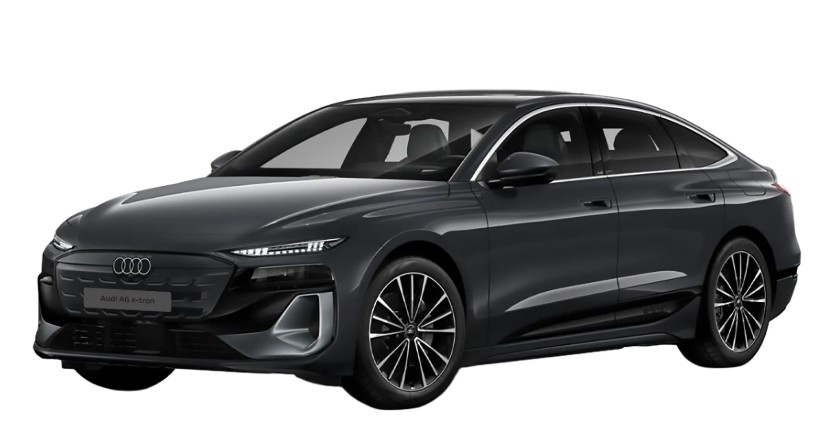
If you have been shopping for a used Audi A6 and keep seeing phrases such as “3.0T,” “3.0 TFSI,” and “supercharged V6,” you are not alone in wondering exactly which Audi A6 is supercharged.
Here is the short answer: Audi A6 models equipped with the earlier 3.0 TFSI V6 used a mechanical supercharger, particularly the late C6 and C7 generations. In the United States, that broadly means the 2009-2011 C6 A6 3.0T and the 2012-2018 C7 A6 3.0T.
Audi introduced the supercharged 3.0 TFSI to the U.S.-market A6 for the 2009 model year. Audi described the engine as a 3.0-liter V6 producing 300 horsepower and specifically confirmed that it used a supercharger rather than a turbocharger.
That distinction matters because the badge can be misleading. You might reasonably assume the “T” in 3.0T means turbo. During this era, however, Audi used TFSI terminology for engines employing forced induction even when the device supplying the boost was a supercharger.
And that little naming quirk has confused used-car shoppers ever since.
Let's untangle it properly.
Content in this publication
- Which Audi A6 Models Have a Supercharger?
- The Audi A6 3.0 TFSI Is the Supercharged One
- Audi A6 C6: The Beginning of the Supercharged Era
- Audi A6 C7: The Supercharged Sweet Spot
- Is the C8 Audi A6 Supercharged?
- How Does the Audi A6 Supercharger Work?
- Supercharged Audi A6 vs Turbocharged Audi A6
- Is the Audi S6 Supercharged Too?
- What Does a Supercharged Audi A6 Feel Like to Drive?
- Is the Supercharged Audi A6 Fast?
- Which Supercharged Audi A6 Is Best to Buy?
- How Reliable Is the Supercharged 3.0 TFSI?
- Common Things to Inspect Before Buying One
- Why Enthusiasts Love the Audi 3.0T Supercharged Engine
- Can the Audi A6 3.0T Be Tuned?
- How Can You Tell Whether an Audi A6 Is Supercharged?
- Did Audi Make a Supercharged A6 Avant?
- Supercharged A6 or Turbocharged A6: Which Should We Choose?
- Final Verdict: What Audi A6 Is Supercharged?
- Frequently Asked Questions
Which Audi A6 Models Have a Supercharger?
For shoppers looking specifically for a factory-supercharged Audi A6, the models we should primarily concentrate on are:
- 2009-2011 Audi A6 C6 3.0T / 3.0 TFSI
- 2012-2018 Audi A6 C7 3.0T / 3.0 TFSI, depending on market and specification
- Most use Audi's 2,995 cc supercharged V6
- Many versions were paired with quattro all-wheel drive
- U.S. C7 versions were offered at different outputs, including approximately 310 and 333 horsepower, depending on year
- The 2016 U.S. A6 3.0T, for example, officially lists a 2,995 cc six-cylinder engine with supercharged/TFSI induction, 333 hp, and 325 lb-ft of torque.
- Later A6 generations changed strategy: the newer 3.0 TFSI V6 is turbocharged rather than mechanically supercharged.
Specifications vary by country, model year, transmission, emissions rules, and engine calibration, so the VIN and engine code remain the safest ways of verifying an individual car.
Still, if someone says “supercharged Audi A6,” chances are they are talking about a C6 or, especially, a C7 A6 3.0 TFSI.
The Audi A6 3.0 TFSI Is the Supercharged One
This is the engine at the center of the story.
Audi's supercharged 3.0-liter V6 belongs to the EA837 engine family. Rather than hanging a turbocharger off the exhaust system, Audi placed a mechanically driven supercharger in the valley between the V6's cylinder banks.
It was an elegant solution.
Think of the engine as breathing through an air pump that is already spinning whenever the engine is running. Push the accelerator and there is no need to wait for exhaust gases to spool a turbine. Boost arrives almost immediately.
Audi's own technical material described the compressor as a Roots-type blower, driven mechanically by the engine through a belt. Audi stated that its rotors could spin at up to 23,000 rpm and generate up to approximately 0.8 bar, or 11.6 psi, of boost.
That explains much of the engine's personality.
It doesn't explode into action like an old-school turbo engine after a pause. Instead, it delivers power progressively and almost immediately.
Why Does Audi Call It 3.0T If It Is Supercharged?
This is where things become confusing.
Ordinarily, we see a letter “T” on a car and think turbocharger.
Perfectly reasonable.
But Audi's nomenclature wasn't that literal.
When Audi introduced the supercharged 3.0 TFSI into the A6, the company explicitly explained that the “T” in its engine designation would no longer refer exclusively to turbocharged engines.
In practical terms, TFSI became more of an Audi branding umbrella associated with gasoline direct injection and forced induction.
Consequently, an Audi advertisement saying A6 3.0T quattro does not automatically tell us whether the car has a turbocharger or supercharger.
The generation and model year do.
What Does TFSI Actually Mean?
TFSI is Audi's designation associated with direct-injected gasoline engines combined with forced induction.
Historically, turbocharging was the technology most people associated with the name. The supercharged 3.0 V6 was an unusual exception.
Audi itself described TFSI-era technology as capable of using either turbocharging or supercharging. Period Audi documentation explained that FSI direct injection could be combined with forced induction to increase performance and efficiency.
That is why decoding an Audi engine purely from its trunk badge can lead us down the wrong road.
Audi A6 C6: The Beginning of the Supercharged Era
The C6 generation was produced long before the 3.0 TFSI became synonymous with Audi's performance-oriented V6.
Early C6 A6 models used engines such as naturally aspirated V6 and V8 gasoline units alongside numerous diesel options.
Then came the facelift.
2009 Audi A6 3.0T
For the U.S. market, 2009 is the big year.
Audi introduced an updated A6 with an available 300-horsepower 3.0 TFSI supercharged V6. Audi of America announced the model as an all-new 300-hp supercharged V6 paired with quattro all-wheel drive.
This makes the 2009 A6 3.0T one of the answers shoppers should immediately remember when asking what Audi A6 is supercharged.
The engine produced 310 lb-ft of torque in U.S. specification, with maximum torque available across a broad section of the rev range. Audi quoted 0-60 mph in roughly 5.9 seconds for the sedan.
For a luxury sedan introduced more than a decade and a half ago, that remains brisk.
Why the C6 3.0T Was Important
The supercharged V6 changed the character of the A6.
Previously, buyers wanting serious effortless performance might naturally have gravitated toward larger engines. The 3.0T delivered V8-like urgency without requiring a large-displacement V8.
That made it something of a sweet spot.
It had enough torque to make the A6 feel genuinely quick, yet it retained the smoothness expected from an executive sedan.
The engine also became the foundation for one of Audi's most memorable performance powertrains of the period.
Audi A6 C7: The Supercharged Sweet Spot
If there is one generation most enthusiasts associate with a supercharged Audi A6, it is probably the C7.
The C7 A6 arrived for the 2012 model year in North America and represented a substantial technological leap over the C6.
Inside, it looked more modern.
Outside, it was sharper.
Under the hood, however, one of its biggest attractions remained that familiar 3.0-liter supercharged V6.
2012-2015 Audi A6 3.0T
Earlier U.S.-market C7 A6 3.0T models used the supercharged V6 with output around the low-300-horsepower mark.
The combination worked beautifully in the A6.
There was enough torque for effortless highway overtaking, enough power to make back-road driving interesting, and enough refinement for the car to disappear quietly into its luxury-sedan role when we stopped pushing it.
This dual personality is one reason enthusiasts still hunt for these cars.
The A6 3.0T can behave like a business-class airport shuttle on Monday morning and reveal a completely different personality when the road opens up.
2016 Audi A6 3.0T
The facelifted C7 brought a particularly interesting version.
According to Audi's U.S. specifications, the 2016 A6 3.0T produced 333 horsepower at 5,500-6,500 rpm and 325 lb-ft of torque at 2,900-5,300 rpm. Its induction system is explicitly identified as Supercharged/TFSI.
Those numbers gave the A6 genuinely serious performance.
And because power delivery remained immediate and linear, the car often felt naturally muscular rather than dramatically boosted.
2017 and 2018 Audi A6 3.0T
The supercharged powertrain continued into the closing years of the C7 generation in the United States.
These late C7 cars are particularly attractive to enthusiasts because we get the mature version of the platform: newer infotainment and styling combined with the character of the supercharged V6.
This is important because the next A6 generation changed the formula substantially.
The C7 effectively represents the end of the traditional factory-supercharged A6 era.
Is the C8 Audi A6 Supercharged?
No—not in the same sense.
This is one of the most important distinctions to understand when shopping.
The C8-generation Audi A6 moved away from the EA837 supercharged V6 and adopted newer turbocharged engines.
Therefore, a newer A6 carrying a 3.0 TFSI designation should not automatically be grouped together with a C7 A6 3.0T.
Same displacement.
Similar badge.
Very different method of producing boost.
That is why searching simply for “Audi A6 3.0T” without checking the year can produce contradictory answers online.
You may be interested in reading Alfa Romeo Tonale vs Dodge Hornet: Which SUV Is Better?
Both claims can appear:
“The Audi A6 3.0T is supercharged.”
“The Audi A6 3.0 TFSI is turbocharged.”
And strangely enough, both can be correct depending on which generation we mean.
How Does the Audi A6 Supercharger Work?
Mechanically, a supercharger and turbocharger pursue the same basic goal: squeeze additional air into the engine so more fuel can be burned and more power generated.
How they obtain the energy to compress that air is the big difference.
A turbocharger relies primarily on exhaust-gas energy.
Audi's supercharger is mechanically driven by the engine.
Audi mounted the Roots-type compressor within the 90-degree V of the engine. This compact arrangement placed the supercharger where a conventional intake manifold might otherwise live.
The result is wonderfully tidy packaging.
Why Put the Supercharger Between the Cylinder Banks?
Packaging matters enormously in a modern engine bay.
By positioning the compressor inside the V6, Audi could create extremely short intake paths.
Shorter airflow paths help the engine respond quickly.
Audi specifically highlighted this advantage when describing the engine, noting that the compressed air had only a short distance to travel before reaching the cylinders.
Imagine blowing air through a drinking straw instead of a garden hose. Everything happens more immediately.
That snappy response is one of the defining characteristics of the engine.
Does the Audi A6 Supercharger Have an Intercooler?
Yes, although its arrangement differs from the conventional front-mounted intercooler setup people often imagine when thinking about tuned turbo cars.
Audi integrated two water-to-air intercoolers into the supercharger housing and connected them to a separate cooling circuit. Their job is simple but crucial: reduce the temperature of compressed intake air before it reaches the combustion chambers.
Compress air and it becomes hotter.
Cool it again and we increase its density, helping combustion and reducing undesirable heat.
It's clever engineering packed into a remarkably compact area.
Supercharged Audi A6 vs Turbocharged Audi A6
So which system is better?
There is no universal winner.
The supercharged A6 has a character enthusiasts often describe as exceptionally linear. Press the throttle and the engine responds almost immediately. There isn't a dramatic wait followed by a surge.
A modern turbocharged A6, meanwhile, benefits from years of development in turbocharger design, engine management and electrification. Turbo systems can deliver enormous torque while achieving impressive efficiency.
For pure mechanical character, however, the old supercharged V6 has something special.
It feels like a large naturally aspirated engine that has secretly been given stronger lungs.
Is the Audi S6 Supercharged Too?
This is another easy assumption to make.
If the regular A6 3.0T was supercharged, surely the faster S6 must have had an even bigger supercharger?
Not necessarily.
The C6 S6 famously used a naturally aspirated V10.
The C7 S6 moved to a 4.0-liter twin-turbocharged V8. Audi's 2016 specification sheet, for instance, identifies the S6 4.0 TFSI as turbocharged while identifying the A6 3.0T sitting beside it as supercharged.
That creates the rather amusing situation where the ordinary A6 3.0T and the more powerful S6 employed completely different forms of forced induction.
So if your goal specifically is to own a factory-supercharged Audi sedan, don't assume moving from an A6 to an S6 keeps the supercharger.
What Does a Supercharged Audi A6 Feel Like to Drive?
This engine's appeal cannot be understood entirely through numbers.
Imagine pushing your foot into the accelerator at 2,500 rpm.
There isn't much drama.
No huge pause.
No theatrical explosion.
Instead, torque simply arrives.
That makes the engine exceptionally well suited to a car such as the A6. Luxury sedans need effortless acceleration more than they need theatrical power delivery.
The supercharger gives the car precisely that sensation.
On a motorway, the engine has the reserves required to move from relaxed cruising to quick overtaking almost instantly.
Around town, we don't have to chase rpm.
And when driven enthusiastically, the V6 revs with considerably more enthusiasm than its executive-sedan surroundings might suggest.
Is the Supercharged Audi A6 Fast?
Absolutely.
Even the original U.S.-market 300-hp version was capable of reaching 60 mph in approximately 5.9 seconds according to Audi's period specifications.
Later C7 versions became considerably stronger.
But straight-line acceleration tells only half the story.
Add quattro traction and the A6 can deploy its power cleanly, even when conditions aren't perfect.
From behind the wheel, that combination produces an interesting sensation. The car may look restrained and businesslike, yet it can leave a stop with surprisingly serious urgency.
It's a sleeper wearing an expensive suit.
Which Supercharged Audi A6 Is Best to Buy?
For many buyers, a later C7 A6 3.0T quattro represents the most compelling version.
Why?
It combines the charismatic supercharged engine with a more modern chassis, interior, safety package and infotainment environment than the older C6.
A facelift C7 can be particularly tempting because it gives us the later styling and a stronger version of the V6 while preserving the supercharger.
That does not automatically make it the right purchase, however.
At this age, condition matters enormously.
A pristine earlier car with extensive service records can be a much smarter purchase than a later example that has been neglected, aggressively modified or passed through numerous owners.
How Reliable Is the Supercharged 3.0 TFSI?
Audi's 3.0 supercharged V6 has developed a generally positive reputation among enthusiasts compared with some more troublesome engines from the same broad era.
But “good engine” does not mean “maintenance-free engine.”
We are still discussing a sophisticated German luxury vehicle containing direct injection, forced induction, an intricate cooling system, substantial electronics and quattro hardware.
Age matters.
Mileage matters.
Maintenance history matters even more.
The engine's fundamental design can be durable, yet surrounding components can turn an inexpensive used A6 into a remarkably expensive project if previous owners treated servicing like an optional subscription.
Common Things to Inspect Before Buying One
Cooling-system components deserve particular attention, as do signs of coolant loss.
You may be interested in readingAlfa Romeo Tonale vs Dodge Hornet: Which SUV Is Better?You may be interested in reading
Alfa Romeo Tonale vs Stelvio: Which Italian SUV Is Better?We should also inspect the crankcase ventilation system, engine mounts, ignition components, oil leaks and carbon accumulation associated with direct-injection engines.
Transmission behavior matters too.
The gearbox should engage smoothly and shift consistently once warm.
And because many enthusiasts buy the 3.0T specifically because of its tuning potential, we should determine whether a prospective vehicle has been modified.
An ECU tune isn't automatically bad.
A badly maintained car running increased boost and repeatedly launched from traffic lights?
Different story.
Service records are worth more than glossy paint.
Listen to the Engine From Cold
Whenever possible, start a prospective A6 when the engine is completely cold.
Cold starts reveal things a seller's conveniently pre-warmed engine can hide.
Listen for abnormal rattles, persistent squealing, uneven running or unusual mechanical noises.
Watch for warning lights.
Check the exhaust.
Then allow the engine to reach operating temperature and drive the car through different loads and engine speeds.
A good example should feel smooth, strong and remarkably refined.
Get a Pre-Purchase Inspection
This is one of those vehicles where spending money before buying can save a small fortune afterward.
An inspection by a technician familiar with Audi and Volkswagen Group vehicles can identify faults that aren't obvious during a twenty-minute test drive.
Scan every control module for stored faults rather than relying only on the absence of a check-engine light.
A sophisticated car can store clues long before a dashboard warning appears.
Why Enthusiasts Love the Audi 3.0T Supercharged Engine
Part of the appeal is performance.
Part is tunability.
But there is another reason: the engine belongs to an increasingly rare category.
Mechanical superchargers have largely disappeared from ordinary luxury cars as manufacturers migrated toward turbocharging, hybrid assistance and electrification.
That gives the C6 and C7 A6 3.0T a distinct mechanical personality.
The supercharger isn't decoration.
It changes how the car responds.
Power delivery feels immediate, predictable and beautifully progressive.
And while modern turbocharged engines can be quicker, more efficient and technically superior in many ways, “better” doesn't necessarily mean more interesting.
Can the Audi A6 3.0T Be Tuned?
Yes, and its tuning potential is one major reason the engine has such a strong following.
The factory calibration leaves meaningful room for additional performance, and aftermarket software can significantly alter engine output.
More aggressive setups can involve supercharger pulley changes, cooling upgrades and supporting modifications.
But here we need to resist the temptation to look only at dyno charts.
Extra power means extra heat and additional mechanical stress.
A tuned car that has received meticulous maintenance can be perfectly appealing to the right buyer. A heavily modified example with incomplete service records deserves far more scrutiny.
For most second-hand shoppers, buying the healthiest stock or lightly modified car is usually wiser than buying the one boasting the largest horsepower figure.
How Can You Tell Whether an Audi A6 Is Supercharged?
First, check the model year and generation.
If it is a late C6 or C7 A6 carrying the appropriate 3.0T/3.0 TFSI V6, we are probably looking at the supercharged engine.
But “probably” isn't enough when money is changing hands.
Look up the VIN and engine code.
Inspect the engine itself.
Review the manufacturer's specification for that exact model year and market.
This is especially important outside North America because Audi offered different engine configurations across Europe, Australia, the Middle East and other markets.
A model-year rule that works perfectly in one country can be incomplete somewhere else.
Did Audi Make a Supercharged A6 Avant?
Yes.
In the United States, Audi's 2009 launch information included both the A6 3.0T quattro sedan and A6 3.0T quattro Avant, with the new supercharged V6 serving as a major part of the facelifted lineup.
That makes the supercharged Avant especially interesting today.
It combines a performance-oriented forced-induction V6, quattro traction and wagon practicality.
In other words, it offers the ingredients enthusiasts spend years trying to convince manufacturers to put into one car.
Availability becomes considerably more complicated across later generations and different markets, however, so again we should verify the exact regional specification rather than applying U.S. rules globally.
Supercharged A6 or Turbocharged A6: Which Should We Choose?
If we want a newer cabin, newer technology, stronger efficiency and the refinement of modern Audi engineering, the newer turbocharged A6 makes a convincing case.
But if engine character matters—and we enjoy owning something mechanically distinctive—the supercharged C7 3.0T has considerable charm.
It occupies a fascinating middle ground.
It is modern enough to feel genuinely luxurious yet old enough to come from an era when Audi was willing to bolt a belt-driven Roots compressor into the middle of a V6 and hide the whole thing beneath a tasteful executive-sedan body.
There's something wonderfully mischievous about that.
Final Verdict: What Audi A6 Is Supercharged?
So, what Audi A6 is supercharged?
The answer buyers should remember is the Audi A6 3.0T/3.0 TFSI equipped with the EA837 3.0-liter V6 during the late C6 and C7 eras.
For the U.S. market, the easiest rule of thumb is that the 2009-2011 C6 A6 3.0T and 2012-2018 C7 A6 3.0T are the cars most associated with Audi's factory-supercharged V6. Audi's documentation confirms the original 2009 300-hp 3.0 TFSI was supercharged, while its 2016 technical specifications continued to identify the A6 3.0T's induction system as supercharged.
The later C8 changed course and uses turbocharging instead, demonstrating why the 3.0 TFSI badge alone isn't enough to identify the forced-induction system.
If we're buying used, the C7 3.0T is arguably the star of the show. It gives us strong performance, instantaneous throttle response, quattro traction, sophisticated luxury and one of Audi's most distinctive modern V6 engines.
Just remember the golden rule: buy the service history before you buy the horsepower.
A carefully maintained supercharged A6 can be an immensely satisfying luxury sedan.
A neglected one can supercharge something else entirely—our repair bill.
Frequently Asked Questions
1. Which years of Audi A6 have a supercharger?
In the U.S., the main factory-supercharged models are the 2009-2011 C6 A6 3.0T and 2012-2018 C7 A6 3.0T. Specifications differ internationally, so buyers outside the U.S. should confirm the engine code and local factory specifications.
2. Is the Audi A6 3.0T turbocharged or supercharged?
It depends on the generation. The 3.0T V6 used in the late C6 and C7 A6 is supercharged, despite the “T” badge. Audi explicitly described its 2009 3.0 TFSI V6 as supercharged. Newer-generation 3.0 TFSI engines use turbocharging.
3. Is the 2016 Audi A6 3.0T supercharged?
Yes. Audi's 2016 U.S. specifications identify the A6 3.0T's 2,995 cc V6 as Supercharged/TFSI, producing 333 hp and 325 lb-ft of torque.
4. Is the Audi S6 supercharged?
The C7 S6 is not. It uses a turbocharged 4.0-liter TFSI V8, while the contemporary A6 3.0T uses a supercharged V6. Audi's specifications explicitly distinguish the two induction systems.
5. Is the supercharged Audi A6 worth buying?
It can be an excellent used luxury-performance car if we find one with strong service records and verify its condition through a professional pre-purchase inspection. The C7 A6 3.0T is especially attractive because it blends an immediate, linear supercharged V6 with quattro traction and a still-modern luxury-car experience.
You may be interested in readingAlfa Romeo Tonale vs Dodge Hornet: Which SUV Is Better?You may be interested in reading
Alfa Romeo Tonale vs Stelvio: Which Italian SUV Is Better?You may be interested in reading
Alfa Romeo Tonale vs BMW X3: Which Luxury SUV Wins?If you want to know other articles similar to What Audi A6 Is Supercharged? Complete Model and Engine Guide you can visit the category Models.
Honda Passport vs Toyota 4Runner: Which SUV Is Better?
Honda Passport vs Ford Bronco: Which SUV Is Better?
Honda Passport vs Ford Explorer: Which SUV Is Better?
Honda Passport or Pilot: Which SUV Is Better?
Honda Passport vs Jeep Grand Cherokee: Which SUV Is Better?
Honda Passport vs Nissan Pathfinder: Which SUV Is Better?
Leave a Reply
More content of your interest