

Alfa Romeo Tonale vs Dodge Hornet: Which SUV Is Better?

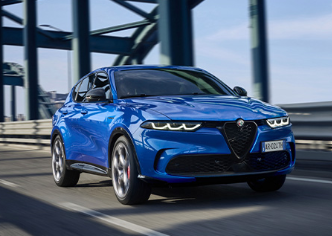
Put an Alfa Romeo Tonale next to a Dodge Hornet, and something feels strangely familiar. Look at the roofline, doors, proportions, dashboard layout, and general stance, and the family resemblance becomes impossible to ignore. That's no coincidence. These compact SUVs share much of their underlying engineering, yet they approach the road with noticeably different personalities.
Think of them as siblings who grew up in the same house but developed completely different wardrobes. The Tonale dresses for Milan. The Hornet turns up wearing a performance hoodie and boxing gloves.
So, which one deserves our money?
The Alfa Romeo Tonale vs Dodge Hornet debate becomes particularly interesting because the obvious differences—badges, styling, pricing, and branding—only tell part of the story. Once we dig into performance, interior quality, comfort, practicality, ownership, technology, and long-term appeal, the choice becomes much clearer.
There's also a major change buyers need to know about. Alfa Romeo continues to offer the 2026 Tonale, now powered by a 268-horsepower 2.0-liter turbocharged four-cylinder with a nine-speed automatic and standard all-wheel drive. Dodge, meanwhile, states that Hornet production has been paused indefinitely, although 2025 examples may remain available at some dealerships.
Let's break down where these two closely related SUVs separate from each other.
Content in this publication
- Alfa Romeo Tonale vs Dodge Hornet at a Glance
- Are the Alfa Romeo Tonale and Dodge Hornet the Same Car?
- Exterior Design: Italian Elegance vs American Muscle
- Performance: Alfa Romeo Tonale vs Dodge Hornet
- Which Is Faster: Tonale or Hornet?
- Handling and Driving Experience
- Interior Comparison
- Technology and Infotainment
- Passenger Space and Comfort
- Cargo Space and Everyday Practicality
- Fuel Economy and Efficiency
- Alfa Romeo Tonale vs Dodge Hornet Reliability
- Maintenance Costs
- Safety and Driver Assistance
- Alfa Romeo Tonale vs Dodge Hornet Price and Value
- Resale Value
- Alfa Romeo Tonale vs Dodge Hornet for Daily Driving
- Which One Is Better for Performance?
- Which One Feels More Luxurious?
- Which One Offers Better Value?
- Pros and Cons of the Alfa Romeo Tonale
- Pros and Cons of the Dodge Hornet
- Alfa Romeo Tonale vs Dodge Hornet: Which Should You Buy?
- The Biggest Difference Isn't Under the Hood
- Conclusion: Two Similar SUVs With Very Different Personalities
- Frequently Asked Questions
Alfa Romeo Tonale vs Dodge Hornet at a Glance
Before digging into the details, here's the basic personality split.
| Category | Alfa Romeo Tonale | Dodge Hornet |
|---|---|---|
| Overall character | Premium and sophisticated | Sporty and aggressive |
| Styling | Elegant Italian design | Muscular Dodge appearance |
| Driving focus | Refined sportiness | Performance-oriented |
| Interior feel | More upscale | More functional and athletic |
| AWD | Standard on current U.S. Tonale | Standard on Hornet GT and R/T |
| Best for | Luxury-minded drivers | Performance/value shoppers |
| Current status | 2026 model available | Production paused indefinitely |
| Main advantage | Design and premium character | Performance for the money |
At first glance, the Tonale seems like the luxury choice while the Hornet looks like the bargain performance alternative. That's generally true, but the situation gets more interesting once we compare specific versions.
Are the Alfa Romeo Tonale and Dodge Hornet the Same Car?
Not exactly—but they're far more closely related than most rival SUVs.
The Tonale and Hornet share the same basic platform and many mechanical components. Their overall dimensions, cabin architecture, suspension layout, and several powertrain elements have substantial similarities.
However, calling them identical would be like saying two chefs using the same ingredients will produce the same dinner.
Alfa Romeo and Dodge tuned their vehicles around different priorities.
The Tonale emphasizes:
- Italian styling
- premium presentation
- sophisticated road manners
- luxury-brand identity
- elegant interior details
The Hornet emphasizes:
- aggressive performance
- muscular styling
- value
- stronger Dodge branding
- sporty driving modes and presentation
That distinction matters more than we might expect.
Why Does the Dodge Hornet Look Like an Alfa Romeo Tonale?
Because underneath the skin, the relationship is genuine.
The similarities are especially obvious when we examine the side profile. Door shapes, window lines, roof structures, and overall proportions look nearly interchangeable.
Walk around to the front, though, and each manufacturer makes a stronger statement.
The Alfa receives its distinctive Scudetto shield grille, giving it that unmistakably Italian face. The Hornet adopts a wider, more aggressive front design that fits Dodge's performance-focused image.
From behind, different taillights, bumpers, trim pieces, and branding create additional separation.
Badge Engineering or Genuine Differentiation?
There's certainly an element of platform sharing, but we wouldn't dismiss either vehicle as nothing more than a rebadge.
Modern manufacturers regularly share platforms, engines, electronics, and components across brands. What matters is whether the resulting cars feel different enough to justify their positioning.
In this case, they do.
Exterior Design: Italian Elegance vs American Muscle
Few compact SUVs are as visually distinctive as the Tonale.
Alfa Romeo has traditionally treated styling almost like sculpture, and the Tonale follows that philosophy. Its curved surfaces, three-plus-three headlight signature, shield grille, and carefully shaped body create an upscale appearance without relying on excessive chrome or fake ruggedness.
The Hornet takes the same basic silhouette and turns up the aggression.
Its hood vents, broad grille treatment, dark trim, sharper details, and Dodge-inspired design cues give it a noticeably more muscular appearance.
Which SUV Looks Better?
This one depends entirely on taste.
We'd choose the Tonale if we wanted something elegant, distinctive, and premium.
We'd choose the Hornet if we preferred a tougher visual personality.
Park them outside a restaurant and the Tonale looks dressed for dinner. The Hornet looks ready to race whoever leaves the parking lot first.
Neither approach is wrong.
Performance: Alfa Romeo Tonale vs Dodge Hornet
Performance used to be one of the most fascinating parts of this comparison because both vehicles were offered with related gasoline and electrified configurations.
For the current 2026 U.S. Tonale, Alfa Romeo has simplified things considerably.
The 2026 Tonale uses a 2.0-liter direct-injected turbocharged four-cylinder producing up to 268 horsepower and 295 lb-ft of torque, paired with a nine-speed automatic transmission and standard AWD.
Previous Dodge Hornet GT models used essentially the same output: 268 horsepower and 295 lb-ft of torque.
That makes a used or leftover Hornet GT particularly relevant to anyone considering the latest Tonale.
Tonale 2.0 Turbo Performance
With 268 horsepower in a compact crossover, the Tonale isn't slow.
Acceleration feels strong enough for highway merging, passing, and spirited driving. More importantly, the chassis has that characteristic Alfa focus on steering response and cornering.
The Tonale doesn't behave like a miniature Stelvio Quadrifoglio, of course. Still, there's enough personality here to remind us that Alfa Romeo cares about how a steering wheel feels in our hands.
Dodge Hornet GT Performance
The Hornet GT offers similar turbocharged muscle with a more openly aggressive personality.
Dodge marketed the GT around performance rather than luxury. Its 268 horsepower and 295 lb-ft figures placed it among the more powerful gasoline-powered compact crossovers in its segment.
Dodge also says the 2025 Hornet GT can reach an estimated 140 mph top speed.
Numbers aren't everything, but they reinforce the Hornet's mission.
Hornet R/T Plug-In Hybrid Performance
This is where the Hornet becomes especially interesting on the used market.
The Hornet R/T combines a turbocharged 1.3/1.4-liter-class gasoline engine depending on market terminology with an electric system to create a performance-oriented plug-in hybrid.
With its PowerShot function activated, Dodge rated the Hornet R/T at up to 288 horsepower and 383 lb-ft of torque, with a claimed 0–60 mph time of approximately 5.6 seconds. Dodge also quoted up to 32 miles of EPA-estimated electric driving range for this configuration.
That's quick.
We're not talking sports-car quick, but we're definitely beyond the sleepy family-crossover category.
Which Is Faster: Tonale or Hornet?
If we're comparing the current 2026 Tonale 2.0T against the Hornet GT, performance is relatively close because both revolve around a 268-horsepower turbocharged engine and AWD layout.
If we're comparing against the Hornet R/T PHEV, the R/T has the advantage in maximum system output and straight-line acceleration.
Its 288-horsepower maximum output and 383 lb-ft of torque give it significantly more punch when everything is working together.
So if our priority is raw acceleration, a Hornet R/T remains one of the more interesting versions to hunt for.
Handling and Driving Experience
Here's where specification sheets stop being helpful.
Two vehicles can share plenty of hardware and still feel different behind the wheel.
The Tonale's greatest strength is balance. Steering is quick, body movements feel controlled, and the SUV generally behaves more like a sporty European hatchback than an oversized crossover.
The Hornet also handles impressively, but its personality feels more direct and muscular.
Tonale on a Twisty Road
Point the Alfa toward a winding road and it starts making sense.
The steering responds quickly. The body doesn't flop around like a shopping cart with a broken wheel. AWD provides confidence when accelerating out of bends.
We wouldn't call it an outright performance SUV, but there's genuine enthusiasm in the chassis.
Hornet Behind the Wheel
The Hornet embraces its Dodge identity more openly.
Sport modes sharpen its behavior, and certain versions were available with upgraded suspension hardware and Brembo brakes.
The result is a crossover that actively encourages enthusiastic driving rather than simply tolerating it.
Winner for Driving Fun
This one is close.
We'd give the Tonale an edge for steering feel and sophistication, while the Hornet—especially the R/T—wins if acceleration and aggressive personality matter more.
Interior Comparison
Open the doors and the relationship between these vehicles becomes obvious again.
Several switches, screens, controls, and general structural elements feel familiar.
Yet Alfa manages to create the more upscale environment.
The Tonale's cabin uses distinctive trim, Alfa-style graphics, sporty instrumentation, and details such as the steering-wheel-mounted start button to create more theater.
The 2026 Tonale includes a 10.25-inch touchscreen and 12.3-inch digital instrument display, along with available features including leather upholstery, ventilated front seats, ambient lighting, and driver-seat memory on higher configurations.
Tonale Interior Quality
The cabin is attractive rather than lavish.
You may be interested in reading Alfa Romeo Tonale vs Stelvio: Which Italian SUV Is Better?
That's an important distinction.
Someone moving from a Toyota or Hyundai may find the Tonale impressively premium. Someone climbing out of a similarly priced BMW, Audi, or Mercedes could notice several harder plastics and less expensive surfaces.
Still, the overall design carries considerable personality.
Hornet Interior Quality
The Hornet cabin is fundamentally similar but presented in a sportier, less luxurious way.
That's not necessarily a criticism.
Dodge buyers aren't usually searching for polished wood trim and whisper-soft carpeting. They want supportive seats, intuitive controls, large screens, and a cockpit that feels connected to the driving experience.
The Hornet largely delivers that.
Technology and Infotainment
Both SUVs belong to Stellantis, so there's plenty of shared technology.
Modern versions feature a 10.25-inch central touchscreen built around the Uconnect infotainment architecture, along with digital instrumentation and smartphone integration.
The system is generally straightforward.
Menus are reasonably intuitive, graphics look sharp, and everyday tasks don't require digging through endless layers of digital nonsense.
That's increasingly important.
We shouldn't need an engineering degree just to turn on heated seats.
Tonale Technology Advantage
Alfa's implementation feels slightly more premium because of its graphics, instrument design, and surrounding cabin presentation.
The latest Tonale also offers a strong standard technology package including navigation, wireless charging, adaptive cruise control, and traffic-sign recognition.
Hornet Technology Advantage
The Hornet provides much of the same functionality without asking buyers to pay primarily for a premium badge.
That can make it the stronger value proposition on the used market.
Passenger Space and Comfort
Because these SUVs share similar proportions, passenger space is predictably close.
Front occupants receive plenty of room.
Rear passengers have acceptable rather than enormous space. Adults can fit comfortably enough for normal journeys, although anyone expecting limousine levels of rear legroom should look at a larger SUV.
Headroom is reasonable despite the sporty roofline.
Which Has Better Seats?
The Tonale generally wins our comfort vote.
Its premium positioning means higher trims can combine supportive shapes with more sophisticated upholstery and luxury-oriented equipment.
Hornet seats tend to emphasize sportiness.
For a long highway drive, we'd lean toward the Alfa.
For an energetic back-road drive, the Hornet's firmer personality might appeal more.
Cargo Space and Everyday Practicality
Neither vehicle is a cargo-hauling champion.
Their compact dimensions make them easy to maneuver in cities, but that also means cargo space trails some boxier competitors.
Still, there's enough room behind the rear seats for groceries, luggage, backpacks, and normal family duties.
Fold the rear seats and practicality improves substantially.
Which One Is More Practical?
For the most part, it's a tie.
The basic body structure dictates similar passenger and cargo packaging.
The real decision should be based less on whether one can swallow an extra grocery bag and more on powertrain, price, features, and ownership expectations.
Fuel Economy and Efficiency
Fuel economy depends heavily on which versions we're comparing.
The turbocharged gasoline Tonale and Hornet GT offer conventional refueling and strong performance without requiring a charging routine.
The Hornet R/T plug-in hybrid adds another dimension.
Charge it regularly and short daily commutes can be completed using little or no gasoline. Dodge quoted up to 32 miles of EPA-estimated electric range for the Hornet R/T.
But here's the catch.
A plug-in hybrid only reaches its full efficiency potential if we actually plug it in.
Buy one, never charge it, and we're carrying around additional battery and electric hardware without exploiting its biggest advantage.
Alfa Romeo Tonale vs Dodge Hornet Reliability
Reliability is one of the most important—and difficult—parts of this comparison.
Both vehicles are relatively young designs, so we don't yet have the same decades of long-term evidence available for something like a Toyota RAV4 or Honda CR-V.
They also use plenty of electronics and sophisticated turbocharged or electrified hardware.
That doesn't automatically mean they're unreliable, but complexity creates more potential failure points.
Mechanical Similarities Matter
Because the Tonale and Hornet share significant engineering, we'd expect certain mechanical strengths and weaknesses to overlap.
That means shoppers should pay attention to:
- software updates
- electrical behavior
- warning lights
- battery condition
- transmission operation
- maintenance history
- recall completion
- PHEV charging performance
- previous dealer repairs
Used Hornet R/T Buyers Should Pay Extra Attention
A plug-in hybrid combines combustion and electric propulsion systems.
That creates excellent performance and efficiency—but also additional hardware.
When shopping used, we'd want a full inspection, confirmation that charging operates correctly, a clean diagnostic scan, and documented maintenance.
Maintenance Costs
The Hornet has one practical advantage here: Dodge has a broad U.S. dealer and Mopar service network.
Dodge states that Hornet owners can obtain parts and service through authorized Chrysler, Dodge, Jeep, and Ram dealerships.
That could make finding service easier depending on where we live.
Alfa Romeo has a smaller dealer footprint.
Routine work isn't necessarily exotic, particularly given the shared Stellantis hardware, but access to an experienced Alfa technician may vary considerably by region.
Is the Tonale More Expensive to Maintain?
Potentially.
The luxury badge, specialized trim components, dealer labor rates, and smaller service network can increase ownership costs.
However, because the Tonale shares significant architecture with other Stellantis products, it's not an isolated Italian exotic requiring hand-built parts shipped by gondola from Milan.
The reality is much less dramatic.
Safety and Driver Assistance
Both vehicles offer modern active-safety technology.
Depending on configuration and model year, available equipment can include adaptive cruise control, lane assistance, blind-spot monitoring, parking assistance, automatic emergency braking, traffic-sign recognition, and related features.
The current Tonale includes adaptive cruise control and traffic-sign recognition among its listed technology equipment.
For most drivers, either vehicle can deliver the level of driver assistance expected from a modern compact crossover.
Alfa Romeo Tonale vs Dodge Hornet Price and Value
This is where the Hornet historically made one of its strongest arguments.
Buyers could access much of the Tonale's underlying engineering through a Dodge badge, often with an emphasis on performance rather than luxury positioning.
On the used market, that equation could become even more attractive.
Why the Hornet Could Be the Better Bargain
The Hornet's discontinued—or officially “paused indefinitely”—status could create opportunities.
Some buyers will avoid a vehicle once production stops. That can place pressure on resale values.
Bad for the first owner?
Possibly.
Interesting for the second owner?
Absolutely.
You may be interested in readingAlfa Romeo Tonale vs Stelvio: Which Italian SUV Is Better?You may be interested in reading
Alfa Romeo Tonale vs BMW X3: Which Luxury SUV Wins?A lightly used Hornet purchased at a substantial discount could deliver serious performance per dollar.
The Tonale offers something harder to quantify: identity.
Cars aren't refrigerators. We don't choose them purely by comparing cubic feet and warranty periods.
Some of us care about the way a car looks when we walk toward it.
The Alfa badge, distinctive grille, Italian design, interior presentation, and more upscale image can make the Tonale feel special in a way the Hornet doesn't quite replicate.
Resale Value
Neither vehicle is an obvious resale-value champion.
Luxury European vehicles commonly depreciate faster than mainstream Japanese SUVs, while discontinued models can experience unpredictable secondhand values.
The Tonale benefits from continued production for 2026, which gives it greater continuity in the marketplace.
The Hornet's situation is more complicated.
Dodge confirms that production has been paused indefinitely, although leftover new examples may remain available.
That could reduce future supply but also reduce buyer confidence.
If resale value is our highest priority, we'd probably investigate alternatives such as the Toyota RAV4 or Honda CR-V.
If value on the used market matters more, depreciation can become our friend.
Alfa Romeo Tonale vs Dodge Hornet for Daily Driving
For commuting, we'd choose the Tonale.
Why?
The premium cabin, sophisticated styling, comfortable driving position, and polished personality suit everyday life nicely.
It feels sporty without constantly asking us to prove something.
The Hornet is more extroverted.
That's entertaining, but the Alfa's blend of refinement and athleticism feels slightly more complete as an everyday companion.
Which One Is Better for Performance?
Hornet R/T.
That answer is simple.
Its maximum 288 horsepower, 383 lb-ft of torque, PowerShot function, and roughly 5.6-second claimed 0–60 mph performance make it the most exciting straight-line configuration in this family.
Against a Hornet GT, though, the comparison gets tighter.
Both it and the current Tonale offer 268 horsepower and 295 lb-ft.
At that point, we'd choose based on price and personality rather than engine output.
Which One Feels More Luxurious?
The Alfa Romeo Tonale.
No surprise there.
From the exterior badge to the cabin materials and overall presentation, Alfa deliberately positions the Tonale above the Hornet.
The difference isn't Rolls-Royce versus rental car. These vehicles share too much DNA for that.
But the Tonale does enough with its styling, upholstery, detailing, and brand identity to create the stronger premium experience.
Which One Offers Better Value?
For a used buyer, the Dodge Hornet could be the winner.
A depreciated Hornet GT gives us much of the 268-horsepower mechanical package associated with the Tonale without paying extra for Alfa Romeo branding.
A Hornet R/T can be even more interesting if we want plug-in capability and strong acceleration.
But we need to evaluate each used example carefully.
A bargain stops being a bargain when neglected maintenance and unresolved problems arrive with it.
Pros and Cons of the Alfa Romeo Tonale
Tonale Pros
- Beautiful Italian styling
- Distinctive premium identity
- 268-hp turbo engine in the 2026 U.S. model
- Standard AWD
- Quick steering
- Attractive digital cockpit
- Strong standard technology
- More upscale interior presentation
- Continued availability as a 2026 model
Tonale Cons
- Potentially higher ownership costs
- Smaller dealer network than Dodge
- Cabin isn't as luxurious as some premium rivals
- Limited long-term reliability history
- Compact cargo area
- Can become expensive with options
Pros and Cons of the Dodge Hornet
Hornet Pros
- Strong performance
- Standard AWD
- 268-hp GT offers serious power
- R/T delivers up to 288 hp
- Up to 383 lb-ft in R/T form
- Sporty handling
- Potentially excellent used value
- Wider Stellantis/Mopar service access
- Much of the Tonale's underlying engineering
Hornet Cons
- Production paused indefinitely
- Resale values may be unpredictable
- Cabin feels less premium
- PHEV adds mechanical complexity
- Limited cargo room
- Short model history
- Styling may feel less distinctive than the Alfa
Alfa Romeo Tonale vs Dodge Hornet: Which Should You Buy?
Here's how we'd simplify the decision.
Choose the Alfa Romeo Tonale if:
- We care strongly about styling.
- We want a premium badge.
- Interior atmosphere matters.
- We prefer sophisticated road manners.
- We're shopping for a current new model.
- We're willing to pay more for personality.
Choose the Dodge Hornet if:
- Performance per dollar matters most.
- We're comfortable buying a used or leftover model.
- We want the faster R/T plug-in hybrid.
- Premium branding isn't important.
- We find an aggressively discounted Hornet.
- We have convenient access to Dodge/Mopar service.
There's no universal winner because these SUVs appeal to subtly different buyers.
And that's what makes this comparison fun.
The Biggest Difference Isn't Under the Hood
After studying the Alfa Romeo Tonale vs Dodge Hornet, we arrive at an unusual conclusion.
The specifications don't fully explain the difference.
These cars demonstrate how branding, design, tuning, and presentation can transform fundamentally related ingredients.
The Hornet says, “Look how much performance you're getting.”
The Tonale says, “Look how good you'll feel getting there.”
One appeals primarily to our calculator.
The other appeals to our emotions.
Our Verdict
For a new vehicle in 2026, we'd pick the Alfa Romeo Tonale almost by default because it remains an active current model while Hornet production has been paused indefinitely.
For a used vehicle, things get much more interesting.
A heavily depreciated Hornet GT could be an excellent way to obtain a 268-horsepower AWD compact crossover without paying Alfa money.
Meanwhile, an attractive Hornet R/T could deliver the most entertaining acceleration of the bunch while adding useful plug-in capability.
But if both vehicles were sitting beside each other with similar mileage, condition, equipment, and price?
We'd take the Tonale.
It simply feels more coherent.
The Hornet is the logical sibling. The Alfa is the charismatic one.
Sometimes charisma wins.
Conclusion: Two Similar SUVs With Very Different Personalities
The Alfa Romeo Tonale and Dodge Hornet prove that shared engineering doesn't automatically produce identical vehicles.
Yes, they share considerable DNA.
Yes, their dimensions and mechanical architecture are closely related.
And yes, shoppers who compare them side by side will notice similarities almost immediately.
But personality changes everything.
The Tonale turns the formula toward European elegance, premium design, and polished handling. The Hornet transforms it into something more aggressive, accessible, and performance-focused.
For buyers who want sophistication and current-model availability, the Tonale is our preferred choice.
For bargain hunters searching the used market, the Hornet deserves serious consideration—especially if depreciation creates a large price gap.
Ultimately, we shouldn't ask which one is universally better.
We should ask a more useful question:
Do we want the sibling wearing the Italian suit, or the one wearing racing shoes?
Frequently Asked Questions
1. Is the Dodge Hornet basically an Alfa Romeo Tonale?
The Dodge Hornet and Alfa Romeo Tonale are closely related and share a platform, similar proportions, interior architecture, and various mechanical components. However, they're not identical. Alfa focuses more heavily on luxury, styling, and Italian brand character, while Dodge gives the Hornet a more aggressive performance-oriented personality.
2. Which is faster, Alfa Romeo Tonale or Dodge Hornet?
It depends on the version. The 2026 Alfa Romeo Tonale produces up to 268 horsepower and 295 lb-ft of torque. The Hornet GT offered the same output, while the Hornet R/T plug-in hybrid could produce up to 288 horsepower and 383 lb-ft and reach 60 mph in approximately 5.6 seconds with its performance systems engaged.
3. Is the Alfa Romeo Tonale more luxurious than the Dodge Hornet?
Yes. Although the vehicles share several underlying components, Alfa Romeo gives the Tonale a more premium interior presentation, distinctive styling, luxury-oriented materials, and upscale options. The Hornet feels sportier and more functional rather than genuinely luxurious.
4. Is the Dodge Hornet discontinued?
Dodge currently says Hornet production has been paused indefinitely to make room for newer additions to the Dodge lineup. Some new vehicles may still remain at selected dealerships, and used examples remain available. The Alfa Romeo Tonale, by contrast, continues as a 2026 model.
You may be interested in readingAlfa Romeo Tonale vs Stelvio: Which Italian SUV Is Better?You may be interested in reading
Alfa Romeo Tonale vs BMW X3: Which Luxury SUV Wins?You may be interested in reading
Alfa Romeo Tonale or Similar: Best Alternatives Compared5. Should I buy a Tonale or a used Hornet?
Choose the Tonale if you value premium styling, current-model availability, and the Alfa Romeo driving experience. Consider a used Hornet if value and performance matter more. A discounted Hornet GT can offer impressive turbocharged performance, while an R/T adds plug-in-hybrid capability and stronger acceleration. Before buying either used, check maintenance history, recalls, software updates, battery health where applicable, and obtain an independent inspection.
If you want to know other articles similar to Alfa Romeo Tonale vs Dodge Hornet: Which SUV Is Better? you can visit the category Models.
Honda Passport vs Toyota 4Runner: Which SUV Is Better?
Honda Passport vs Ford Bronco: Which SUV Is Better?
Honda Passport vs Ford Explorer: Which SUV Is Better?
Honda Passport or Pilot: Which SUV Is Better?
Honda Passport vs Jeep Grand Cherokee: Which SUV Is Better?
Honda Passport vs Nissan Pathfinder: Which SUV Is Better?
Leave a Reply
More content of your interest